2026 World Intelligent Connected Vehicles Conference: Transitioning from Spec Benchmarking to Safety Benchmarking, the Industry Steps into a New Era of Regulatory Oversight
 10/26 2026
 405
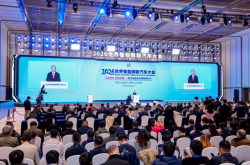
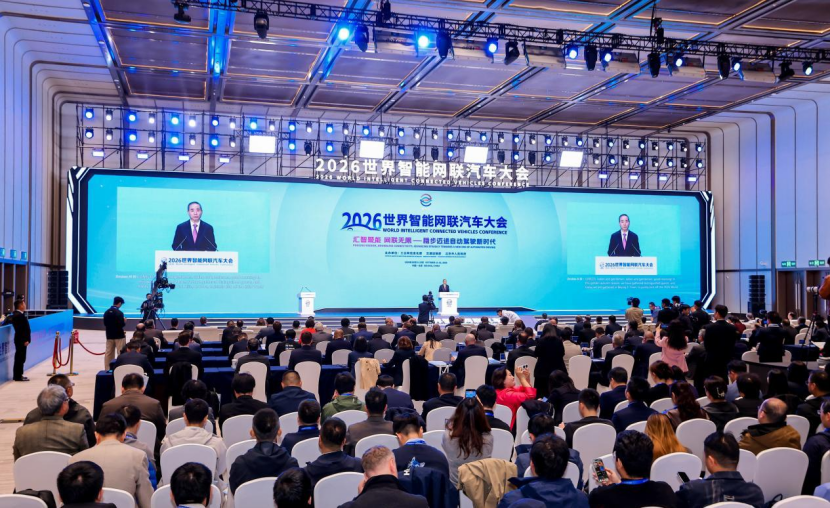
On October 21, 2026, the 2026 World Intelligent Connected Vehicles Conference, jointly organized by the Ministry of Industry and Information Technology, the Ministry of Transport, and the Beijing Municipal People's Government, commenced in Yizhuang, Beijing. The narrative surrounding intelligent connected vehicles is shifting away from isolated technological advancements. Safety has evolved from a mere pre-market inspection checkpoint to an essential prerequisite for market entry and ongoing iterative development.
Simultaneously, intelligence is transforming from a mere feature enhancement to a comprehensive reconfiguration of vehicle-road-cloud collaborative systems. These collective advancements point to a singular outcome: the industry's competitive landscape is pivoting from hardware specifications and features to compliance capabilities, system interoperability, and commercial viability.
▍Safety Emerges as a Fundamental Requirement: From Inspection to Full Lifecycle Oversight
Safety took center stage at this year's conference, underscored by regulatory pronouncements. Xin Guobin, Vice Minister of the Ministry of Industry and Information Technology, emphasized at the opening ceremony that the rapid deployment of intelligent connected vehicles in real-world scenarios necessitates stricter standards for product safety, system reliability, and cross-domain collaborative governance.
He highlighted the urgency of implementing mandatory national standards for autonomous driving, accelerating standard development in critical areas such as operational monitoring and data security, and cautiously advancing pilot programs for market entry and road operation of intelligent connected vehicles. Li Changqing, a second-level inspector at the Quality Development Bureau of the State Administration for Market Regulation, stressed that regulators will rigorously combat exaggerated and false advertising, ensuring that marketing claims do not obscure safety risks.
These statements reflect the emergence of a robust mandatory standards framework. In late June, the mandatory national standard Safety Requirements for Combined Driving Assistance Systems in Intelligent Connected Vehicles was issued, slated to take effect on January 1, 2027. It specifies that drivers retain full driving responsibility at all times and categorizes products into three classes—basic single-lane, basic multi-lane, and pilot NOA—each with distinct technical benchmarks. On July 30, the Safety Requirements for Autonomous Driving Systems in Intelligent Connected Vehicles (GB 44721—2026) received approval, with implementation scheduled for July 1, 2027, applicable to vehicles equipped with L3 and L4 systems.
These standards mandate automakers to establish comprehensive safeguard capabilities across four dimensions—safety policy, risk management, safety assurance, and safety enhancement—throughout the entire lifecycle, from design and development to production, manufacturing, and post-deployment. They require rigorous simulation, closed-course, and on-road testing during R&D validation. For L3 systems, driver takeover monitoring is obligatory, and automakers must transparently communicate automation levels, capabilities, and limitations to users via official websites, in-vehicle displays, and other channels. The inspection framework integrates enterprise safeguard capability assessments, safety documentation reviews, and confirmatory testing, with third-party agencies conducting closed-course, on-road, and simulation tests based on recommended national standards such as GB/T 41798, GB/T 44719, and GB/T 47025.
Cui Dongshu, Secretary-General of the China Passenger Car Association, believes that the two mandatory national standards establish a comprehensive regulatory framework from L2 to L4, ensuring products meet stringent safety requirements before market entry. This shift redirects industry competition from hardware specifications and city coverage to safety capabilities. On September 11, nine departments, including the Ministry of Industry and Information Technology, released the 15th Five-Year Plan for the Development of the Intelligent Connected New Energy Vehicle Industry, targeting 70% and 40% market shares for new energy passenger and commercial vehicles, respectively, by 2030, and achieving highly autonomous driving on highways, urban expressways, and select urban roads.
Lei Jun, Founder, Chairman, and CEO of Xiaomi Group, argued that safety is the cornerstone of the automotive industry; without it, all other advancements are moot. Zhang Xinghai, Founder and Chairman of Seres Group, labeled safety the "non-negotiable first responsibility" for enterprises. Jin Yuzhi, Senior Vice President of Huawei and CEO of Yinwang, explained the shift from a liability perspective: while drivers remain liable in L2 accidents, liability transfers to the system in L3 and above, making the second half of the intelligent era a competition for safety and trustworthiness. He also emphasized that safety requires not just technological innovation but also objective verification, advocating for transparency in safety data.
▍In the Second Half of Intelligence, System and Commercial Validation Take Center Stage
In the second half of the intelligent era, foundational preparations are well underway. Conference data revealed that in the first half of 2026, over 70% of new passenger vehicles in China featured L2-level assisted driving, with L3 penetration expected to exceed 35% by 2030. Additional statistics showed that as of August 2026, approximately 61 million passenger vehicles in China were equipped with combined driving assistance, including 15 million with pilot assistance.
Officials from the Ministry of Industry and Information Technology noted that China has established 17 national-level test demonstration zones, promoted 20 pilot cities for "vehicle-road-cloud integration," issued over 20,000 testing licenses, opened 57,000 kilometers of test roads, and accumulated over 220 million kilometers of testing mileage. Ninety standards for intelligent connected vehicles have been released, with 62 more under development.
Xin Guobin also called for deepening "vehicle-road-cloud integration" pilots, fostering deeper synergy between automotive, ICT, energy, transportation, and smart city sectors. This means high-level autonomous driving will no longer rely solely on onboard sensors and computational power but will require collaborative loops involving roadside infrastructure, cloud platforms, communication networks, and vehicles.
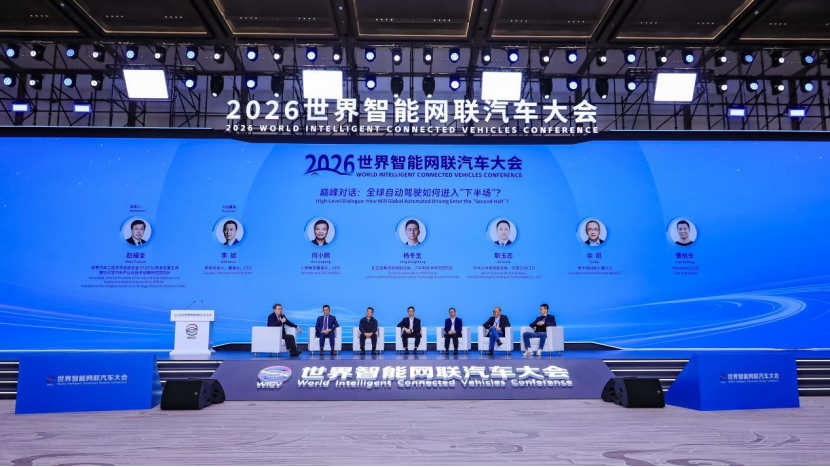
Foundational progress does not equate to established business models. Zhao Fuquan, Lifetime Honorary President of FISITA and Dean of Tsinghua University's Institute of Automotive Industry and Technology Strategy, stated during the conference's "Summit Dialogue" that the first half relied on technological breakthroughs, while the second half hinges on mass adoption and profitability. Li Bin, Founder, Chairman, and CEO of NIO, added that assisted driving incurs fulfillment, training, communication, and upgrade costs, making sustainability impossible without revenue. Thus, user willingness to pay becomes the core metric.
He Xiaopeng, Founder, Chairman, and CEO of XPeng Motors, quantified success metrics as safety collision mileage, full-scenario user coverage, and the proportion of users willing to pay. Yang Dongsheng, Senior Vice President of BYD and Dean of its New Automotive Technology Research Institute, summarized consumer perspective shifts as "usable, daring to use, using daily," stressing that automakers must treat safety as a mission, not just a technical indicator.
Regarding technological pathways, He Xiaopeng argued for skipping L3, as it transfers liability to the system without improving user experience or safety. Yang Dongsheng predicted conditional L3 autonomy could land by 2028, with higher levels following within one to two years through iterative updates. These differing views reflect varying assessments of liability transfer costs versus experiential benefits.
Ecosystem collaboration was another recurring theme. Lei Jun asserted that the second half of the intelligent connected vehicle era is not just about vehicle intelligence but ecosystem strength. Zhao Fuquan emphasized that no single automaker or supplier can dominate, urging industrial chain players to compete through collaboration and share profits. Jin Yuzhi, representing Huawei Qiankun, reiterated that Yinwang remains committed to being an "electronic screwdriver+" in the intelligent connected era, helping automakers build and sell vehicles without competing with them. These statements converge on one point: the competitive unit in the second half of intelligence is shifting from individual enterprises to collaborative networks.
In summary, the current landscape can be characterized as follows: On the safety front, mandatory national standards now cover L2 to L4, shifting liability from humans to systems. Safety is no longer an abstract promise in product marketing but a verifiable, traceable, and accountable requirement. Technologically, L2-level combined driving assistance is rapidly penetrating the new vehicle market, while debates continue over L3+ route selection and liability allocation. Competition now focuses on system collaboration and commercialization, with user willingness to pay and full-scenario coverage replacing parameter stacking as key metrics. Ecologically, the competitive unit is evolving from individual enterprises to collaborative networks involving automakers, suppliers, tech firms, and regulators. For automakers, the true test lies in sustaining safety and system investments amid compressed margins. When these investments will yield stable returns remains to be seen.
Layout | Yang Shuo Image Sources: 2026 World Intelligent Connected Vehicles Conference, Qianku.com
-
![]()
Annual Production Capacity in Phase I to Hit 50,000 Units! Weijing Optics Unveils Mudanjiang Production Base
-
![]()
Net Profit Loss Shrinks by 35.52% in First Three Quarters of 2026, Yet Costar’s Stability Remains Elusive
-
![]()
Massive Exchange Losses! Lens Technology’s Profits Plummet in First Three Quarters—Will the iPhone Duo Mark a New Turning Point?
-
![]()
2026 World Intelligent Connected Vehicles Conference: Transitioning from Spec Benchmarking to Safety Benchmarking, the Industry Steps into a New Era of Regulatory Oversight
-
![]()
Hundreds of Billions Fully Invested in AI, Yet No Returns in Sight
-
![]()
ByteDance's Automotive Ambitions Come to the Fore
-
![]()
$12.9 Billion: Nvidia Buys an 'Insurance Policy'
-
![]()
iPhone Duo: Is It a Thorn in Ternus's Side?