Has DeepSeek Truly Topped the Global Charts? Let’s Hold the Applause for Now
 10/27 2026
 397
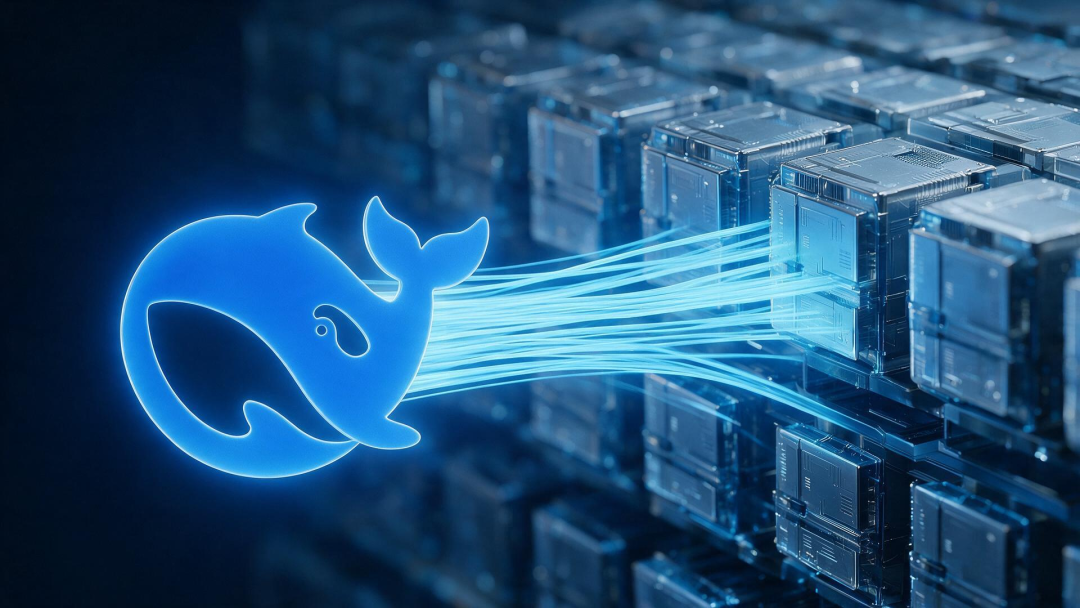
The tech sphere is abuzz once again.
According to last week’s data from OpenRouter, global AI large-scale models collectively processed a staggering 188 trillion Tokens. Chinese models contributed a substantial 93.54 trillion, while their US counterparts accounted for 22.47 trillion. China has outperformed the US for 26 consecutive weeks, with all five of the top-ranking models hailing from China. Leading the pack, DeepSeekV4.1-Flash-1017 handled an impressive 33.6 trillion Tokens in a single week, marking a remarkable 801% month-over-month surge.
“Reaching the pinnacle of global rankings” — this headline is not misleading, and it undeniably grabs attention. However, if you interpret DeepSeek’s current standing solely based on this phrase, you’re likely to misunderstand its true position.
Let’s dissect this 801% growth.
V4.1-Flash-1017 was launched on October 17th. During the same week, the previous iteration, V4.1Flash, experienced a 45% decline in usage. Users flocked to the new version, resulting in a net gain that appears striking on paper. This isn’t inflated data, but it shouldn’t be mistaken for “an overnight eightfold increase in new users.” The real narrative lies elsewhere: the new version enhanced performance without raising prices — maintaining the cost of $0.15 per million input Tokens and $0.60 for output, all under an MIT open-source license. Developers saw no compelling reason to switch to alternatives.
This has been DeepSeek’s steadfast strategy for over a year: competing not on intelligence alone, but on affordability.
The V4.1Flash model exemplifies this approach. With a total of 552 billion parameters, it activates only 8 billion for input and 16 billion for output, thanks to its proprietary asymmetric CausalEncoder-Decoder architecture. In simpler terms, it delivers near-flagship performance at a significantly lower activation cost. Scenarios involving agent tasks and long-text processing — which are truly Token-intensive — benefit the most from this strategy. Some estimates suggest that Anthropic’s top models would incur 28 times the cost for the same workload.
Twenty-eight times. Even a startup would know which option to choose without hesitation.
Thus, DeepSeek’s ascent to the top isn’t a testament to technological supremacy; it’s a triumph of cost-efficiency.
However, let’s put this into perspective. OpenRouter serves as an API aggregation gateway, and its statistics only encompass usage routed through its platform. Many enterprises opt for official APIs, Azure, Bedrock, or private deployments, which are not included in this dataset. This ranking reflects the preferences of developers and small-to-medium enterprises (SMEs) but does not provide a comprehensive comparison of Sino-US AI capabilities.
Stanford’s AI Index Report puts it more candidly: As of March this year, the performance gap between leading Chinese and US models was a mere 2.7%, with both sides taking turns at the summit. China’s true advantage lies in offering “good enough and cheap” solutions, rather than “absolutely leading in cutting-edge intelligence.” The choice of words is crucial.
The same applies to DeepSeek. Its CED architecture is indeed impressive — some scholars argue that its foundational design “cannot be distilled away,” and I concur. However, its current strengths lie primarily in inference efficiency, long-context cost-effectiveness, and the cost-performance ratio for agent tasks. Solving complex tasks at lower costs is the right path and sustainable, but it still falls short of “next-gen model originality” by a full technical cycle.
Weekly rankings are one thing; the company’s actual situation is another. Three key developments from last month shed more light on DeepSeek’s future challenges than the 33.6 trillion Token figure.
First, it secured RMB 100 billion in financing at a pre-money valuation of RMB 500 billion, with CATL and Tencent as the largest investors. Its annualized revenue run rate surpassed $1 billion, more than doubling in just a few months, and clients remained loyal even after August’s API price hike. Commercialization is accelerating, but it still falls short of covering R&D and computing costs.
Second, it’s transitioning to domestic chips. Engineers are actively involved in Ascend chip design, planning to pre-train the next model on Ascend 950DT by year-end. Meanwhile, its DeepInfer inference framework supports both NVIDIA and Ascend chips. This move is necessary but fraught with risks. While single-card cost-effectiveness is strong, communication and stability at scale (e.g., with 10,000 cards) are critical. Whether the next model can smoothly pre-train on domestic computing power will determine its position in next year’s rankings.
Third, pricing. API prices have risen to 2.3–4.5 times their original levels, with peak/off-peak pricing introduced. The era of “ultra-low prices for scale” is ending; now comes “unit economics at scale.” Meanwhile, Anthropic is pursuing a $1 trillion valuation, and OpenAI continues to burn through capital — US leading labs still have an order of magnitude more funding than their Chinese counterparts. The $10 billion financing narrowed the gap but didn’t close it.
The open-source strategy also warrants closer scrutiny. By open-sourcing DeepInfer, DeepSeek exposed its Token-per-card scheduling system to all. This strengthens the ecosystem in the short term — third-party providers can offer cheaper services on the same stack, expanding total usage. In the long term, however, balancing open-source benefits with commercialization will face regulatory and investor scrutiny during its Sci-Tech Innovation Board listing. Restraint is a competitive edge, but restraint alone doesn’t generate revenue.
In summary: DeepSeek’s weekly ranking on OpenRouter validates its efficiency-first approach. Once performance gaps shrink to single-digit percentages, cost structure becomes developers’ most reliable metric. The 33.6 trillion Tokens prove this path works and highlight the demand for “affordable intelligence.”
But efficiency has its limits. Leading in usage does not equate to technological leadership; channel preferences do not equate to industrial dominance; more Tokens do not equate to higher profits. The $10 billion financing, migration to domestic computing, IPO plans, and the shift from low-price volume to price hikes for profitability — all these challenges are converging. That’s the real test after reaching the summit.
The top spot is secured.
The harder part is staying there when the next technological gap emerges.
-
Capital Reevaluation of the 'Battery King'
-
![]()
Audi China Undergoes Division: Splitting the Brand, Taking a Risk on Destiny
-
![]()
SpaceX Secures $40 Billion in GPU Financing, Wagering on Market Growth Over the Next Five Years
-
![]()
Has DeepSeek Truly Topped the Global Charts? Let’s Hold the Applause for Now
-
![]()
Why Is It Harder for Suppliers to Stand Out in the Crowded Intelligent Driving Market?
-
The Golden September and Silver October Are Not Over: China's Auto Market Finds New Pathways to Growth
-
![]()
Wow! OpenAI Makes Significant Investment in Lab to Combat Emerging Viruses Using AI
-
![]()
NamiWork Steers Clear of Direct Clash with Tech Titans, Targets Challenging AI Market