NamiWork Steers Clear of Direct Clash with Tech Titans, Targets Challenging AI Market
 10/27 2026
 540

On October 14, Zhou Hongyi candidly admitted in an interview that 360 has not yet fully embraced AI adoption within enterprises.
He categorizes enterprise AI utilization into three distinct phases: initially, training employees to harness AI tools; subsequently, enhancing individual efficiency through the use of Agents; and ultimately, integrating intelligent agents into business systems to autonomously accomplish tasks. While 360 has extensively tested Agents internally, Zhou Hongyi conceded, “We are still navigating the second phase of exploration.”
This revelation comes less than three months after the official launch of NamiWork. On July 28, at the Beijing National Convention Center, Zhou Hongyi invited Abulajiang·Aiskaier, the proprietor of a breakfast shop in Kashgar, Xinjiang, to demonstrate his experience utilizing NamiWork for marketing, design, and contract management.
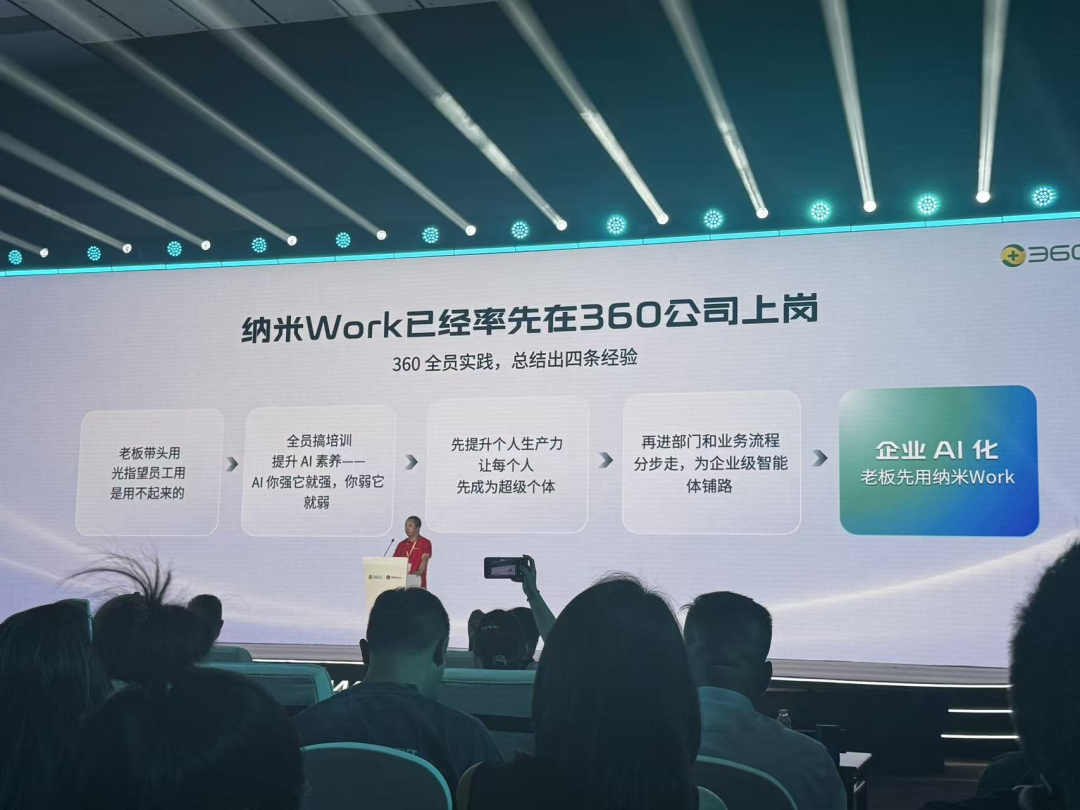
Zhou Hongyi posited that for enterprises to fully adopt AI, business leaders must lead by example. He aims to transform 360's internal Agent capabilities into an enterprise work platform, enabling small businesses without professional teams to leverage AI.
However, 360 faces a unique challenge in the office Agent market. On October 20, Analysys released data on domestic desktop AI office agent traffic for September, revealing that Tencent WorkBuddy led with 85.34 million visits, followed by Qianwen Office with 46.55 million, and Doubao Work with 30.39 million. NamiWork, in contrast, ranked 18th with 2.27 million visits.
Since its market entry, NamiWork has been enhancing its daily office capabilities, such as WeChat message processing and Office editing, while restructuring its membership and cloud computer pricing. Engineers have also begun visiting physical stores to configure intelligent agents for merchants. Zhou Hongyi has acknowledged that 360 cannot dominate all technical domains and hopes to focus more on enterprise agents and security. Yet, this path is fraught with its own set of challenges.

Prior to launching NamiWork, 360 conducted a series of experiments within its own organization.
According to data released at the launch event, the company deployed intelligent agents like OpenClaw in over 1,000 internal business scenarios, collected 56,000 feedback entries, and iterated 166 versions over five months. NamiWork can leverage different models, enabling multiple Agents to collaborate on research, data analysis, document creation, and application development. 360 hopes to consolidate these capabilities into a single platform, lowering the barrier for enterprises to adopt AI.
Nevertheless, regardless of the available capabilities, users must have a compelling reason to repeatedly use them for a business to thrive. On October 20, Analysys' desktop office agent rankings made NamiWork's position clear. The top three agents combined had over 160 million visits. NamiWork's 2.27 million visits were equivalent to only about 2.7% of WorkBuddy's.
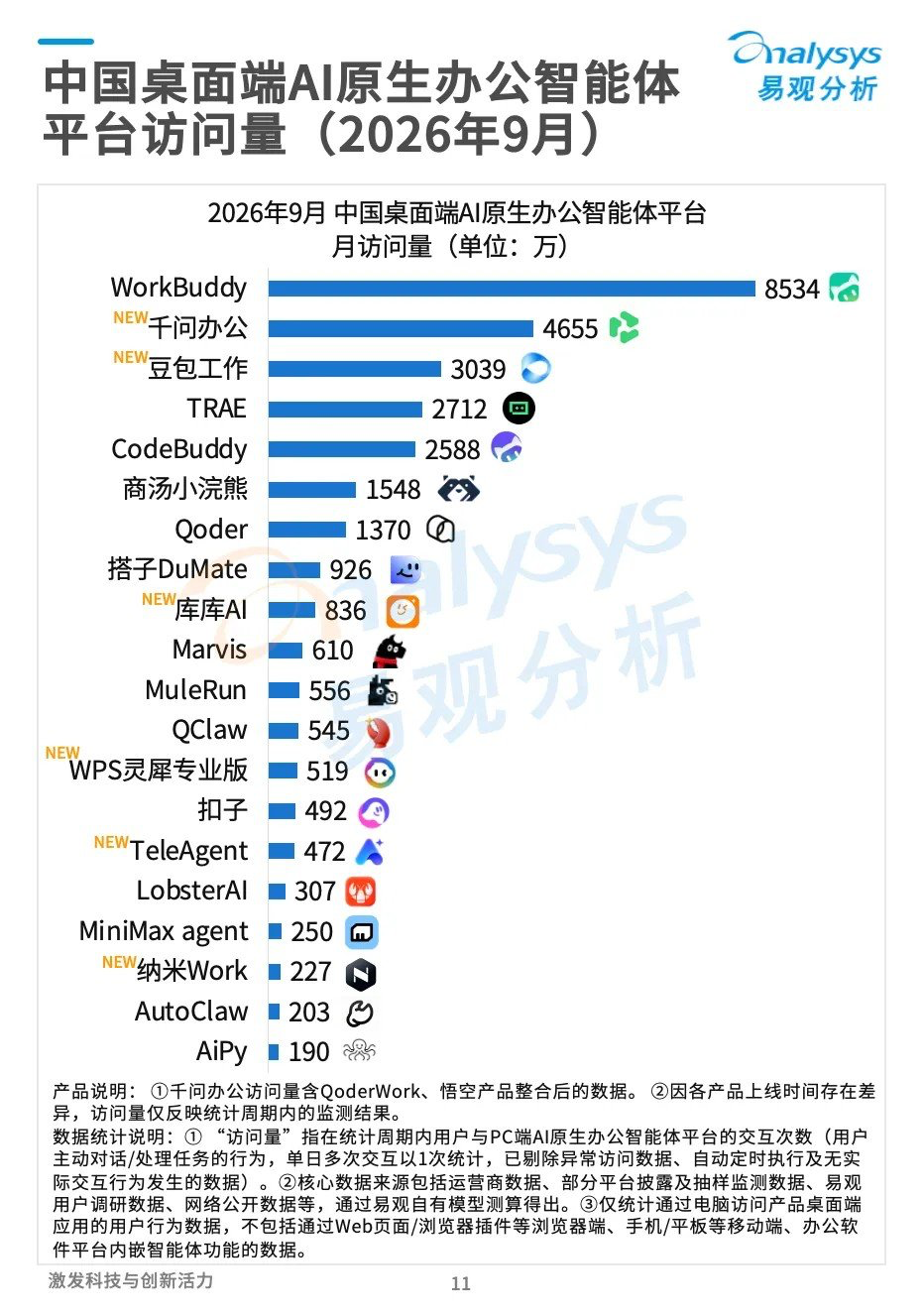
NamiWork is not just competing against a handful of internet giants. SenseTime's Xiaohuixiong received 15.48 million visits, Baidu's DuMate reached 9.26 million, and Baidu's Kuku AI, launched as a standalone office tool in August, already had 8.36 million visits in September, nearly 3.7 times that of NamiWork. MuleRun, incubated within Alibaba Cloud, had 5.56 million visits.
Further down the list, there are even products that do not rely on mass-market traffic. China Telecom's TeleAgent, launched in July, had 4.72 million visits, and NetEase Youdao's LobsterAI had 3.07 million. Only at 18th place did NamiWork appear.
360's existing PC user base did not translate into a corresponding advantage in these traffic rankings. Users of 360 Security Guard and 360 Safe Browser primarily use these products for computer security, system tools, and internet access. Installing 360 does not mean users will use it daily for meetings, file management, or work group messages.
Tencent has WeChat Work, Tencent Docs, and Meetings; Alibaba has DingTalk; ByteDance has Feishu. These tools are already deeply integrated into employees' daily work routines. The files, group chats, meeting records, and enterprise knowledge users need are already stored in these products. For them, adding an office Agent is a natural extension of existing work relationships.
NamiWork, on the other hand, needs to persuade users to migrate work originally done in other software into the 360 ecosystem.
On September 2, 360 adjusted NamiWork's pricing model, separating membership from cloud computer services. At launch, the cloud office was a key selling point: users could continue tasks with Agents even after shutting down their local computers. However, in practice, many individual users still prefer to work locally, making cloud computers more suitable for on-demand use.
With this adjustment, NamiWork needs to validate not only what Agents can do but also which capabilities users are willing to pay for continuously. For people accustomed to existing office software, an additional cloud workspace may not be as appealing as reducing software switching.
On October 15, NamiWork introduced two new features tailored to daily office needs. It launched WeChat work message integration, allowing users to forward chat messages, work files, and favorites from WeChat to an Agent on their phone or computer, which can then organize materials, create plans, or PPTs.
On the same day, 360 also introduced a built-in Office editor. Documents generated by NamiWork, such as Word, Excel, and PPT, can be directly opened and edited, eliminating the need to regenerate entire files for minor adjustments like image or data changes.
These features reduce the hassle of switching between different software, but WeChat message processing and Office editing are not unique to NamiWork. While 360 has improved the daily office experience, it still needs to persuade users to switch from their existing tools.

Zhou Hongyi admits that 360 lacks the resources and talent density to compete in foundational large models and is not an expert in this area. He believes 360 still has an opportunity to integrate agents with enterprise business and is currently investing most of his energy in AI security.
“Once you have an objective understanding, you need to find your own battlefield.”
This represents a clear strategic choice by Zhou Hongyi in the AI competition. Over the past few years, 360 has also released its own large models and AI applications. However, with NamiWork, it has chosen not to insist on developing all capabilities in-house but instead to leverage multi-model scheduling, utilizing existing models and agent technologies to complete tasks.
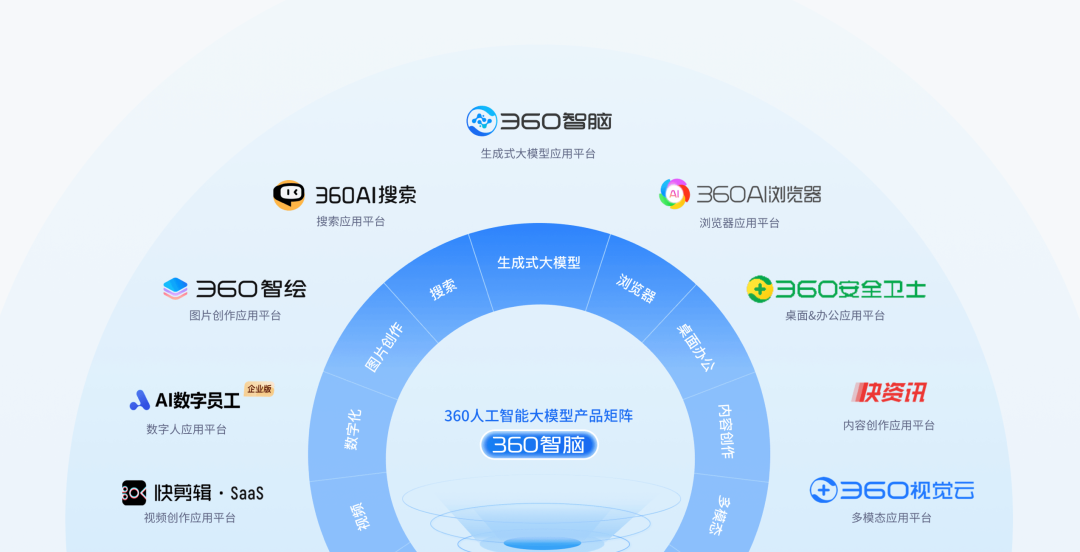
However, other Agents can also call upon these models. To differentiate itself, NamiWork must offer capabilities beyond just models.
Zhou Hongyi places his bet on security. In his view, the key difference between Agents and chatbots is that Agents not only answer questions but also operate computers, call programs, and modify files. Mistakes could impact actual business operations.
During internal testing of Agents at 360, security issues also arose. Zhou Hongyi revealed that the team initially tried the OpenClaw architecture but discovered risks related to permissions and execution during internal use. They later switched to architectures inspired by products like Codex and Claude Code.
NamiWork has designed a controlled execution environment for this purpose. Permissions restrict which files Agents can access, which tools they can use, and which operations they can perform. 360 also attempts to monitor the execution process through security Agents, issuing alerts or halting tasks when abnormalities occur.
However, the technical advantages must be evaluated within specific procurement scenarios. For a bank allowing an Agent to access internal data and process business workflows, permission control, operation auditing, and data isolation may be mandatory requirements before purchase. Similar needs exist in government, energy, and large manufacturing enterprises.
The situation differs for a breakfast shop. The owner using AI to analyze revenue, create marketing content, and organize customer reviews will first care about whether tasks can be completed and the monthly cost. For individual users writing code or creating PPTs daily, execution speed, generation quality, and usability habits are equally important. Security may not be the primary reason for them to switch software.
In fact, even 360 itself has not fully achieved enterprise AI adoption. Zhou Hongyi mentioned in interviews that while 360 has conducted extensive Agent testing, with employees using AI for coding and document processing, individual efficiency has improved significantly, but overall company efficiency has not seen a corresponding boost.
Zhou Hongyi once envisioned Agents automatically collecting information from various departments, eliminating the need for employees to write weekly reports with AI and managers to read them with AI. Further exploration revealed that enabling Agents to directly access this work information would require modifying existing systems and data. When 360 piloted AI development within some R&D teams, they found that widespread AI use does not mean AI can independently complete tasks; job roles, workflows, and even organizational structures needed adjustment. He did not roll it out company-wide but proceeded week by week.
In July, Zhou Hongyi transformed 360's accumulated Agent capabilities into an enterprise work platform. Less than three months later, he admitted that 360 itself has not yet completed the transition from individual efficiency gains to enterprise business automation. While security can constrain how Agents operate, it cannot decide for enterprises which tasks should be handed over to AI or how existing systems should be modified. The issues Zhou Hongyi hopes NamiWork will address are still being explored by 360 itself.

The competition in the general office market continues, and 360 has chosen to go offline, pursuing a business model less typical of internet software.
On September 17, at Beijing's 798 Art Zone, Zhou Hongyi announced the launch of NamiWork's “Dual-City Thousand-Store Onboarding Plan,” aiming to introduce AI into the daily operations of thousands of businesses, starting with physical stores in Beijing and Shanghai.
This plan not only provides software to merchants but also sends engineers to stores. Before the project launched, FDE engineers visited some merchants in the 798 Art Zone to understand their operations, streamline business processes, and determine which tasks could be handed over to AI. 360 calls this approach “deep dive in a few, scalable support for many.” On October 19, NamiWork appeared at the Shanghai Lujiazui International Coffee Culture Season, demonstrating store operation scenarios like customer flow analysis and revenue estimation.
Compared to general office products, this approach requires more manpower.

A coffee shop, restaurant, or retail store typically lacks a dedicated IT team. The owner may want AI to help analyze operations and create marketing content but may not know how to integrate existing business systems. For example, a restaurant's sales data might be in the cash register system, procurement records in spreadsheets, employee schedules managed via WeChat, and customer reviews scattered across several online platforms.
If the owner only wants AI to create posters, the task is relatively simple. But if they want daily automated operation reports, someone must determine data sources, statistical rules, and update methods. For an Agent to remind about procurement, raw material inventory, reorder cycles, and which purchases require owner approval must be clarified.
Someone needs to sort this out for merchants first. FDEs must not only understand the client's business and break down needs into tasks AI can execute but sometimes also develop tools, connect systems, and train clients on usage.
Zhou Hongyi hopes to train FDEs from 360's existing network of security professionals. These individuals previously helped enterprises identify security vulnerabilities but now need to learn how to configure intelligent agents, connect business systems, and even develop new tools for clients.
On October 23, 360 Digital Security Group launched a three-day specialized training program covering API development, workflow orchestration, and enterprise knowledge base construction. However, in introducing this training, 360 also mentioned that an FDE capable of independently handling project delivery typically requires two to three years of practical project experience.
Three days of training can familiarize engineers with tools but cannot replace two to three years of project experience. At client sites, engineers still need to understand the business. For example, cash register and membership systems may differ among restaurants; switching from a coffee shop to an auto repair shop requires reworking many tasks.
360 hopes to reduce repetitive work with industry templates. Engineers first make systems work in a few stores, then organize reusable parts into templates. For similar clients in the future, there is no need to redesign from scratch each time.
However, the extent to which templates can save engineers' work determines whether this business can scale. Standardized software allows clients to register, subscribe, and use it independently without requiring on-site visits for every sale. FDEs, however, may need to communicate needs, connect systems, and handle training and maintenance for each enterprise individually. If deploying at the first store takes several days, and the hundredth store still takes just as long, then as customers increase, so does the engineers' workload.
The implementation of FDE (Full-Disk Encryption) is not exclusive to 360. On September 10, Kimi unveiled its strategy to establish an FDE team in collaboration with IT service providers and system integrators. Its initial partners encompass ChinaSoft International, Kingsoft Cloud, and Teamsun. Kimi aims to utilize the capabilities of large integrators to penetrate the enterprise market. Meanwhile, 360, in addition to expanding its enterprise service network, is also directing its attention towards small and micro businesses that lack dedicated IT staff.
These small establishments often lack in-house IT expertise and may heavily rely on on-site visits from engineers. However, they might be hesitant to incur substantial costs for bespoke solutions. Therefore, 360 must devise a service model that is cost-effective for customers and eliminates the need for engineers to repeatedly build solutions from the ground up.
Zhou Hongyi has ventured into a market where success cannot be solely achieved through traffic. This approach may be more conducive to leveraging 360's accumulated capabilities, but it also demands greater patience. Negotiations with customers must be conducted individually, and business operations must be meticulously organized. The mere fact that software can perform more tasks does not necessarily translate to reduced workload for engineers.

On July 28, Zhou Hongyi invited the owner of a breakfast shop to a launch event in Beijing, showcasing how AI could assist in marketing, design, and contract management. Less than two months later, 360's engineers commenced visits to physical stores in Beijing's 798 art district. They inquired about the business operations and data storage practices of store owners before identifying tasks that could be delegated to an Agent.
From the demonstration at the launch event to the subsequent store visits by engineers, the challenges facing 360 have become more clearly defined. Generating a business report using AI is not difficult; the real challenge lies in ensuring that the AI can access the correct data daily and execute tasks in accordance with the merchant's specific business rules. To achieve this, engineers may need to make multiple visits to integrate systems, refine processes, and educate store owners on usage.
360 aspires to gradually transform these tasks into standardized templates, eliminating the need for each subsequent store to start from scratch. However, small and micro merchants present a paradoxical customer base: they lack technical expertise and require assistance in harnessing AI, yet they may not possess the financial resources to afford ongoing manual services.
Large corporations excel in the realm of traffic acquisition. While Zhou Hongyi's willingness to eschew direct competition is commendable, it also implies that Nami Work has relinquished the most lucrative market segment.
*The featured image and illustrations in this article are sourced from the internet.
-
![]()
Has DeepSeek Truly Topped the Global Charts? Let’s Hold the Applause for Now
-
![]()
Why Is It Harder for Suppliers to Stand Out in the Crowded Intelligent Driving Market?
-
The Golden September and Silver October Are Not Over: China's Auto Market Finds New Pathways to Growth
-
![]()
Wow! OpenAI Makes Significant Investment in Lab to Combat Emerging Viruses Using AI
-
![]()
NamiWork Steers Clear of Direct Clash with Tech Titans, Targets Challenging AI Market
-
![]()
SAIC Audi: The Sole Beacon of AUDI!
-
![]()
2026 Imaging Flagship Face-Off: Xiaomi, OPPO, Vivo Excel, Apple Lags Behind
-
ByteDance Incorporates CapCut International Edition into ChatGPT