Why Is Anthropic Worth $1.5 Trillion?
 11/19 2026
 428
This is the 174th original article from Thinking AI Society.
The full text runs about 940 words and takes roughly 3 minutes to read.
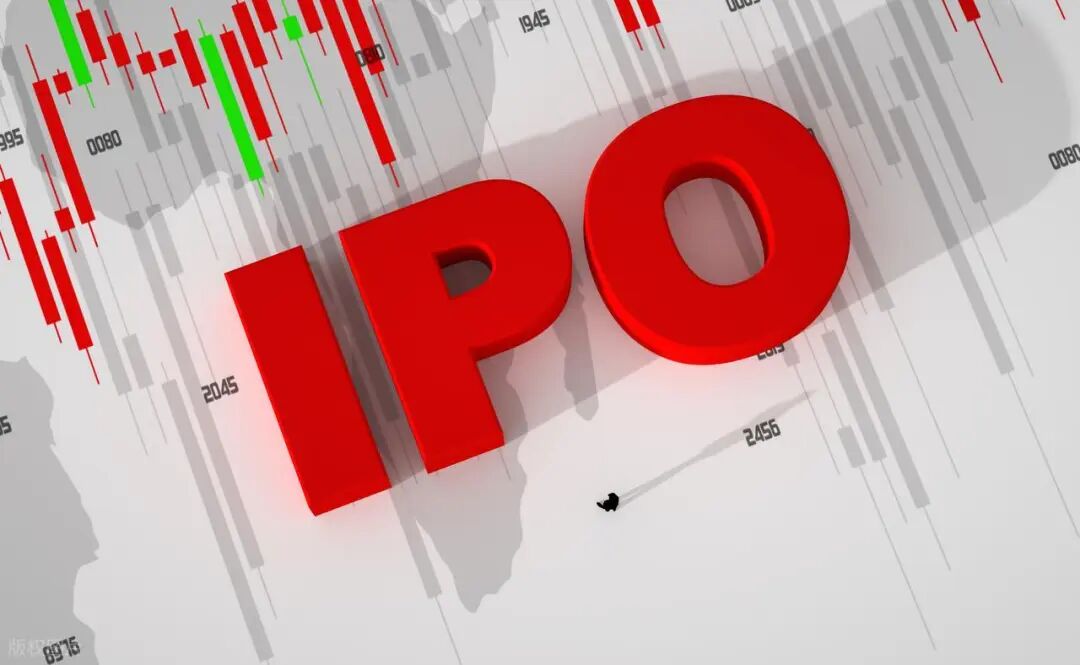
Anthropic has set its IPO price at $83 per share, above the earlier range of $70 to $78, implying a valuation of approximately $1.5 trillion.
The company plans to offer 825 million shares to the public, with a base offering size of about $68.5 billion; if the underwriters fully exercise the over-allotment option, the deal will raise about $81.3 billion, which is expected to surpass the record previously set by SpaceX.
At the same time, seven technology companies will invest a further $26 billion through private placements.
Even more striking are the operating figures. Anthropic generated $33.2 billion in revenue in the first nine months of 2026, compared with just $2.5 billion in the same period last year, while its operating loss narrowed from $5.2 billion to $1.3 billion.
Yet the company has already signed roughly $900.9 billion in computing power and infrastructure procurement commitments, of which $70.7 billion will come due within the next 12 months.
Why It Became the Largest IPO
What the market is buying first and foremost is growth speed. Claude only began commercialization in 2023, yet its single-quarter revenue in the third quarter of 2026 had already reached $17 billion. Revenue over the past 12 months grew about 12-fold year on year, while headcount grew about 170%.
The second reason is scarcity. There are plenty of large-model companies, but very few pure AI targets that ordinary investors can buy directly. Anthropic both develops models and sells APIs and enterprise applications, and its path to customer payment is clearer than the "burn money first, then find a business model" approach.
But it is indeed short of money. Model training, inference services, and data centers all require long-term investment.
The $900.9 billion in procurement commitments disclosed in the prospectus almost already answers why it needs to raise so much money at once. Behind the sky-high valuation lie both revenue growth and computing power bills.
Who Is Subscribing?
In addition to the public offering, Anthropic has locked in seven industrial investors: Google and Nvidia are each subscribing $10 billion, AMD $2.5 billion, Broadcom, Micron, and Microsoft $1 billion each, and TSMC Partners $500 million, for a total of $26 billion.
This list is very telling. Most of the subscribers are also Anthropic's chip, cloud computing, or infrastructure partners.
They are betting on Claude's growth and may also profit from Anthropic's future procurement. Directors and related entities have also expressed subscription interest of up to $303 million, though this part is not a binding commitment.
Where the Money Will Go
The prospectus does not give fixed proportions, only listing several categories of use: supplementing working capital and paying operating expenses and capital expenditures, with key investment in computing power and infrastructure; recruiting and retaining research and engineering talent; acquiring or investing in other companies, products, and technologies when necessary; and paying withholding taxes arising from the settlement of certain restricted stock.
The real bulk is likely still computing power. Anthropic simultaneously uses AWS Trainium, Google TPU, and Nvidia and AMD chips, and is also building its own computing power system, Anthropic Direct.
In the coming years, it will not only need to honor procurement commitments already signed, but also to keep model iteration speed from being constrained by computing power supply.
Anthropic's listing this time is more like stockpiling ammunition in advance. The $33.2 billion in revenue shows that Claude has already become a business, while the $900.9 billion in procurement commitments shows just how cash-burning that business is.
A $1.5 trillion valuation is not cheap. What investors are really betting on is whether Claude's revenue growth rate can ultimately outpace the growth of computing power costs.
This article is compiled from public information and represents only personal views.
If interested, you can click the business card to follow.
-
![]()
Between Jing and Jie: Has AITO Landed in an "Intermediate State"?
-
![]()
Apple's 18 New Products: All-Star Lineup for Next Year, With First AI Glasses Finally Making Their Debut
-
![]()
MIIT Approves 6G Ministry-Province Collaborative Pilot in 8 Provinces and Municipalities: A Comparative Analysis of Regional Industrial Advantages
-
Anthropic Goes Public, but Its Values May Determine How Far It Can Go
-
Lei Jun Truly Shows Sincerity: The Overseas Version of the Xiaomi 18 Pro Has Reduced Specs and Costs Nearly 5,000 Yuan More!
-
Memory Prices Are Skyrocketing: Q3 Sees Phone, PC, and Tablet Sales All in Freefall
-
![]()
Why Is Anthropic Worth $1.5 Trillion?
-
These AI Leaders All Studied Physics