Between Jing and Jie: Has AITO Landed in an "Intermediate State"?
 11/19 2026
 327
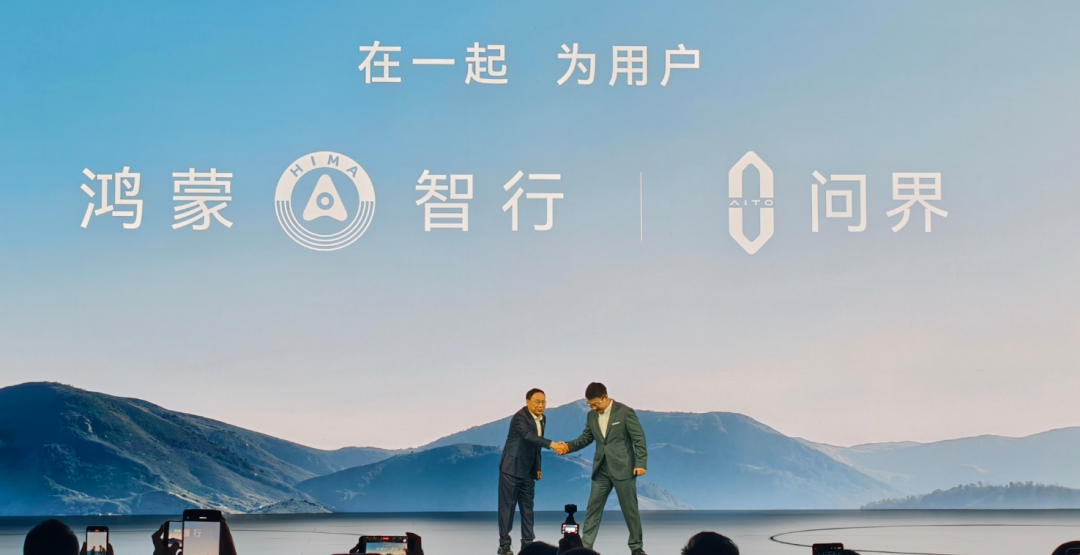
On November 13, at the launch event for the new AITO M8 held at the Seres Super Factory in Chongqing, Huawei Terminal BG Chairman Richard Yu shook hands with Seres Group Chairman Zhang Xinghai—and behind them, AITO reclaimed the top spot in the "Five Jie" rankings. The adjustment that was interpreted two months ago as a "split" has now revealed its true face: Seres has obtained operating rights, while Huawei still holds definition rights.

Not a "split" but a "division of labor"
On September 15, HarmonyOS Intelligent Mobility and AITO announced on the same day that AITO's product definition, product design, brand marketing, channel retail, and service system would be led by Seres, with Huawei Terminal participating in an empowerment role. The capital market reacted immediately: Seres' A-shares closed down 5.09% that day.
On September 30, Huawei and Seres signed a cooperation agreement in Shenzhen covering a new five-year period. The two sides will jointly form a dedicated team for the AITO business and continue to advance it through "dedicated and exclusive operation."
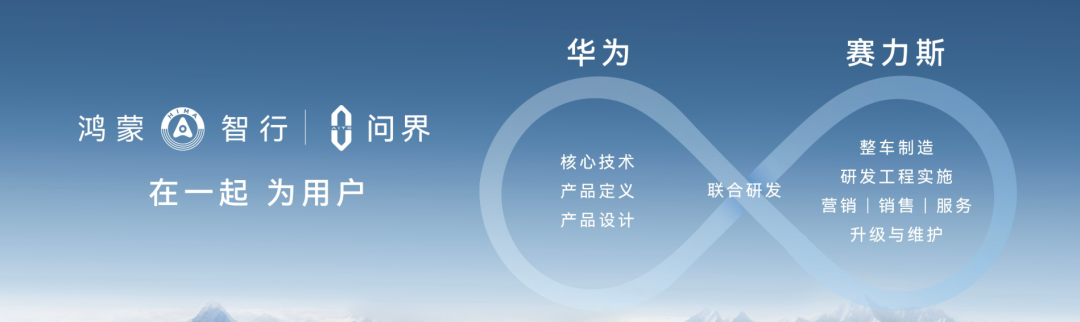
At the new M8 launch event on November 13, Richard Yu laid out the latest division of responsibilities between the two sides: "joint research and development, joint design." Huawei continues to lead core technology, product definition, product design, and quality processes; Seres leads vehicle manufacturing, R&D and engineering implementation, marketing, sales, and service. He also made a point of stating that "the work led by Huawei is fully participated in by Seres, and the work led by Seres is also fully participated in by Huawei."
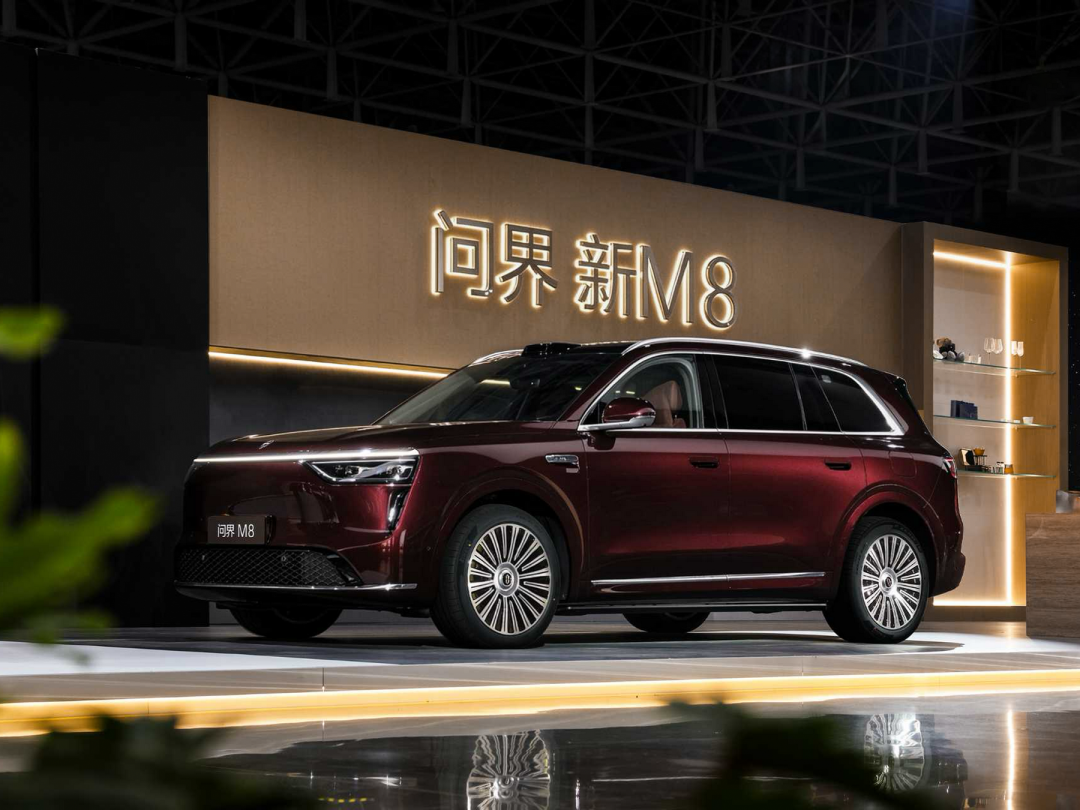
The repeated adjustments to the boundaries of cooperation between the two sides are direct feedback after market testing. After September, orders for both AITO and HarmonyOS Intelligent Mobility declined significantly. Channels need stability, users need reassurance, and Seres needs time to build its network; revising the wording was a joint stop-the-bleeding move by both sides.
Three ceremonial details confirm the sense of proportion: the launch event was held for the first time at the Seres Super Factory; product presentation was for the first time handed to Huawei Terminal BG CEO He Gang, with Richard Yu speaking only on strategy; and AITO returned to the top of the "Five Jie" rankings. Venue, personnel, and order are all visualizations of power relations.
So for AITO, there is indeed no "split." The procurement volume from Yinwang has not changed, the HarmonyOS Intelligent Mobility framework has not changed, and Huawei's leadership over definition and quality processes has not changed. What has changed is only the entity responsible for sales and service.
Why release only AITO?
In the past, AITO was able to achieve volume with an average transaction price close to 400,000 yuan because it relied on the trust endorsement of Huawei stores and scarce technology labels. When both are being diluted, channel efficiency and brand management capabilities must step in—so Seres urgently hoped to adjust the Huawei model. Huawei drew a clear boundary for this adjustment: it targets only AITO. The reason is not hard to understand.
First, AITO is currently the only one among the five Jie of HarmonyOS Intelligent Mobility that has "run through." In 2025, HarmonyOS Intelligent Mobility delivered 589,100 vehicles, of which AITO accounted for 422,900, or 71.79%; in the first 10 months of 2026, AITO still accounted for about two-thirds of HarmonyOS Intelligent Mobility. It has a million-level user base, more than 400 user centers, and coverage of more than 200 cities, making it the only brand among the five Jie with independent channel capacity.
Second, equity provides insurance against a "supply cutoff." Seres is a 10% shareholder of Yinwang, tied with Avatr, having invested 11.5 billion yuan in 2024. The biggest fear in delegating power is a technology supply cutoff, and equity turns this issue from "trust" into "institution."
Third, the other four Jie are still at the stage of being "helped onto the horse." Loosen one first and concentrate resources on the other four. After AITO's switch, Huawei will "concentrate core resources and deepen Maextro, Stelato, Luxeed, and Shangjie with the full-process Smart Selection model," and 2027 will be a major year for HarmonyOS-series products.
Fourth, but "releasing only AITO" also has a cost. It provides the four Jie automakers with a negotiating template for "independence": Chery has already made Luxeed an independent legal entity with independent qualifications and independent channels; SAIC has invested a 5,000-person team and 6 billion yuan in initial funding for Shangjie; BAIC has cumulatively invested more than 20 billion yuan in Stelato; and JAC has built a super factory with planned annual capacity of 200,000 vehicles for Maextro.
When these investments settle into system capabilities, "when can we also operate it ourselves" will become the starting point for the next round of negotiations. As industry analysts put it: the control Huawei has gained in exchange for "full-process leadership" is being diluted bit by bit by the precedent of AITO.
AITO's three hurdles
Although Seres has gained marketing leadership under the new cooperation model, the challenges it faces are still considerable.
The first is channels. AITO's offline sales stores are understood to have decreased noticeably. A salesperson at a Huawei terminal store said: "We are no longer responsible for AITO sales, nor can we accept AITO orders." A staff member at an AITO user center said that the new M8 has arrived at stores, and subsequent new user centers will be advanced more by Seres and the dealer system.
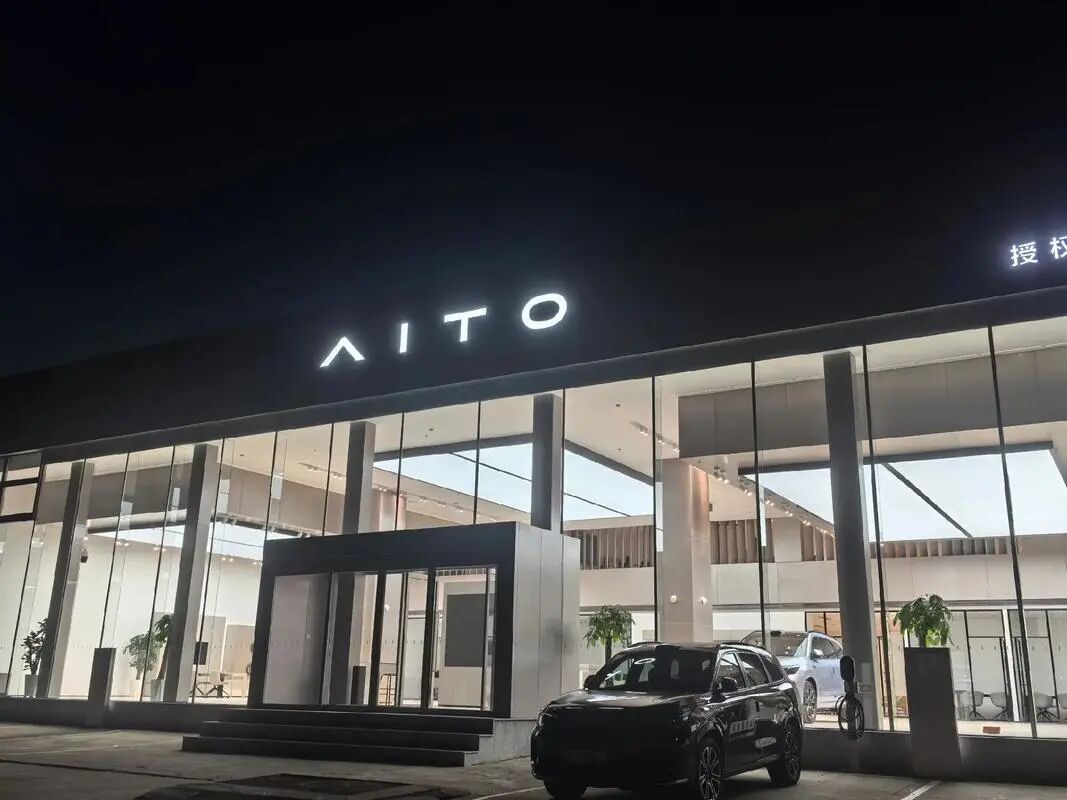
According to a person close to HarmonyOS Intelligent Mobility, starting January 1, 2027, Huawei specialty stores will be divided into two categories: "exclusively selling AITO" and "selling the other four Jie." Which stores continue to participate in AITO pre-sales depends on channel transfer and dealer choice. Only six weeks remain until January 1, 2027. Seres must complete channel classification, dealer signing, and store renovation within these six weeks, while truly turning more than 400 user centers into a network capable of retail customer acquisition. It needs to race against time.
The second is brand. Richard Yu's IP cannot be replicated. Over the past five years, a large part of AITO's brand equity has been parasitic on two things: Richard Yu's IP and the trust endorsement of Huawei stores. The former brought traffic and buzz, and the latter brought store visits and transactions. Now the former has retreated to the "strategy" level, and the latter has contracted sharply. Many AITO owners say that when the word "Huawei" no longer appears on store signs, they will reassess this 400,000-yuan expenditure.
More importantly, there is financial pressure. In the first half of 2026, Seres' selling expense ratio rose significantly year on year. Channel construction, brand investment, and user operations are all upfront inputs, with revenue coming later. If channel transfer is completed in 2027 and per-store efficiency improves, the expense ratio will fall; if sales fall short of expectations, it will be a double blow to both investment and revenue.
The new M8 is the first stress test of this model. By industry convention, a steady-state monthly sales volume of 8,000–10,000 vehicles is the passing line for this new model; if it remains below 5,000 vehicles for a long time, the rationality of "Seres operating it" will be re-examined.
The "intermediate state" between Jing and Jie
AITO's current arrangement—"Seres leading operations, Huawei leading definition"—opens up, within the framework of "Jie," an intermediate state between the traditional Smart Selection vehicle and the "Jing" model: it is closer to the operational independence of "Jing" than the four Jie, but still retains the depth of technical definition of "Jie" and its belonging to the HarmonyOS Intelligent Mobility ecosystem.
The signal Huawei conveys to all partners through this arrangement is clear: the threshold of "Jie" is not permanently bound operating rights, but the technology base and product definition capability. For the four Jie still under Huawei's full-process leadership, AITO's present offers a long-term possibility and also draws an implicit assessment line: the maturity of operating capability will determine the pace and extent of Huawei's "letting go."
In the longer run, the parallel operation of the AITO model and the "Jing" series means Huawei is in fact testing two sets of power-allocation logic. The two routes are not simply "who replaces whom," but each seeks a sustainable balance point at different depths of cooperation. Under AITO's new model, the quality of Seres' operations will become a key reference for judging how far the boundary of "Jie" power delegation can go; and the pace of the "Jing" series will in turn affect the four Jie's expectations of Huawei's resource commitments.
Zhang Xinghai said at the launch event: "If HarmonyOS Intelligent Mobility is strong, then AITO is strong; if AITO is strong, then HarmonyOS Intelligent Mobility is even stronger." That statement now looks more like a bet: AITO must prove it can sell 400,000-yuan cars well without Huawei stores, and Huawei must prove it can sustain HarmonyOS Intelligent Mobility without AITO.
-
![]()
Between Jing and Jie: Has AITO Landed in an "Intermediate State"?
-
![]()
Apple's 18 New Products: All-Star Lineup for Next Year, With First AI Glasses Finally Making Their Debut
-
![]()
MIIT Approves 6G Ministry-Province Collaborative Pilot in 8 Provinces and Municipalities: A Comparative Analysis of Regional Industrial Advantages
-
Anthropic Goes Public, but Its Values May Determine How Far It Can Go
-
Lei Jun Truly Shows Sincerity: The Overseas Version of the Xiaomi 18 Pro Has Reduced Specs and Costs Nearly 5,000 Yuan More!
-
Memory Prices Are Skyrocketing: Q3 Sees Phone, PC, and Tablet Sales All in Freefall
-
![]()
Why Is Anthropic Worth $1.5 Trillion?
-
These AI Leaders All Studied Physics