"It's a Bit Late Now," Ma Huateng Said Point-Blank: Tencent Has Reached a Life-or-Death Moment
 11/23 2026
 348
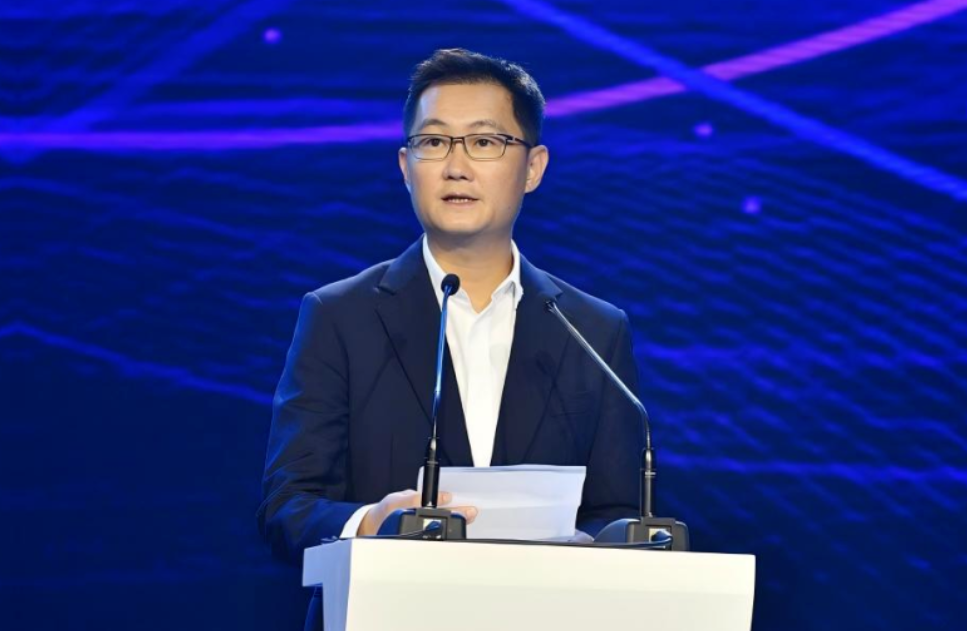
At Tencent's 28th-anniversary LinkTime all-hands meeting this Double 11, something felt off the moment Ma Huateng opened his mouth.
"At today's LinkTime, I want to be more stern than usual and get the unpleasant things out of the way first."
No pleasantries. No fond recollections of past glories. He came out swinging: this is no longer about structural cost-cutting—it's a life-or-death transformation, a question of whether we can adapt to new ways of fighting on new battlefields. The goal isn't to cut costs; it's to adapt to the new battlefield. Both the people and the organization must undergo major adjustments.
The tide in the distance has already swallowed hill after hill. You can't just sit there enjoying the view. You have to get anxious, get on your feet, find high ground, move the supplies, board the ship—and shift from land warfare to sea warfare.
Then came his harshest line: frankly speaking, it's a bit late now. You can no longer afford to feel safe at a leisurely pace.
The bar for people has changed too. Those who choose to adapt to new ways of fighting must be decisive. It's no longer like the old days, when you had to coax people, persuade them, negotiate terms, or first dangle a management title before anyone was willing to board the ship.
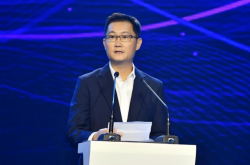
His plan: use half the workforce to hold the line and let the other half fight new campaigns. Half are like an army defending territory, using AI to boost efficiency; the other half are like a navy exploring AI-native territory.
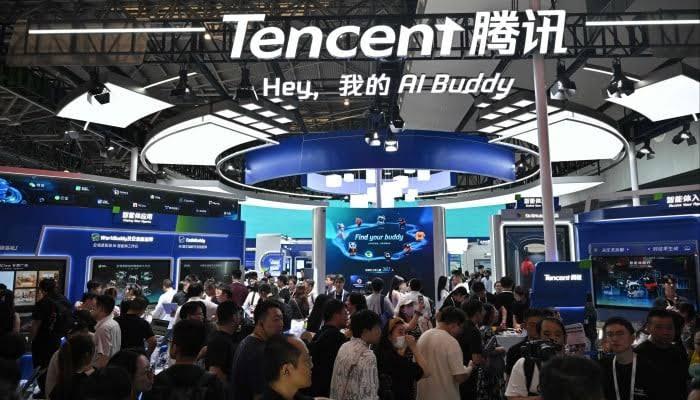
Image source: Internet
After the meeting, this was misreported as "laying off half the staff." Tencent has flatly denied it: "Half defending and half attacking is a metaphor, not a layoff ratio." The misreading needed clarifying, but the directional signal hasn't changed.
Why did Ma Huateng say "Tencent is late"? Because competitors are "coming on strong." The controversial "ByteDance Time" narrative from earlier has become more of a talking point than anything else, but ByteDance as a formidable competitor is beyond doubt.
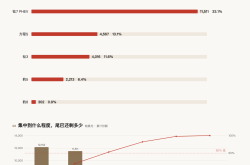
By QuestMobile's "China Mobile Internet Top 50 Apps by Usage Time" measure, the Tencent and ByteDance ecosystems have already flipped, and the gap is widening in 2026. The latest August data shows ByteDance at 41.8% versus Tencent at 28.6%. But measured by "user scale/coverage," there has been no reversal. After deduplicating users across the network, ByteDance has only 1.259 billion, while Tencent is still slightly ahead at 1.28 billion.
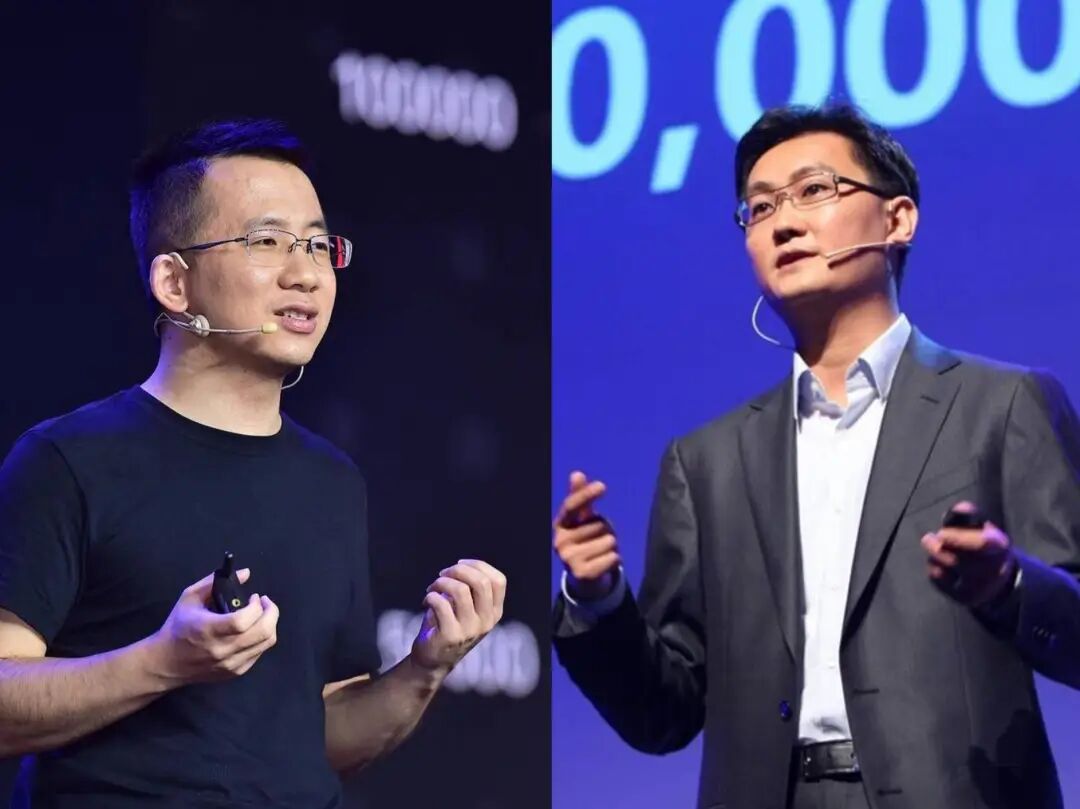
Image source: Internet
Objectively speaking, time share is not market share. The user substitution relationships among short videos, graphics and text, instant messaging, and e-commerce are completely different. These numbers illustrate the trend of attention migration, but they cannot show that Tencent has already lost its position as an entry point. Still, if Tencent no longer has a sense of urgency, being comprehensively surpassed is not out of the question.
A week later, on November 18, the Q3 report came out, and Liu Chiping picked up the thread: to achieve AI efficiency gains, the organization needs a fairly substantial restructuring and work processes need to be redesigned; if existing businesses can be run with fewer people, staff can be redeployed to new growth drivers and new businesses.
From "the ship is leaking" to "it's all a bit late," Ma Huateng's sense of crisis has been escalating all along.
Then the Q3 report arrived.
In Q3 2026, Tencent spent 65.1 billion yuan on computing power, up 226% year-on-year. In the same financial report, non-IFRS operating profit was 68.1 billion yuan, down 6.2% year-on-year. One foot on the accelerator, the other on the brake. At first glance, you might wonder whether something has gone wrong at Tencent.
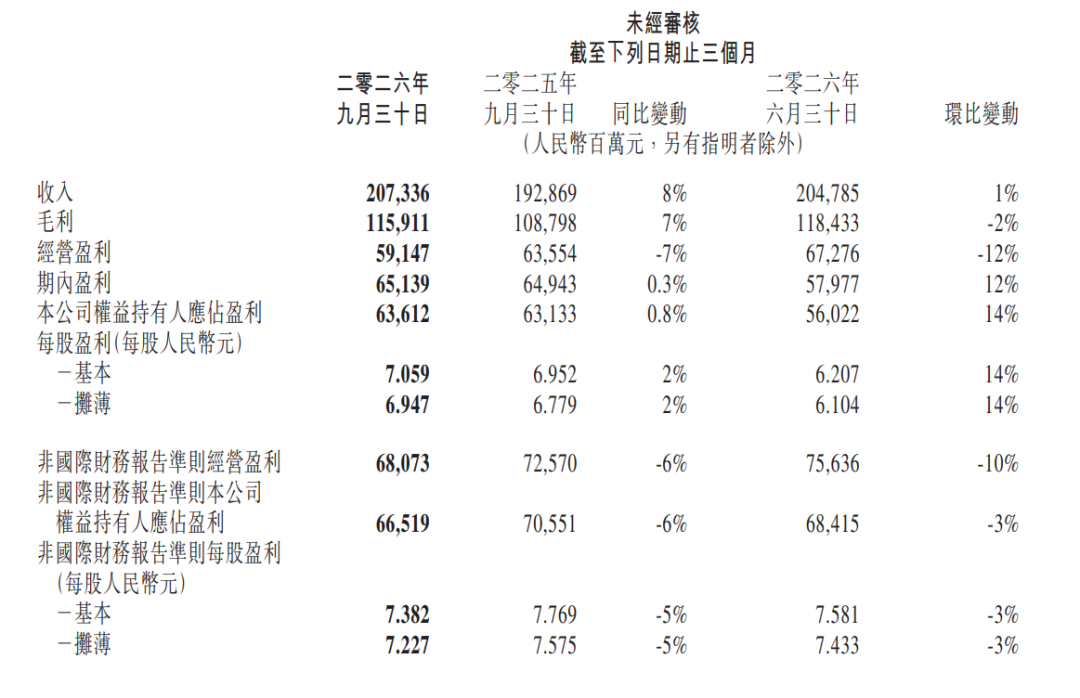
Image source: Internet
Hold on—look at the second number. There's a line buried in the financial report: excluding the impact of new AI products, operating profit was 83.3 billion yuan, up 8% year-on-year.
The difference between 83.3 and 68.1 is 15.2 billion yuan. That 15.2 billion is the profit AI consumed in a single quarter. This isn't business shrinkage; it's active spending. Put plainly, the core business hasn't fallen—Tencent chose to pay an "entry fee" first.
The "rent" Tencent paid is computing power. About 86 billion yuan in prepayments for computing power procurement pushed the investment pressure of the next few years entirely onto this quarter's books. So Tencent's free cash flow went negative. But excluding the 86 billion, free cash flow was 16.9 billion—positive.
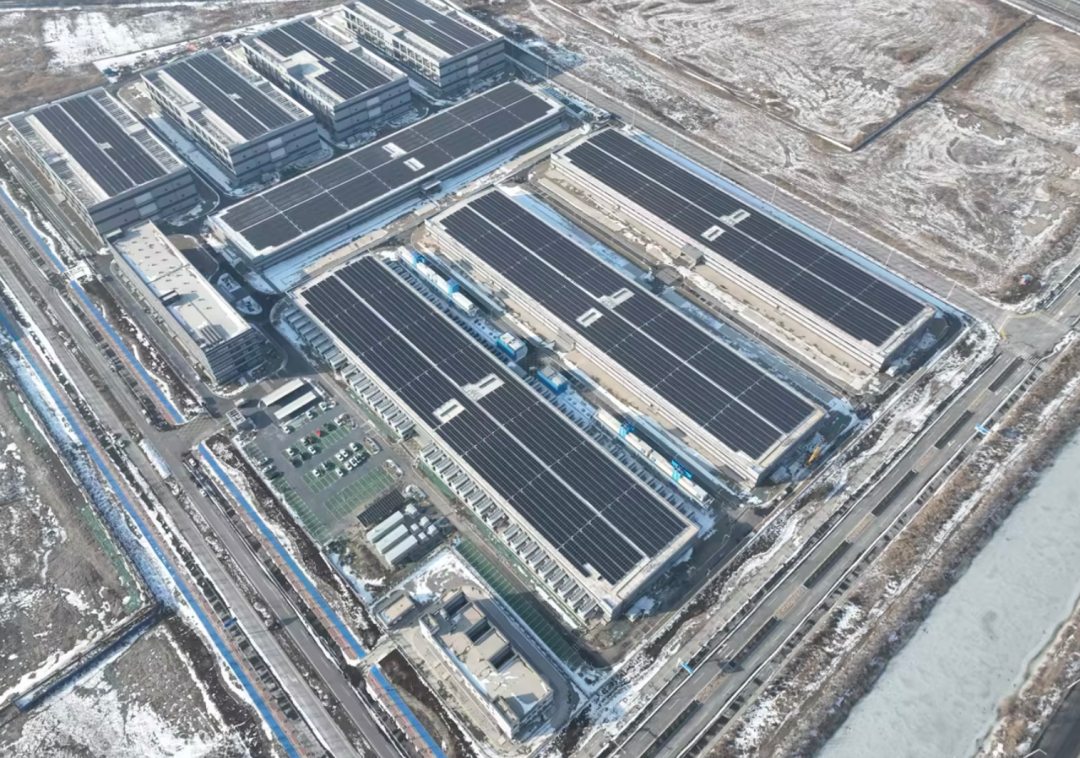
Tencent Tianjin High-Tech Cloud Data Center. Image source: Tencent official website
This isn't operational blood loss; it's using the balance sheet to buy a time window. Using today's cash to buy tomorrow's computing power, betting on the day after tomorrow's entry point.
One financial report, two ways to read it. Those staring at the income statement see "below expectations"; those staring at strategy see "actively shifting gears." The author's judgment is direct: it's not that performance has gone wrong—it's that accounting standards can't keep up with the speed of strategic transformation.
Why Tencent Must "Operate" Now
The profit decline is only a surface wound. What truly keeps Tencent from sitting still are three deeper issues.
First hurdle: the old engine can't support new investment.
Domestic games were up about 10% year-on-year; overseas, down about 3%. One climbing, one sliding—combined, incremental growth is limited. There are 113 reserved mobile games, 59% of which have obtained licenses; the pipeline isn't thin. But in gaming, a hit is a game of probability, not an assembly line.
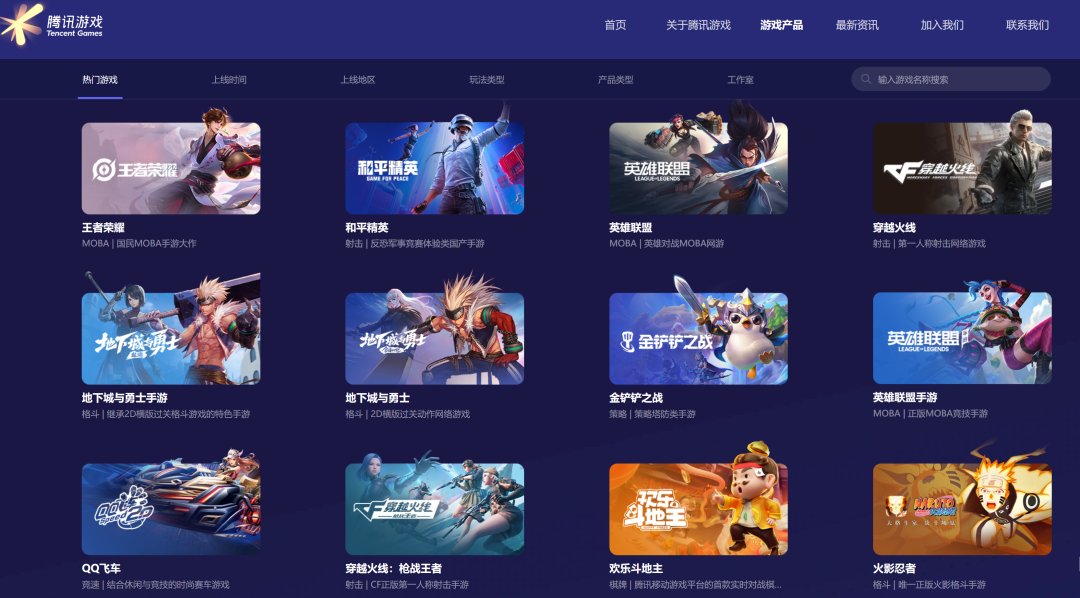
Image source: Tencent official website
On the advertising side, 19% growth looks decent but has also reached a critical point. The ad load rate for Video Accounts can't be pushed up indefinitely; once it piles up to the point of annoying users, that's the ceiling. The blood that games and advertising can supply isn't enough to support a 15.2 billion yuan AI loss in a single quarter.
Second hurdle: the right to define the entry point is being challenged.
This is the most critical—and also the easiest to underestimate.
For the past twenty years, Tencent's moat has been "open the app." If you want to chat, pay, or watch content, your first reaction is to open WeChat. 1.3 billion monthly active users means 1.3 billion "opens."
But AI Agents are rewriting this behavior. Users no longer open a specific app; instead, they say to a dialog box, "Book me tickets, arrange a meeting with someone, and write a weekly report," and the Agent gets it done in the background.
At this point, WeChat may gradually degrade from a traffic pool into a scenario library. A traffic pool is active: users come to you. A scenario library is passive: others come to you to retrieve things. A one-word difference, and the initiative changes hands.

Image source: Chief Business Review
If the entry point is taken away by an OS-level Agent, then no matter how big WeChat is, it will only be one option on someone else's list. Tencent must enter the field itself and build an Agent—not to add another product, but to avoid handing over the entry point.
Third hurdle: investment intensity has crossed the critical point, and Tencent needs to determine its direction.
A single-quarter AI loss of 15.2 billion yuan isn't a one-time expenditure; it's continuous. As long as the model is still iterating and computing power is still being purchased, this account will press down quarter after quarter.
If it can't be converted into billable revenue for a long time, it will continuously suppress profit margins and valuation centers. The market can tolerate you losing money for one or two quarters, but how can it tolerate you losing money for three years while still being unable to explain how you'll make money?
The critical point here means the investment has already grown so large that you can't just "give it a try." It must either become a strategic asset or a financial burden; there's no buffer zone in between.
History has actually given the answer.
In 2012's "518," Tencent changed from a business system to a business group structure—that was the juncture of the PC-to-mobile transition. In 2018's "930," CSIG and PCG were newly established, and the idea that "the second half of the internet belongs to the industrial internet" was proposed—that was the juncture when the consumer internet dividend peaked.
Image source: Internet
Both transformations occurred when the slope of the old growth curve peaked and a new, sufficiently broad main road needed to be opened.
So the essence of this transformation isn't adding a few AI departments. It's shifting from a "product company" to a trinity of "model + scenarios + computing power." Product companies rely on hits; the trinity relies on infrastructure. These are two different ways of living.
Of course, strategy can change overnight, but an organization takes one or two years to grow new muscles.
Tencent Has Four Cards in Hand: Not the Strongest, but the Hardest to Bypass
The problem is clear, and the cards are on the table. So what exactly does Tencent have in hand? Four cards, each more concrete than the last.
First card: the WeChat AI Agent.
When the latest generation of Hunyuan, Hy4, was released, it ranked first among Chinese models in Agent Arena. The gray-test scope of WeChat's AI assistant "Xiaowei" continues to expand.
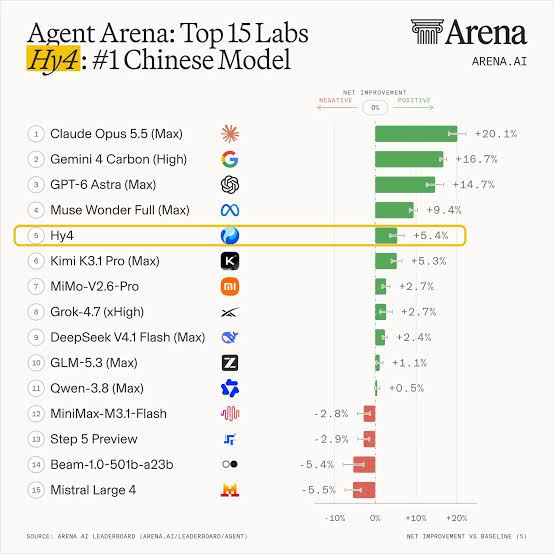
Image source: Internet
These two things should be viewed together. Model capability is the bullet, and WeChat is the barrel. 1.3 billion MAU is an Agent invocation scenario the whole world envies. Turning "open the app" into "say a sentence in WeChat" is the only lever Tencent has to hedge against ByteDance's traffic advantage.
ByteDance's advantage is content distribution and time spent. Tencent's advantage is relationship chains and necessity. In the Agent era, whoever is closer to users' daily actions wins. WeChat is the closest.
The weight of this card lies in the fact that it's the only card others cannot copy or compare with.
Second card: WorkBuddy's B-end depth.
Daily active users exceed 10 million, average daily Token consumption exceeds 100 trillion—the AI product with the highest average daily large-model Token consumption in China. The enterprise edition launched in June, and in September it advanced the open platform, connecting Tencent Meeting and Docs.
What do these numbers show? They show it's not a toy, but a work tool that is truly being used.
Moving from a tool to an Agent OS is its ambition. The workflow entry point on the enterprise side is stickier and more valuable than the consumer side. Once a company puts its workflows on your platform, the migration cost is terrifyingly high.
Tencent has always lacked a killer entry point on the B-end. WorkBuddy may well be that answer.
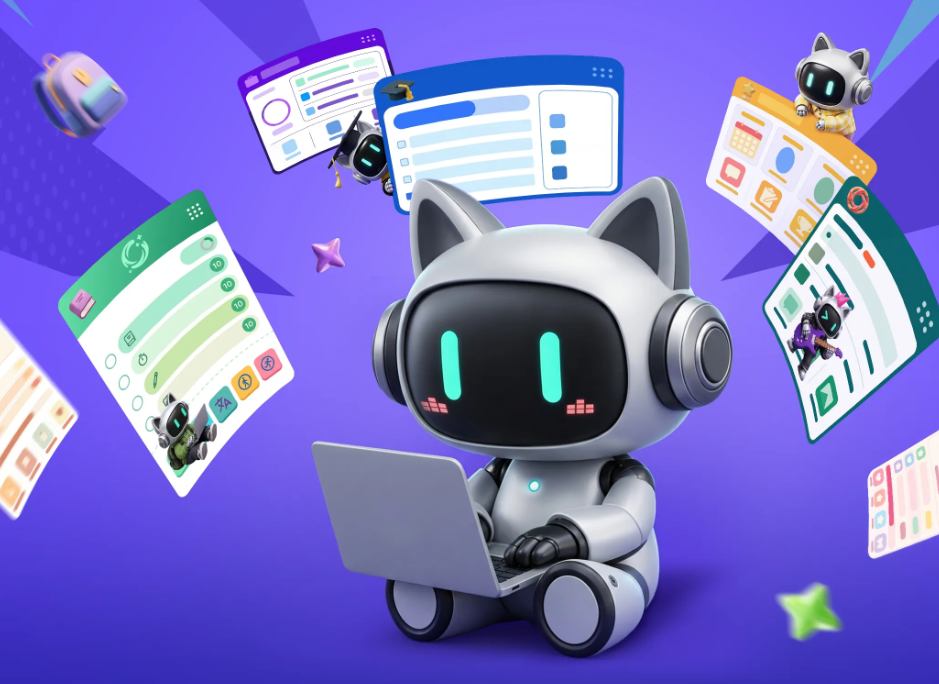
Image source: Internet
Third card: using cloud to capture AI monetization.
Cloud service revenue was up 35% year-on-year, with AI demand as the main driver.
Tencent's 65.1 billion yuan purchase of computing power can't all be used internally; it must be sold. Convert capital expenditure into externally sold computing power and API revenue, creating a closed loop between the investment side and the revenue side.
This is the biggest difference between Tencent and pure model companies. Pure model companies burn money to gain capability; Tencent burns money and can also sell cloud along the way. For the same capital expenditure, others see pure cost; Tencent sees cost plus potential revenue.
Cloud business grew 35%—a signal that the closed loop has begun to turn. It still can't cover the investment, but the direction is right.
Fourth card: executable scenarios.
Mini Programs, Official Accounts, and payments—together, these three form "executable scenarios."
What does executable mean? It means the Agent can truly get things done, not just chat for a couple of lines. If you ask the Agent to order food, pay bills, or make appointments, there must be a service network behind it that can actually deliver. OpenAI and others have the strongest models, but they don't have this network.
The last mile of the Agent must rely on scenario implementation. Tencent has built this network for twenty years; it can't be copied, nor can it be bought.
But good cards don't mean a sure win. Can computing power supply be guaranteed? Nvidia chips face the risk of a complete supply cutoff; Huawei is stepping in, and supply chain switching will be painful.
When can Agent commercialization be billed? It's still in the investment period, and the revenue standard is vague. Can games and advertising continue to supply blood? Value-added services at +3% already show that the old engine is slowing down. How great is the execution friction of organizational change? Every major change has a one- or two-year running-in period.
Image source: Internet
If any one of these four goes wrong, it will slow the pace.
What Tencent is betting on has never been the "most powerful model," but rather "the infrastructure layer that is easiest to invoke." Models may take turns dominating, but entry points and scenarios are extremely hard to dislodge.
Final Thoughts
Objectively speaking, it is unfair to judge today's Tencent by the profit levels of recent years. Going forward, capital expenditure on computing power will likely remain elevated for an extended period, profit pressure will persist for a long time, and historical profits will become less relevant as a reference point. A more prudent valuation approach is to focus on core business profitability and treat the AI business as a growth option whose returns have yet to materialize.
Ultimately, this is a race against time.
Tencent is using today's profits to buy tomorrow's entry point. Whether that trade-off pays off depends on whether it can convert "strategic loss" into "strategic asset" before the window of opportunity closes.
- END -
-
![]()
BMW i3 and Lexus TZ Step Up: Joint Venture Brands Are Not Backing Down at the Guangzhou Auto Show
-
Understand This AI Evolution Diagram and You Understand the Essence of AI: 'Intelligence Moves Up, Users Stay Down'
-
![]()
NetEase's Latest Financial Report: High Gross Margin, Low Debt
-
![]()
AI Unemployment Buffer Period
-
![]()
"It's a Bit Late Now," Ma Huateng Said Point-Blank: Tencent Has Reached a Life-or-Death Moment
-
![]()
AI Short Dramas Begin to Impact the Gaming Industry?
-
![]()
Fangchengbao's October Domestic Sales Hit 34,761 Units, Titan 7 Duo Accounts for 68%
-
![]()
GM China October Retail: How Are Buick, Cadillac, and Zhijing Performing?