AI Unemployment Buffer Period
 11/23 2026
 532
The General Office of the State Council has issued the "Opinions on Adapting to the Development of Artificial Intelligence Technology and Helping to Build an Employment-Friendly Development Model," marking the first appearance of the term "unemployment buffer period" in a national-level policy document.
The document states: "Encourage enterprises to explore the establishment of an unemployment buffer period system, and in the process of large-scale promotion and application of artificial intelligence, inform affected workers in advance and provide support for transformation, job transfer, and employment."
1. Projected Anxieties and the Real Policy Target
In this round of discussion, many people have subconsciously projected their own jobs into the equation—writers, illustrators, customer service workers, coders—all worrying that one day they will be replaced by models.
This anxiety is real. But if it is treated as the primary subject of policy concern, then the wording of the document has been misread.
A study based on approximately 1.45 million recruitment advertisements from domestically listed companies between 2016 and 2025 used an "occupational AI exposure index" to measure the degree of overlap between the capabilities required for jobs and AI capabilities.

The study found that the finance industry had the highest index, followed by education, then information transmission, software, and information technology services, while transportation, warehousing, and postal services as well as accommodation and catering had lower indices. The researchers specifically cautioned that this index reflects capability overlap, not the proportion of jobs replaced—what truly deserves attention is that in industries where the index is declining, enterprises are reducing recruitment for related positions.
A person with education, accumulated experience, a house, and a car being replaced by AI is actually in a controllable situation. They will have a buffer period; at worst, they can switch to a lower-income job and apply their experience at a lower level. This is not consolation; it is reality.
Nor should this buffer be imagined as too leisurely. Downgrading means the income curve shifts downward, while rigid expenditures such as mortgage payments, education, and medical care will not decline accordingly. For people with accumulated assets, the buffer period is a transition zone that can be exchanged with savings and time, and its existence depends on the cushion accumulated earlier. This precisely shows that the impact of AI job replacement is not homogeneous; before it enters each family, it is first filtered through that family's existing asset structure.
What the policy document truly cares about is another group of people:
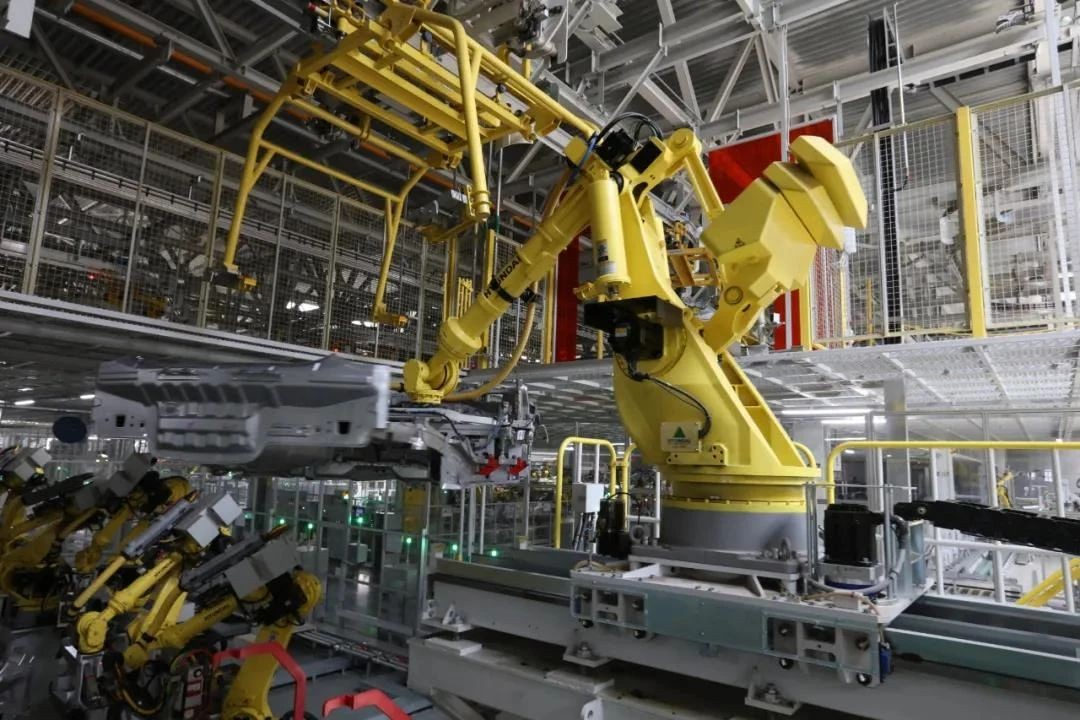
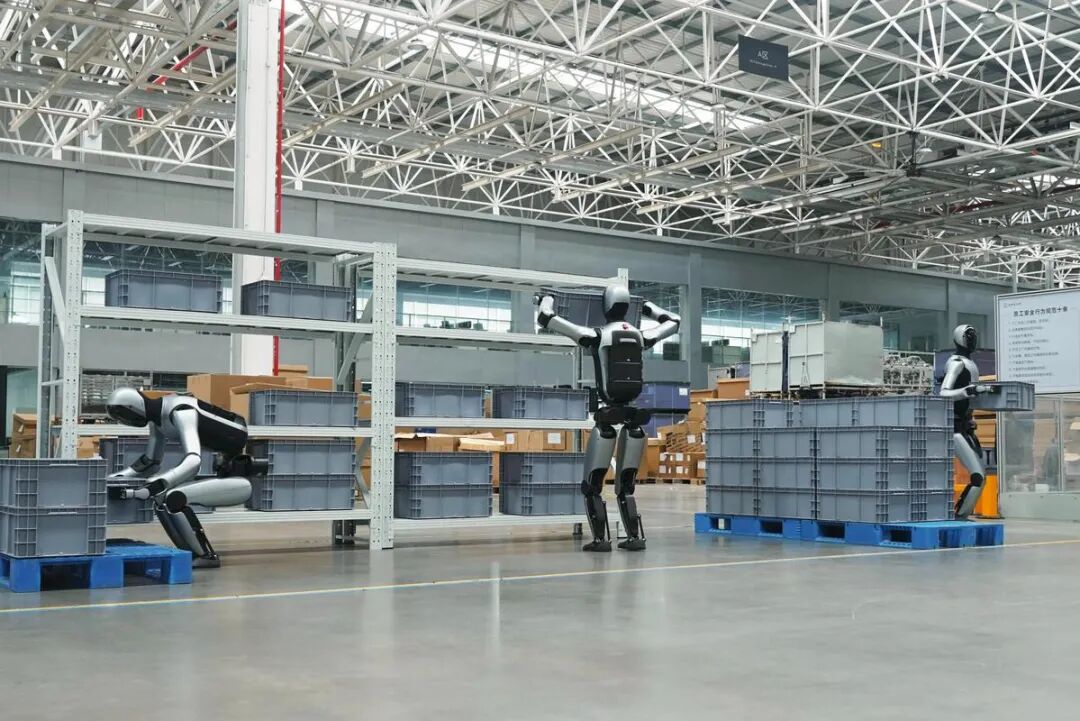
Drivers who have no special skills and are already working for ride-hailing platforms, just as autonomous taxis arrive; workers who only know how to carry bricks and tighten screws, just as bricklaying robots appear on construction sites and screw-driving robotic arms appear in factories. These people have no assets that can be downgraded. Once their jobs are replaced, what they face is not an income gap, but the question of whether there will be another job at all.
To translate that policy language into something a ride-hailing driver can understand, it roughly means: the platform or local authorities must tell him in advance that orders on this route may be taken away by driverless cars, and then give him a chance to learn charging pile maintenance or become a safety officer for driverless vehicles. To translate it into something a migrant worker on a construction site can understand, it means that before the project department replaces workers with machines, it must first ask: are you willing to go to training, and can you learn it?
This is the weight of the four words "inform in advance." It targets not the skill mismatch on a resume, but whether people who lack alternatives can obtain a ticket to job transfer before the machines arrive.
2. The Buffer Period Is Not Indefinite
The problem is that the buffer period has a time limit, while machines do not wait.
Consider two sets of figures. The first comes from Baidu's latest financial report: as of October 2026, Apollo Go's operational footprint had covered 30 cities, completing about 34 million kilometers of autonomous driving mileage in the third quarter, with cumulative mileage exceeding 390 million kilometers. From testing to commercialization, from a few cities to scale rollout, it took several quarters, not several years.
The second set comes from the construction site of the Ningbo Olympic Sports Center. The local plastering robot consistently operates with a pressing force of about 30 kilograms and plasters at least 300 square meters per day, equivalent to the daily workload of five skilled workers; ordinary workers can learn to operate it after three days of training. The cost of construction robots is still declining, and "one machine replaces five workers" is turning from promotional language into a technical parameter in bidding documents.
The window period is real, but it is narrowing. When the replacement efficiency of a piece of equipment is written into a tender, the qualification to be buffered itself needs to be re-earned—those who enter training one step earlier get the job, while those one step later may not even count as people to be notified.
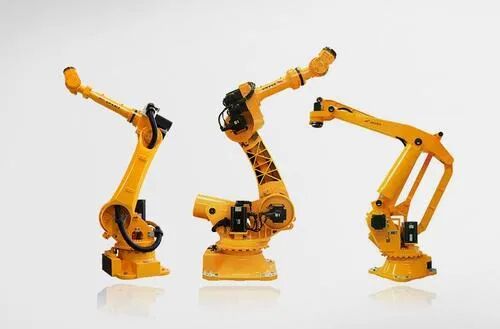
More noteworthy is the order of substitution. The policy explicitly requires prioritizing the promotion of artificial intelligence in positions with labor shortages and high-risk environments, and steadily and prudently grasping the scope, intensity, and pace of application in labor-intensive industries.
Behind this ordering is a judgment: let machines first do the work that people are unwilling to do, unsuitable to do, or unsafe to do, leaving people time to turn to other jobs. But "prudent" has never meant "stop." Slowing the pace is to allow job transfers to keep up, not to prevent substitution from happening.
The document also established a front-end gate: establish a mechanism for assessing the employment risk of artificial intelligence applications.
For application scenario projects in market access fields that may cause significant employment impact, employment risk assessments should be carried out simultaneously during review, and relevant departments should coordinate support for transformation, job transfer, and employment.
This means that the buffer period is not only remedial action after the fact; before the technology is deployed, the impact on jobs must also be calculated into the approval form.
3. What Policy Can Do
What can policy do at this stage?
It is not to stop technology, but to hold up the nets of training, social security, and job matching during the window period.
The Hengshui sample disclosed by China Employment Network in November 2026 provides a quantifiable reference. The local area connected a closed loop of unemployment registration, job introduction, skills training, and employment guidance; paid unemployment insurance benefits of 75.57 million yuan on time and in full, paid basic medical insurance premiums of 12.21 million yuan, and helped 7,897 unemployed people find reemployment; in addition, through job recommendations, social security subsidies, and public welfare positions as a fallback, it helped 1,784 people with employment difficulties find jobs, and completed skills training for 17,000 people throughout the year. Twenty-four gig markets linked with 1,687 gig supermarkets, helping 23,000 person-times find employment nearby and locally.
The value of this chain lies in filling the blank period between "being replaced" and "reemployment": first register, then train, then match with jobs, and finally use public welfare positions as a fallback.
The number 7,897 is not large nationwide, but it proves one thing—as long as service density is sufficient, the buffer period can be transformed from a principle into a walkable path.
The difficulty is that Hengshui is Hengshui; not every city where a ride-hailing driver lives has such service density. Job introduction, skills training, and social security linkage belong to different links, and making them happen continuously for the same person requires grassroots employment service capacity to truly sink to the level of gig markets and gig supermarkets.
The judicial side is also drawing boundaries. Hangzhou once had a labor dispute known as the first "AI job replacement case": an AI large-model quality inspection supervisor was transferred to another post with a pay cut, and after unsuccessful negotiation, the company unilaterally terminated the labor contract on the grounds of being affected by AI technology.
From labor arbitration to the first instance and second instance, all determined that the company constituted illegal termination and ordered compensation of more than 260,000 yuan. The second instance clearly stated that introducing AI to achieve job substitution and complete technological upgrading does not constitute a "major change in objective circumstances" as stipulated by the Labor Contract Law.
The signal sent by this precedent is clear: technology can replace jobs, but it cannot directly replace labor contracts.
On the other side is the supply of newly created jobs. Data from the National Data Administration show that as of the end of June 2026, seven data annotation pilot cities including Chengdu, Shenyang, and Hefei had 140,000 workers, with annotation volume exceeding 119 petabytes.
Tongren, Guizhou, gathered 12 data annotation enterprises, driving employment for more than 1,200 people, most of whom are relocated residents and returning migrant workers—some of them once repeated single processes on electronics factory assembly lines, and now annotate pedestrians, vehicles, and traffic lights for autonomous driving models. The National Development and Reform Commission has also made it clear that it will promote the inclusion of new occupations such as model trainers and data annotators in the national occupational classification system.
4. The Emphasis Is on "As Much as Possible"
"Reduce the impact on workers as much as possible"—if you look closely, the emphasis is not on "reduce," but on "as much as possible." This is an adverb of degree; it acknowledges that impact is inevitable, acknowledges that some people will be left out, and only requires that the net be woven denser so that fewer people fall through.
This restrained wording deserves more attention than slogan-like promises. The policy does not promise zero impact, because it knows that is impossible; what it promises is a set of mechanisms: advance notice, job transfer support, risk assessment, and rights protection. Mechanisms can reduce the intensity of harm, but they cannot change the direction of substitution.
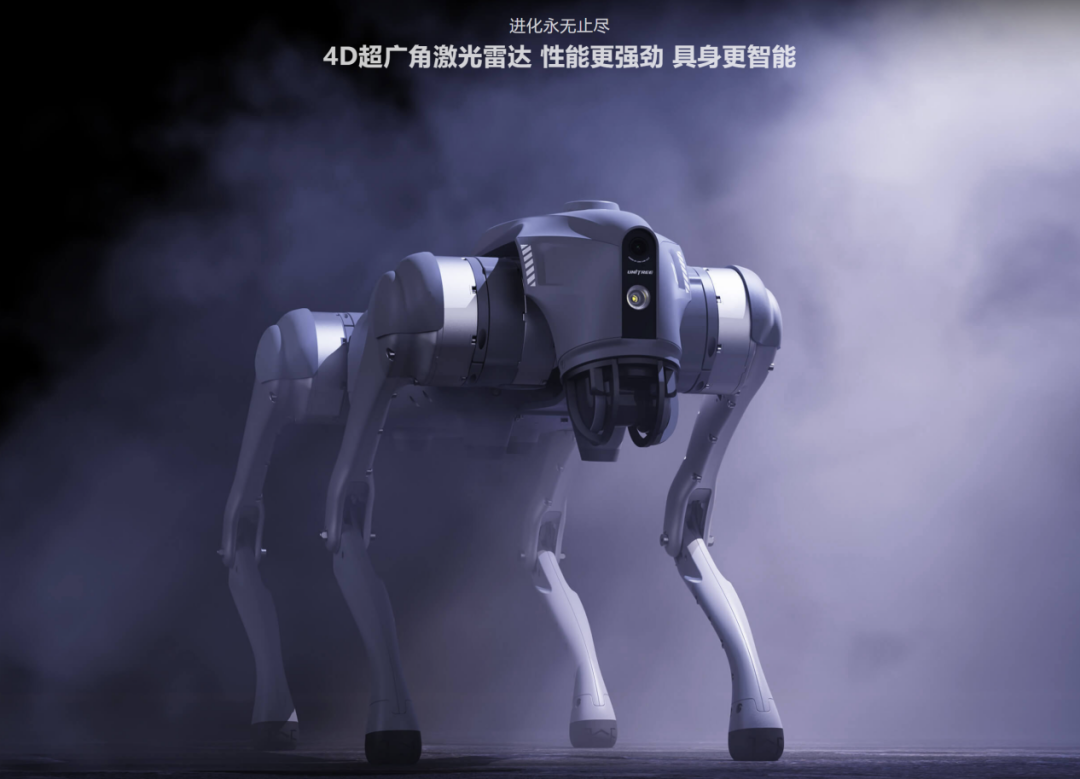
The truly cruel distinction lies here: when people with education and accumulated assets are replaced, the buffer period means "switch to a slightly lower-income occupation," a downgrade, a transition; when people with no special skills are replaced, the buffer period means "is there another pit that can catch you?"
With the same machine entering the scene, one person's way out is to move down one level on the career ladder, while another person's way out is whether a net can catch them.
So the ride-hailing driver may eventually become a ground safety officer for driverless vehicles, watching screens in a control center and handling remote recovery when vehicles get stuck in construction zones; the bricklaying worker may learn robot operation and stand at the edge of the construction site tapping a tablet.
Xingkong Jun believes that the measure of this round of AI substitution is not how many jobs disappear, but how many people are smoothly delivered to the next job. The pace of technological substitution will not stop; what can be chosen is the distance between the pace and the people—and that distance is the buffer period. The value of the document lies in that it does not pretend this distance does not exist, but requires that it be seriously used once before it disappears.
-
![]()
BMW i3 and Lexus TZ Step Up: Joint Venture Brands Are Not Backing Down at the Guangzhou Auto Show
-
Understand This AI Evolution Diagram and You Understand the Essence of AI: 'Intelligence Moves Up, Users Stay Down'
-
![]()
NetEase's Latest Financial Report: High Gross Margin, Low Debt
-
![]()
AI Unemployment Buffer Period
-
![]()
"It's a Bit Late Now," Ma Huateng Said Point-Blank: Tencent Has Reached a Life-or-Death Moment
-
![]()
AI Short Dramas Begin to Impact the Gaming Industry?
-
![]()
Fangchengbao's October Domestic Sales Hit 34,761 Units, Titan 7 Duo Accounts for 68%
-
![]()
GM China October Retail: How Are Buick, Cadillac, and Zhijing Performing?