Wall Street's "Big Short" Investor Suddenly Boosts Chinese Holdings
 11/27 2026
 349

Michael Burry, the globally renowned big short seller, is back in the headlines.
The real-life inspiration behind The Big Short and founder of Scion Asset Management has reportedly increased his positions in Chinese assets. Alibaba briefly became his top holding, his JD.com stake doubled, and Baidu also entered the portfolio.
Once the news broke, headlines proclaiming "smart money is bottom-fishing China" flooded the airwaves.
The two most valuable words on Wall Street are sometimes "bearish." Get one call right, and your name can hang around for over a decade. But when it's actually time to place an order, a nickname won't help you. On November 24, Michael Burry added to three Chinese stocks once again. Hong Kong's Victoria Harbour, file photo | Romain Pontida, CC BY-SA 2.0, resized. This round of trades had clues going back as far as the summer.
In August, Fortune reported that Burry had sold Alibaba and shifted toward building a JD.com position.
In early November, Benzinga reported that he had also bought JD.com call options expiring in 2029 while adding to BYD shares.
On November 25, Burry said he had sold the remaining Nasdaq 100 index put options. For now, the portfolio is mainly long, with cash at about a quarter.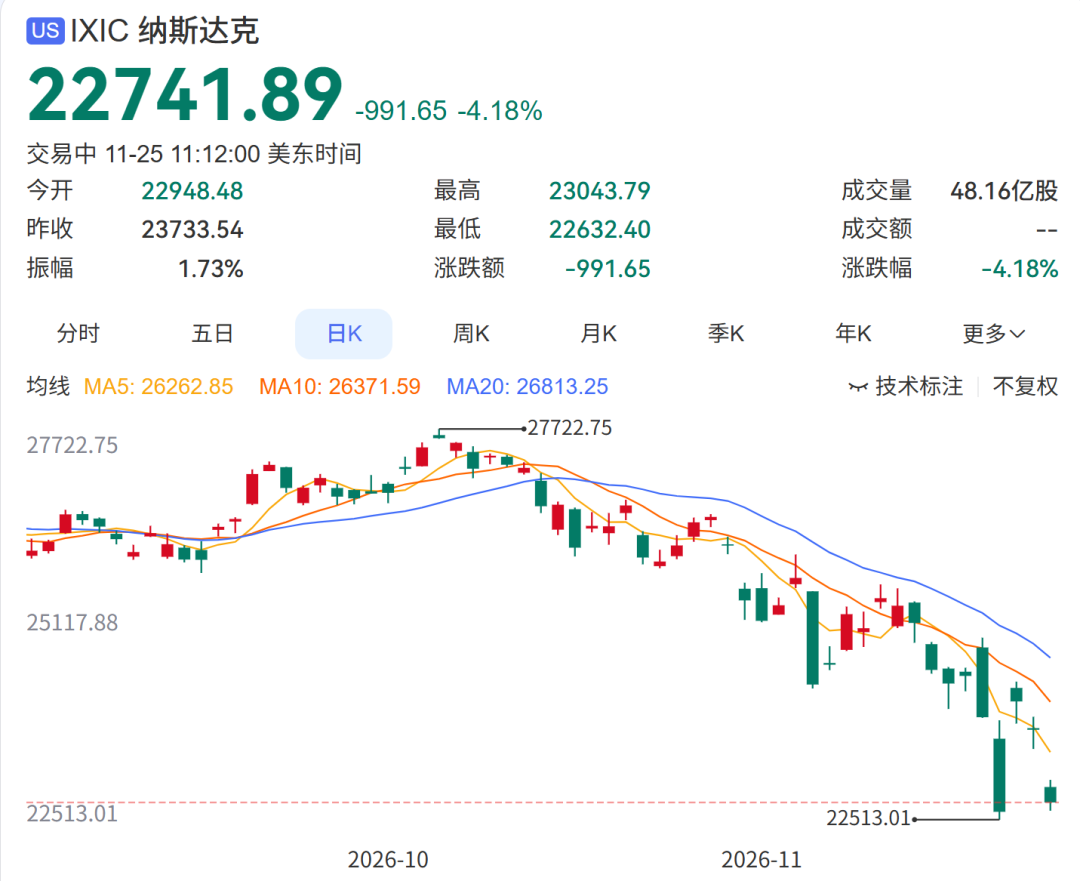
He still holds put options on Palantir and MetLife. That also sets the tone for this round of additions.
Burry is reducing some U.S. index shorts while adding several Chinese companies.
Public information is only enough to reveal these two moves. How the money actually moved—public records don't show the cash flow.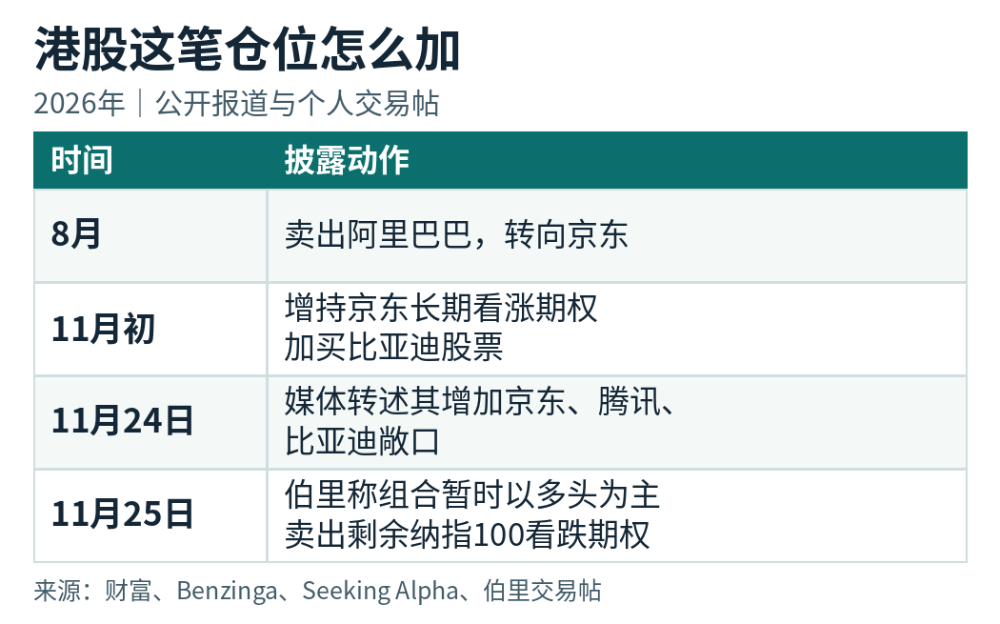

First, let's look at the short seller's ledger.
Burry was once a resident physician and founded Scion Capital in 2000. His subprime trade landed him in the classic film The Big Short, and in 2013 he founded Scion Asset Management.
Both firms share the Scion name, making it easy to confuse their performance records.
The latter firm reported assets under management of about $155 million in its March 2025 filing, across four pooled investment vehicles. The filing discloses client categories and total assets; beyond that, information on individual investors stops there. On November 10, 2025, the firm's investment adviser registration was terminated.
According to a letter seen by Reuters, Burry planned to liquidate the fund and return investor capital before the end of that year, retaining a small amount for audits and taxes. As for how large his personal account is now, public records offer no verifiable figures.
For overall returns over the past five years, verifiable net asset values are missing. U.S. institutions' 13F holdings tables list some securities. Cash and stock shorts are off the table, and many overseas positions are also invisible.
Put several quarterly holdings tables together, and what you still get is holdings. What spreads most easily in this business is whom someone is shorting.
The hardest thing to keep up with is when he pulls the money out. Institutions can use options to cap the cost of a single trade, and they can also trim positions midway. Many people, when they hear the news, often get only a stock name.
When Burry goes long, he favors businesses the market already finds expensive and tiresome—where the stock price has already fallen first. When he shorts, he often targets growth that is priced too fully into the stock.
Both sides look at the same thing: the money paid today must be earned back over how many years and with how much profit. The reported scale includes clients' money. To see purchase records and calculate an annualized return for the fund is, on Wall Street, like guessing a household's income from a shopping receipt.
How has the short-selling business done?
Regarding this company, publicly available information is currently limited. The subprime trade has a record that can be checked.
Burry used credit default swaps to buy default protection on mortgage-backed bonds. While mortgages were still being paid on time, the premiums still had to be paid, and investors were also pressing. To guess the ending correctly and still survive until the ending—that was the hard part of that trade.
Michael Lewis recorded that the trade brought Burry personally about $100 million and investors about $725 million.
Early Scion Capital, from its founding in November 2000 to the end of June 2008, had a cumulative return of 489.34% after fees. That was the record of the entire early fund. Tesla's record is much shorter.
In the first quarter of 2021, Burry's firm held Tesla put options corresponding to 800,100 shares.
In October of the same year, he said he had exited. The purchase cost, selling price and full contract terms are missing, so how much the trade made cannot be calculated. By 2025, a Palantir trade again put the numbers in the spotlight. The third-quarter filing still included Nvidia put options; the Palantir line was about $912 million, filled in as the value of the underlying stock.
Burry said he spent about $9.2 million buying these Palantir options.
Based on the number of contracts and strike price reported by Reuters, the premium was about $1.84 per share. Holding to expiration and ignoring fees, the stock would need to fall to about $48.16 to break even. Detailed records of execution and exit are still missing. Wall Street headlines can be big, but traders need to see the decimal points clearly.
Put two stock options side by side, and you can understand the institution's calculation. The direction can be right, and the timing can still lose. A company may take months to deliver earnings that turn the stock around, and the option may already have expired. The Big Short won one big battle, but every trade afterward still requires paying premium.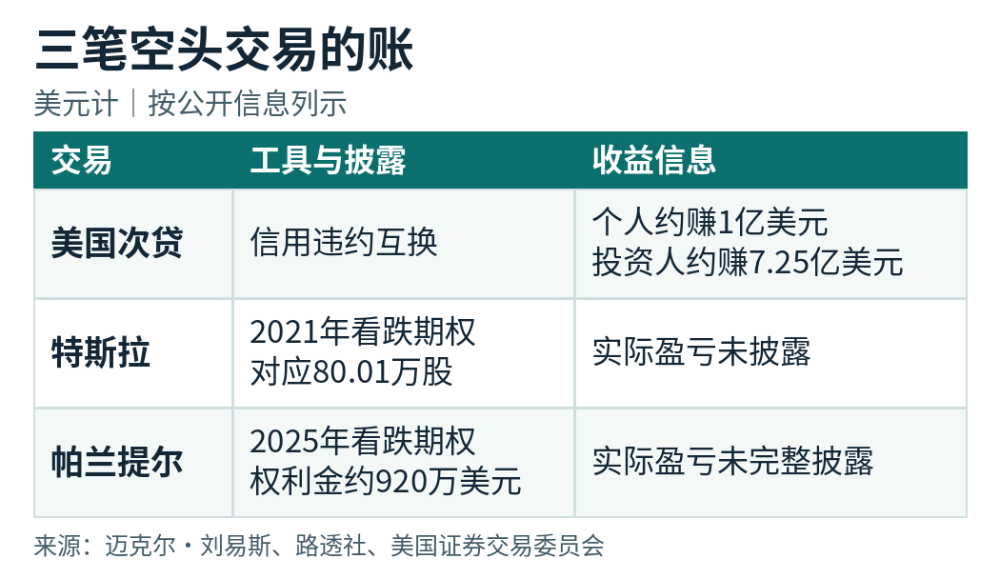
Three underlying assets
I am relatively optimistic about these Chinese assets. Behind them are businesses that are collecting money, and after the stock price falls, buyers can bid again. How thick a reasonable discount is still depends on the expense that most needs to be seen clearly in each of the three statements.
This round of Hong Kong stock pullback has given buyers a chance to compare prices and businesses again. Business models each have their own cycle, but when they land in the financial statements, there is one common question.
How much of the cash consumed by expansion can ultimately be earned back. Whoever earns that money back first has a stronger reason for their discount to narrow.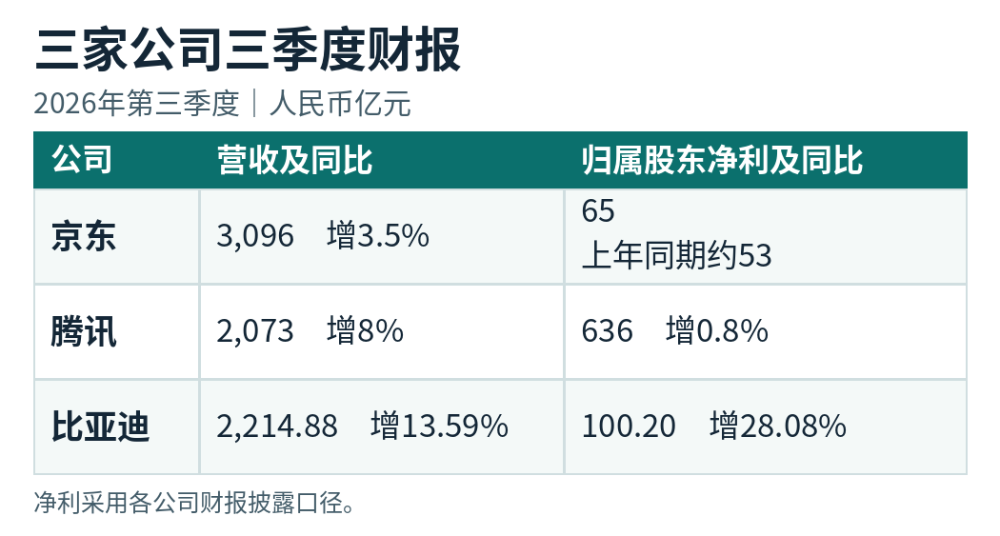
JD.com's core retail business is steadier than the stock price impression suggests. Third-quarter retail operating profit rose from about 14.8 billion yuan to 15.1 billion yuan, with the margin slipping slightly from 5.9% to 5.8%. Third-quarter free cash flow was a net outflow of about 23.9 billion yuan. For the twelve months ended September, free cash flow was about 18.8 billion yuan, versus about 12.6 billion yuan a year earlier.
The warehousing and delivery business relies on order density to spread costs. If new businesses continue to narrow losses, the cash earned by the old business has a chance to be retained more. National Bureau of Statistics figures are also somewhat interesting.
In the first 10 months, total retail sales rose 1.0% year on year, and online retail sales of goods rose 2.9%. Overall demand is moving slowly, but online still has growth.
If JD.com can get customers who have bought appliances and digital products to come back a few more times, spending on delivery and after-sales service has a chance to be diluted.
I am willing to give JD.com a bit more patience and confidence. New businesses still have plenty of room to develop, and every additional profitable retail order can leave a little more room for the next stage.
What needs to be waited for now is for this improvement to also be visible in next quarter's cash accounts.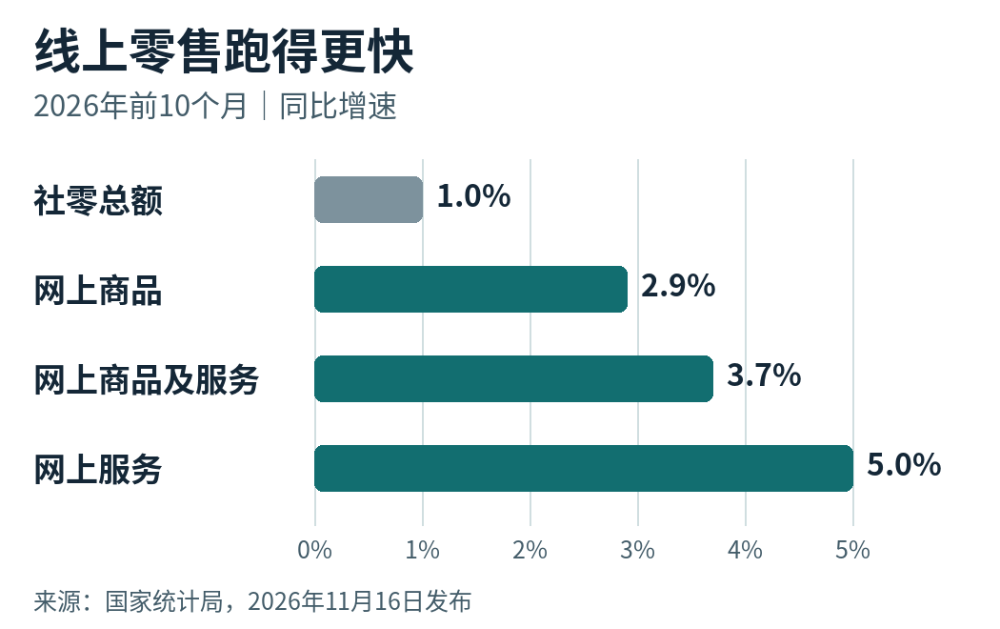
Tencent's good news right now is on the revenue side. In the third quarter, advertising revenue rose 19% year on year, cloud services rose 35%, and combined monthly active accounts for Weixin and WeChat reached 1.449 billion.
AI can help it sell ads more precisely, and its existing users and advertisers let Tencent take a shorter path than starting from scratch to find the market. Tencent's free cash flow in the quarter was a net outflow of 69.1 billion yuan; the company said that excluding large prepayments for computing power procurement, free cash flow was positive at 16.9 billion yuan. Adjusted operating profit fell 6% year on year.
Cloud revenue has already risen. How much of the computing power spending can be recovered must be calculated together with costs. Tencent has a ready platform to turn new technology into advertising and cloud bills, which is why I am willing to watch it for a while longer. If in the coming quarters the extra money from selling more advertising can cover inference costs, investors will have a firmer basis for valuing the return on that new equipment.
BYD's third-quarter revenue rose 13.59%, net profit attributable to shareholders rose 28.08%, while net profit attributable to shareholders for the first three quarters was still down 4.24%. October new energy vehicle sales were about 490,000 units, and overseas passenger vehicle and pickup sales in the first 10 months exceeded 1.5 million units. Overseas markets give it one more place to take orders. Overseas cars also need to be stocked first. At the end of September, BYD's inventory was about 221.6 billion yuan, up 60.08% from the end of last year. Operating cash flow in the first three quarters was about 54.5 billion yuan, up 33.36% year on year. With cash coming back in, going overseas becomes easier to sustain through the heaviest phase of plant building and channel investment.
According to media reports, Burry lowered his reference buying price for BYD to about HK$58. That is quite practical. If it can sell overseas, the valuation has support. Opening new markets requires holding inventory, and part of that must be deducted when bidding. The more willing one is to buy, the more necessary it is to calculate the money carefully. BYD's overseas expansion has another layer of meaning. Opening one more market means one more place to absorb production capacity.
What is truly valuable is the price local customers are willing to pay and how fast they pay. If sales expansion can come with gross margin, the valuation has reason to look higher.
Don't be blindly optimistic even if bullish
In the third quarter of 2024, Burry's firm simultaneously held U.S.-listed depositary receipts of Alibaba, JD.com and Baidu, as well as put options on all three.
By the first quarter of 2025, the filing showed put options on four Chinese concept stocks, including Pinduoduo. Being bullish and guarding against declines can naturally sit on the same table at the same time.
The person running the trades can hold the stock while buying protection against a drawdown. Those who copy the ticker often see only the first half. This public report confirmed that he increased long exposure; the per-name hedges and transaction amounts have not yet been disclosed.
Some positions use options, which have a different waiting period from buying stocks. Call options in particular are easily read as having bought the stock. Stocks can be held for another quarter, but options settle when they expire.
Those who have paid the premium still need the stock price to rise above the strike price plus that cost. So understanding a person's stock picks means understanding only part of the trade.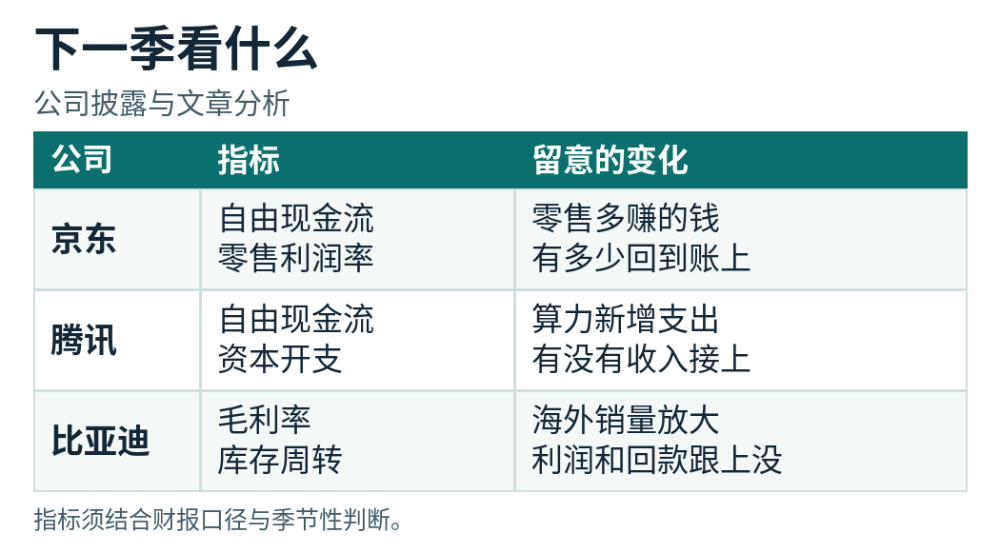
My personal view is that JD.com and several other excellent Chinese companies still have a chance to turn growth into profit. Online consumption still has growth, advertising and cloud services have already generated revenue, and cars are truly being delivered overseas. At this stage, it is more worthwhile to leave some margin when valuing them, especially by watching the money left for shareholders after expansion.
Being bullish on these companies also means guarding against the market pricing in the improvement first. If companies earn more but the stock rises faster, the next earnings report will have to deliver higher profit. That gap is what short sellers most easily seize. If money spent on expansion does not come back for a long time, growth on the statements can easily be repriced by the market.
For the next quarterly report, JD.com will be watched to see whether retail profit and the momentum of new businesses can continue; Tencent, to see how much profit compute spending can bring back; BYD, to see how quickly overseas inventory turns over. Burry's next repositioning will still make news. Only companies that can earn back this money deserve another quarter of following.
What do you think about this hot topic? We look forward to your civilized and rational insights in the comment section.
Disclaimer: This article provides a professional analysis of trending financial topics. The data and materials cited are sourced from public queries, company announcements, and Tonghuashun iFinD. The views expressed are for reference only and do not constitute any investment or consumption advice.
#FinancialHotTopics #InDepthInterpretation #BusinessFinance #InvestmentBankingCircle #ListedCompanies #PrimaryMarket #IPO #AI
-
![]()
Why Is There No "Pinduoduo Narrative" in the AI Era?
-
![]()
Wall Street's "Big Short" Investor Suddenly Boosts Chinese Holdings -
![]()
Memory Price Hikes, Spec Cuts, and Incremental Upgrades: The Smartphone Spec War Hits a Memory Wall
-
AI Is Rewriting the Pricing Logic of Office Software — Kingsoft Software's Bid for the Enterprise Productivity Entry Point
-
![]()
Priced from Over 300,000 Yuan with L3 Architecture: Is the Xiangjie V8 Gunning for the Tengshi D9's Lunch?
-
![]()
How Will Automakers Fight the Final Battle in a Tough 2026?
-
![]()
Automakers Burdened by Collective Debt Double Down on AI Investment
-
![]()
Li Auto to Launch Only 1–2 New Models in 2027