Did Luo Yonghao’s Seven Accusations of ‘Copying’ Against the iPhone Duo Hit Home?
 09/14 2026
 398
398

Luo Yonghao is never one to miss an opportunity to criticize Apple following its product launches. This occasion was no different, as he didn’t hold back in his critique of the iPhone Duo.
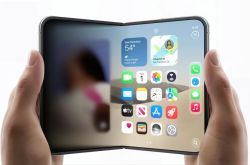
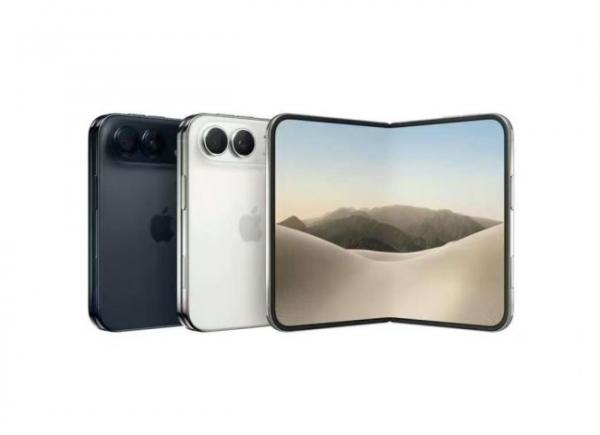
On the afternoon of September 10th, Luo Yonghao posted on Weibo with the caption, “Can We Still Speak the Truth?” Leveraging seven instances of the word “copied,” he accused the iPhone Duo’s core selling points—such as its foldable form factor, under-display camera, widescreen ratio, side Dock, seamless transition between internal and external screens, multi-angle suspension, and titanium 3D-printed hinge cover—of being borrowed from Android devices.
The only feature he commended was the folding animation effect, but he quickly followed up by saying, “Writers paid for promotional content, and mindless Apple fans will keep praising it endlessly.” Finally, Luo lamented that 25 days later would mark the 15th anniversary of Steve Jobs’ passing, expressing his sorrow that the industry, caught in a cycle of celebrations between “idiots and their imitators,” had failed to achieve true technological innovation.
It must be said that Luo Yonghao’s critique of Apple’s latest offering remains as incisive as ever. Taking an objective and balanced perspective (without taking sides), I believe he makes some valid points but also exaggerates in certain areas.
Let’s start with the valid points: Apple indeed did not introduce any groundbreaking innovations, which is where Luo’s main argument holds water. In the foldable screen segment, Samsung launched its first-generation model in 2019, with Huawei, Xiaomi, and others following suit with multiple iterations. By the time the iPhone Duo entered the market, it offered no revolutionary breakthroughs—its form factor, under-display camera, suspension, and hinge design had all been previously validated by the Android阵营 (Android camp).
In tech circles, Apple’s diminishing innovation is not a new topic, but Luo’s use of seven parallel accusations of “copying” significantly amplified its reach.
Now, let’s examine the overstatements, which manifest in three key areas:
① The term “copied” is problematic. Technology integration is commonplace in the smartphone industry, with companies frequently drawing inspiration from each other’s work. For example, Samsung’s foldable hinge design was adapted by Huawei, Huawei’s under-display camera was optimized by Xiaomi, and Xiaomi’s folding animation was refined by Apple... Luo’s equation of industry-standard solution integration with copying seems inappropriate. Apple’s true strength has never been about being first to market but about execution. Hence, the folding animation this time is impressive—even Luo admitted it was original and visually striking.
② The critique of the matte screen has merit but lacks a complete logical chain. Luo argued that Apple used a matte screen to conceal creases, resulting in a more prominent front camera. While this observation is correct, the deeper issue is that foldable screen creases are fundamentally a physical limitation, not a screen craftsmanship issue. Using a matte screen as a workaround suggests Apple hasn’t found a perfect solution for hinge and screen adhesion technology—a challenge even Samsung and Huawei haven’t fully resolved, making truly crease-free screens unattainable.
③ The invocation of Steve Jobs’ legacy feels forced. Luo’s emphasis on Jobs’ death anniversary during the iPhone Duo launch could be perceived as opportunistic. The innovation logic of Apple under Jobs and Tim Cook differs fundamentally; judging Cook-era Apple by Jobs’ standards seems anachronistic and unfair.
In my view, the accusation that the iPhone Duo copied reflects the innovation bottleneck in the foldable screen category. Companies have exhausted obvious copying opportunities, leaving only incremental innovations. Apple uses a matte screen to hide creases, Huawei optimizes hinges to reduce them, and Samsung employs new materials to suppress them—but physical laws dictate that creases cannot vanish entirely. For foldable screens to become truly practical, a new material revolution, not just industrial design tweaks, is needed.
The iPhone Duo’s starting price of 15,999 yuan is itself revealing. Apple’s confidence in setting this price shows it relies not on innovation but on brand premium and ecosystem lock-in. No matter how harshly Luo criticizes, it won’t deter buyers—1.36 million have already pre-ordered on JD.com, highlighting a fundamental difference between Apple and Android camps.
Overall, Luo’s critique is blunt but not without substance, though emotion outweighs analysis. He accurately points out Apple’s lack of innovation in foldable screens but oversimplifies industry technology integration as “copying,” and his closing appeal to Jobs’ legacy feels contrived.
Nevertheless, as a public figure, Luo’s precise use of seven accusations of “copying” to resonate with public sentiment on Apple’s launch day is a communication success. He fulfills his role as a consumer advocate, industry watchdog, and traffic generator. Perhaps he should instead ask, “Why can Apple succeed without innovation?”—because brand moats run far deeper than technological ones, a question more worthy of discussion than mere copying claims.
-
Tianlong-3 Yao-1 Mission Update: Insights from the 189.5-Second Flight
-
The Untold Undercurrent of CIFTIS: Chinese Tech Goes Global, Shifting from Quick Profits to Sustainable Value
-
![]()
Confirmed! Apple CEO Cook Admits to ‘Drawing Inspiration’ from Huawei; Luo Yonghao Offers Direct Criticism
-
![]()
Zhang Yiming’s Global Empire Surges: TikTok Achieves Scalable Profitability Across Key Markets!
-
![]()
No AI Until High School! NYC Establishes the Most Stringent Educational Boundary in U.S. History
-
The Dilemma of Expanding Domestic Cars and Shrinking Parking Spaces: A Parking Nightmare
-
Purchasing Power Parity: iPhone18 Pro Affordability Across Nations
-
Over 16% Surge! The 'Home Appliance Giant's' AI Story Pushes Boundaries