Suzuki: From Retreat in China to Japan's Third Largest | Cover Story: Japanese Automakers at the Crossroads of Transformation (Part 5)
 11/13 2026
 444
The competitive landscape of the automotive industry is being reshaped, and the window for transformation is closing fast. Electrification and intelligentization have become the core engines of transformation and upgrading, while globalization has become the proving ground for their success. As electrification and intelligent technologies shift from quantitative to qualitative change, and Chinese automakers expand globally at a rapid pace, Japanese automakers find themselves at the crossroads of transformation. At this historic juncture, if Japanese automakers want to have the last laugh, they urgently need to reconstruct their existing advantages and continue to forge latecomer advantages.
Focusing on the transformation of Japanese automakers, Auto Review presents this issue's special cover story. This special report consists of six articles, and today we publish the fifth. Please stay tuned.
Suzuki, which voluntarily abandoned the world's largest market and the world's second-largest auto market, has staged a comeback story of global performance growth in recent years.
In 2018, when Suzuki transferred its 50% stake in Changan Suzuki to Changan Automobile for 1 yuan, the industry almost unanimously believed that this "king of small cars" would decline. At that time, Suzuki's annual sales in the Chinese market had fallen from a peak of 220,000 units in 2011 to less than 60,000 units. Then-Suzuki chairman Osamu Suzuki's remark that he would "never compromise with the Chinese market until death" added a tragic color to this retreat.
Eight years later, however, Suzuki delivered an answer that surprised all the naysayers. According to Kyodo News, in fiscal 2025 (April 2025 to March 2026), Suzuki's global sales reached 3.32 million units, a year-on-year increase of 2.4%, surpassing Nissan Motor to become Japan's third largest. During the same period, Suzuki's consolidated net profit (under International Financial Reporting Standards) increased by 6% year-on-year to 439.2 billion yen, and sales revenue (equivalent to operating revenue) increased by 8% to 6.2929 trillion yen, both hitting record highs.
Why has an automaker that voluntarily abandoned the world's largest auto market (China) and the world's second-largest auto market (the United States) instead achieved performance growth? How exactly did Suzuki stage its "comeback"?
Why abandon China?
On the surface, Suzuki's exit from China was a tragedy caused by "stubbornness," but in reality it was the inevitable result of a mismatch between market supply and demand.
As is well known, Suzuki's core capability lies in small cars, and almost all of its related advantages in its technical system, supply chain, and cost structure are built around small cars. From the 1990s to the early 21st century, Suzuki's product matrix perfectly matched the demands of the Chinese market. Models such as the Alto and Swift, with their compact size, economical fuel consumption, and affordable prices, helped Suzuki's sales in China climb to a historical peak of 220,000 units in 2011.
But afterward, the demands of Chinese auto consumers changed. According to statistics from the China Association of Automobile Manufacturers, from 2011 to 2018, annual sales of SUVs in China soared from 1.59 million units to 9.99 million units, while the market share of small cars continued to decline, leaving only about 5% by 2018. In this situation, Suzuki, which stubbornly adhered to the small-car route, had a relatively thin product line, and its brand image was locked in the "low-end" range, lacking high-end models to enhance brand premium. Product updates were slow, and it failed to keep up with the SUV and new energy waves in time, ultimately leading to a rapid decline in Suzuki's sales in China.
In September 2018, Changan Automobile acquired the 50% stake in Changan Suzuki held by Suzuki for a symbolic price of 1 yuan. Some analysts believe this was a strategic retreat by Suzuki based on reality, because consumer preferences in China's auto market had shifted toward large-space SUVs and sedans, which ran counter to Suzuki's core competitiveness in small cars. Rather than continue losing money in the fiercely competitive Chinese market with mismatched supply and demand, it was better to stop losses in time and concentrate resources in markets where it truly had advantages.
According to data released by the China Passenger Car Association, in the first half of 2026, cumulative retail sales of domestic passenger vehicles reached 8.701 million units, while retail sales of A00-class new energy vehicles were only 240,000 units, plummeting 63% year-on-year. In the first half of the year, cumulative sales of passenger vehicles priced below 50,000 yuan were only 130,000 units, plunging 55% year-on-year, and market share shrank from 2.8% last year to 1.4%. In this ebb tide of small and micro cars, once-popular models have lost ground across the board. Sales of the Wuling Hongguang MINIEV, Bingo, and Geely Panda all declined to varying degrees, with some models selling fewer than 1,000 units per month.
At the time, Suzuki's strategic contraction was not recognized by many people, but now it appears that this decision successfully enabled Suzuki to avoid continued bleeding in the Chinese market and instead laid the foundation for the reversal of its global performance.
India: From "Safe Haven" to "Growth Engine"
So where is the market where Suzuki truly has advantages? In India.
The origins of Suzuki and India can be traced back to 1983. That year, the Indian government and Suzuki established the joint venture Maruti Suzuki, and the first model produced, the Maruti 800, once held an 83% share of the Indian market in fiscal 1997-1998. Over four decades, Suzuki has built a "rock-solid sales and service network" in India. Today, Suzuki already has more than 4,000 sales and after-sales service outlets in India. Its extremely deep channel penetration and extremely low maintenance costs make it impossible for competitors to surpass its network coverage in the short term. Maruti Suzuki has long occupied about 40% of India's passenger car market. In fiscal 2025, Suzuki's sales in the Indian market reached 1.86 million units, a year-on-year increase of 3.7%, setting a record high. Sales in the Indian market accounted for more than 56% of Suzuki's total global sales, making India the strongest "growth engine" supporting Suzuki's global performance.
Suzuki's success in India is not accidental. First, it benefits from the precise matching of product characteristics and the market environment.
India implements a tax policy based on vehicle length and engine displacement, and underwent an important adjustment in September 2025, further strengthening tax incentives for small cars. Suzuki's small cars are not only affordable but also happen to fall right in the "sweet spot" of tax incentives, creating a natural price barrier. For example, as the model with the highest cumulative sales in the Indian market for Maruti Suzuki, the Alto's cumulative sales had exceeded 4.7 million units as of November 2025. In fiscal 2025, Alto sales reached 102,200 units, ranking fourth among India's best-selling hatchbacks. At the same time, India's per capita GDP is only one-fifth that of China, and demand for cheap mobility tools is real and rigid. Suzuki's product positioning is highly consistent with the consumption capacity of the Indian market.
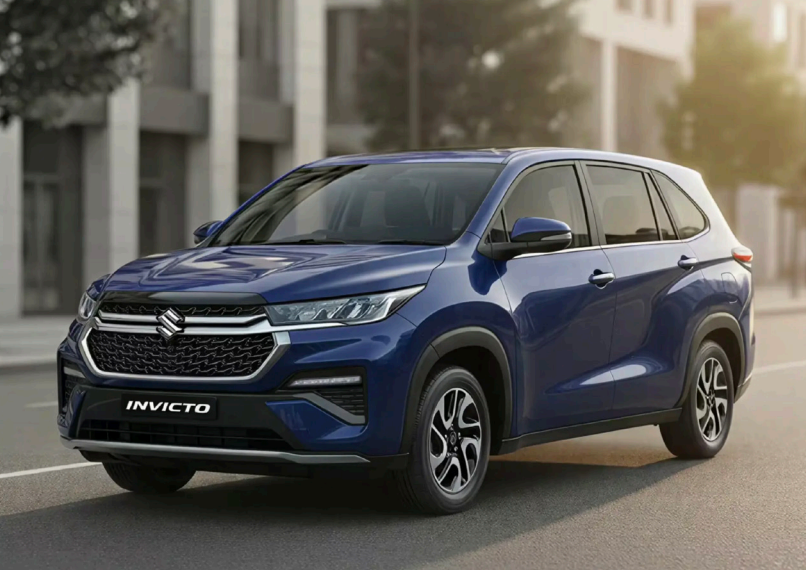
Admittedly, changes toward consumption upgrading have also appeared in India's current auto market. But Suzuki followed up in time and quickly adjusted its product line, launching multiple all-new SUVs and crossovers and successfully capturing the high-growth market. Among them, the crossover SUV Fronx and the mid-size SUV Grand Vitara became hits, and together with the facelifted Brezza, they helped Suzuki's sales in India's SUV market continue to grow, exceeding 760,000 units in fiscal 2025, an increase of nearly 6% year-on-year, offsetting the gap left by the decline in traditional sedans. It is worth mentioning that with the advancement of India's national infrastructure construction and the economic growth of local third- and fourth-tier cities, rigid demand for Suzuki's entry-level and small cars (such as Alto, Wagon R, and Dzire) in non-first-tier regions remains relatively large.
Second, in terms of powertrains, Suzuki saw the pain point that local supporting infrastructure for pure electric vehicles is not yet complete, and chose to avoid head-on competition in high-cost pure electrics, instead vigorously promoting CNG (compressed natural gas) models and smart hybrid vehicles. The natural gas models launched by Suzuki have extremely low fuel costs and are favored by many Indian taxi drivers, ride-hailing drivers, and family car owners. It is understood that by popularizing CNG versions across almost its entire product line in India, Suzuki has also occupied the vast majority of the share in India's natural gas passenger vehicle market. At the same time, Suzuki has engaged in deep cooperation with Toyota, introducing mature hybrids through technology sharing (such as Grand Vitara/Invicto), and has also established certain barriers in fuel-consumption-sensitive markets.
In addition, Suzuki has also turned Maruti Suzuki into a global export hub. Vehicles produced in local Indian factories, including the Fronx and Jimny, are exported in large numbers to the Middle East, Latin America, Africa, and Japan itself. In its 2025 financial report, Suzuki's single-fiscal-year export volume exceeded 447,000 units, up as much as 35% year-on-year. The sharp increase in overseas exports directly drove strong growth in Indian production capacity. Suzuki president Toshihiro Suzuki clearly stated that all Suzuki electric vehicles for the global market will be manufactured in India, with plans to export vehicles from India to more than 100 countries. This "Made in India, exported globally" model allows Suzuki to fully leverage local cost advantages and production scale effects while avoiding duplicated investment in building independent production bases in each country.
Global Expansion and Contraction
In India, Suzuki launched the largest capacity expansion plan in its history earlier this year.
On January 12 this year, Maruti Suzuki announced that its board of directors had approved the purchase of land in Gujarat, with plans to add 1 million units of annual capacity and a total budget of 49.6 billion rupees (about 550 million US dollars). This expansion is a core part of Maruti Suzuki's strategy to "double output to 4 million units by 2031," following Suzuki Motor's announcement last August of an 8 billion US dollar investment in India over the next five to six years and the start of commercial production of the mid-size electric Vitara SUV at its Gujarat plant. Maruti Suzuki chairman Bhargava once said that to meet domestic and export demand, an additional 2 million units of capacity would be needed. In addition to Gujarat, the company also plans to build a new plant of the same scale in northern India.
Previously, Suzuki announced an investment of about 7.2 billion US dollars to raise India's annual capacity from 2.6 million units to 4 million units by 2030. In 2025, Suzuki has already put a new plant in Haryana into operation and plans to launch a new production base in Gujarat in 2029. Suzuki has also proposed a goal of raising its Indian market share to 50% by 2030. To achieve this goal, the company has planned eight new SUV models, including the pure electric e-Vitara. In addition, Suzuki is also deploying renewable energy in India, with plans to build nine compressed biogas plants in Gujarat by 2027.
In fact, Suzuki is also expanding on a broader global scale.
Africa is the next strategic growth pole that Suzuki highly values. At present, Africa's population has exceeded 1.5 billion and continues to grow. Local consumers prefer cars that are cheap and resistant to harsh road conditions, similar to the situation in the Indian market. Financial report data show that in fiscal 2025, Suzuki's sales in Africa reached 127,000 units, with a market share of 9%. Suzuki's goal is to increase African sales to 150,000 units by 2030 and reach a market share of 10%. As of fiscal 2025, Suzuki ranked first in market share in five African countries including Angola, with a share as high as 81% in Angola, while its market share in another eight countries was no less than 10%.
Another key expansion region for Suzuki is Europe. The strategy remains to leverage its small-car advantage and use electric microcars to open a breakthrough. Suzuki plans to launch a micro electric vehicle in Europe as early as 2027, using Japanese-style high-cost-performance small models to compete with European local automakers and Chinese electric vehicle manufacturers. The car will be built based on the Vision e-Sky, with a range of about 310 kilometers, and is expected to be priced below 20,000 pounds in the UK market. Suzuki believes that the European Union's new classification standard for small electric vehicles will promote the expansion of Europe's small electric vehicle market, and combined with the advantage of yen depreciation, this will help leverage the pricing competitiveness of its models. If it succeeds in Europe, it will also pave the way for expansion into markets such as Southeast Asia that favor small cars.
It is worth noting that Suzuki's global layout "advances and retreats." In Thailand, Suzuki adopted the same strategy as it did with the Chinese market back then—voluntary contraction. In 2024, Suzuki announced that it would close its Rayong plant in Thailand by the end of 2025 and stop producing cars in Thailand, because output at the local plant had plunged from a peak of nearly 60,000 units per year to only 4,400 units. The latest news shows that the plant ceased production at the end of 2025 and was sold to Ford, with the transaction covering all 66 hectares of facilities, and the transfer of land and assets completed in 2026. It is worth mentioning that Suzuki continues to sell in Thailand through imports.
In fact, although Suzuki has exited the domestic passenger vehicle manufacturing business in the Chinese market, it still sells models such as the Jimny through parallel import channels. In 2025, Suzuki's import sales exceeded 2,000 units. In the US market, Suzuki has not returned since its exit in 2012. Although some analysts believe that K-Cars could offer Suzuki a pathway back to the United States, the company currently has no clear plan to do so.
Electrification Transformation: A Late Chaser
On March 16, 2026, Suzuki issued an announcement declaring that it would formally implement organizational restructuring and personnel changes effective April 1. This adjustment involves departmental reorganization, changes in executive positions, and the rotation of a large number of mid-level managers, covering R&D, finance, marketing, production, and overseas business. By integrating its electrification department, upgrading its financial structure, establishing a new financial services department, and dispatching core executives to Indian plants, Suzuki has made clear its strategic direction: integrating electrification into the mainstream product system, opening new revenue streams in finance and used cars, and continuously deepening its presence in the Indian market.
Among these changes, the original "BEV Product Planning Department" and "BEV Business Planning Department" were abolished, and BEVs are no longer treated as an independent special project but have been integrated into the mainstream product planning system. The product management departments were reorganized into four clear units: the Kei Car Product Management Department, the Global Product Management Department, the India A-segment and Commercial Product Management Department, and the India B, C, and D-segment Product Management Department. From now on, electric vehicles, gasoline vehicles, and hybrids will all be managed under the same organizational framework. The Battery Development Headquarters newly established a "New Technology Co-creation Department" responsible for cross-departmental technology implementation. Departments such as four-wheel body technology and vehicle motion technology completed integration and renaming, centralizing previously dispersed testing, performance evaluation, and safety management functions under unified management, so as to achieve complementarity across the two-wheel, four-wheel, and outboard motor lines and improve overall development efficiency.
Although its actions have been somewhat slow, Suzuki has still made strides in electrification.
In February 2025, Suzuki officially released its new mid-term management plan for fiscal years 2025–2030, titled "By Your Side." The plan clearly identifies pure electric and hybrid vehicles as the core directions of future development, with the goal of achieving global annual sales exceeding 4 million units. Regarding cooperation with Toyota, Suzuki has said it will continue to deepen collaboration in technology and products as an equal partner—not only cooperating closely on advanced safety technologies (such as collision damage mitigation braking systems) and BEV core components and platform development, but also mutually supplying models in major global markets (including India, Africa, Europe, and Japan) to achieve resource sharing and complementary advantages, further advancing joint efforts in carbon neutrality and diversified mobility.
At present, Suzuki has officially begun product electrification layouts around the world. According to Japanese media reports, Suzuki Motor plans to launch a micro electric vehicle in Europe as early as 2027, leveraging its expertise in high-cost-performance small models to compete with European local automakers and Chinese electric vehicle manufacturers. The new car will be produced at a plant in Shizuoka Prefecture, southwest of Tokyo, with the UK and Italy both potential sales markets. It is reported that this will be the first time Suzuki exports overseas a K-Car model that is essentially identical to the Japanese domestic version. The new car is based on the Vision e-Sky concept and is scheduled to go on sale in Japan in November this year.
Beneath the Prosperity, Hidden Concerns Remain
However, Suzuki's comeback story harbors hidden concerns beneath its prosperity.
First, and most worrying, the Indian market is replaying the old script of the Chinese market.
As India's economy grows and its middle class expands, bestselling models are shifting from mini cars to SUVs. In 2022, SUV sales in India surpassed those of small cars, and SUVs now account for nearly 50% of the market. Suzuki's competitiveness in the SUV segment is relatively weak, with limited appeal to younger and higher-income buyers. Suzuki's market share in India has dropped from a peak of 83% to 38.93% in fiscal 2025, falling below 40% for the first time in six years. Although absolute sales are still growing, the growth rate is only 3.54%, underperforming the overall market. The dilution of its automotive market share mainly stems from five competitors—Mahindra, Tata, Hyundai, Toyota, and Kia—simultaneously "dividing the pie."
Another deep-seated concern for Suzuki is the "lock-in effect" of its technology path. Having long focused on small fuel-powered cars, Suzuki's technological accumulation in electrification and intelligentization is relatively weak. Although Suzuki has begun to push into electrification and intelligentization, whether it can build its own competitiveness remains to be seen.
In addition, Suzuki faces multiple external risks. In its forecast released on May 14 this year, Suzuki stated that if the impact of Middle East disputes materializes, it will cause a negative impact of 100 billion yen for the full year. This estimate assumes that current fluctuations in raw material prices and maritime transport costs for automobiles persist for one year. Suzuki expects that in fiscal 2026, rising raw material prices will become a heavy burden, with net profit decreasing 13% year-on-year to 380 billion yen.
Some analysts believe that Suzuki's comeback story provides a unique case study, fully demonstrating that in the century-long transformation of the global automotive industry, a company does not need to succeed in all markets—the key is to find the market it can win and go all out. Through strategic focus, Suzuki decisively withdrew from the Chinese and US markets where it could not win, concentrated resources on advantageous markets such as India and Africa, and adhered to small cars as its core capability, finding a market where policy and demand both align. On this basis, it carried out orderly expansion, using India as a manufacturing and export hub to radiate into markets such as Africa and Europe, achieving a well-paced global layout.
Of course, Suzuki's story is far from over. The wave of electrification will not stop because of Suzuki's "lateness," and the Indian market has also begun transitioning toward electrification and SUVs. If it lacks competitiveness in the SUV segment, Suzuki may find itself struggling in local competition. Perhaps, as Suzuki President Toshihiro Suzuki said at the earnings briefing: "We are not in business to become No. 2. Our mission is to manufacture and sell cars that are recognized." For Suzuki, the real breakthrough lies not in surpassing anyone, but in whether it can continue to make "recognized cars" in the new technological era.
Related reports:
Cover Story (1): Defense and Offense in the Transformation of Japanese Automakers
Cover Story (2): Toyota's Title Defense and Rebirth Amid the Advance of Domestic Brands
Cover Story (3): The End of Honda's Technology Myth and Its Breakthrough and Rebirth
Cover Story (4): Why Can Nissan Grow Again Amid Shrinking Scale?

Image: From the Internet
Article: Automotive Horizons
Layout: Automotive Horizons
-
![]()
"Space AI's First Stock" Debuts Today, but Investors Aren't Exactly Rushing In
-
Apple Doesn't Want to Keep "Winning by Doing Nothing"
-
![]()
Token Overseas Revenue Can No Longer Keep Up with Soaring Storage Costs
-
![]()
Suzuki: From Retreat in China to Japan's Third Largest | Cover Story: Japanese Automakers at the Crossroads of Transformation (Part 5)
-
Nearly Half of Q3 Complaints to 12365auto.com Came from Cars Less Than Three Years Old, Putting Validation Under Pressure
-
![]()
1113 Domestic Computing Power Expert Exchange Minutes
-
AI Film & TV: Top 10 Companies with the Fastest Growth and Strongest Profitability
-
![]()
Long Time No See, "Little" Smart | Why Build a Car That Doesn't Make Money?