1113 Domestic Computing Power Expert Exchange Minutes
 11/13 2026
 345
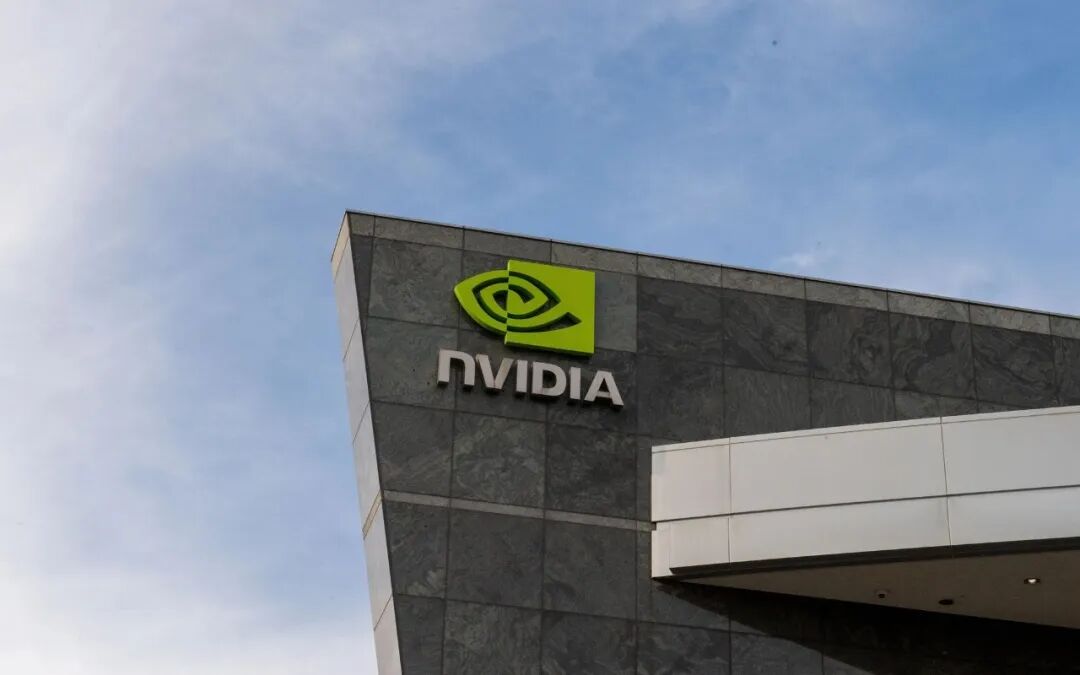
After the NVIDIA incident, how will domestic vendors' computing power strategies change?
Produced by | Meigang Tan'an
Author | Anonymous
2026.11.13 This represents only the expert's views and does not constitute any investment advice. The interviewed expert is the co-founder of an AI infrastructure service provider, who previously was responsible for the construction of ten-thousand-card clusters at a leading internet company and has long been engaged in the adaptation and delivery of multi-domestic chips (anonymized at the expert's request; "we" below refers to the expert's team).
After this NVIDIA matter came out, the market is very worried that the computing power supply for domestic large models will have problems, and some even believe that domestic computing power is "about to collapse." What do you think is the actual impact of this matter?
My judgment is that the psychological level is greater than the substantive level. High-end cards have been available only intermittently these past two years, and the window periods are hard to predict. This time it is equivalent to adding another layer of uncertainty. In the short term, some vendors will reassess their orders on hand and their card-stocking pace; that is real. But the claim that "domestic computing power is about to collapse" does not hold, because the question of "whether domestic cards can train large models" has been repeatedly verified over the past six years. What is truly worth discussing are two more specific questions: to what level has training progressed, and what bottlenecks remain.
Then let's start with this basic question: can domestic cards actually train large models? Are there cases that have already run successfully and are presentable?
The answer is yes. In fact, domestic card training has long passed the PPT stage. If one pays attention, there are many real training cases in the industry. The past few years can be roughly divided into three stages:
The first stage, 2020 to 2023, was the stage from 0 to 1. For example, Zhipu trained a 2.9-billion-parameter model on Hygon cards in a Chengdu cluster; at that time most practitioners had not even heard of large models. In 2021, they also trained the 13-billion-parameter code model CodeGeeX on Ascend 910A.
In 2023, iFlytek and Huawei built the first domestic ten-thousand-card platform, Feixing No. 1, and the entire Spark series was trained on Ascend; Meituan's LongCat team also began working with domestic cards at the thousand-card scale that year.
The second stage, 2024 to 2025, saw hundreds of billions scale up and ten-thousand-card clusters take shape. In September 2024, China Telecom trained a trillion-parameter model on a fully domestic ten-thousand-card cluster, with effective training time accounting for more than 98%, and open-sourced the hundred-billion-parameter TeleChat2-115B. In March 2025, Ant's Ling-Plus used domestic accelerator cards to train a 290-billion-parameter MoE model, and pre-training costs also dropped by about 20%. In April to May 2025, Huawei's Pangu Ultra 135B dense model was trained purely on Ascend, with zero NVIDIA content; subsequently, the 718-billion-parameter Pangu Ultra MoE raised the MFU of a ten-thousand-card cluster from 30% to 41%. In 2025, Zhipu used Ascend 910B to train GLM-Image, with the entire process from data preprocessing to large-scale training done domestically, and text rendering achieved open-source SOTA.
The third stage, 2026, saw the full process run through at the trillion scale. In April, DeepSeek V4 was released, with part of the training using Ascend, the first time this was written into an official technical report; in May, Baidu trained an important version of Wenxin 5.1 on a ten-thousand-card cluster of Kunlun Core P800, with an effective training rate of 97%; in June, a joint team in Shenzhen used a thousand-card Ascend 910C to complete full-parameter post-training of the 1.6-trillion-parameter DeepSeek-V4-Pro; in July, Meituan open-sourced LongCat-2.0, with 1.6 trillion parameters, peaking at more than 50,000 domestic cards, and a fully domestic process from zero pre-training to inference, the industry's first true full-stack domestic solution. In the same year, Zhipu trained a 70-billion-parameter text model on Hygon. By November, according to our understanding, the next-generation models of DeepSeek and Zhipu both plan to conduct pre-training directly on Ascend.
How should the real level of these cases be evaluated? There are voices outside questioning whether there is water in them.
Looking at the metrics separately, indicators such as "effective training time accounting for 98%" and "effective training rate 97%" reflect cluster stability and fault tolerance, indicating the ability to work continuously for long periods; the value here is real.
MFU in the 30% to 41% range still has a gap compared with top international clusters, but it is already at a level where serious work can be done. The most fundamental change is in scope: two or three years ago, domestic cards mainly handled inference and fine-tuning, but now they have pushed all the way into the full process of pre-training, post-training, and reinforcement learning. In addition, 98% and 97% come from different companies and different definitions, so they cannot be directly compared horizontally; just look at the trend.
However, two points need to be explained: first, some cases belong to "partial process localization," such as DeepSeek V4 using Ascend for part of its training, which cannot be called purely domestic; at present, the true full-stack purely domestic benchmarks are Pangu Ultra and Meituan LongCat-2.0. Second, there are still several mountains between "can train" and "can afford to train, can train fast, and can train best." The scale problem has basically been solved, but the efficiency and cost problems have not.
Then where exactly are the bottlenecks?
Five aspects.
First, single cards and memory. The manufacturing process is stuck at 5 to 7 nanometers, and HBM is even more scarce. If a single card is not enough, one can only stack cards, and stacking cards brings a series of new problems in power consumption, communication, and stability.
Second, production capacity. Yield and wafer capacity determine how many cards can actually be produced, and this is not something the R&D side alone can solve.
Third, the software ecosystem. CUDA has accumulated nearly twenty years of foundation, and every time one switches to a different chip, the operator library basically has to be rewritten; this gap cannot be caught up in one or two years.
Fourth, fragmentation. Ascend, Hygon, Kunlun Core, Cambricon, Moore Threads, and MetaX each go their own way, and model vendors have to adapt the same model N times, spreading engineering resources thin. This is what we feel most directly on the adaptation side, and it is currently the industry's biggest internal friction.
Fifth, labor costs. A single large-scale adaptation often requires hundreds or thousands of engineers, and how many times such investment can be replicated is something each company is actually unsure about.
How do you view the paths to break the deadlock? Which one will take effect first?
In fact, the industry has explored many paths in parallel, and they take effect at different speeds.
Chip-model co-design is the most realistic. Models are designed for chips, and chips are designed for models; with MoE, sparse attention, and low-precision training, every FLOP saved in the algorithm helps hardware close the gap.
A unified intermediate layer is unavoidable. Starting from scratch for every chip and every model is too much internal friction; the industry needs an open-source, cross-chip "domestic CUDA layer," and TileLang and open-source CANN have already made a good start.
If a single card is not enough, use the system to make up for it. System engineering such as super nodes, interconnection, scheduling, and fault tolerance happens to be the strength of Chinese engineers, and we have already seen relatively certain progress on this line.
Training-inference layering is a pragmatic transitional strategy. Inference should be fully localized first, using the scale and revenue of inference to feed chip iteration; for training, domestic cards and existing cards should be mixed first, and then gradually switched over.
Open source drives the ecosystem, and this takes effect fastest. On the day LongCat-2.0 was open-sourced, several domestic chips completed adaptation. Open-source models have in fact become the best test sets and the best standard parts for domestic chips.
The underlying hard bones such as HBM, advanced processes, and advanced packaging can only be chewed on slowly; these are ten-year matters and cannot be rushed.
You mentioned that the next-generation models of DeepSeek and Zhipu both plan to conduct pre-training directly on Ascend. How do you view their positions in this wave of localization?
Each company takes a different path, and the intensity is also different.
DeepSeek's route is concentrated in the pre-training stage: V4 used Ascend for part of its training and wrote this into its official technical report, V4-Pro's trillion-level post-training was completed on a thousand-card Ascend setup, and the next generation's pre-training is also planned to be placed on Ascend.
Zhipu started earliest and has the broadest route: in 2020 it trained a model on Hygon in a Chengdu cluster, almost two years earlier than the industry's general understanding; in six years it has gone through Hygon, Ascend 910A, and Ascend 910B, with GLM-Image fully on Ascend in between, and in 2026 it also trained a 70-billion-parameter text model on Hygon.
Among leading model companies, as far as we understand, this is the only one that has simultaneously traveled the routes of more than two domestic chips. Moreover, the engineering accumulation in adaptation has compounding returns; the pitfalls encountered with operators and the tuning experience for training stability will all carry over to the next switch.
If we combine this with some recent market rumors—that Zhipu's next-generation base model has a parameter scale of more than one trillion, that its infra team has been strengthened, and that it is negotiating a revenue-sharing model with cloud vendors—plus reports in November that both it and DeepSeek plan to pre-train directly on Ascend for their next generation, then if this lands, it will be the first time domestic cards undertake base-model pre-training at this scale, and the industry significance will be greater than the model itself.
Of course, one caveat: do not mythologize any single case. According to engineering convention, the training side will most likely be a transitional mix of domestic cards and existing cards; pure Ascend pre-training has extremely high stability requirements, and repeated fluctuations in the middle are normal. However, Zhipu's post-training accumulation has a good reputation in the industry; even if there are fluctuations in the pre-training stage, its ability to pull things back in the post-training stage is greater than that of ordinary companies.
One last question: after the NVIDIA incident, how will domestic vendors' computing power strategies change?
Two judgments.
First, training-inference layering will accelerate. There is basically no suspense about localization on the inference side; the scale and cash flow of inference in turn feed chip iteration. Once this flywheel turns, the switch on the training side is only a matter of time.
Second, computing power determines the ceiling, but not the direction. Whether NVIDIA changes CEOs or not, China's AGI path must continue. When Zhipu first trained a model on Hygon, no one thought that would be a main road; six years later, there are more and more names on this timeline, and it is becoming the main road. The problem with domestic cards is no longer "whether it can be done," but "how fast the efficiency gap can be closed."
This NVIDIA fluctuation will only make this switch faster, not slower.
Disclaimer: This article is based on the public-company nature of listed companies. Meigang Tan'an strives to make the content and views contained in the article objective and fair, but does not guarantee their accuracy, completeness, or timeliness; the information in this article or the opinions expressed do not constitute any investment advice, and Meigang Tan'an assumes no responsibility for any actions taken based on this article.
-
![]()
"Space AI's First Stock" Debuts Today, but Investors Aren't Exactly Rushing In
-
Apple Doesn't Want to Keep "Winning by Doing Nothing"
-
![]()
Token Overseas Revenue Can No Longer Keep Up with Soaring Storage Costs
-
![]()
Suzuki: From Retreat in China to Japan's Third Largest | Cover Story: Japanese Automakers at the Crossroads of Transformation (Part 5)
-
Nearly Half of Q3 Complaints to 12365auto.com Came from Cars Less Than Three Years Old, Putting Validation Under Pressure
-
![]()
1113 Domestic Computing Power Expert Exchange Minutes
-
AI Film & TV: Top 10 Companies with the Fastest Growth and Strongest Profitability
-
![]()
Long Time No See, "Little" Smart | Why Build a Car That Doesn't Make Money?