Apple, Huawei, and Xiaomi Vie for Dominance in the 10,000-Yuan Smartphone Segment: Has the Smartphone Market Embraced the Luxury Era?
 09/14 2026
 398
398
The recent product launches from major smartphone giants have garnered widespread attention, with heated debates swirling around their new premium offerings. One undeniable trend is the soaring prices of smartphones, with devices surpassing the 10,000-yuan mark—and even exceeding 20,000 yuan—becoming increasingly prevalent. Some media outlets have raised the question: Are smartphones now entering the luxury era?
I. Apple, Huawei, and Xiaomi Clash in the 10,000-Yuan Smartphone Arena
According to a report from China Newsweek, from the afternoon of September 7 to the early morning of September 10, the global smartphone industry is set to witness an unprecedented "foldable screen showdown."
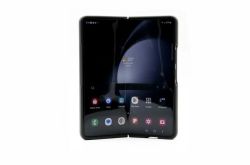
Within a 72-hour span, Huawei, Xiaomi, and Apple will each host product launches, unveiling their flagship foldable smartphones. This marks the first time in seven years since the inception of the foldable screen category that these three industry titans are competing head-to-head in the same timeframe and product segment. Huawei and Apple are facing off in the foldable screen arena for the first time, while Xiaomi is joining the fray with a novel "medium-fold" form factor.
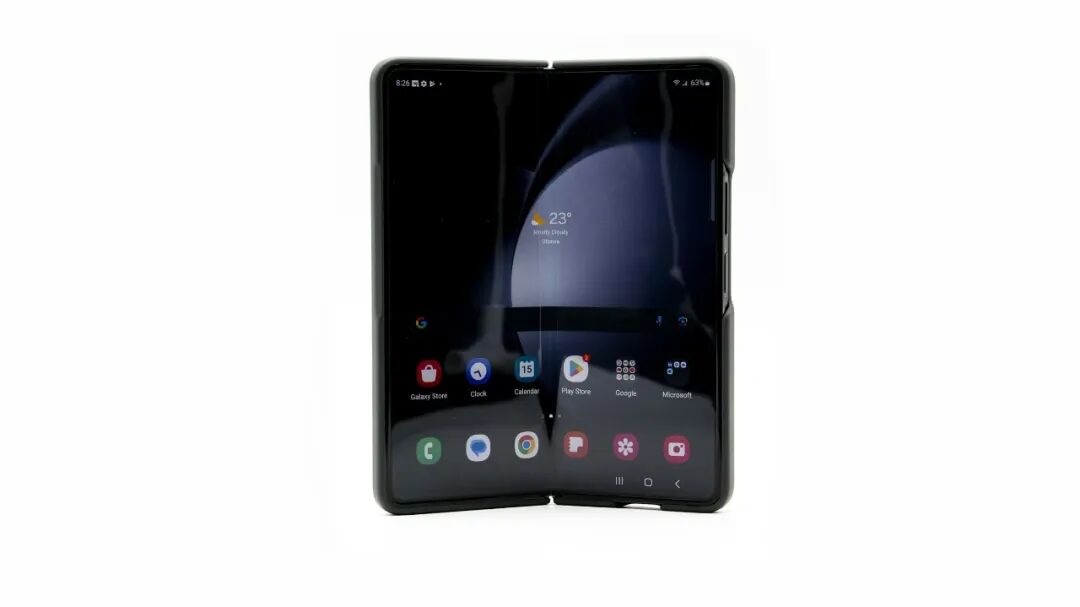
On the afternoon of September 7, Huawei took the lead by unveiling its new-generation triple-fold smartphone, the "Huawei Mate XT 2" Ultimate Master. Pricing starts at 19,999 yuan, with the top-tier version reaching 24,999 yuan.
Xiaomi followed suit, announcing its first "medium-fold" smartphone, the Xiaomi 18 Fold, in the evening. The 18 Fold introduces an entirely new medium-fold form factor. Xiaomi Group President Lu Weibing confirmed that the starting price would exceed 10,000 yuan, marking Xiaomi's foray into the 10,000-yuan smartphone market.
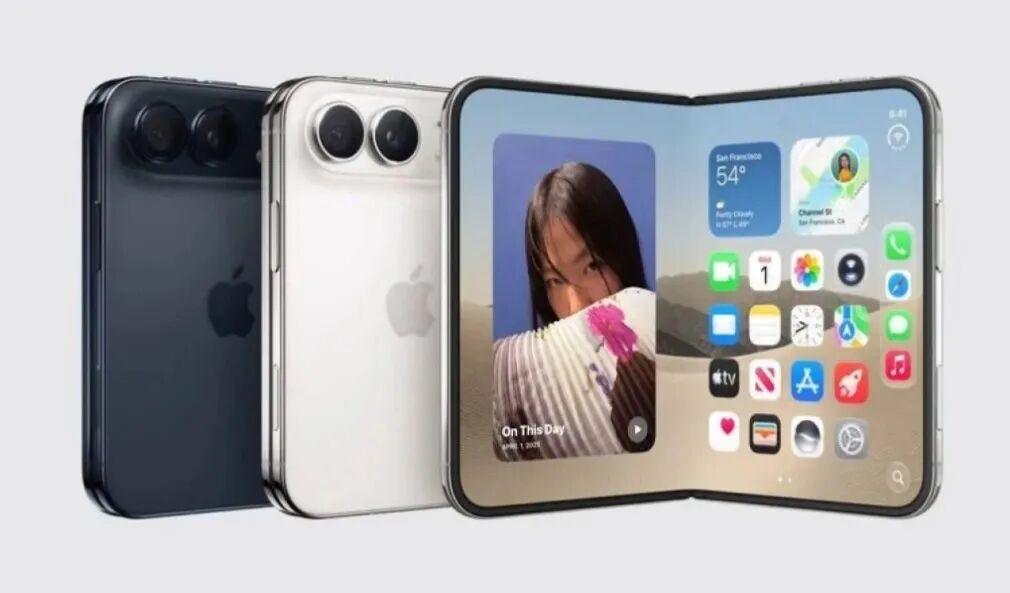
In the early hours of September 10, Apple finally unveiled its long-rumored foldable smartphone, the "iPhone Duo." Dubbed the "most significant change to the iPhone's appearance to date," the device features a horizontal book-style fold, with an external screen measuring approximately 5.4 inches when closed and an internal screen expanding to about 7.6 inches when opened, nearing the display area of an iPad mini. Pricing for the iPhone Duo starts at 15,999 yuan for the 256GB China variant, with the top-tier 2TB model reaching 26,499 yuan, making it the most expensive model in Apple's current iPhone lineup.
According to a report from Cover News, multiple flagship smartphones were priced above 10,000 yuan in September, with Apple significantly raising the prices of several models, sparking market discussions about smartphones entering the luxury era.
II. Has the Smartphone Market Truly Entered the Luxury Era?
Recently, Huawei, Xiaomi, and Apple have been lining up to host product launches, unveiling one foldable smartphone after another, with prices soaring to new heights. Some have even questioned whether smartphones have already entered the luxury era.
First, across-the-board price hikes for smartphones have become inevitable. Rising smartphone prices are no longer an isolated phenomenon by a single brand but a structural trend across the entire industry. In the past few years, consumers have grown accustomed to flagship smartphones being priced around 5,000 to 6,000 yuan, with entry-level, cost-effective models priced around 1,000 yuan. However, smartphones priced at 7,000 to 8,000 yuan or even over 10,000 yuan are now becoming increasingly common. Particularly after the recent product launches, smartphones priced between 10,000 and 20,000 yuan are now comparable to high-end luxury handbags. The fundamental driving force behind this trend is the comprehensive pressure that AI technology is placing on smartphone hardware systems.
Deploying on-device large models is not as simple as installing software. It requires greater memory bandwidth, stronger computing power, more advanced manufacturing processes, and even places new demands on cooling modules and battery capacity. These comprehensive hardware upgrades directly drive up bill-of-materials (BOM) costs. Meanwhile, the upstream supply chain itself is experiencing price increases, with advanced-node wafer foundry prices rising year after year and memory chip prices rebounding after a cyclical downturn. Against the backdrop of comprehensive AI-driven advancements, nearly all mainstream electronic components are experiencing significant price hikes, and all hardware manufacturers are actively shifting their production capacity toward the more profitable AI industry—a move that could be seen as a "dimensionality reduction attack" on traditional consumer electronics.
In other words, smartphone manufacturers are not facing cost pressures from a single dimension but rather across-the-board cost increases throughout the entire supply chain, from chips to screens to storage to assembly. In this landscape, expecting smartphone prices to remain stable is unrealistic. Industry-wide price hikes are less a proactive choice by manufacturers and more a passive result driven by rising costs.
Second, the comprehensive pursuit of high-end positioning by smartphone brands has also become a trend. In the past, many manufacturers adopted a "volume-first" strategy, flooding the market with mid-range and low-end models to achieve economies of scale and reduce costs, while generating profits from high-end models. However, the profit margins of mid-range and low-end models are now being severely compressed by rising costs. A smartphone priced at 2,000 yuan may no longer be profitable—or may even result in losses—due to higher chip, memory, and screen costs. From last year to this year, many well-known smartphone brand leaders have lamented that selling 1,000-yuan models means selling one at a loss—this is not just complaining but an objective fact. In this context, continuing to cling to the mid-range and low-end markets is no longer about "thin profits but high volume" for many manufacturers but rather "thin profits and no sales" or even "the more you sell, the more you lose."
As a result, a clear strategic shift is evident: nearly all mainstream manufacturers are sparing no effort to push into the high-end market. Apple needs no introduction—it has always been the dominant player in the high-end market, with the price anchor of its iPhone series continuously rising, now surpassing the 20,000-yuan mark. After its return, Huawei has directly targeted the 10,000-yuan segment with its Mate series and foldable products, a strategic positioning that is no accident but the result of deliberate consideration. Xiaomi is no different, continuously pushing its price bands upward from the MIX series to its flagship digital line, even launching a high-end product line to compete with foldable smartphones. Essentially, the logic of these manufacturers is consistent: since producing unprofitable performance-focused models is becoming increasingly difficult, it is better to concentrate resources on high-end products, using higher unit prices to cover higher costs while also boosting brand premium. The transformation of high-end models into 10,000-yuan devices is less a market choice and more an inevitable result of industrial logic evolution—this is why many people exclaim (gǎntàn, lament) that smartphones are becoming luxury goods.
Third, the notion of smartphones entering the luxury era is a relative concept. While many now say smartphones have become new luxury goods, this statement is only partially accurate. When you compare 10,000-yuan smartphones to traditional luxury items like handbags and watches, they are still rapidly iterating tech products that become outdated within two or three years and lack the long-term collectibility and value retention of traditional luxury goods. The so-called luxury era merely means that smartphone price ranges have touched the threshold of traditional luxury goods, with their social attributes and symbolic value beginning to outweigh their practical utility.
When you pull out the latest foldable smartphone, people around you immediately recognize that you are using the most cutting-edge tech product available. The identity-signaling effect of such a device is more powerful than any logo affixed to the back of the phone. Many people who purchase 10,000-yuan foldable smartphones do not do so out of necessity—it is not that they cannot work or live without this device. Instead, carrying it around for gatherings with friends or business meetings conveys their pursuit of technological innovation and reflects their consumption power and social status. This symbolic value has now become one of the core selling points of high-end smartphones.
Consider the recent release of Apple's foldable smartphone: second-hand prices immediately skyrocketed, with some media reports even claiming that certain Apple iPhone Duo models were reselling for nearly 100,000 yuan. This is because many who managed to purchase one at launch did not rush to unbox and use it but instead took photos to post on social media, showcasing that they had secured one of the first scarce units available online. Among those willing to spend 100,000 yuan on a limited-edition model in the second-hand market, how many truly intend to use it as their primary device? What they are purchasing is not the phone's functionality but the social话题 (a topic of conversation) generated by its scarcity and the capital to display their status within their social circles.
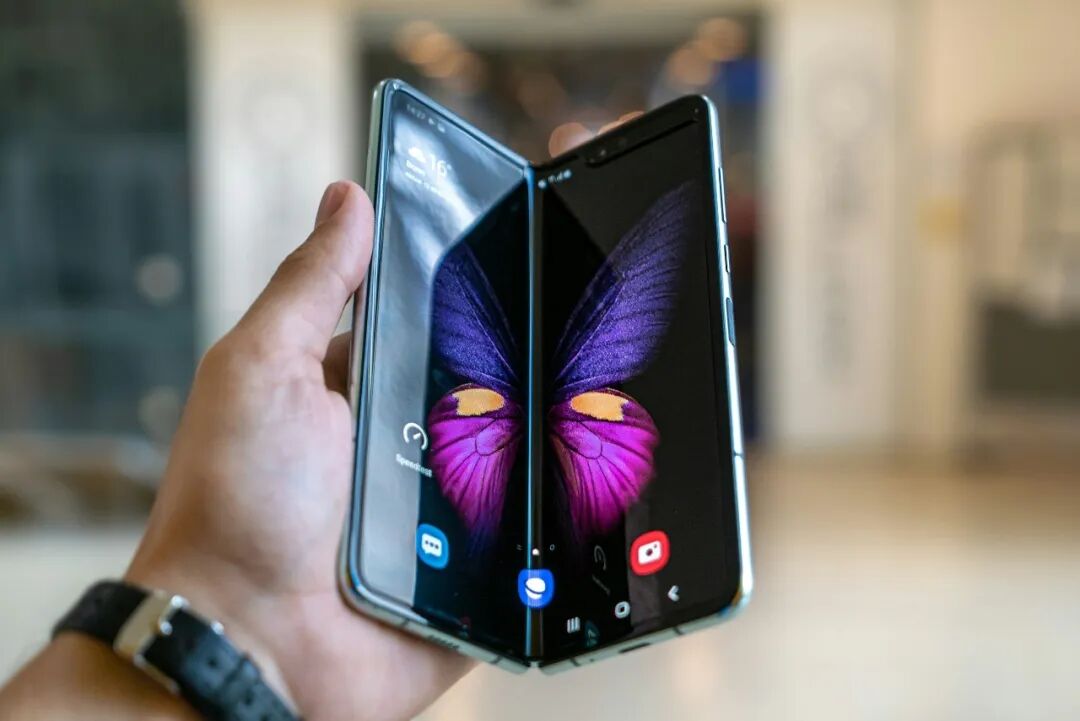
Fourth, cost-effective models remain the urgent need for most ordinary people. While the luxury trend in smartphones is gaining momentum, the market is ultimately stratified. For most ordinary people, there is still a strong desire for more cost-effective models—after all, the majority cannot afford luxury goods. This reality ensures that the smartphone market will not fully luxury-ize but will instead develop a clear hierarchical structure.
The extension of replacement cycles has become a rational consumer response. Faced with prices nearing 10,000 yuan, more and more consumers are choosing to use their smartphones for 3 to 4 years, transforming flagship models from "fast-moving consumer goods" into "durable goods." This shift directly impacts the smartphone industry's shipment model, making manufacturers more reliant on profits from high-end models rather than sales growth.
The trend of consumption stratification is becoming increasingly evident. Some consumers have explicitly stated, "I can buy expensive, but not at an inflated price," opting for base-model flagships or waiting for major promotions rather than blindly chasing the latest releases. This rational consumption attitude means the smartphone market will not fully move toward luxury-ization but will instead feature a dual-track structure of "high-end luxury-ization + mid-range cost-effectiveness."
For manufacturers, this highlights the importance of differentiated strategies. Truly competitive manufacturers must not only establish a luxury image in the high-end market but also maintain cost-effectiveness in the mid-range market, satisfying the needs of different consumer groups through a multi-tiered product matrix. Those who merely follow the trend of price hikes without genuine technological breakthroughs will ultimately be eliminated by the market.
For a long time, we have consistently advocated for technological democratization. We do not oppose high-priced premium smartphones, but the market also needs affordable entry-level and performance-focused models alongside high-end offerings. After all, most people urgently need a simple, affordable, and functional smart terminal—this is what the market truly requires.
END
Daily Quote: Never define anyone around you, for interests and human hearts are ever-changing. Time reveals people, and adversity reveals true intentions. Without experiencing events, one cannot truly understand others. Do not gamble with fate, and do not guess at human hearts—fate is too risky to bet on, and human hearts are too complex to fathom. Small matters reveal one's character, and details reveal one's integrity. Time itself is neutral; everything depends on the human heart. Do what you must, be grateful, stay kind, and leave the rest to time. "Small matters reveal one's character, and details reveal one's integrity. The world itself is neutral; everything depends on the human heart." — Blossoms Shanghai
Jiang Han's Perspective
-
![]()
Apple, Huawei, and Xiaomi Vie for Dominance in the 10,000-Yuan Smartphone Segment: Has the Smartphone Market Embraced the Luxury Era?
-
![]()
Chinese Air Conditioners Gain Momentum in Europe: Can Indian Companies Follow Suit on the Global Stage?
-
![]()
Xingyu Shares Cancels Contracts of 107 New Graduates—Not for Listing, but for a Far Grimmer Reason
-
Rebirth: My New Role as the "Factory Director" at the Bund Conference
-
![]()
Can Neta Automobile Truly Be Revived? Will Taiyi Shenglian Rejuvenate It with 3 Billion Yuan?
-
![]()
Zotye Auto Initiates Trial Production of New Vehicle, Signaling a Potential Comeback
-
![]()
"Chinese Version of Cullinan" is Here: A Sneak Peek at New Cars from MIIT
-
![]()
Growth Slows Again: Denza Z9GT Makes Car Buying More Accessible