Apple’s Foldable Phone: A Revolution That Even Steve Jobs’ Legacy Can’t Stop
 09/14 2026
 393
393
In January 2007, Steve Jobs famously quipped at the original iPhone launch, “Who needs a stylus?” Gesturing to his finger, he declared, “We’re born with ten perfect ones.”
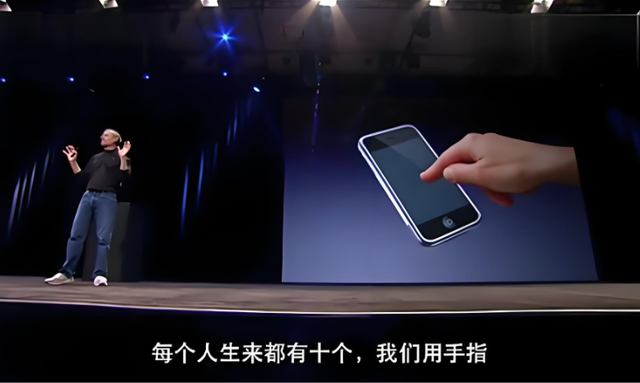
Nineteen years later, Apple’s new CEO made a bold move that seems to defy Jobs’ philosophy: the iPhone Duo, Apple’s first foldable phone, officially supports the Apple Pencil on both its inner and outer screens.
Apple didn’t just launch a foldable phone with a large screen—it paired it with a stylus, a tool Jobs once dismissed.
Both choices, once scoffed at during the Jobs era, are now embraced by Apple.
I. Foldable Screens with Styluses: Apple Follows, But Isn’t the First
Huawei took the lead in introducing stylus support for foldable phones in China.
In 2022, the Huawei Mate Xs 2 introduced compatibility with the M-Pen 2s, featuring 4,096 levels of pressure sensitivity.
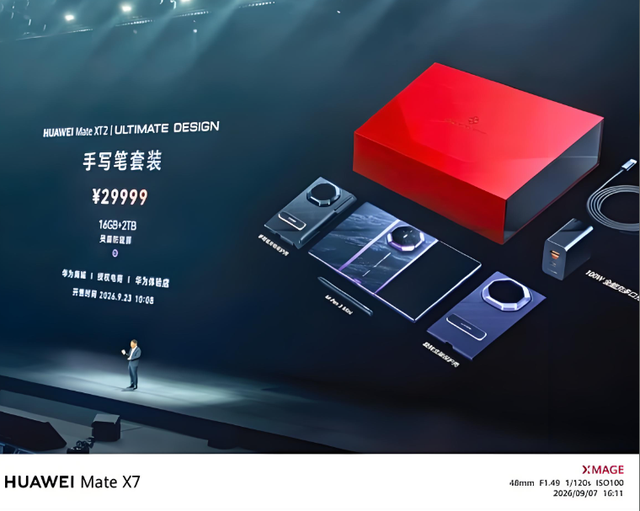
Huawei doubled down on this approach. In September 2026, the latest triple-folding Mate XT 2 Ultimate Master launched with a special stylus bundle priced at 29,999 yuan, with the stylus alone costing 1,199 yuan.
The Mate XT 2 boasts a 10.2-inch triple-screen inner display, optimized for mobile office and creative tasks when paired with the stylus.
While Huawei is doubling down, Samsung is stepping back.
Samsung phones began supporting the S Pen stylus with the Galaxy Z Fold3, continuing until the Z Fold7 before abandoning it entirely with the Z Fold8. After four generations, Samsung simply gave up.
Other brands are also exploring this space.
OPPO introduced an AI stylus with the 2026 Find N6, focusing on screen selection recognition and handwritten formula calculations.
Xiaomi remains hesitant—the September 2026 Xiaomi 18 Fold made no mention of stylus support, though multiple tech influencers previously claimed the Xiaomi MIX Fold 5 would “support an AI stylus.”
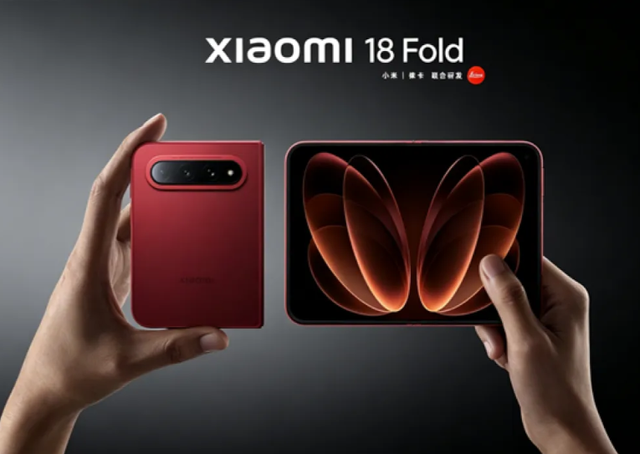
Plans exist, but execution remains unclear.
II. Why Do We Still Need a Stylus?
Foldable screens typically measure 7 to 8 inches when unfolded, with Huawei’s Mate XT 2 reaching 10.2 inches in triple-screen mode.
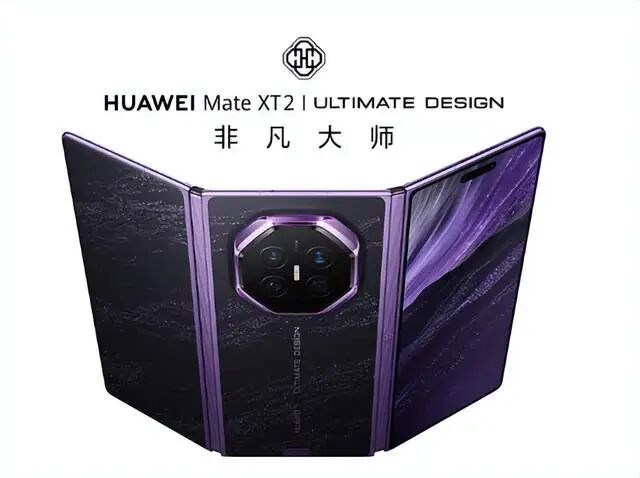
This size amplifies the inaccuracy of finger-based touch controls.
While finger taps work fine on regular smartphones, tasks like annotating documents, precise drawing, or split-screen operations on a tablet-sized screen reveal the limitations of finger precision.
Styluses provide “precise input” capabilities—a natural demand for large-screen devices.
Huawei’s vision is clear. The Mate XT 2’s stylus serves as a “mobile workstation,” paired with a 10.2-inch screen and PC-grade apps to create a pocket-sized productivity device.
Leaks about the Xiaomi MIX Fold point in the same direction: the stylus accessory is described as a “core productivity ecosystem perk.”
But ideals clash with reality.
The UTG ultra-thin glass used in foldable inner screens is far less durable than the cover glass on regular smartphones.
To achieve thinness, foldable screens stack the touch layer, polarizer, and ultra-thin glass together, making the stylus’s “tap lifespan” a high-stakes gamble between after-sales costs and product functionality.
Simply put, manufacturers are betting whether users will damage the screen within the warranty period.
This is why Samsung abandoned the S Pen with the Z Fold7.
In pursuing ultra-thin designs, the physical flatness at the hinge couldn’t meet the stylus’s writing experience requirements. Yield rates and after-sales costs crushed the feature. Supporting a stylus requires stacking an additional sensor layer beneath the flexible screen, increasing thickness and costs.
With foldable phones already engaged in a price war in 2026, sacrificing profit margins for a non-essential accessory is a losing bet for most manufacturers.
Samsung calculated and lost, then withdrew.
III. Apple Arrives Late, But Not Necessarily Behind
Apple CEO Ternus responded bluntly in post-launch interviews about “defying legacy”: he never viewed Jobs’ 2007 statement as a permanent rule.
He added that the stylus is an optional feature, not a fallback for failed touch controls.
This stance holds technical merit.
Jobs opposed styluses in 2007 because resistive screens required pen-tip precision—a “necessary compromise.”
Today’s Apple Pencil is an active tool for creativity and efficiency, operating on a different logic.
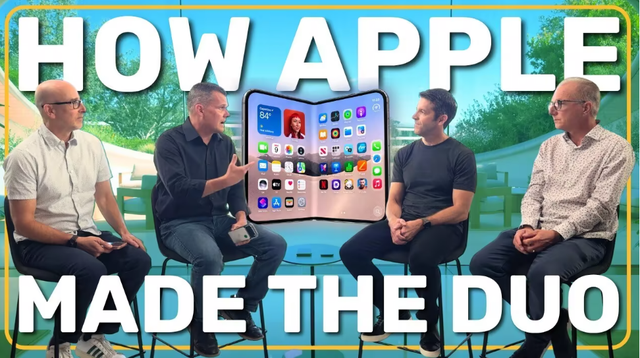
But Apple is undeniably late to the game.
Huawei has offered styluses since 2022, with the September 2026 Mate XT 2 representing its third-generation triple-folding device, complete with a 2TB storage, 29,999-yuan stylus bundle.
Xiaomi hasn’t delivered a stylus yet, but its September 2026 Xiaomi 18 Fold entered the market at 10,999 yuan, featuring a “mid-fold” design and self-developed Xuanjie O3 chip.
Apple’s strategy may lie in its “lateness.”
It never rushes to be a guinea pig for first-gen designs.
Huawei pushed the “triple-fold + stylus” premium business form to extreme price points, while Samsung navigated the pitfalls of thin foldable screens. Apple then swooped in with a standardized “dual-screen fold + Apple Pencil compatibility” to capture high-end Apple fans.
This “plant trees, then harvest” platform-level strategy is Apple’s signature move. Apple doesn’t invent—it paves others’ trial-and-error paths into toll roads.
Huawei is indeed more aggressive—triple folds, first-mover stylus adoption, PC-grade interactions. These are facts.
But Apple defines “standards,” and standards are the true commercial moat.

Huawei shows the industry what foldable phones can do; Apple dictates what they should do.
The former explores; the latter consolidates.
Conclusion
Apple adding a stylus to its foldable phone isn’t so much “defying legacy” as acknowledging a reality: when phone screens approach tablet size, fingers are no longer the only suitable input tool.
The context of Jobs’ 19-year-old remark has changed.
Foldable screens with styluses aren’t yet a definitive trend: Samsung abandoned them after four generations, Apple just joined, Huawei persists, and Xiaomi waits. What determines the stylus’s fate isn’t Jobs’ words but whether users actually adopt it.
If the stylus remains just another “optional accessory,” it may join most foldable accessories as a novelty that gathers dust after launch.
What Jobs said doesn’t matter—what matters is whether users will pay for the stylus.
If the answer is “no,” Apple’s legacy-defying move will merely add another dusty gadget to the annals of digital accessories.
What’s your take? Thanks for commenting.
————————
-
![]()
Why Do More Camera Sales Lead to Less Profit? The Dilemma of Perception Hardware Provider Haoen Automotive Electronics
-
![]()
Has the Market for A00-Class Pure Electric Vehicles Dried Up, Leaving Them in the Dust of Progress?
-
![]()
Can Zotye Make a Comeback with Its New Car?
-
![]()
Where is the $142 Million Going? Domestic Focus on Optical Waveguides, Overseas Shift to Application Layer
-
![]()
JD Builds 100,000-Card Cluster, ByteDance 'Borrows' $29.6 Billion: AI Computing Power Enters a High-Stakes Gambling Phase
-
![]()
Jiangsu Liyang: Leading County in the Power Battery Sector, Propelling Electric Vehicle Growth in Eastern China
-
![]()
Apple’s Foldable Phone: A Revolution That Even Steve Jobs’ Legacy Can’t Stop
-
![]()
Unexpected Trading Suspension! GAC Undergoes Significant Capital Restructuring Amidst Speculation of Mutual Shareholding with FAW, Shaking Up the Automotive Market