Can Doubao Mobile Phone II, Which Has Learned to 'Knock,' Exchange 380 Million Monthly Active Users for Ecosystem Openness and Scheduling Rights?
 09/18 2026
 328
328
A New Game
On the afternoon of September 16th, Doubao Mobile Phone II was officially released with a starting price of 5,999 yuan, reduced to 5,499 yuan after national subsidies.
This marks the second collaboration between ZTE and ByteDance following the Nubia M153 (Doubao Mobile Phone I), resulting in the Nubia NaviX Ultra. Before its official sale, the product had nearly 400,000 pre-orders on JD.com and is officially positioned as the world's first AI agent phone.
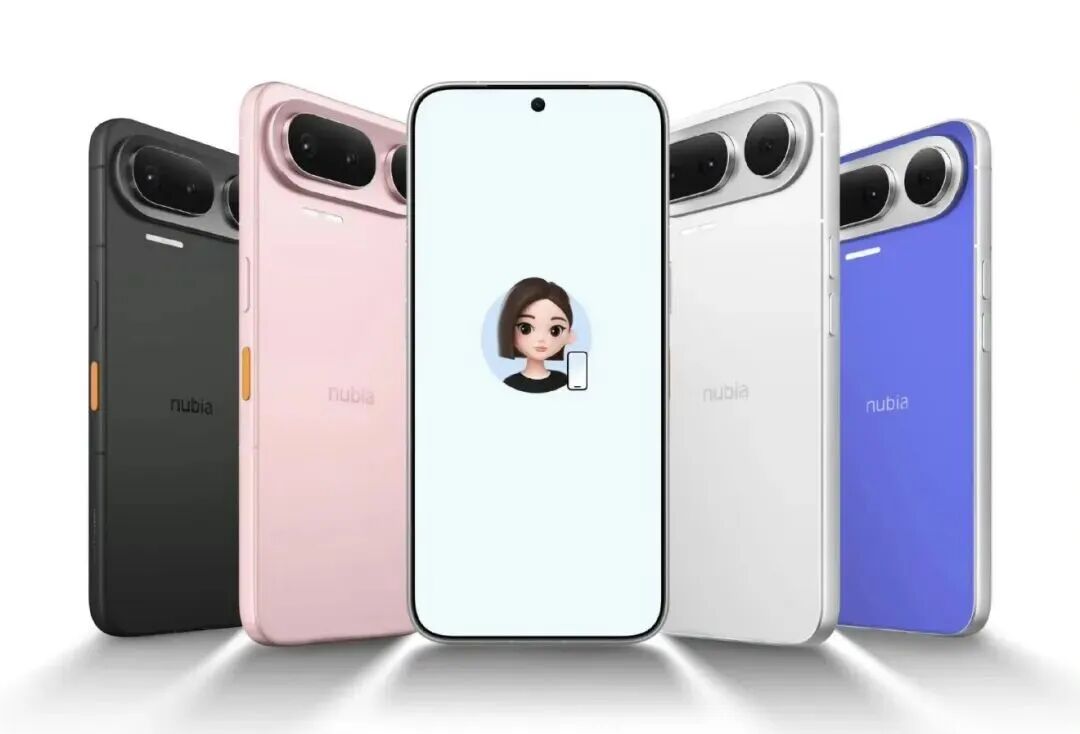
Compared to traditional smartphones, the core selling point of Doubao Mobile Phone is 'getting things done with one sentence,' meaning AI can complete a series of operations across apps based on user instructions, such as booking flights, sending messages, or hailing rides. In fact, during Doubao Mobile Phone I, the technical validation for this process was already completed, and the industry had reached a consensus that the completion of 'getting things done with one sentence' would continuously improve as AI develops. At one point, Doubao Mobile Phone I was even resold for over 13,000 yuan just for this capability.
However, things did not unfold as envisioned. When super apps restricted ecosystem and operational permissions, and phone manufacturers restricted system-level scheduling, Doubao Mobile Phone I quickly became a 'brick' in the hands of early adopters. Now, Doubao Mobile Phone II is making a comeback, but the products that can be activated with 'one sentence' are concentrated within the ByteDance ecosystem and a few open third-party apps, leaving the core conflict unresolved.
From 'Breaking In' to 'Knocking'
What Compromises Has Doubao Mobile Phone II Made?
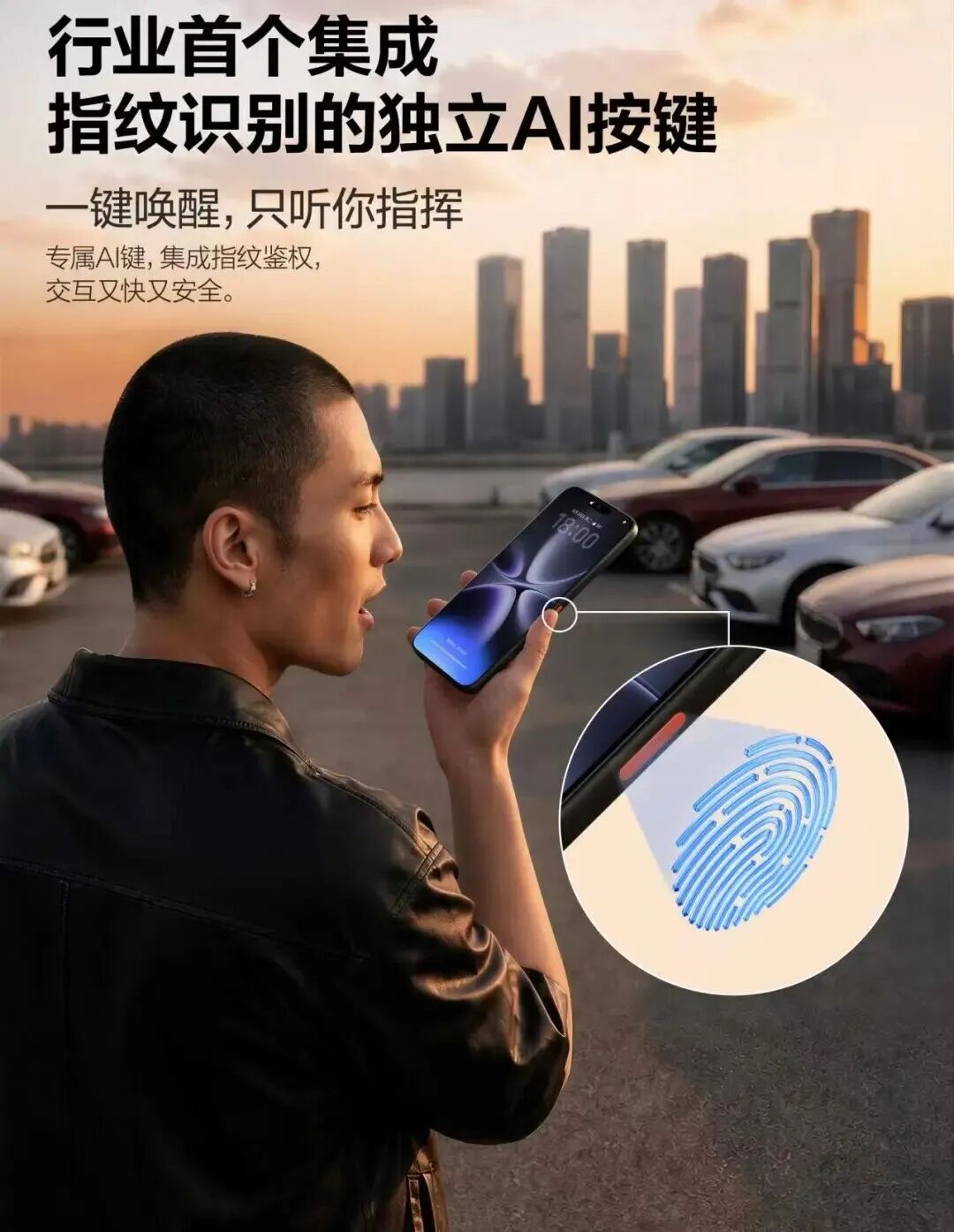
From a product innovation perspective, Doubao Mobile Phone II has two main changes. One is the addition of an AI activation button: the fingerprint unlock key on the right side of the phone now includes a function to activate the AI assistant, placing the AI activation Entrance (entry point) before users access mobile apps.
The other change is in the execution process of the Agent (intelligent agent).
It is important to understand that the core of 'getting things done with one sentence' is 'using an Agent to make the phone work for the user,' but the entire operation still needs to be completed across multiple apps. Doubao Mobile Phone I achieved this through GUI simulation clicks, allowing AI to enter corresponding apps on behalf of the user to complete instructions. However, this quickly triggered risk warnings from super apps like WeChat, Taobao, and Alipay, leading to joint countermeasures from these products.
The reason is that AI automation services were not permitted by the corresponding apps, making the operations similar to 'viruses' and amounting to 'forced entry.' A deeper issue is that most internet platforms rely on attention-based business models. For example, advertising services, which constitute the majority of revenue for many platforms, are built on user attention generated through browsing. By replacing user operations, Agents 'kill' attention, creating the potential to disrupt original business models—a key reason for platform countermeasures.
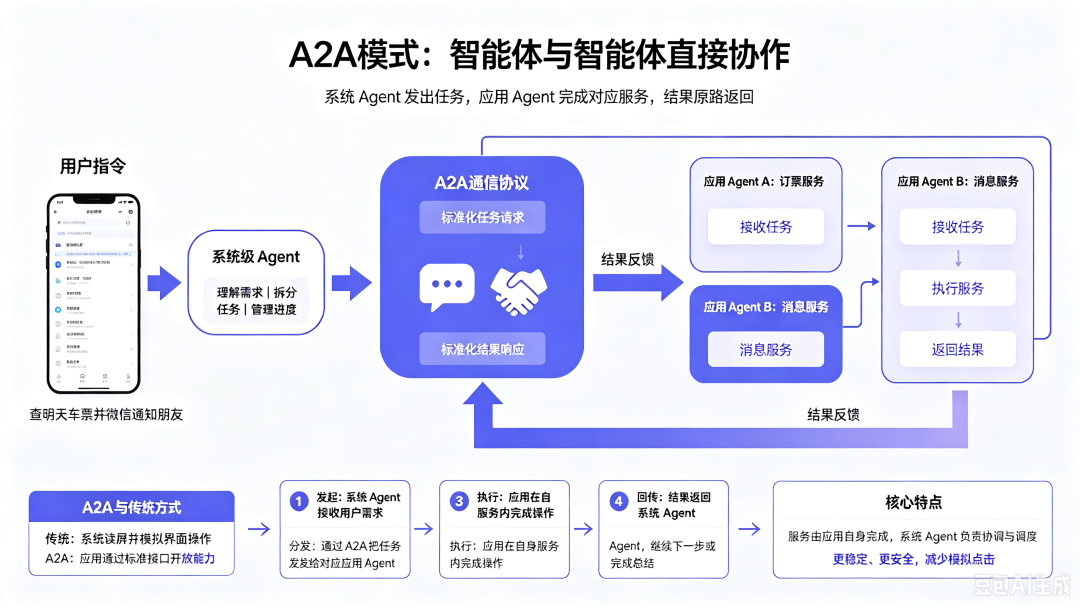
Therefore, the most significant change in Doubao Mobile Phone II lies here: the way Agents execute user instructions has shifted to a combination of protocol calls like MCP and A2A, combined with GUI, with a clear preference for protocols. Simply put, instead of Doubao completing tasks alone, it now collaborates with Agents from other apps. Before entering relevant apps, Doubao 'knocks' first—if permitted, it proceeds independently; if not, it can relay user instructions to the corresponding app's Agent via protocols. Tasks without agreed-upon protocols cannot be completed.
Currently, super apps prefer the A2A model, which keeps Agent operations entirely within their platforms. For example, in June, reports emerged that WeChat was collaborating with phone manufacturers like Huawei, Honor, Xiaomi, and OPPO to introduce A2A assistant capabilities. At the time, Tencent customer service confirmed that multiple manufacturers had already integrated this feature.
This directly reflects that the 'ecosystem wall' issue faced by Doubao Mobile Phone I remains unresolved, essentially representing a game between Agents vying for user entry points and super apps defending their traffic sovereignty.
However, Doubao Mobile Phone II has introduced a new strategy. On September 14th, the official launched SAEP (Screen Automation Operation Declaration Protocol), which states: apps will not be operated by GUI agents during a 30-day public notice period unless they actively declare acceptance. If the notice period expires and the corresponding app has not notified via email or declined via the SAEP protocol, Doubao will enable GUI agent operation capabilities for that app.
To some extent, this is a strategic retreat. As Doubao Mobile Phone II moves toward mass production, this declarative protocol implies that apps that do not refuse will further enrich its product capabilities. Conversely, if they refuse, it signals that Doubao Mobile Phone could do more but is being prevented by the relevant apps. The key change is that Doubao now stands with users. With a concrete reference for agent phones, if more users come to expect Doubao to do more, the resulting increased demand expectations could potentially force industry ecosystem openness.
The Struggle for Scheduling Rights
Three Emerging Directions
Additionally, securing system-level scheduling rights is as challenging as gaining ecosystem access.
This refers to who first receives user instructions, schedules apps, and coordinates arrangements after a command is issued. Doubao seeks this permission, which is why it chose to collaborate with ZTE—because ZTE is willing to grant it system scheduling rights. In contrast, major players like Huawei, Xiaomi, OPPO, and Vivo, with hundreds of millions of users, prefer to reserve system scheduling for their own AI assistants.
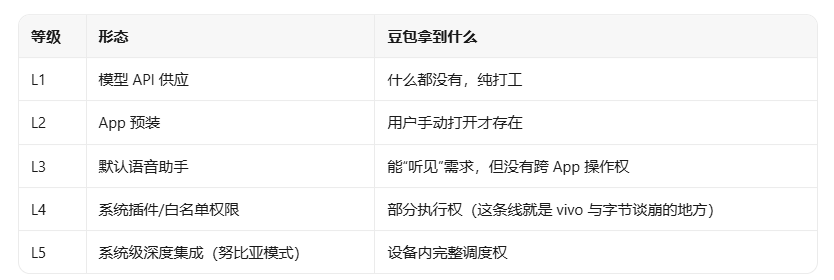
workbuddy generation
The reasons can be explained from two perspectives. First, this area harbors new business opportunities: necessary Token consumption in the Agent era could lead to paid subscriptions. An AI assistant with system scheduling rights can decide the priority of app activation. For example, upon receiving a 'order milk tea' instruction, a system-level AI could choose to open Taobao Flash Sale or Meituan by default. Such changes might drive a new round of 'bid ranking.'
Second, another selling point of AI phones is local memory: after long-term use of a specific agent, user preferences, habits, and memories are stored within the system, creating a closed loop (closed loop) where the phone increasingly understands the user, and the user becomes increasingly dependent. The high secrecy of this locally stored memory means it can only be migrated through the system's built-in device-switching service, subtly raising the cost for users to switch brands. Phone manufacturers are reluctant to relinquish system-level permissions to keep the local memory formed through AI interactions firmly under their control.
Under these circumstances, three exploration directions have emerged in the industry.
1) Model vendors directly collaborate with phone manufacturers, exchanging model strength and market influence for system scheduling rights, as seen with Doubao Mobile Phone II.
However, given its current inventory of 200,000 units, Doubao Mobile Phone II is still in the verification stage. A more direct impact of this step is transforming conceptual products into tangible, user-perceptible on-device AI entities, proving that 'getting things done with one sentence' is achievable, creating demand expectations, and thereby raising its leverage in the game theory (game) for scheduling rights.
2) Phone manufacturers tighten their grip on system scheduling rights and pursue the A2A route.
Just one day before Doubao Mobile Phone II's official release, Honor unveiled MagicOS 11, officially positioned as the industry's first mobile operating system to achieve commercial deployment of system-level Agent Harness. Based on Alibaba's QianWen model, the system's scheduling rights belong to Honor's self-developed voice assistant, YOYO, which can execute long-range tasks exceeding 100 steps. It currently integrates 700 tools and 500 open Skills, with proactive services covering over 1,000 scenarios.
In comparison, leading phone manufacturers like Honor focus more on scheduling, while model capabilities and app execution can be achieved through collaboration—this is the key difference from Doubao Mobile Phone II.
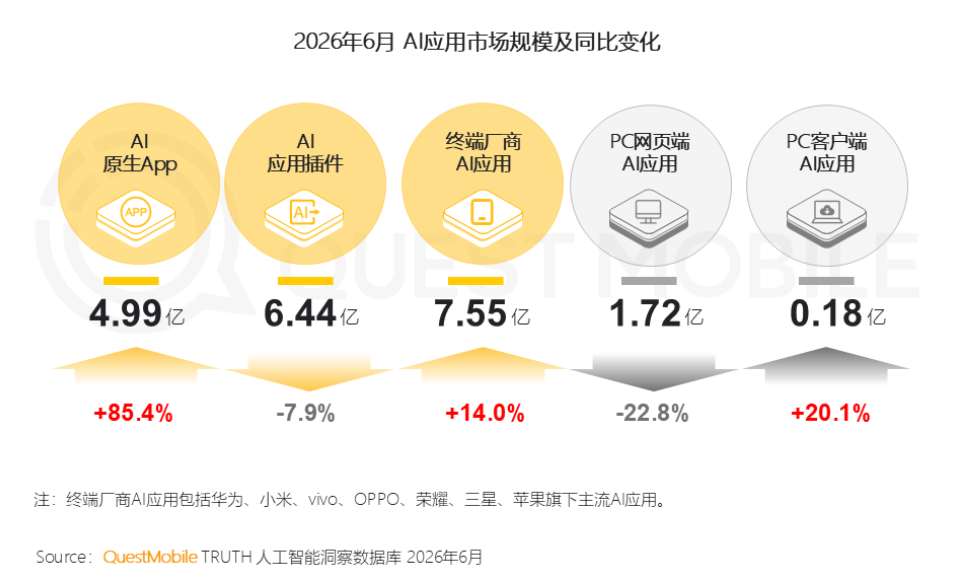
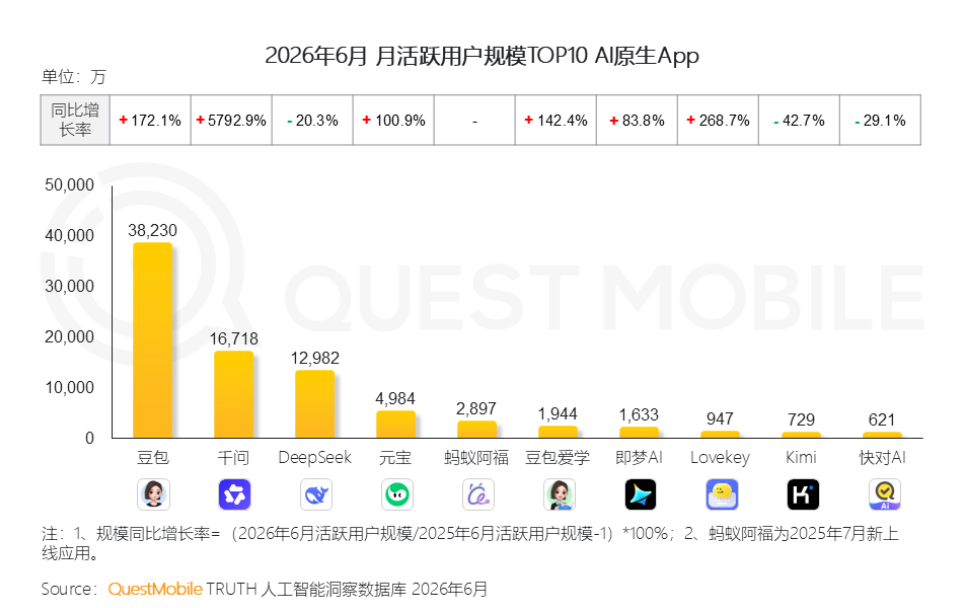
The underlying reason is that ByteDance lacks hardware products, but Doubao has already established a dominant market position. According to QuestMobile's '2026 H1 AI Application Market Development Insights Report,' in June this year, terminal manufacturer AI apps had 755 million monthly active users, a 14% year-over-year increase, while AI-native apps had 499 million monthly active users, growing at a rapid 85.4%. Among AI-native apps, Doubao led with 380 million monthly active users. This is why ByteDance dares to attempt forcing ecosystem openness and system scheduling through demand expectations.
3) Model vendors develop their own hardware to secure scheduling rights from the ground up.
On July 13th, model vendor StepFun launched its first large model-native AI terminal brand, STEPX, and simultaneously introduced the native agent phone (Agentic Phone) STEPX Neo. The company aims to establish a complete chain from base models to agent systems and hardware terminals. Currently, this represents the most aggressive approach among model vendors, with its commercial viability and market recognition yet to be observed.
More Players Enter
Information Security and Genuine Demand Warrant Discussion
The number of players continues to grow, and the AI-driven evolution of smartphones is an irreversible trend.
In July this year, cybersecurity authorities conducted the first-ever separate filing and public announcement for 'on-device generative AI services' on mobile phones, covering end-side large models from seven major phone brands: Apple, Huawei, OPPO, Vivo, Xiaomi, Samsung, and Nubia. It is foreseeable that phone manufacturers will accelerate their Layout (deployments) in this area.
However, it is important to note that this round of technological upgrades and product launches is not driven by demand-side factors. The demand expectations that Doubao Mobile Phone II values have not yet fully materialized. From a consumer perspective, many still question whether 'AI-driven tasks' are secure, especially when transactions are involved—granting AI payment permissions is not entirely reassuring.
Moreover, whether there is genuine demand for an AI assistant capable of handling tasks remains uncertain. On one hand, is it more efficient or convenient to let AI complete relatively complex instructions compared to doing them oneself, especially when simple app activation suffices? On the other hand, given that many people view 'playing with their phones' as a form of entertainment, is there sufficient imagination for AI to handle tasks? Beyond entertainment scenarios like watching videos, playing games, and socializing, can AI adequately address tedious or cumbersome tasks that people dislike?
These are questions that require repeated validation during the industry's exploratory phase. They also reflect that market demand has not yet been unleashed, and current industry development leans more toward supply-side forced adoption.
The reasons are not hard to understand. For model vendors, significant upfront investments require monetization scenarios, and on-device AI represents one such direction in the Agent era. For phone manufacturers, mobile smart devices have reached a point of diminishing returns, and the industry needs new narratives to drive consumption and capital growth.
More intuitive (visibly), global smartphone sales have been declining. The latest data from market research firm Counterpoint Research shows that in Week 20 of 2026, global smartphone sales fell 8% year-over-year, marking the ninth consecutive week of decline. However, smartphone prices are rising. As AI-related industries' demand for storage resources continues to grow, smartphone costs have increased, prompting many manufacturers to raise prices. During the recent back-to-school season, China's smartphone market saw a rare phenomenon of simultaneous price hikes across multiple brands.
Given this landscape, even if market demand has not yet emerged on a large scale, manufacturers and platforms will continue to craft new narratives. In this process, users will gradually adapt through waves of technological iteration. From this perspective, the mass-produced Doubao Mobile Phone II has already toppled the first domino in the commercialization of AI agent phones.
-
From Rent Collection to Vehicle Management, Didi Land's Hong Kong Stock Market Journey Still Has the Second Half to Go
-
![]()
The 'AI Apocalypse' Drama Staged by Five Individuals
-
![]()
Doubao Mobile Phone II: Can Its 'Knock' Feature Secure 380 Million Monthly Active Users Amidst Ecosystem Openness and Scheduling Rights Challenges?
-
![]()
Can Doubao Mobile Phone II, Which Has Learned to 'Knock,' Exchange 380 Million Monthly Active Users for Ecosystem Openness and Scheduling Rights?
-
Congratulations! In iPhone Duo, China’s Supply Chain Secures a Leading 40% Value Share
-
![]()
GAC Acquires Stake in FAW Toyota: The Merger of North and South Toyota Unveils the Complex Landscape of China’s Auto Market
-
![]()
[Electrical Equipment] 45 BRT Pure Electric Mining Trucks Supplied to Chaonaoliang Coal Mine
-
![]()
FAW Acquires Stake in Leapmotor