Second-Gen Doubao Phone Hits Shelves: Can AI Agent Phones Step Up?
 09/18 2026
 463
463
Original: Shenmou Finance (chutou0325)
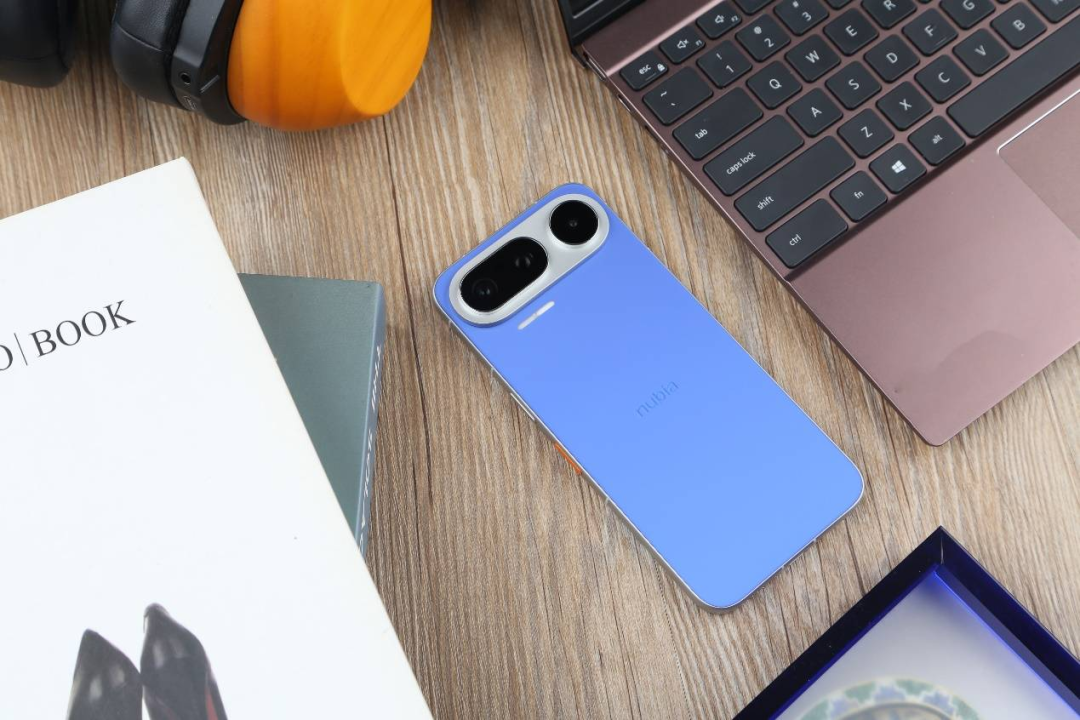
On September 16, the Nubia NaviX Ultra, jointly developed by ZTE and ByteDance, officially hit the market. This second-gen "Doubao phone" is branded as an "AI agent phone."
Its predecessor, launched last December as a limited-edition engineering model priced at 3,499 yuan, saw only 30,000 units released. These quickly became hot commodities, with secondary market prices skyrocketing. The new Doubao phone starts at 5,999 yuan, or 5,499 yuan after national subsidies. Before its launch, reservations on JD.com alone surpassed 370,000 units.
Nine months have passed since the shift from a limited-edition engineering model to a mass-produced product. Now, the question for the Doubao phone isn't about its technological capabilities, but whether this new category can thrive.
01 From Engineering Model to Mass-Produced Product: Tackling Three Key Challenges
According to the official specifications, the Doubao phone's hardware is not extraordinary among this year’s flagship models. It features the fifth-generation Snapdragon 8 Elite platform, a 7,100mAh battery, a 6.78-inch BOE screen, and a triple-camera system with a 200MP main sensor, a 50MP ultra-wide lens, and a 64MP periscope telephoto lens. For storage, it uses Changxin Memory's LPDDR5X, with a maximum speed of 10,667Mbps. Notably, this marks the first time a high-speed domestically produced memory chip has been used in a mass-produced phone.
What sets this phone apart from ordinary flagships is the independent AI button with fingerprint recognition on the right side. Pressing this button doesn't launch an app; instead, it activates an intelligent agent embedded in the system. This agent connects to the Seed full-duplex voice large model, supporting continuous dialogue that can be interrupted at any time and recognizing over a dozen dialects, including Minnan, Hakka, Shanghai dialect, and Cantonese.
The manufacturer describes its capabilities in four phrases: it understands, executes tasks, remembers, and ensures security.
In practical use, it functions like this: saying, "Book me a high-speed train ticket to Shanghai next Friday and a hotel near Hongqiao Station" can automatically handle the entire process of querying, comparing prices, and placing the order. Saying, "Summarize what was discussed in this Feishu group today" can read messages, generate a summary, and forward it to designated individuals. Pointing at a product and saying, "Help me find the best price" can identify the screen content, compare prices, and offer purchasing advice.
Compared to last year’s engineering model, the biggest changes in this generation aren't about being "smarter" but about being "more like a commercial product," with three key improvements:
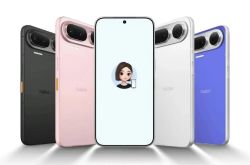
The first is positioning. The previous Nubia M153 was a technical preview version aimed at industry insiders and early adopters, with limited sales. This generation is the consumer version, starting with 512GB of storage, four color options, and following a mass-production retail strategy.
The second is rules. The previous generation relied on "screen reading" to simulate operations directly, but it faced significant backlash from app developers just one day after launch.
This generation introduces a comprehensive set of rules, launching the Screen Automation Operation Declaration Protocol (SAEP) and initiating a 30-day rule announcement period. Third-party apps can decide whether to allow AI to perform screen operations. During the announcement period, the Doubao assistant will only operate system apps, ByteDance-owned apps, and explicitly consenting third-party apps by default. For sensitive actions like payments, fingerprint button confirmation is required, and agent permissions are tiered.
The third is commercialization. The first-generation Doubao phone was priced at 3,499 yuan and limited to 30,000 units. The new generation starts at 5,499 yuan for mass production, with inventory scaled up to around 200,000 units.
Overall, this generation essentially repackages what worked technically but faced ecological challenges in the previous generation into a commercially viable product.
02 First-Generation Missteps Pave the Way for Second-Generation Improvements
The second-generation Doubao phone's focus on "improving rules" is largely due to the missteps of the first generation.
The first-generation Doubao phone gained overnight attention thanks to its aggressive technical approach of screen reading. The intelligent agent didn't require apps to open interfaces; instead, it interacted with the screen like a human, clicking and inputting to complete tasks across apps.
The advantage of this approach was immediate results without relying on ecosystem cooperation. However, the downside was equally apparent: it bypassed app authorization, making conflicts almost inevitable as it scaled up.
In December of last year, just one day after the first-generation engineering model went on sale, users reported that their WeChat accounts were flagged for "abnormal login environments" when the Doubao agent operated them, with some accounts forcibly logged out or temporarily frozen. Frequent issues like human verification, crashes, and forced logouts occurred in Alibaba-owned apps like Taobao, Xianyu, and Damai. Apps from Agricultural Bank of China and China Construction Bank suspended logins and payments due to "risky environments."
These countermeasures weren't solely due to one reason. When the Doubao agent operated on behalf of users, users no longer opened these apps themselves, leading to a loss of opening ads, in-app traffic, and user data. More seriously, there were risks of privacy breaches. Platform risk controls aimed to uphold the principle that "users must operate apps themselves."
The second generation responds with the SAEP protocol and a 30-day announcement period, allowing apps to declare whether they allow AI operations. "Whether operations are possible" is no longer solely determined by Doubao but requires simultaneous confirmation from user authorization and app authorization.
In fact, this restraint isn't entirely Doubao's choice. On July 15 of this year, the Cyberspace Administration of China released filing information for generative AI services on mobile devices from seven manufacturers—Apple, Huawei, vivo, OPPO, Xiaomi, Samsung, and Nubia—for the first time. What AI in phones can and cannot do is being brought under regulatory frameworks. The Doubao phone's "rule improvements" reflect both passive corrections after hitting walls and proactive adaptation to tightening industry regulations.
However, despite improvements in user safety and privacy, several issues remain unresolved:
First, ecological boundaries persist. Currently, the Doubao phone assistant's voice operations primarily cover ByteDance's own products, with only a few third-party apps like Caocao Chuxing currently integrated. High-frequency apps like WeChat, Taobao, and Alipay remain outside the scope of operability. For an intelligent agent that "gets things done," if it cannot handle the most commonly used tasks, its experience is capped.
Second, success rates are a weakness. Manufacturers claim an end-to-end task success rate exceeding 80%, but this figure comes from scenarios predefined by the manufacturer. Looking at the entire intelligent agent industry, the China Academy of Information and Communications Technology, citing OSWorld evaluation data at the World Artificial Intelligence Conference, pointed out that the general success rate for intelligent agents executing long-chain tasks of over 500 steps is only 18%.
Third, whether "one-sentence delegation" is an essential need remains unanswered. The first-generation engineering model's hype in the secondary market quickly faded after launch. How many of the 370,000 reservations for this generation will convert into actual sales remains to be seen after the initial sales period.
03 Four Different Approaches, Consensus Weakens
If the Doubao phone is viewed merely as a new product, its sales performance would only affect ZTE's quarterly financials. However, this phone represents more: it is the first time the "AI agent phone" category faces market testing in a mass-produced form. Beyond it, several other manufacturers are betting on different directions simultaneously.
Honor follows an "embodied" approach. The Robot Phone, released on August 12, incorporates a four-degree-of-freedom titanium alloy gimbal in its body, allowing the camera to rotate, track, and even nod or shake its head. Priced starting at 9,999 yuan, Honor's answer is to give the phone a "body," enabling AI to move from digital intelligence on the screen into the physical world.
Jieyue Xingchen takes a "native" approach. Its STEPX Neo features a self-developed intelligent agent-native operating system, Step AOS, which reconstructs the system from the ground up. It includes a personal intelligent agent, Amoo, and an end-side model, StepEdge, along with an interactive secondary screen on the back.
The STEPX Neo is currently the only intelligent agent phone to pass the L3 Intelligent grading test, with first-batch ecological partners including Meituan, Alipay, Didi, and Ctrip. However, this phone has not yet provided a mass-production timeline, and officials admit that shipping volumes have not been predetermined.
Huawei continues its self-developed closed-loop approach. The Kirin chip, Pangu Large Model, and HarmonyOS work in tandem. The HarmonyOS 7, released in September, upgrades Xiaoyi into a system-level intelligent agent capable of perceiving over 200 system-level user data points, invoking over 2,100 system capabilities, 2,000+ HarmonyOS intelligent agents, and 500+ partner-selected skills. Huawei's confidence in this route comes from controlling everything from chips to systems in-house.
These four approaches offer four different answers to the question, "What should an AI phone be?" Disagreements aren't necessarily bad; they indicate that there is no standard answer yet and that no one has truly succeeded. Who is right or wrong cannot be judged at this moment.
What these four approaches reveal is a fork in the evolution of smartphones. The integration of intelligent agent capabilities into phones is a certain direction; the real suspense lies in whether it will ultimately upgrade the term "smartphone" or spawn an independent new category.
This suspense won't be resolved immediately because the industry hasn't yet figured out what an "AI phone" should look like.
Over the past decade, smartphones have had a nearly uniform form factor: a touchscreen and a grid of app icons. Now, intelligent agents have become a new entry point beyond icons, but manufacturers are betting on vastly different forms for this new entry point.
The same is true at the standards level. The Ministry of Industry and Information Technology released the national standard Intelligent Grading of Artificial Intelligence Terminals in May this year, dividing terminal intelligence into levels L1 to L4. In July's first batch of tests, 66 products from 17 companies only reached L3 Auxiliary level, not yet touching the highest L4 Collaborative level.
The market is also evolving. According to Counterpoint Research's June 2024 forecast, generative AI-supported phones will account for 45% of global shipments by 2026 and 52% by 2027, expanding the market significantly. However, how this expanding pie will be divided remains undetermined.
Ultimately, the answer must come from users. Previously, what drove users to upgrade their phones was better experiences like larger screens, faster chips, and improved cameras. Now that these dimensions have reached their limits, AI intelligent agents are hoped to become the new reason for upgrading.
Whether this hope will materialize depends on two things: first, whether intelligent agents can transition from novelty features to daily essentials, and second, whether they can influence the ecosystems of super apps. The former determines whether users are willing to upgrade for it, and the latter determines how much it can "get done."
Currently, the Doubao engineering model has proven "technologically feasible." Now, it's the market's turn to prove "it's worth buying." The Doubao phone has submitted its answer sheet, and the ones grading it will be every real user in the coming months.
* Image sourced from the internet. Please contact us for removal if there is any infringement.
-
![]()
Insta360 H1 Revenue Soars 50%, Yet Net Profit Plummets 90%; Nearly 2 Billion Yuan Spent on Memory Chip Procurement; Inventory Surges to 6.2 Billion Yuan Amid Negative Operating Cash Flow; Stock Price
-
![]()
Second-Generation Doubao Phone Hits the Shelves: The Moment of Truth for AI Agent Smartphones
-
![]()
Second-Gen Doubao Phone Hits Shelves: Can AI Agent Phones Step Up?
-
![]()
How Long Can Domestic Foldable Screen Smartphones Laugh After Apple's Entry?
-
From Rent Collection to Vehicle Management, Didi Land's Hong Kong Stock Market Journey Still Has the Second Half to Go
-
![]()
The 'AI Apocalypse' Drama Staged by Five Individuals
-
![]()
Doubao Mobile Phone II: Can Its 'Knock' Feature Secure 380 Million Monthly Active Users Amidst Ecosystem Openness and Scheduling Rights Challenges?
-
![]()
Can Doubao Mobile Phone II, Which Has Learned to 'Knock,' Exchange 380 Million Monthly Active Users for Ecosystem Openness and Scheduling Rights?