The Clash of Agent Systems Among Chinese Smartphone Brands: From 'Photo Editing Pros' to 'Task Doers'—Who Leads the Race Among Huawei, Xiaomi, OPPO, Vivo, and Honor?
 09/20 2026
 554
554
Some brands are going all-in, while others are testing the waters.
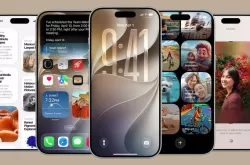
A few days ago, during a business trip to Berlin, Germany, I finally had the chance to watch an Apple event without having to stay up late. However, the more I watched, the less impressed I felt. The iPhone Duo seemed to directly mimic Huawei and Xiaomi's foldable phone designs, and the notch on the iPhone 18 Pro got smaller again—hardly a groundbreaking move.
To be honest, in recent years, my anticipation for Apple's announcements has shifted almost entirely to the iOS system. Yet, year after year, it feels increasingly lackluster because these new features seem all too familiar. Most of iOS's new capabilities can already be experienced on Chinese systems a year or even six months in advance.
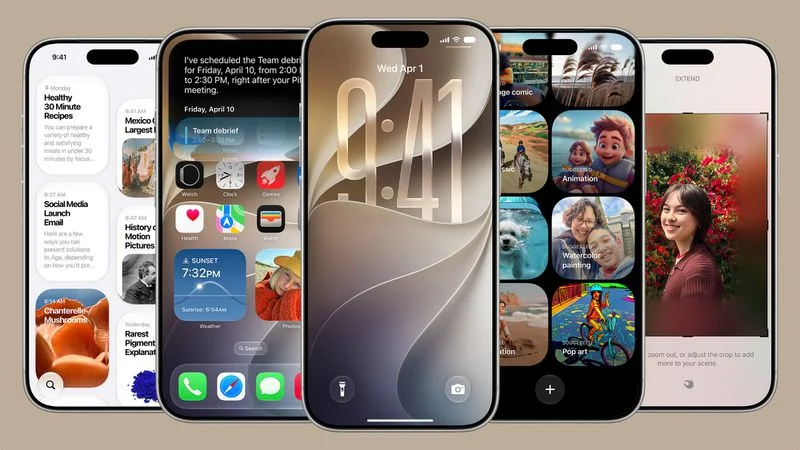
Image source: Apple
Take this year's most talked-about iOS AI features—AI writing, AI object removal, AI image expansion—which Chinese systems had already implemented two years ago. So, seeing these new features doesn't really excite me much. Even overseas bloggers have commented that some of iOS's AI functions aren't as good as Samsung's.
Moreover, as if by agreement, Chinese systems also saw major updates in September:
September 7: Huawei unveiled HarmonyOS 7
September 15: Honor launched MagicOS 11
September 16: Vivo released OriginOS 7
September 17: OPPO introduced ColorOS 17
In just ten days, nearly all the world's major smartphone systems underwent collective updates. The Leikeji editorial team's mobile testing crew was kept busy nonstop. These new systems all coincidentally focused on one thing: AI Agents, enabling phones to directly make decisions, complete tasks, and get things done for users. An obvious trend is emerging: the Agentic OS (AOS) era is accelerating.
Chinese Systems Evolve from AI Features to Agent-Driven Task Completion
This year's core focus for Chinese systems is enabling phones to truly 'get things done' rather than just offering scattered 'AI features' throughout the system.
The difference lies in the fact that the latter still requires users to locate and activate the feature themselves, with AI only saving steps like parameter adjustments. The former involves giving a voice assistant a command, which then analyzes the required functions, invokes them automatically, and delivers a definitive result.
Essentially, most of the time, users only need to confirm results and arrange execution without worrying about where to find the feature. Although the core logic of iteration is the same, each Chinese system's approach differs, as seen in their respective launch events.
HarmonyOS 7: AI Begins to Understand Your Intentions
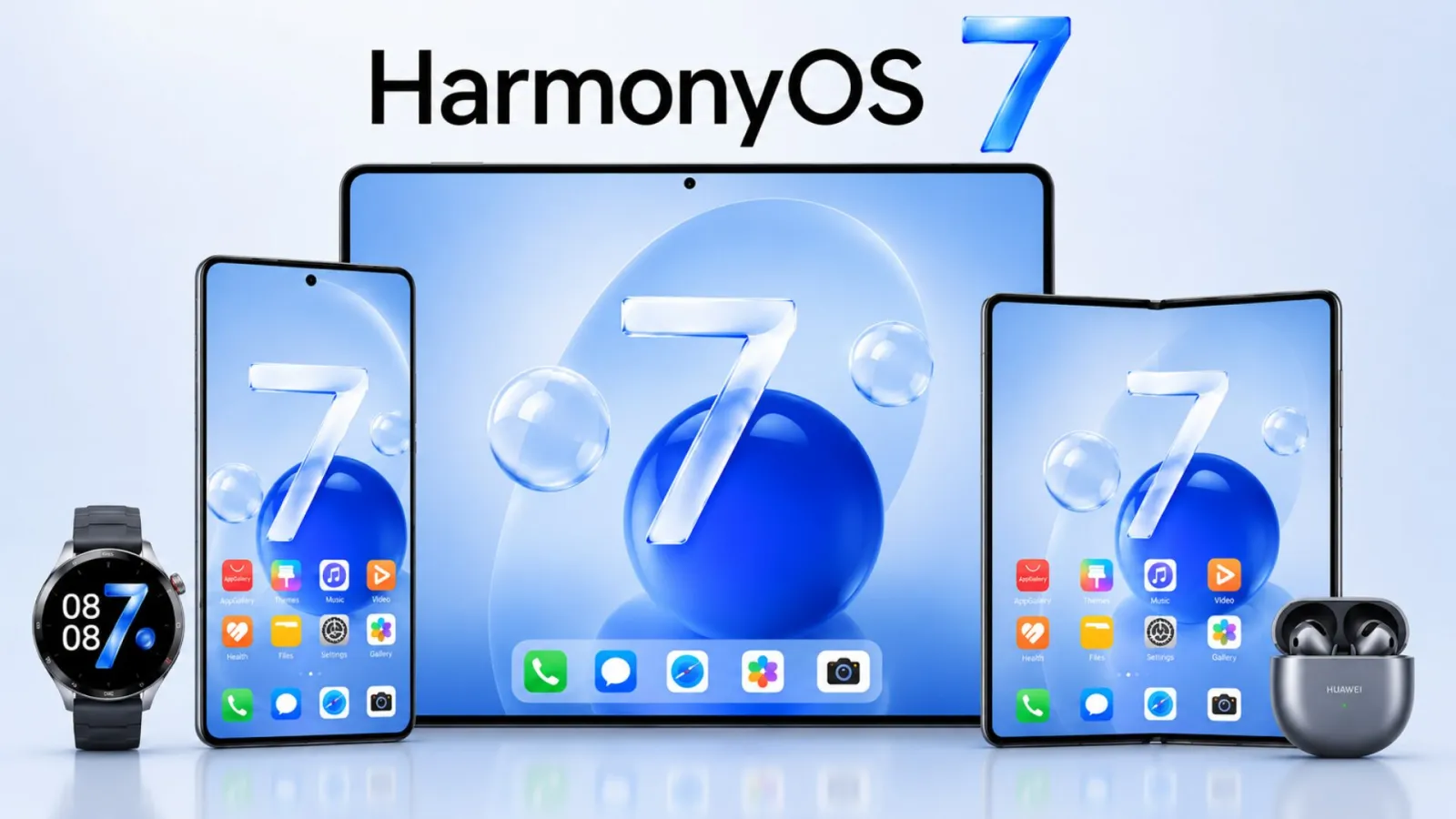
Image source: Huawei
For example, Huawei's HarmonyOS 7 further upgrades the Hongmeng intelligent agent framework, allowing Xiaoyi to understand screen content, perceive device status, and invoke system and app capabilities.
Consider this scenario: you receive a text address from a friend. Previously, you'd need to copy it, open a map app, paste it into the search bar, and finally click on directions to start navigation. With the new system, simply copying the content prompts the AI to 'look' at the screen, identify navigation needs from context, and activate the AI navigation bar at the bottom. A single click opens the map app directly to the navigation page.
For users, they don't even need to express their needs—AI identifies them autonomously. This is Huawei's emphasis on 'intention as service.'
HyperOS 4: Turning AI into a Readily Available Tool
Image source: Xiaomi
Xiaomi's approach is similar to Huawei's. HyperOS 4's newly upgraded Super Xiaomi AI also possesses screen-reading capabilities. When users drag out the Inspiration Ball, voice functionality activates simultaneously. Simply drag the 'ball' to the corresponding location, state your needs briefly, and AI executes the subsequent operations.
This seems to add a 'voice command' step compared to Huawei, but the Inspiration Ball's advantage lies in not requiring specific context. With keywords like locations, images, or times combined with voice commands, it can complete various operations—sacrificing some convenience for greater usage flexibility.
Additionally, thanks to Xiaomi's significant AI model investments over the past year, Super Xiaomi AI now likely offers the best content recognition and generation capabilities among smartphone manufacturers. Official promotional cases demonstrate its ability to automatically select images, generate copy, and create complete travel plans (including ticket links).
OriginOS 7: Understanding You Before Helping You
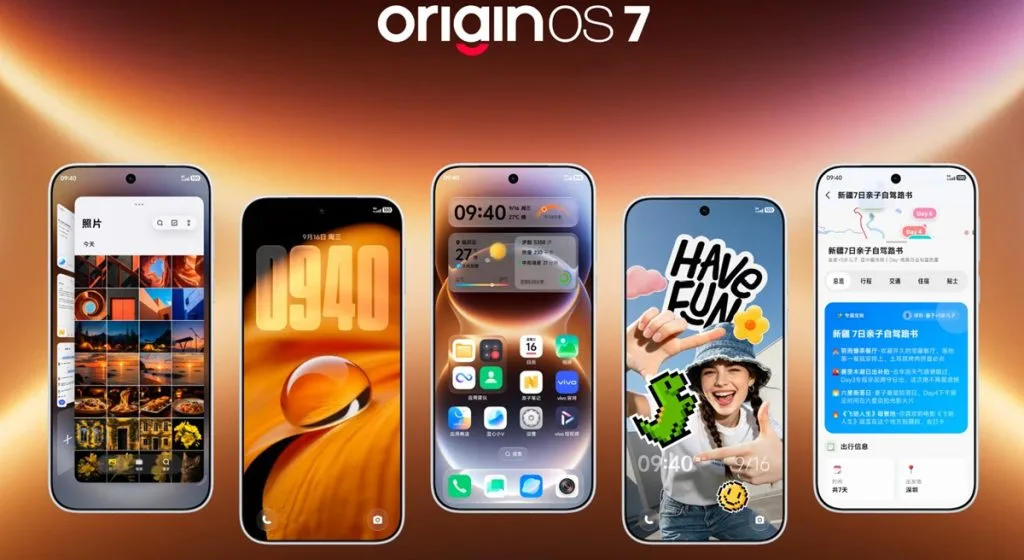
Image source: Vivo
Vivo's OriginOS 7 can be summarized by the core idea of 'understanding you before helping you.' Thus, the new Blue Heart Xiaowei Pro's most significant change is incorporating long-term memory and autonomous learning capabilities. It gradually understands user habits and preferences through historical dialogue, eliminating the need to re-explain context for complex tasks like travel planning.
Moreover, 'Xiaowei Assistance' advances AI from 'providing suggestions' to 'direct execution.' Needs like hailing rides, booking hotels, or purchasing train tickets can all be completed directly by AI. Even operations like modifying settings or connecting devices can be done with a single voice command. Combined with AI screenshot capture, Atomic Workbench, and other features, OriginOS 7 is integrating AI into the system's foundation—a feature particularly valuable for elderly users.
Compared to past competitions based solely on response speed, OriginOS 7 emphasizes having the phone remember users, understand their needs, and take over intermediate processes that previously required user intervention.
ColorOS 17: Remembering You Before Proactively Helping
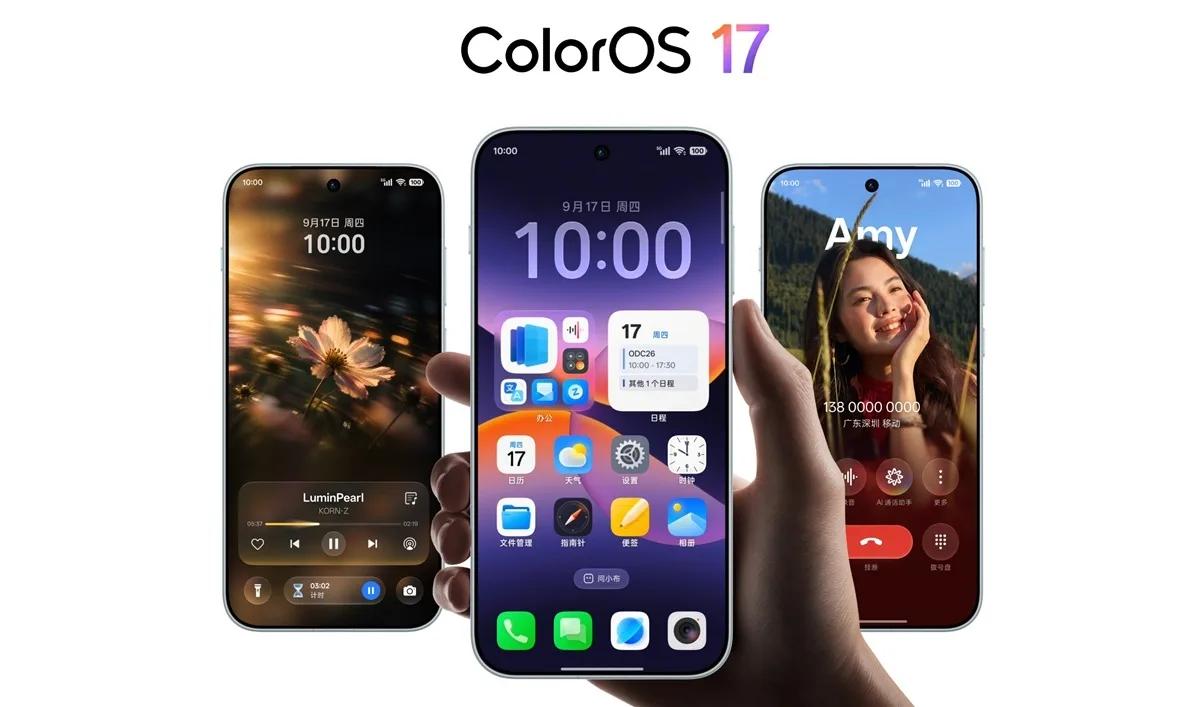
Image source: OPPO
OPPO's newly released ColorOS 17 further deepens its signature 'memory' function. Previously, One-Touch Flash Notes primarily saved articles, chats, and videos. Now, Xiao Bu can further analyze user intentions based on this information.
For instance, if you see concert information and use Flash Notes, AI analyzes the page, automatically records ticket sale and show times, and reminds you before ticket sales begin. Simultaneously, AI continuously monitors SMS and other data on the device side, extracting tasks requiring user attention and generating corresponding reminders.
Additionally, ColorOS 17 introduces a practical feature—Xiao Bu Calls. By authorizing data access from travel apps like VariFlight and 12306, AI records your travel information and directly calls you if you accidentally book the wrong ride. This feature holds significant practical value for frequent travelers.
Arguably, ColorOS 17's most significant change is shifting from last generation's 'AI helps you remember' to 'AI remembers and proactively helps.' Setting ticket-buying alarms, hailing rides, purchasing tickets, and other operations can all be completed autonomously by AI, essentially offloading many tasks that previously required user attention and recording to the system.
MagicOS 11: Handing System Control to AI
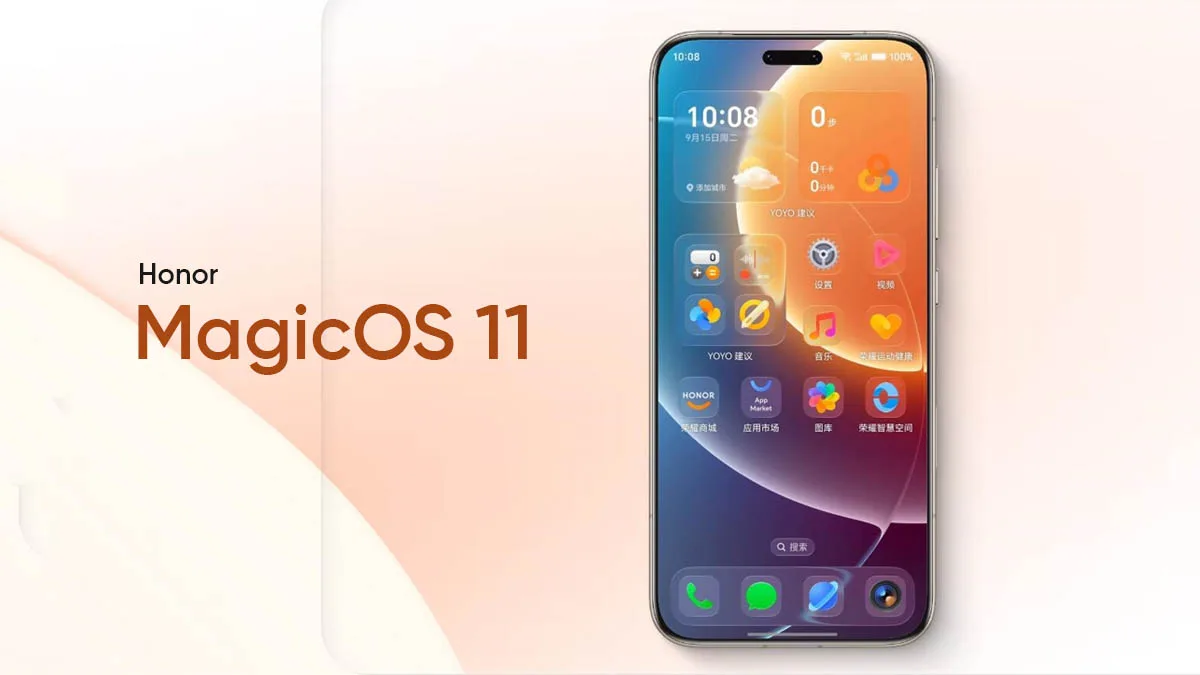
Image source: Honor
Finally, let's discuss Honor's MagicOS 11—arguably the most aggressive among this year's Chinese systems and the one explicitly targeting 'Agentic OS.'
The new YOYO incorporates YOYO Harness internally, integrating screen content, environmental perception, user input, and personal memory. It automatically breaks down tasks, invokes system interfaces, Skills, and even GUI operations. Many may recall that at Honor's launch events a couple of years ago, they used AI to place orders for thousands of coffees. Now, MagicOS 11 can do much more than just order food.
Autonomous scheduling, app operations, and other tasks are basic. More interestingly, YOYO can decide operation times and trigger conditions based on task content after you assign it. For example, if you plan to go out but aren't sure when you'll return home, you can instruct YOYO to turn off the air conditioner if you haven't returned within an hour. YOYO breaks down these conditions and autonomously plans automated tasks.
Compared to past voice assistants that responded to queries one by one, YOYO can now handle long-chain tasks exceeding 100 steps and proactively intervene in daily scenarios through features like AI Call Assistant and YOYO Tasks. Thus, Honor's goal is straightforward: let AI gain system control and directly get things done for users—a more aggressive approach than other manufacturers.
Overall, the core objective remains reducing user effort, with many features being similar. The key difference lies in the degree of AI control over the system.
Of course, there's an exception: Doubao Phone, which takes AI as the foundational logic of its entire system. Given its different positioning and starting point compared to Chinese smartphone brands, we won't discuss it here. Interested readers can check out our analysis of Doubao Phone.
Behind Different Agent OS Approaches Lies a Battle for System Control
While the ultimate goals of these Chinese systems are similar—having AI do things for users—their approaches differ significantly, primarily due to varying degrees of control over systems and ecosystems among manufacturers.
Take Huawei, for example. They fully control HarmonyOS, enabling them to decompose app capabilities into system services and have Xiaoyi dispatch (coordinate) them uniformly. In contrast, Honor's MagicOS 11 is built on Android, requiring YOYO Harness to invoke system-level interfaces and address perception, memory, tool invocation, and execution capabilities—necessitating greater system control for AI.
Xiaomi's situation differs again. Its true advantage lies not just in smartphones but in a hardware ecosystem encompassing cars, TVs, tablets, earphones, smart home devices, and AI glasses. Thus, Super Xiaomi AI's future direction likely isn't just about managing smartphones but becoming a unified AI entry point across different devices—hence its emphasis on versatility.
Image source: Xiaomi
As former 'blue-green factory' brands, Vivo and OPPO emphasize 'personalization' in their AI features. Notably, both systems focus on remembering user needs and preferences to resolve specific tasks and troubles. Compared to Huawei and Xiaomi, OPPO and Vivo grant AI relatively more permissions but aren't as aggressive as Honor, which has already ventured into 'system autonomy.'
However, greater AI control entails higher risks. While Honor has implemented many measures to prevent AI-related issues, the trade-off is requiring further user confirmation, effectively reducing 'autonomy.' Currently, AI mainly handles mundane tasks like buying tickets, ordering food, or turning off air conditioners, so users can still be relatively bold in using these features.
But as AI capabilities grow stronger in the future, we might one day truly entrust most tasks to smartphone AI for autonomous operation. Eventually, there might be no traditional Apps—only AgApps, or 'Agent + Apps.'
AgApp design philosophies will differ from traditional Apps, emphasizing less on UI interaction and more on integration with Agents. Ultimately, all information will consolidate into the system's AI interface, eliminating the need for users to check Apps for their information.
At that point, the system's importance within smartphones will reach new heights, and differences between phone brands will become more pronounced. Honestly, Android systems have become increasingly similar in recent years. But as Agents become mainstream, system usability will depend solely on each manufacturer's AI models and foundational capabilities.
Of course, for users, only one thing matters: who can do more things for me, I'll buy whose phone.
Source: Leikeji
Images in this article come from: 123RF Licensed Image Library. Source: Leikeji
-
![]()
Doubao Mobile Phone Launched: AI Agents Enter the 'Terminal' Race
-
Apple’s Annual Online Sentiment Journey: From Launch Price Dip to Market Dominance in 5 Phases
-
![]()
Can AI Truly Annihilate All of Humanity? Are Those Chilling Doomsday Predictions Actually Plausible?
-
![]()
iPhone 18 Pro Max First Launch Review: Not Many Surprises, But Not Entirely Without Them
-
![]()
Stock Price Soars to New Heights: Lenovo Breaks Free from 'Computer Seller' Label, Transforms Fate with AI
-
![]()
The Clash of Agent Systems Among Chinese Smartphone Brands: From 'Photo Editing Pros' to 'Task Doers'—Who Leads the Race Among Huawei, Xiaomi, OPPO, Vivo, and Honor?
-
![]()
In-Store Investigation of the iPhone 18 Pro's First-Day Sales: Prices Drop Sharply Right After Launch, Overseas 'Scalpers' Pay Cash to Resell New Phones
-
![]()
AI's Accuracy Rate Only 21.2%! UN Teams Up With Google to Revamp Global Public Data