Samsung, Spurred by Apple, Steps Up Its Game, with LY Technology Reaping the Greatest Benefits
 09/20 2026
 342
342

Source | Yuan Media
Following Apple's unveiling of the iPhone Duo, Samsung found itself unable to remain passive.
Recent reports indicate that Samsung's second-generation tri-fold smartphone, the Galaxy Z TriFold 2, might be launched earlier than planned, potentially hitting shelves as soon as July next year. Initially, it was anticipated to make its debut in the latter half of 2027.
Samsung's sense of urgency likely arises from the competitive pressure exerted by Apple's early foray into the foldable phone market with its inaugural foldable iPhone Duo. Despite the underwhelming market performance of Samsung's first-generation tri-fold phone,
A week prior, Apple's first foldable iPhone Duo, which had been the subject of rumors for three years, officially made its debut, starting at 15,999 yuan for the Chinese market.
With Apple making its move, Samsung swiftly responded. The two international tech behemoths are now poised to engage in a fierce battle over the foldable phone market.
Interestingly, regardless of who takes the lead, the party that might be most delighted could be the "wealthiest woman in Jiangmen."
01.
Profiting from the Foldable Phone Craze
When compared to traditional bar phones, the two most crucial incremental components in foldable phones are flexible displays and hinges.
LY Technology serves as a key hinge supplier for Apple.
According to reports, LY Technology provides Apple with precision hinge components, screen support plates, ultra-thin vapor chambers, and flanged ultra-thin stainless steel battery shell modules, among other essential parts. The value per unit is several times higher than that of traditional bar phones.
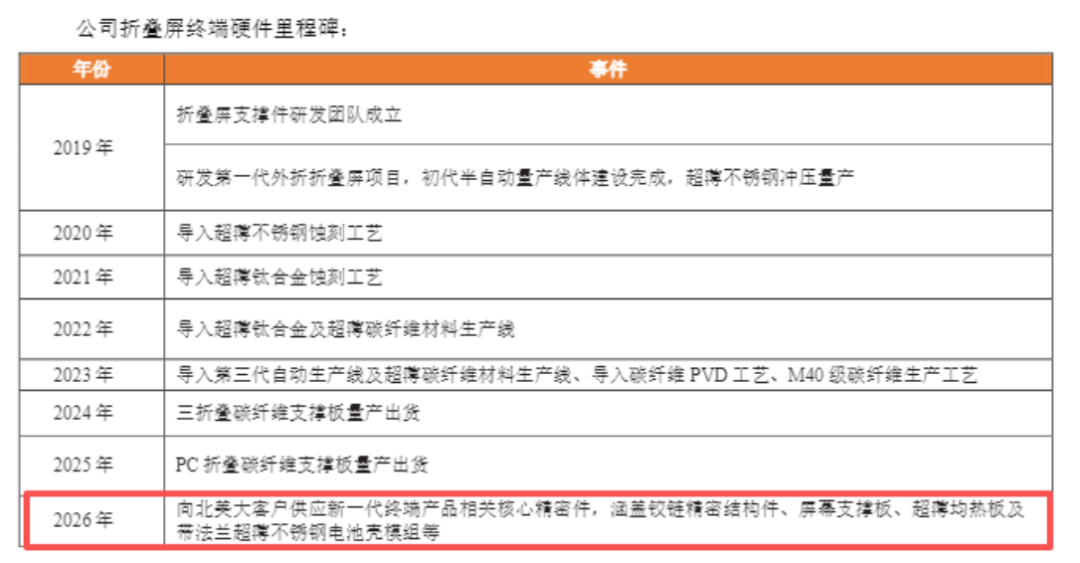
Image Source: LY Technology's 2026 Semi-Annual Report
LY Technology is also a primary hinge supplier for Samsung.
The company has publicly stated that it supplies ultra-thin titanium alloy support components for Samsung's Galaxy Z Fold7 and further provides ultra-thin titanium alloy folding support plates for the Galaxy Z Fold8, facilitating breakthroughs in lightweight design and structural durability for the new models.
In essence, whether consumers opt for Apple's iPhone Duo or Samsung's Galaxy Z Fold, LY Technology stands to benefit.
The more intense the competition between the two, the greater the sales of foldable phones, and the more robust LY Technology's order book becomes. This business model does not rely solely on one manufacturer but bets on the entire market trend, allowing the wealthiest woman in Jiangmen to capitalize on the foldable phone boom.
The company's current performance reflects this strategy.
In the first half of 2026, LY Technology's revenue reached 25.15 billion yuan, a historic high. Its thermal management business, encompassing heat dissipation for edge devices and AI computing servers, generated 2.92 billion yuan in revenue, up 43.46% year-on-year. Revenue from automotive and low-altitude economy businesses surged 198% to 3.53 billion yuan.
This success is attributable to LY Technology's significant investment in R&D. In the first half of the year, R&D spending increased by 28% year-on-year to 1.44 billion yuan, primarily focused on technological development for foldable phone hardware and VC heat dissipation hardware.
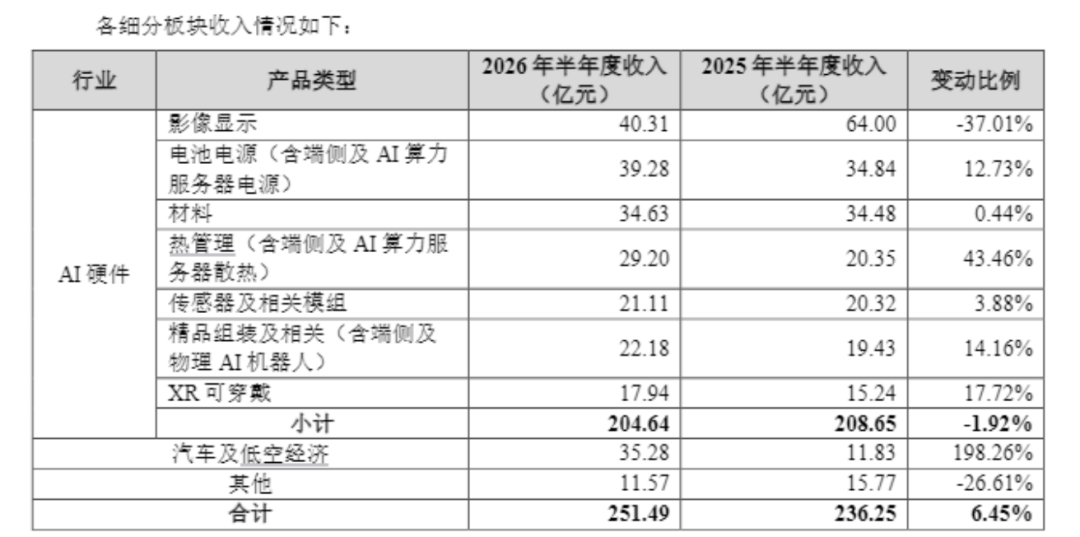
Image Source: LY Technology's 2026 Semi-Annual Report
Like a coin with two sides, the positive aspect is that LY Technology is capitalizing on the foldable phone boom, with impressive growth in new businesses. On the flip side, the company has a long-standing issue—its heavy reliance on the "Apple supply chain."
For years, Apple has been a core customer for LY Technology, with its revenue contribution gradually increasing. From 2022 to 2025, the company's revenue grew from 34.5 billion yuan to 51.4 billion yuan, but its gross margin remained stagnant during the same period.
The termination of O-film Tech by Apple in 2021 served as a wake-up call for companies in the Apple supply chain. Although O-film Tech quickly adjusted its strategy by shifting its focus to domestic manufacturers like Huawei, Xiaomi, and Honor to partially offset order losses, its overall scale inevitably declined.
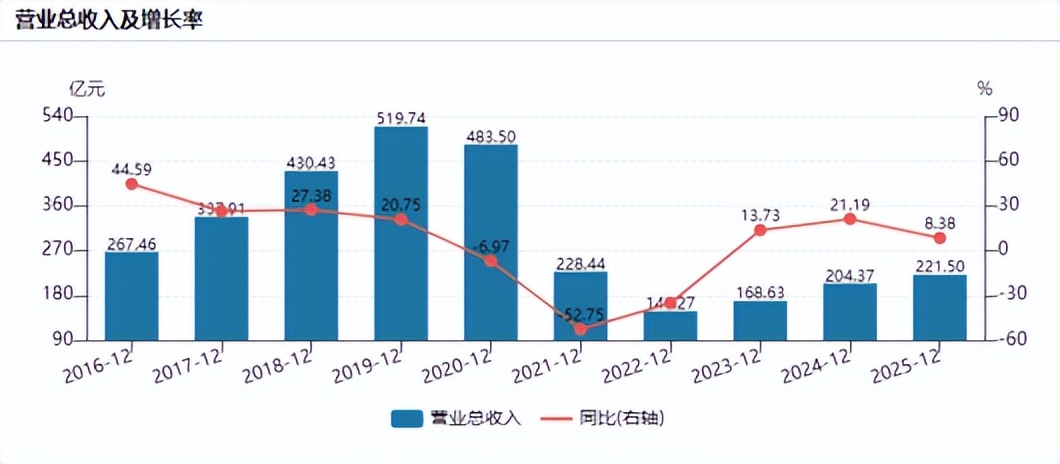
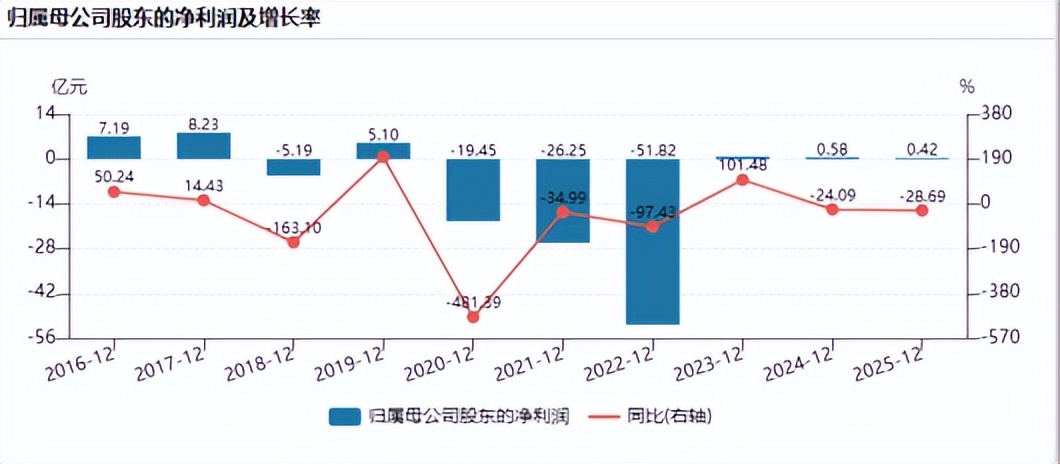
Image Source: Wind
O-film Tech's experience made many companies in the Apple supply chain recognize the issue of operational dependency.
02.
The Entire Apple Supply Chain Adopts a New Strategy
Joining the Apple supply chain has boosted revenue for many companies and even created wealth myths.
The female leaders behind Lens Technology, Luxshare Precision, and LY Technology all climbed the wealth rankings by leveraging Apple's supply chain.
In 2025, the leader of LY Technology ranked 6th on the Hurun Female Entrepreneurs List with a net worth of 69.5 billion yuan, becoming the wealthiest woman in Jiangmen, Guangdong.
However, the anxiety caused by highly concentrated orders has made many Apple supply chain companies aware that wealth rankings can be fleeting.
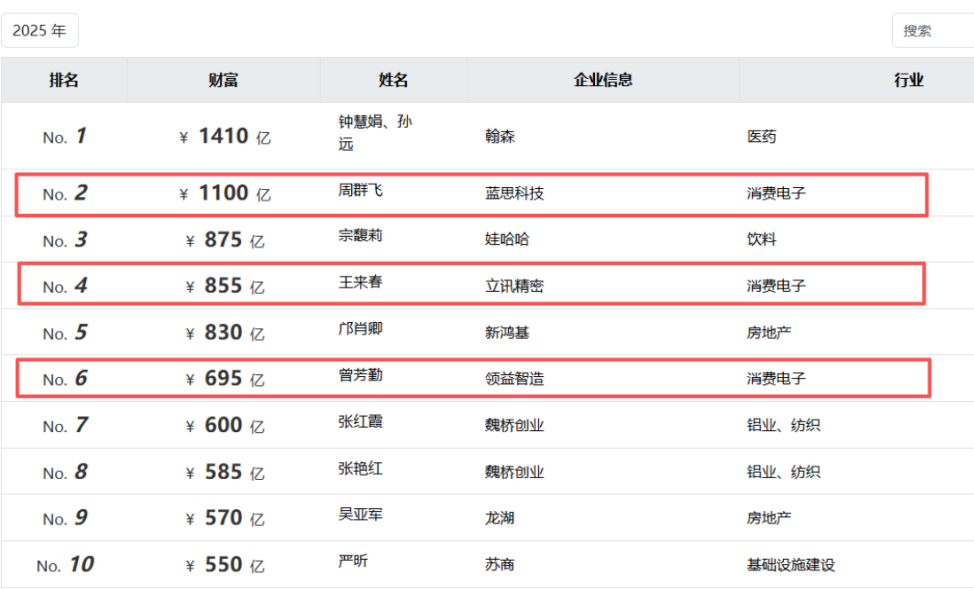
Image Source: 2025 Hurun Female Entrepreneurs List
Consequently, giants in the Apple supply chain have begun a collective transformation, seeking alternative business models.
Among them, Luxshare Precision has moved the fastest. Financial reports and Tianyancha data show that the proportion of its revenue from Apple dropped from 73.3% in 2022 to 56.7% in 2025.
In 2025, after integrating Germany's Leoni Group, a major automotive component supplier, Luxshare Precision's automotive electronics business revenue reached 39.3 billion yuan, up 185% year-on-year. In the first half of 2026, its automotive business grew by 274% year-on-year.
Simultaneously, Luxshare Precision expanded into AI computing infrastructure, covering high-speed connectivity, heat dissipation, and power management.
Additionally, Luxshare Precision took capital-level actions by spinning off Lixiang Innovation for an independent IPO. This not only facilitates Lixiang Innovation's financing and independent operations but also gradually reduces Luxshare Precision's reliance on the Apple supply chain, paving the way for diversified transformation.
Lens Technology adopted a "multi-pronged" strategy, reducing its revenue dependence on Apple from 71% in 2022 to 49.5% in 2024.
In the second half of this year, Lens Technology supplied UTG glass for a major client's foldable phone project, a highly challenging process that significantly increased the value per unit, making the company a beneficiary of structural component growth in foldable models. Meanwhile, Lens Technology expanded into multiple sectors, including AI glasses, robots, computing hardware, and TGV glass substrates.
Goertek placed its bets on AI glasses. In 2025, the company's emerging businesses, such as AI smart glasses, experienced explosive growth, with net profit surging nearly 50% year-on-year.
Leveraging its first-mover advantage in AI smart glasses, Goertek sold 3.48 million units globally in Q2 2026, primarily driven by growth in Meta's products.
Compared to these "sibling companies," LY Technology's diversification strategy has both overlaps and unique approaches.
At the client level, besides Apple, LY Technology has a strong presence in the Android camp, with clients including Samsung and Xiaomi. At the business level, it clearly focused on four strategic directions in 2026: AI terminals, AI servers, humanoid robots, and automotive and low-altitude economy businesses.
In the AI server sector, it completed the acquisition of Liminda in January 2026, enhancing its capabilities in server liquid cooling hardware. In the low-altitude economy, it achieved technological breakthroughs in carbon fiber flight propellers, adopting thermosetting unidirectional carbon fiber materials for the first time to significantly reduce weight and improve strength.
While these new sectors may not replace Apple-related business as the primary revenue driver in the short term, they form a safety net—ensuring the company has alternative growth avenues when the foldable phone boom fades or if it is excluded from the Apple supply chain.
03.
The Most Certain Revenue Growth Stems from Foldable Phones
Interestingly, despite annual calls to "de-Appleize" by Apple supply chain giants, the most certain revenue growth in the second half of 2026 comes from the direct competition between Apple and Samsung in the foldable phone market.
Reports suggest that Apple's first foldable iPhone has a production target of 10 million units.
If the phone performs well after its October launch, additional orders are likely. Coupled with Samsung's accelerated release of its second-generation tri-fold phone, which requires a complete redesign of the hinge solution, LY Technology stands to secure substantial orders.
Counterpoint Research estimates that Apple's foldable iPhone could ship up to 6 million units in 2026, capturing about 25% of the global foldable phone market shortly after launch.
Against the backdrop of overall pressure in the consumer electronics industry, foldable phones may be the biggest surprise for Apple supply chain companies in the second half of the year.
This creates a paradox: while Apple supply chain giants are desperately trying to reduce their reliance on Apple, they cannot deny that Apple remains the most dominant player in the industry.
For example, Luxshare Precision's revenue growth in the first half of the year was still primarily driven by Apple-related orders. Similarly, LY Technology's foldable phone hinge orders represent substantial business.
"De-Appleization" is not about leaving Apple but about growing new legs while remaining part of the Apple supply chain.
In previous years, fearing order cancellations, Apple supply chain companies collectively turned to the automotive sector for a second growth curve. This year, they are shifting toward AI for the same reason: not putting all eggs in one basket.
However, AI is still in its early commercialization stages, with no major client yet to replace Apple. AI glasses remain a niche market, and robots are still exploring commercialization. In contrast, Apple's foldable phone orders are certain, Samsung's accelerated foldable phone market expansion is certain, and the trend of foldable phones moving from niche to mainstream is certain.
LY Technology's greatest advantage lies in the fact that the faster Apple and Samsung advance in the foldable phone market, the better positioned the company is in both camps, leading to quicker revenue realization.
In this "hinge war," the happiest party might be the supplier profiting from both sides—LY Technology, led by the wealthiest woman in Jiangmen.
Note: This article is based on official reports and publicly available information. The views expressed are for reference only. Some images are sourced from the internet. If infringement is found, please notify us for removal.
-
![]()
Samsung, Spurred by Apple, Steps Up Its Game, with LY Technology Reaping the Greatest Benefits
-
Blue Heart Xiaov Set to Introduce Paid Pro Version, Revealing vivo’s Large Model Strategy
-
Three-Way Struggle for Market Share: BYD, Chery, and Geely Challenge Great Wall, Posing Immediate Risks to Wei Jianjun
-
![]()
The Reason Behind Valve's Headset Price Surge of 2400 Yuan: The End of an Era of Selling at a Loss
-
![]()
Decoding the '4S' Architecture | Report on Enterprise-Level AI Services in China
-
![]()
Li Auto Aims to Sell Three Technologies, First Buyers Unlikely to Be Major Automakers
-
![]()
Liu Zongcheng Declares Haste Makes Waste in Car Manufacturing, Yet Seres Seems to Be Rushing Headlong!
-
![]()
Did Trump Make Concessions? Chinese Automakers Are Invited to Establish Factories in the U.S., but Importing Fully Assembled Vehicles Is Off the Table