vivo X500 Pro Imaging Professional Review: Strong Telephoto, Powerful Video, Enhancing Imaging Dominance with High Output Rate
 09/22 2026
 446
446
vivo continues to reinforce its label as the "King of Mobile Imaging."
When it comes to which smartphone manufacturer has been most 'obsessed' with imaging in the past two years, vivo is undoubtedly a top contender.
Starting with the X90 series, each generation of vivo's imaging flagships has pushed the boundaries of mobile imaging: one-inch primary sensors, 200-megapixel telephoto lenses, humanistic street photography, cinematic modes, external teleconverters, and more. It's no exaggeration to say that many configurations and ideas seen in imaging flagships were first proposed and implemented by vivo.
Earlier this year, after testing the vivo X300 Ultra, Xiaolei was curious about where future imaging flagships could innovate, given that hardware performance in mobile imaging had largely peaked.
(Image Source: Leitech Shoot)
The vivo X500 Pro Max answers by lowering the shooting barrier to a level where almost anyone can capture great photos and videos.
A Familiar Feeling, A Familiar Taste
To be honest, when Xiaolei first picked up the X500 Pro Max, the immediate reaction was two words: thick and heavy.
(Image Source: Leitech Shoot)
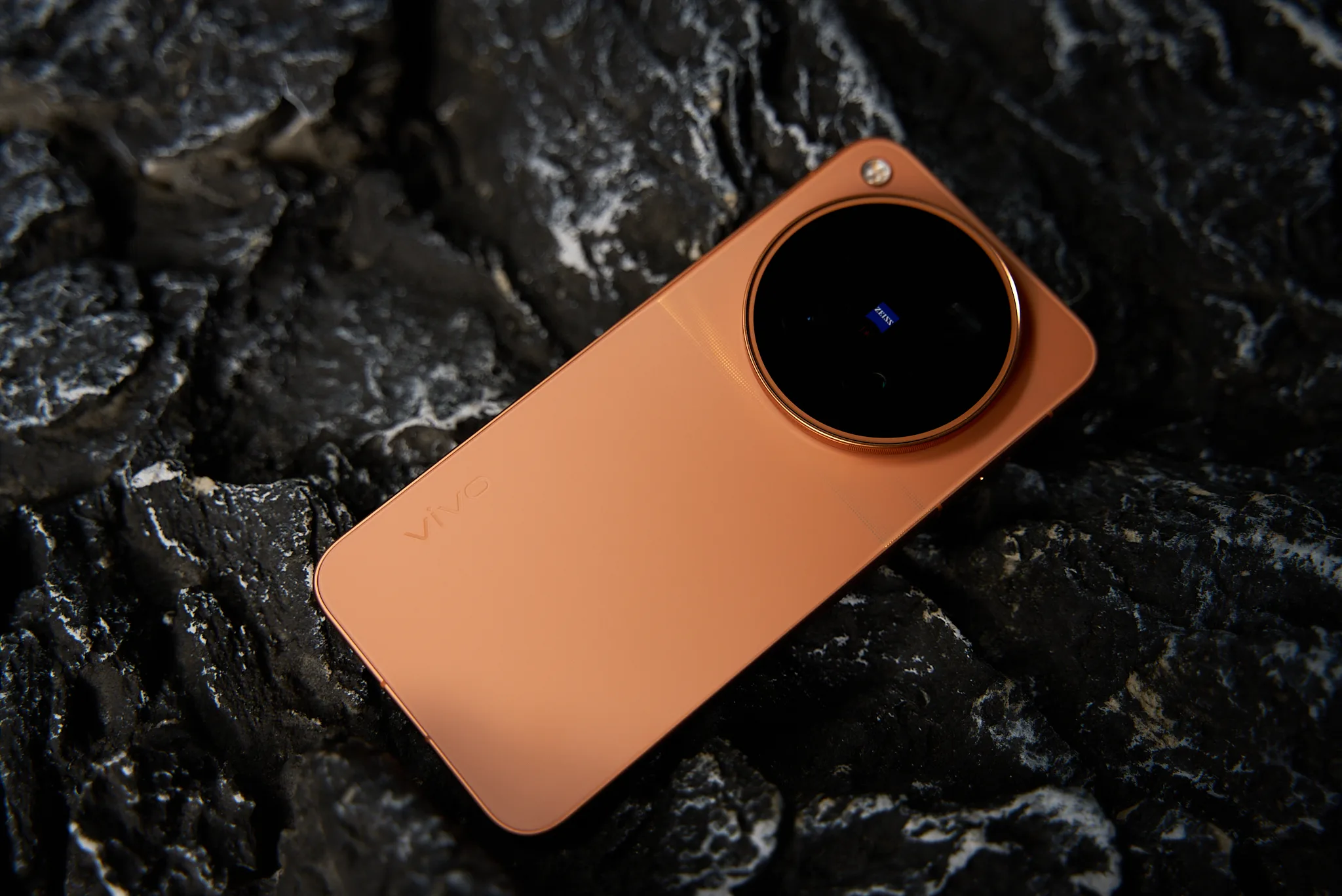
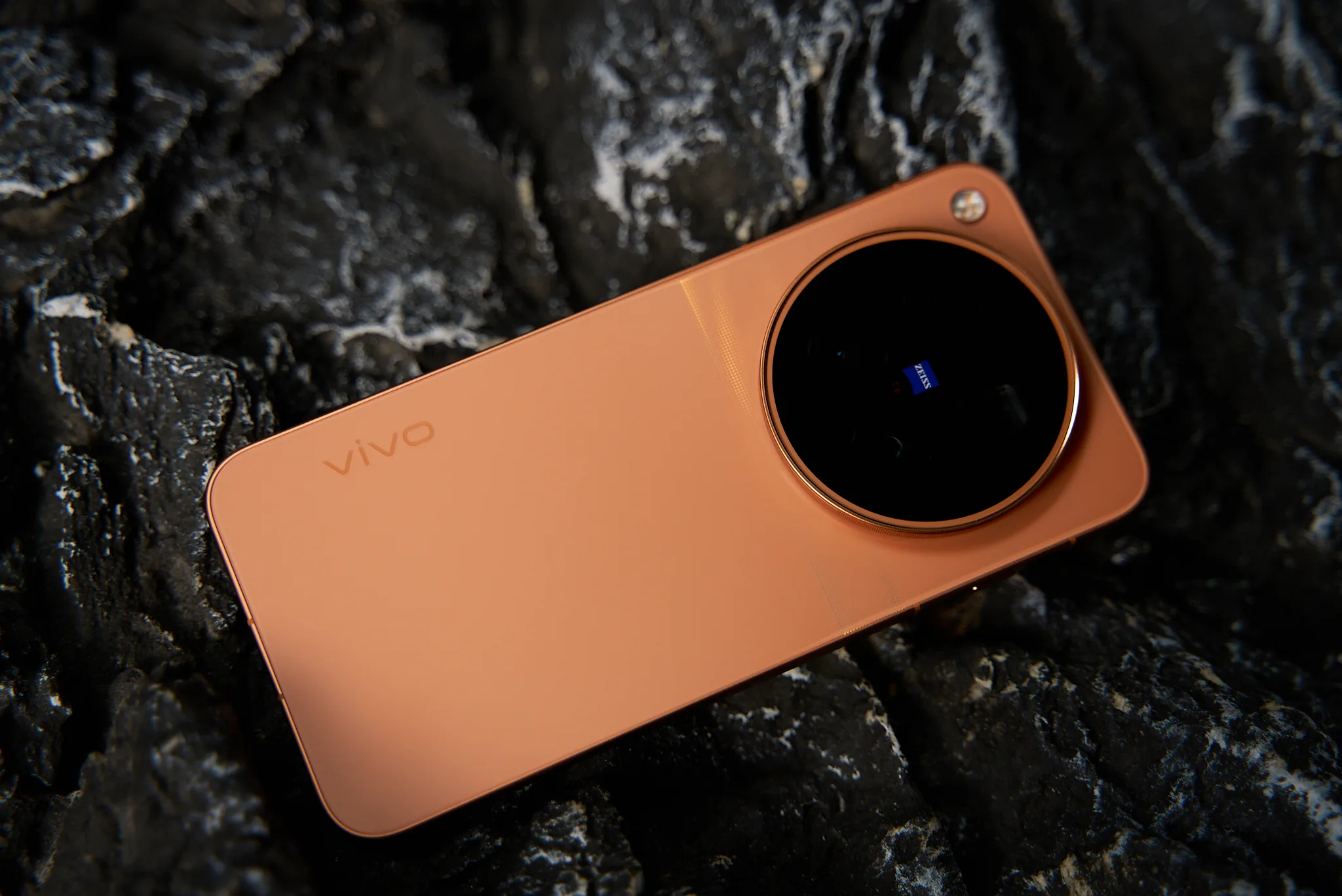
The front still features a large flat screen, while the back showcases the iconic large circular camera module of the X series, complete with the Zeiss blue logo. Placing several generations of vivo X series phones together, most people would struggle to distinguish them without considering color schemes and minor details.
However, Xiaolei doesn't see this as a bad thing.
After all, flagship smartphone designs have moved past the stage of major overhauls every year, especially for imaging flagships. With large primary sensors and 200-megapixel periscope telephoto lenses packed into the back, making the camera module significantly smaller is unrealistic. Rather than forcing a 'fresh' new design for the sake of it, Xiaolei cares more about how comfortable the phone feels in hand.
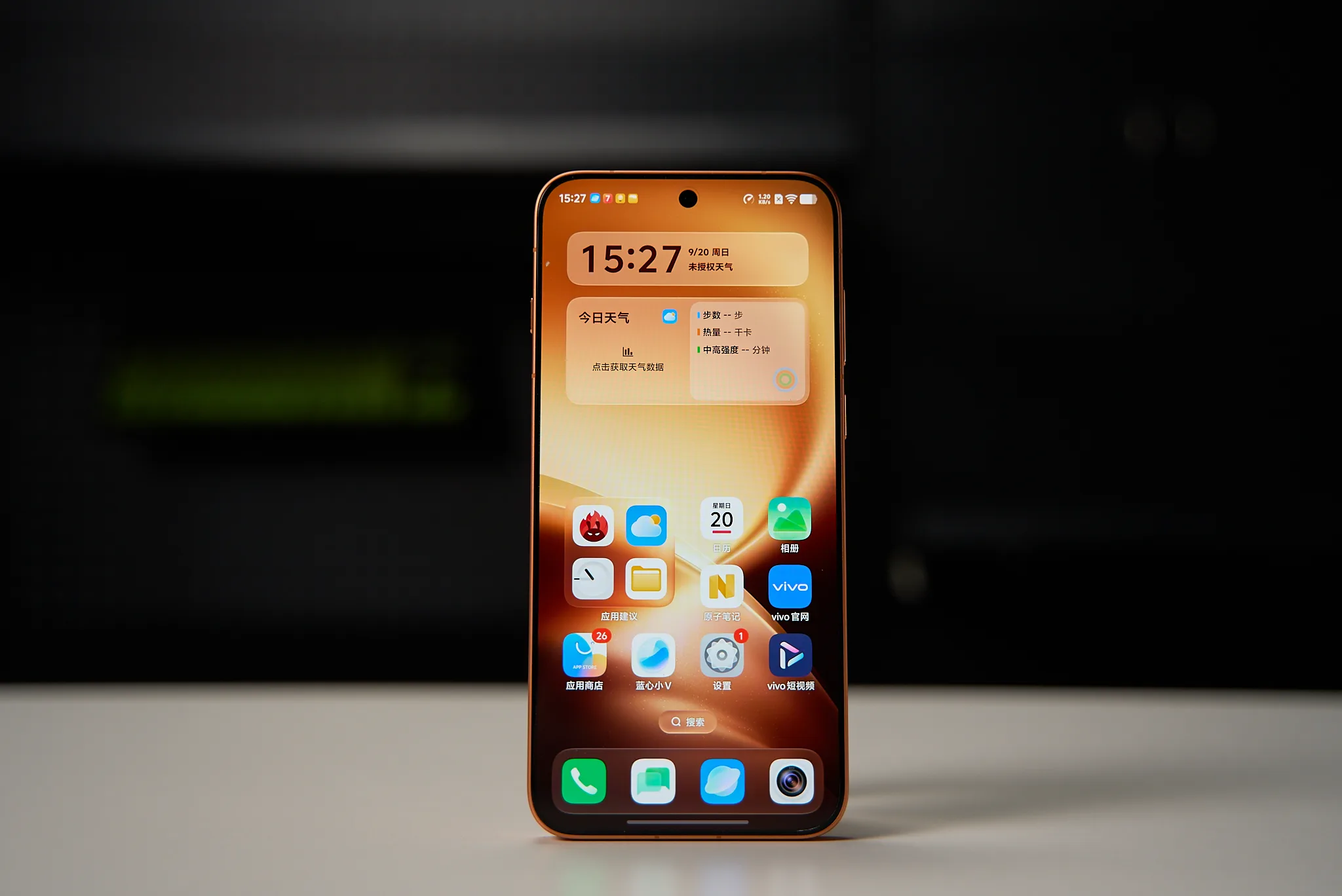
The vivo X500 Pro Max comes in four color options: Earth Echo, Sunny Day, Sunset Glow, and Night Capture. Xiaolei received the Sunset Glow version, weighing 229g and measuring 8.12mm thick. While the weight isn't extreme, the camera module is quite bulky. When holding it vertically, the index finger naturally rests on the edge of the lens, and holding it one-handed for half an hour of video watching can strain the wrist.
But again, if you're buying an imaging flagship, portability shouldn't be your primary concern.
The front screen leaves little to complain about: a 6.85-inch 8T LTPO display with a 3168×1440 resolution, up to 144Hz adaptive refresh rate, up to 300Hz touch sampling rate, and a peak brightness of 5000nits. Composing shots outdoors under bright sunlight is easy, as the screen's composition guides remain clearly visible without guessing—highly practical for someone like Xiaolei who shoots with a phone daily. Additionally, the phone supports IP68 and IP69 dust and water resistance, along with ultrasonic 3D fingerprint recognition that works even with wet hands.
The X500 Pro Max houses an 8000mAh Blue Ocean battery, supporting 90W wired and 40W wireless charging. For a phone that frequently uses the camera and records high-resolution videos, a large battery is a significant advantage, easily lasting a full day under normal use.
Familiar Configurations, Improved Usability
From a camera perspective, the vivo X500 Pro Max doesn't offer many surprises. It retains a triple-camera setup: a primary sensor co-developed by vivo and Sony, the Blueprint Lumina 900 (LYT-L910), featuring 50MP, a 1/1.28-inch size, f/1.57 aperture, and a 24mm equivalent focal length; the telephoto lens continues with the familiar HP0, offering 200MP, a 1/1.4-inch sensor area, and an 85mm equivalent focal length; the ultra-wide lens is a 50MP JN5, while the front camera also uses a 50MP sensor.
(Image Source: Leitech Shoot)
Starting with the primary camera, the Blueprint Lumina 900's standout feature is its dynamic range, with official specs reaching up to 17EV. It has been redesigned to reduce read noise and power consumption while natively supporting 4K 120fps DCG HDR and 4K 240fps recording.
Of course, parameters like 17EV hold little practical meaning for most users—in simpler terms, it excels in handling backlighting.
(Image Source: Leitech Shoot)
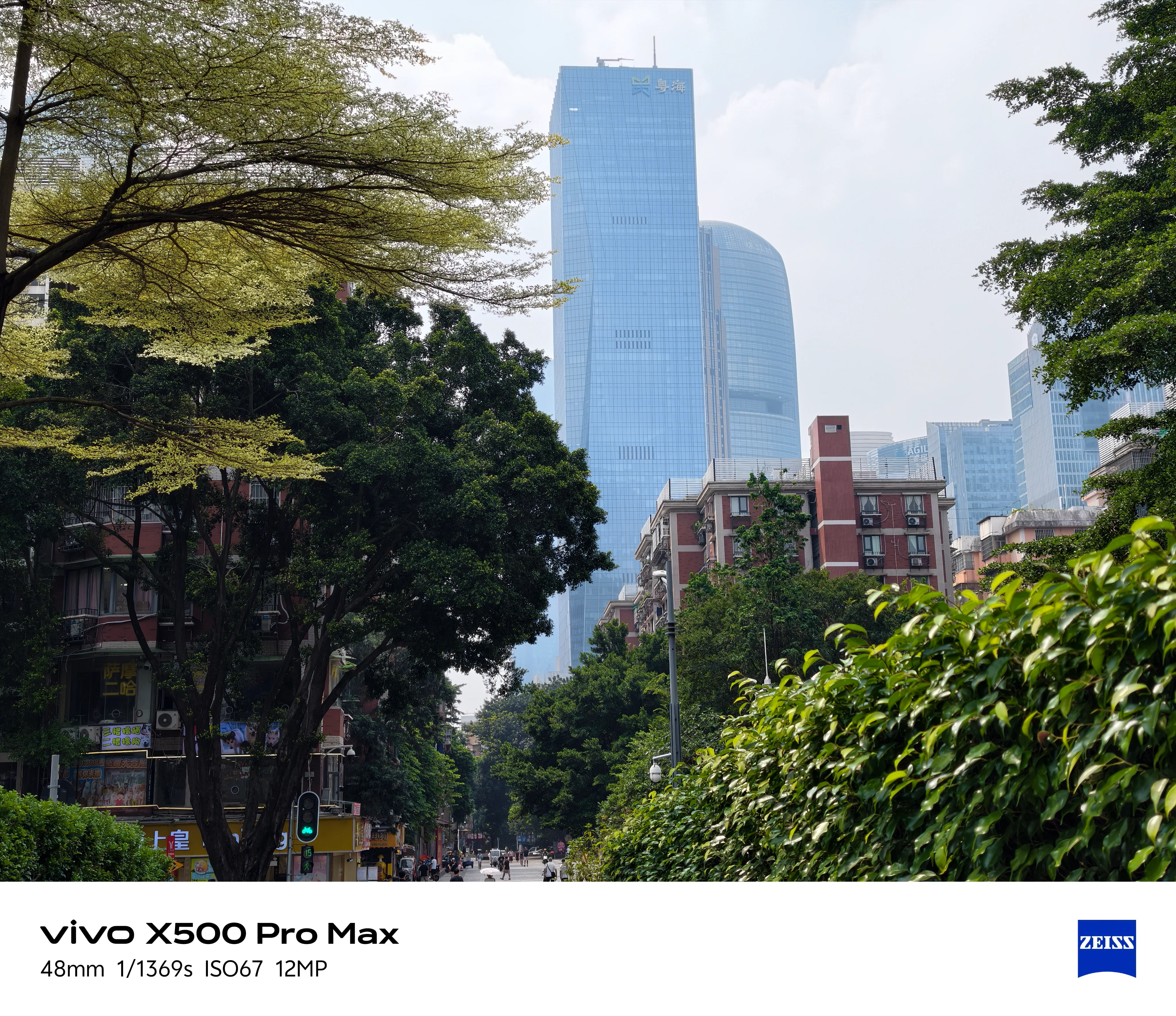
Under normal daylight conditions, the X500 Pro Max's style doesn't differ drastically from previous generations, maintaining a visually pleasing approach. Skies appear bluer, and plants slightly more vibrant, but overall, colors are more restrained than in earlier years, especially in architectural and street scenes. Image quality remains outstanding, with no significant edge degradation—a relatively easy task for modern flagship phones.
(Image Source: Leitech Shoot)
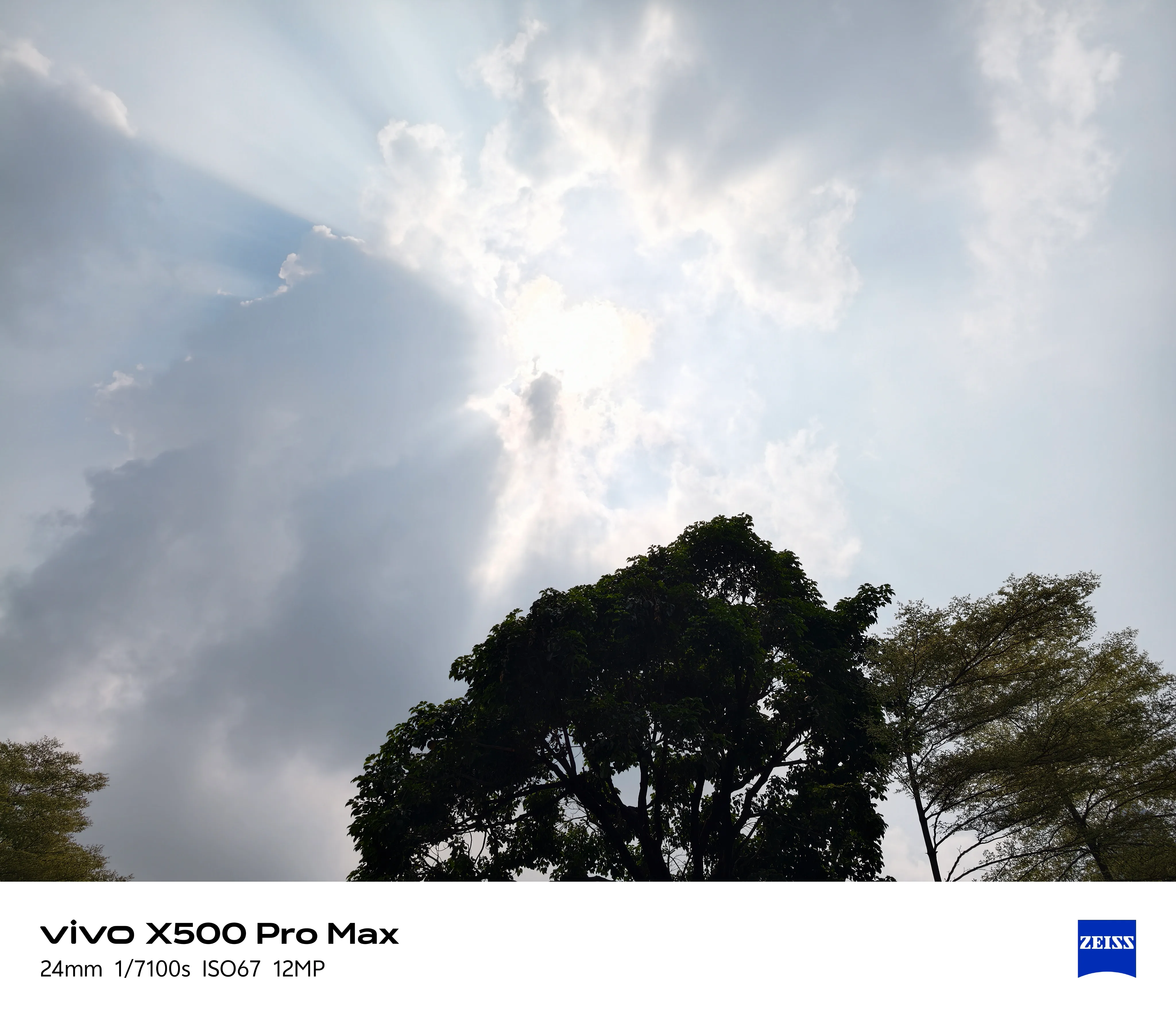
However, in high-contrast backlighting scenarios, the Blueprint Lumina 900 truly shines. Xiaolei placed the sun directly in the center of the frame, and the X500 Pro Max avoided darkening the entire image to control the sun's brightness or artificially brightening shadows to match highlights. Shadows remained shadows, and leaf textures stayed clear. While not visually stunning, it demonstrated the primary camera's impressive dynamic range.
Additionally, many phones overprocess HDR photos, making it hard to discern the light source's direction. vivo's approach feels far more natural, particularly in high-contrast environments like sunsets or window-lit portraits, preserving layering and logical light transitions.
After testing various scenarios, Xiaolei found himself using the 85mm telephoto lens most frequently.
(Image Source: Leitech Shoot)
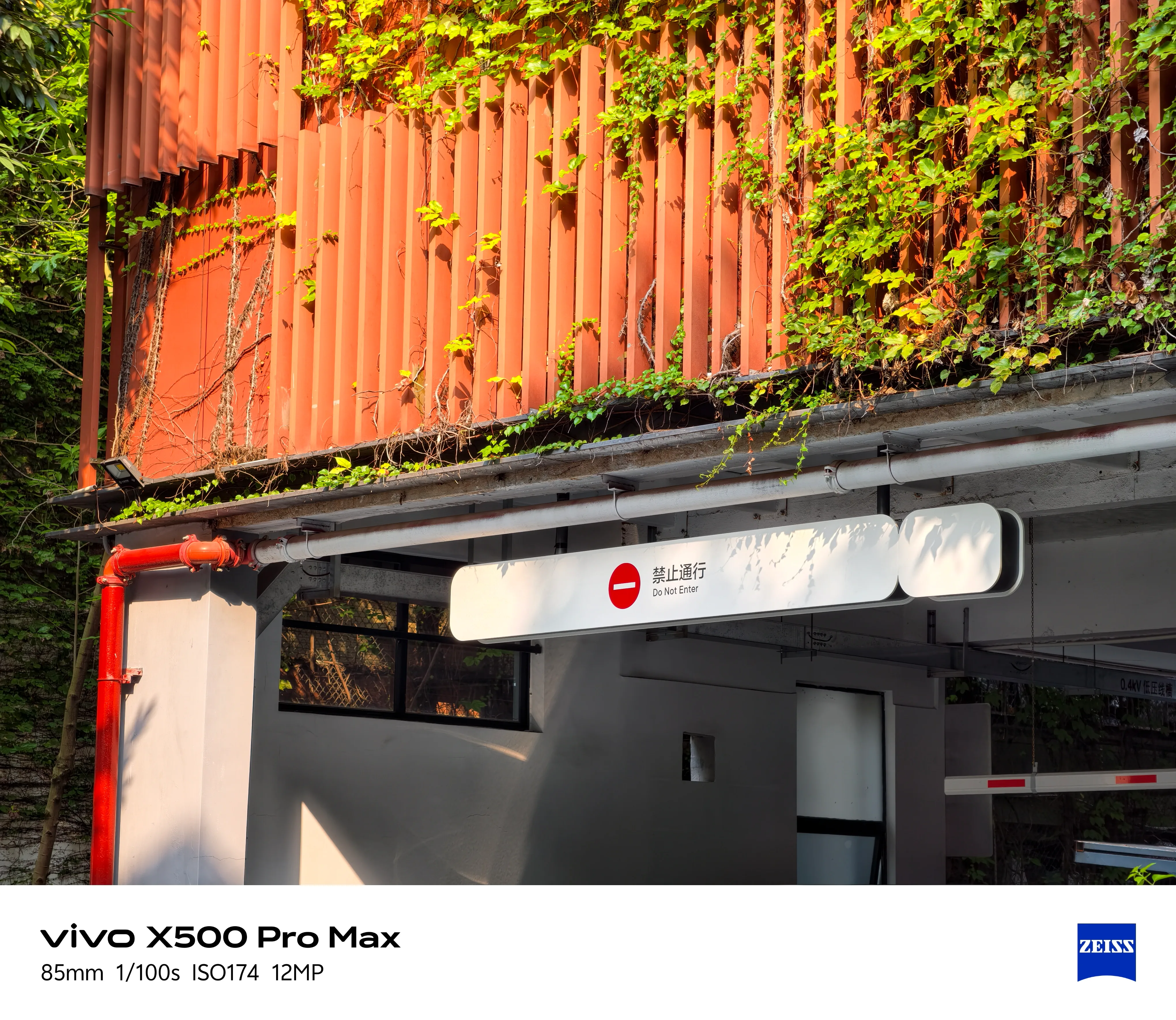
The HP0 sensor needs little introduction—it proved itself in the X300 Ultra: 200MP, a 1/1.4-inch size, and an 85mm equivalent focal length, paired with Zeiss T* coating and CIPA 7.0 stabilization. The hardware remains largely unchanged. Its true strength lies in its focal length and highly flexible cropping capabilities.
An 85mm focal length makes it easy to capture compelling shots. While a primary camera shooting street scenes might include unwanted elements like passersby, signs, or trash cans, the narrower 85mm perspective (field of view) allows you to exclude clutter by taking a few steps. Combined with the natural compression effect of telephoto lenses, even shots of roadside (roadside) cars, building signs, or plants become easy to compose.

(Image Source: Leitech Shoot)
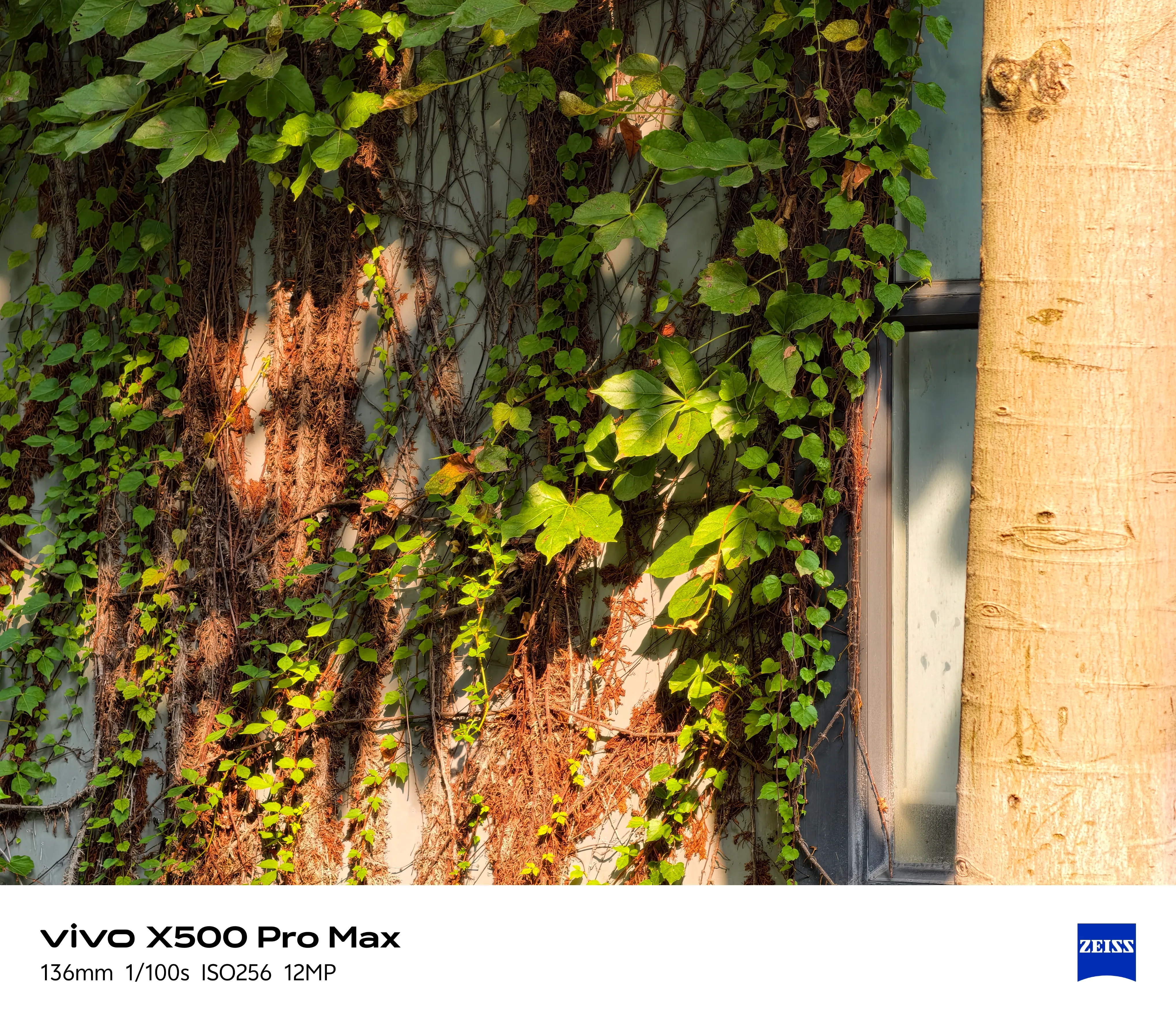
Another highlight is the telephoto lens's high success rate. During the X300 Ultra review, Xiaolei praised its stabilization, even describing it as "exceptionally strong telephoto stabilization." The X500 Pro Max maintains this advantage—especially at 10x zoom, handheld shooting remains steady without noticeable viewfinder shake. Spotting a distant subject? Simply raise the phone and press the shutter; the process is quick and decisive.
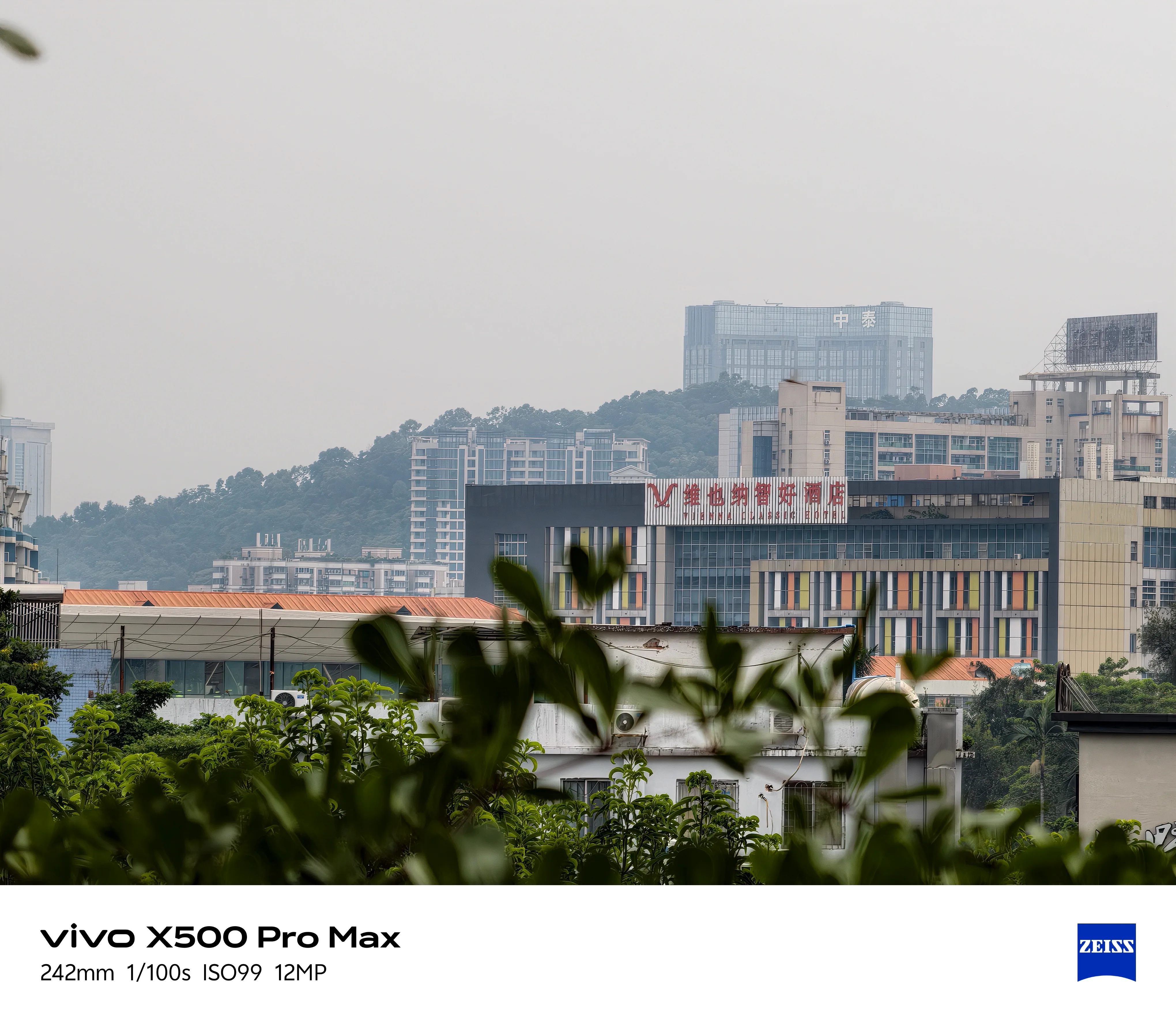
(Image Source: Leitech Shoot)
Image quality is equally impressive. The 200MP sensor captures ample detail, allowing for post-shooting crops that remain sharp. Even at 10x zoom, distant architectural textures retain clarity.
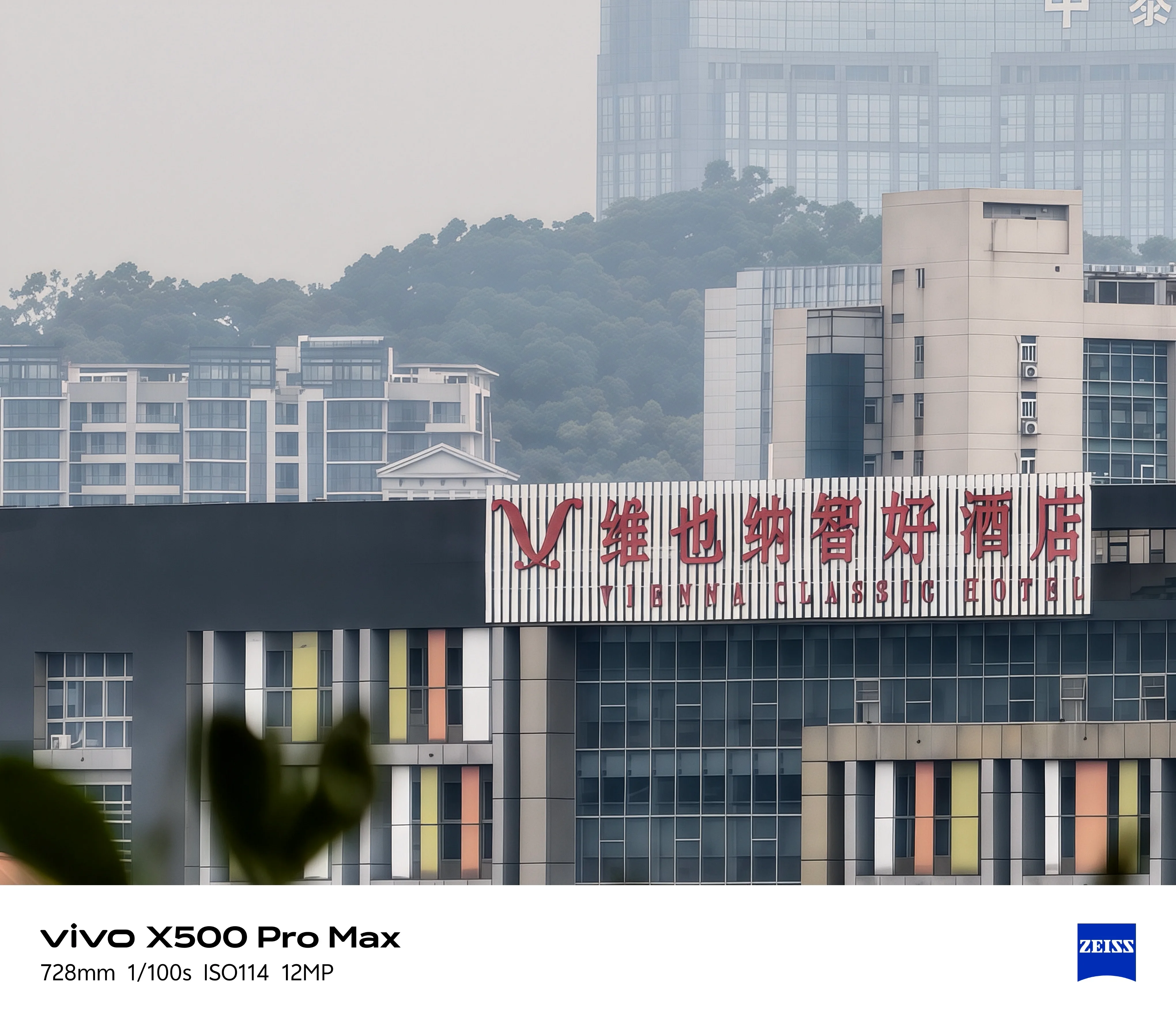
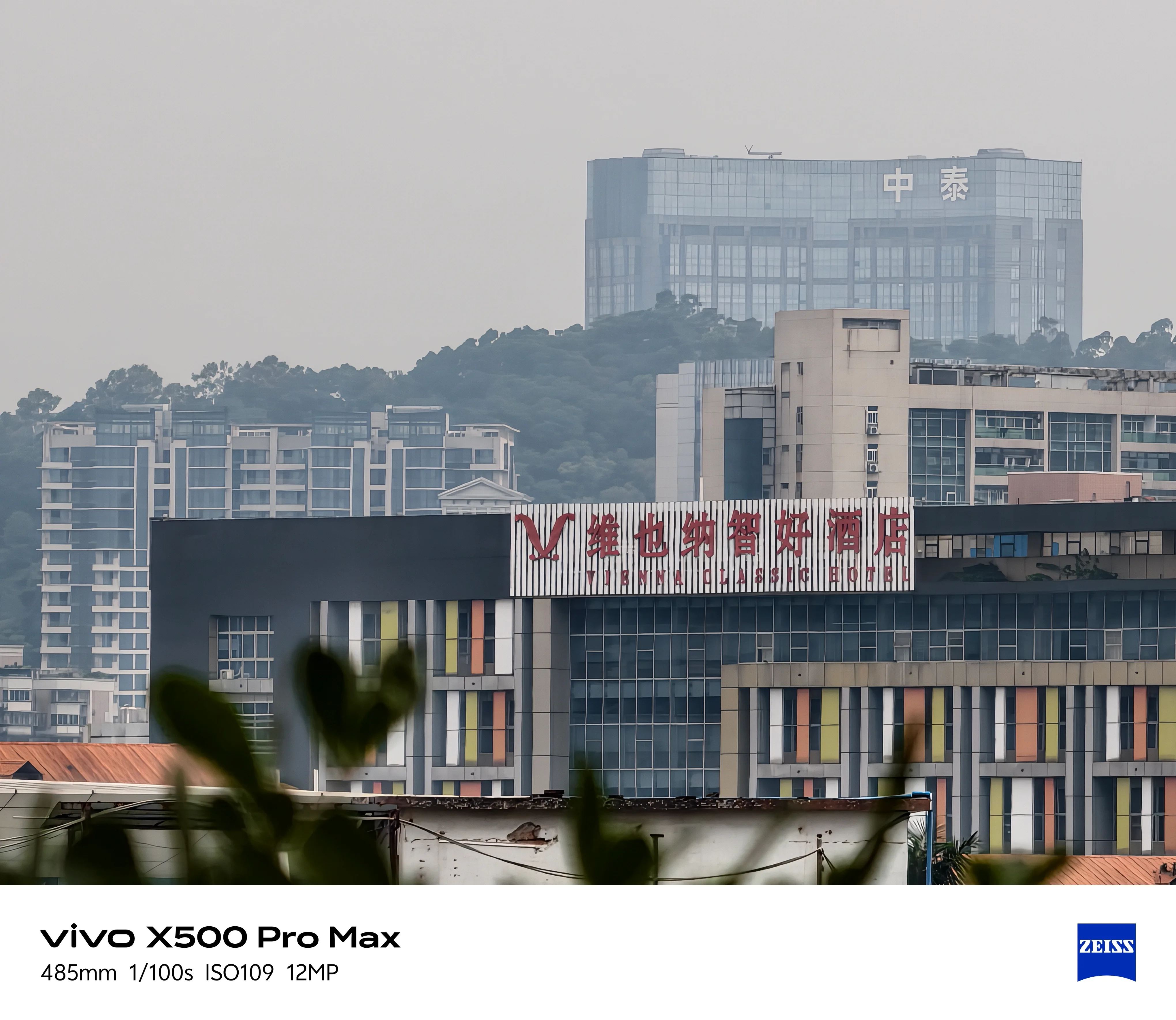
(Image Source: Leitech Shoot)
At 20x or 30x zoom, don't expect pixel-level detail—distant branches or text may show noticeable processing artifacts. However, Xiaolei considers this acceptable, as the priority at such magnifications is capturing the subject rather than microscopic detail.
Oh, and its telephoto burst mode supports up to 30x zoom, with Pro Max adding telephoto tracking. When shooting moving subjects, the system automatically maintains focus on them.
Another favorite feature is portrait photography. The 85mm focal length is ideal for half-body and close-up shots, and vivo's consistent strength in portrait imaging ensures natural skin tones without excessive whitening, detailed facial features, and smooth background blur (bokeh) that avoids a cut-out look. Essentially, shots are ready to share straight from the camera.
After extensive use, Xiaolei no longer cares whether vivo switched the telephoto CMOS—it's already strong enough. Rather than chasing headlines with a new sensor, Xiaolei prefers vivo to further unlock this telephoto lens's potential.
The 400mm 'Cannon'—This Time, It's Legit
Starting with the X200 Ultra, vivo has doubled down on teleconverters. The reviewed X500 Pro Max supports the vivo Zeiss Teleconverter G2 Ultra, extending the equivalent focal length to 400mm.
First, the downside: it's bulky. Seriously bulky.
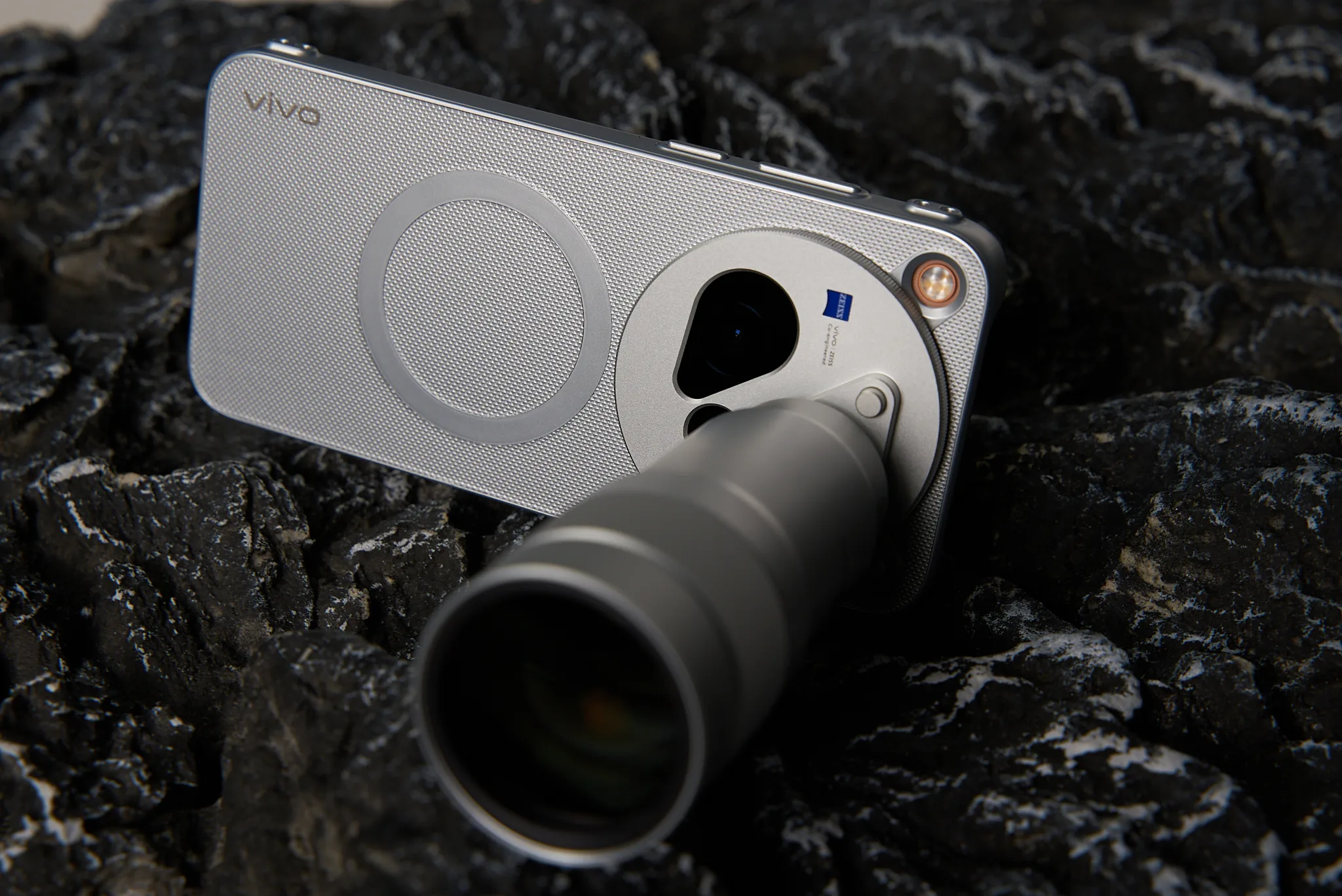
(Image Source: Leitech Shoot)
Attached to the phone, the X500 Pro Max transforms from a smartphone into a bizarre "compact camera." The center of gravity shifts downward, making it impossible to pull out casually from a pocket for a quick shot. When asked if Xiaolei would carry it daily, the answer is no—but it's the kind of accessory that feels unnecessary until you use it, then reluctant to remove it afterward.
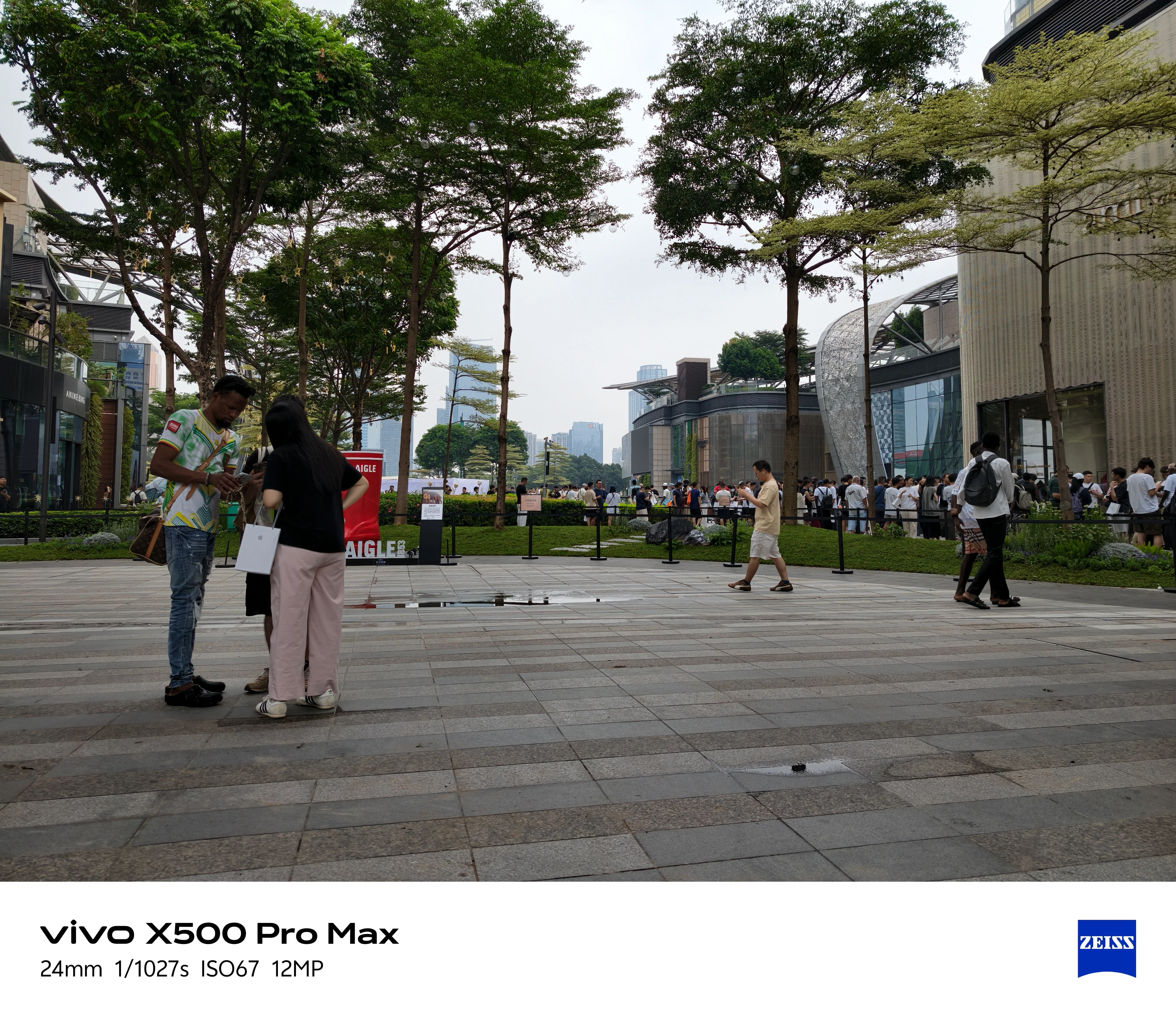
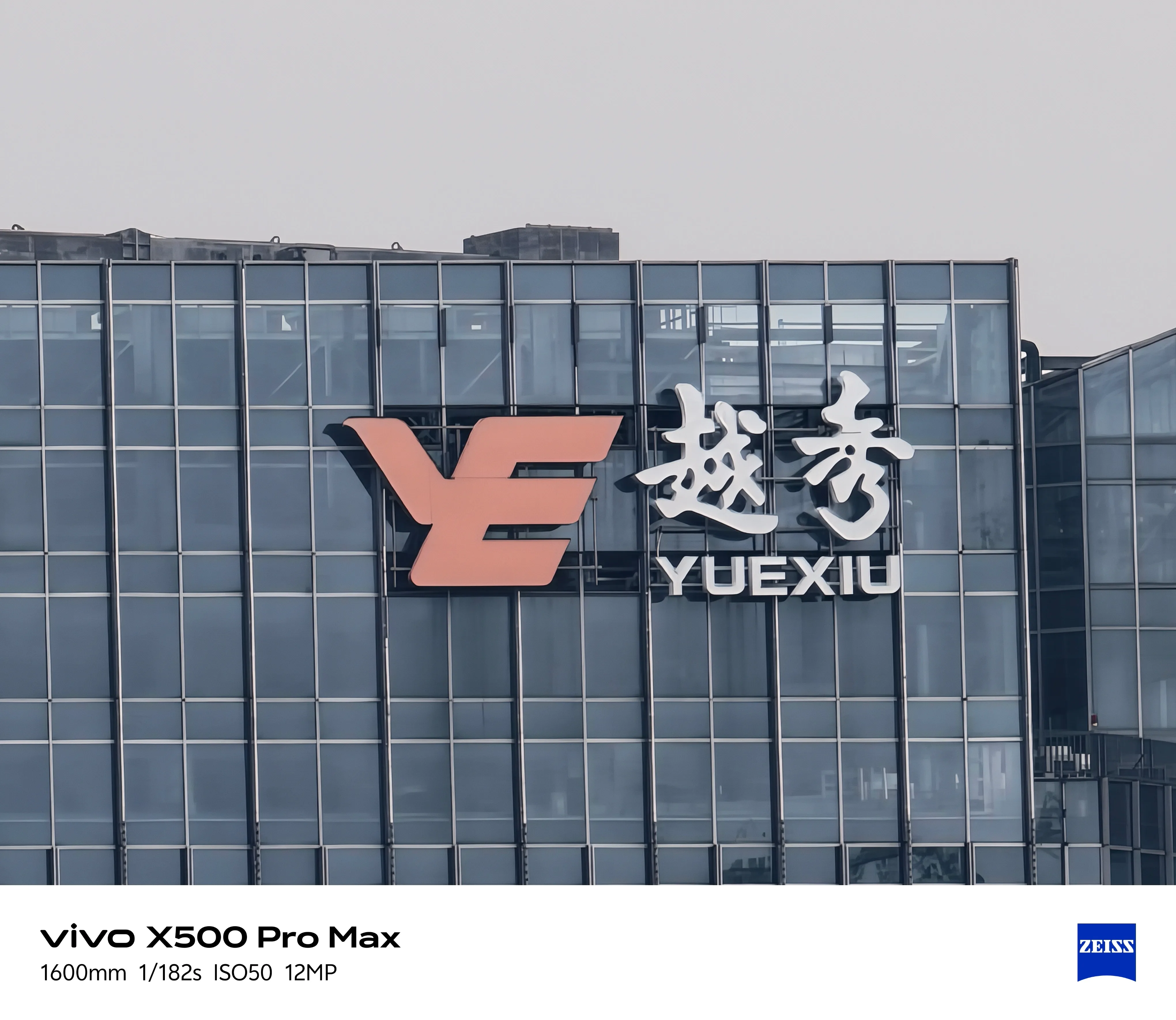
Photos taken at 400mm differ significantly from the phone's internal telephoto. When shooting distant buildings, mountains, or stages, the ultra-telephoto compression effect becomes obvious, bringing faraway subjects and backgrounds visually closer. Without the watermark, it's hard to associate such perspectives with smartphone photography.
(Image Source: Leitech Shoot)
Even when subjects aren't extremely distant, 400mm creates a distinct feel compared to 85mm—especially when photographing mountains, seas, or city skylines while traveling. This lens captures shots that primary and standard telephoto lenses struggle to achieve.
If your photography mainly involves food or friends, this accessory will likely gather dust in a drawer. However, for concertgoers, sports fans, or wildlife photographers, it justifies its existence.
After all, weight and quality are directly proportional.
Video Shooting Made Simpler: A Smartphone Cinema Camera?
After photography, let's discuss what Xiaolei considers the X500 Pro Max's most significant upgrade: video.
vivo's video capabilities have always been solid but less prominent than its telephoto and portrait features. In terms of specs, the X500 Pro Max's primary camera supports up to 4K 240fps recording, with primary and telephoto lenses capable of 4K 120fps 10-bit Log/Dolby Vision. All focal lengths support 4K 60fps Cinematic Portrait mode, along with 10-bit 4:2:2 APV professional video encoding.
What Xiao Lei cares about most is the 4K 240fps slow-motion feature, which was previously only available on some high-end movie cameras costing tens of thousands of dollars. This means you can slow down moments from the real world by several times while maintaining true 4K ultra-clear quality in every frame.
You're probably already familiar with slow-motion. A few years ago, smartphone manufacturers even competed with 480fps and 960fps modes. But Xiao Lei barely used them more than twice. The reason is simple: the quality was terrible.
Some smartphones' 960fps slow-motion looks impressive at first glance, but if you zoom in even slightly, the entire frame becomes blurry, and details are completely indistinguishable. Once the novelty wears off, there's no reason to keep using it.
But the vivo X500 Pro Max is different. Even shooting a simple video of pouring cola becomes incredibly interesting when you enable 4K 240fps.
vivo also offers 480fps and 960fps modes, but these require post-processing enhancement in the gallery. From actual experience, Xiao Lei found these two modes less practical, as 4K 240fps already strikes a comfortable balance between image quality and slow-motion effects.
Even more interesting is the Movie Studio feature. It includes several functions like C-Position Lock, Super Slow-Mo, Rotating Camera, and Dual View.
Xiao Lei's favorite is C-Position Lock.
For example, when filming someone walking toward you, normally you'd have to walk backward while controlling the zoom to keep the subject's proportions consistent in the frame. It sounds simple, but in practice, it's easy to get flustered. If you zoom too fast, the entire shot becomes awkward. C-Position Lock automatically handles these camera movements for you.
After selecting the subject, the phone uses different focal lengths and cropping to maintain the subject's size. The effect isn't as smooth as manual control by a professional photographer, and it can occasionally lose track if the subject moves too quickly, but for ordinary users, it's more than sufficient.
Rotating Camera works similarly. Previously, these shots either required learning specific techniques or carrying a stabilizer. Now, vivo has built them directly into the camera—just follow the prompts after enabling the feature.

(Image source: Lei Technology)
Xiao Lei believes this is what smartphone videography should be about. Features like Log, 10-bit color, and professional codecs are important, but they're still too niche for most users. Many people don't even know why Log footage looks gray, let alone understand the benefits of 10-bit 4:2:2.
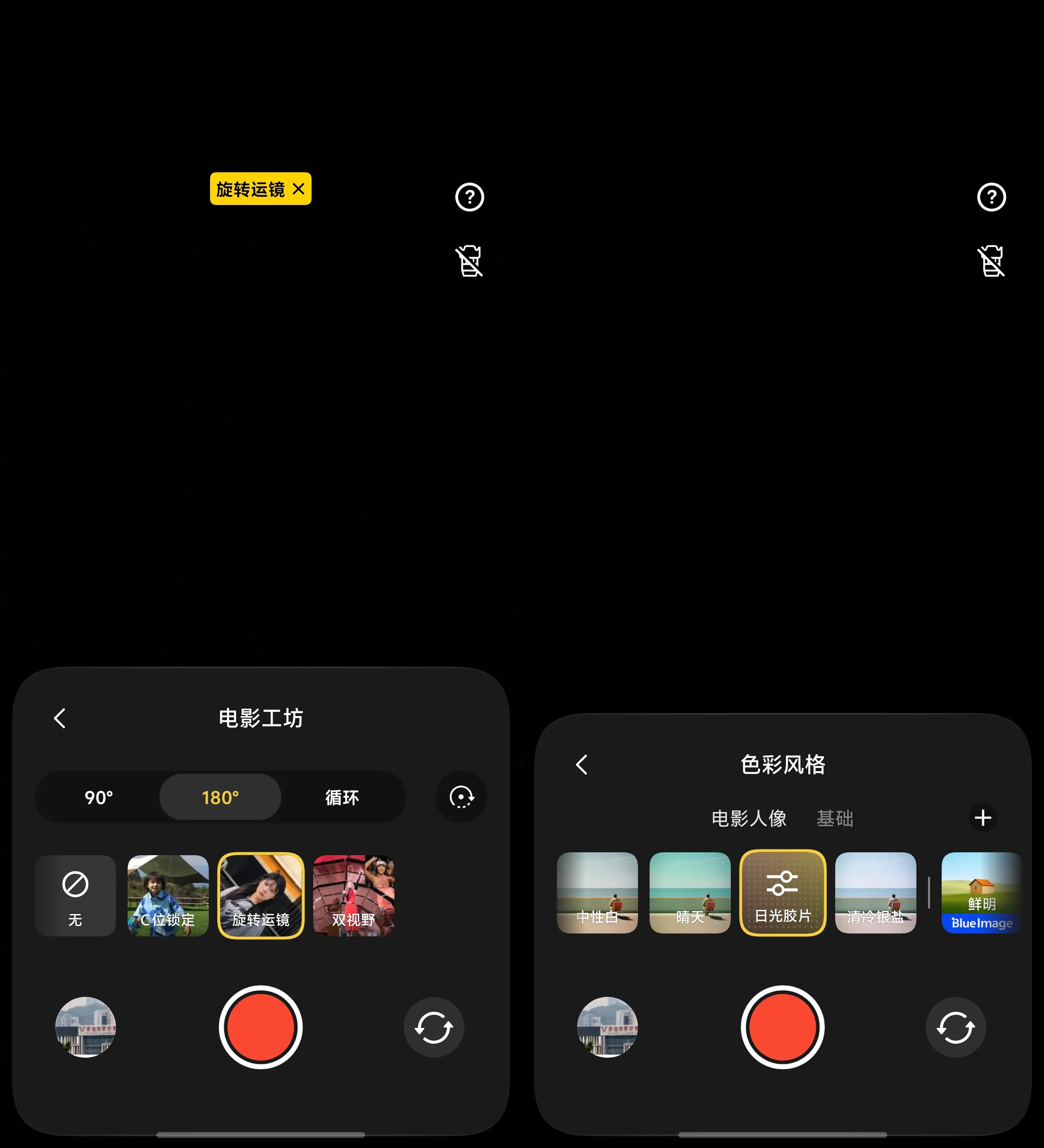
Besides camera movements, vivo has also put significant effort into color science. The X500 Pro Max offers various cinematic color profiles like Daylight Film, Cool Silver Salt, Sunny Day, Paris Afterglow, Warm Light, and Cool Shadow, while still supporting user-imported 3D LUTs.
(Image source: Lei Technology)
Xiao Lei's personal favorite is Daylight Film.
Especially during late afternoon to sunset, the colors of Daylight Film match the environment beautifully. Highlights have a slight warm-red tint, while overall saturation remains moderate, making it easy to capture striking shots of streets, portraits, or sunsets.
Filters themselves aren't particularly novel. What impresses Xiao Lei is that vivo doesn't alter skin tones along with the scene. On some phones, so-called cinematic filters add atmosphere but turn skin tones yellow or green, requiring post-editing fixes.
The X500 Pro Max handles subjects and environments relatively independently, so even with heavy filter colors, skin tones remain natural.
For those who enjoy post-production, Log, LUTs, and professional codecs offer enough control to create stunning films. But for lazy users like Xiao Lei, being able to select a filter directly is far more convenient.
This year, the concept of 'cinema cameras' has become trendy, with devices like the DJI Pocket 4p embracing the idea. Xiao Lei believes the X500 Pro Max deserves to be called a true 'smartphone cinema camera.'
Conclusion: Another classic flagship reinforcing vivo's imaging dominance
Following Lei Technology's tradition, here's a quick summary of the vivo X500 Pro Max's pros and cons:
Pros:
1. The 200MP telephoto camera remains top-tier, with excellent stabilization and high shot success rate.
2. The main camera offers good dynamic range and stable performance in high-contrast scenes.
3. 4K 240fps is highly practical, finally giving video specs as much presence as photography.
4. Movie Studio genuinely lowers the barrier to video shooting.
5. The 400mm extender is exaggerated but incredibly fun in specific scenarios.
Cons:
1. At 229g with a massive camera module, the feel isn't great.
2. The growing number of camera features has a learning curve.
3. Current performance is somewhat average.
When Xiao Lei first saw the specs, the X500 Pro Max felt a bit like 'incremental upgrades,' easily giving the impression that vivo had run out of meaningful improvements.
While the main camera now uses the Blueprint Guangyu 900 sensor, its size doesn't feel like a 'must-have' upgrade. Coupled with the MediaTek Dimensity 9600 Pro's underwhelming performance so far, the phone doesn't seem like a complete generational leap on paper.
But after using it, the experience feels entirely different. Especially for video, when Xiao Lei thinks of the vivo X series, portraits and telephoto always come to mind first, while video felt 'strong but low-key.' The X500 Pro Max changes that impression, particularly with 4K 240fps and Movie Studio—the former is genuinely fun, while the latter solves the problem of not knowing how to shoot video.
Here's an interesting anecdote: Lei Technology's editor-in-chief Luo Chao, who was inspecting global markets in Europe, immediately asked an editor to bring the X500 Pro Max to Spain after seeing sample shots. Previously, his European imaging gear list already included over three phones, a DJI Pocket, an Insta360 panoramic camera, and a Sony mirrorless—showing just how compelling the X500 Pro Max's imaging capabilities are.
After years of smartphone imaging competition, specs can still improve, but the perceived difference for users is shrinking. Rather than swapping one 200MP sensor for another or slightly enlarging the CMOS, Xiao Lei prefers seeing manufacturers refine already well-regarded systems to maximize their potential.
The X500 Pro Max is exactly that kind of phone.
Source: Lei Technology
Images in this article come from: 123RF Royalty-Free Image Library Source: Lei Technology
-
![]()
Mysterious New Model Cracks 100+ World-Class Problems in 24 Days! OpenAI Unveils Mathematics and AI Advisory Board
-
![]()
vivo X500 Pro Imaging Professional Review: Strong Telephoto, Powerful Video, Enhancing Imaging Dominance with High Output Rate
-
![]()
Practical Testing of Doubao AI for Work: Multimodal Video Generation Provides Differentiated Advantages for Office Scenarios, Strong in Structured Tasks
-
Why Are Chinese Cybersecurity Stocks Still Falling Despite Zhipu Securing 1 Billion Yuan in Orders?
-
The ‘Korean Bentley’ in Beijing, Shanghai, and Guangzhou Stores: Hanging On by a Thread
-
Corporate Splurge on AI Box
-
![]()
RoboX’s Breakthrough Year: From Hype to Reality
-
![]()
Nitto Denko Pours $160 Million into New Factory to Bolster Global Polarizer Strategy