Honor Expands Partnership with Alibaba: Who Will Lead the AI Smartphone Revolution?
 09/22 2026
 342
342
For a long time, the smartphone industry has been lacking variables that genuinely transform product logic.
While advancements in imaging, screens, chips, and battery life persist, most enhancements are performance-oriented, making it hard for users to perceive a revolutionary change in their devices. The advent of AI introduces a new paradigm: smartphones are evolving from mere app-running tools to devices capable of understanding user intent and executing tasks autonomously.
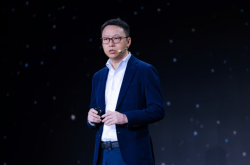
On September 22, Fang Fei, President of Honor's Product Line, announced at Alibaba's Cloud Town Conference that future devices will transcend being mere app containers, becoming platforms for intelligent agents to operate.
MagicOS is set to evolve into Agentic OS, an intelligent agent operating system designed for partner-type multimodal interactions. Honor and Alibaba are collaborating to develop five vertical domain models and solutions for next-generation AI smartphones. Alibaba will provide foundational model capabilities, while Honor will contribute system capabilities, hardware adaptation, and real-world usage scenarios from end users.
This transformation aligns with changes in smartphone interaction: previously, users had to locate apps before performing actions; in the future, users will set goals, and the system will determine the necessary services to invoke.
Indeed, YOYO in Honor's recently launched MagicOS 11 has already transitioned from a traditional voice assistant to a task-oriented intelligent agent. The number of executable task steps for YOYO has surged from 14 last year to over 100, with a comprehensive task closure rate of approximately 90%. It now covers scenarios such as schedule management, automated responses, and AI call assistance. Users no longer need to open calendars, contacts, and communication tools separately; the system can perform related operations based on semantics.
Historically, the value of smartphone AI has centered on "understanding." Today, the focus has shifted to "completion." This distinction is crucial—understanding a sentence requires linguistic capabilities, while completing a task involves permission management, application interfaces, operational pathways, exception handling, and accountability boundaries. Model performance is just the starting point; system scheduling capabilities determine whether users will continue to use the service in the long run.
I. AI Smartphones: From "Understanding" to "Execution"
User expectations for smartphone AI have long exceeded simple Q&A interactions.
Tasks such as summarizing an article, generating an image, or refining a few sentences represent early-stage application-level functions. The truly valuable experience occurs when users only need to set a goal, and the smartphone can recognize intentions, invoke services, manage permissions, and complete cross-app operations.
For instance, when a user says, "Help me schedule a meeting for tomorrow afternoon," the phone must recognize the time, check the schedule, find contacts, send invitations, and follow up in case of conflicts. When a user says, "Save the phone number mentioned in the call," the system must complete speech recognition, information extraction, and contact management.
Under traditional system architectures, apps operate in isolation, making it difficult for models to continuously invoke different services. Even if an AI function understands a command, it often gets stuck on permissions, interfaces, pages, and execution workflows. Users may issue a natural language command but still need to perform multiple clicks themselves.
In MagicOS 11, released on September 15, Honor introduced a system-level Agent Harness architecture to address execution challenges. This architecture organizes models with perception, planning, tool invocation, and execution capabilities, enabling YOYO to manage tasks rather than just answer questions.
Public information indicates that the new YOYO achieves a comprehensive task accuracy rate of 91.8%, reduces GUI average operation time to 3.6 seconds, and supports a maximum of over 100 steps. Other metrics show a single-round task success rate of 90.4% and a task closure rate exceeding 90%.
While deviations may occur in specific tasks, this demonstrates that product competition is shifting from the quantity of functions to the quality of task completion. For users, long-term usage depends not on how many AI functions are preinstalled but on whether AI reduces operational costs in real life.
Honor's YOYO upgrades encompass three levels:
Application-level AI handles automatic execution of cross-app, multi-step tasks; system-level AI relies on YOYO's skill ecosystem, collaborating with interfaces like MCP, A2A, Skills, and GUI; embodied AI explores interactions between smartphones and robots through Robot Phone. Honor aims to transform smartphones from passive devices into personal terminals capable of sensing scenarios, understanding intentions, and providing proactive services.
While the product concept is broad, the core challenges remain execution reliability and user retention.
IDC predicts that global AI smartphone shipments will exceed 722 million units by 2026, with a penetration rate of 66.4%. However, IDC also notes that terminal AI suffers from infrequent functional usage, with many users abandoning it after a single try. The reason is simple: novelty attracts initial interest, but long-term usage requires accuracy, stability, and minimal disruption.
A smartphone that helps users complete a complex task once demonstrates capability; consistently completing tasks across scenarios creates systemic value. This is why Honor is strengthening collaborations with external partners.
II. Honor and Alibaba's Collaboration Strengthens AI Smartphone Ecosystem
AI smartphones possess three core capabilities: models, systems, and ecosystems. Most future AI hardware will likely focus on these three areas.
Models determine understanding, generation, and planning capabilities; systems determine computing power, energy efficiency, permissions, and cross-app invocation efficiency; ecosystems determine whether intelligent agents have sufficient service entry points.
It is evident that smartphone manufacturers alone cannot bear the cost of foundational model research and development profitably; similarly, large model companies struggle to manage permissions, hardware performance, and user scenarios without smartphone system expertise. Honor's collaboration with Alibaba helps reinforce these structural advantages.
Alibaba offers Qwen large models, cloud computing infrastructure, and extensive internet service scenarios. Honor provides MagicOS, smartphone hardware engineering capabilities, and scalable terminal entry points. By aligning model parameter scales and capability boundaries with smartphone power consumption, memory, and chip performance, AI smartphones avoid simply replicating cloud models. Instead, they enable tiered deployment based on terminal conditions, opening up greater possibilities for AI-powered smartphones and other intelligent hardware.
For example, on-device models are suitable for privacy-sensitive, high-speed tasks, while cloud models handle complex reasoning and large-scale information retrieval. Balancing cost, speed, privacy, and experience during model switching is crucial. Honor and Alibaba's joint development of vertical domain models and solutions translates model capabilities into usable smartphone services.
Prior to this, Honor had accumulated ten years of AI terminal experience, providing a strong foundation for system iteration.
Chronologically, MagicOS 6.0 introduced YOYO Suggestions to proactively offer services; 7.0 introduced Magic Ring for enhanced cross-device interconnection; 8.0 launched AnyDoor for intent-driven cross-app operations; 9.0 upgraded YOYO to an intelligent agent; 10.0 expanded AI to daily life scenarios; 11.0 began reconstructing the underlying architecture.
Data shows that YOYO has over 160 million monthly active users, with over 8,000 connected ecosystem MCPs and intelligent agents. MagicOS 11 has opened 700 tools and 500 Skills, integrating over 10,000 third-party AI services.
More importantly, Honor has not limited AI capabilities to its own apps. MagicOS 11 simultaneously opens multiple interfaces, including MCP, A2A, Skills, and GUI. Standardized interfaces improve execution efficiency, while GUI covers apps not yet integrated into the system. After Honor and WeChat connected via A2A, users can instruct YOYO to find contacts, open chat interfaces, and initiate calls.
From the current product strategy, AI smartphones must address two types of challenges to become systemic products: establishing standardized connections with apps and completing universal operations when standard interfaces are unavailable. Honor's parallel advancement of both mechanisms reflects its pursuit of balance between openness and stable usage—ultimately aligning with user needs.
III. System-Level Challenges Elevate the Bar for AI Smartphones
Since the goal of AI smartphones is to meet user demands, the entire system users interact with becomes the most critical threshold.
Simply put, while model capabilities and chip performance will continue to improve, the resources that smartphone manufacturers find hardest to replicate are long-term system experience and user behavior scenarios.
In its Agentic OS roadmap, Honor proposes that system scheduling objects will shift from processes to user intentions, kernel-managed resources will transition from threads to models and computing power, and permission subjects will move from apps to intelligent agents. Clearly, the core of future smartphone systems will no longer be managing apps, files, and hardware but orchestrating the invocation of multiple intelligent agents across tasks.
This can be understood in the context of smartphone operation—traditional smartphone systems are app-centric. Users open apps and then perform actions. Intelligent agent systems are intent-centric. Users set goals, and the system decides which apps, models, and permissions to invoke.
The difference between these two logics means AI smartphones cannot remain at the level of "a regular system with an AI assistant." While the latter can be launched quickly, it struggles to address permission management, accountability, data security, and post-failure handling. The former requires redesigning the system framework and collaborating with developers to establish new service interfaces.
Honor's advantage lies in its years of embedding AI capabilities into MagicOS and its complete product experience spanning smartphone hardware, system software, and ecological connections. Honor possesses model vendors' hard-to-replicate capabilities in terminal deployment, system coordination, and user scenarios. Alibaba brings large models to smartphones, while Honor transforms them into system services. Ultimately, they converge on terminal transformation and business model upgrades.
Such innovations are particularly crucial today.
Preliminary data from Counterpoint Research indicates that global smartphone shipments declined by 11% year-over-year in the second quarter of 2026. With hardware performance nearing maturity and replacement cycles lengthening, smartphone manufacturers must find new sources of value.
AI smartphones offer a fresh product narrative, but narrative does not equal real demand. Consumers are willing to pay for better imaging, battery life, screens, and communication capabilities but may not sustain extra costs for infrequently used AI assistants.
Therefore, AI smartphones must overcome at least three barriers to drive industry growth:
The first barrier is accuracy. Frequent task failures will quickly drive users back to manual operations.
The second barrier is permissions and security. Intelligent agents must clearly communicate what services they can access, what actions they can perform, and who is responsible for errors.
The third barrier is ecosystem density. While smartphone manufacturers can develop a limited number of functions, the true potential of intelligent agents depends on whether third-party apps are willing to open interfaces and allow system-level intelligent agents to participate in service workflows.
For users, the value of AI smartphones lies not in having a more conversational assistant but in whether the phone can serve as a unified gateway for personal tasks. For manufacturers, the value extends beyond selling more hardware to gaining higher-frequency access to system services.
Today, AI smartphones are beginning to form tiers. In addition to well-known options like Doubao Phone, large model company StepFun launched its global debut at WAIC in July 2026, introducing the world's first large model-native AI terminal brand STEPX, the first intelligent agent-native operating system Step AOS, and the next-generation personal intelligent agent Step Amoo.
Among them, the large model-native intelligent agent smartphone STEPX Neo is manufactured by listed company Huaqin Technology, with intelligence capabilities provided by StepFun itself. This represents a entirely new attempt, as the AI smartphone ecosystem begins to expand.
As more players enter the AI smartphone arena and collaboration directions become clearer, we are rapidly approaching a tipping point for qualitative change.
Source: Songguo Finance
-
![]()
China’s Premier Independent Token Factory: Secures 2.9 Billion Yuan in Funding
-
FAW and GAC Toyota: Collaborating Without Full Merger?
-
Honor Expands Partnership with Alibaba: Who Will Lead the AI Smartphone Revolution?
-
![]()
Yunqi Conference Heralds Computing Power Growth: Alibaba Cloud’s Data Center Capacity to Surpass 20GW by 2032, T-Head Reveals AI Chip Zhenwu V900
-
![]()
Singapore Hardware Veteran Creates an AI Golf Personal Trainer
-
![]()
Data Integration Throughout the Production Chain! Haomi Optics Initiates MES and ERP System Upgrade Project
-
![]()
3.56 Billion Yuan in Overdue Payments and Unpaid Salaries! What’s Ailing Lianchuang Electronic’s Automotive Optics Business?
-
Volkswagen Can't Bear a Profit Margin Cut to 1%! Thousands of Workers Protest: We Won't Accept It