In-Depth Performance Analysis of iPhone 18 Pro: Unmatched Superiority, Enhanced Cooling, and the Advantages of 2nm Chip Technology
 09/23 2026
 536
536
Folks, the iPhone 18 Pro has arrived!
What can I say? Upon first handling this device, I briefly wondered if I had mistakenly picked up an older model. The design remains largely unchanged—the camera setup is identical, and the overall body design is the same. If you're searching for differences, the transition between the glass and metal is now smoother, offering a more seamless feel compared to last year's model when held.
Well, it seems Apple's design team had a relatively relaxed year this time around.
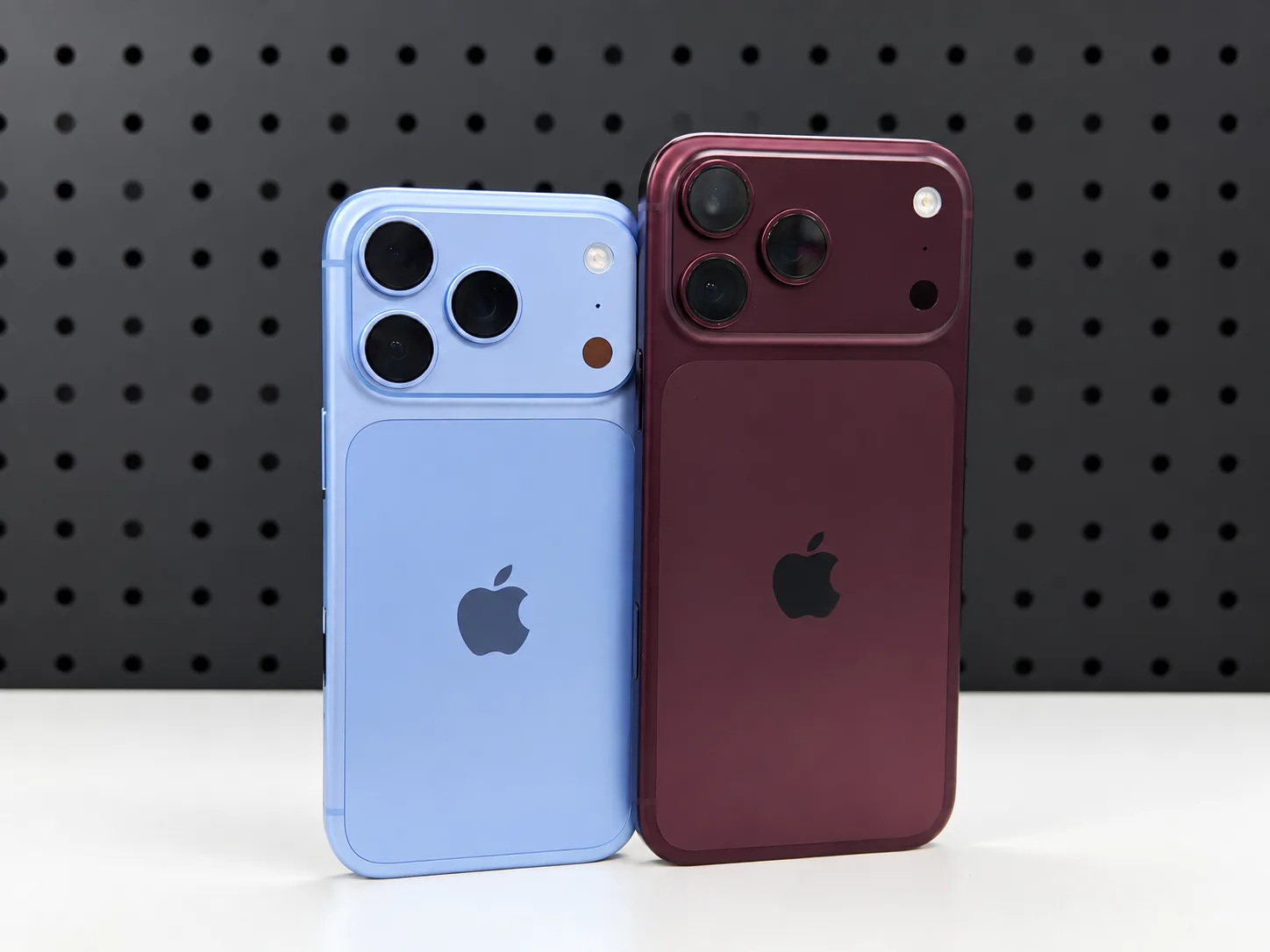
(Image Source: Leikeji)
Of course, appearance isn't the primary concern for most people now. After all, the two most talked-about features of this year's iPhone 18 Pro series are '2nm chip technology' and 'variable aperture.'
The iPhone 18 Pro series not only introduces the A20 Pro chip built on a 2nm process but also boasts upgraded cooling systems throughout the device. During the launch event, Apple highlighted performance improvements and sustained high performance, leaving many impressed. Some have even claimed that Apple has unleashed a 'performance beast' with these upgrades.
Is it really that remarkable? Today, I'm here to put it to the test.
Process Improvement and Significant Cooling Enhancements
Let's delve deeper into the A20 Pro chip.
This year, Apple has finally adopted the 2nm process. The CPU still features six cores, although Apple now refers to the two high-performance cores as 'Super Cores.' The GPU has been upgraded from six cores to seven, with memory bandwidth increased by 50% compared to the A19 Pro. Apple claims that GPU performance has improved by up to 40%, while the neural engine has been doubled to 16 cores for each of its two clusters, totaling 32 cores.
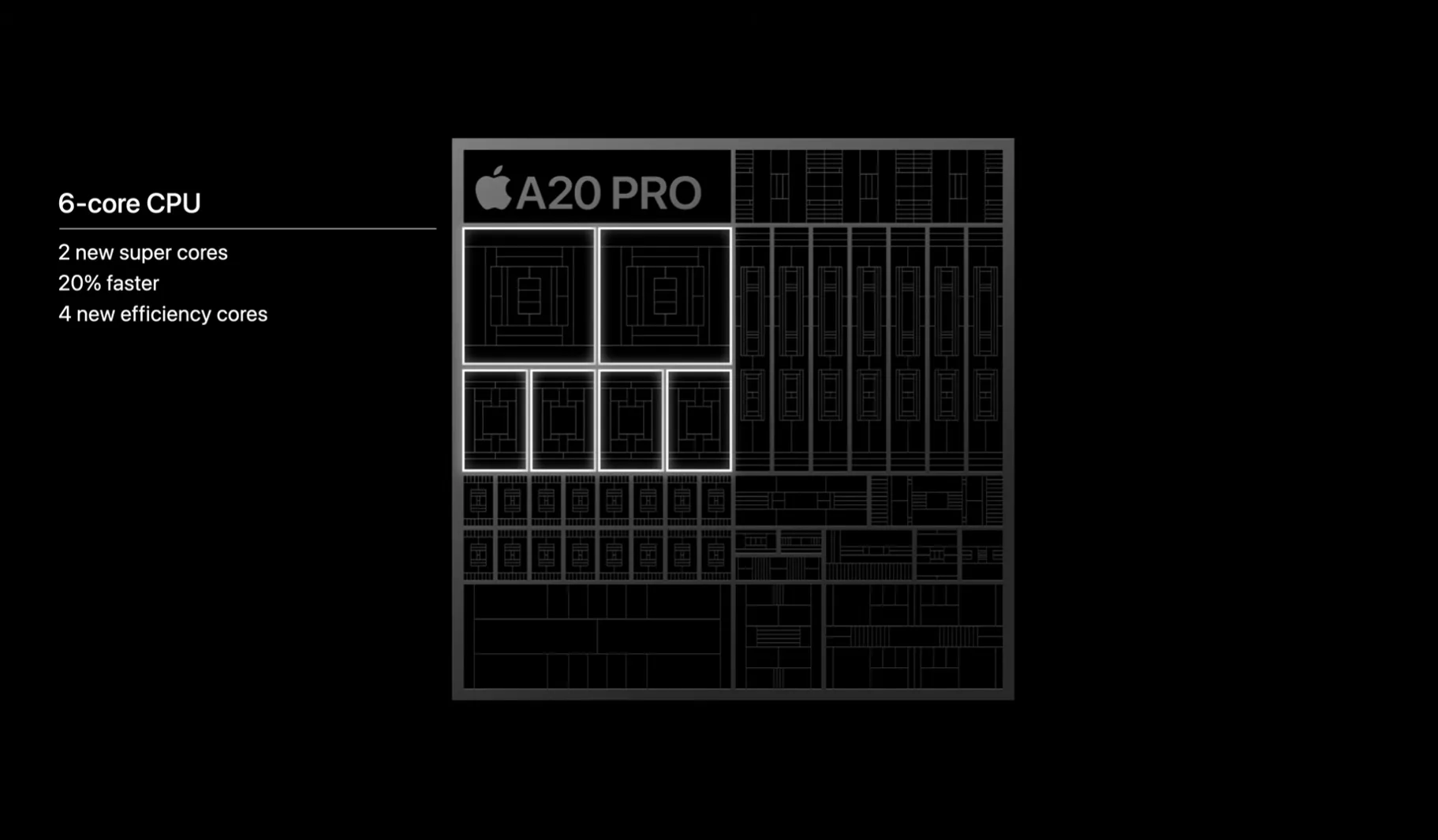
(Image Source: Leikeji)
Based on these specifications, this year's iteration doesn't seem like the usual 'slight frequency bump and name change' upgrade we've seen in recent years.
However, simply boosting theoretical performance isn't enough. For a device as compact as a smartphone, how long it can maintain performance during intensive tasks is often more critical than peak performance.
In the past, Apple didn't seem to prioritize this aspect. While A-series chips have become increasingly powerful year after year, cooling has often been an afterthought. When launching a game, frame rates might initially impress, but prolonged use would lead to overheating, reduced brightness, and throttled performance—to the point where low-power mode almost became the default 'game mode.'
This situation only began to change significantly last year. The iPhone 17 Pro series introduced Apple's first in-house vapor chamber (VC) cooling and replaced the titanium frame with a more thermally conductive aluminum unibody design. This allowed heat from the A19 Pro to dissipate more quickly across the entire device, resulting in noticeably better stability during extended gaming sessions and stress tests compared to the iPhone 16 Pro series.
Having tasted success, Apple decided to double down on cooling with the iPhone 18 Pro series.
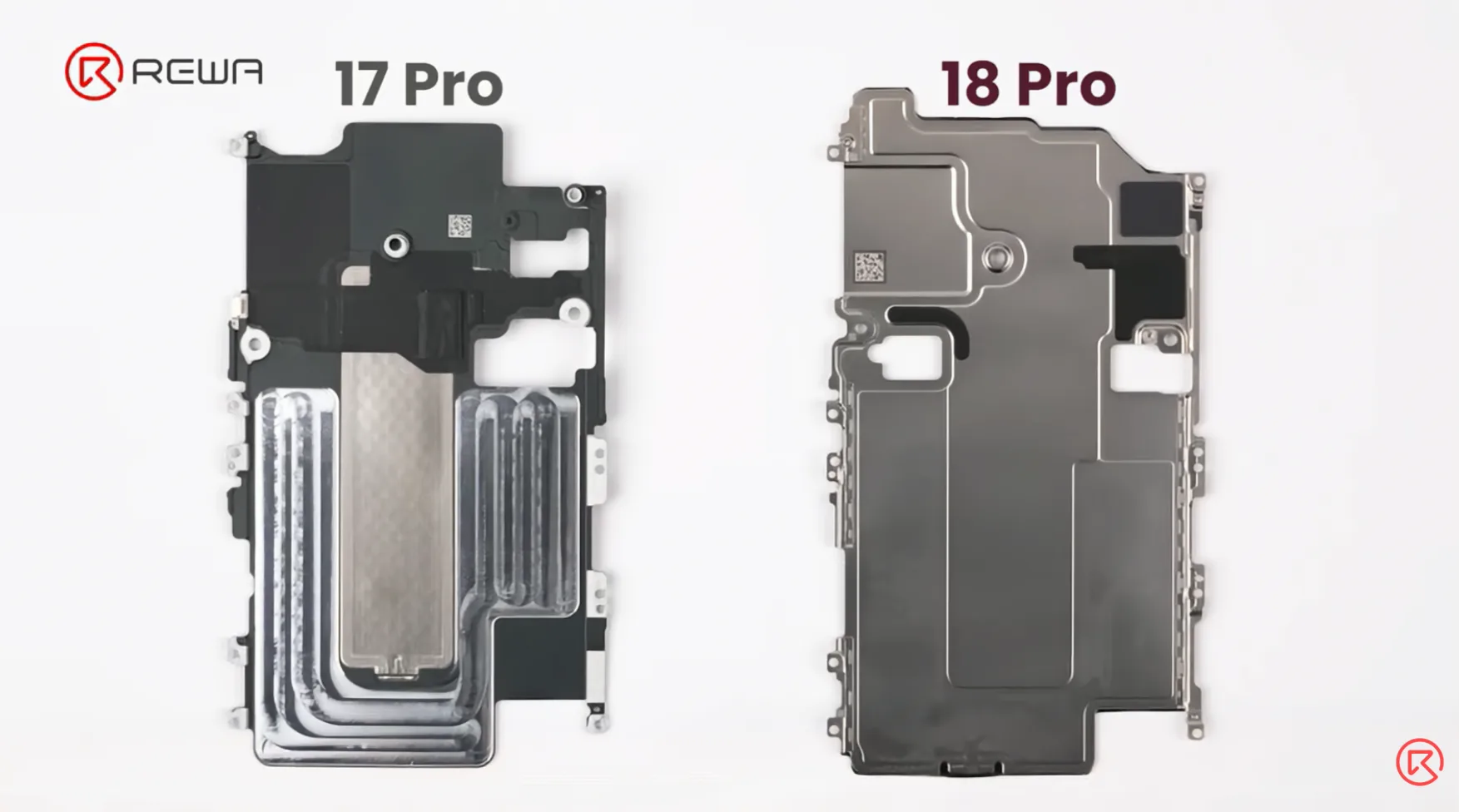
(Image Source: REWA Tech)
According to Apple, the new VC cooling area is three times larger than that of the 17 Pro. They've also switched to new thermal conductive materials to ensure direct coverage and contact with the SoC's primary heat-generating areas.
From teardown videos, it's clear that the vapor chamber area in the iPhone 18 Pro is significantly larger than its predecessor. Additionally, a composite cooling material made of graphite, metal, and foam has been added between the mainboard and vapor chamber, greatly reducing thermal resistance and accelerating heat transfer.
Not only that, but the packaging approach for the A20 Pro has also changed.
Previously, memory and SoC were stacked more compactly. This time, Apple has adopted a side-by-side layout similar to the M-series chips in Macs, placing the memory next to the chip. As a result, heat generated by the A20 Pro no longer has to pass through an additional layer and can be transferred more directly to the VC, then spread across the rest of the device via the larger vapor chamber.
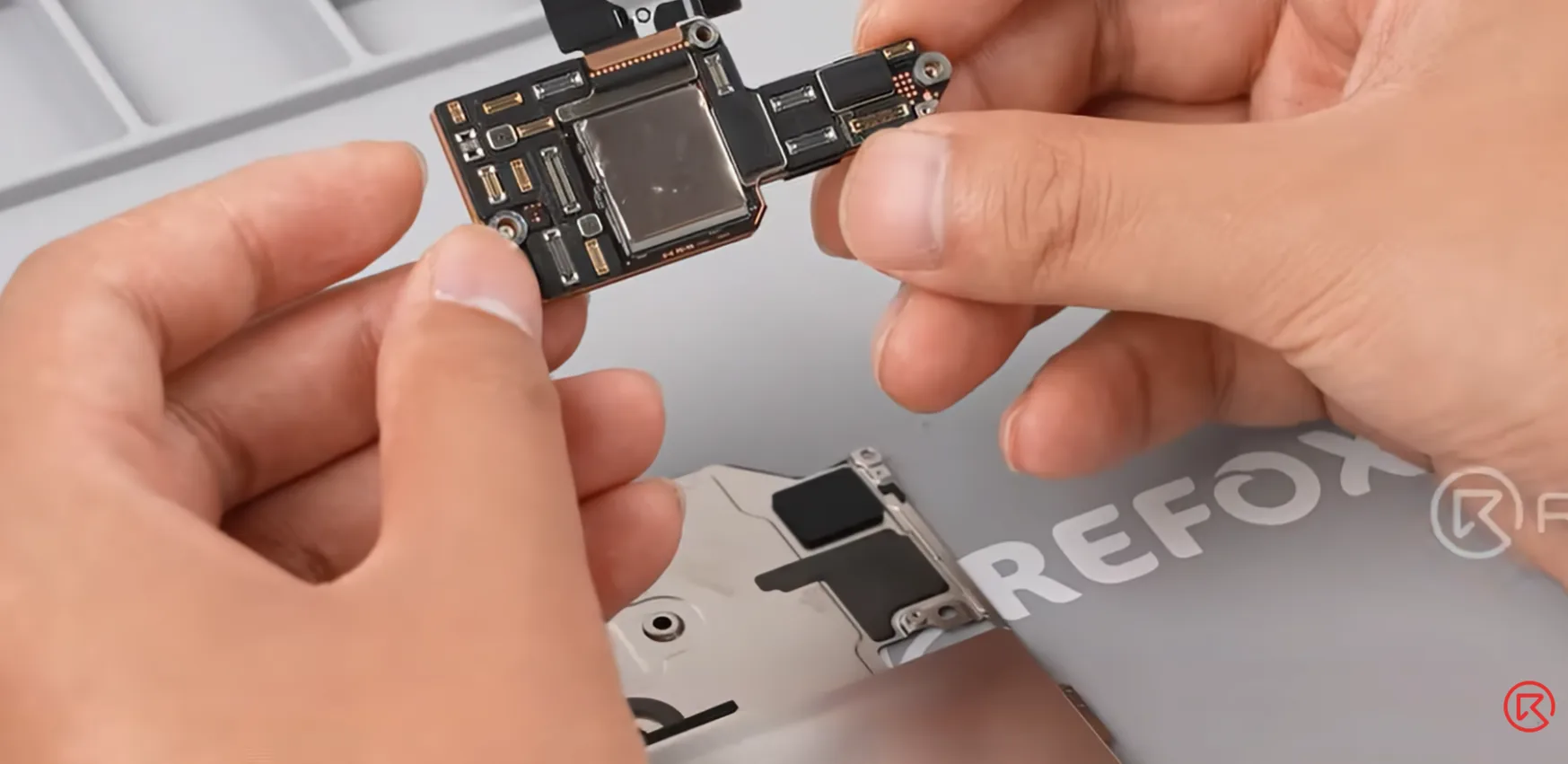
(Image Source: REWA Tech)
On paper, the new 2nm process, redesigned chip packaging, and a vapor chamber area that has tripled in size indicate that Apple has invested heavily in cooling this time around.
So, the question remains: Is the iPhone 18 Pro series' new cooling design effective? And how will the device's temperature behave during everyday use when heat is properly dissipated?
Let's dive into the tests.
Unrivaled Single-Core and Multi-Core Performance
First up, Geekbench 7.
For the CPU, the iPhone 18 Pro scored 4025 points in single-core and 11418 points in multi-core tests. The iPhone 18 Pro Max scored 4006 points in single-core and 11317 points in multi-core. Both devices performed at essentially the same level, with only normal scoring variations.
Since Apple claims significant improvements, why not compare it to the previous two generations?
According to Geekbench's official data, the iPhone 17 Pro averages 3157 points in single-core and 8777 points in multi-core tests, while the iPhone 17 Pro Max scores 3168 points in single-core and 8804 points in multi-core. The iPhone 16 Pro scores 2895 points in single-core and 7796 points in multi-core, with the 16 Pro Max scoring 2871 points in single-core and 7691 points in multi-core.
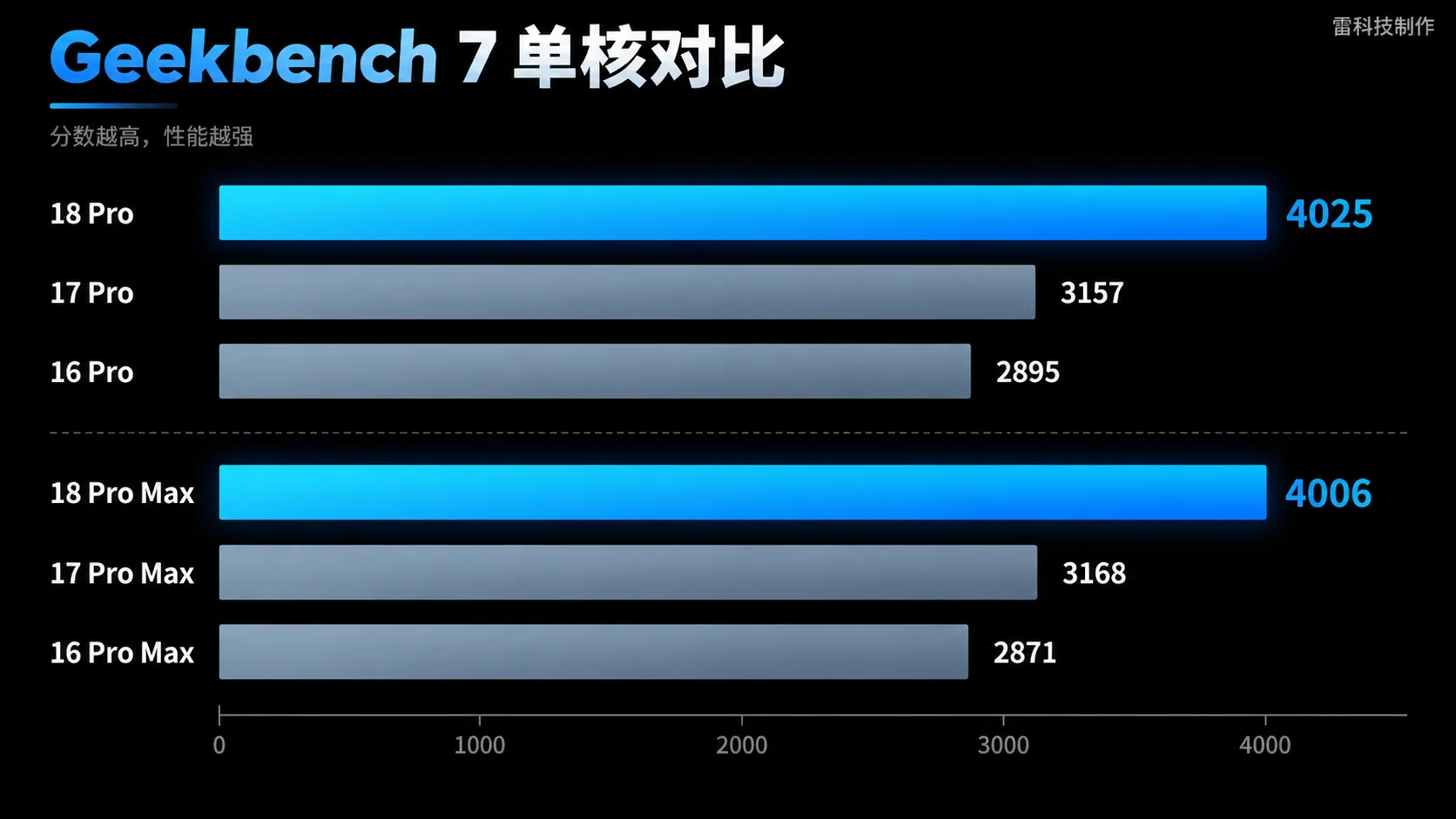
(Image Source: Leikeji)
Calculating the differences, the iPhone 18 Pro shows a roughly 27.5% improvement in single-core performance and a 30.1% improvement in multi-core performance compared to the iPhone 17 Pro. The Pro Max sees similar gains, with a 26.5% increase in single-core and 28.5% in multi-core performance.
No matter how you look at it, these are substantial improvements exceeding 20% per generation.
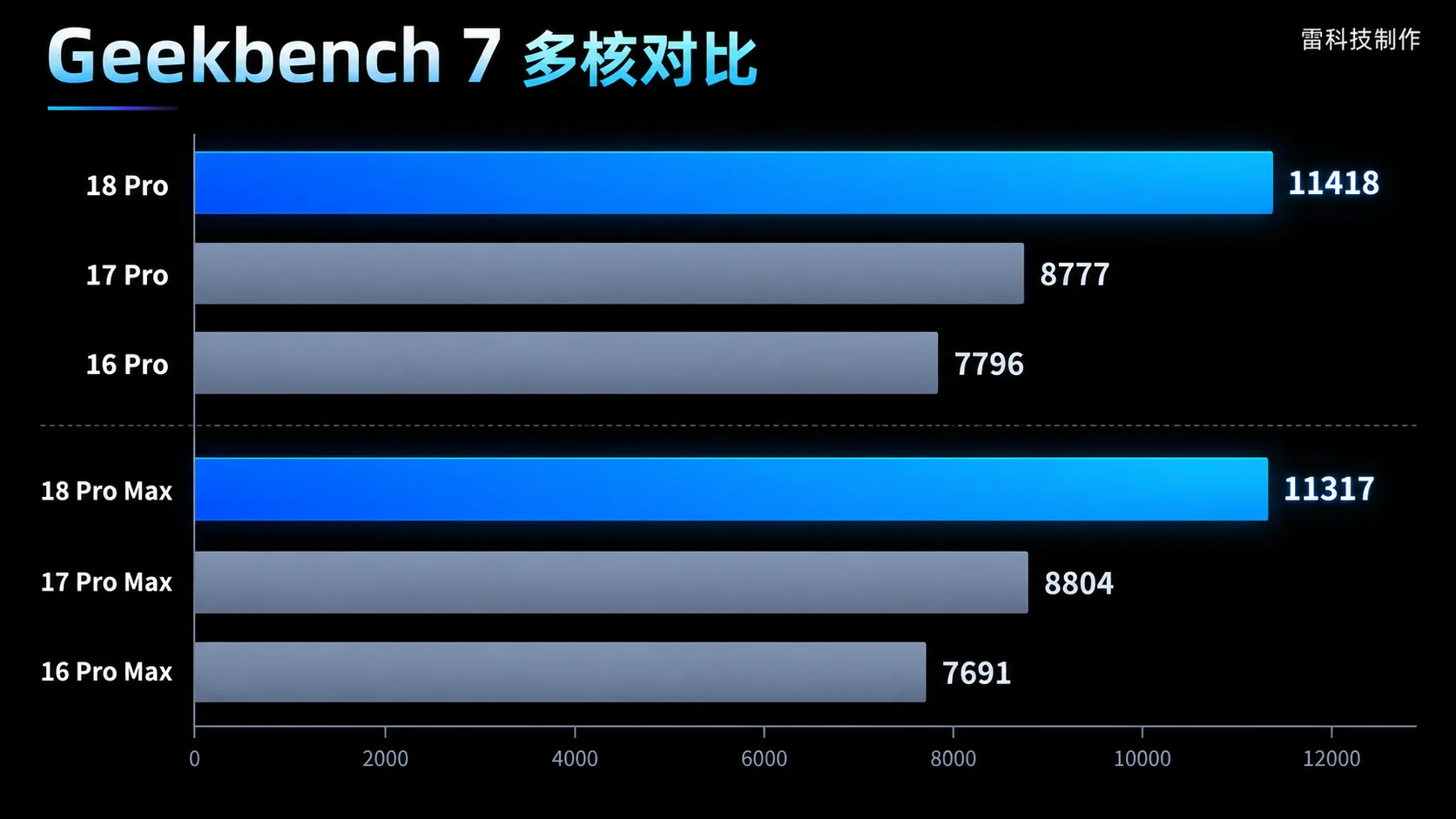
(Image Source: Leikeji)
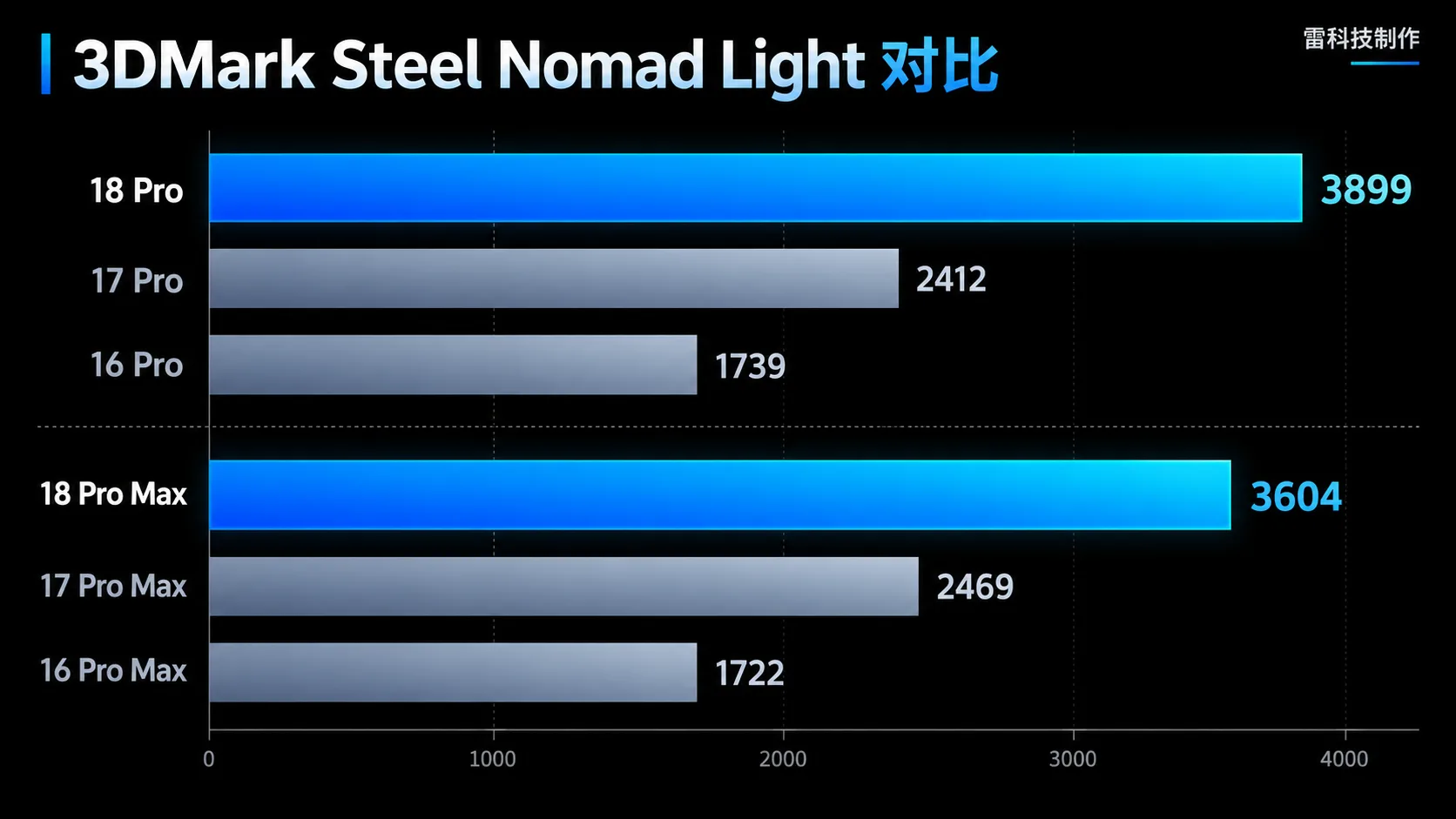
In 3D Mark tests, which are closer to real-world gaming scenarios, I ran Steel Nomad Light, Solar Bay Extreme, and Wild Life Extreme. The iPhone 18 Pro scored 3899, 2933, and 8149 points, respectively, while the iPhone 18 Pro Max scored 3604, 2966, and 7929 points.
Interestingly, except for Solar Bay Extreme, the smaller iPhone 18 Pro outperformed the Pro Max in the other two tests.
For comparison, UL's current data shows the iPhone 17 Pro scoring 2412, 1963, and 5304 points in Steel Nomad Light, Solar Bay Extreme, and Wild Life Extreme, respectively. The 17 Pro Max scores 2469, 1998, and 5405 points in the same tests.
(Image Source: Leikeji)
If we compare these results to the iPhone 18 Pro Max, we see improvements of 46%, 48.4%, and 46.7% in the three tests, respectively—fully aligning with Apple's claim of over 40% performance gains.
While these extreme benchmarks are mostly for fun, they still clearly demonstrate significant performance improvements.
The iPhone 18 Pro Excels in Gaming
Now, the main event: How does the A20 Pro perform in real-world gaming scenarios?
To find out, I tested two demanding games, Wuthering Waves and Zenless Zone Zero. Lighter games like League of Legends: Wild Rift and Peacekeeper Elite weren't even worth testing, as smooth performance is practically guaranteed.
First up is Wuthering Waves, widely regarded as a performance killer in recent gaming circles.
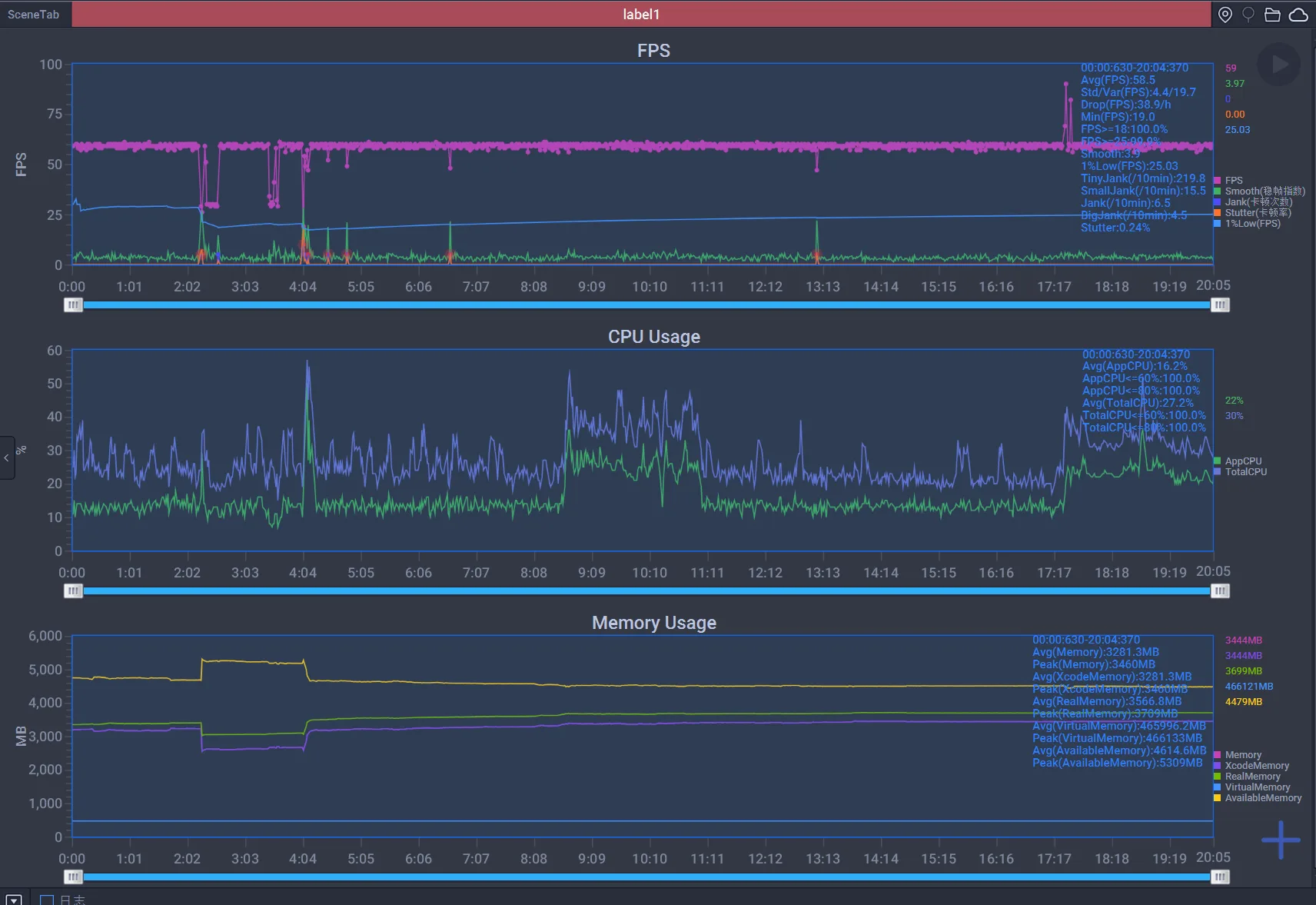
At maximum graphics settings and 60 FPS, after about 20 minutes of gameplay, the iPhone 18 Pro averaged 57.2 FPS, with some frame rate fluctuations after 15 minutes. The iPhone 18 Pro Max averaged 58.5 FPS, with no major issues during city exploration, motorcycle travel, or outdoor combat.
(Image Source: Leikeji)
As for temperatures...
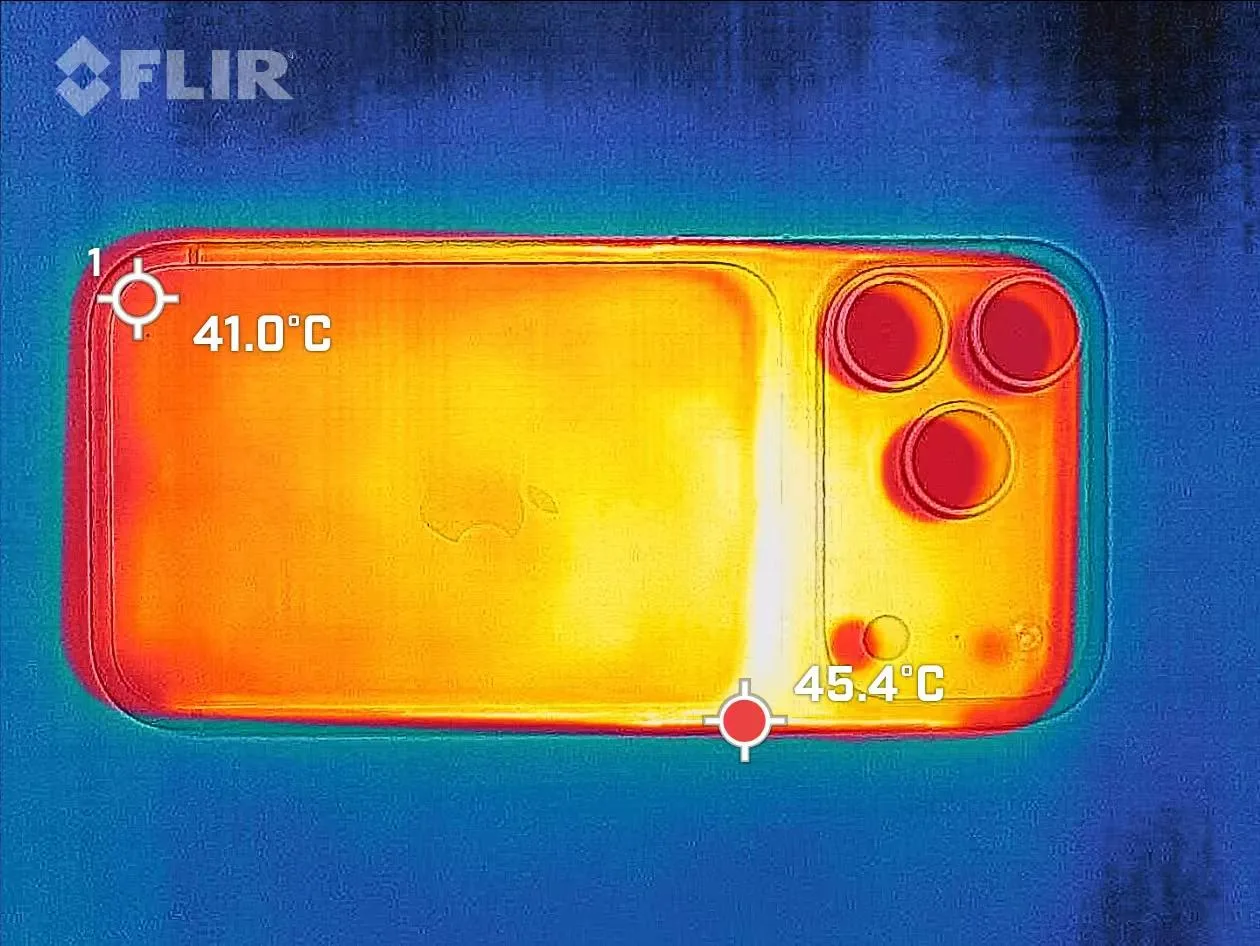
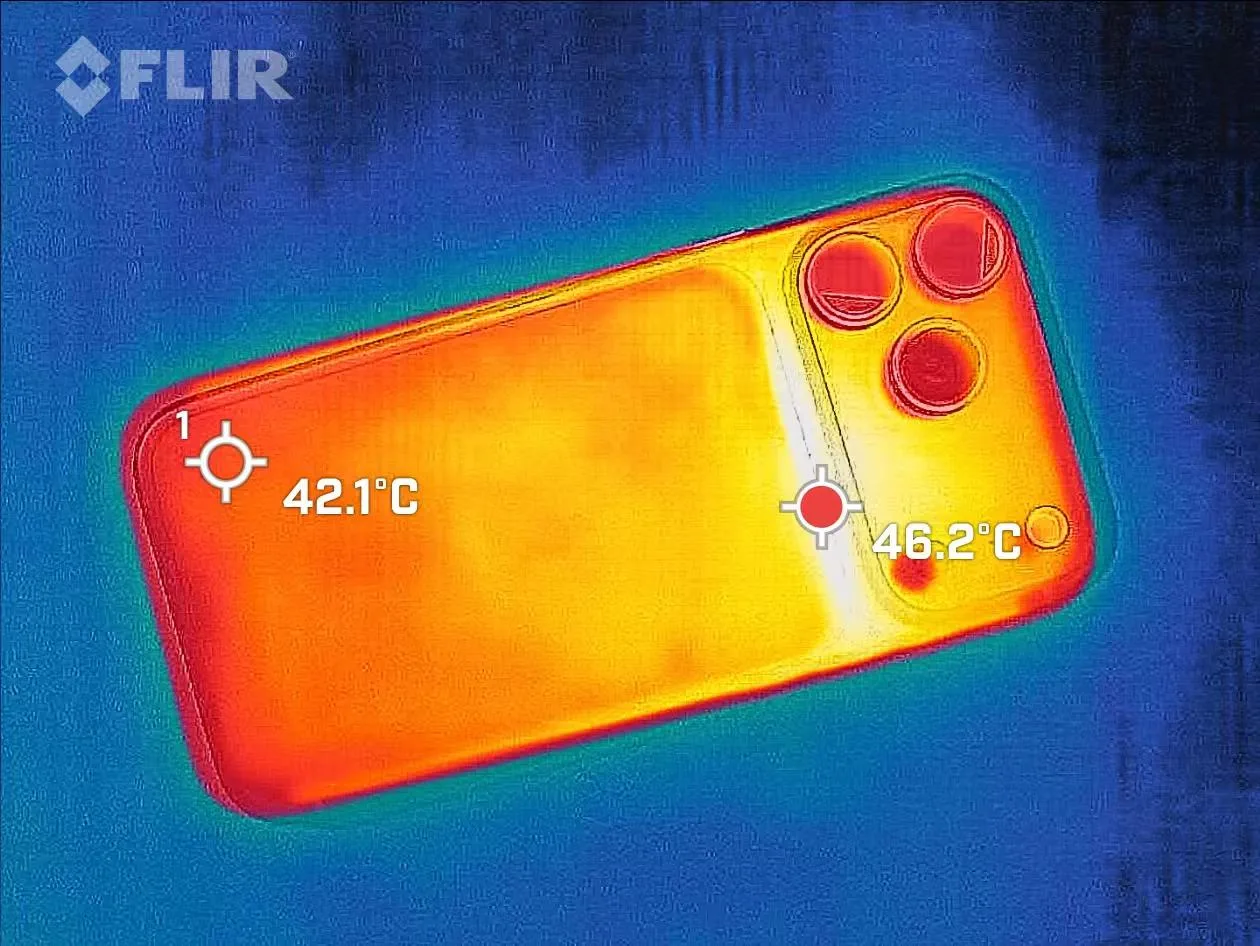
At an ambient temperature of around 24°C, the iPhone 18 Pro reached a maximum body temperature of 44.9°C, while the iPhone 18 Pro Max hit 46.2°C. Both devices felt noticeably warm, but the heat was more evenly distributed across the camera area, the upper-middle back, and the frame, avoiding any overly hot spots.
(Image Source: Leikeji, iPhone 18 Pro)
(Image Source: Leikeji, iPhone 18 Pro Max)
Next up is Zenless Zone Zero, a relatively new title from miHoYo.
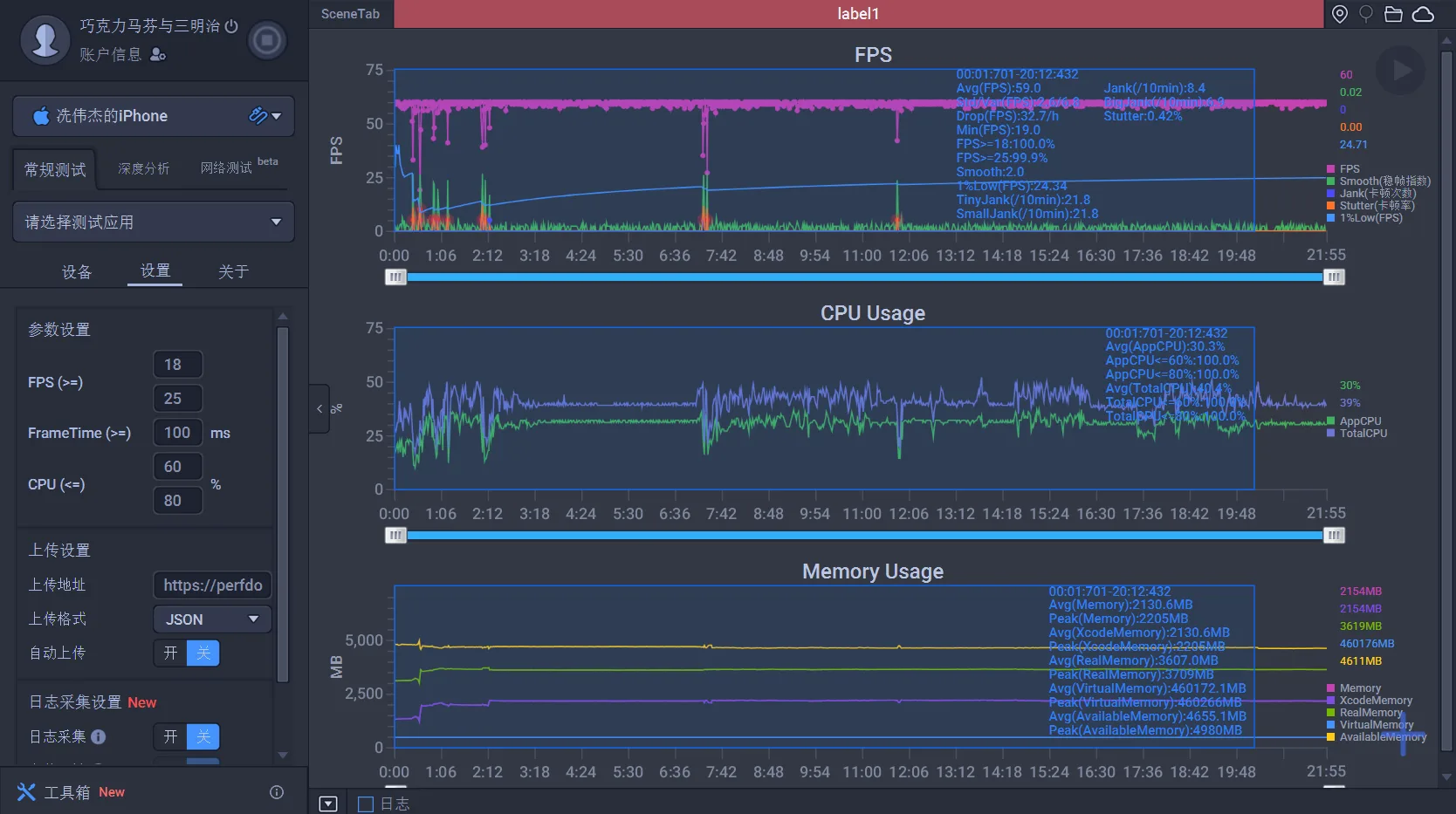
I set the graphics to ultra and the frame rate to 60 FPS, then played for 20 minutes of regular gameplay and combat. The iPhone 18 Pro averaged 59 FPS, while the iPhone 18 Pro Max averaged 59.2 FPS.
In actual experience, both devices performed stably throughout, without sudden stutters or prolonged frame drops. The Pro Max, with its larger body, maintained a more consistent frame rate over time, while the smaller Pro experienced occasional fluctuations—though nothing major.
(Image Source: Leikeji)
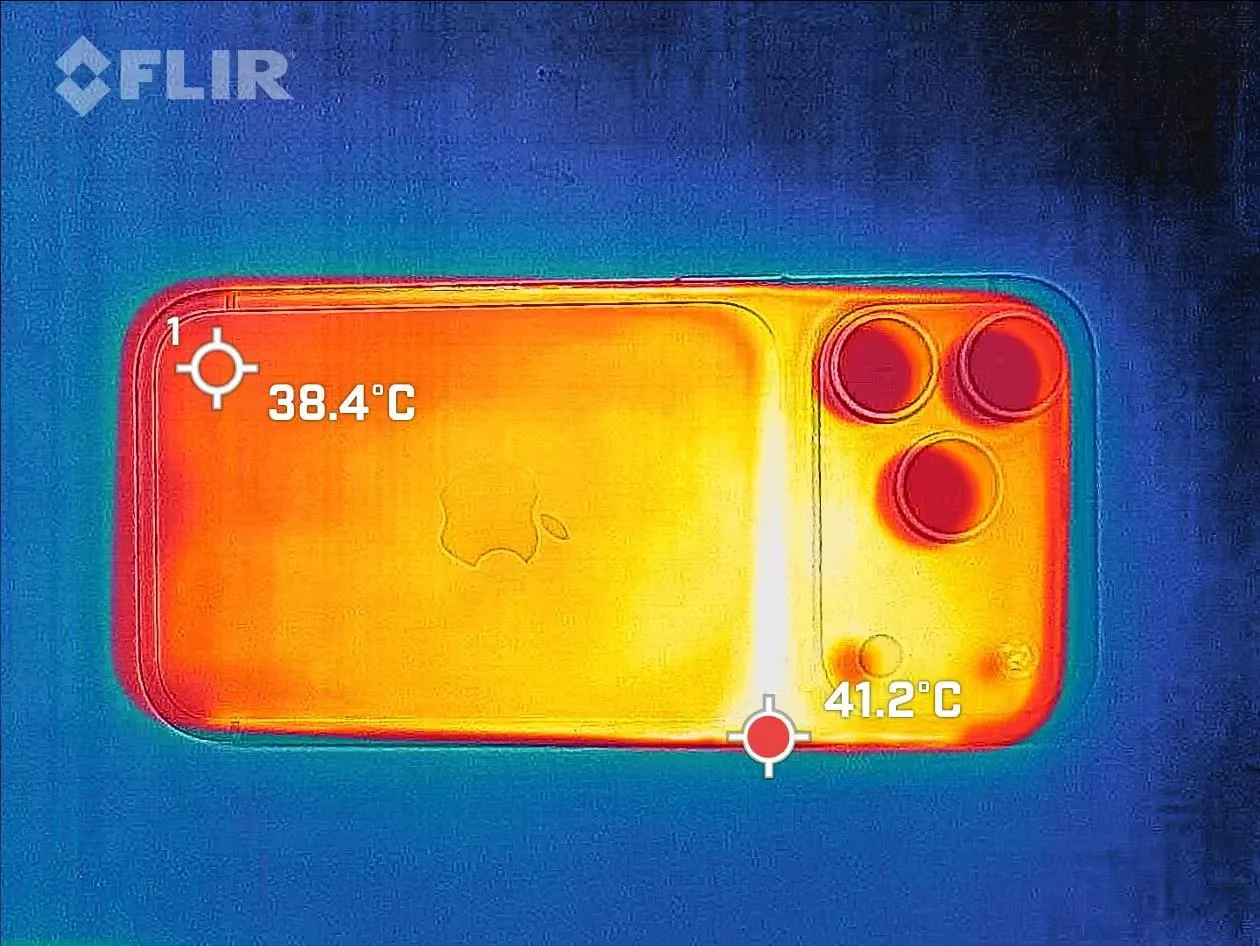
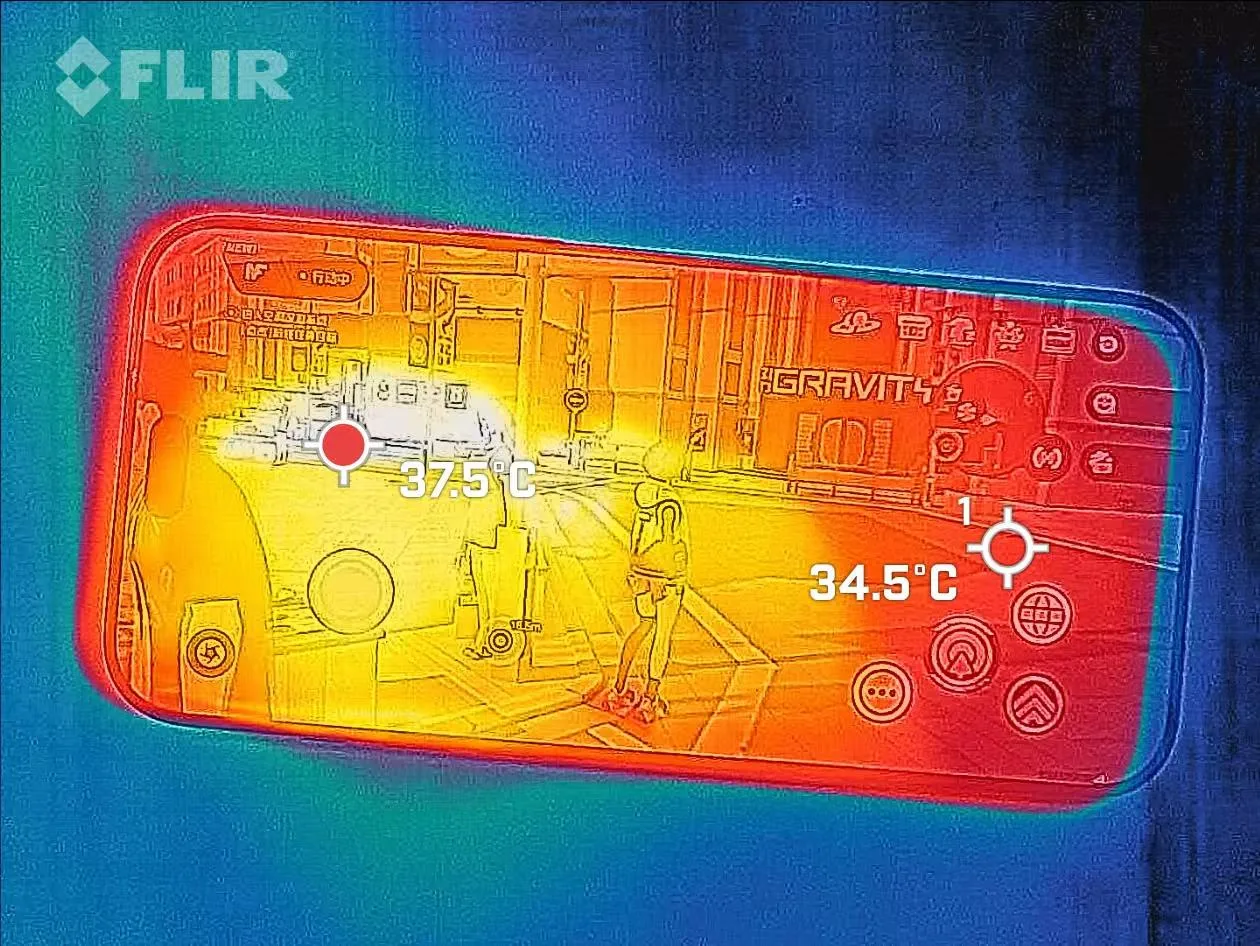
Testing temperatures again, the iPhone 18 Pro's back reached a maximum of 41.2°C, while the Pro Max hit 37.5°C—similar to the results from Wuthering Waves. This suggests that the A20 Pro typically operates in the low-to-mid-40°C range during demanding games, actually feeling more comfortable than similarly positioned Android flagships.
(Image Source: Leikeji, iPhone 18 Pro)
(Image Source: Leikeji, iPhone 18 Pro Max)
In everyday use, few activities push a smartphone to sustained high temperatures aside from gaming. The next most common scenario is prolonged video recording.
So, I took both devices outdoors and started recording in 4K at 60 FPS.
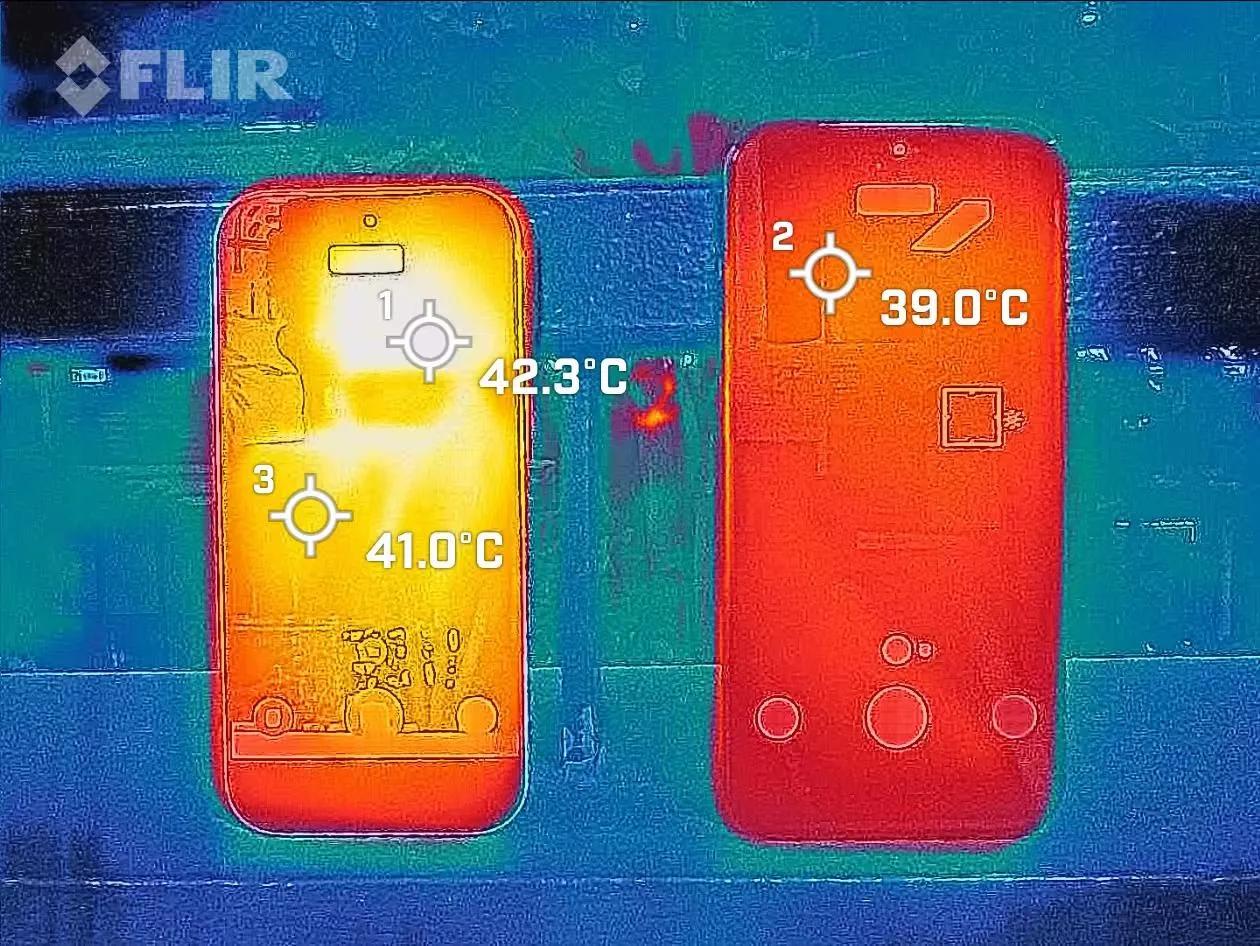
After 20 minutes, the iPhone 18 Pro's front reached a maximum temperature of 42.3°C, while the Pro Max hit 39°C. The back of the 18 Pro also peaked at 42.3°C, with the Pro Max reaching 40.7°C. The latter clearly handled heat better, with both devices distributing heat evenly and avoiding significant screen brightness drops.
(Image Source: Leikeji, Pro on the left, Pro Max on the right)
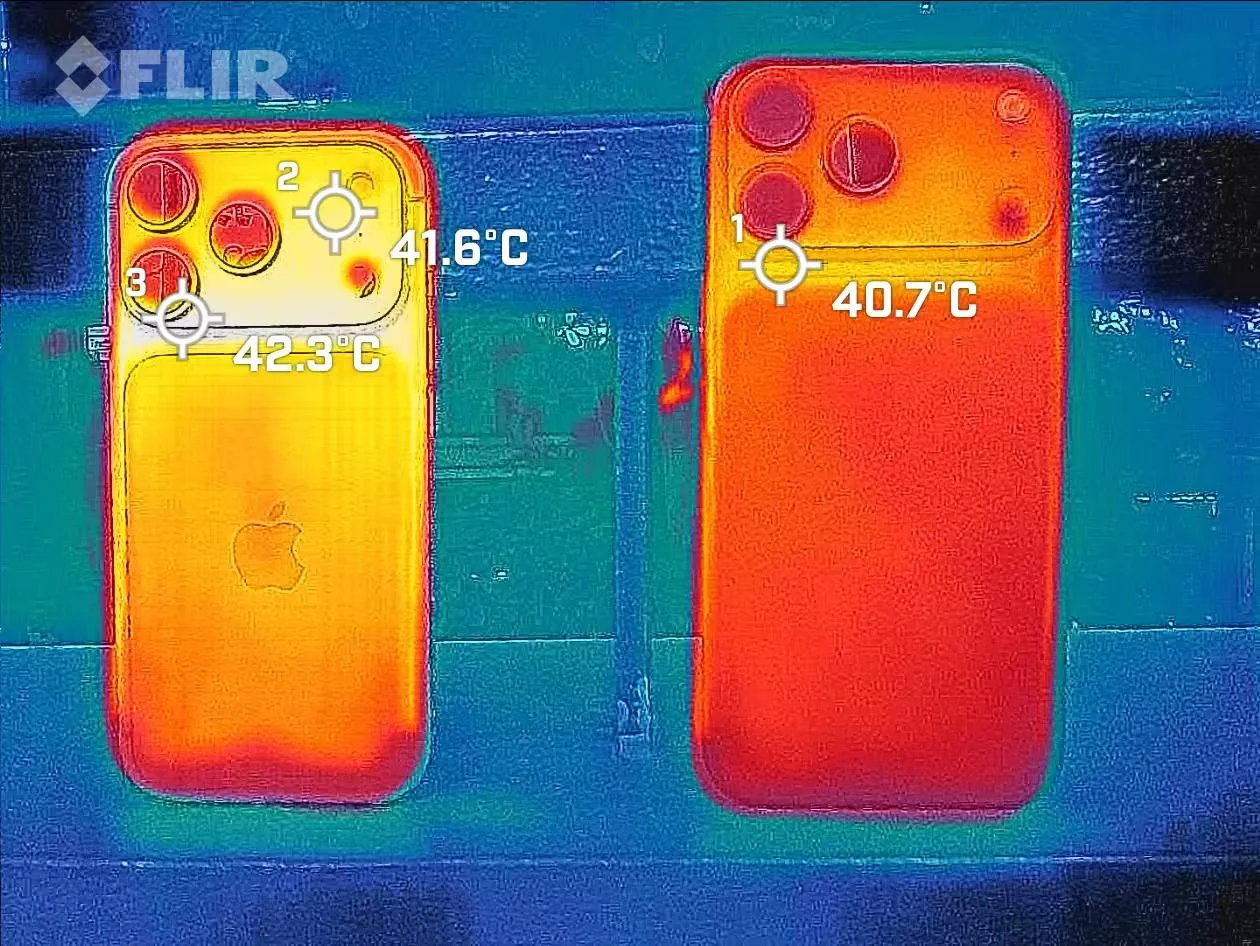
(Image Source: Leikeji, Pro on the left, Pro Max on the right)
At this point, the side frames measured 39.9°C and 38.5°C, respectively, with heat evenly distributed along the entire frame.
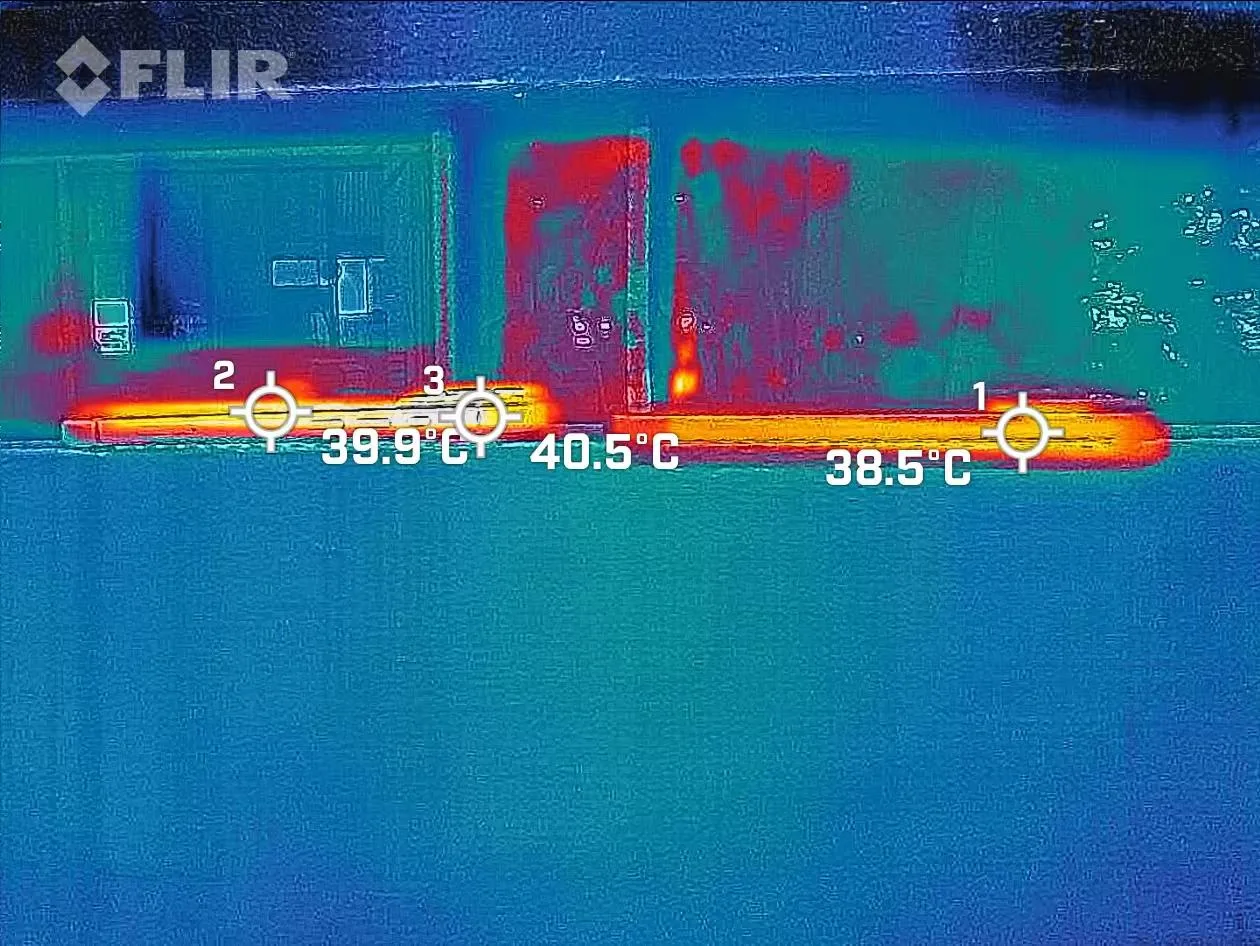
(Image source: Leikeji, Pro on the left, Pro Max on the right)
As a comparison, the iPhone 17 Pro that we have tested before showed a significant temperature difference between the top and bottom of the frame after long-time video recording.
It is not hard to see that after the VC area becomes larger this year, the heat near the SoC will be more quickly distributed to the back cover and frame, keeping the overall temperature of the device within a relatively comfortable range.
Do you think the heat dissipation test ends here? Not really. In fact, I have also prepared a question that usually does not receive much attention: How long does it take for the phone to return to normal temperature after closing high-load applications?
adv
-
![]()
In-Depth Performance Analysis of iPhone 18 Pro: Unmatched Superiority, Enhanced Cooling, and the Advantages of 2nm Chip Technology
-
![]()
OPPO Find X10 Pro Max Imaging Review: Perfect for Beginners in Street Photography, The Only 'All 200MP' Claim That Stands Up
-
![]()
QianWen Computers Have Arrived! When Thought Becomes a Tradable Good, Alibaba’s Ambitions Reach Farther Than You Think
-
![]()
AI Office Track: A Telecom Operator Makes Its Debut
-
![]()
The AI Landscape Evolves: How Can Kimi Bridge the 'Dark Side of the Moon' Gap?
-
![]()
Seres Chairman Addresses Huawei Cooperation Adjustment: Partnership Intact, Commitment Strong
-
Muse Leads the Charts, QianWen Joins the Race: The Dawn of the Personal Agent Era
-
vivo's Journey to the High-End Market: Focused on Imaging, Yet Constrained by It?