Doubao Enters Smartphone Market, Alibaba Unveils Tablets: The Battle for AI Hardware Dominance Begins
 09/23 2026
 541
541
Author|Xie Jiabaoshu
Following Doubao's unveiling of its 'Second-Generation Doubao Smartphone,' Alibaba is stepping up its game.
On September 22, 2026, Alibaba hosted the 2026 Yunqi Conference, where it showcased the 'QwenBook' tablet, still in the development phase.
According to LatePost, QwenBook, developed by Alibaba Cloud's Wuying team, is positioned as a native AI agent computer. The team has independently crafted both the product's definition and its hardware components, leveraging the system and cloud capabilities honed through Wuying's past cloud computer projects.
As the AI race intensifies, Doubao and Alibaba are not alone. A growing number of tech firms are turning their attention to hardware. In September 2023, Meta, in partnership with Ray-Ban, launched the Ray-Ban Meta AI glasses, which quickly gained popularity due to their lightweight design. In November 2025, OpenAI CEO Sam Altman announced that the company's AI hardware had reached its first prototype stage and would enter production within two years.
With agents emerging as an industry trend, the focus of large model competition is shifting from Q&A services to task execution. In this landscape, tech companies are not just betting on innovative product forms but are also targeting control layers, such as default entry points, system permissions, and app scheduling.
The success of AI hardware developed by tech companies in overcoming challenges like third-party app barriers, security, and commercialization will determine whether this hardware race spawns new platforms or merely yields a batch of chatbot-equipped devices.
01 The Agent Era: Large Models Seek a 'Physical Form'
Reflecting on the AI industry's evolution over the past few years, while large models have remained the core technology, product implementations and usage scenarios have undergone significant transformations.
Initially, driven by ChatGPT, large models were repackaged as Q&A robots, providing answers based on user queries. Since these interactions were purely conversational, without the need to schedule external tools, ordinary web pages or apps could easily host chatbot services.
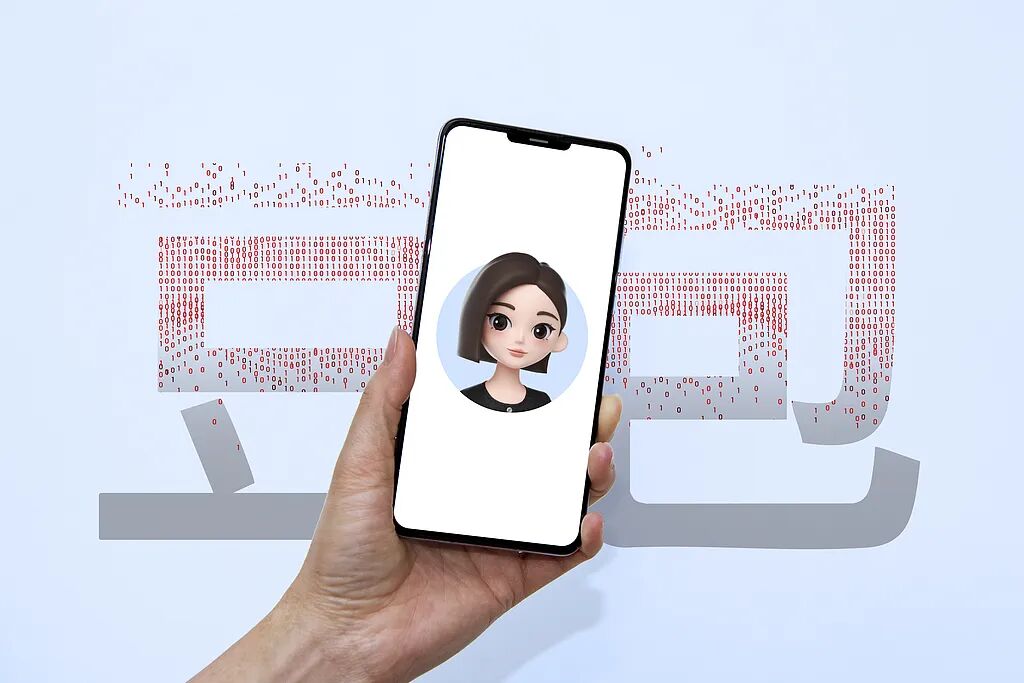
Image Source: Doubao
Although Q&A robots offer users a cost-effective alternative to traditional search engines for information screening, their limited revenue-generating potential and high operational costs have hindered the establishment of a sustainable commercial model. According to LatePost estimates, as of the first half of 2026, Doubao's average daily revenue was less than RMB 1 million, while its costs soared into the tens of millions.
Fortunately, AI has transcended the chatbot form. With advancements in reasoning, memory, and scheduling technologies, large models are evolving into agents capable of executing complex tasks with a single command, helping users tackle real-world problems and unlocking greater commercial potential.
Unlike traditional Q&A robots, agents can directly invoke tools to execute tasks, necessitating higher permissions. Only by accessing the system layer and obtaining permissions such as local file modification, screen access, and cross-app operations can agents fully realize their potential.
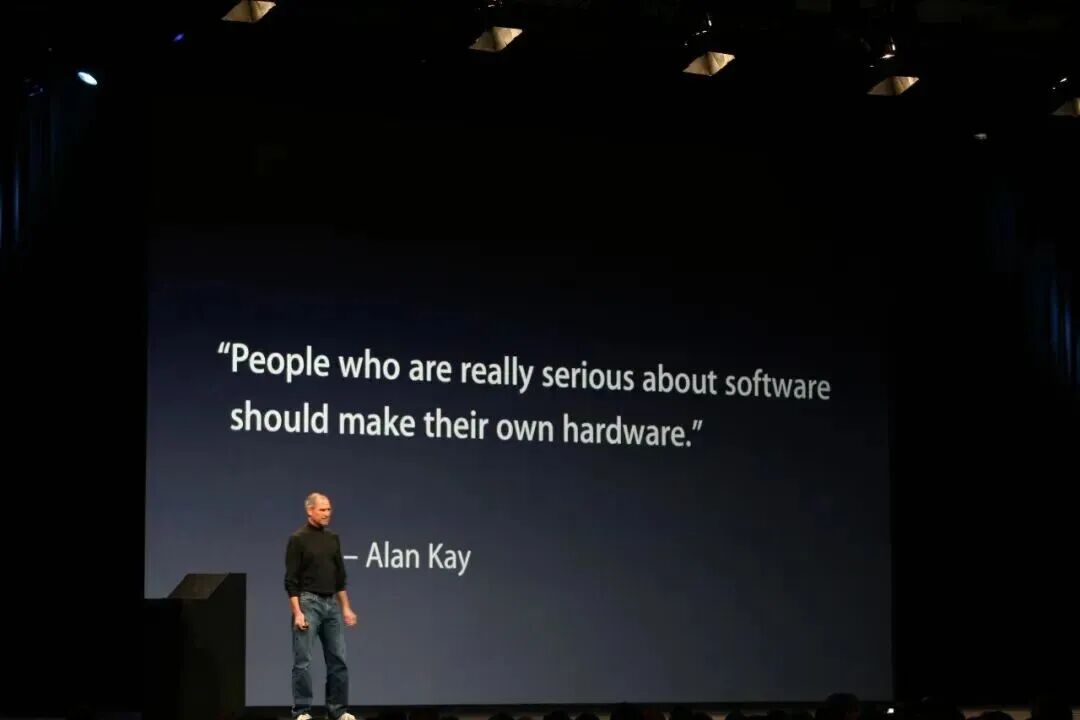
Image Source: Apple
This is precisely why tech companies are eager to develop innovative hardware around AI technology. As computer scientist and graphical user interface pioneer Alan Kay once said, 'People who are serious about software should make their own hardware.' AI technology demands a deeper level of software-hardware integration. To offer users a differentiated experience, tech companies must create innovative products that control underlying permissions.
While the tech industry has recently witnessed a surge in AI hardware innovation, this does not imply that model companies are intent on transforming into consumer electronics firms. Rather, these companies recognize that without device-layer permissions, agents will struggle to transition from mere 'talkers' to 'doers.'
02 Smartphones, Tablets, and Glasses: Catering to Diverse Contexts
Although AI has sparked a new wave of hardware innovation, unlike the desktop internet and mobile internet eras dominated by PCs and smartphones, respectively, AI hardware has yet to coalesce around a single form factor.
Overall, AI hardware developed by tech companies falls into three main categories: smartphones, tablets, and wearable devices.
This diversification is partly due to the early stage of the AI hardware competition, with vendors still in the exploration phase. On the other hand, it reflects the technical characteristic that large models require sufficient context to better serve users.
Take smartphones, for instance. As a mass computing platform, smartphones handle a wide range of tasks, including communication, socializing, and payments, generating a wealth of contextual data about daily life. Given the importance of mobile terminals, many tech companies are developing AI-related smartphone products.
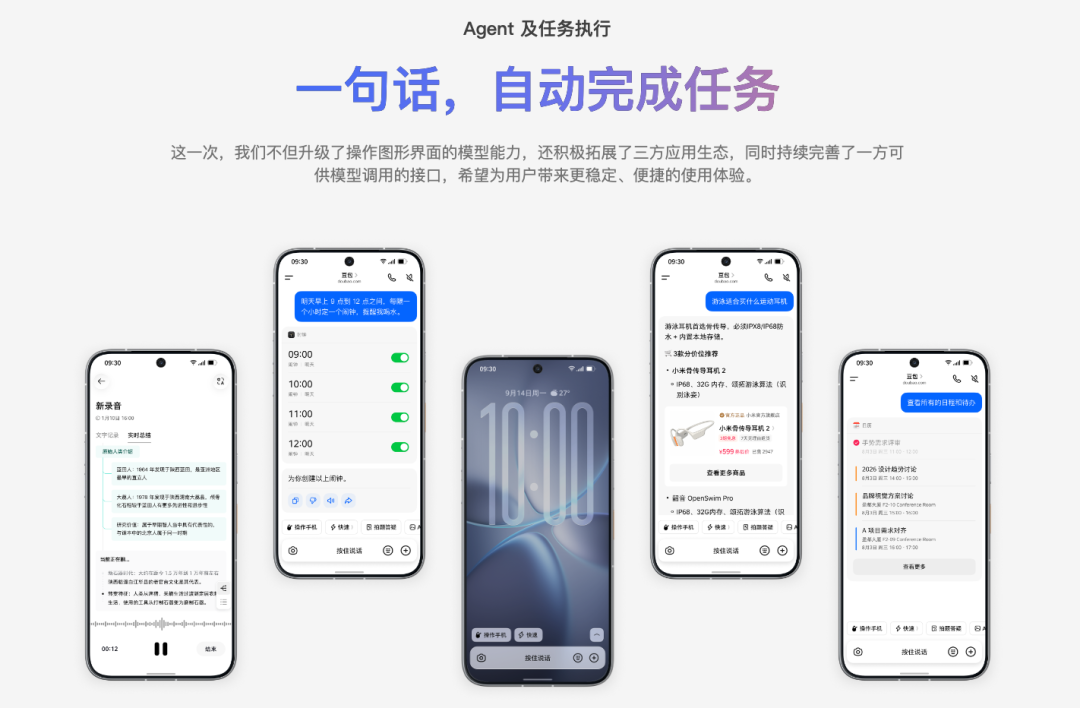
Image Source: Doubao
On September 14, Doubao launched the consumer version of the Doubao Smartphone Assistant, capable of automatically executing tasks via MCP, A2A interfaces, or GUI after receiving user commands. On September 22, Alibaba introduced the Qwen Intelligence full-stack solution for AI smartphones, providing an agent technology platform based on the Qwen large model to enable smartphones to execute complex tasks across apps.
As mentioned earlier, in addition to smartphones, Alibaba also developed the 'QwenBook' tablet. According to reports, QwenBook features a tablet + magnetic keyboard design and is marketed as 'Your First Native AI Agent Computer,' positioned as a productivity tool.
Clearly, Alibaba's primary objective with QwenBook is to capture contextual data from users' work and learning scenarios. If QwenBook can deliver results based on users' productive contexts, it could redefine the traditional entertainment-focused positioning of tablets and unlock new consumer demand.

Image Source: Li Auto
The same rationale applies to tech companies focusing on wearable devices. While smartphones and computers have broad utility, users do not use them continuously. In contrast, wearable devices like glasses and earphones can be worn for extended periods, capturing environmental, locational, and auditory information to provide large models with real-world contextual data about users.
Since smartphones, tablets, and wearable devices offer contextual data from different dimensions, many tech companies are not betting solely on one type of device but are diversifying their portfolios across multiple categories. Some companies are even venturing into voice recorders, smart cars, and smart home appliances to collect contextual data from more specialized scenarios.
For AI companies, the value of hardware lies not just in expanding their business lines but in providing a stable entry point for obtaining user contextual data. This suggests that the focus of future AI hardware competition will shift from individual devices to cross-device personal agents.
03 Self-Developed Hardware Is Just the First Step; Building an App Ecosystem Is the Real Challenge
For well-funded tech companies, developing AI hardware using established solutions and relying on contract manufacturers is relatively straightforward. The true challenge lies in securing developer support.
In December 2025, Doubao launched a technical preview version of the Doubao Smartphone Assistant, enabling cross-app automation through GUI simulation click technology.
For example, when a user instructs the Doubao smartphone to select a product on Taobao, the assistant can automatically open the Taobao app, choose a product that meets the user's needs, and proceed to payment. The user only needs to verify the password to complete the purchase.
Although the Doubao smartphone significantly enhanced the user experience of mobile agents, the GUI simulation click technology breached the security and risk control systems of the mobile internet ecosystem. Consequently, the technical preview version was swiftly restricted by popular apps like WeChat, Meituan, and Alipay.
In response, Tencent CEO Pony Ma stated in early 2026 that Tencent has always been firmly opposed to methods involving 'black market plugins' to record users' phone and computer screens and transmit the data to the cloud for processing, deeming such practices 'extremely unsafe' and 'irresponsible.'
Doubao subsequently clarified that the smartphone assistant only invokes necessary capabilities with explicit user authorization and adheres to a 'no storage, no training' principle for cloud processing.
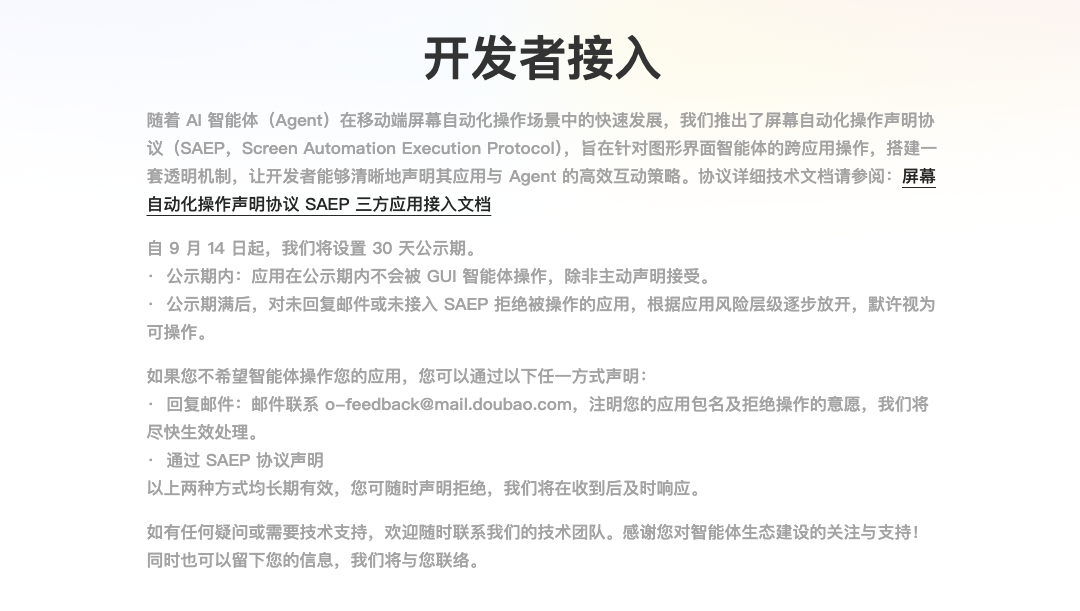
Image Source: Doubao
Today, while the second-generation Doubao smartphone still retains GUI technology, it has introduced a 30-day notification period. During this period, third-party apps will not be operated by GUI agents. After the notification period expires, apps that do not explicitly refuse operation will be gradually opened based on risk levels, while apps that explicitly refuse will remain untouched.
Although it remains uncertain which apps can be operated by GUI agents, given the experience with the technical preview version, the consumer version may still struggle to control super apps like WeChat, Meituan, and Alipay.
Given the difficulty of breaking through the mobile internet ecosystem barriers, QwenBook emphasizes strengthening system-level AI capabilities. Alibaba's product team has independently developed a suite of AI tools, including system-level note-taking, Wiki, smart folders, a self-developed email client, and knowledge base MyNote and memory management app MyZone. Additionally, QwenBook will collaborate deeply with Kingsoft to integrate WPS.
The challenge is that after years of mobile internet development, most users' contextual data and consumption scenarios are concentrated in third-party apps. Relying solely on proprietary AI tools is unlikely to persuade users to incur additional costs for a product whose basic experience is indistinguishable from traditional devices.
Thus, self-developed hardware is just the first hurdle for agent maturity. The real challenge is whether AI companies can persuade app developers, service platforms, and users to collectively embrace a new set of authorization and benefit distribution rules.
Companies that strike the right balance between system permissions, ecological barriers, and user acceptance are more likely to emerge as winners in the AI hardware competition than those that simply sell more AI devices.
Interactive Topic
What AI hardware have you used? What advantages does it offer over traditional hardware?
This article is original content from Farsight and is not authorized for reproduction.
-
![]()
Doubao Enters Smartphone Market, Alibaba Unveils Tablets: The AI Hardware Race Heats Up
-
![]()
Doubao Enters Smartphone Market, Alibaba Unveils Tablets: The Battle for AI Hardware Dominance Begins
-
![]()
Sports Sedans Flood the Market: How Can Young Buyers Tell the Real from the Fake?
-
![]()
AI Firms Offer Seven-Figure Salaries to Lure Talent: Headhunters Reap Big Rewards with a Single Placement
-
![]()
Why Has CATL Reached This Point?
-
![]()
Tuopu Group Sees 10% Revenue Growth, But Profits Decline by 21%: Robot Business Contributes Just 14.0477 Million Yuan
-
![]()
Shenzhen Announces Procurement Results for 2,036 Buses: BYD, Nanjing Golden Dragon, and ZTE Secure Contracts
-
![]()
Behind 'Audi Sues Audi': Profiteers Flock to Germany, Rumors Stay in China