Doubao Enters Smartphone Arena, Qianwen Ventures into Tablets
 09/24 2026
 544
544

AI Hardware: The New Frontier of Competition
Image Source | Internet (Please contact us for removal if infringement occurs) Partially AI-generated
In the last two weeks of September 2026, two significant product launches almost simultaneously sent ripples through the tech industry.
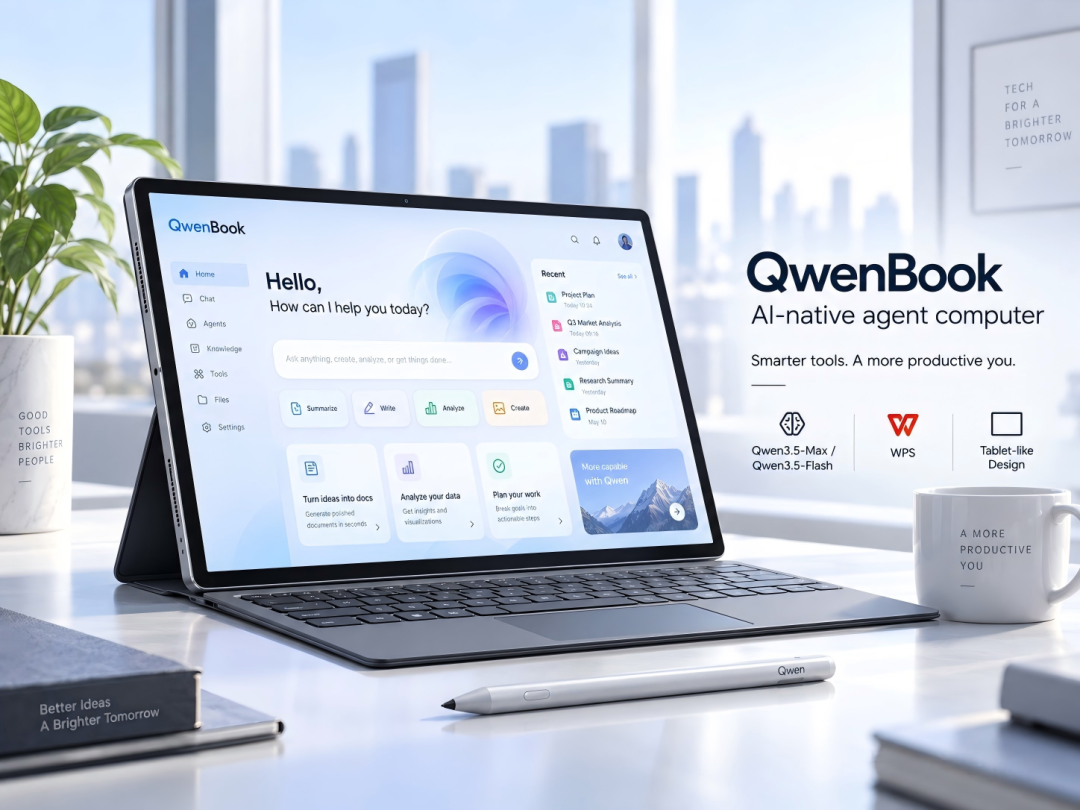
On one front, Alibaba's Cloud Town Conference took center stage. The Wuying team introduced the QwenBook, a tablet-keyboard hybrid sporting a macOS-like interface and featuring a dedicated 'Qianwen Key' engraved on the keyboard.
Positioned officially as a 'native agent computer,' the immediate reaction was unanimous: Isn't this just a Qianwen-powered tablet?
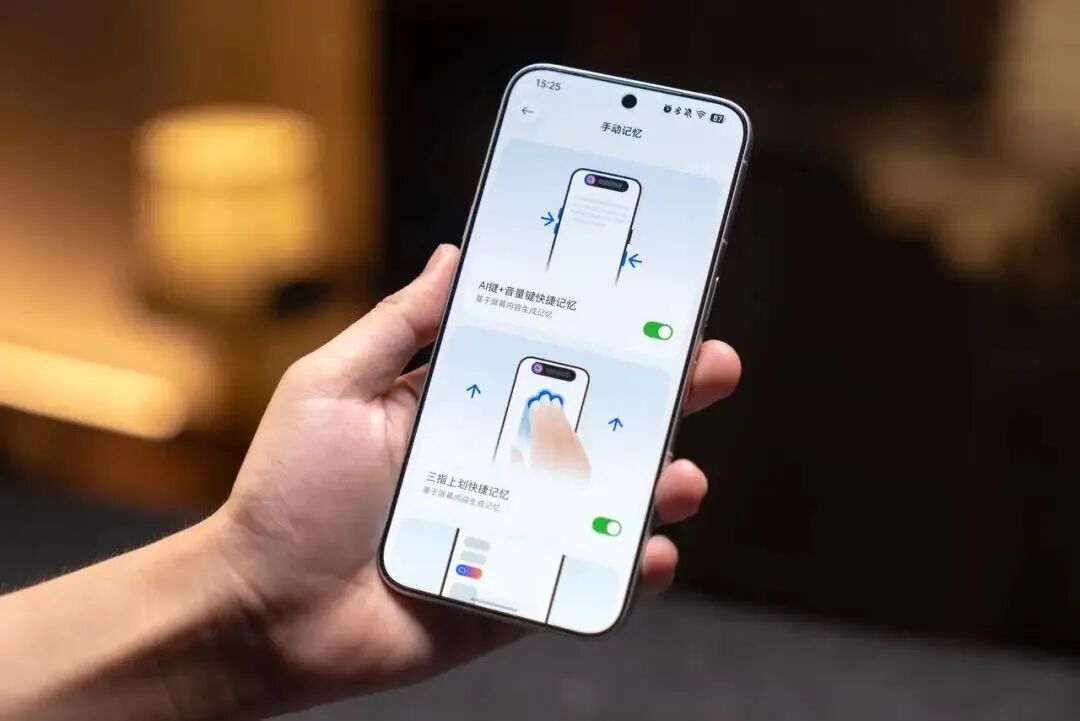
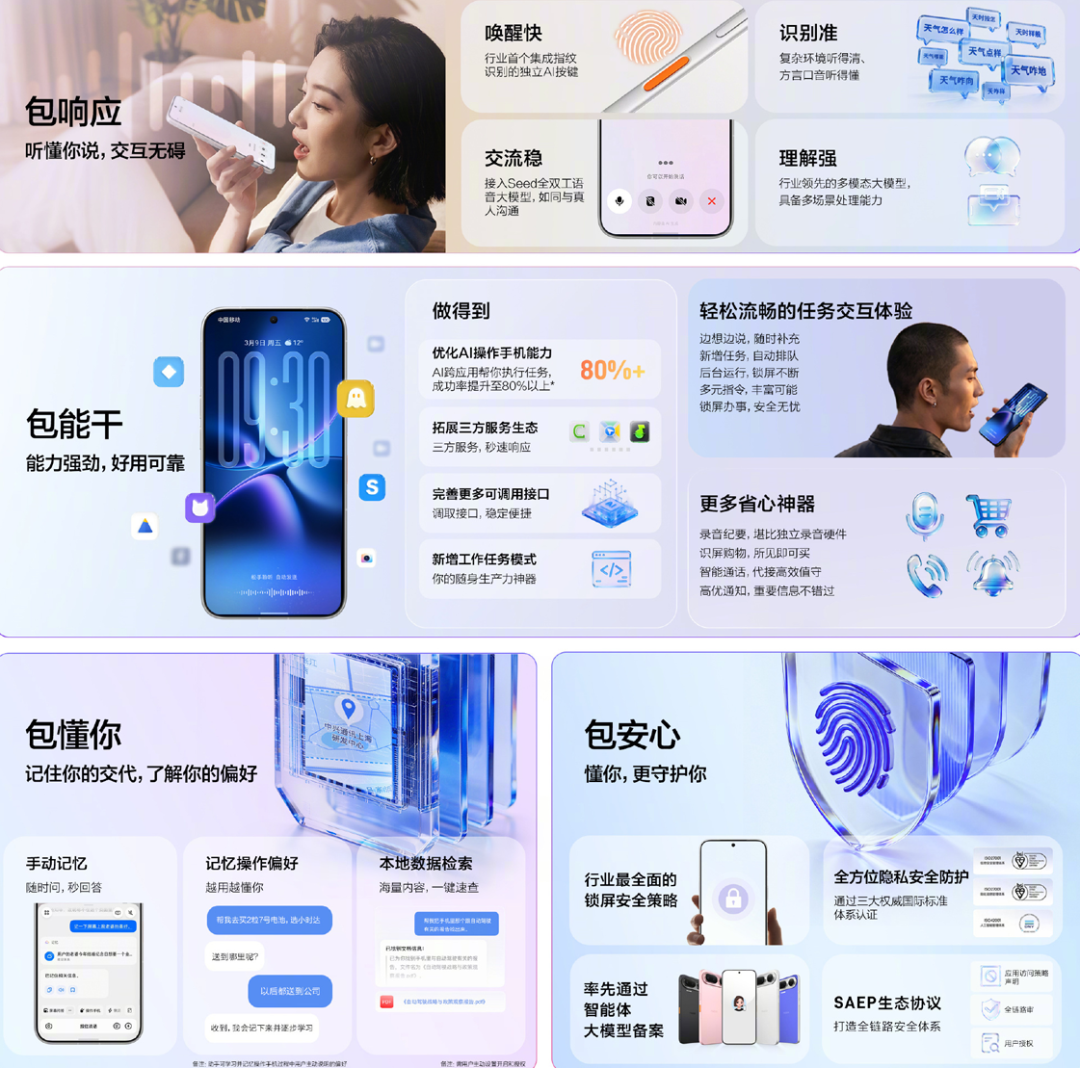
Meanwhile, on September 16th, the Nubia NaviX Ultra, showcasing the consumer edition of Doubao's smartphone assistant, hit the shelves. Boasting nearly 400,000 pre-orders on JD.com and sales surpassing 100 million yuan within the first second, the pre-order volume soared to 12 times that of the initial launch, which saw 30,000 units.
Together, these developments led industry insiders to speculate that large models are no longer content with just developing apps but are now making a foray into hardware devices.
From the early days of AI glasses to the current landscape of AI smartphones, tablets, and computers...
Large models are gradually pivoting towards hardware development.

From 'Chatting' to 'Doing': Large Models Need a Physical Presence
To comprehend this hardware craze, it's essential to grasp the identity shift that large models are undergoing.
From 2023 to 2025, large models primarily manifested as chatbots. Users would open an app, pose a question, and receive an answer.
In this setup, the model didn't need to delve into the system's lower layers or perform cross-app operations—a web page sufficed.
However, the limitation was evident: monetization was a daunting task. By mid-2026, Doubao's average daily revenue was less than 1 million yuan, while costs soared into the tens of millions.
The turning point came with the advent of Agents. As large models transitioned from 'question-answering tools' to 'task-executing assistants,' everything changed.
When a user requests, 'Book me a high-speed rail ticket to Shanghai tomorrow,' the Agent must ascertain your schedule, open a ticketing app, input information, and complete the payment—each step necessitating access to the system's lower layers, screen access permissions, cross-app operation permissions, and local file read/write permissions.
Yet, these critical elements were not within the model's purview. They were dispersed across the operating system, hardware, and apps.
This is the fundamental reason why large model companies are collectively embracing hardware. As Alan Kay, the pioneer of graphical interfaces, aptly put it: 'People who are serious about software should make their own hardware.'
Without device-layer permissions, Agents would forever remain in the 'can talk' phase, incapable of truly 'acting.'
Notably, this hardware trend is not exclusive to China.
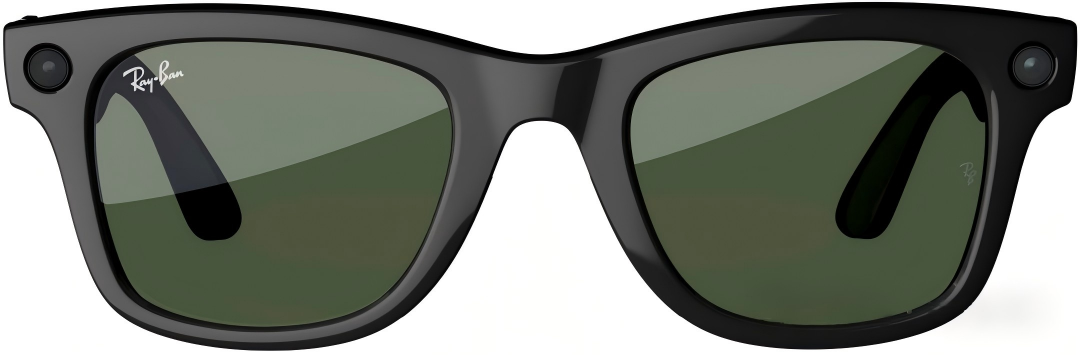
Meta's AI glasses, developed in collaboration with Ray-Ban, have become a sensation, and OpenAI plans to unveil its first AI hardware prototype within the next two years. The trend of large model companies venturing into hardware is becoming a global phenomenon.

Same Goal, Two Distinct Paths
Both ByteDance and Alibaba are venturing into hardware, but they have chosen different entry points, reflecting two distinct strategies.
ByteDance opted for smartphones. Smartphones are ubiquitous computing platforms, handling communication, socializing, and payments—the most frequent and private aspects of users' lives.
Capturing the smartphone market means seizing the richest user context entry point.
However, ByteDance took the most challenging route with its first-generation Doubao smartphone. The initial product employed a GUI simulation click approach: AI 'saw' the screen like a human, recognized interface elements, and simulated finger taps to achieve cross-app automation.
The first 30,000 engineering units sold out immediately upon launch, with secondhand platform prices skyrocketing by over 4,000 yuan. The impact was remarkable, but the repercussions followed swiftly.
WeChat displayed 'Abnormal Login Environment' warnings, while Taobao, Pinduoduo, and Alipay tightened risk controls. Banking apps directly blocked login and payment processes.
The first-generation Doubao smartphone didn't encounter technical issues but rather faced fierce resistance from super-apps defending their entry points.
The second-generation product underwent a fundamental overhaul. The technical approach shifted from 'forcing entry' to 'knocking': prioritizing protocols, using simulation as a fallback, and requiring human confirmation.
Doubao also implemented a 30-day public notice period, during which only OS apps, ByteDance and ZTE's own apps, and explicitly consenting third-party apps were accessible.
Compliance efforts also improved. In July 2026, the 'Nubia Doubao Smartphone Large Model' passed filing alongside Apple Intelligence and Huawei Xiaoyi, earning the title of 'the world's first commercially filed AI agent smartphone.'
However, ringing the doorbell doesn't guarantee entry. In tests, the Doubao smartphone assistant could automatically launch WeChat, Xiaohongshu, and Meituan but struggled with in-app operations like posting to Moments, placing orders, or posting content, receiving 'cannot complete automatically' messages. Payment and real-name verification steps were handed back to users for manual completion.
Only a handful of third parties truly opened their interfaces to Doubao smartphones, with services like Cao Cao Mobility being among the few to break out of ByteDance's ecosystem.
Alibaba took a different approach. The QwenBook, developed by the Wuying team, is positioned as a 'native agent computer' but is essentially a tablet—a tablet-keyboard touchpad combo offering a laptop-like experience.
A small design detail on the back is intriguing: the camera module occupies only half the space, with the other half featuring a circular mini-screen displaying cartoon avatars.
Unlike Doubao smartphones, QwenBook doesn't develop its own smartphone but first builds a closed loop within its own apps. The team developed a suite of AI tools: system-level note-taking, Wiki, smart folders, a proprietary email client, and knowledge base MyNote and memory management app MyZone, while also integrating services like Taobao.
In essence, Alibaba doesn't need to wait for third-party developers to open interfaces one by one. It first establishes the 'context collection → task understanding → execution pathway' within its controllable scope.
This path is more stable but has a clearer ceiling.
As one analysis pointedly noted: If Agents can only invoke tools developed by Alibaba, QwenBook becomes more akin to an Alibaba-customized office environment, where users cannot work within their original software ecosystems.

The Real Opponent: The 'Ecosystem Wall'
Doubao smartphones and Qianwen tablets may seem to take different paths, but they face the same obstacle.
This obstacle is known as the 'super-apps.' Communications, payments, mini-programs, and lifestyle services on smartphones—all concentrated within a few super-apps like WeChat, Alipay, and Taobao—are unwilling to relinquish operational control to external AI.
The reason is straightforward: If AI Agents can operate apps on behalf of users, traffic distribution rights, user relationships, and data entry points could all be reshuffled.
WeChat wouldn't want an external AI deciding which Moments users see, nor would Taobao want an external AI price-comparing and placing orders on behalf of users.
This is a core commercial interest issue, unrelated to technical prowess.
Even mighty Apple has struggled to get WeChat to accept iOS system features like contacts and file sharing.
For large model companies, relying on a single Agent to integrate all apps is a daunting challenge.
More troubling is that smartphone manufacturers are also developing system-level Agents. Huawei, Xiaomi, OPPO, and Vivo are all building their own AI assistants, viewing AI as a critical system capability and unwilling to cede entry points to another company.
But smartphone manufacturers face the same dilemma: How can they get platform companies like WeChat and Alipay to accept their AI assistants?
Essentially, this is the same wall, just viewed from opposite sides.
A notable variable is the rapid advancement of edge computing power. Qualcomm predicted at its Snapdragon Summit that next-generation agent-based AI devices could process up to 1 million Tokens per day at the edge, with agent capabilities expanding from smartphones to PCs, smart glasses, wearables, and automobiles.
IDC forecasts that global generative AI smartphone shipments will reach 432 million units in 2026.
This means the capability foundation for edge-side Agents is rapidly maturing, but ecological barriers won't disappear automatically with increased computing power.
For these tech giants with deep pockets, relying on mature supply chains and contract manufacturers to produce hardware isn't the hardest part.
The real challenge is getting enough apps to open their interfaces, adapt experiences, and build ecosystems for this hardware.
The first-generation Doubao smartphone already proved this with hard cash: No matter how impressive the technology, if mainstream apps reject it, the product quickly retreats to the awkward position of only operating its own apps.
ByteDance clearly learned its lesson. The second-generation Doubao smartphone shifted its technical approach from 'bypassing apps' to 'negotiating with apps,' even publicly releasing a protocol statement letting apps specify which operations they allow or reject.
This represents a postural shift—from challenging rules to attempting to participate in rulemaking.
Alibaba chose a more circuitous path: first validating cross-vendor collaboration possibilities with partners like WPS within its own app ecosystem before gradually expanding outward. This path is slower but perhaps more pragmatic.
The two companies chose different entry points—ByteDance bets on smartphones as the highest-frequency gateway, while Alibaba bets on tablets for office and productivity scenarios—but they face the same ultimate challenge: Can they convince enough third-party developers that opening interfaces to AI Agents also benefits them?
This requires not just technical prowess but also commercial negotiation skills, ecosystem operation capabilities, and, most importantly, patience.
Large model companies building hardware are essentially seeking a physical presence for their Agents.
But while the body may be built, whether the soul—the ecosystem of developers, apps, and services—can keep pace will determine whether this hardware race spawns new platforms or merely produces 'new devices with chatbots.'
At the Cloud Town Conference, the complete QwenBook product is reportedly not launching until the end of the year or early next year.
The next-generation Doubao smartphone is also on the way. Hardware iteration speeds are never slow, but ecosystem building is always measured in years.
This war begins with hardware, but that's just the first hurdle.
-
China’s PC Market Defies Downturn: Huawei Surges 82%, Apple Up 63%
-
![]()
Pupil Function → PSF → MTF: A Three-Tiered Numerical Framework for Optical Assessment
-
![]()
GW is Becoming the Unit of Measurement for Cloud Providers
-
![]()
Doubao Enters Smartphone Arena, Qianwen Ventures into Tablets
-
![]()
After 40 Years of Competition, It's Time to Clear the Field in China's Auto Market
-
![]()
Manus Valued at $27 Billion: Revenue Surges 4x, Marketing Outshines Technology
-
![]()
【Electric Equipment】Weichai Foton Signs Agreement Again
-
![]()
Wan Gang and Zhu Huarong: How to Transform, Upgrade, and Achieve Resilient Growth Amid Declining Sales