Huawei's PC Shipments Skyrocket by 82% in Q2 2026, Securing Second Place Behind Lenovo
 09/28 2026
 560
560
On September 25, Kuaikeji, a tech media outlet, reported that research firm Omdia had unveiled statistics for the Chinese mainland PC market in the second quarter of 2026. The data revealed a total of 11.4 million desktop and notebook shipments, marking an 11% increase from the same period the previous year.
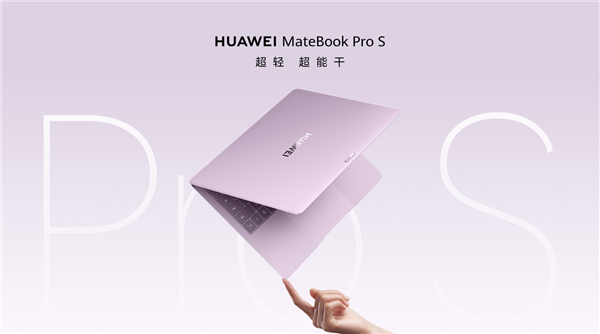
Notably, Huawei's computers experienced the most substantial growth, with an impressive 82% year-on-year surge, securing the second position in the market in terms of shipment volume.
Delving into the vendor-specific data, Lenovo maintained its leading position, shipping 3.7 million units in the second quarter and capturing a 32% market share. This represents a 7% year-on-year growth. Although its market share slightly dipped from 34% in the same period last year, its shipment volume continues to rise steadily, underpinned by a solid market foundation.
Huawei, on the other hand, shipped 1.8 million units in the second quarter, holding a 16% market share, up from 10% last year. The remarkable 82% year-on-year growth rate stands out among the leading vendors, further widening the gap with the third-place contender.
This rapid growth for Huawei can be attributed to several factors: continuous updates to its notebook product lineup, increased orders in the commercial market, and a multi-device collaborative ecosystem that entices numerous individual and enterprise users to upgrade their devices.
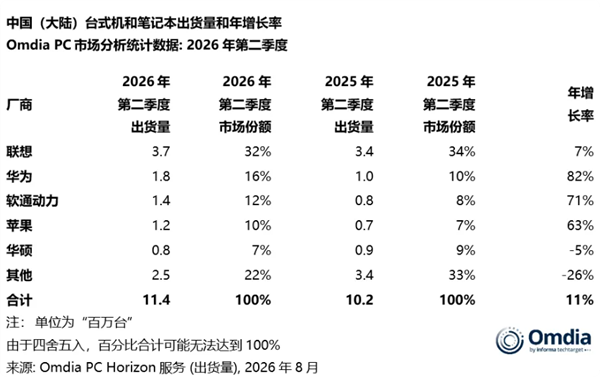
Ranking third is iSoftStone, with 1.4 million units shipped, accounting for a 12% market share, and achieving a 71% year-on-year increase. Apple secures the fourth position, shipping 1.2 million units, holding a 10% share, and growing by 63% year-on-year.
ASUS stands out as the only brand among the top five to experience a decline, shipping 800,000 units, holding a 7% share, and decreasing by 5% year-on-year. The remaining vendors collectively shipped 2.5 million units, holding a 22% share, and witnessed a 26% year-on-year decline, indicating that the survival space for smaller brands is continuously being squeezed.
The market landscape is clearly differentiated. Leading brands such as Huawei, iSoftStone, and Apple are witnessing explosive growth, capturing a significant portion of the market share lost by small and medium-sized vendors. ASUS has seen a slight decline, while other niche vendors have experienced an overall contraction in shipment volumes.
A substantial portion of the growth observed in domestic PC brands can be attributed to the sustained release of government and enterprise procurement demands for innovation, increased orders for commercial models, and the introduction of new consumer-end products that drive individual users to upgrade.
The overall industry is rebounding, with an 11% year-on-year growth, putting an end to its previous prolonged slump. However, the benefits of this growth are primarily concentrated among the top five major vendors, making it increasingly challenging for smaller vendors to compete. The upcoming competition is expected to focus more on ecosystem experience, commercial orders, and new product iterations.
-
In-depth Analysis | China's Top Three LiDAR Companies Shift Business Priorities as Growth Strategies Diverge
-
Trend丨Power Battery Supply Dynamics Shift as Automakers Dive into Core R&D
-
![]()
Apple May Re-enter Server Market as Internet Market Sees 'Fierce Competition'
-
Chang Jing Ultimately Led Roborock into the Competitive White Goods Market
-
Hot Topic | RSI Goes Viral from Silicon Valley to China: AI Starts to Participate in Training Its Next Version
-
![]()
Huawei's PC Shipments Skyrocket by 82% in Q2 2026, Securing Second Place Behind Lenovo
-
![]()
Qualcomm Announces Official Renewal of Global Patent License Pact with Apple, Effective April 1, 2027
-
![]()
Find X10 Series: OPPO's Dilemma Between Affordability and Innovation Amidst Memory Price Hike and AI Competition