The Era of Performance Involution Is Over! Domestic Flagship Phones Shift Focus from Benchmarks to Imaging and On-Device AI as Key Differentiators
 09/28 2026
 510
510
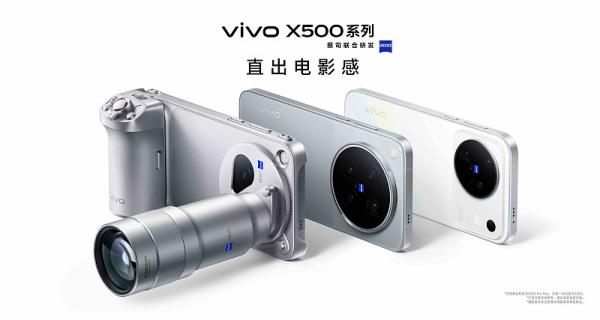
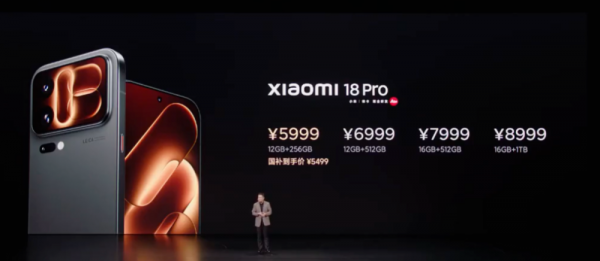
This September, the mobile phone industry is experiencing an unprecedented wave of excitement and competition. On the eve of the Mid-Autumn Festival, the vivo X500 series, OPPO Find X10 series, and Xiaomi 18 Pro series made their grand debuts one after another. Following the festival, the Honor Magic9 series, iQOO 16, Huawei Mate90 series, and OnePlus 16 are also poised to make a strong entrance into the market.
Have you ever noticed that the launch events for domestic flagship phones used to revolve around a blatant competition of parameters? The new-generation chips from Qualcomm/MediaTek, higher benchmark scores, larger memory capacities, and more robust cooling systems were the highlights of these events, serving as the primary reasons for major brands to persuade users to upgrade their devices. Over the past few years, the performance iteration of Android flagships has been rapid, with computing power doubling and endless specification upgrades.
However, as we step into 2026, a clear industry trend emerges: the marginal benefits of mobile phone performance have reached their peak, and the relentless pursuit of pure hardware performance has come to an end. Today, mainstream domestic flagships almost uniformly come equipped with the same top-tier chips. Processor performance is no longer a unique selling point for brands but rather a standard requirement for all high-end models. For ordinary users, daily activities such as browsing social media, watching short videos, working online, and running mainstream mobile games show negligible differences in smoothness between the previous-generation flagships and the latest ones.
The numerical gap in chip benchmark scores has become mere laboratory data, failing to translate into tangible improvements in real-world usage. Consequently, user upgrade cycles continue to lengthen, indicating that the marketing strategy of domestic manufacturers relying solely on performance upgrades can no longer stimulate consumers' desire to upgrade.
The industry trend has subtly shifted. At current flagship launch events, the time spent explaining performance has been significantly reduced. Phone manufacturers no longer compete based on whose chip is more powerful but instead focus their efforts on two new frontiers: the system capabilities of computational imaging and the localized experience of on-device AI. These two areas are beginning to replace traditional performance parameters as the core battlegrounds for domestic flagships to differentiate themselves and build high-end market barriers.
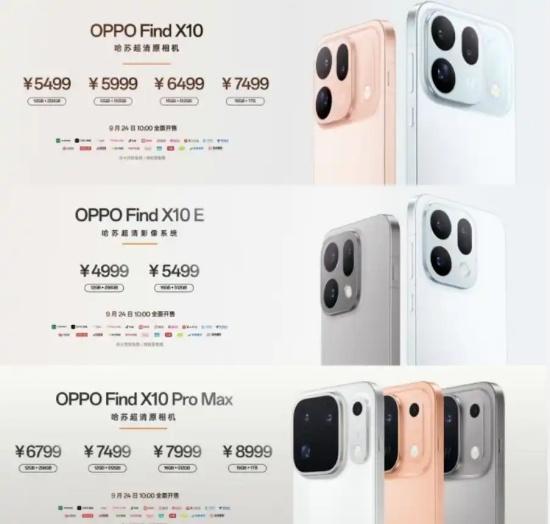
The evolution of mobile phone imaging best reflects this shift in industry logic. In the past, imaging competition was a straightforward hardware race: larger sensors, higher pixel counts, larger apertures, and the widespread adoption of periscope telephoto lenses. In just a few years, the triple-camera setup of a large-aperture main camera, ultra-wide-angle lens, and high-magnification telephoto lens has gone from being exclusive features of top-tier models to standard equipment across all flagships. The hardware limitations have been quickly surpassed, making it difficult to create significant experience gaps through mere hardware stacking.
The imaging race has officially transitioned from hardware parameter competition to a new stage of AI computational photography and system optimization. Industry competition now focuses not on the parameter height of a single lens but on a comprehensive comparison of full-focal-range consistency, color style, low-light image quality, and video storytelling capabilities. As a result, major players are beginning to break free from the homogeneous hardware stacking trap and establish their own unique imaging style systems: some focus on accurately restoring human skin tones and bokeh textures, some emphasize ultra-clear resolution for telephoto distant views, and others specialize in video dynamic range and cinematic texture.
Among them, the imaging technology breakthroughs of domestic manufacturers are particularly noteworthy. Honor has forged a deep strategic cooperation with the German cinema camera brand ARRI, integrating professional cinema color curves, wide color gamut standards, and cinematic-quality filters natively into the phone's imaging system. Paired with the computing power scheduling of its self-developed imaging chip, it enables ordinary users to create emotionally resonant and narratively rich imaging works without the need for professional equipment.
Meanwhile, on-device AI is deeply integrated into the entire imaging process, with features such as intelligent composition, AI low-light noise reduction, image quality restoration, dynamic scene optimization, and extreme zoom texture reconstruction fully implemented. Algorithms compensate for hardware limitations, significantly raising the upper limit of the mobile phone imaging experience. For example, the Xiaomi 18 Pro series debuts with the Legendary Moment large-model imaging, restoring camera optical texture. Compared to quantifiable hardware parameters, this system capability combining hardware, algorithms, color systems, and AI scheduling presents higher barriers, more obvious differentiation, and better aligns with the era's demand for universal content creation.
If imaging determines the current upper limit of the flagship phone experience, then on-device local AI defines the future product form of domestic flagships and becomes the core focus of the industry's new round of competition.
Previously, mobile phone AI was mostly limited to cloud-based interactions, relying on network transmission, and suffered from issues such as high latency, privacy concerns, and data consumption. Functional scenarios were fragmented and of limited practicality. However, the current competitive core of flagship phones lies in local on-device large models that can run offline, with low latency and high privacy. Mainstream domestic flagships have fully equipped themselves with 7B-level or higher on-device large models, moving beyond simple intelligent voice interactions to achieve full-scenario intelligent upgrades.
The core value of local AI lies in breaking the traditional interaction logic where users actively operate apps on their phones and shifting towards an intelligent mode where AI actively understands and autonomously serves. In daily use, AI can perform real-time image retouching, document summarization, real-time bilingual translation, privacy content protection, and intelligent scene recognition. Across various app scenarios, it can autonomously organize information, plan schedules, and coordinate tasks, relying on on-device computing power to achieve full-process offline operation and millisecond-level responses.
More importantly, all data remains on the local device without needing to be uploaded to the cloud, fundamentally safeguarding user privacy—a core advantage that cloud AI cannot match. It's worth noting that the competition in on-device AI is no longer just about who can equip a large model but rather a contest of hardcore software-hardware collaboration capabilities.
Keep in mind that the computing power, memory, power consumption, and cooling space on mobile devices are limited. Finding the optimal balance between model effectiveness, memory usage, and power consumption and heat generation is the core challenge faced by all phone manufacturers. Brands that can achieve model lightweight compression, chip-level optimization, and intelligent system scheduling can truly free on-device AI from the awkward situation of performing well in demos but poorly in daily use, enabling intelligent functions to be normalized and frequently utilized.
IDC predicts that this year, AI phone shipments in China will reach 147 million units, accounting for more than half (53%) of the overall market. AI will thoroughly become a core standard feature of flagship phones. Of course, the new track competition for domestic flagships still faces numerous practical bottlenecks.
In terms of imaging, professional-grade cinematic texture and full-focal-range high-quality image quality are advanced capabilities with limited perception among ordinary users. Moreover, high-frequency usage scenarios are concentrated on daily photography, resulting in low utilization rates of high-end imaging functions. Regarding AI functions, most users are still in the exploratory stage, with essential and normalized intelligent scenarios not yet fully formed. Some functions suffer from homogenization and insufficient practicality. Meanwhile, as imaging algorithms mature and on-device large models rapidly proliferate, these two new frontiers will also gradually face homogenization challenges in the future, compelling domestic manufacturers to continuously deepen their technological barriers.
However, it cannot be denied that the underlying competitive logic of the mobile phone industry has been completely rewritten. Performance is no longer the core selling point of flagship phones but rather the foundational chassis. The imaging system determines the differentiation of current user experiences, while local on-device AI determines the future growth potential of products.
From parameter involution to experience-first, from hardware stacking to technological deep diving, domestic flagship phones are bidding farewell to the era of extensive hardware iteration and entering a high-quality competition stage characterized by refinement, systematization, and intelligence. Looking ahead, the high-end phone market will no longer compete on who has stronger parameters or higher performance but rather on who can restore true light and shadow through imaging technology, empower mass creation, and who can reconstruct human-computer interaction and optimize user full-scenario experiences through local AI.
In other words, the future competition in high-end phones will no longer focus on single hardware parameters but rather on the comprehensive experience resulting from the fusion of imaging, AI, and system ecosystems. The role of phones is evolving from a high-performance communication device to a personal local intelligent terminal. This shift between old and new tracks is not only crucial for domestic phone brands to break free from homogenization and penetrate the high-end market but also a core microcosm of China's consumer electronics industry transitioning from hardware manufacturing to technological innovation and experience-driven success. What are your thoughts on this transformation?
-
![]()
Detailed Explanation of Zhuoyu ZYT World: While the Industry is Still Reviewing Recordings, Zhuoyu has Already Thrown AI into the 'GTA World' for Driving Practice
-
![]()
Beware the High Estimated Price Trap When Trading In Your Old Phone
-
![]()
Why Can Foldable Screens Fold? The Secret Lies in These Two Layers
-
![]()
Dissecting NVIDIA's Latest Autonomous Driving World Model: AlpaDreams
-
![]()
Has End-to-End Technology, Having Evolved to Its Present State, Still Left Edge Scenarios as an Insurmountable Challenge for Autonomous Driving?
-
![]()
Exploring Doubao: What Can the Current In-Cabin Large Model Really Do?
-
![]()
Final Decision: Why Are There So Many New Car Launches Prior to the Mid-Autumn and National Day Holidays?
-
![]()
The Era of Performance Involution Is Over! Domestic Flagship Phones Shift Focus from Benchmarks to Imaging and On-Device AI as Key Differentiators