Honor Magic9 Pro Max Review: Imaging Gets More Exciting, Agent System Impresses
 09/28 2026
 487
487
The imaging system of the Honor Magic9 Pro Max is exceptional in every aspect.
In recent years, the Honor brand has firmly established itself in the market.
From expanding its product range after gaining independence to relaunching the Magic series in the premium market over the past two years, Honor's flagship devices have consistently delivered robust configurations. Eye protection, battery life, communication, and performance—all the essentials are well-covered, fostering the brand image that 'Honor excels in creating all-rounder smartphones.'
However, here lies the issue: excelling in everything is not the same as being truly memorable. In today's context, the previous iterations of the Magic series left me with the impression of being competent 'all-rounders' but lacking a distinctive 'tag' that could instantly evoke thoughts of Honor's flagship devices.
Nevertheless, things have taken a different turn this year, as the Honor Magic9 Pro Max has clearly embraced a fresh approach.
On September 28, Honor hosted a product launch event in Beijing, unveiling their flagship Magic9 series for the year. Featuring three color options inspired by the film industry, a redesigned camera module, and deep collaboration with ARRI, they are clearly aiming to make a mark in the imaging domain.

(Image Source: Honor)
Coincidentally, I know next to nothing about professional photography. When taking photos or videos, my biggest technical challenge is simply keeping the phone steady.
But precisely because of this, after getting my hands on the Magic9 Pro Max, I was most intrigued: Can Honor's 'ARRI phone' truly enable ordinary people to capture some professional-looking shots?
Highly recognizable with a great feel in hand
Have you heard of silver halide?
It's a traditional photographic film material. When light strikes silver halide particles, varying degrees of exposure marks are left, which are then developed and fixed to preserve the image. When such images are played back at 24 frames per second, they transform into the original film footage.
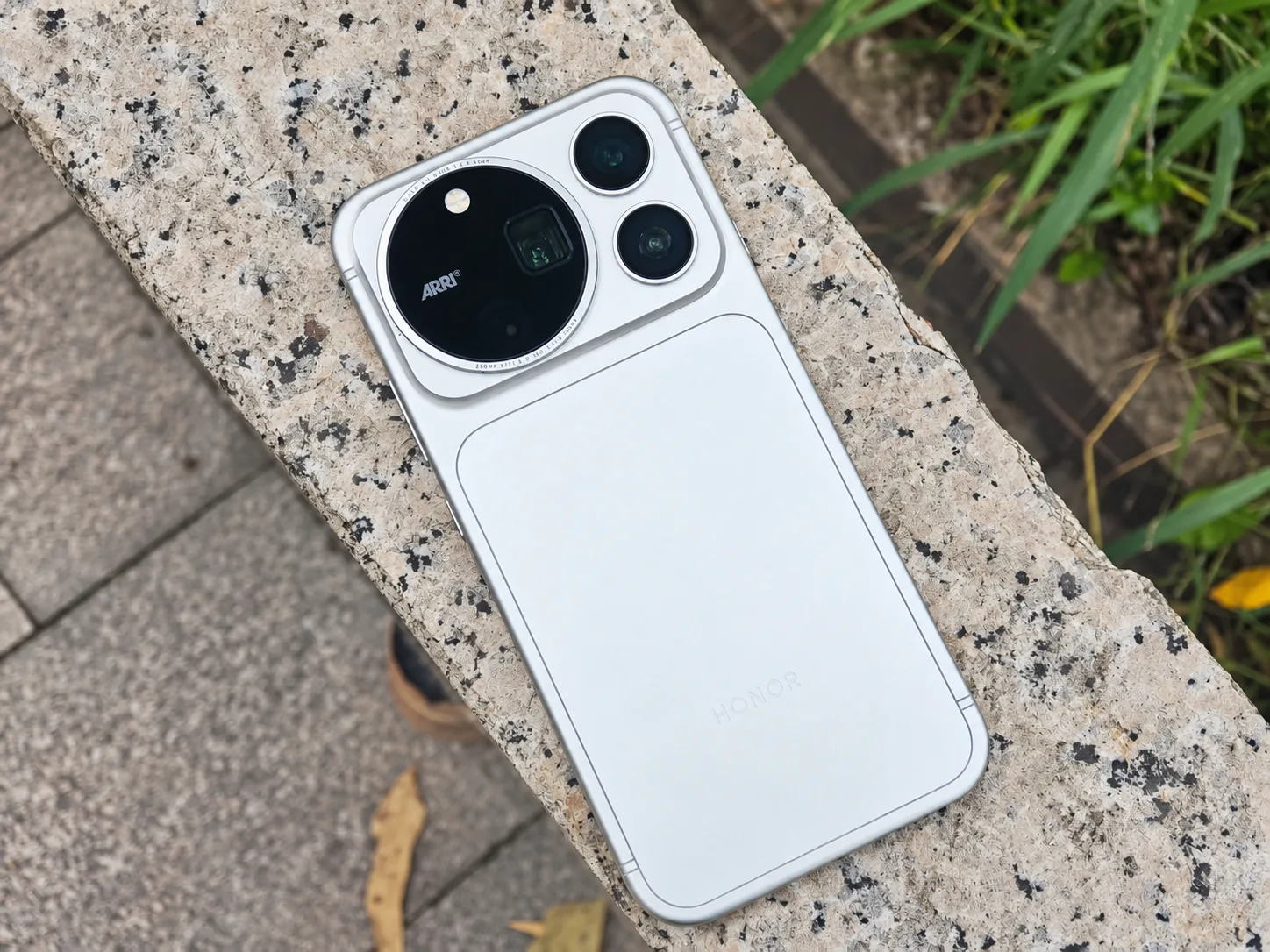
The version we have here is the Silver Halide edition.
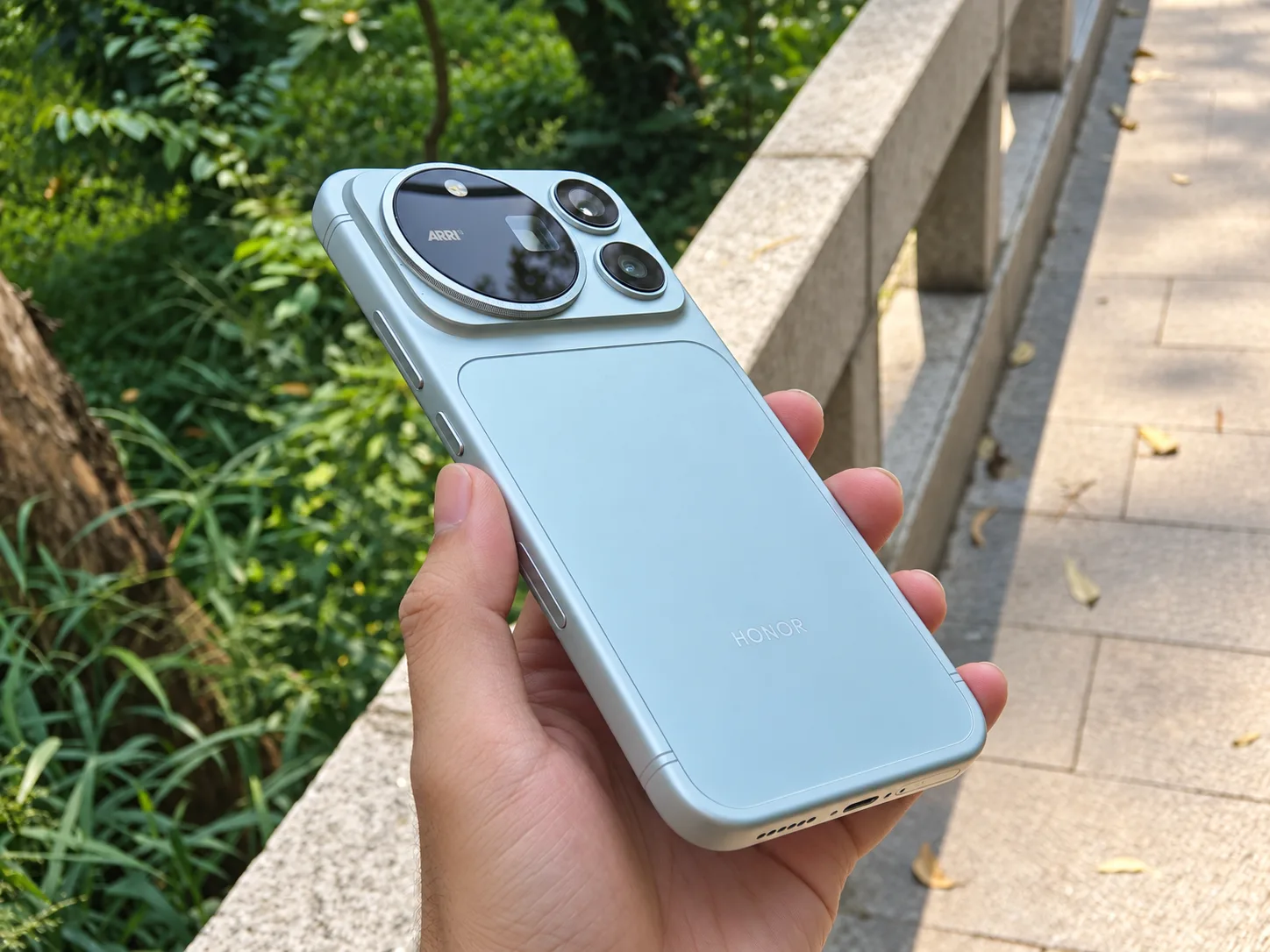
Visually, it's not a blindingly bright pure silver but rather a very subtle cool grayish-white. In dim light, the phone's body resembles the base color of plastic-coated photographic paper. When taken outdoors, under illumination, the metal frame and camera accent panel emit a slightly cool silver glow.
(Image Source: Leitech)
In terms of design, Honor has boldly adopted a Unibody all-metal construction this time. The phone's frame, back cover transition, and camera accent panel are all crafted using hot-forged aluminum in a single piece, featuring a very fine matte texture. Running your fingers over it provides some resistance, making it less likely to slip from your hand when used bare, and it's virtually fingerprint-resistant.
I personally love matte back covers, but for various reasons, manufacturers in recent years have struggled to deliver satisfactory results. Honor's design this time deserves commendation.
However, design is one aspect.
Due to the Magic9 Pro Max's relatively wide body—measuring 76.98mm in width and weighing nearly 236g—holding it in one hand is quite strenuous, a common issue among large flagship phones in recent years.
(Image Source: Leitech)
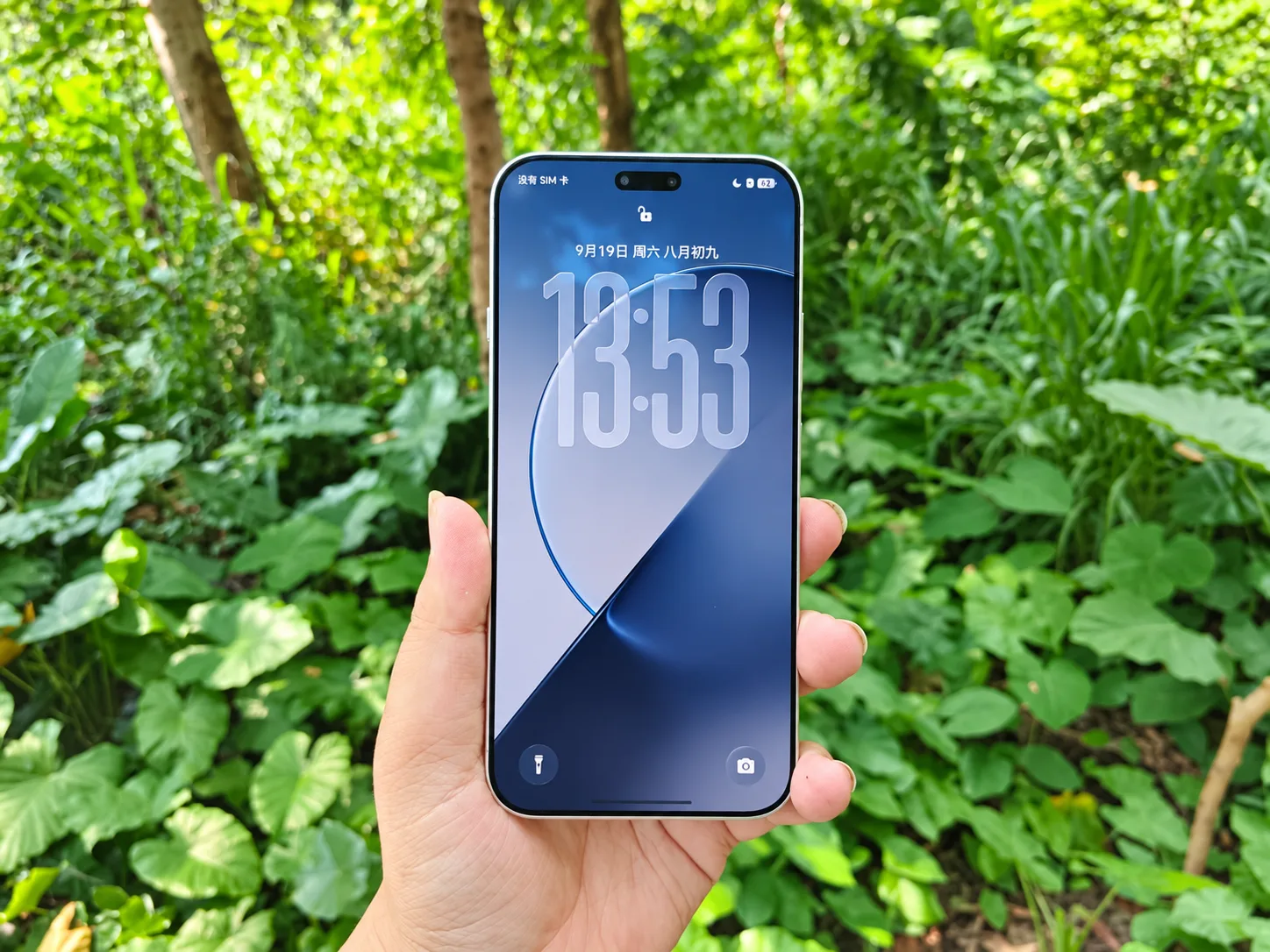
Turning to the front, the Magic9 Pro Max features a 6.8-inch 120Hz OLED flat display.
You'll notice that the bezels are significantly narrower this time, with the official claim of 0.98mm, which aligns with our actual measurements. However, without enabling Sunlight Mode, using this screen outdoors at noon is quite challenging. I recommend turning on Sunlight Mode right away and not worrying about the slight extra battery drain.
Now, let's delve into the camera module.
(Image Source: Leitech)
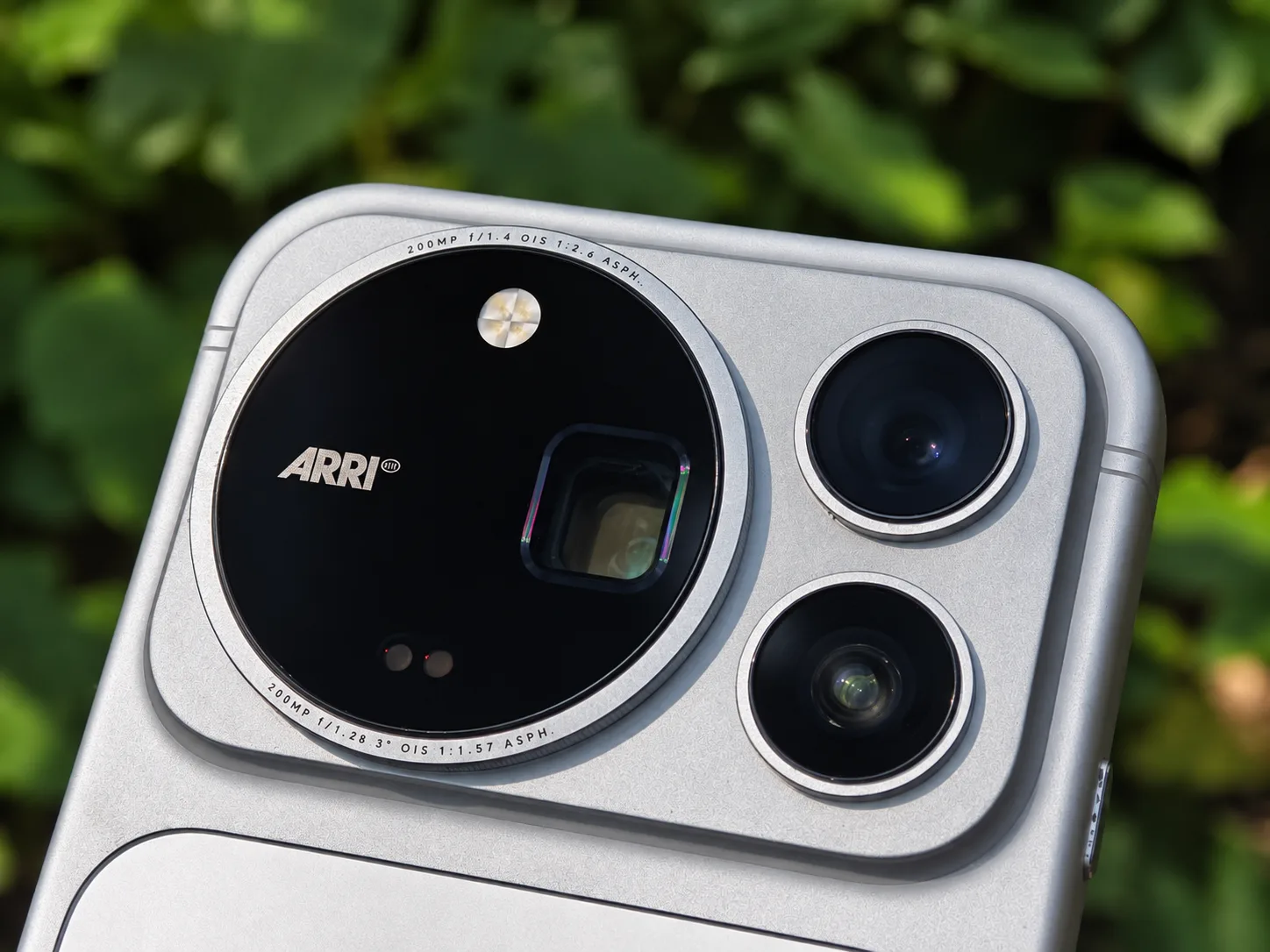
Honor claims to have drawn inspiration from ARRI's classic film cameras, creating a triple-camera matrix with one large and two small sensors. While some might view it as overly decorative or borrowing design elements, I personally find the overall design quite harmonious. Thanks to this stepped design, the camera protrusion seems less pronounced.
Among this year's diverse designs, the Magic9 Pro Max stands out as a refreshing option.
ARRI empowerment: Can beginners enjoy photography too?
In terms of imaging configuration, the Magic9 Pro Max is equipped with a 200MP ARRI gimbal-grade main camera featuring a 1/1.28-inch large sensor and CIPA 8.0-level stabilization. Paired with a 1/1.4-inch 200MP telephoto lens and a 50MP ultra-wide lens, it offers a very robust triple-camera setup.
Under ample daylight, it captures excellent details in buildings, greenery, and roadside stone lions, with slightly muted overall colors.
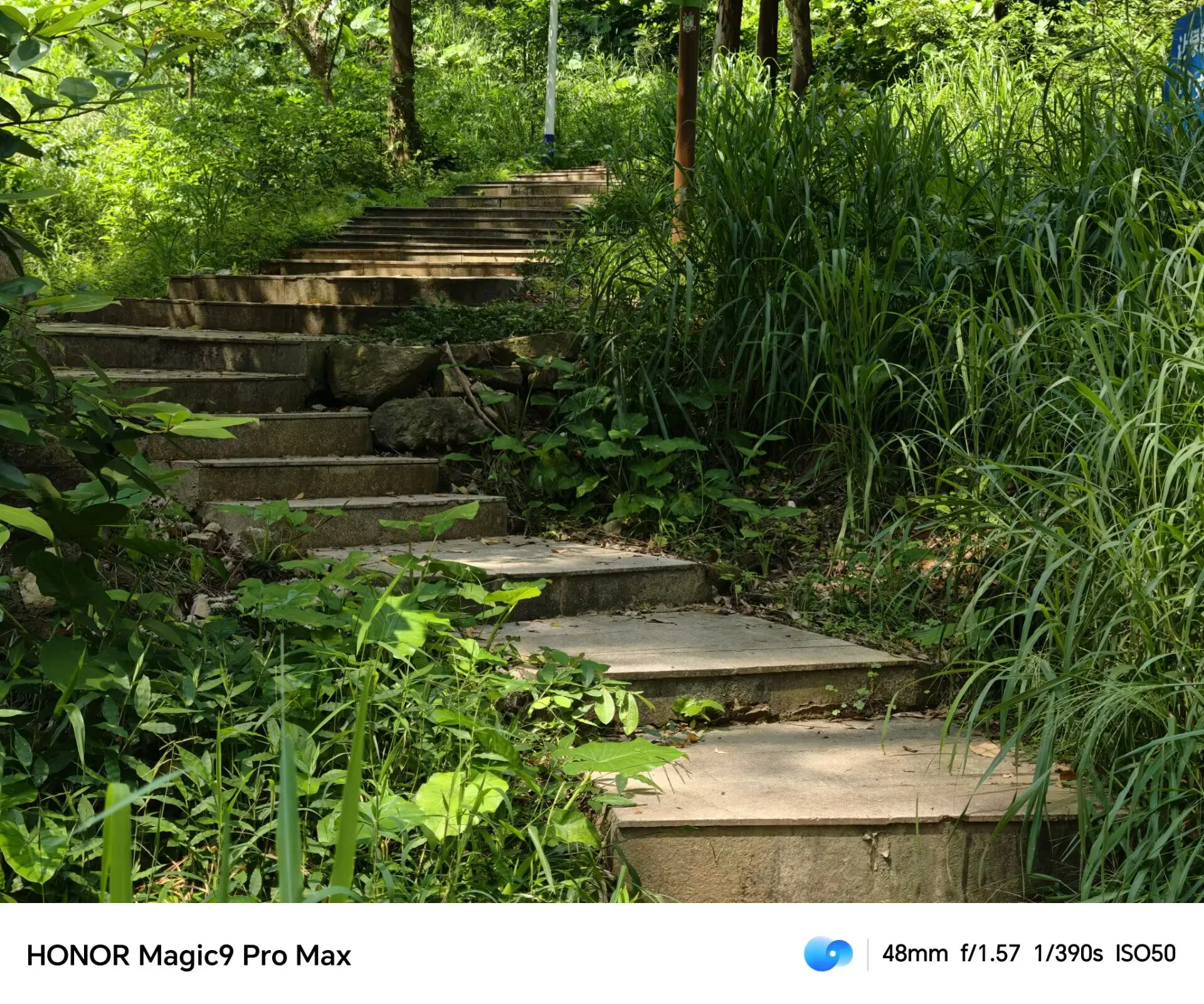
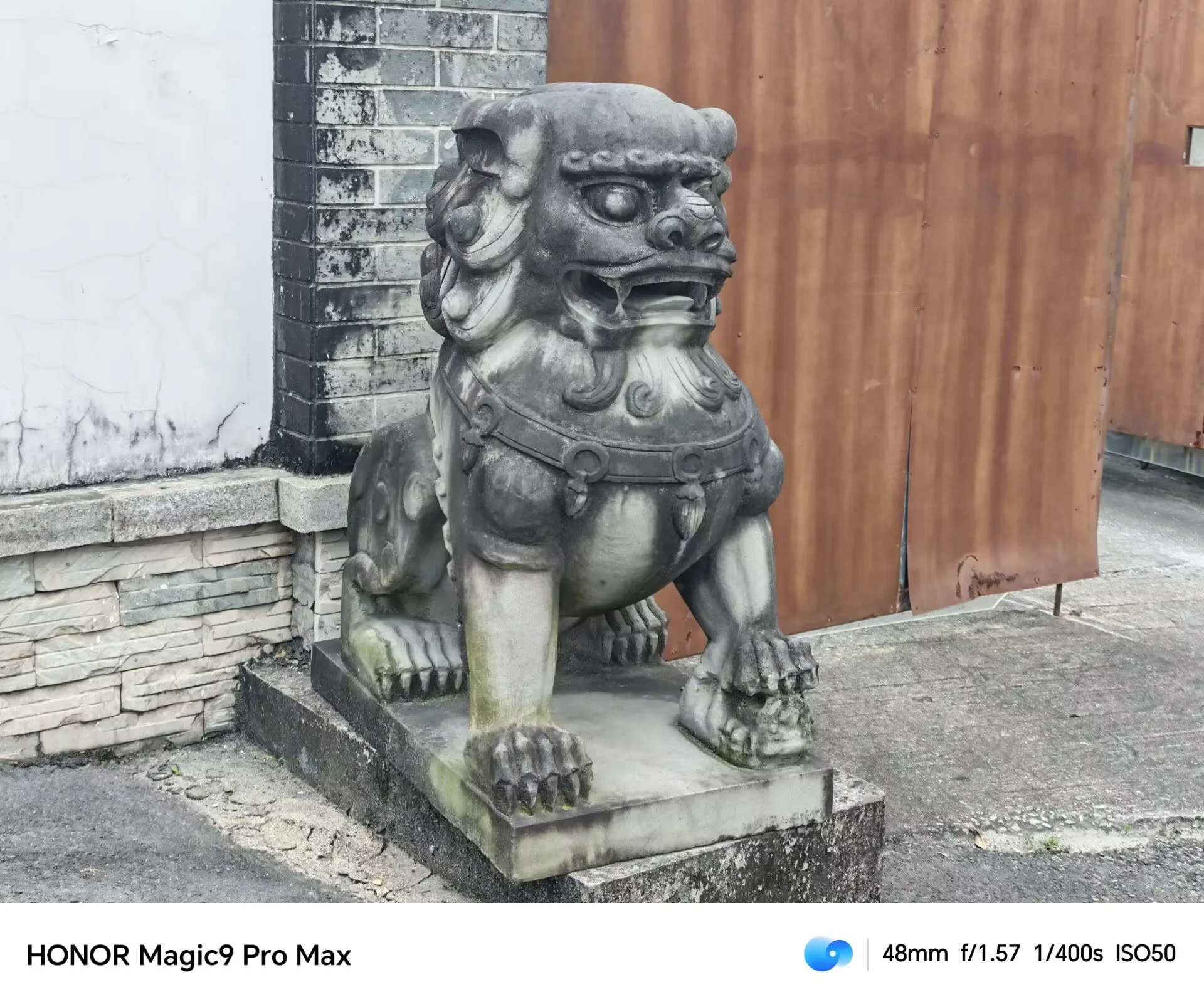
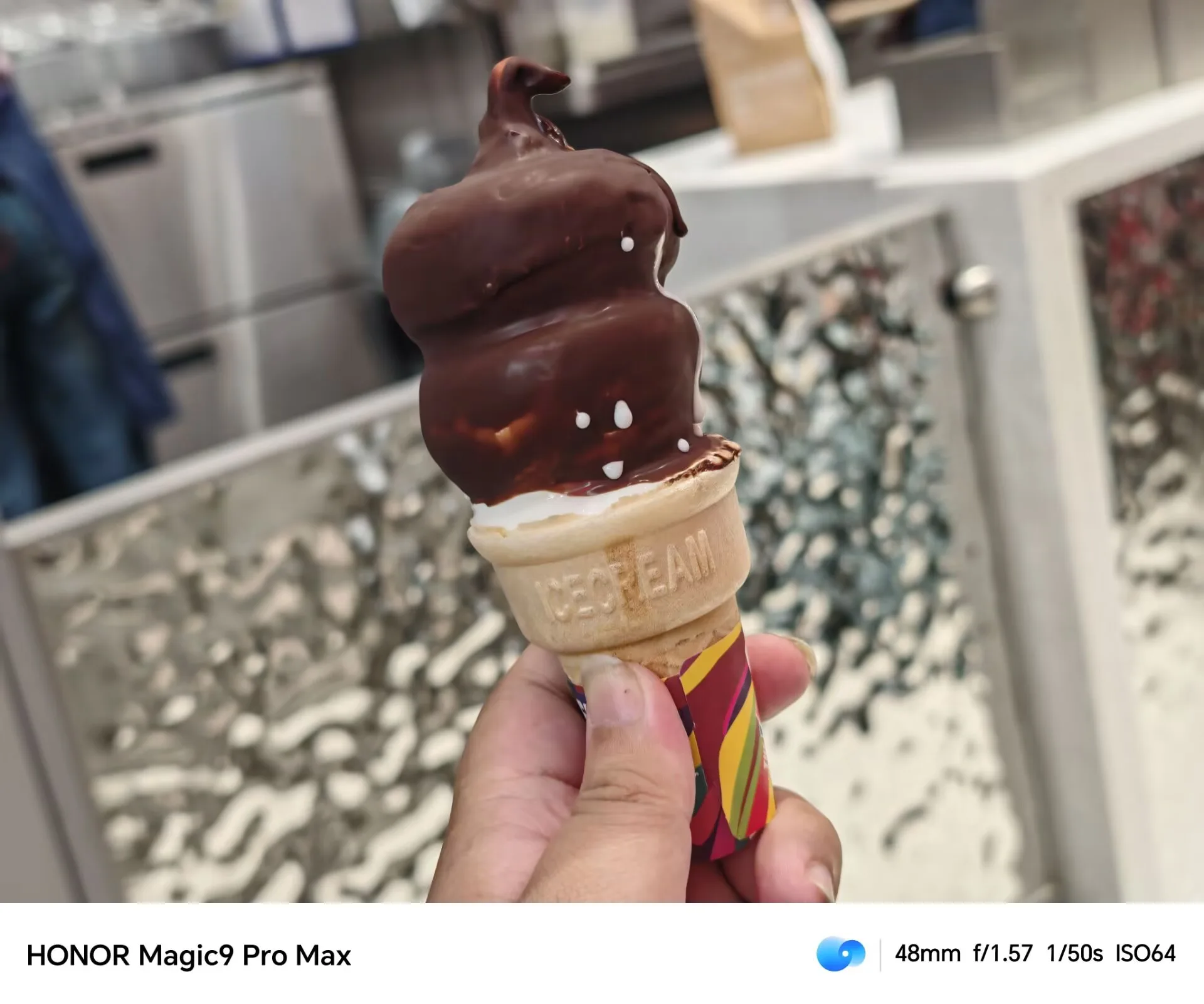
(Image Source: Leitech)
It must be said that the daytime image quality of current imaging flagships is virtually indistinguishable to the naked eye—everyone has reached the top tier, making it truly difficult to spot any differences.
At night, the main camera still produces clean images. In easily overexposed areas like bar signs and shop lightboxes, it doesn't overly crush highlights to preserve shadows, instead moderately brightening the scene while retaining the ambiance—capturing the essence of nighttime quite well.
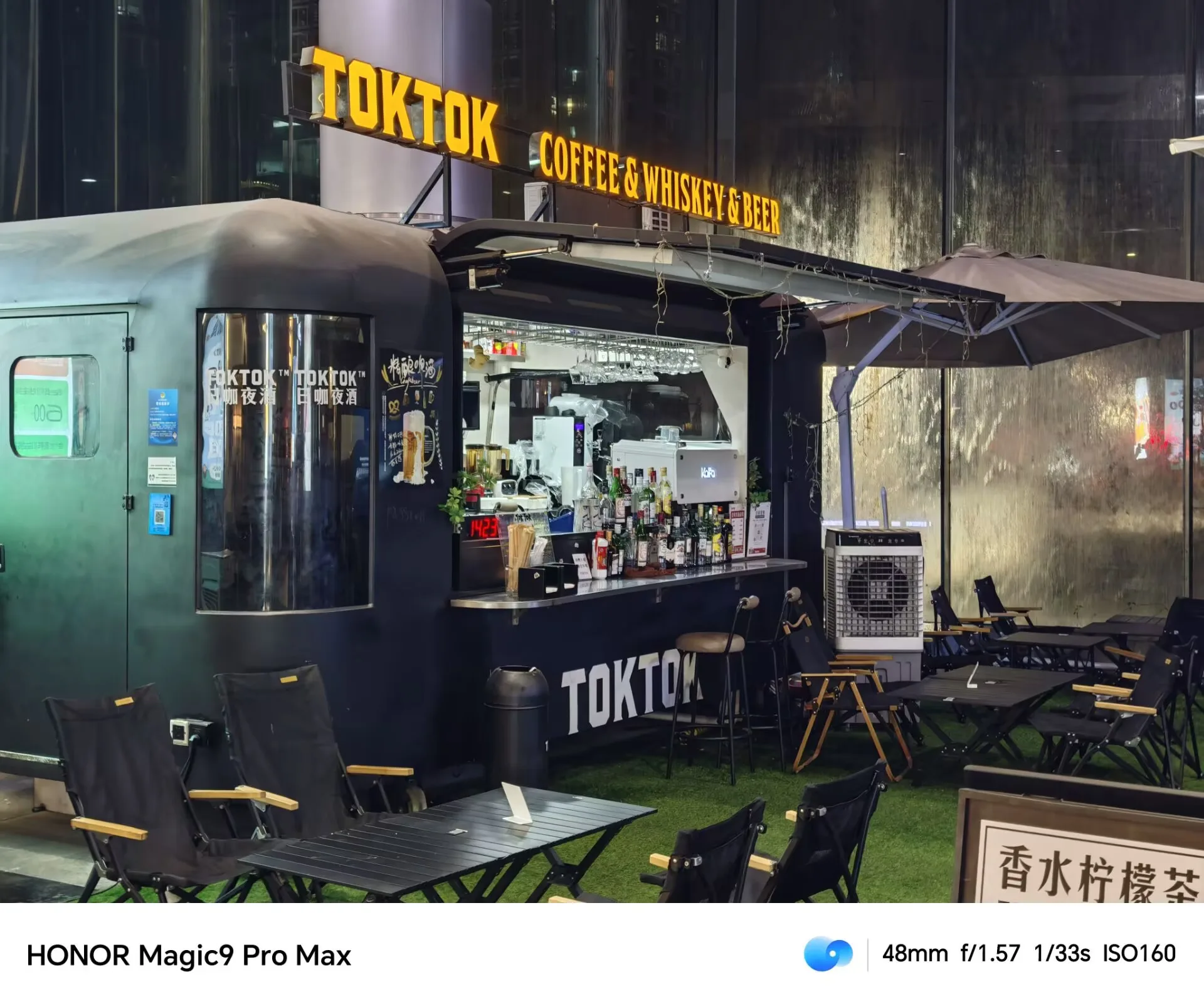
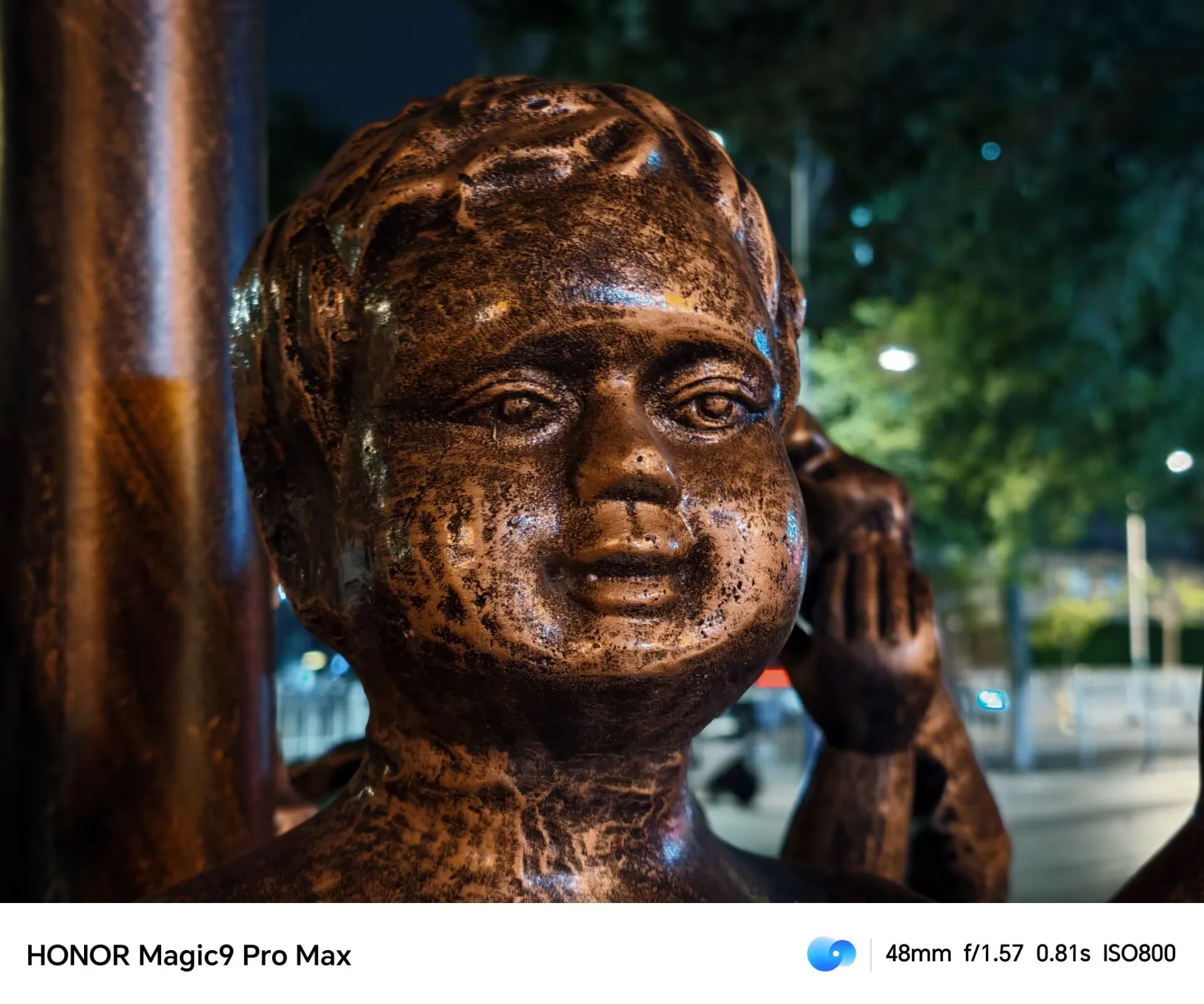
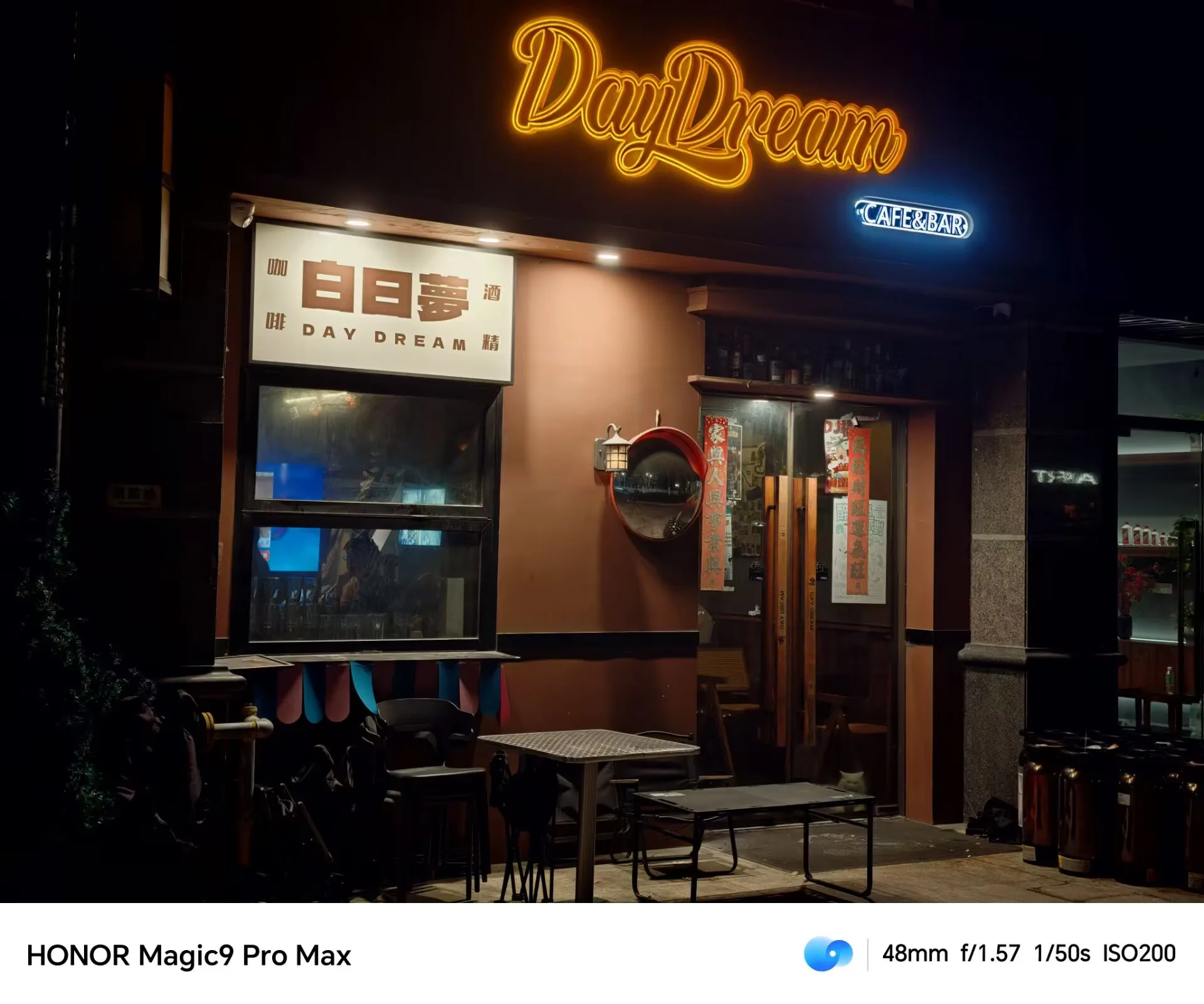
(Image Source: Leitech)
As for the periscope telephoto lens... it's currently among the best available.
The Magic9 Pro Max features a 200MP periscope telephoto lens with a 1/1.4-inch sensor, f/2.6 aperture, OIS support, and CIPA 7.5-level stabilization—placing it in the top tier among recently released Android flagships. The high pixel count also allows for more flexibility in cropping at medium to long distances.
At the native 3.5x zoom, whether day or night, this lens maintains remarkably stable resolving power with no noticeable color shift compared to the main camera—crucial for a smooth videography experience.
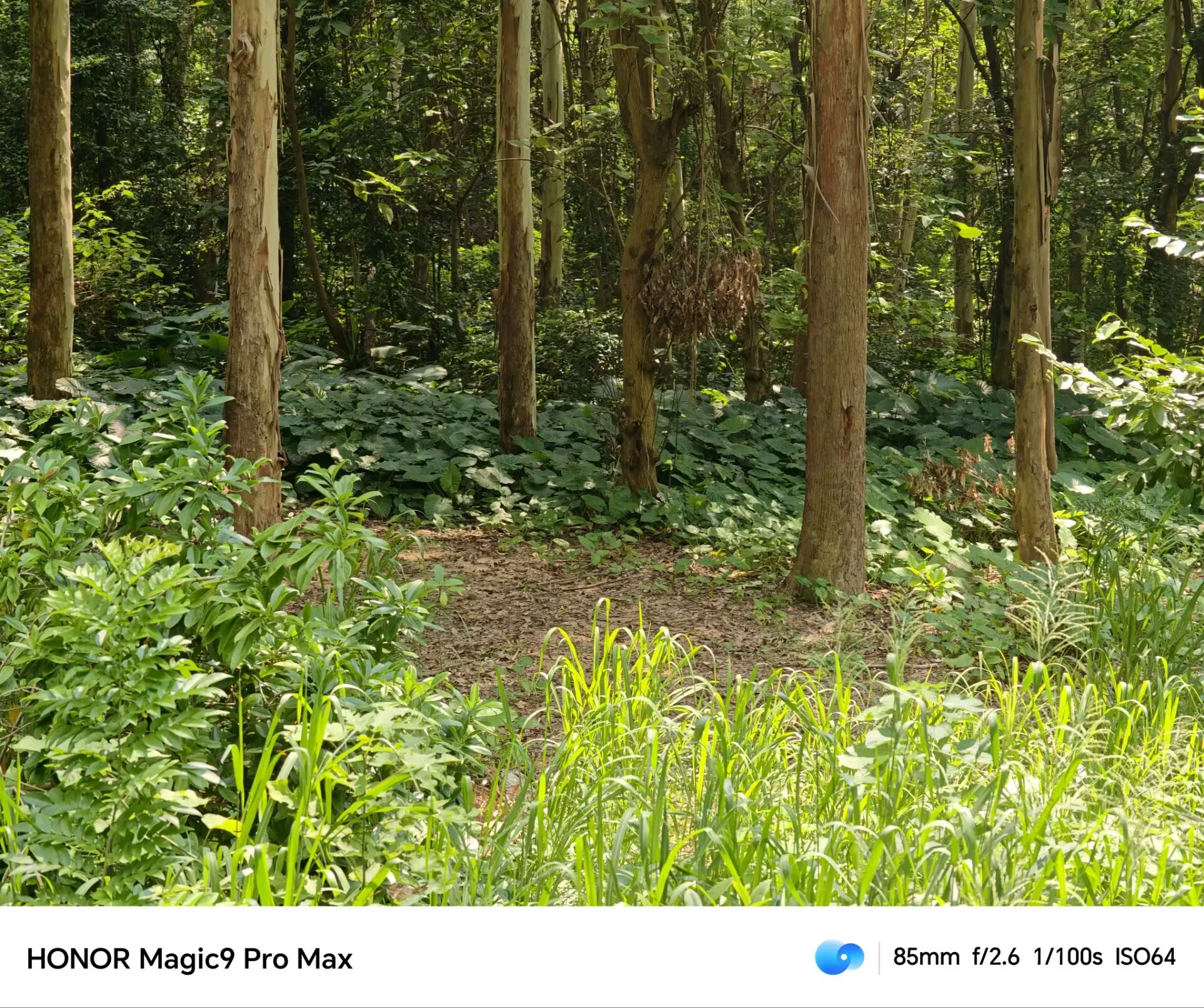
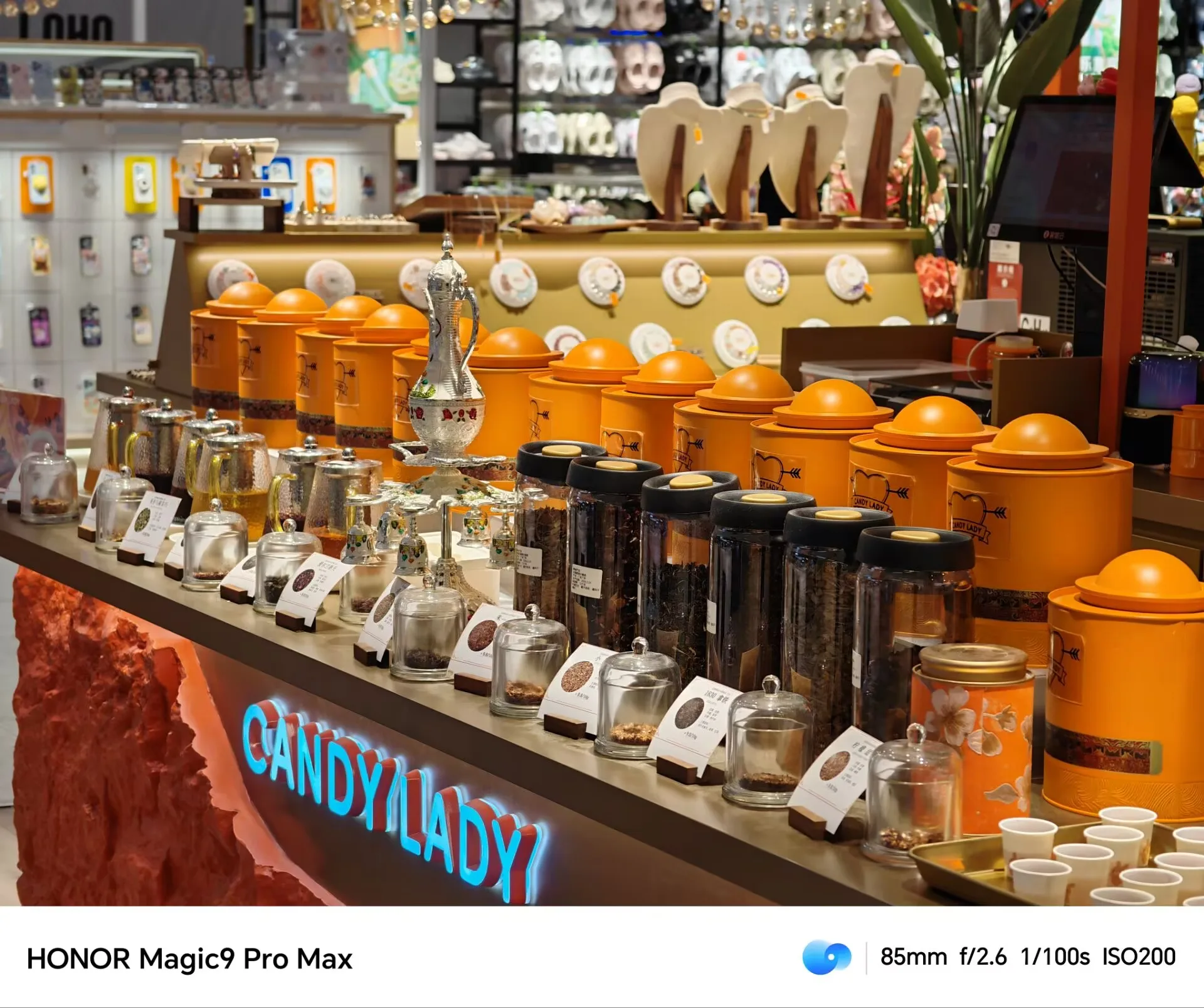 (Image Source: Leitech)
Even at 10x hybrid zoom, the image quality remains acceptable. While some algorithmic processing is visible, it's not overly distracting. I consider it highly usable, and with the official teleconverter, the results can be further enhanced.
Of course, that accessory isn't cheap—for most users, this telephoto lens is more than sufficient.
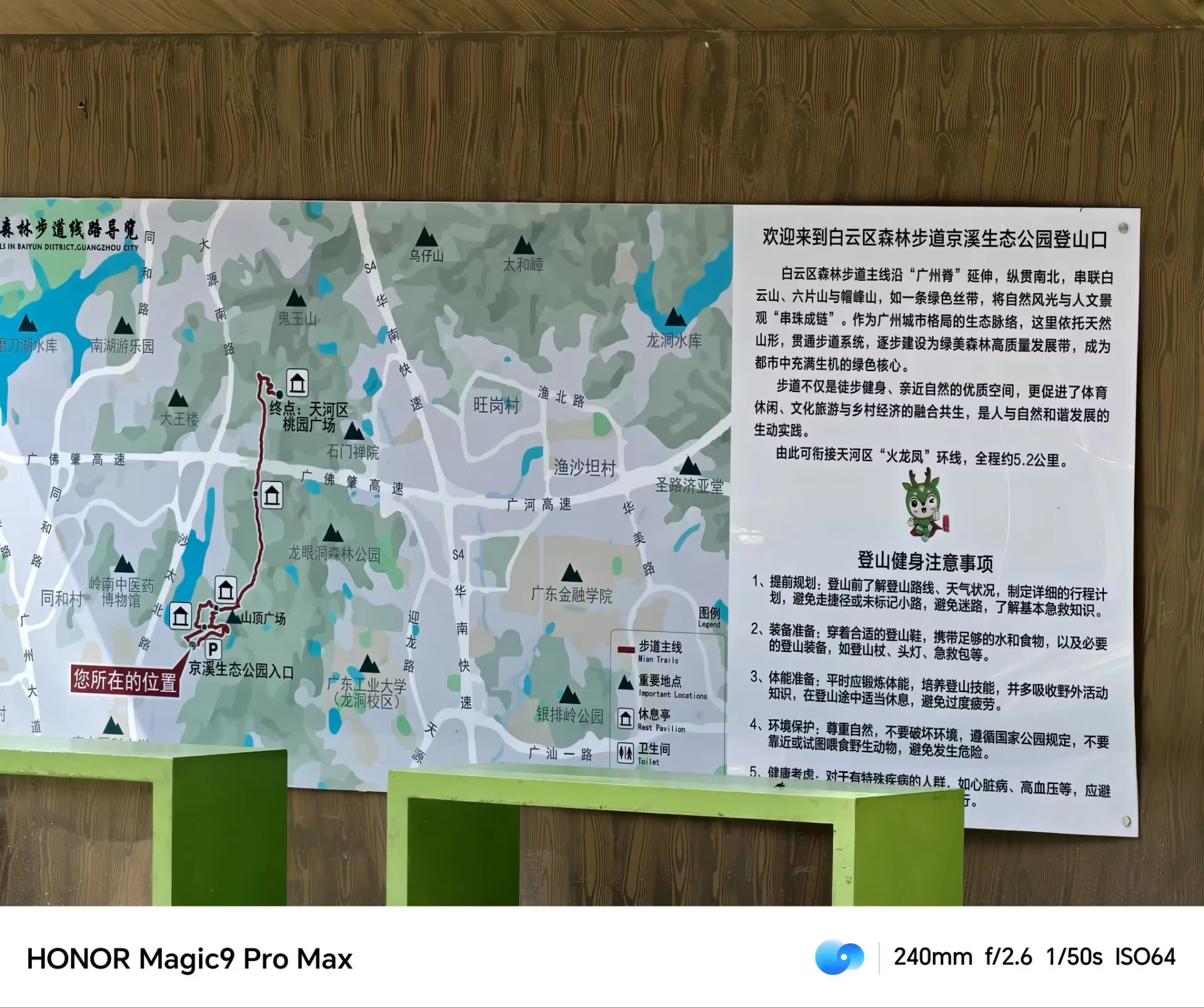
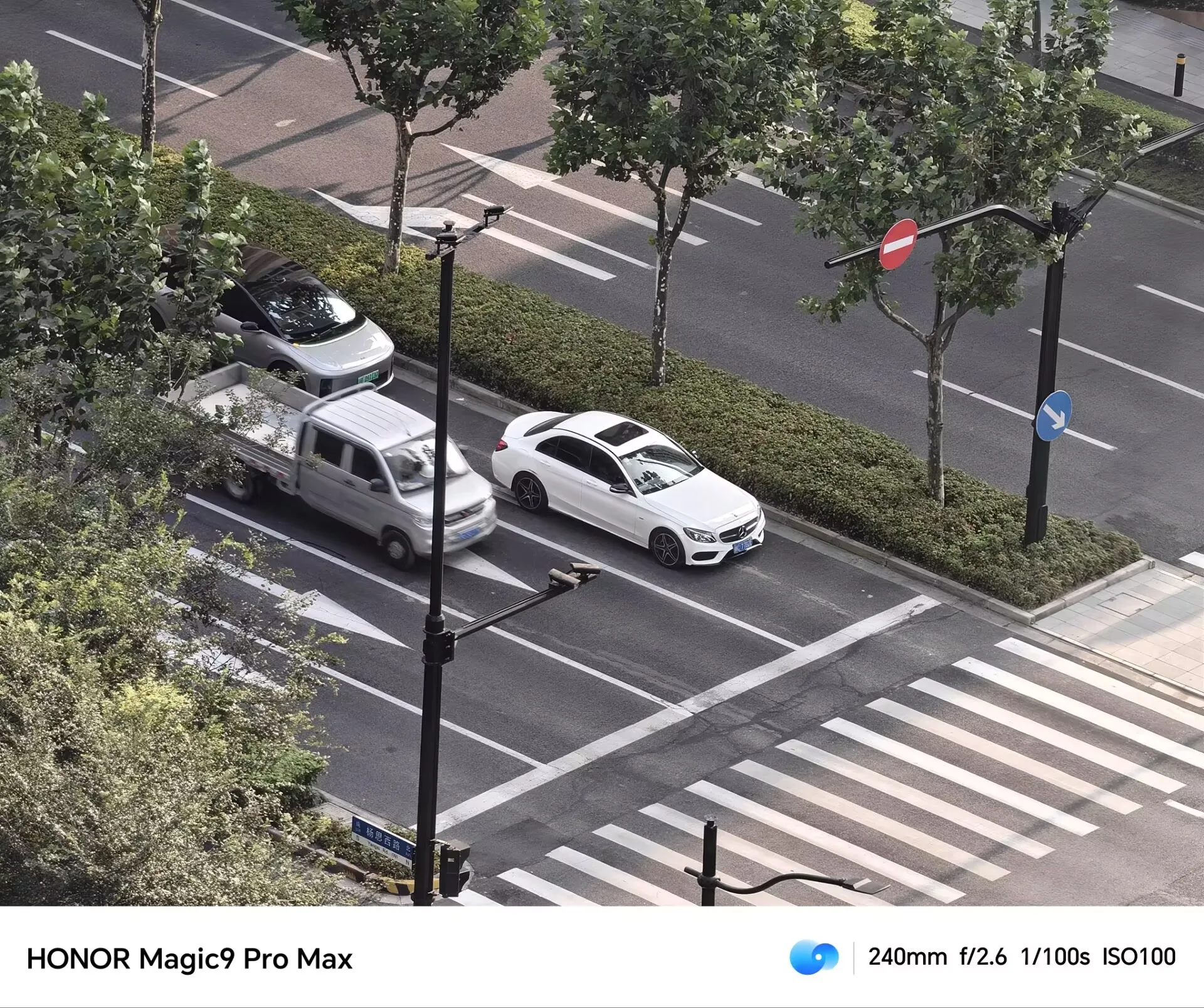
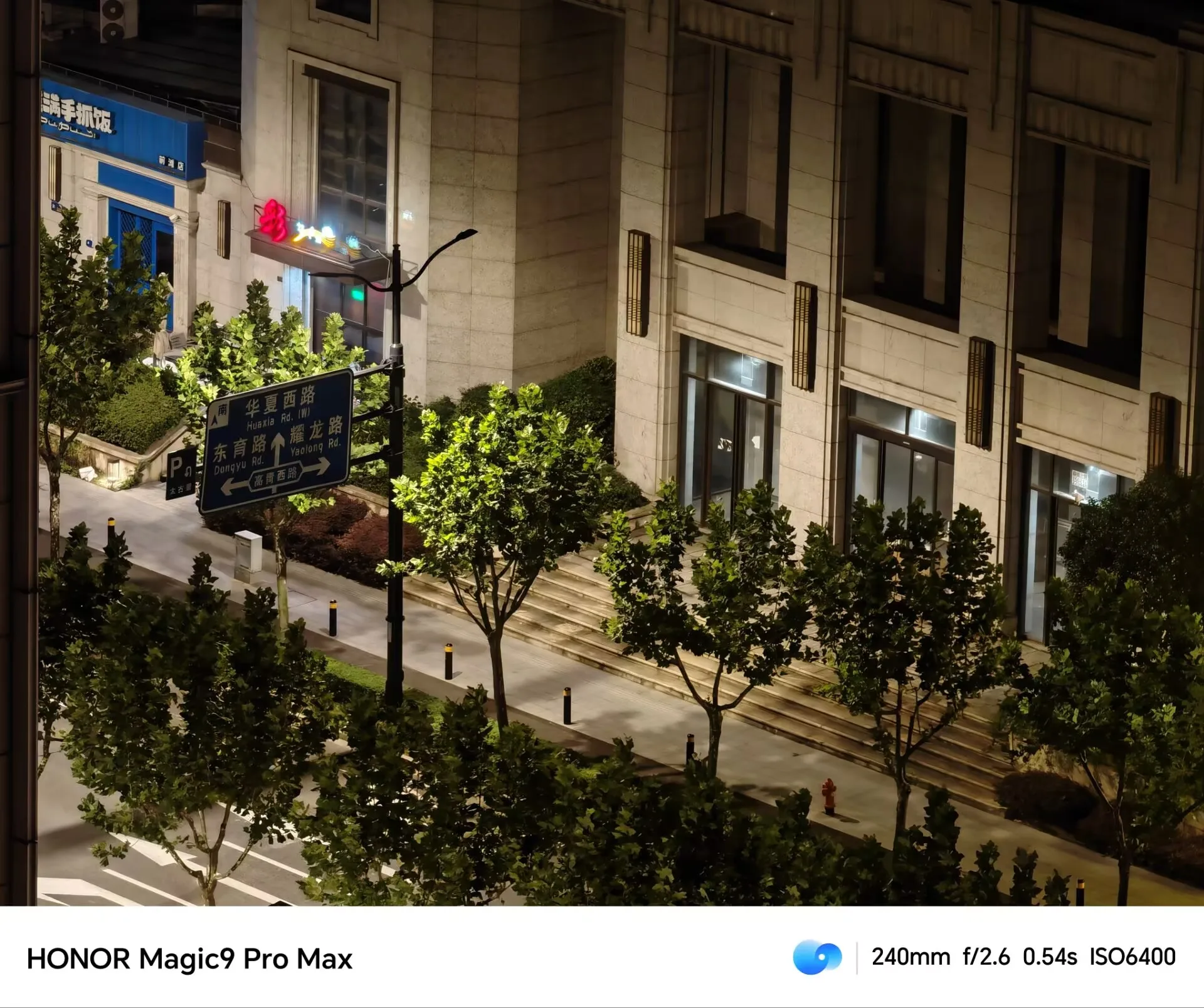
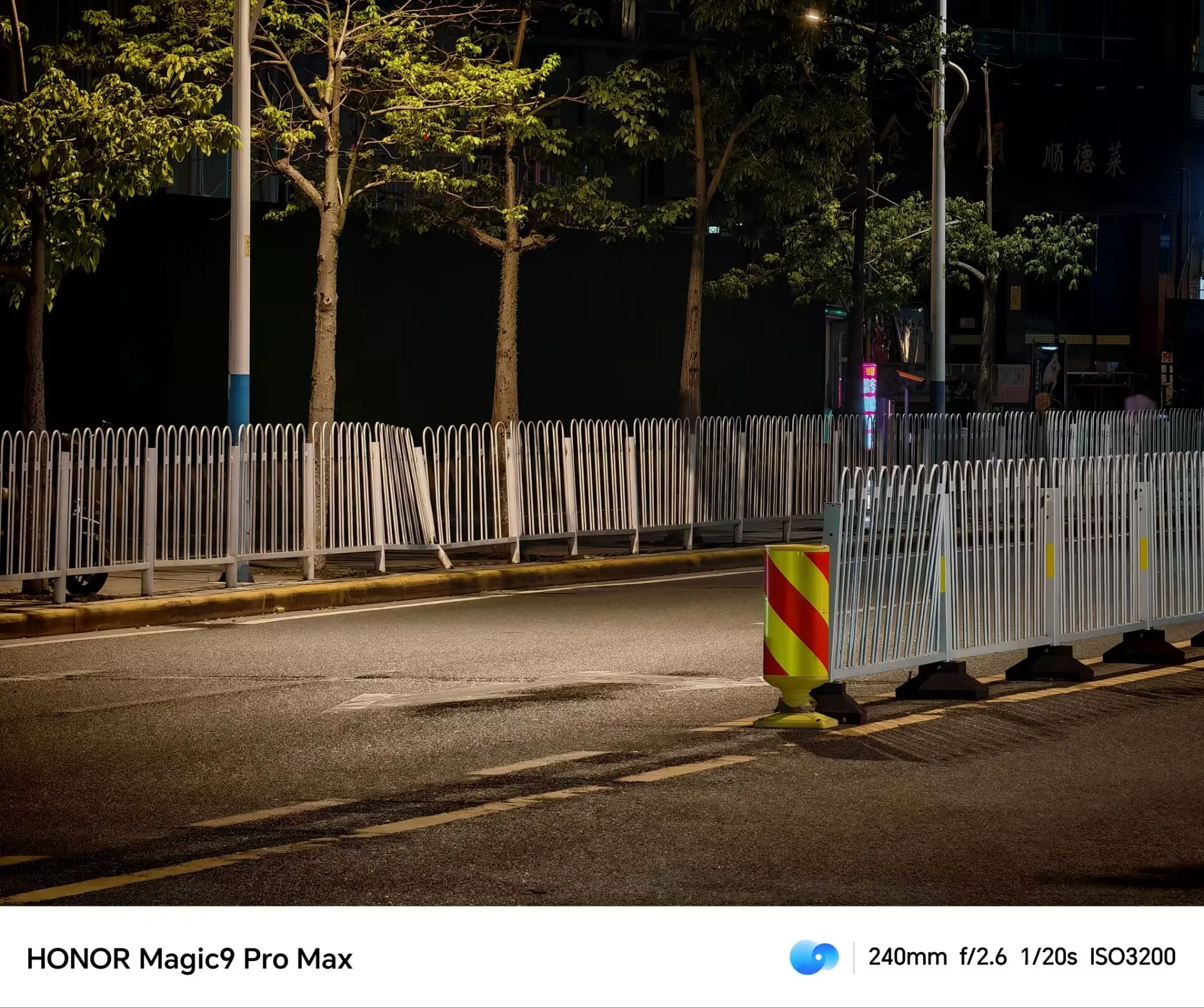
(Image Source: Leitech)
Now, let's talk about videography—a major selling point for Honor this year is bringing ARRI into the smartphone realm.
For those unfamiliar, ARRI is a globally renowned professional imaging equipment brand. Among the Best Picture winners at the Oscars over the past 16 years, 14 were shot using ARRI film cameras—making ARRI synonymous with a century of cinematic aesthetic standards.
Simply swipe right in the camera interface to access the ARRI Imaging mode, which offers a vast array of shooting parameters. Those familiar with such settings can intuitively, precisely, and freely adjust them, but for imaging novices like myself, it felt a bit overwhelming.
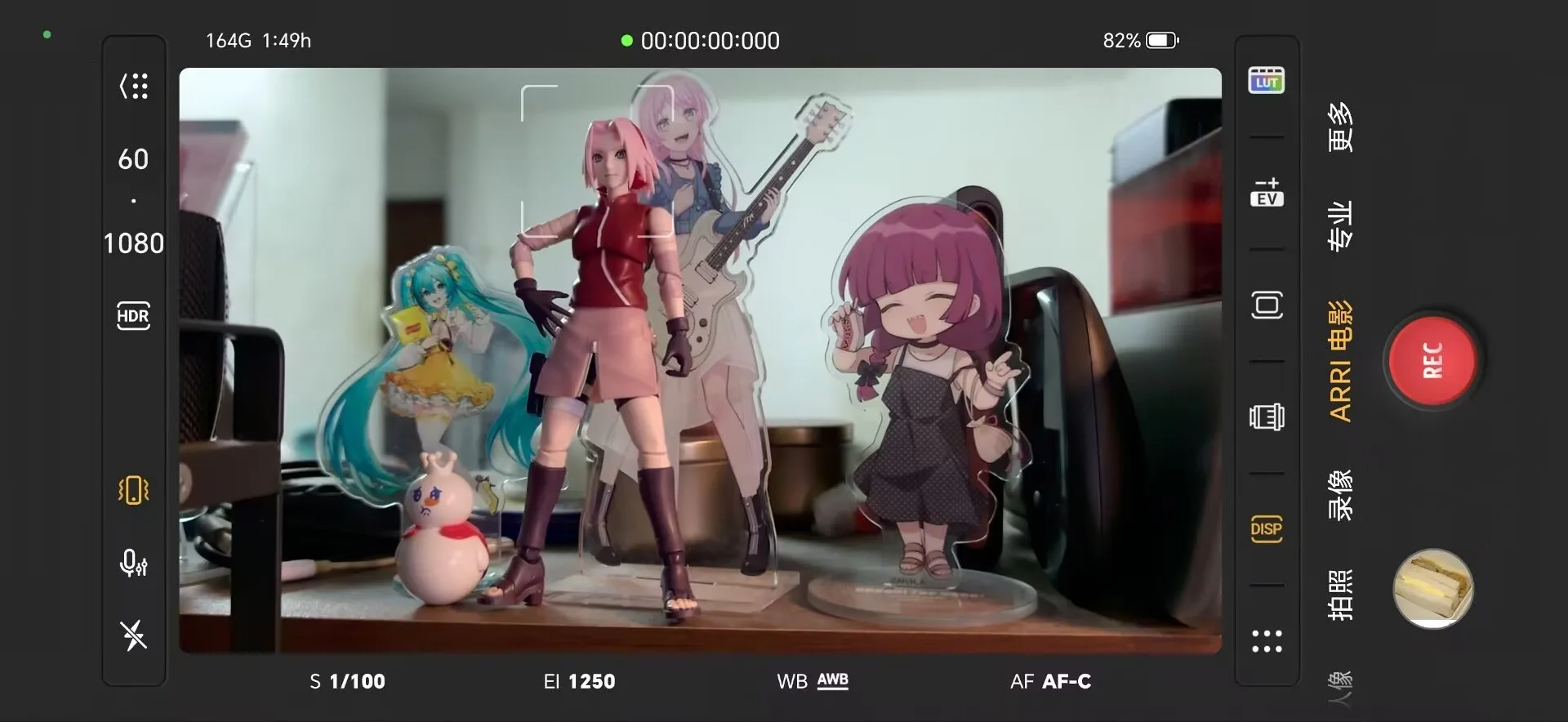
(Image Source: Leitech)
After some exploration, I figured out how beginners can use this mode effectively.
First, in the top-right corner of the camera frame, you can choose between Log C3, HDR, and SDR formats. The officially promoted mode is ARRI LogC3, which uses nonlinear compression to retain ample highlight and grayscale details, greatly enhancing the image's plasticity and post-production flexibility.
However, shooting in this mode naked produces a grayish, muted image.

(Image Source: Leitech)
You'll need to import the footage into a computer for post-production to finalize it, or more simply, apply an ARRI film Look in the gallery for a quick preview.
The final result looks something like this. I personally prefer the ALEXA/Humanities effect—the former offers a darker, warmer tone, while the latter provides a slightly cyan-blue cool tone.

(Image Source: Leitech, ARRI Humanities)
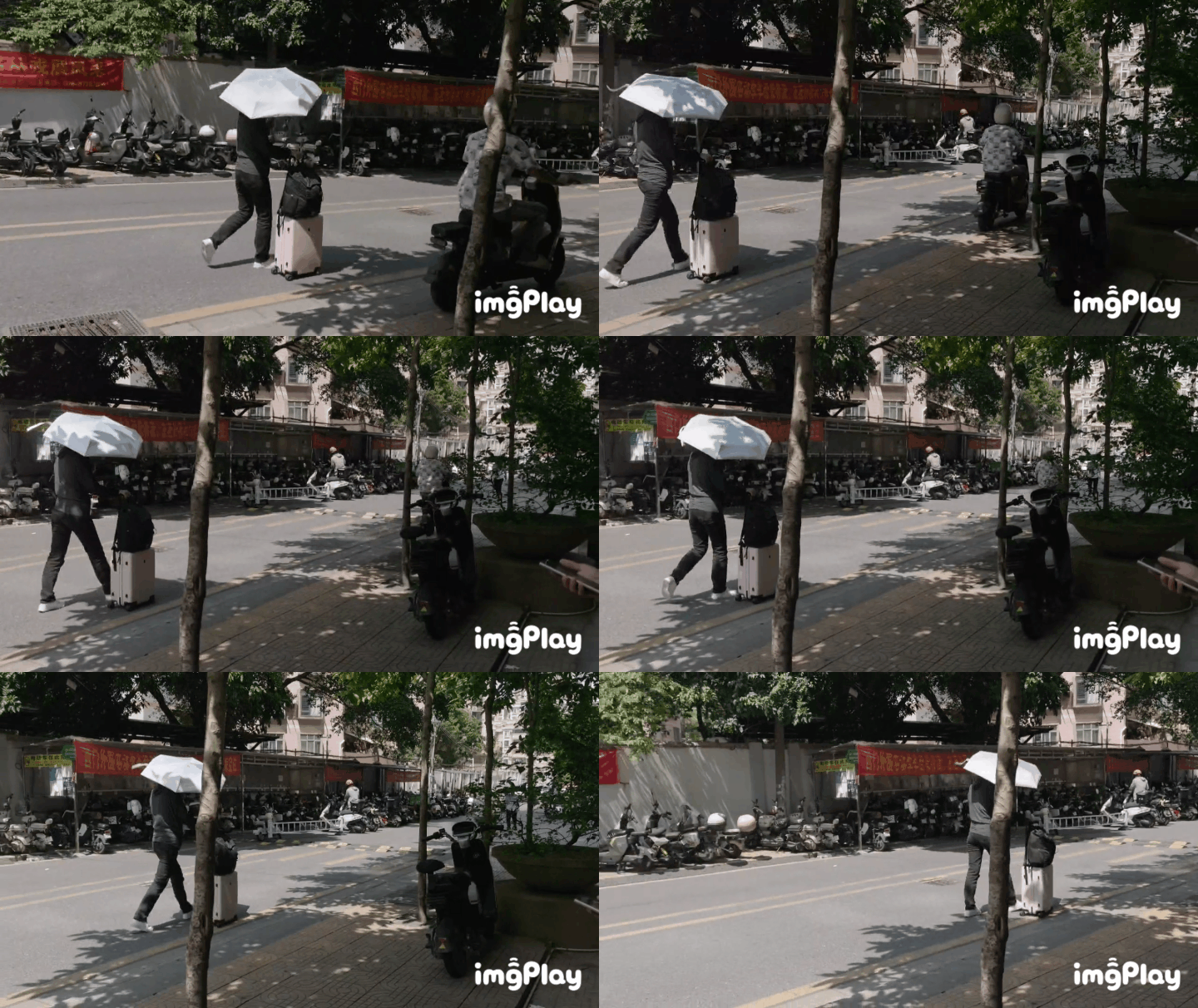
(Image Source: Leitech, ARRI ALEXA)
If you're unfamiliar with Log C3 and just want to shoot and share videos with ARRI colors instantly, I recommend using SDR or HDR mode and selecting an ARRI filter suitable for the current scene.

(Image Source: Leitech, ARRI Vivid)
As you can see, even while climbing stairs, the Magic9 Pro Max's stabilization remains highly effective.
Regarding Vlog features, which several Android manufacturers have emphasized in recent years, the Honor Magic9 Pro Max introduces a unique ARRI Film Live mode. Unlike traditional Vlogs that capture 1.5 seconds before and after pressing the record button, this mode captures a 3-second window after long-pressing the record button, making your live photos more controllable.
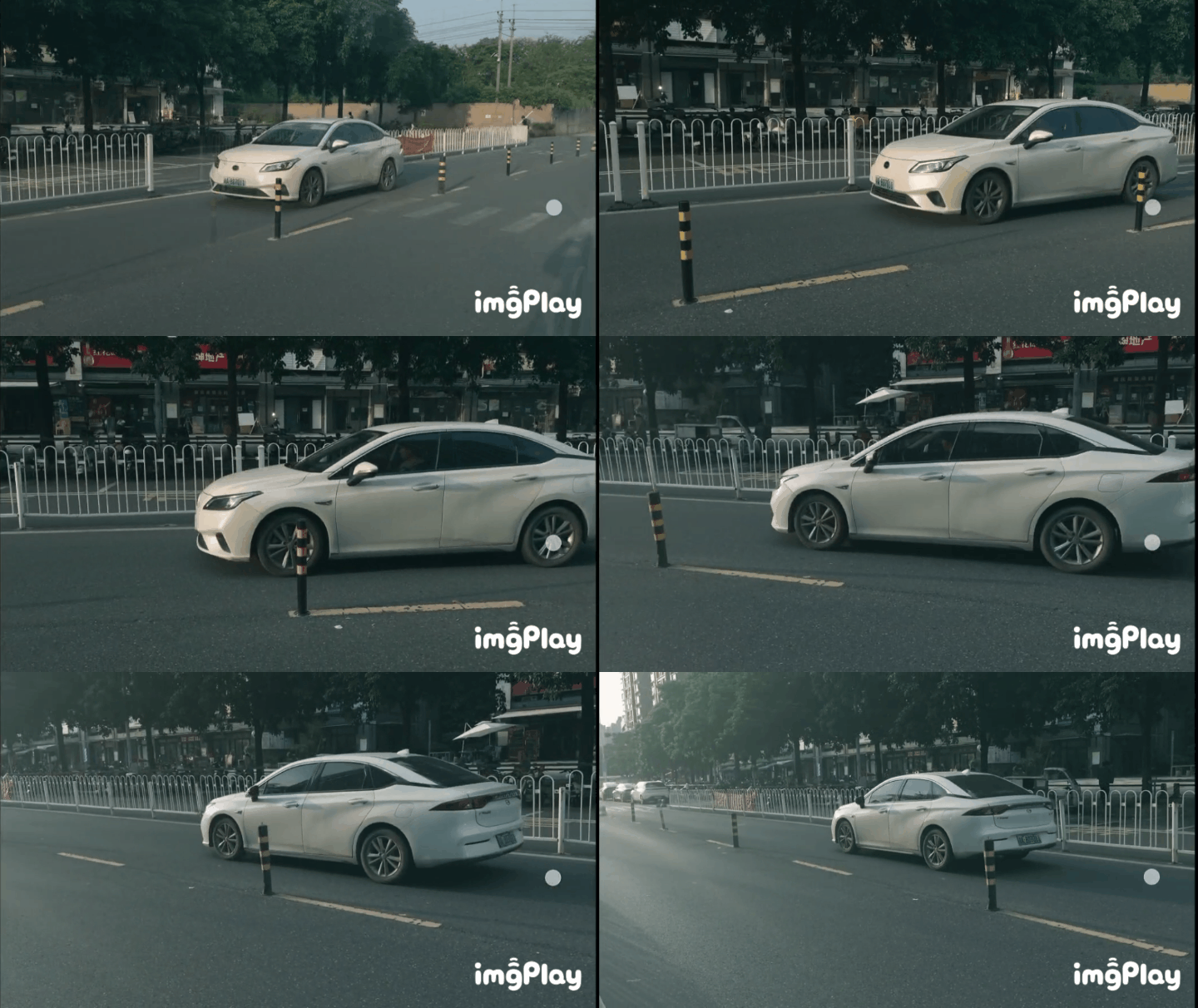
(Image source: Leitech, ARRI Humanities)
As for the drawbacks... is the fact that this feature is limited to SDR one of them?
Moreover, ARRI colors can currently only be used for video shooting. I want to experience ARRI colors in daily photography as well. The only way to do so is by taking photos during video recording, which is equivalent to capturing a single frame from a video.
Of course, I know that ARRI is a century-old giant in the film industry, and it makes sense for Honor to choose to collaborate with it and focus on video recording. But after all, it's a smartphone. I believe that incorporating ARRI colors into more imaging functions such as photography, portrait, and professional modes would better allow everyone to feel the changes brought about by the ARRI collaboration.
Can the new generation of YOYO really respond instantly to commands?
I don't know if you've noticed, but the term 'Agent' has been appearing particularly frequently in the digital circle this year.
It seems that users' expectations for smartphone AI are no longer satisfied with just summarizing an article or generating an image. Whether smartphones can accurately recognize user intentions and help users complete tedious operations and directly submit results is the key to the Agent era.
Upon closer thought, Honor actually made an early layout in this field. Many people should still remember Zhao Ming's demonstration at a press conference years ago where he used YOYO to order a coffee from Luck
After roughly a minute, YOYO chimed in with, "All tasks are complete!"
Eager and with hands trembling slightly, I was excited to see what Honor had accomplished in such a short span.
Upon reviewing, I found that flight recommendations, daily itinerary planning, transportation options, attractions, dining suggestions, homestay recommendations, and pre-departure precautions were all included. However, for some unexplained reason, no return flight recommendations were provided during the initial Q&A session.
For flights and homestays, Honor utilized Ctrip for information retrieval. I'm unsure why, but no specific homestay recommendations were given for Dali, whereas the two homestay suggestions for Lijiang met the criteria. As for the travel itinerary, it seemed quite sensible. Making adjustments based on this recommendation could save considerable effort.
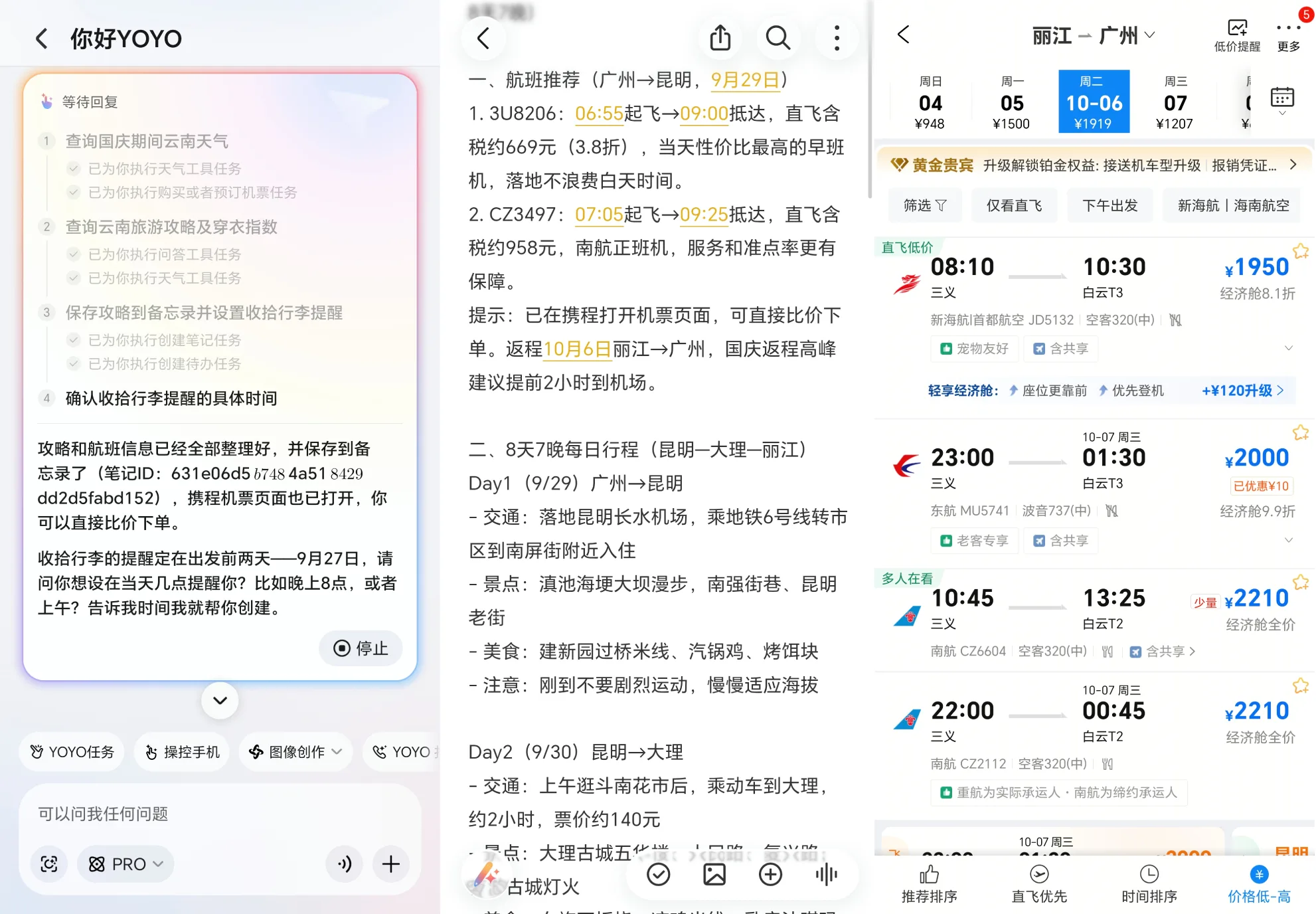
(Image source: Leitech)
In terms of speed, it definitely exceeded my expectations, taking only about a minute.
After this initial test, I also evaluated YOYO's performance in other scenarios. For instance, in the classic e-commerce price comparison scenario, Honor was able to normally access Taobao and JD to search for prices, but it took three attempts on Taobao to succeed, and Pinduoduo failed directly. Fortunately, the product eventually added to the cart was the lowest price available online.

(Image source: Leitech)
Interestingly, YOYO has also introduced the industry's first content creation smartphone AI assistant!
Firstly, there's the trending topic selection feature, which essentially allows for the daily collection of hot news—a capability I had previously implemented across various office agents. On Honor, you can also set scheduled tasks to automatically trigger and execute every morning, eliminating the need to keep a computer running and search manually.
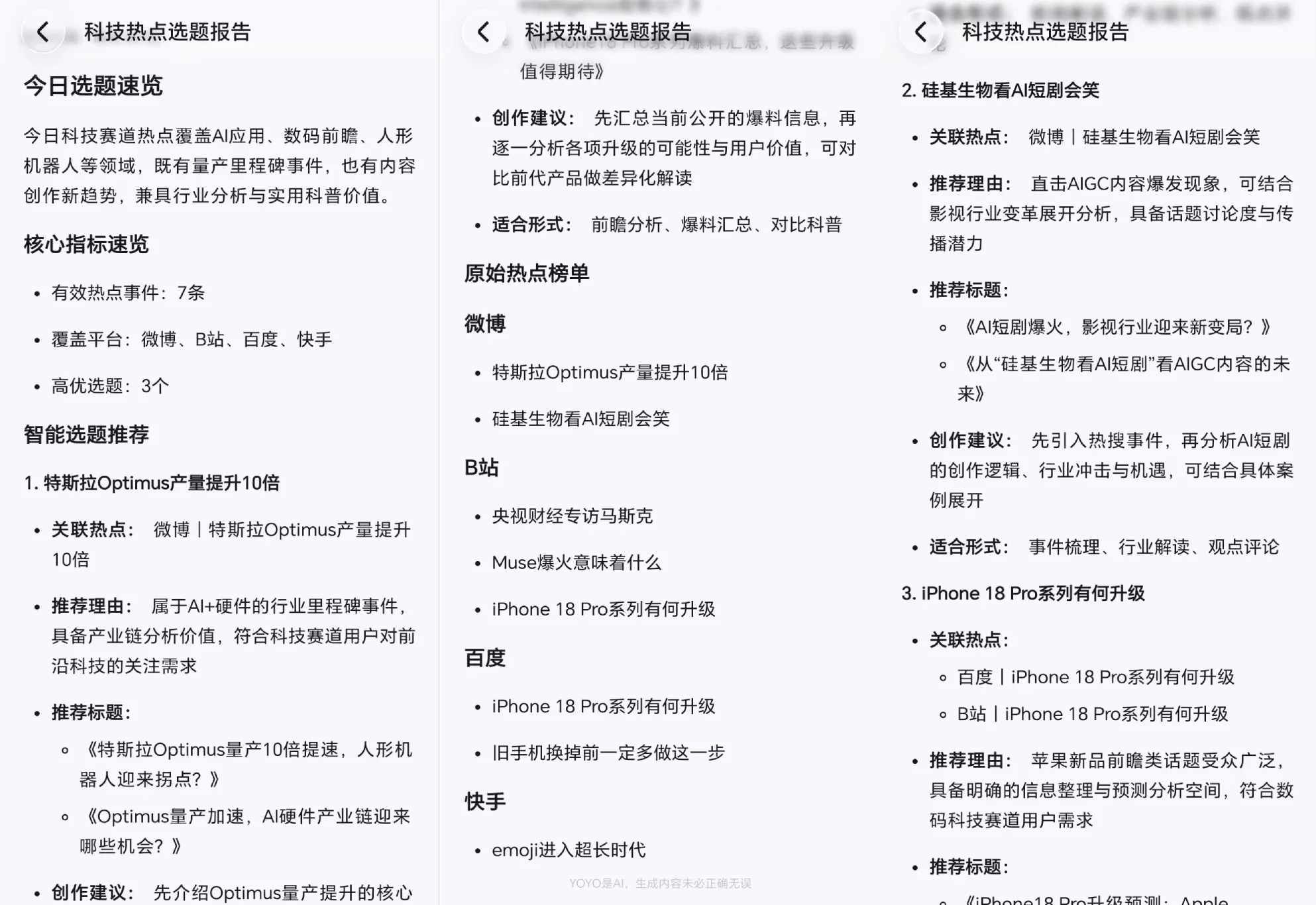
(Image source: Leitech)
The final output not only includes hot news but also relevant topic recommendations and justifications.
Then there's the inspiration organization feature, a common divergent thinking tool that enables the agent to refine reference materials on a specific topic based on user memory and online information.
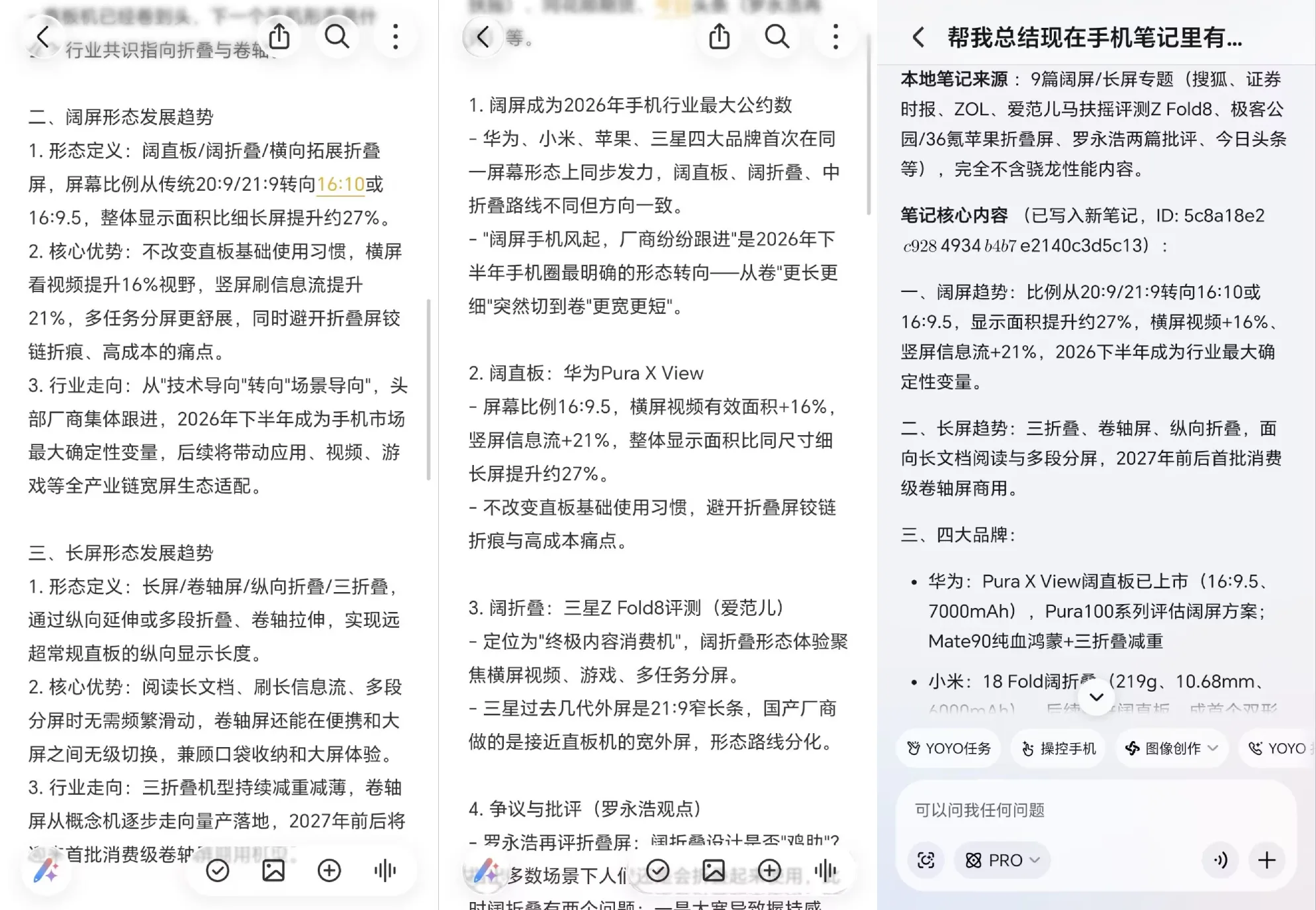
(Image source: Leitech)
This feature performed adequately. I tried it several times and didn't encounter any significant errors. Combined with my draft, it provided quite a few ideas.
However, during this creative process, I discovered a drawback: YOYO's current image generation capabilities are somewhat limited. Both data charts and product tables were riddled with issues, as evident from the X-axis, Y-axis, and labeled data in the image below.
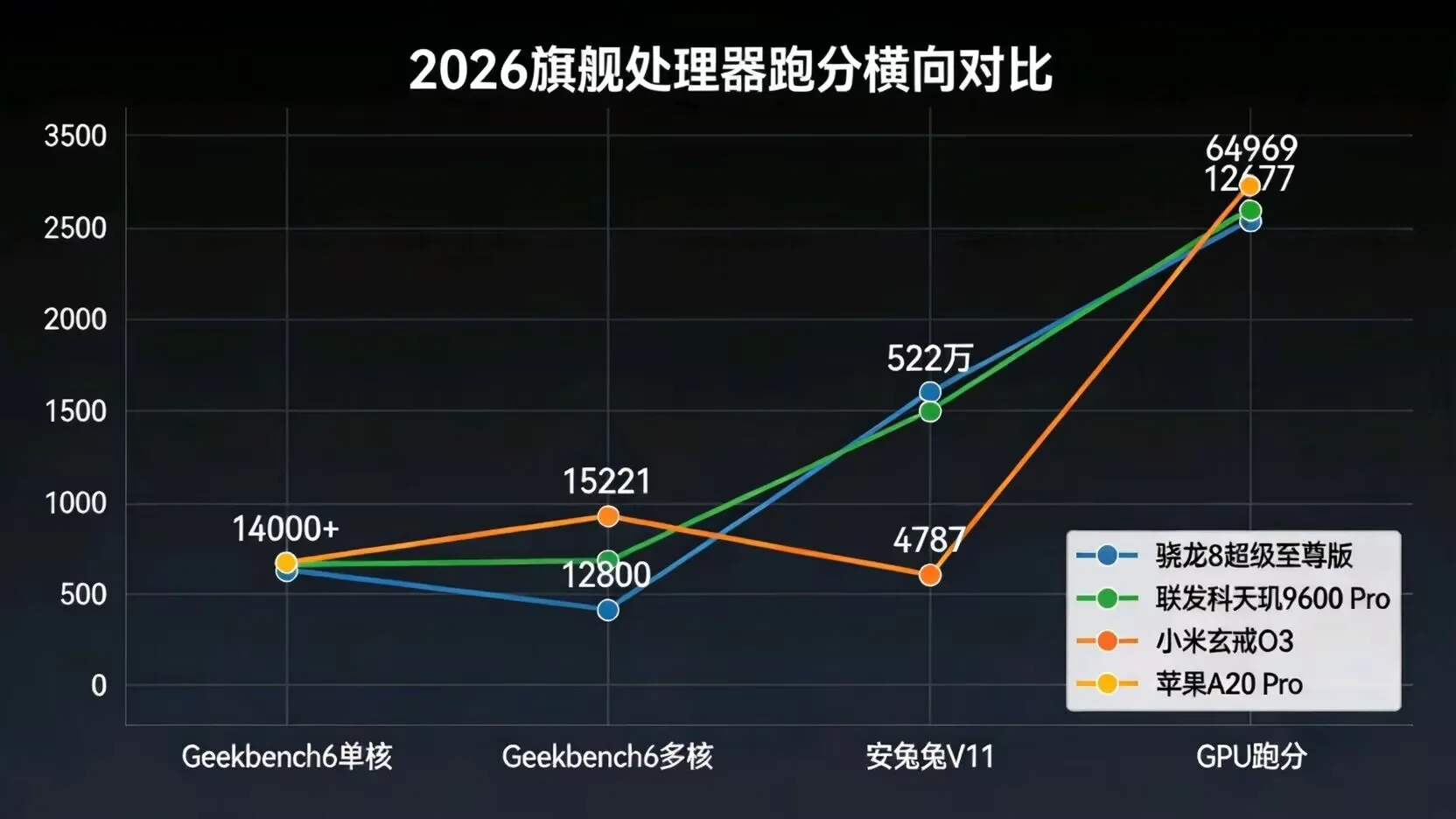
(Image source: Leitech)
If you want it to write an article, Honor claims it has built-in agents for four major influencer styles, allowing you to create content with a single click in their respective writing styles. The only issue is that the produced articles don't quite match the target styles. I believe this final product still requires some refinement to eliminate the AI flavor...
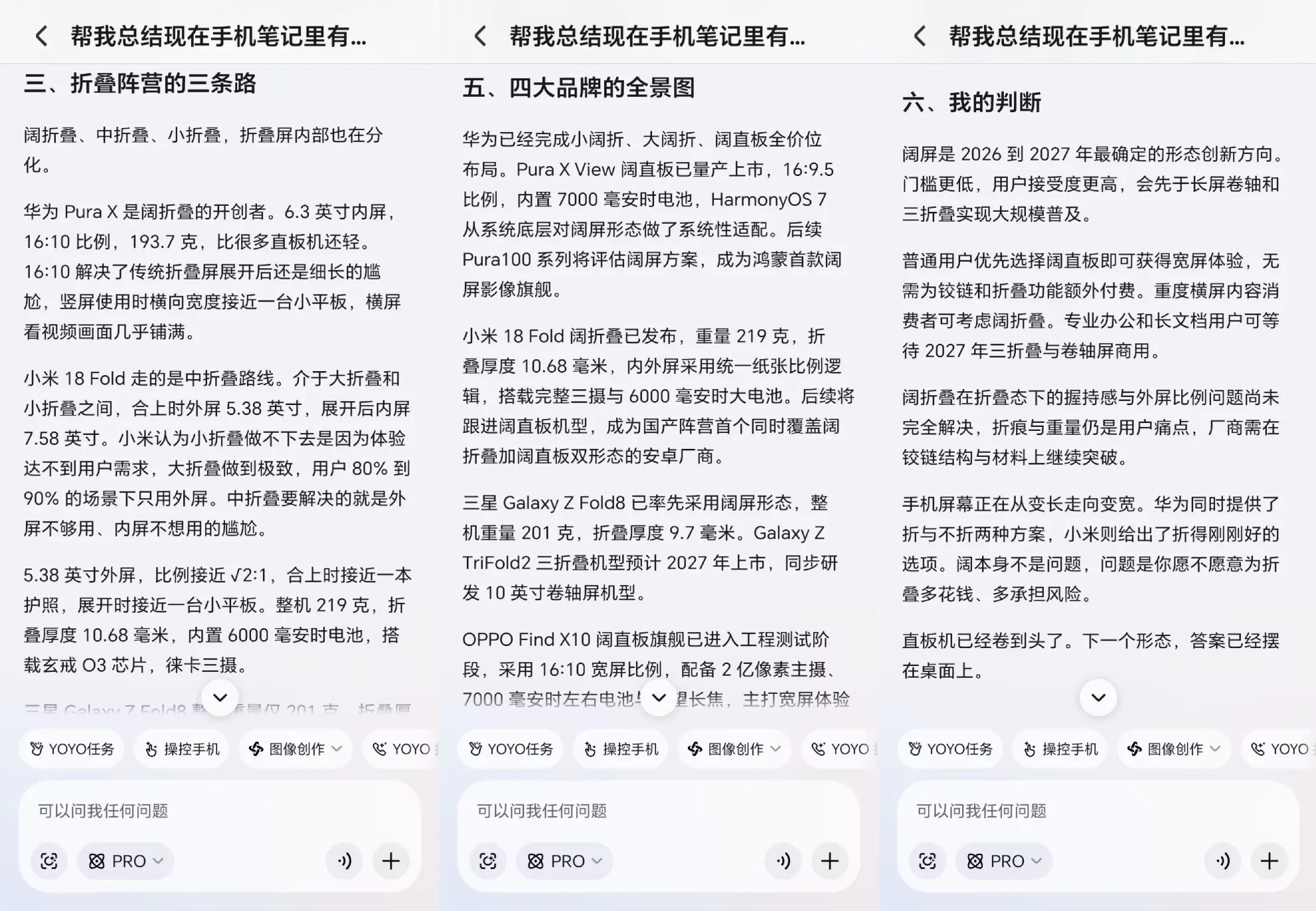
(Image source: Leitech)
Overall, I find the new generation of Honor YOYO quite useful. Although some new features feel a bit forced, the agent's long-chain task scheduling is truly impressive. It integrates with various software better than similarly positioned products and can usually complete tasks smoothly.
Of course, occasionally, inexplicable verification codes appear, which can be frustrating for agents.
Oh, and Honor's previous systems always gave me a steady impression, with many features but a somewhat outdated and business-like appearance.
This time, MagicOS 11 looks much more youthful than before, with extensive use of transparent glass effects. Personally, I quite like it. For example, the notification bar, control center, and some card interfaces reveal the content behind them without making the text unreadable due to transparency. The animations are also quite responsive.
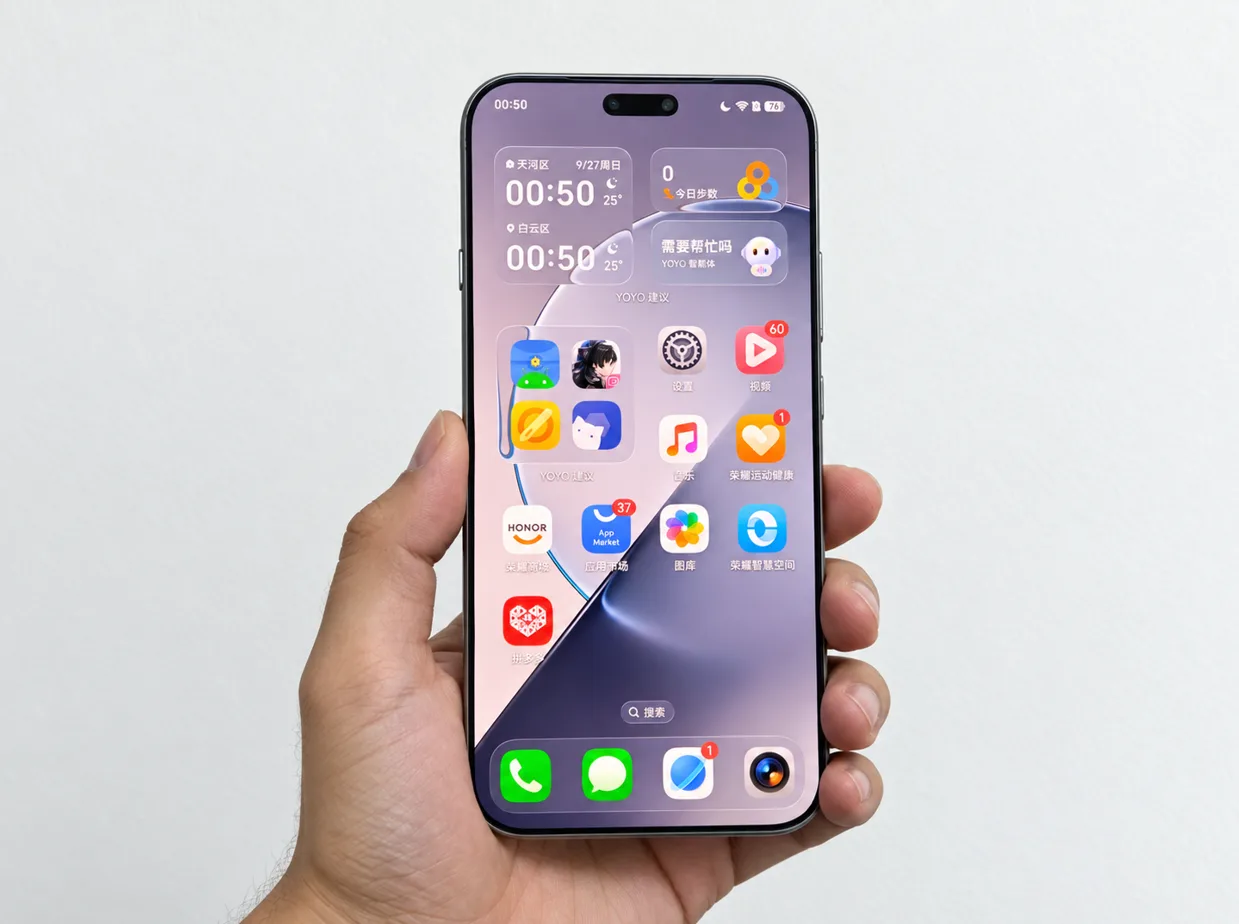
(Image source: Leitech)
A manufacturer that even had issues with transparent glass effects should learn a thing or two from Honor.
Summary: A Better System, Enhanced Imaging
Following Leitech's tradition, here's a brief summary of the pros and cons of the Honor Magic9 Pro Max:
Pros:
1. The triple-camera setup is excellent, still among the best in the current market.
2. Good video capabilities, with a high success rate for the new Vlog logic.
3. Unique AgenticOS experience.
Cons:
1. Although it feels good in hand, it's still quite heavy at over 230g.
2. The ARRI film mode still has a learning curve.
3. The current version's performance is relatively average.
(Image source: Leitech)
In any case, after using it for a few days, I really like the Honor Magic9 Pro Max.
It's not a particularly aggressive device. Once you hold it, you'll find that its imaging, battery life, and system have no obvious shortcomings. It still follows Honor's familiar all-around approach from the past few years, but it finally has some distinctiveness in design and has caught up with the trend of imaging collaborations.
Speaking of Honor's main push for the ARRI collaboration, if you're willing to spend time studying video, then there's definitely a lot of room to explore with this feature in video creation.
The problem is that video always has a barrier to entry. It's not like taking a photo where you can just record something casually. Features like ARRI Looks and LogC3 may forever remain a mystery to many consumers in terms of their usefulness. To truly master them, you still need to invest time in learning.
I'm more optimistic about Honor's changes to the system this time. YOYO's usability has indeed improved significantly. It's no longer just about ordering a coffee at a press conference. Many operations that previously required step-by-step clicks can now be directly handed over to it. Although the final outputs vary in quality, it's still a more hassle-free way to operate.
If you're interested in ARRI imaging or the AgenticOS experience, the Honor Magic9 Pro Max is definitely a worthwhile choice to consider.
Source: Leitech
The images in this article are from the 123RF royalty-free image library. Source: Leitech
-
![]()
What is the True Value of Zhipu's $3 Billion ARR Amid the 'Data Leak' Controversy?
-
![]()
Monthly Report | China's Online Notebook Computer Market in August 2026: Sales Volume Drops 21%, Apple and Xiaomi Buck the Trend to Gain Market Share; Average Price Rises 12%, Share of Models Priced O
-
【Focus】Low-drag disc brake assembly reduces energy loss and holds great potential in new energy vehicles
-
![]()
Lying Flat in a Car: Is There a 4.4-Fold Increase in the Risk of Severe Injury During a Collision?
-
![]()
Honor Magic9 Pro Max Review: Imaging Gets More Exciting, Agent System Impresses
-
What questions does the Third Pioneering Venture of Volkswagen in China Need to Answer with ID. UNIQ 09?
-
Why is Geely introducing Zhichong now, and what stage has Geely's new energy strategy reached?
-
![]()
Fuel Vehicle Sales Slump and New Energy Gaps Present Limited Growth Avenues for Joint Ventures