Huawei’s Tri-Fold Phone Is a Sensation, But Another Buzz Is Even More Electrifying
 09/29 2026
 556
556
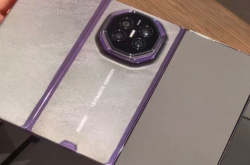
Huawei’s second-generation tri-fold smartphone, the XT2, is flying off the shelves.
Seasoned Huawei smartphone buyers are well-acquainted with the 'Priority Purchase Code' system (akin to Xiaomi’s 'F Code'), which guarantees expedited shipping.
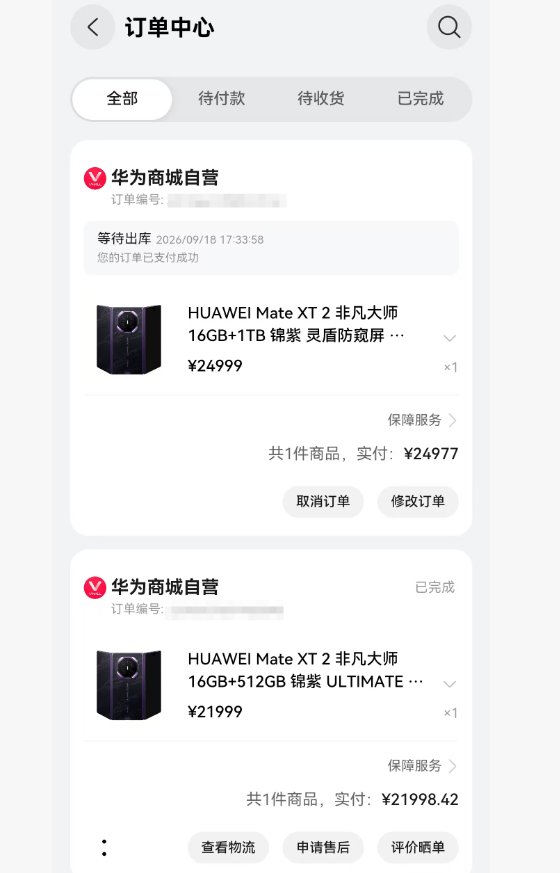
My initial purchase, placed on September 13th, arrived promptly on the 15th.
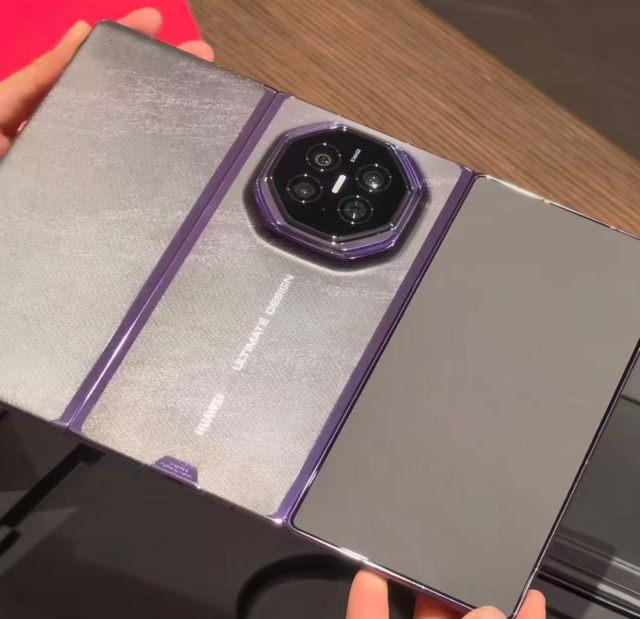
A friend, impressed by my device, utilized a Priority Purchase Code to acquire a second unit.
However, this time, despite ordering on the 18th, it only arrived today, the 28th.
Even with Priority Purchase Codes, inventory is scarce, underscoring the immense demand for the XT2 and the lengthy queues.
The reasons are manifold: Huawei’s new products are perpetually in high demand, and this time, there’s an added surge in demand for Mid-Autumn Festival gifts, further heating up the market.
Once again, congratulations to Huawei on its remarkable sales.
Yet, compared to the tri-fold phone’s popularity, another Huawei initiative warrants even greater attention.
Rumors abound that Huawei is set to launch a sub-brand named 'Starlight,' encompassing a comprehensive array of products from smartphones and earphones to other digital gadgets.
Investigations reveal that Huawei Terminal has long since registered trademarks including 'Starlight Smartphone' and 'Starlight.'
Moreover, there are whispers that Huawei’s trendy Nova brand, currently aimed at young consumers, might also operate as an independent sub-brand.
In my opinion, if these rumors hold true, this move could be even more momentous than the XT2 queues.
1. HarmonyOS Is Missing a Piece of the Puzzle
Recall that Huawei once boasted the 'Honor' sub-brand for the mid-range market.
It also offered Huawei Smart Select contract models for the budget-conscious segment.
At that juncture, Huawei phones catered to all consumer segments—high, mid, and low—consistently dominating the sales charts.
Later, as we all know, 'Honor' was compelled to spin off and gradually distanced itself from Huawei.
Today, Honor is merely another 'other' brand with no ties to Huawei, its sales having long since tumbled out of the top 5.
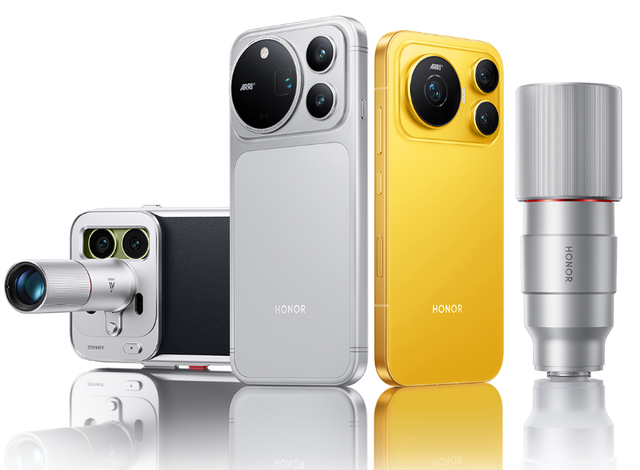
But for Huawei, this leaves a void in the mid-to-low-end market.
Now, Huawei’s foremost strategic priority is to broaden HarmonyOS’s reach and device count.
While Huawei phones are exceptional, their high prices limit accessibility. Although Nova targets younger consumers, its pricing still doesn’t fully encompass the market.
Especially in the 1,500-3,500 yuan online price range—the largest by volume—Huawei has long lacked genuine mass-market models.
The Enjoy series caters to the sub-1,000 yuan segment but with low-end specifications; the Nova series has brand appeal but struggles to compete on cost-effectiveness with Redmi, iQOO, and Realme.
Consumers with a 2,000+ yuan budget desiring Kirin chips and HarmonyOS currently have no ideal Huawei option.
This is precisely Redmi’s stronghold.
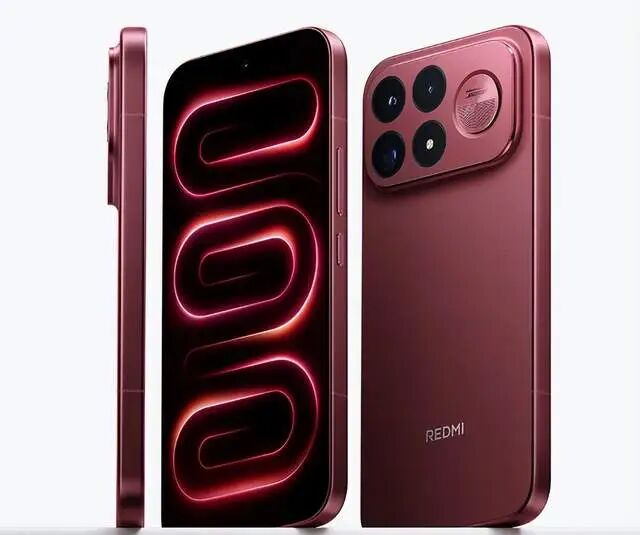
Thus, if the rumors are accurate, a more affordable 'Starlight' series could directly challenge Xiaomi’s 'Redmi' line and potentially disrupt mainstream models from Vivo, Honor, and others.
2. Starlight Is Not 'The Next Honor'
Some liken 'Starlight' to 'Honor' before its independence, but I believe the market environments are vastly different.
After spinning off, Honor initially capitalized on being a 'Huawei alternative,' but its position became precarious after Huawei’s return.
Honor is now the mainstream brand with the largest market share decline, having fallen out of the top 5 into the 'Other' category.
If launched, Starlight would target cost-effective online brands like Redmi, iQOO, and Realme.
Rumors suggest Huawei’s inaugural Starlight model may start at 1,799 yuan, featuring a Kirin chip and native HarmonyOS, sharing Huawei flagship-level imaging algorithms.
A few years ago, such specifications would be unthinkable below 2,000 yuan, but with Kirin chip production ramping up, Huawei can now deploy its self-developed chips to mid-range products.
More crucially, Starlight isn’t merely about poaching Redmi users.
In the 2,000-2,500 yuan segment, Vivo, Honor, and others also vie for market share.
If Starlight enters this range with Kirin chips and HarmonyOS’s brand appeal, it poses a formidable challenge to brands competing in the mid-range market—adding a competitor with both brand prestige and cost-effectiveness.
While 'disrupting all' is an overstatement, the pressure will undoubtedly mount on every cost-effective brand.
3. Harmony Ecosystem Is Starlight’s True Mission
The strategic value of Huawei Starlight transcends smartphone sales.
Huawei Rotating Chairman Xu Zhijun has stated that 100 million users create a viable ecosystem for developers to achieve commercial closed-loops, enabling a self-sustaining ecosystem.
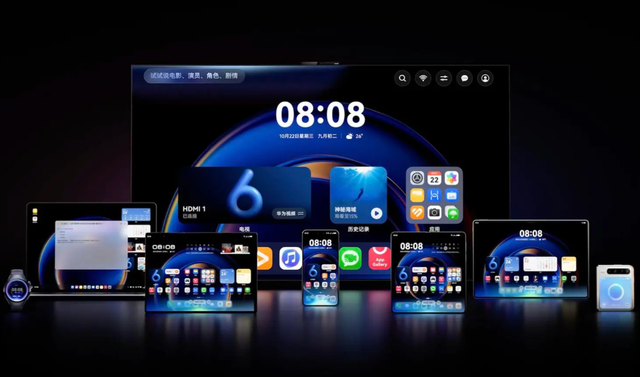
As of August 20, 2026, over 80 million devices have shipped with HarmonyOS 6, with an expected 100 million users by Q4.
This is a pivotal milestone for HarmonyOS, but attaining it necessitates more than just high-end models.
Premium phones inherently have limited user bases; rapid growth in installations hinges on the mid-to-low-end market.
Huawei’s Enjoy 90 series already offers HarmonyOS 6 starting at 1,299 yuan, targeting the 1,000-2,000 yuan market, but one product line alone can’t suffice. If Starlight covers the 1,500-3,000 yuan mass-market segment, adding tens of millions of Harmony devices annually, it could qualitatively transform the ecosystem’s scale.
Ecosystem expansion also yields network effects: more devices attract more developers, leading to richer apps, enhanced user experiences, and in turn, more device sales.
Starlight’s role in this cycle is to furnish a sufficiently large user base to render Harmony truly 'useful' rather than merely 'usable.'
Dong's Observation:
No matter how extensive the XT2 queues are, it merely reflects a high-end market frenzy, proving Huawei can sell premium phones. Starlight’s success, however, will hinge on whether Huawei can sell enough phones overall.
These are fundamentally distinct challenges.
The former pertains to brand prestige and technical prowess; the latter is a grueling battle for ecosystem expansion and market share.
Huawei has already established dominance in the high-end segment, but in the mid-range, Redmi, iQOO, Realme, and Honor are formidable adversaries. If Starlight genuinely offers a 1,799 yuan starting price, Kirin chips, and native HarmonyOS, it won’t merely be 'another option'—it will bring the fight to competitors’ doorsteps.
The challenges are daunting: mid-range margins are thin, cost control is arduous, and distinguishing Starlight from Nova without cannibalizing sales are all pertinent issues.
But for Huawei, the focus must remain on the user growth Harmony’s ecosystem most desperately needs.
Finally, a multiple-choice question. If Starlight genuinely starts at 1,799 yuan with a Kirin chip and native HarmonyOS, would you—
A. Immediately buy Starlight—Huawei branding + cost-effectiveness, no reason not to;
B. Stick with Redmi—better specs, why pay for branding;
C. Wait for Honor, iQOO, or Realme to drop prices—competition benefits consumers;
D. Just want to know when XT2 will be available for immediate pickup...
Share your thoughts in the comments!
-
![]()
Baolong Technology: Air Suspension Supports All Growth, But 2.6 Billion in Short-Term Debt Looms—Can Quality Be Sustained?", "Baolong Technology, Revenue, Profit, Air Suspension, Short-Term Borrowings
-
![]()
Why Does the Beijing-Tianjin-Hebei Region, Boasting a Trillion-Yuan Automotive Industry, Aspire to Become a World-Class Automotive Hub?
-
![]()
China’s Wealthiest Entrepreneur Zhang Yiming Leads in Computing Power, Outpacing Alibaba, Tencent, Baidu, and Huawei
-
![]()
Two Major Auto Brands Officially Merge!
-
![]()
AMD Acquires Li Feifei's Spatial Intelligence Startup World Labs: Accelerating the Deployment of Physical AI
-
![]()
Mistral, the second largest AI company in Europe, completes €3 billion Series D funding round, with valuation rising to €21.3 billion
-
![]()
Huawei’s Tri-Fold Phone Is a Sensation, But Another Buzz Is Even More Electrifying
-
![]()
National Day & Double 11 Refrigeration and Laundry Market Outlook: Navigating Growth Amid Structural Shifts