How Did the iPhone 18 Pro Conceal Face ID Beneath the Screen?
 10/08 2026
 360
360
Whenever you pick up your iPhone, that iconic black pill-shaped notch at the top of the display is a constant presence.
From the introduction of the notch on the iPhone X to the innovative Dynamic Island on the iPhone 14 Pro, Apple has dedicated nearly a decade to the challenge of fully concealing the Face ID sensors, albeit without success until now.
In October 2026, the iPhone 18 Pro series achieved a breakthrough by embedding infrared flood illuminator components beneath the screen for the first time.
The width of the Dynamic Island has been reduced from 20.76mm to approximately 16.57mm, resulting in a 20% decrease in area and an impressive 94.7% screen-to-body ratio.
However, this raises a question: Since Face ID relies on infrared light, which cannot penetrate the screen, how did Apple manage to make this happen?
01
Can Infrared Light Pass Through the Screen?
Creating a Pathway for Infrared Light
The TrueDepth module used for Face ID needs to emit and receive infrared light simultaneously. It projects over 30,000 invisible infrared dots onto the user's face to create a detailed 3D depth map for identification purposes.
Nevertheless, the dense pixel arrangement in traditional OLED screens prevents infrared light from passing through the pixel layer.
Apple's solution involves a three-step process. The first step is to create space for the pixels.
Apple redesigned the pixel layout in the area beneath the display where Face ID is located, intentionally leaving larger gaps between pixels to allow infrared light to pass through.
However, this comes at a cost: the pixel density in this region is reduced by approximately 50%, a figure confirmed by Apple.
The second step is to compensate for the reduced brightness.
With only half the pixels, the display would appear uneven, with a noticeable dark spot in the middle of the screen.
To address this, Apple increased the brightness of the remaining pixels in this area, ensuring that the perceived brightness matches that of the surrounding regions.
The third step involves installing a one-way filter. A specialized infrared filter layer is added inside the screen.
This filter acts as a one-way gate, allowing only infrared light to pass through while blocking visible light from leaking through the pixel gaps, further concealing the sensor components below.
The result of these three engineering layers is that, during normal use, the under-display Face ID module is virtually undetectable, even when viewed up close.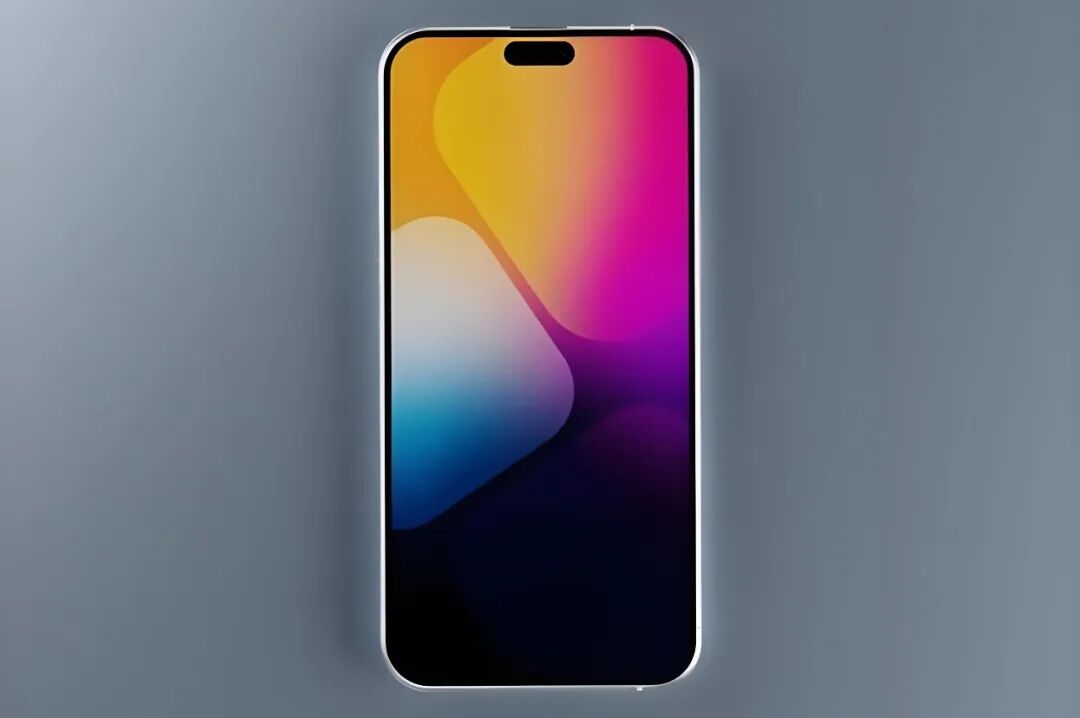
Image Source: Internet
The special pixel arrangement in this area can only be observed under microscope-level magnification.
It's worth noting that Apple only placed the infrared flood illuminator beneath the screen this time, while the front camera, dot projector, and infrared camera remain in the Dynamic Island.
This represents a partial under-display integration, rather than a complete concealment of the entire Face ID module.
02
The Dynamic Island Shrinks, Yet Accommodates More Information
The most immediate impact of this technology is a significant increase in usable space within the Dynamic Island.
The iPhone 18 Pro's Dynamic Island can now display up to three real-time activities simultaneously, compared to just two in the previous generation.
This means that navigation, music playback, food delivery tracking, and timers can all be displayed on the Dynamic Island at once, without the need to crowd out or take turns displaying.
In video playback and fullscreen gaming scenarios, a smaller Dynamic Island means a more immersive viewing experience.
The black area at the top is narrowed by about 20%, so fullscreen content is no longer obstructed.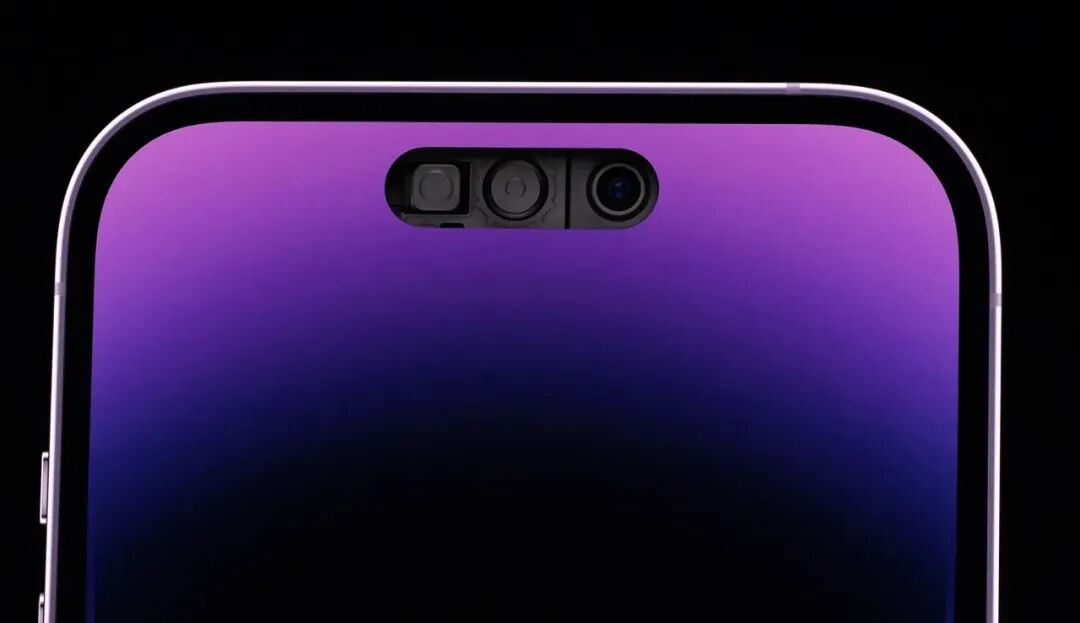
Image Source: Internet
But Apple's ambitions extend beyond this. According to its long-term design roadmap, the ultimate goal is to move the front camera beneath the screen, achieving a truly hole-free front design.
The under-display Face ID on the iPhone 18 Pro marks the first mass-produced step on this technological path.
03
Why Didn't Android Implement This First?
The technical challenges associated with under-display Face ID are far greater than those of under-display fingerprint or under-display camera technologies.
Under-display fingerprint technology only needs to recognize a 2D fingerprint pattern, while under-display camera technology only requires light to pass through the screen to reach the sensor.
In contrast, Face ID needs to project and receive tens of thousands of infrared dots to construct a 3D depth map. The infrared light must pass through the screen and return, requiring signal quality and precision several orders of magnitude higher.
Cost is another significant barrier. The Face ID module itself includes multiple precision components such as VCSEL lasers, infrared cameras, and flood illuminators, with a single module costing about 2-3 times that of an under-display fingerprint module.
Additionally, custom high-transmittance OLED screens are over 30% more expensive than regular screens, driving up the overall BOM cost of the solution.
Another often-overlooked factor is that most Android flagships have shifted to ultrasonic under-display fingerprint technology, reducing the priority for 3D facial recognition.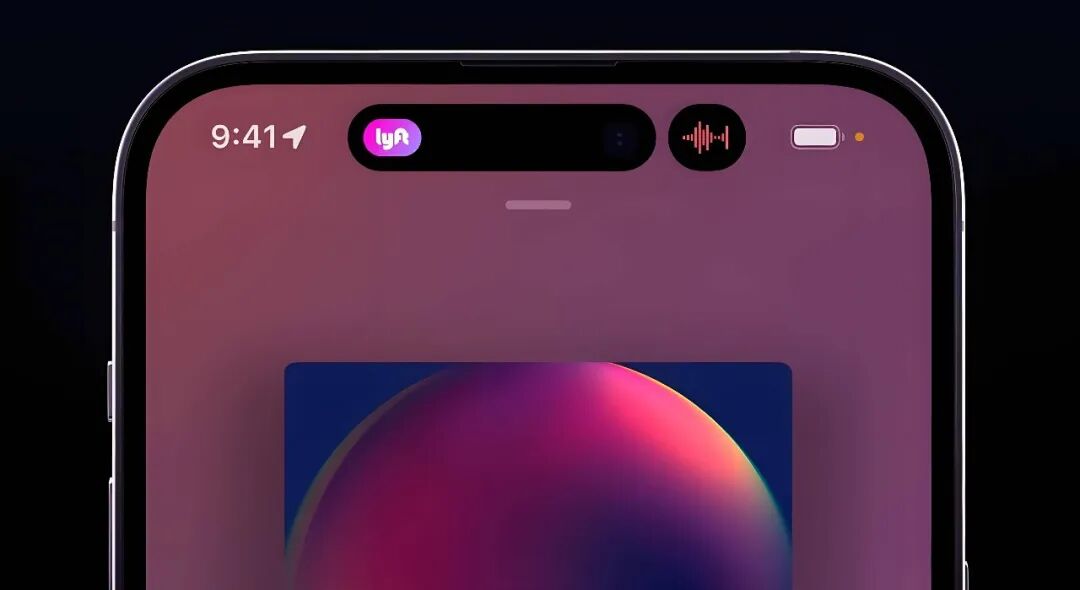
Image Source: Internet
The Pixel 4 previously attempted to incorporate 3D facial recognition but abandoned it after just one generation due to design compromises resulting from the large forehead and excessively high component procurement costs. Since Pixel 4 sales were far lower than those of iPhones, it couldn't amortize these costs.
Apple, on the other hand, ships around 200 million units annually, so any yield issues with new processes are magnified.
Currently, the mass-production light transmittance of consumer-grade AMOLED under-display infrared cameras in the industry tops out at 65-70%, while Apple has set a qualified transmittance threshold of ≥80% for the Face ID infrared imaging module. This gap represents a physical bottleneck that cannot be bypassed for a full under-display solution.
Meanwhile, Apple's yield requirements for screen panels are equally stringent, with an LTPO+ panel yield threshold set at 85%+, causing suppliers with yields of only 65-70% to lose orders.
This means that with the iPhone 18 Pro, Apple only partially moved Face ID components under the screen, retaining some cutouts and waiting for transmittance and yields to improve before proceeding further.
04
Final Thoughts
From the notch on the iPhone X to the Dynamic Island on the iPhone 14 Pro, and now the shrinking Dynamic Island on the iPhone 18 Pro, Apple has spent nine years transforming a screen that once had a noticeable cutout into one that appears almost seamless.
The mass production of under-display Face ID means that the vision of a single, unbroken glass design has transitioned from concept to engineering reality.
Another notable change is the evolving functional role of the Dynamic Island.
As it shrinks in size but can now carry three real-time activities simultaneously, its role has shifted from a mere eyesore covering a hole to an information hub at the top of the screen.
Navigation prompts, food delivery progress, music controls, timers—information that can be seen without opening an app—is redefining the purpose of that small area at the top of your phone screen. #Apple18 #DynamicIsland
-
![]()
UK Mulls Imposing EU-Style Tariffs on Chinese Electric Vehicles
-
AI Embarks on a New Phase Amidst Unabated Capital Fervor
-
![]()
Is Fan the Only Option for Laptop Cooling Systems?
-
![]()
What is the role of language in autonomous driving VLA?
-
![]()
Why Does Apple’s Foldable Screen Feel So Uninspired, Even as a Late Entrant?
-
![]()
How Did the iPhone 18 Pro Conceal Face ID Beneath the Screen?
-
![]()
Qualcomm and Huawei Are Becoming Inseparable Partners
-
![]()
Why Are Automakers Embarking on Realignment: Insights from Geely-NIO to FAW-GAC Collaborations?