Why Are Automakers Embarking on Realignment: Insights from Geely-NIO to FAW-GAC Collaborations?
 10/08 2026
 464
464
The automotive landscape has been buzzing with activity lately!
On September 28, Geely Holding Group and NIO unveiled a comprehensive strategic partnership in the battery swapping and charging sectors. This collaboration goes beyond mere technology and standard sharing; it also entails a deeper integration of their respective energy businesses through equity participation.
On the same day, GAC Group revealed a significant asset restructuring plan, proposing to acquire a 50% stake in FAW Toyota from FAW Co., Ltd. via share issuance.
One initiative focuses on integrating previously isolated capabilities in the energy replenishment domain, while the other involves reshuffling joint venture assets through capital maneuvers.
These endeavors may appear distinct, but collectively, they underscore a prevailing trend in the automotive industry.
As automotive competition increasingly hinges on systemic capabilities, automakers must reconsider which tasks should be handled internally and which can be effectively executed through collaboration.
01 Why Are Certain Capabilities Becoming More Conducive to Collaboration?
Traditionally, competition in the automotive sector centered on complete vehicle offerings.
A vehicle's product strength, pricing, branding, and distribution channels would ultimately determine its market success. However, the advent of new energy and intelligent vehicles has expanded this competition beyond the vehicles themselves.
Power batteries, intelligent driving systems, software platforms, energy replenishment networks, supply chains, and service systems all demand continuous investment. Some capabilities not only require lengthy construction periods but also necessitate a certain scale to optimize investment utilization.
Energy replenishment networks exemplify this trend. Geely Holding Group's partnership with NIO extends beyond simply procuring battery swapping services.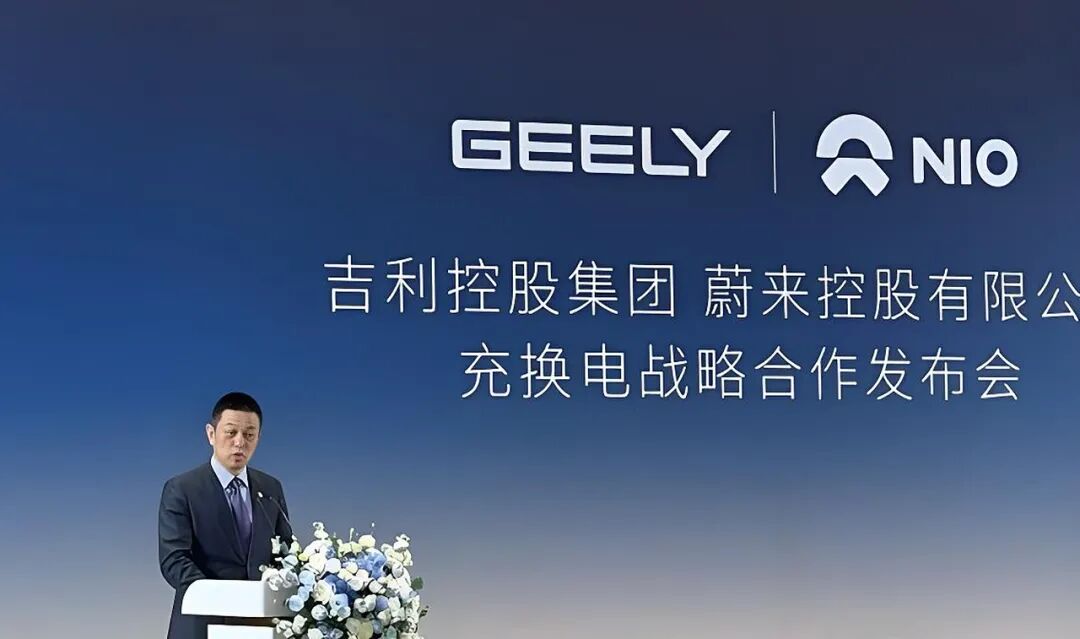
Image source: Internet
According to the announced agreement, Geely Holding Group will contribute a 100% stake in Yi Yi Interconnection and RMB 640 million in cash to acquire a 30% stake in NIO Power. NIO China will subscribe for new shares in Haohan Energy with cash, holding a 10% stake, and utilize the capital increase to acquire some of NIO's charging assets.
Both parties will also achieve full interoperability of their charging networks and jointly establish unified C-end battery swapping technologies and standards. Geely will subsequently develop consumer-oriented battery swapping vehicle models to access NIO's battery swapping network.
This signifies a deeper integration of assets, technologies, and operational capabilities in the energy replenishment sector between the two sides, without transferring ownership of the core battery swapping networks.
The rationale behind this cooperation is that battery swapping networks are capital-intensive and infrastructure-heavy. NIO has invested over RMB 20 billion in the charging and battery swapping sector and has recently transitioned towards a model where assets are owned by partners while NIO manages operations.
Introducing industrial capital like Geely represents both a resource synergy and a means to share the capital burden for expansion.
If an infrastructure necessitates long-term investment and different companies' networks can mutually benefit, there is no need for redundant resource allocation.
This does not imply that all capabilities should be collaboratively managed, but rather that certain infrastructure-like capabilities requiring long-term investment and amenable to sharing may be increasingly suitable for enhancing utilization efficiency through cooperation.
02 Why Is Cooperation Evolving from Procurement to Joint Construction?
Another notable aspect of the Geely-NIO partnership is that it transcends the traditional supplier-automaker model.
Historically, when automakers collaborated with external entities, it often involved the automaker outlining needs and the supplier providing products, with cooperation revolving around price, quality, and delivery.
However, this collaboration entails a deeper integration of relevant energy businesses through equity investments, while simultaneously promoting operational synergies.
Geely Holding Group gains equity in NIO Power, and NIO secures a stake in Haohan Energy, with both sides advancing technology, standard, network, and business synergies in tandem.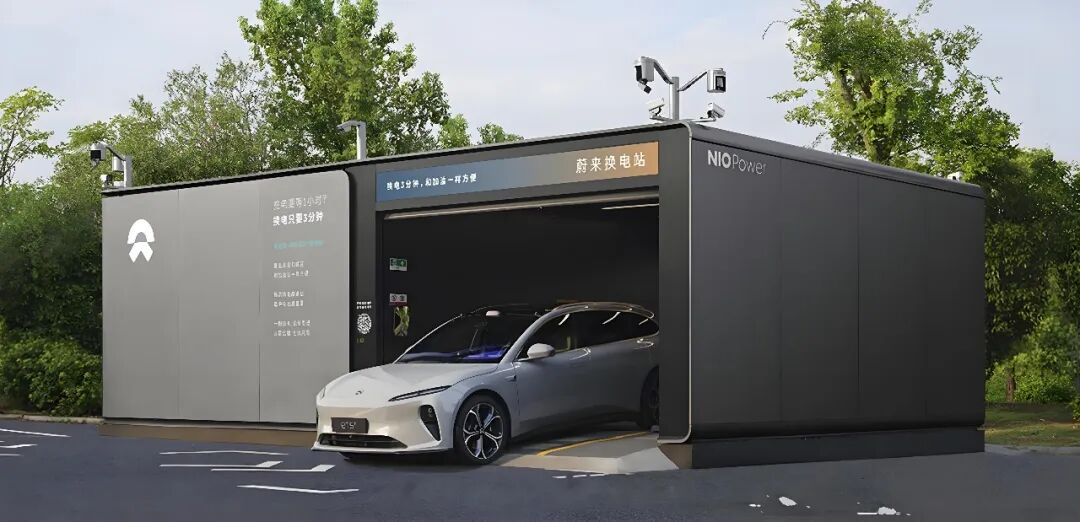
Image source: Internet
In essence, the two sides are not merely purchasing services but are striving to further interconnect their previously relatively independent energy replenishment networks and jointly expand service capabilities.
This also reflects an adjustment in the automotive industry's division of labor.
When the construction cost of a particular capability escalates, and different companies can share this capability, cooperation may extend from simple product procurement to joint investment, co-construction, and resource sharing.
This explains why current cooperation among automakers transcends joint development of a single vehicle model. Some collaborations occur in the battery swapping and charging sectors, others in technology R&D and software, and some directly involve equity and asset restructuring.
The boundaries between companies have not vanished, but more resources that can be jointly utilized are emerging beyond these boundaries.
03 Why Are Some Companies Initiating Asset Reconfigurations?
If Geely's partnership with NIO focuses on capability collaboration, then GAC Group's transaction with FAW Co., Ltd. centers on reconfiguring asset and capital relationships.
On September 28, GAC Group disclosed a major asset restructuring plan, proposing to acquire a 50% stake in FAW Toyota through share issuance and simultaneously raise supporting funds. Currently, relevant auditing and evaluation work is ongoing, and the transaction still requires subsequent approval procedures, making it an ongoing restructuring plan.
This is not a direct merger between FAW and GAC Groups, nor can it be simply construed as a traditional automaker merger.
More accurately, it involves GAC Group and FAW Co., Ltd. rearranging equity relationships around a joint venture automotive asset.
FAW Toyota was originally established as a joint venture between FAW Co., Ltd. and Toyota Motor Corporation, with the current shareholding structure being 50% for FAW Co., Ltd., 45.77% for Toyota Motor Corporation, and 4.23% for Toyota China.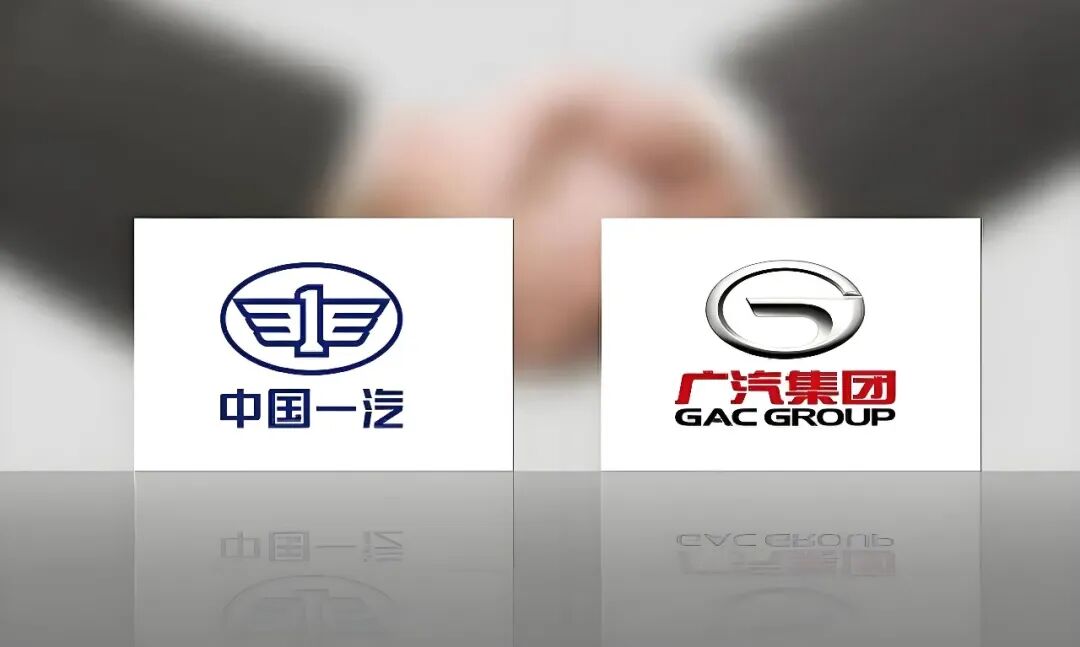
Image source: Internet
According to the currently disclosed plan, after the transaction, GAC Group will hold a 50% stake in FAW Toyota, while the Toyota Motor Corporation system will retain the remaining 50%. FAW Co., Ltd. will no longer hold any stake in FAW Toyota but will become the second-largest shareholder of GAC Group by obtaining shares issued by GAC Group.
However, this transaction does not alter the actual controller. GAC's controlling shareholder remains Guangzhou Automobile Industry Group, and the actual controller remains the Guangzhou State-owned Assets Supervision and Administration Commission.
Although fundamentally different from Geely's and NIO's cooperation, this transaction raises a similar question: when the industrial structure formed in the past evolves with the new market environment, do companies need to reconfigure their assets and resources?
This reconfiguration does not necessarily entail a merger. It can manifest as an equity adjustment, an asset restructuring, a business cooperation, or simply connecting previously independent infrastructures.
From this perspective, automaker integration does not adhere to a singular form.
04 What Are Automakers Truly Seeking to Realign?
If we merely perceive recent market changes as automakers forming alliances, it would be somewhat simplistic. What automakers are realigning may not be the complete vehicle companies themselves but rather the underlying capabilities and resources.
Geely and NIO are reconnecting their energy replenishment capabilities; GAC's transaction with FAW Co., Ltd. involves joint venture assets and capital relationships; looking further back, automakers' cooperation with technology companies entails recombining intelligent driving, cabin, and software capabilities.
Although these initiatives take diverse forms, they share a common thread.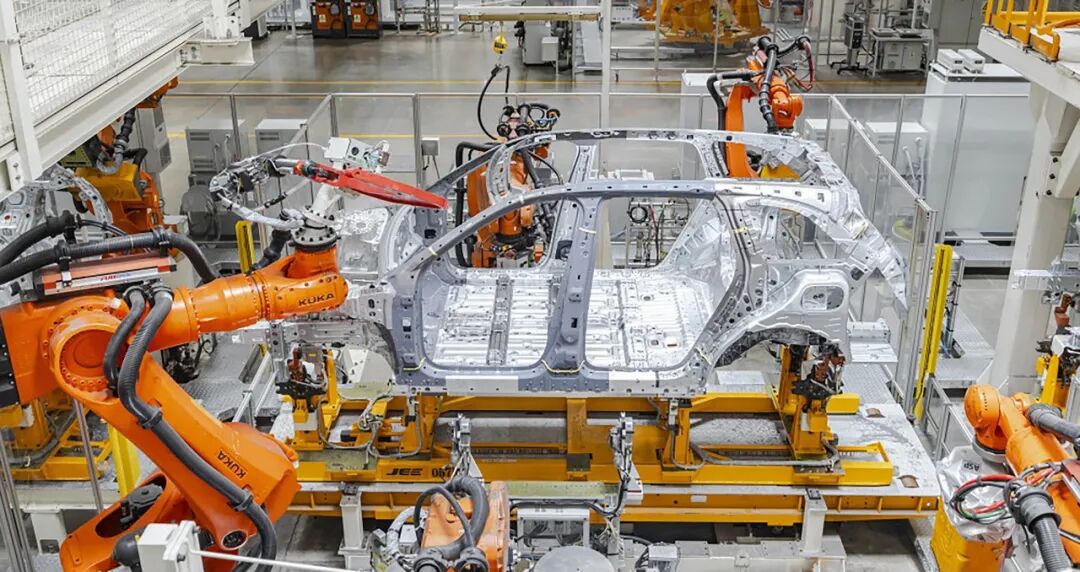
Image source: Internet
Companies have not relinquished their brands and complete vehicle businesses but are reassessing which capabilities need to be retained internally, which can be sourced through cooperation, and which assets require reconfiguration.
This is actually a pragmatic issue that must be addressed as new energy and intelligent vehicles progress to this stage.
If all capabilities are developed in-house, R&D and infrastructure investments will continue to soar; if overly reliant on external partners, companies may compromise their control over core technologies, products, and users.
Therefore, at the current stage of intelligent driving development, automakers must contemplate not whether to cooperate but on which capabilities to collaborate, in what manner, and where to establish the boundaries of cooperation.
05 Will Automotive Competition Devolve into Corporate Alliances?
Geely's cooperation with NIO focuses on resource synergies in the battery swapping and charging sectors; GAC's transaction with FAW Co., Ltd. also entails clear asset and equity arrangements. Neither directly indicates that the automotive industry has entered a phase of comprehensive integration.
However, these cases reveal that the relationships between automotive companies are characterized by both competition and cooperation. Companies can compete in the complete vehicle market while collaborating on energy replenishment networks; industrial assets previously operated independently may also be reconfigured through the capital market.
In the future, there may be more cooperation centered around technology, supply chains, energy, and service capabilities.
Undeniably, competition in the automotive market will still revolve around products, pricing, and sales volumes. However, for some automakers, efficiency competition is also extending to how resources are shared, costs are contained, infrastructures are interconnected, and industrial assets are reconfigured.
From Geely's and NIO's cooperation in battery swapping and charging to GAC's asset restructuring with FAW Co., Ltd. around FAW Toyota, automotive companies are reevaluating what should be handled internally and what can be effectively executed through collaboration.
This may be the more noteworthy transformation underlying these collaborations and restructurings.
-
![]()
UK Mulls Imposing EU-Style Tariffs on Chinese Electric Vehicles
-
AI Embarks on a New Phase Amidst Unabated Capital Fervor
-
![]()
Is Fan the Only Option for Laptop Cooling Systems?
-
![]()
What is the role of language in autonomous driving VLA?
-
![]()
Why Does Apple’s Foldable Screen Feel So Uninspired, Even as a Late Entrant?
-
![]()
How Did the iPhone 18 Pro Conceal Face ID Beneath the Screen?
-
![]()
Qualcomm and Huawei Are Becoming Inseparable Partners
-
![]()
Why Are Automakers Embarking on Realignment: Insights from Geely-NIO to FAW-GAC Collaborations?