Ren Zhengfei Once Playfully 'Teased' Yu Chengdong: Initially, All Family Members Used iPhones! Now, Yu Chengdong Laughs: They’ve All Made the Switch to Huawei!
 10/15 2026
 528
528
An intriguing anecdote is making rounds within the Huawei community. Back in the day, Ren Zhengfei frequently 'challenged' Yu Chengdong, often silencing him with a single, pointed remark—a comment that has only grown more poignant over time.
In an interview, Yu recounted how Ren once playfully ribbed him about his family's smartphone preferences: 'You're always boasting about how fantastic our phones are, but in my eyes, there's still a gap. I use Huawei, but none of my family members do—they're all on iPhones.' Years later, Yu shared the punchline with a chuckle: 'Now, Mr. Ren's wife and kids have all switched to Huawei!'
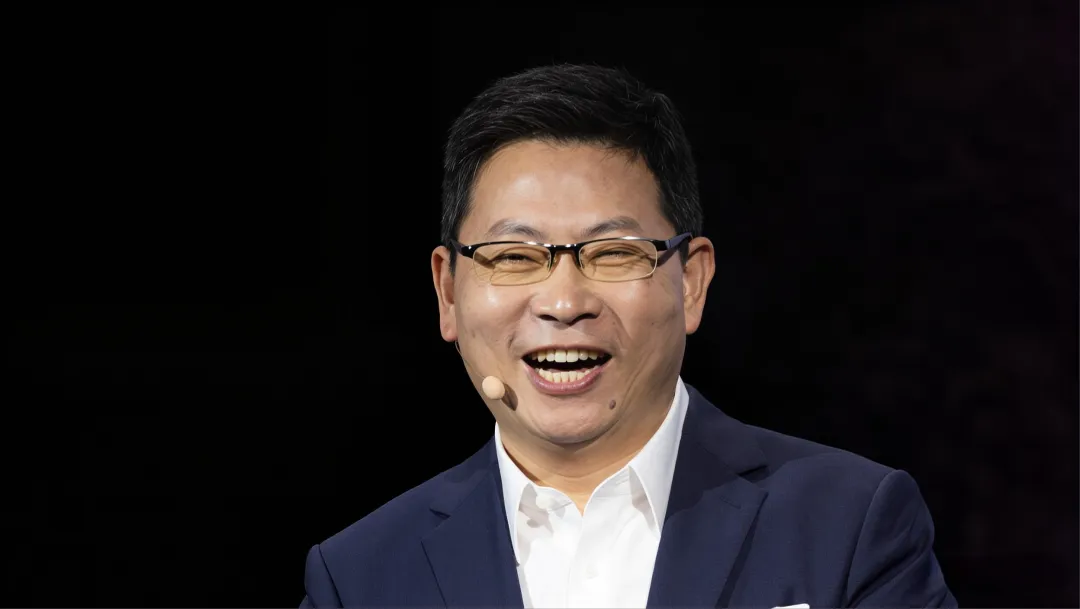
Yu Chengdong. Image source: Weibo
Ren Zhengfei's Clear Vision: Smartphones Are Just Products—Don't Link Them to Patriotism
Many only recall the sensational headline—'Ren Zhengfei’s family used to favor Apple'—but overlook his insightful remarks from that time.
He stated, 'My daughter studies in the U.S. If she didn't use Apple, it would be inconvenient for her studies. We shouldn't be exclusionary. We should analyze why Apple is so strong and identify our shortcomings. Having such a competitor as a mentor is a blessing. From that perspective, it's not exaggerating to say I'm a fan of Apple.' 'My family has always used Apple. The Apple ecosystem is excellent. When they travel abroad, I even provide them with Apple laptops.'
He also dispelled some common myths: 'Choosing Huawei doesn't equate to patriotism, and not choosing it doesn't mean you're unpatriotic. A smartphone is merely a product—use what you prefer, switch if you don't. Don't mix politics into it.' 'If not using Huawei makes you unpatriotic, then my kids must all be unpatriotic, right? Don't stir up emotions or resort to populism.' 'If you have grievances, criticize U.S. politicians—this has nothing to do with American companies.'
In an online environment that often conflated brand loyalty with nationalist sentiment, these remarks were refreshingly candid. Huawei is Huawei, Apple is Apple—using Apple doesn't imply disloyalty, and learning from a competitor doesn't signify surrender. Treating products as products, competitors as mentors, and separating emotions from technology—this was the core philosophy Ren Zhengfei repeatedly emphasized. Openly acknowledging a competitor's strengths and his own company's weaknesses, even using his family's real choices to temper a high-flying team, exemplifies Huawei's culture of self-criticism in action.
A Classic 'Good Cop, Bad Cop' Dynamic
Ren Zhengfei's use of his family's smartphone choices to 'challenge' Yu Chengdong wasn't merely a joke—it was a strategic management tactic. During Huawei's rapid ascent, reaching No. 2 globally by 2019 and receiving widespread acclaim, Ren feared complacency. He habitually used sharp reminders to keep everyone grounded.
On one hand, Yu Chengdong fearlessly promoted Huawei’s consumer business, elevating its profile. On the other, Ren Zhengfei remained calm, tempering expectations. One stern, one lenient; one aggressive, one defensive—this dynamic helped Huawei navigate multiple cycles. Initially, Ren’s family opting for iPhones reflected genuine shortcomings in Huawei’s phones: before the Mate 9, systems lagged over time, app compatibility was mediocre, and gaming performance was lacking. Subsequent improvements with the Kirin 980, Leica imaging, and Ark Compiler narrowed these gaps. By the P40 and Mate 40 with the Kirin 9000, product quality had transformed, and Ren’s family switched from iPhones to Huawei. This wasn't marketing hype—it was genuine endorsement from a discerning user.
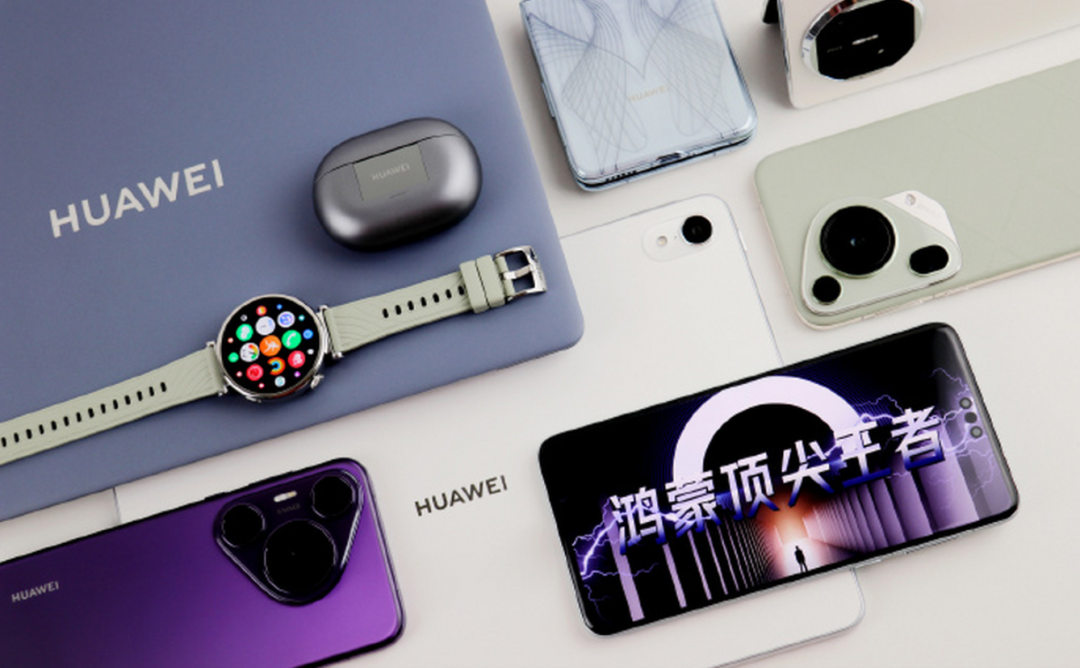 Image source: Huawei’s official website
Just as momentum peaked, external pressures mounted: chip shortages, GMS restrictions, and a collapse in Huawei’s smartphone business, with market share nearly halving by 2021. During the toughest years, Huawei didn't retreat. Instead, it viewed the crisis as an opportunity, doubling down on chip and HarmonyOS R&D. Annual research investment only increased, and Huawei persevered despite sanctions, regaining control over its destiny.
An Industry-Wide Slump, Yet Huawei Defies the Odds
Today’s smartphone market is a zero-sum game. Counterpoint data reveals global smartphone sales plummeted 20% YoY in Q3 2026, hitting a 14-year low for the period. IDC stats show a 15.4% YoY decline in China’s Q3 shipments, with most brands experiencing sharp drops.
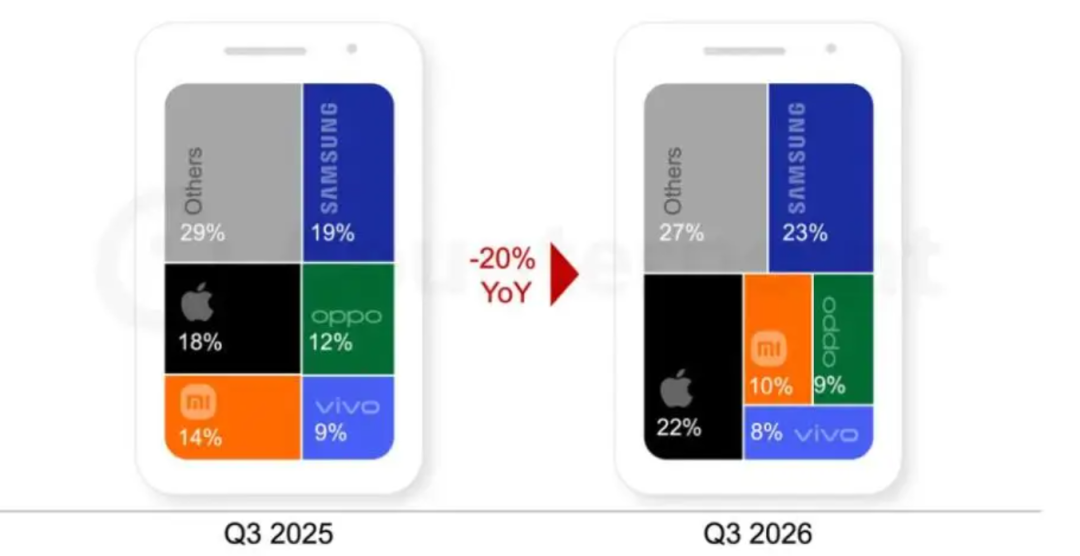 Image source: Weibo
Yet Huawei bucks the trend. IDC’s latest Q3 domestic rankings place Huawei at No. 1 with a 21.1% share, up 17.3% YoY—the only brand among the top five to grow. Apple slips to No. 2, with sales down 4.3%; OPPO, vivo, and Xiaomi round out the top five, all posting double-digit declines; Honor follows; Samsung’s share dwindles to 0.4%, effectively marginalized.
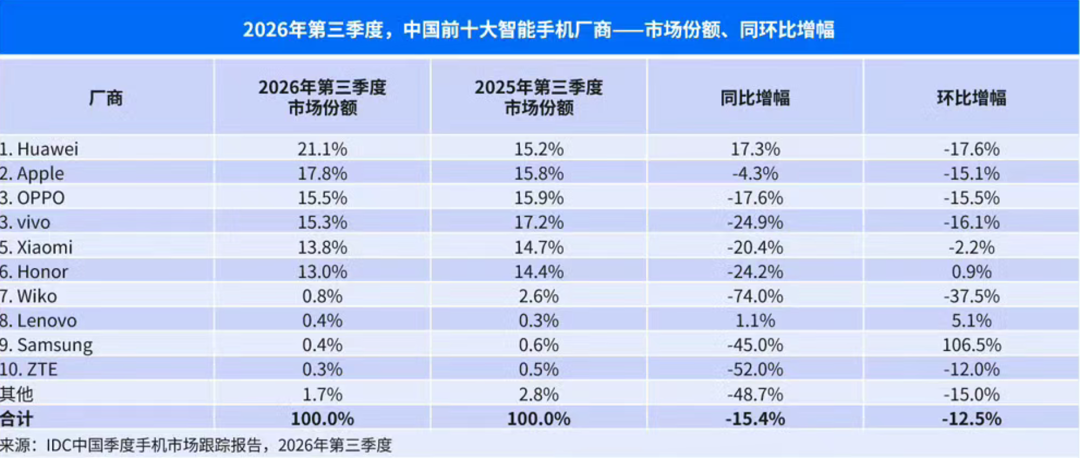
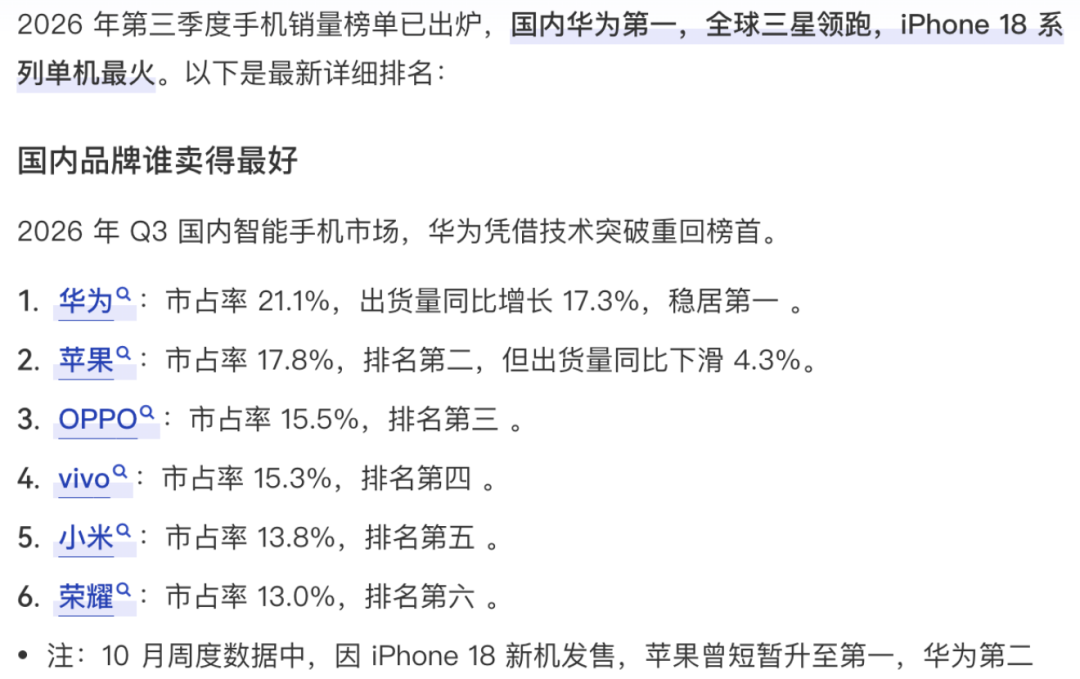
Some dismiss Huawei’s rise as a result of other brands’ steep declines, but IDC disagrees. Recent component price hikes (e.g., storage) have squeezed manufacturers, forcing some to raise prices, cut specs, or discontinue budget lines. Most consumers see no reason to upgrade if their phones still function. In contrast, Huawei offers a diverse product lineup with modest price increases, catering to all budgets. Its foundation lies in self-developed tech: Kirin chips have broken through sanctions, with the 9050Pro already on sale and the next-gen Kirin 2027 on the horizon; HarmonyOS continues to evolve, with plans to expand smartphone exports; rumors suggest a sub-brand could lower prices. Objectively, HarmonyOS still has room to grow—the Zunjie incident revealed some app compatibility issues that need refinement.
The Wide Straight-Screen Sensation: 30% of Buyers Are Former iPhone Users, Fulfilling Yu Chengdong’s Vision
While Huawei’s 21.1% market share reflects steady success, weekly data has electrified the tech world. In Week 37, as the overall market fell nearly 10%, Huawei’s weekly share surged 7 points to 27%.
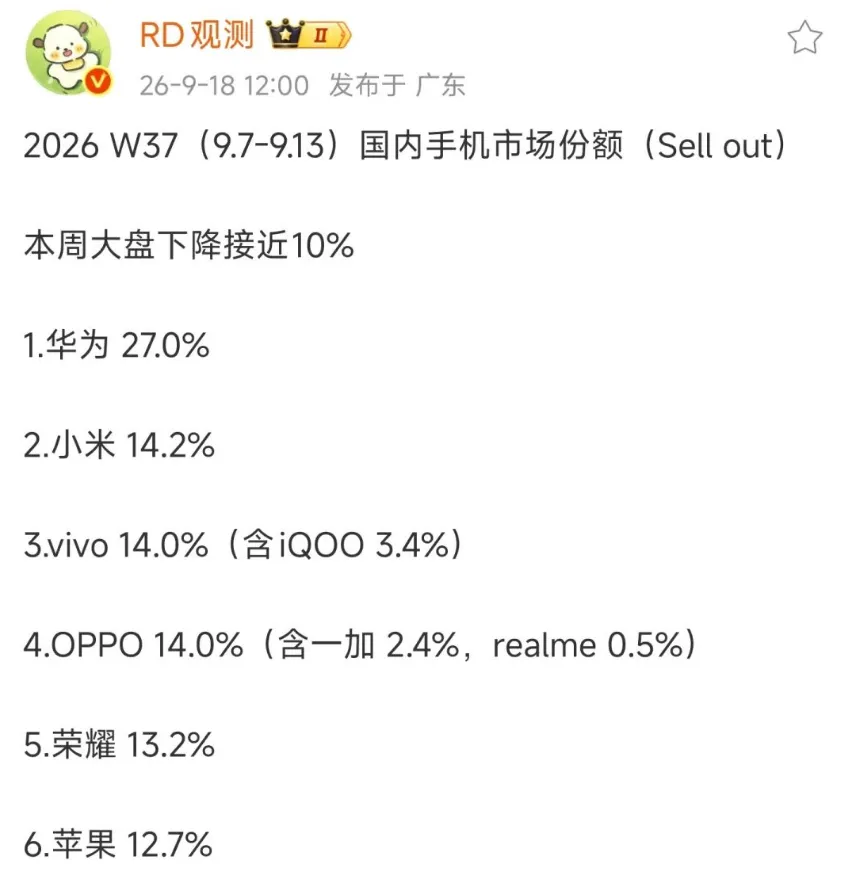
Image source: Weibo
Many assumed Huawei’s surge came from the ¥10,000+ Mate XT2 triple-fold phone, but its late launch and limited stock had minimal impact. The real game-changer was the world’s first wide straight-screen phone, the Pura X View: 180,000 units sold on debut day, 282,000 in five days, and over 310,000 in the first week, surpassing the iPhone 17 Pro Max to claim the single-model sales crown. It sold out online and faced shortages offline. With a 6.39-inch √2:1 wide screen (resembling paper), a 6.68mm body housing a 7,000mAh battery, Kirin 9030S + HarmonyOS 7, Kunlun Glass, Star Flash, and Beidou messaging, it’s fully loaded.
The most intriguing detail? Around 30% of Pura X View buyers were previously iPhone users. Apple loyalists are notoriously hard to sway, making this shift remarkable. It validates Yu Chengdong’s prediction: 'Even if you’re a diehard iPhone user, buy a Pura X View as a secondary phone. Before long, it’ll become your main device.' Many iPhone users tried it for the large screen, long battery life, and smooth HarmonyOS experience, gradually switching from dual-device use to making it their primary phone.
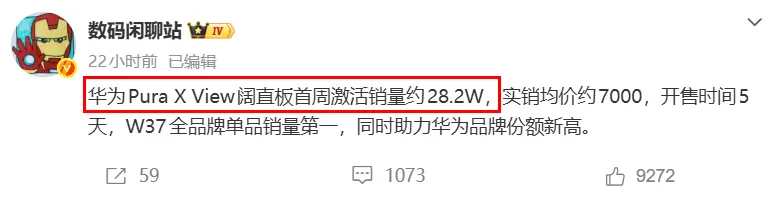 Image source: Weibo
Objectively, Apple’s drop to No. 6 that week was largely due to a new-model lull—the iPhone 18 Pro didn’t launch until month-end, leaving older models to carry sales (which will likely rebound post-launch). Xiaomi stabilized briefly with the Xiaomi 18 Fold’s debut, but foldables typically see only initial bursts, and the Redmi K100 Pro’s sales slipped after subsidy cuts, lacking sustained hits.
The Pura X View officially launched on September 9 and sold out immediately. It sold 180,000 units on debut day, 282,000 in five days, and over 310,000 in the first week, surpassing the iPhone 17 Pro Max to become the best-selling single model.
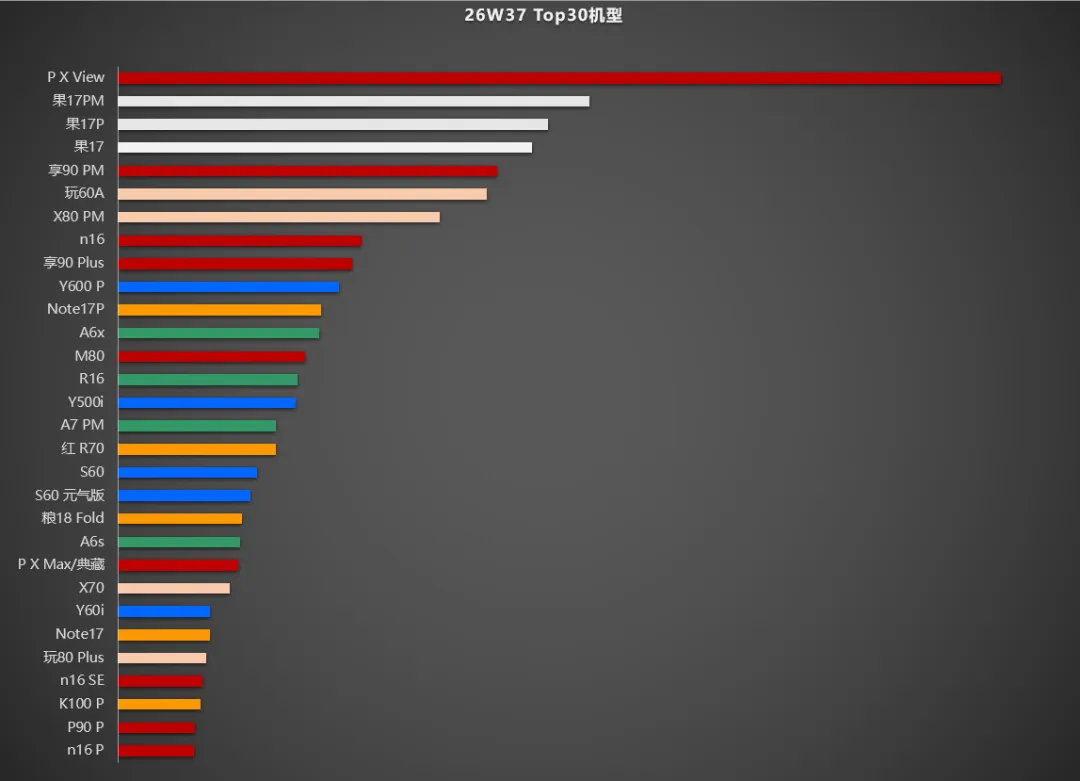 Image source: Weibo
The premium market shifted dramatically in H1 2026: Huawei broke Apple’s monopoly with over 60% share above ¥5,000. Xiaomi pushed aggressive hardware with the 17 Pro (3nm Snapdragon, massive battery, Leica imaging), but its aggressive system tuning led to overheating and a lack of differentiated experiences. A single flagship couldn’t prop up its position, leaving Xiaomi at the bottom among mainstream brands. The Mate 80 Pro and Xiaomi 17 Pro represent two paths: Huawei’s balanced, all-around strength with software-hardware synergy for long-term smoothness; Xiaomi’s parameter-heavy approach lacking an ecosystem moat. Instead of chasing benchmarks, Huawei innovated with form factors—triple-fold, wide-fold, and now wide straight-screen—to capture premium users.
Final Thoughts
From Ren Zhengfei ‘challenging’ Yu Chengdong over his family’s iPhones to everyone switching to Huawei, this small story encapsulates Huawei’s decade-long breakthrough. It proves a simple truth: the best marketing isn't slogans—it’s products that speak for themselves. This success wasn’t overnight; it came from a culture of self-criticism that relentlessly refined products. It wasn’t built on sentimentality but on sustained R&D investment under sanctions, tackling the toughest challenges like chips and operating systems.
Amid an industry slump, most brands retreated to survive. Huawei kept innovating. Its market share reflects real consumer votes. But the smartphone race is a marathon—short-term data is just a milestone. With Apple, OPPO, vivo, and Honor flagships still to come, competition will intensify. Huawei offers a blueprint for domestic tech firms: face competitors honestly, acknowledge gaps, stay humble, and win users with products—not emotions.
Discussion Topic: Have you seen iPhone users switch to Huawei? Could new form factors like wide straight-screens become mainstream? Share your thoughts in the comments.
Disclaimer: This article is a financial commentary on major companies and does not constitute investment advice. All corporate data and regulatory events mentioned are from public sources and are for reference only; refer to official announcements for accuracy. Images sourced from the internet; contact us for copyright removal if needed.
-
![]()
Ren Zhengfei Once Playfully 'Teased' Yu Chengdong: Initially, All Family Members Used iPhones! Now, Yu Chengdong Laughs: They’ve All Made the Switch to Huawei!
-
![]()
Yu Chengdong Faces Scrutiny: Zhijie RX Logs Just 379 Units in Its Debut Month—Can It Still Challenge the YU7?
-
![]()
Why Do Intelligent Driving Vehicles Always Give Way During Cut-ins?
-
![]()
Apple Hits $5 Trillion Market Cap Threshold
-
In-Depth | Domestic Large Models Submit Results Intensively, the Post-90s Generation Begins to Take Over the Core Battlefield
-
Global Tech Titans' Gambit: Steering Clear of NVIDIA's Dominance
-
Prices Drop from 'Yuan' to 'Cents': The Second Half of the AI Video Race Begins
-
AI Companies' IPOs Start Hitting the Brakes Collectively