Why Do Intelligent Driving Vehicles Always Give Way During Cut-ins?
 10/15 2026
 440
440
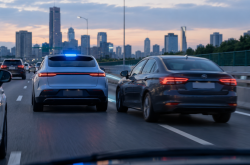
When driving, you've probably noticed vehicles with small blue lights on, typically indicating that driving assistance or intelligent driving features are active.
Many drivers tend to maintain a safe distance from such vehicles, while others might speed up to cut in. Often, intelligent driving vehicles opt to slow down and yield.
Why does intelligent driving yield, even when it detects a cut-in?
This happens because intelligent driving systems assess cut-ins differently than human drivers do.
01 How Does Intelligent Driving Perceive a Cut-in?
For intelligent driving systems, a cut-in isn't just a simple maneuver; it's a continuously evolving state of a traffic participant.
When a vehicle first appears in an adjacent lane, the system evaluates its position, speed, heading, and lateral movement trend.
If the vehicle gradually moves closer to the current lane, the system must continually assess whether it's merely drifting slightly or preparing to change lanes. How much distance remains between it and the current vehicle? Will a conflict arise in the next few seconds if both continue at their current speeds?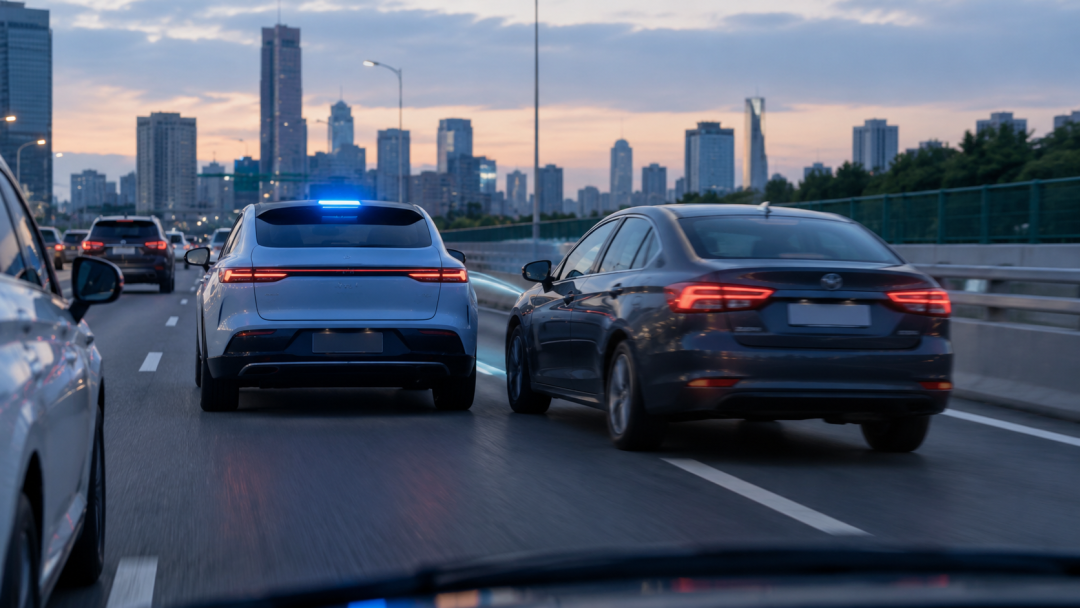
Image source: Leading Edge of Intelligent Driving
This is where the crucial role of the autonomous driving prediction module comes into play.
The prediction module doesn't simply guess where the vehicle will be in the next second. Instead, it generates possible future motion trajectories based on the vehicle's position and speed changes over time, combined with lane and road structure, as well as the states of surrounding vehicles.
Xiaopeng openly mentioned in its second-generation VLA upgrade that the system now employs faster streaming autoregressive inference for sudden situations, such as abrupt braking by the vehicle ahead, pedestrian U-turns, and forced cut-ins by adjacent vehicles. It uses a world model to predict potential future behaviors of surrounding traffic participants.
Its X-Foresight prediction world model can deduce the motion trends of surrounding traffic participants within the next 6 seconds, helping the system anticipate changes in scenarios like cut-ins, pedestrian direction changes, and vehicle braking in advance. The Infini-VLA long-sequence architecture retains road environment data from the past 30 seconds, connecting fragmented road events to provide longer-term contextual information for intelligent driving decisions.
This is particularly crucial for cut-in judgment. A cut-in is generally a dynamic process lasting several seconds, and long-sequence memory helps the system more accurately judge the evolving intentions of the opposing vehicle, rather than relying solely on instantaneous snapshots for judgment.
Huawei's Qiankun ADS 5 technology route adopts a similar approach. Its officially announced vehicle-end world behavior model introduces, for the first time, the safety risk field theory, making real-time decisions through risk heatmaps and reducing collision risk by 50%. Huawei describes this as moving beyond merely identifying targets to judging risks.
Additionally, Huawei's cloud-based world model introduces, for the first time, a multi-agent game mechanism, increasing training intensity by 10 times, which is directly related to game-theoretic decision-making in cut-in scenarios. Qiankun OS also reduces in-vehicle signal latency by 30% through technologies such as deterministic scheduling engines, ensuring that low-latency tasks like emergency cut-ins can be executed promptly.
Therefore, when a vehicle begins to move closer to the current lane, intelligent driving doesn't wait until it has fully encroached before making a decision. It may have already determined, based on the opposing vehicle's lateral speed, distance, and movement trend, that a conflict is likely during this lane change.
A simple cut-in action may not yet be perceived as a cut-in by humans, but in the eyes of intelligent driving, it may already see this trajectory approaching and need to decelerate in advance to respond.
02 Why Does Intelligent Driving Still Yield After Judging a Cut-in?
For intelligent driving systems, the real challenge after judging that the other party is cutting in is determining what to do next.
Suppose an adjacent vehicle is moving into the current lane. Intelligent driving has several options: maintain speed and let the other vehicle complete the lane change, decelerate appropriately to actively leave space for the other vehicle, or adjust its own trajectory to avoid conflict if conditions allow.
What may seem like a simple decision to yield or not involves a continuous decision-making process.
The system must simultaneously consider the current vehicle's speed, the distance to the vehicles ahead and behind, the speed and lateral movement of the target vehicle, vehicles in adjacent lanes, and the current vehicle's braking capability.
Especially on congested urban roads, where the distance between vehicles is already small, a single action can easily affect the vehicles behind.
Therefore, intelligent driving generally doesn't prioritize maintaining its position as the sole goal but places avoiding uncontrollable conflicts higher on its priority list.
This is why some intelligent driving systems exhibit behavior that may seem overly polite to human drivers.
For human drivers, holding firm a bit may just be a normal driving interaction. For intelligent driving systems, if the other party's behavior is highly uncertain, actively reducing speed makes it easier to control risks within its own manageable range.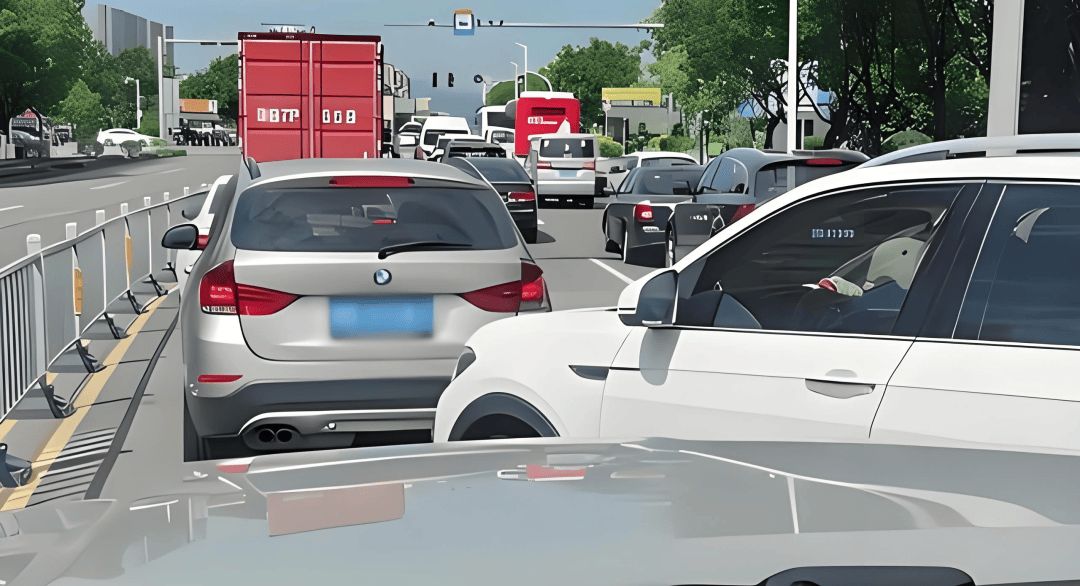
Image source: Internet
Li Auto's previously disclosed intelligent driving technology has already been specifically optimized for congested game-theoretic lane changes.
The official update notes for its OTA 5.2.0 clearly mention optimizing strategies for lane change timing, lane change space, and lane change waiting games, reducing waiting times for initiating lane changes and overtaking, improving the decisiveness of lane change waiting decisions and the effectiveness of lane changes, while adjusting speed control strategies for scenarios where other vehicles cut in, optimizing speed control strategies for following and other vehicles cutting in, reducing jerks and sudden decelerations during following, and enhancing following comfort and safety.
This indicates that Li Auto's technological direction focuses more on making decisive decisions in games rather than simply yielding.
In its 2024 publicly disclosed technical materials, avoiding adjacent vehicles when they approach is listed in the user manual. The OTA 6.0.0 update notes mention bypassing obstacles and improving the ability to respond to dynamic targets.
This shows that cut-ins are not simply about avoiding obstacles but involve interactive decision-making between vehicles. From a game theory perspective, a cut-in is essentially a non-cooperative game where the cut-in driver gains time benefits through rule violations, while the cut-off driver is forced to bear the deceleration and safety risks.
The "Transportation Research Part C: Emerging Technologies" published in 2026 proposes a hierarchical FSM-Nash framework.
It decouples the decision-making process into a strategic layer (game-theoretic coordination, achieving multi-stage behavior transitions through finite state machines) and an execution layer (constrained Nash equilibrium planner), achieving a 50% improvement in safety and an 11% improvement in efficiency in dense traffic cut-in scenarios.
The study also introduces a self-evolving Bayesian risk mechanism, dynamically calibrating risk thresholds through real-time interaction data and regional driving patterns, enabling the system to adapt to driving style differences in various regions.
If an intelligent driving system only judges that there is a vehicle ahead, it may easily make a sudden braking action. If it can further judge that the adjacent vehicle is cutting in and at a relatively fast speed, the system can adjust its speed earlier, turning a sudden cut-in into a relatively smooth speed change.
03 What Intelligent Driving Truly Needs to Solve Is the Extent of Yielding
For the cut-in scenario, what intelligent driving systems need to do is not to shift from always yielding to never yielding.
A truly mature strategy should know when to yield, how much to yield, and when there is no need to yield.
In the Xmart OS 4.3.0 version pushed by Xiaopeng in July 2023, XNGP officially incorporated an anti-cut-in strategy, described as dynamically controlling the following distance in congested scenarios while optimizing following capabilities. The same version also added different driving style choices for lane change strategies and optimized lane change timing and execution methods.
The logic behind such technologies is that if the following distance is always kept large, adjacent vehicles are more likely to find space to cut in. If the following distance is too small, it may lead to frequent braking of the current vehicle and even increase the collision risk.
Therefore, true anti-cut-in is not simply about reducing the following distance but allowing the vehicle to dynamically adjust its behavior based on traffic conditions.
In normal traffic flow, if an adjacent vehicle is merely approaching, it does not necessarily mean it will cut in, so there is no need to suddenly decelerate. When the other party has clearly started moving into the current lane, the system can decelerate in advance to reduce conflicts. If the other party has already completed the cut-in, the system should quickly resume a reasonable following distance rather than continuously maintaining an excessively large safety space.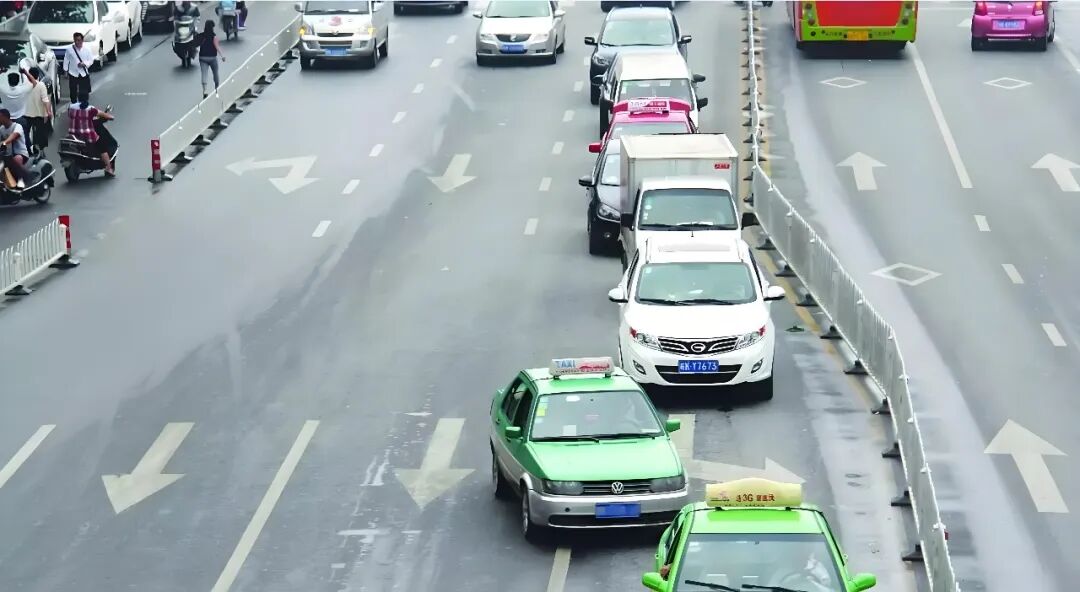
Image source: Internet
This series of actions, in a traditional modular architecture, involves at least target tracking, trajectory prediction, intention judgment, risk assessment, longitudinal control, and lateral planning. The difficulty lies in the fact that these aspects cannot make independent decisions.
If prediction believes the other party may cut in, planning must prepare in advance. If planning decides to yield, control must achieve it through smooth deceleration. If the other party ultimately does not cut in, the system must promptly correct its judgment.
In an end-to-end architecture, these aspects are no longer passed serially as independent modules but are unified into a single neural network for joint reasoning.
Perceptual features directly participate in the generation of planning decisions, and the system's response to cut-ins is completed synchronously in a continuous reasoning flow, no longer relying on explicit intermediate variables like prediction results.
In other words, end-to-end does not eliminate the judgment process in traditional modular architectures but allows them to be parallelly coupled in an implicit feature space, reducing information loss between modules and internalizing the goal trade-offs that require cross-module negotiation in traditional architectures into a unified optimization process.
This is why more and more automakers are now starting to separately optimize cut-ins, congested lane changes, and adjacent vehicles approaching.
A 2026 review of human-machine mixed traffic research published in the "China Journal of Highway and Transport" points out that manually driven vehicles exhibit adaptive behaviors when facing autonomous vehicles. These changes affect car-following and lane-changing behaviors and are closely related to subjective factors such as drivers' trust in autonomous driving technology and driving styles, as well as objective factors such as the penetration rate of autonomous vehicles and driving environment.
Another independent study on AV penetration rate and driving styles further found that the impact of penetration rate varies from person to person. Aggressive and ordinary drivers exhibit more aggressive decision-making behaviors as the AV penetration rate increases, while defensive drivers' behaviors remain unaffected by penetration rate changes.
This means that the impact of increased AV penetration rate on the behaviors of manually driven vehicles is not linearly "more significant with higher rates" but is closely related to individual drivers' styles.
The conservative behavior of intelligent driving itself may also have a negative impact on traffic flow.
Research through co-simulation analysis has found that the impact of conservative driving varies with speed limits, mainly because sudden deceleration by autonomous vehicles leads to a sharp reduction in the safe distance with the vehicle behind.
Another traffic flow simulation study points out that autonomous vehicles are more conservative than human drivers in acceleration behavior and lateral movement, requiring larger lane change gaps and being forced to decelerate and wait more frequently.
This provides a possible explanation for why intelligent driving vehicles are more likely to be cut in in congested scenarios, as larger safety gaps become one of the incentives for cut-ins.
In high-density mixed traffic, it is extremely rare for safety, interaction quality, and traffic performance to be simultaneously satisfied. Excessive yielding by intelligent driving, while improving safety in some metrics, may incur hidden costs in other dimensions (such as traffic efficiency and the experience of vehicles behind).
So, the fact that human drivers feel that intelligent driving vehicles are always yielding to some extent indicates that when autonomous vehicles enter real human-machine mixed traffic environments, the system not only needs to predict the road but also other drivers.
What intelligent driving truly needs to improve in the future is not simply becoming more assertive but handling cut-ins more precisely, yielding in advance when necessary and not over-yielding when unnecessary. Facing forced cut-ins, it should also maintain a reasonable driving rhythm while ensuring safety.
In this manner, intelligent driving systems will avoid the pitfalls of appearing unintelligent due to an overly cautious approach, while also steering clear of introducing new risks by attempting to mimic the assertiveness of human drivers. #AutonomousDriving #CutIn
-
![]()
Ren Zhengfei Once Playfully 'Teased' Yu Chengdong: Initially, All Family Members Used iPhones! Now, Yu Chengdong Laughs: They’ve All Made the Switch to Huawei!
-
![]()
Yu Chengdong Faces Scrutiny: Zhijie RX Logs Just 379 Units in Its Debut Month—Can It Still Challenge the YU7?
-
![]()
Why Do Intelligent Driving Vehicles Always Give Way During Cut-ins?
-
![]()
Apple Hits $5 Trillion Market Cap Threshold
-
In-Depth | Domestic Large Models Submit Results Intensively, the Post-90s Generation Begins to Take Over the Core Battlefield
-
Global Tech Titans' Gambit: Steering Clear of NVIDIA's Dominance
-
Prices Drop from 'Yuan' to 'Cents': The Second Half of the AI Video Race Begins
-
AI Companies' IPOs Start Hitting the Brakes Collectively