Yu Chengdong Faces Scrutiny: Zhijie RX Logs Just 379 Units in Its Debut Month—Can It Still Challenge the YU7?
 10/15 2026
 341
341
With the release of September sales figures, the Zhijie RX reported 379 deliveries, ranking 14th among the 18 Hongmeng Zhixing models currently available. It's important to note that these vehicles were mainly allocated to stores nationwide as test and display units, with official mass deliveries to customers who have placed confirmed orders yet to start.
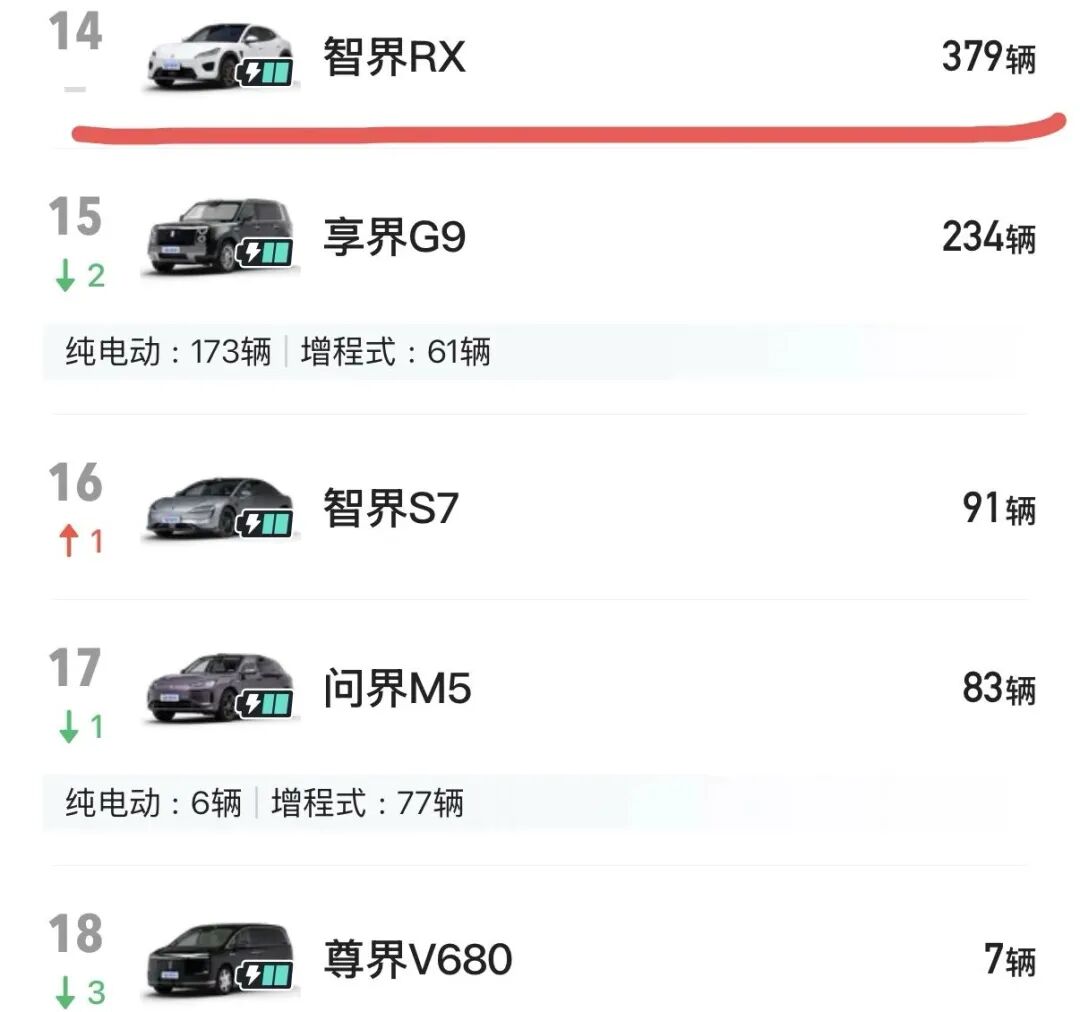
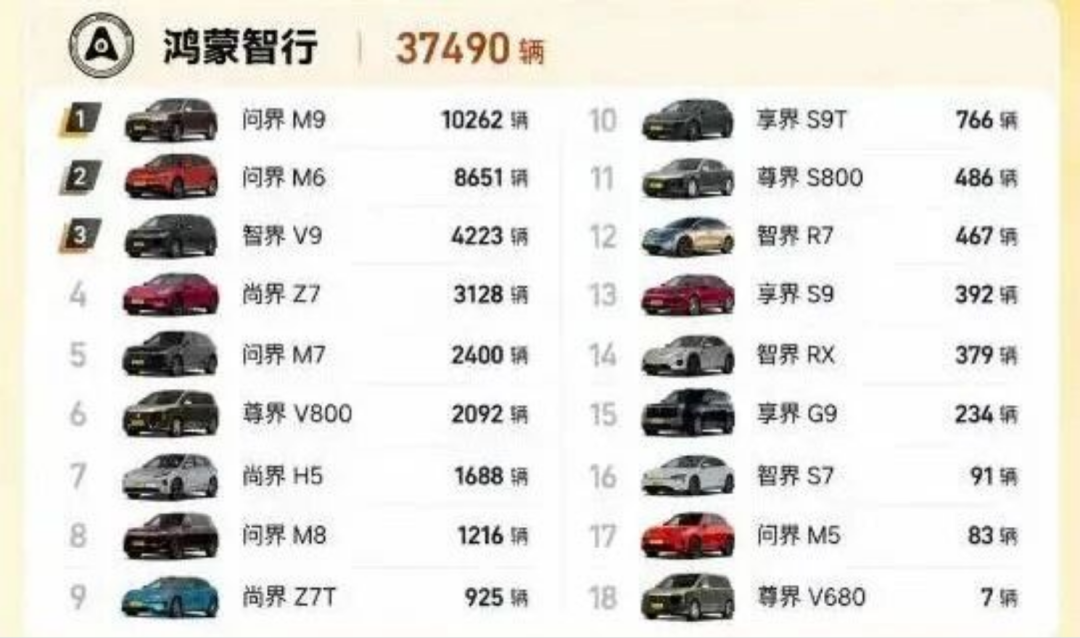 Image Source: Dcdcar
Some skeptical internet users were blunt: 'They've been promoting it for months, and in the end, their sales are a tiny fraction of YU7's.' Others chimed in with sarcasm: 'Zhijie Auto sells 300 units a month—bright future ahead! Meanwhile, Xiaomi Auto sells 40,000 units a month and is clearly struggling.' Controversy also arose over its design: 'Think copying YU7's design would boost sales? Copying won't get you far in the future!'
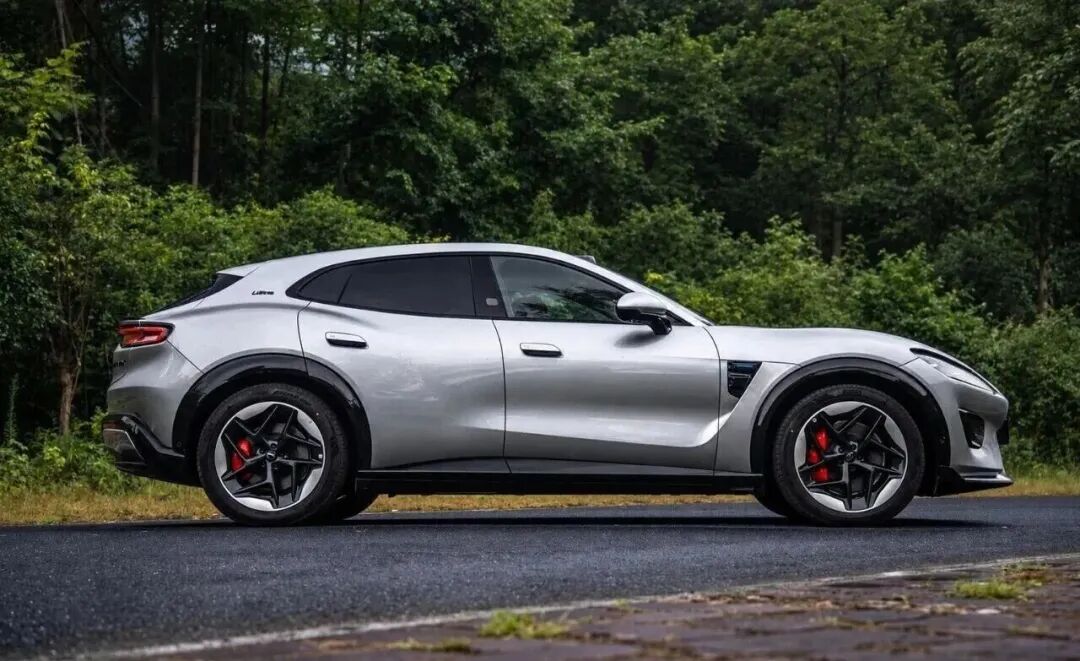
On one side is the figure of 379 units, and on the other is the actual order volume—data that the company has been withholding and which the entire internet is eager to see. Many internet users complained: 'No wonder it took so long; they're afraid to release the sales figures.'
Faced with a barrage of questions, Zhijie's Zhao Changjiang responded directly in the comments section. When asked why order data wasn't disclosed, he simply replied, 'We're not releasing them anymore.' When questioned about the RX's sales performance, he confidently stated, 'Very well.'
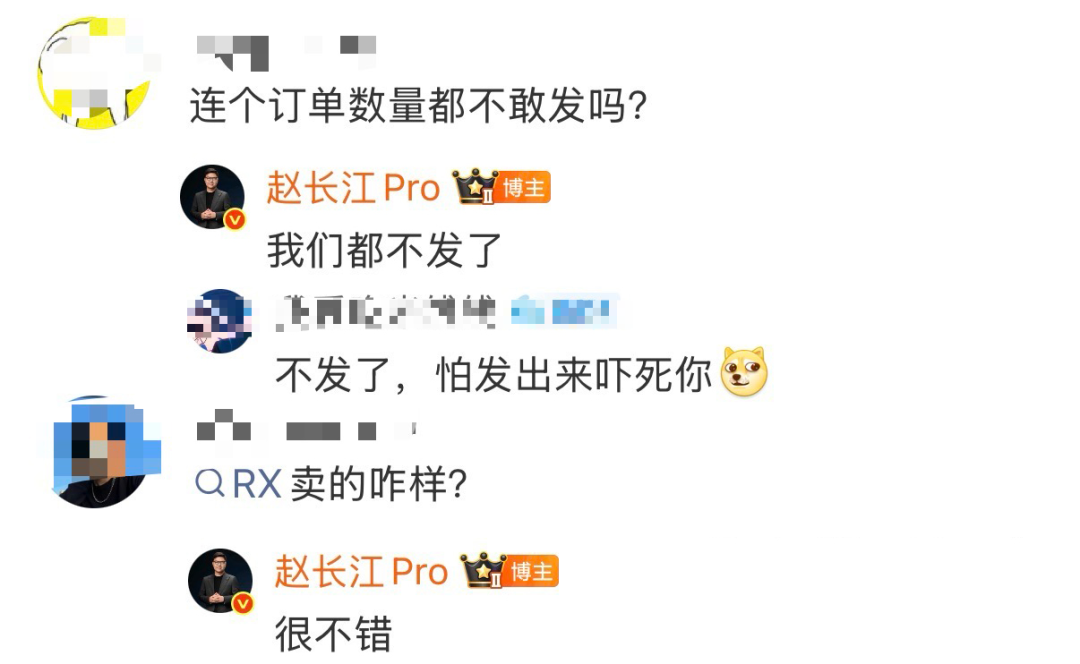 Image Source: Weibo
Those two brief remarks reignited the debate. Many overlooked that this approach isn't a one-size-fits-all rule for Hongmeng Zhixing. The Xiangjie V8, which opened for pre-orders on the same day, released its 72-hour pre-order report as usual. Simply put, not releasing order data is a strategic choice made by Zhijie itself.
This wave of silence seems more like a deliberate decision. In an era where pre-sale reports flood in and every brand claims to be 'selling like crazy,' rather than letting outsiders speculate based on an order sheet of questionable authenticity, it's wiser to let subsequent lock-order and delivery data speak for themselves. By controlling the pace, they won't be swayed by others' reports.
Two Distinct Approaches to Data Disclosure in the Automotive Industry
Xiaomi has already shifted its data strategy. After launching the new-generation SU7 in March, Xiaomi stopped publicizing large advance orders and only released lock-order data. The reasoning is straightforward: lock-orders represent genuine financial commitment, with higher thresholds for cancellations, avoiding the industry's longstanding issues of confusing and potentially inflated figures for intent orders, small deposits, and large advance orders.
Nowadays, pre-sale reports are so exaggerated that claims of tens of thousands of orders are met with public indifference. Voluntarily stepping out of the order-counting frenzy is actually a sign of clarity. Of course, if a model truly has blockbuster potential, Xiaomi doesn't hide it—when the Pengcheng launched, lock-orders surged to 70,000 in the first month, and Lei Jun proudly announced the figure on a poster.
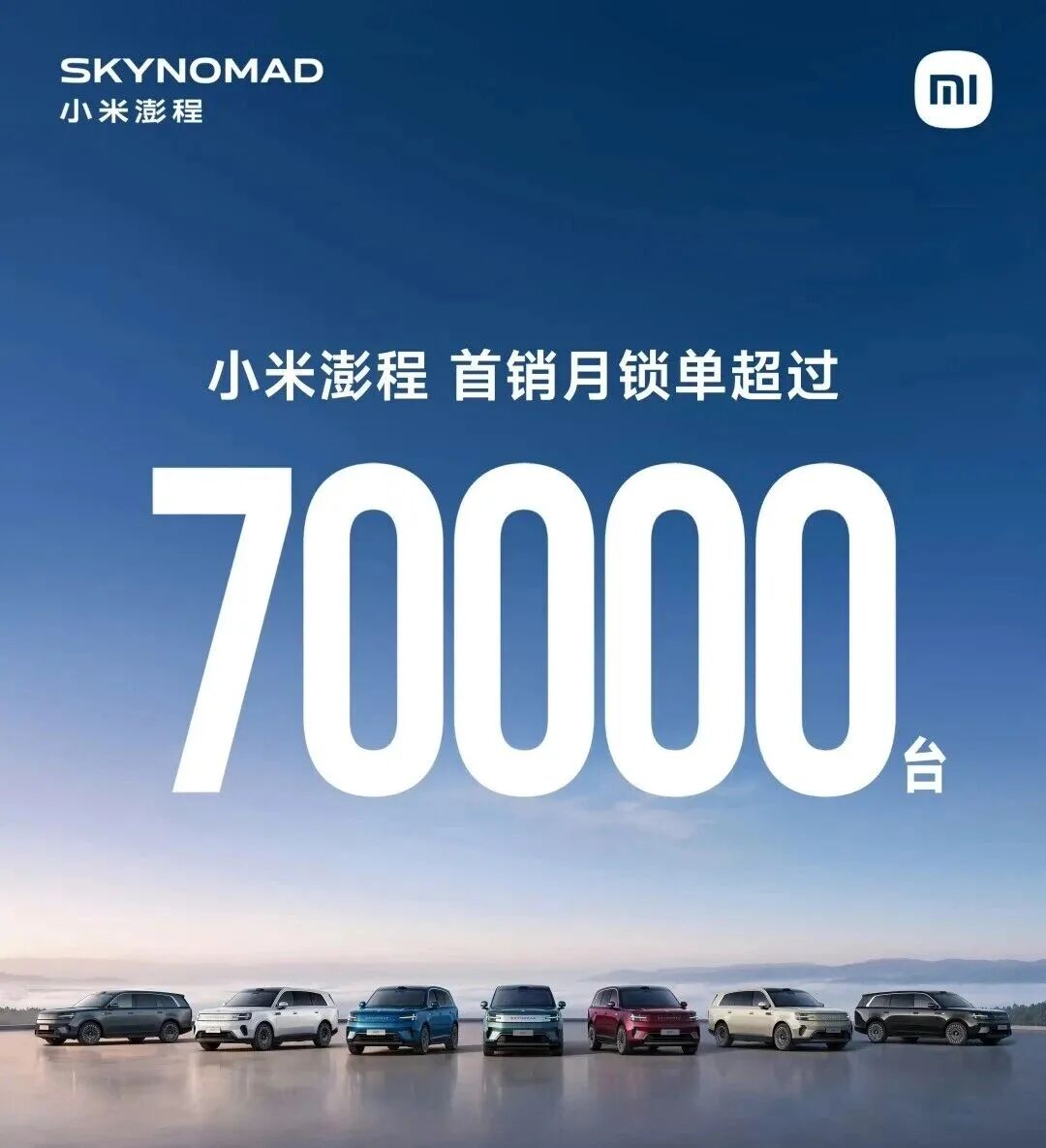 Image Source: Weibo
Applying this logic to the Zhijie RX, its choice to keep a low profile and wait for lock-order and mass delivery data before speaking makes perfect sense. If orders were truly dismal, Zhao Changjiang wouldn't have bothered to respond to critics in the comments section, let alone confidently declare, 'Very well.'
Supporters of the Zhijie RX also explained: 'The RX has only been delivering for a few days; it just launched, and it's not even a full delivery month yet. Besides, how could production keep up right after launch? The cars haven't even been manufactured yet, so how can they be delivered? It's not like the Xiaomi YU7, which has been on the market for so long that its production line is already mature and stable.'
A Mainstream Blockbuster vs. a Niche Tech Flagship
The user profile Zhao Changjiang previously shared also reveals the RX's target demographic. Within just two days of launch, over 90% of small advance order customers opted for the more expensive L3 version, with the average order price reaching 380,000 yuan. Most buyers of this model already own luxury cars like Porsches, Ferraris, or BBA (BMW, Benz, Audi) vehicles.
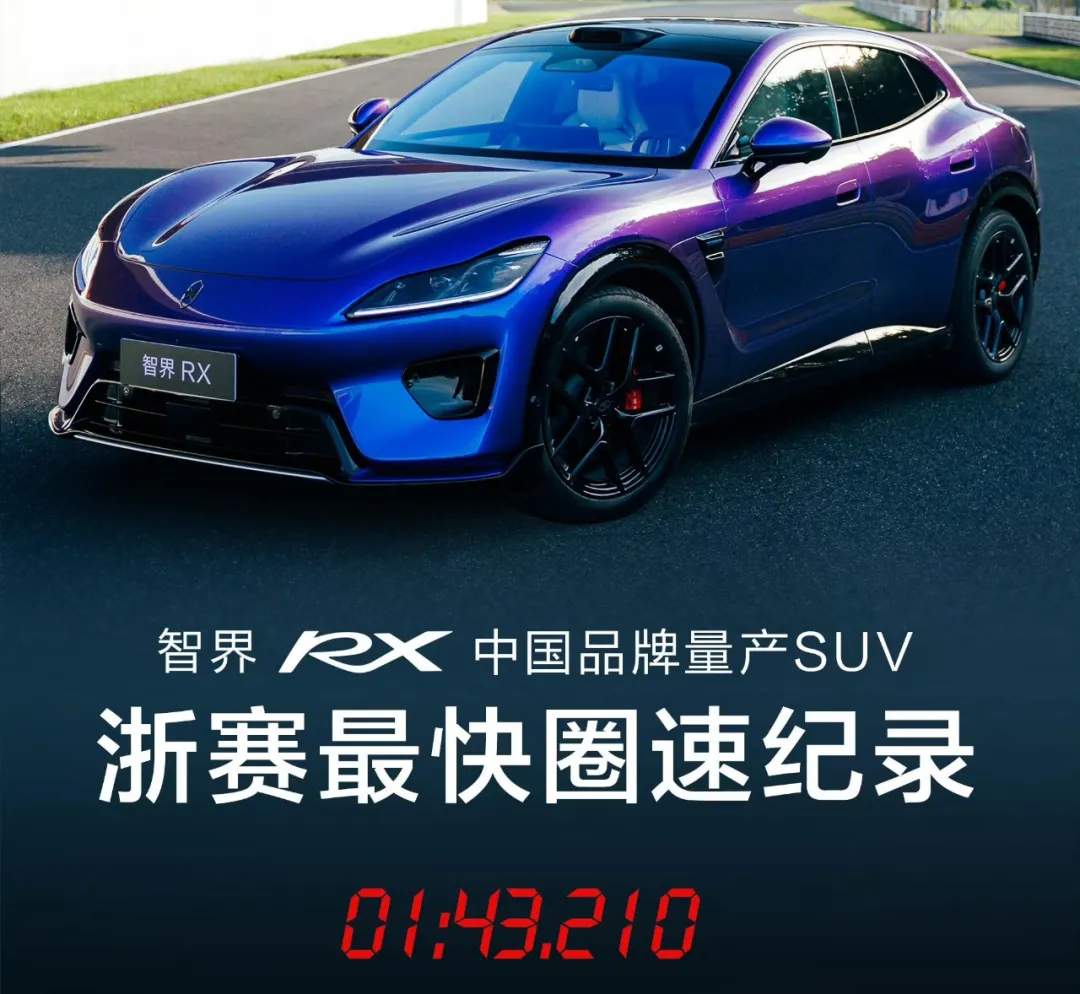
At the launch event, Yu Chengdong didn't hold back in praising the RX, calling it the pinnacle of aesthetics and sportiness within Hongmeng Zhixing. Just 14 days after its launch, the vehicle set a new lap record for domestically produced SUVs at the Zhejiang International Circuit with a time of 1 minute and 43.210 seconds. Equipped with Huawei's Tuling platform, next-generation Zhiqing electric drive, and optional L3 autonomous driving, its hardware is top-notch.
Source: Weibo
The endorsements from these two executives actually speak louder than any order numbers. At the launch event, Yu Chengdong boldly claimed that the Zhijie RX offers the best driving experience under the Hongmeng Zhixing brand, with unmatched aesthetics and sportiness.
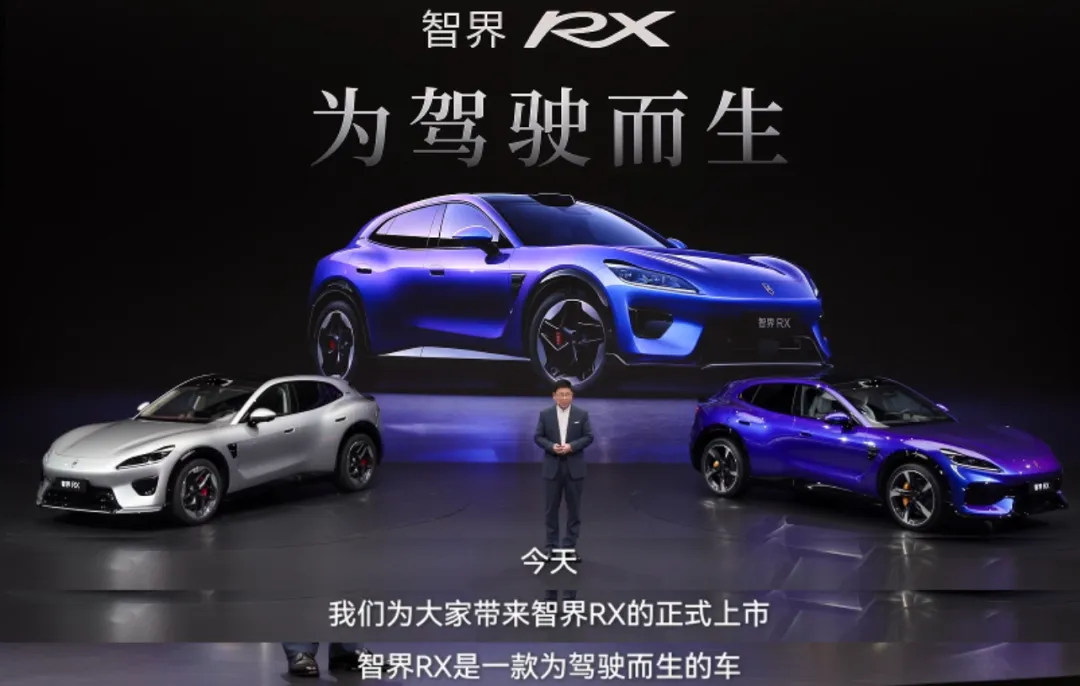
Image Source: Weibo
Zhao Changjiang has repeatedly voiced his support, calling the RX the most aesthetically pleasing and sporty vehicle, advising buyers to opt for the L3 architecture version. He also revealed that owners of this model often already have a Porsche, Ferrari, or Mercedes-Benz or BMW in their garage. Before the product even launched, these two leaders positioned it as a 'technological pinnacle.'
Simply put, this vehicle was never intended to be a 'volume seller' from the outset. Its mission is to set a benchmark: using top-tier chassis tuning, optional L3 autonomous driving architecture, and track-level performance to establish the 'Hongmeng Zhixing Sport Flagship' label, gradually attracting high-net-worth users willing to pay a premium for technology.
The internet often pits the Zhijie RX against the Xiaomi YU7, but their underlying strategies couldn't be more different. The Xiaomi YU7 targets the mainstream blockbuster segment, priced around 250,000 yuan, relying on Xiaomi's ecosystem and online hype to aim for monthly sales of over 10,000 units, habitually releasing order data to sustain buzz.
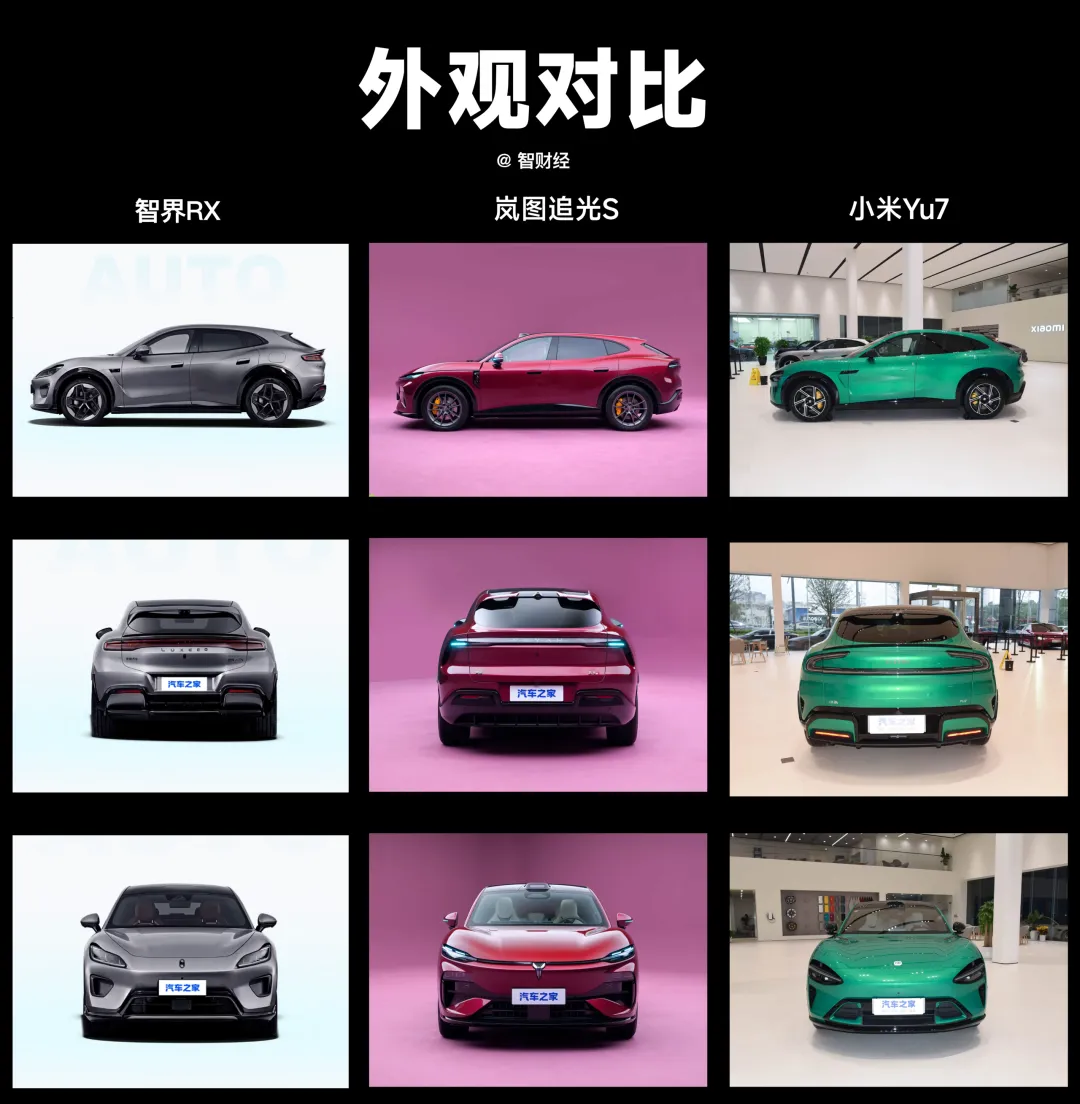 Image Source: Zhicaijing
In contrast, the Zhijie RX follows a boutique, niche tech flagship route, priced between 259,800 and 389,800 yuan, focusing on chassis handling, L3 advanced autonomous driving, and track performance, with a realistic expectation of stable monthly sales of 2,000 to 3,000 units. From the beginning, it wasn't designed to be a mainstream volume seller.
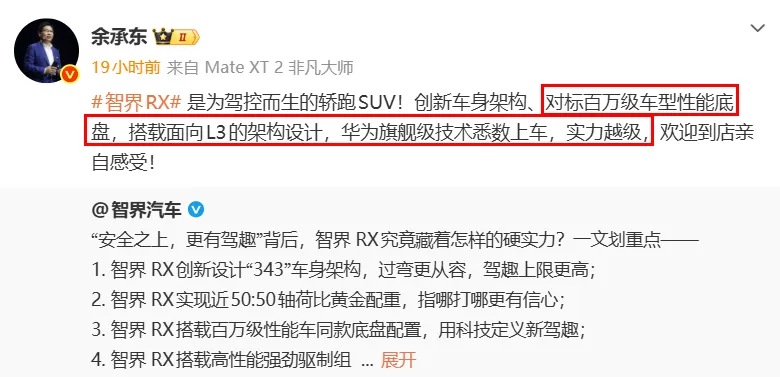
Image Source: Weibo
This is precisely why Zhao Changjiang is vying for the right to define 'success': rather than engaging in a head-to-head battle over order numbers, he shifts the focus to customer quality, average order price, and hard product strength as the criteria for judgment.
379 Units Are Just the Beginning—Delivery Data Will Be the Litmus Test
At the heart of the controversy, 379 units represent only the initial stocking quantity shortly after launch. Judging a vehicle's success based solely on this figure is premature. Some eagle-eyed internet users pointed out the crucial timeline: 'Didn't the RX launch on September 28?' Many agreed: 'We'll know by looking at Zhijie RX's actual sales in October and November.'
In reality, the Zhijie RX wasn't officially released until September 28, though pre-sales had been ongoing for some time. Those 379 units were mostly sent to stores nationwide as display and test vehicles, with mass deliveries to firm order customers yet to begin. Strictly speaking, this doesn't even constitute a complete month of customer delivery data.
For an ordinary mainstream SUV, a few hundred units in initial sales would generally indicate a lukewarm reception. However, the Zhijie RX targets a different demographic—people willing to pay a premium for track performance and advanced autonomous driving. The fact that 90% chose the L3 version and the average order price reached 380,000 yuan shows that price isn't their primary concern.
Yet, this strategy of 'not releasing order data' has obvious drawbacks. Without quantitative order figures, relying solely on verbal assurances like 'very well' makes it difficult to quell doubts. While sales don't represent a vehicle's entire worth, they remain the most tangible scorecard in the automotive industry. Ultimately, even the best reputation needs delivery data to back it up over the long term.
The true test for the Zhijie RX lies in the two full delivery months of October and November. The market wants to see not just the number of test vehicles sent to stores, but whether it can consistently meet the monthly delivery target of 2,000 to 3,000 units while building a reputation among high-end users.
In fact, the first wave of deliveries for the Zhijie RX isn't primarily about how quickly production can ramp up, but whether it can win over those truly willing to pay for technology. For this group, affordability isn't the top priority—they care whether the vehicle deserves a spot in their garage and whether it can uphold the prestige of already owning a Porsche or Ferrari.
A Direct Clash of Two Automaking Strategies
The Zhijie RX and Xiaomi YU7 represent a direct collision of two automaking strategies. Xiaomi targets the mainstream market, prioritizing scale and sales volume; the Zhijie RX focuses on the niche high-end segment, emphasizing technological leadership. While these two vehicles are frequently compared, their evaluation criteria shouldn't be identical.
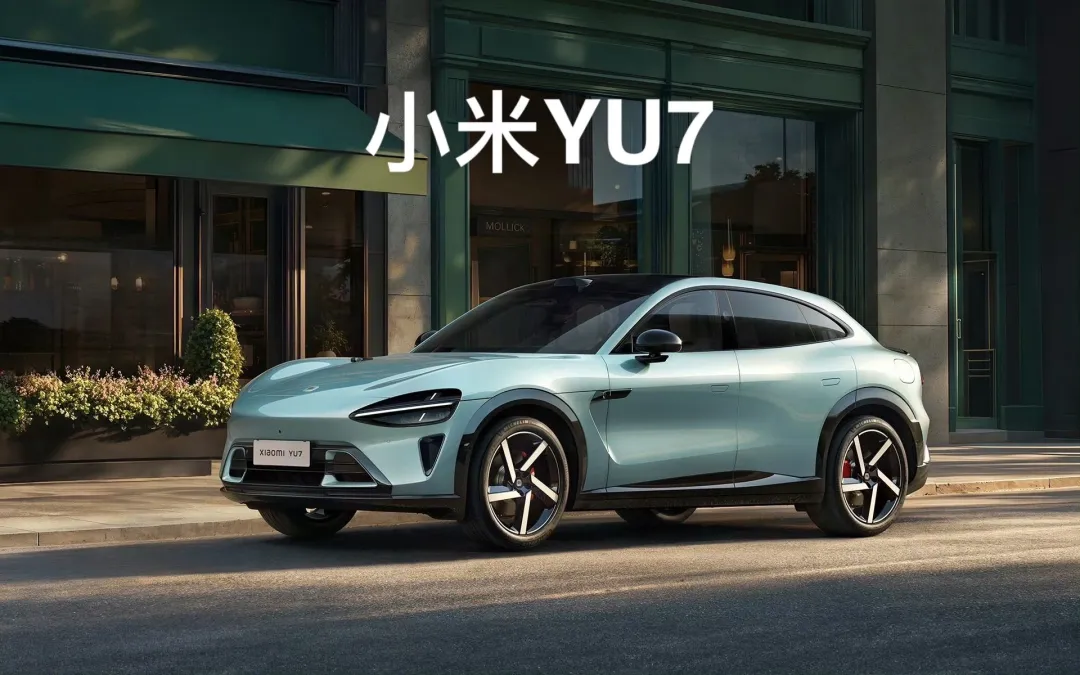
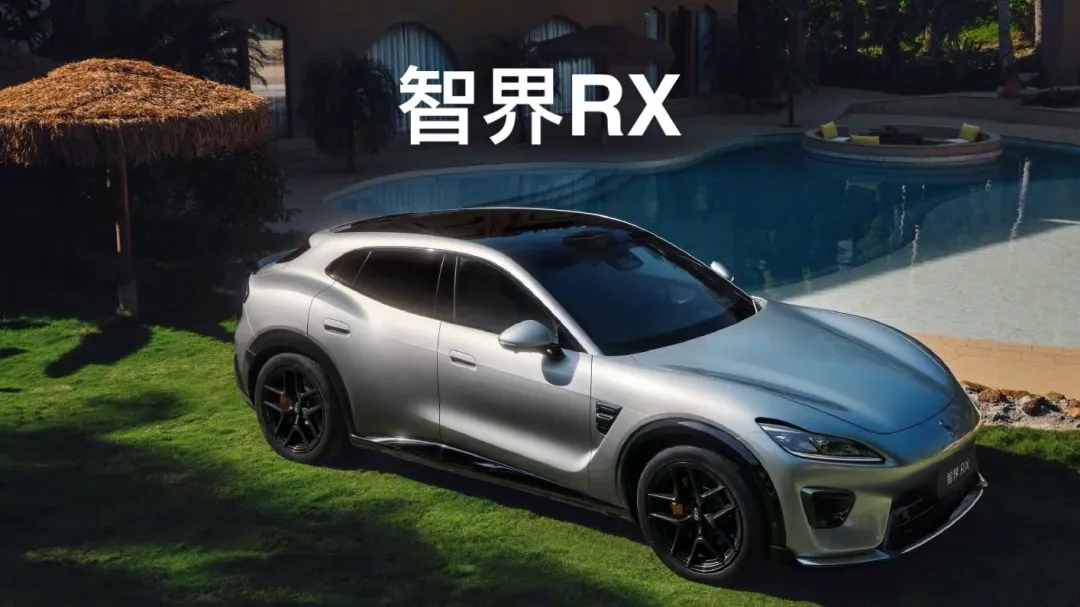
Image Source: Weibo
The figure of 379 units doesn't signify the Zhijie RX's failure—it's not even a formal examination but merely a small market test before mass delivery begins.
Zhao Changjiang's bid to redefine 'success' essentially means avoiding a public opinion tug-of-war with the Xiaomi YU7 over order numbers. However, in the automotive market, victory isn't determined by a few comments on social media.
Order numbers merely serve as pre-event hype; the true outcome is always written by sustained deliveries. Whether a vehicle becomes a hit isn't decided by internet users' comments or executives' statements—ultimately, the delivery data will have the final say.
Can the Zhijie RX establish itself in the high-end sport SUV segment? Does it still have a chance against the Xiaomi YU7? The answers won't be found in comment section squabbles or brief executive replies—they lie in the delivery reports of the next two months.
Interactive Topic: Do you think the Zhijie RX's boutique niche strategy will succeed? Between the Zhijie RX and Xiaomi YU7, which one do you favor? Share your thoughts in the comments. Disclaimer: This article is solely a commentary on major industry trends and does not constitute investment advice. All corporate data and regulatory events mentioned are sourced from publicly available information and are for reference only; please refer to official announcements for details. Images sourced from the internet; if copyright issues exist, please contact us for removal.
-
![]()
Ren Zhengfei Once Playfully 'Teased' Yu Chengdong: Initially, All Family Members Used iPhones! Now, Yu Chengdong Laughs: They’ve All Made the Switch to Huawei!
-
![]()
Yu Chengdong Faces Scrutiny: Zhijie RX Logs Just 379 Units in Its Debut Month—Can It Still Challenge the YU7?
-
![]()
Why Do Intelligent Driving Vehicles Always Give Way During Cut-ins?
-
![]()
Apple Hits $5 Trillion Market Cap Threshold
-
In-Depth | Domestic Large Models Submit Results Intensively, the Post-90s Generation Begins to Take Over the Core Battlefield
-
Global Tech Titans' Gambit: Steering Clear of NVIDIA's Dominance
-
Prices Drop from 'Yuan' to 'Cents': The Second Half of the AI Video Race Begins
-
AI Companies' IPOs Start Hitting the Brakes Collectively