Microsoft Taps NVIDIA to Take On Apple Head-On: Redmond's High-End AI PC Gamble
 10/30 2026
 423
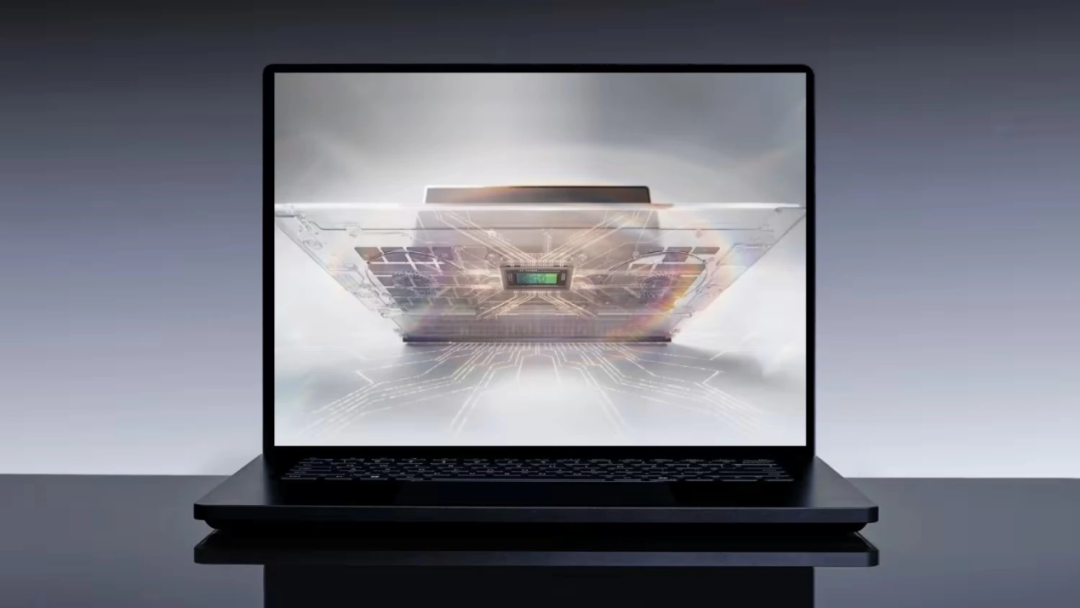
After two eventful years in the AI PC race, the Windows camp has finally delivered a flagship chip that can genuinely rival the Mac ecosystem.
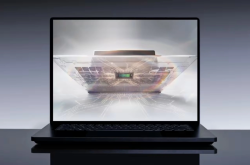
Microsoft has teamed up with NVIDIA to launch the Surface Laptop Ultra, powered by the RTX Spark superchip. This is far more than a routine hardware refresh from Microsoft going it alone; it marks the first time the Windows ecosystem has secured NVIDIA's all-in-one flagship SoC, harnessing on-device compute muscle to address a long-standing weakness.
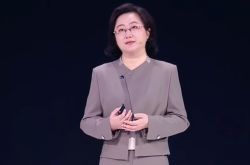
Pavan Davuluri, Microsoft's Corporate Vice President of Windows and Devices, said at a company event in San Francisco on Wednesday that the Surface Laptop Ultra is now available for pre-order and will begin shipping on October 16. The laptop features a magnetic USB-C port, similar to Apple's MagSafe charging connector.
01 Is Windows Turning to NVIDIA's Flagship SoC to Fix the Core Weakness of On-Device AI?
Most of the AI PCs that have hit the market in volume over the past two years are built on conventional PC hardware foundations, amounting to little more than add-on modifications of existing designs.
Whether it's the integrated NPU solutions from Intel and AMD, or the Arm version Qualcomm brought to Windows, the core approach is to bolt lightweight AI acceleration units onto mature hardware frameworks—rarely undertaking a ground-up rebuild of the on-device compute system for high-end generative AI workloads.
This also leaves most Windows AI PCs with obvious limitations: the dedicated on-device AI acceleration units have a low compute ceiling and are only suitable for light AI tasks such as text summarization or simple photo editing.
Once you attempt high-load scenarios—local inference of tens-of-billions-parameter large models, ultra-long context parsing, high-definition image, text and video generation, or autonomous execution of multi-step AI agents—the constraints of compute and memory quickly become apparent.
This has long been a key factor making the Windows ecosystem less competitive than Mac in the high-end creator and developer market.
Apple relies on its self-developed Apple Silicon SoCs to achieve deep architectural coupling of CPU, GPU and unified memory, completing full-stack on-device AI optimization from the hardware foundation up and building a stable, efficient local AI compute base for creators and developers.
The Windows camp, by contrast, has long been plagued by hardware fragmentation, making cross-device software-hardware collaborative optimization more difficult. Until now, the industry had not formed a complete on-device hardware solution specifically tailored for high-end AI tasks; most complex AI tasks still had to rely on cloud-based Copilot, and local compute could mostly only support lightweight AI needs.
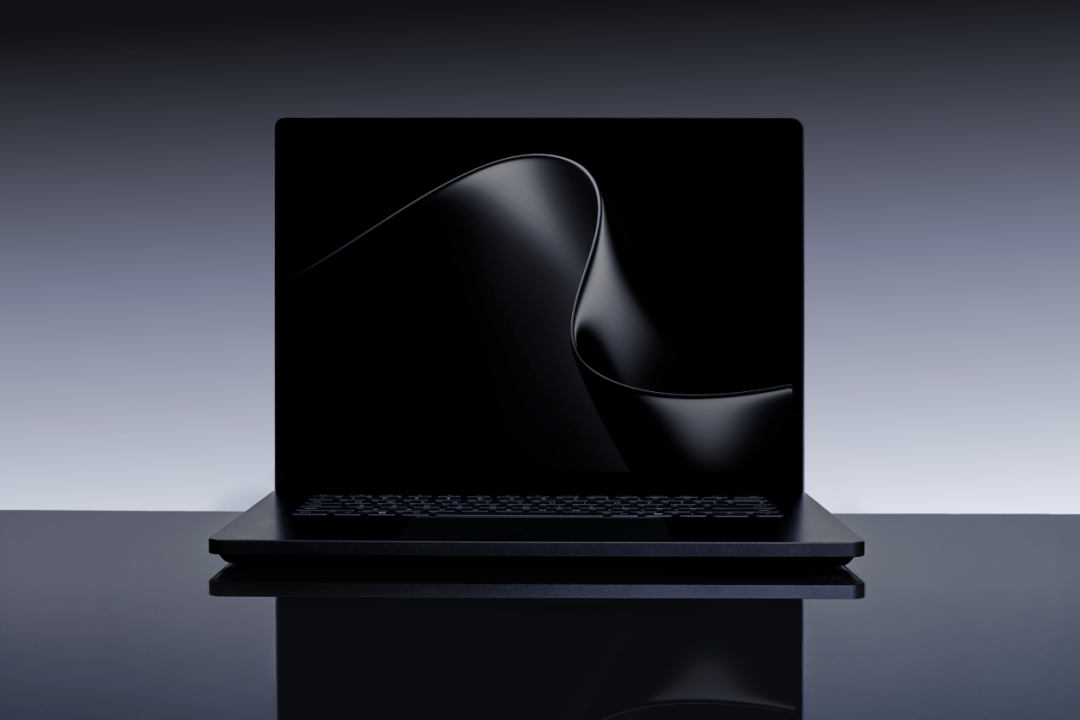
The arrival of NVIDIA's RTX Spark superchip is expected to rewrite the competitive logic of high-end AI PCs. It also means Microsoft no longer has to bear the system-level heavy lifting alone in the AI PC race, having joined forces with NVIDIA and a host of system vendors to build the core alliance of the Windows high-end AI ecosystem.
As NVIDIA's flagship superchip built for personal AI agents, the RTX Spark integrates a Grace-architecture CPU with a Blackwell-architecture RTX GPU, can be equipped with up to 128GB of unified memory, delivers up to 1 Petaflop of FP4 compute, can locally run 120B-parameter large models, support million-level token ultra-long context windows, and is natively compatible with the full CUDA ecosystem.
In FP4-precision AI inference scenarios, this hardware specification gives consumer thin-and-light laptops local on-device compute approaching that of professional AI workstations and small servers—enough to handle large-model tasks that previously could only run on large equipment.
In the past, most PC makers developed complete machines after the chip solution was finalized, with work focused on motherboards, appearance and thermal tuning, leaving limited room for adjusting chip resource scheduling and low-level system adaptation.
In the RTX Spark project, however, Microsoft participated throughout platform definition and refinement, extending from complete-machine thermal solutions, power supply logic and power consumption regulation to Windows low-level compute scheduling, memory allocation and hardware collaboration mechanisms, conducting full-dimensional joint optimization.
The goal of this solution is to enable the operating system on this platform to precisely and efficiently call the chip's CPU, GPU and unified memory resources, alleviating the long-standing software-hardware adaptation fragmentation in the Windows ecosystem.
For NVIDIA, the value of RTX Spark is not just as a high-end PC chip; it is also a key move to extend the CUDA ecosystem into high-end consumer PC scenarios.
By bringing the CUDA software stack—homologous with cloud and professional workstations—to personal terminals, developers can complete AI large-model prototype debugging, 3D rendering, AI video generation and agent validation on the machine itself. With this environment, developers can complete model prototype building, small-scale fine-tuning and deployment validation locally, greatly reducing reliance on cloud instances and narrowing the migration cost between consumer-end and cloud AI development environments.
Relying on NVIDIA's top-tier compute and complete CUDA ecosystem, Windows has, on this high-end hardware line, filled the shortcoming of being unable to run high-end on-device AI tasks in thin-and-light form factors, greatly reducing the need to call cloud AI.
02 Microsoft Targets Creators' Core Base, Competing for Territory with Differentiated Experiences
Beyond hardware specs, the Surface Laptop Ultra has absorbed, in many experience designs, ideas from Mac that have already been validated by the market for high-end creative devices, but Microsoft did not simply replicate them; it retained the unique differentiated advantages of the Windows ecosystem.
The most representative is the Magnetic Connect magnetic USB-C port, the first time a laptop maker has integrated a magnetic structure into a standard USB-C port. The design targets the pain point of Mac's magnetic charging being pull-resistant, while retaining USB-C's universal expansion capability, replacing Microsoft's long-used, ecosystem-closed Surface Connect proprietary interface, balancing port safety and universality.
In addition, the PixelSense Ultra touchscreen has a peak HDR brightness of up to 2,000 nits, higher than the 1,600-nit peak of the M5 Pro MacBook Pro, and the large trackpad also adds haptic feedback.
However, Microsoft did not wholesale copy Mac's trade-off logic, retaining the practical attributes Windows audiences value: the chassis is equipped with HDMI, USB-A, an SD card reader and a 3.5mm headphone jack, with complete expansion capability, able to drive up to three 4K monitors simultaneously provided matching cables and specifications; the SSD supports user removal and replacement, reserving hardware expansion space for creators and AI developers.
This design trade-off targets a very clear core demographic: creators and AI developers.
This group happens to be Apple's most solid base in the high-end productivity market. For a long time, large numbers of video editors, 3D modelers and AI model debuggers have chosen Mac not just for chip compute advantages, but for the comprehensive experience formed by the unified memory architecture, complete-machine stability and deep software-hardware collaboration.
Microsoft's competitive approach is thus clear: relying on the complete CUDA ecosystem brought by RTX Spark, plus more outstanding AI video generation performance in specific scenarios, paired with refined hardware experiences matching Mac's level, attempting to pry away the high-end creative user group Apple has long held.
The signal released by this series of moves is very clear: Microsoft is no longer satisfied with holding the base of the mass PC market; it is attempting a head-on contest for the high-end creation and local AI development territory where Apple has the advantage.
The $2,599 starting price is lower than the comparable 16-inch MacBook Pro; the essence of this pricing strategy is ecosystem positioning, not simply cutting prices to concede profit.
Microsoft wants to use this benchmark product to prove that a Windows high-end AI PC can deliver compute performance on par with or even stronger than local AI tasks, while retaining the Windows ecosystem's software compatibility, CUDA development capability, and the freedom of peripheral expansion and hardware upgradability.
But from a broader industry perspective, this single flagship hardware alone can hardly directly push Windows back into the mainstream of the high-end creator market.
User migration in the high-end productivity market has never been driven by a single hardware specification or one benchmark model. The migration cost for the creator community is high: engineering files, project templates, plugin ecosystems and team collaboration norms are all deeply bound to existing workflows.
Many teams choose Mac not just for local AI compute, but also for cross-device collaboration and long-term version stability, as well as the sustained native optimization of a large number of professional creative software titles for Apple Silicon. This is the software ecosystem barrier Apple has built over years, hard to erase in the short term with a single Windows flagship.
Another practical constraint comes from product positioning: because RTX Spark is a high-end SoC with high cost and limited capacity, it will only land in a few flagship models in the short term and can hardly quickly trickle down to mainstream-priced PCs. The vast majority of ordinary Windows AI PCs will still use Intel, AMD and Qualcomm NPU solutions, and the old problems of hardware fragmentation and uneven software-hardware collaboration will not disappear.
In other words, this excellent on-device AI foundation cannot quickly benefit the entire Windows camp in the short term. Windows will still show polarization: a few flagship models have integrated AI capabilities comparable to Mac, while the massive mainstream models remain at the lightweight NPU stage.
A bigger test falls on the quality of Windows Agent implementation; the AI value carried by this flagship hardware must ultimately be realized through system-level agents. If the Agent's experience in multi-step task scheduling, local hybrid model inference and deep application integration falls short of expectations, even dazzling chip specs will easily become paper parameters.
And polishing the agent experience requires massive software developer participation in adaptation and extensive deep modification of third-party applications; the cycle for cultivating such an ecosystem will be far longer than the hardware R&D cycle.
Overall, the strategic positioning of this device is more like a capability showcase for the Windows high-end AI ecosystem. Its goal is not to immediately convert large numbers of existing Mac users, but to prove to developers and creators that the Windows platform has the potential to build an integrated hardware foundation carrying high-end local AI, large-model debugging and AI video generation.
03 Can the Hardware Support Windows Agents?
The core trade-offs of the entire Surface Laptop Ultra hardware design revolve around one goal: supporting Windows Agent, that is, a personal AI agent that can run locally.
It has a clear hierarchical difference from the Copilot everyone is familiar with today.
Agent is no longer limited to simple Q&A interaction; the goal is to automatically chain multi-step tasks across applications: reading local documents, calling drawing tools, editing videos, managing local files, relying on multi-model collaboration to complete complete complex workflows, and completing computation locally on the terminal as much as possible to reduce cloud dependence and thereby safeguard data privacy.
Such automated intelligent tasks impose stringent thresholds on hardware: large-capacity unified memory, sustained and stable AI inference compute, and high-speed interconnect channels between CPU and GPU. This is precisely the design origin of the RTX Spark chip.
NVIDIA has also launched OpenShell in support, building a local secure sandbox for agents, using permission policy controls to let the Agent safely call various local hardware and software resources under constraints.
But hardware being in place does not mean Windows Agent can smoothly land; there are two layers of practical gaps in between.
The first gap comes from the adaptation shortfall of the software ecosystem.
The compute foundation is only the base; for the Agent to run the full chain, it cannot do without multi-party collaboration among Windows low-level APIs, third-party applications and model scheduling frameworks. Adobe has announced restructuring the underlying architecture of Photoshop and Premiere for RTX Spark to optimize AI acceleration, but massive numbers of small and medium developers and vertical industry software still need a long migration and modification cycle.
Even if the hardware can carry 120B-parameter large models, if the application layer lacks supporting Agent linkage capabilities, what users get will most likely still be just a high-performance creative laptop, not an AI agent device with autonomous execution capabilities.
The second gap falls on power consumption control, system stability and real user experience.
Continuously running large-model-driven agents will keep the whole machine under high load for long periods, posing sustained tests for thermal design, system scheduling algorithms and battery management. Demo scenarios at launch events are ideal environments; whether performance throttling and significant battery life shrinkage occur in real scenarios with long periods of stacked multi-tasking remains to be verified by long-term real user use.
Hardware alone only offers possibility. Whether the Windows Agent can evolve from a launch-event demo into a stable, everyday productivity tool will depend largely on subsequent iterations of the Windows system and on progress in building out the broader software ecosystem.
The controversy surrounding it is this: will the Surface Laptop Ultra amount to little more than a rarefied benchmark demo machine that is difficult to scale up in volume?
Its pricing already makes its positioning clear: starting at $2,599, with the 128GB top configuration reaching $5,899, it is benchmarked against professional workstations and aimed squarely at AI developers and high-end creators—not a volume product for the mass consumer market. Nor does Microsoft expect to rely on this device to absorb massive numbers of users; its more central mission is to complete the definition of the entire platform.
Microsoft and NVIDIA have officially announced that PC makers including ASUS, Dell, HP, Lenovo and MSI will successively launch thin-and-light laptops and small-form-factor desktops equipped with RTX Spark this autumn, with Acer and Gigabyte to follow later.
However, the widespread adoption of mainstream AI PCs still faces multiple constraints.
The first is cost. As a flagship SoC, the RTX Spark carries high chip manufacturing yields and overall BOM costs, making it difficult in the short term to reach the mainstream consumer price range of under 10,000 yuan.
The second is the trade-off over power consumption. Thin-and-light products aimed at ordinary users must strike a balance among AI computing power, battery life and noise, making it difficult to replicate the full-power computing specifications of flagship models.
The last is the logic of application-ecosystem adoption: if ordinary users cannot intuitively perceive the practical value that on-device AI delivers, they will be hard-pressed to pay a premium for products built around AI capabilities.
Microsoft's collaboration with NVIDIA to launch the RTX Spark flagship PC is essentially not a simple contest of hardware specifications, but an important bet by Windows to restructure the high-end productivity ecosystem in the era of personal AI.
In the short term, this flagship product is more like a testing ground for developers and creators. Medium- and long-term success depends on two things: first, whether Microsoft can polish the Windows Agent from a demo feature into a stable and reliable native system capability; second, whether PC manufacturers and software developers can continuously enrich supporting application scenarios around the RTX Spark.
Competition in AI PCs has long since moved beyond the superficial question of whether an NPU is present.
-
![]()
Phone Sales Hit a Ten-Year Low While Prices Keep Climbing—What's Going On?
-
![]()
Revenue of 94.14 Billion Yuan, Market Value of Only 89 Billion—Is Foxconn Industrial Internet Undervalued?
-
![]()
Microsoft Taps NVIDIA to Take On Apple Head-On: Redmond's High-End AI PC Gamble
-
![]()
DHS Leak Exposes 41,000 Employees: Undercover Agents and Grok Permission Groups Among the Casualties
-
![]()
Apple Actually Went Ahead and Made a Touchscreen MacBook, Exactly 16 Years After Steve Jobs Said It Wouldn't Work
-
![]()
Exclusive: The Two Turning Points That Sealed Xiaodu's Fate
-
![]()
Zhongji Innolight's Net Profit Triples: The Cash Flow Test Behind the AI Frenzy | Q3 Report
-
![]()
The $5 Billion Rumor and the $20 Million Floor Price: Character.AI's Death Ledger