Phone Sales Hit a Ten-Year Low While Prices Keep Climbing—What's Going On?
 10/30 2026
 429
When it comes to the recent phone market, most people would agree the mood is gloomy: sales keep falling on one side, while prices keep rising on the other. With phone sales hitting a ten-year low and prices repeatedly hitting new highs, how exactly should we interpret this?

1. Phone sales hit a ten-year low?
According to a report by Qilu Yidian, market research firms IDC, Counterpoint, and Omdia recently released their third-quarter global smartphone market reports, showing shipment declines of 22%, 20%, and 20% year-on-year respectively. IDC data shows global smartphone shipments fell to 255.3 million units, down nearly 70 million from the same period last year—the largest single-quarter year-on-year drop since records began. China's market was not spared either. Counterpoint noted that China's smartphone shipments in Q3 hit their lowest level for the same period in 14 years. According to IDC, China's Q3 smartphone shipments fell 15.4% year-on-year to about 57.9 million units, the sixth consecutive quarterly decline.
Soaring memory chip prices have sharply increased the bill-of-materials cost of phones, and supply shortages have worsened, seriously affecting OEMs' shipping capacity. In response, manufacturers have generally passed higher component costs onto consumers—so far in 2026, global smartphone retail prices have risen 20%, pushing the market's average selling price even higher.
Commenting on the situation, Counterpoint senior analyst Shilpi Jain said: "The severe memory shortage is pushing the smartphone market into a more selective phase, reshaping OEM strategies and even influencing consumer behavior." She noted that consumers are holding onto their phones longer than expected, increasingly considering refurbished devices, and prioritizing high-value models; meanwhile, OEMs are adjusting product portfolios, pricing, and market strategies to protect profitability. "This puts greater pressure on the mass market, while demand in the high-end market remains relatively resilient, further widening the gap between the high-end market and price-sensitive markets."

2. When will the phone market's predicament end?
On one side, industry-wide shipments have fallen to a ten-year low, sales for many brands have halved year-on-year, and foot traffic in offline stores has visibly dwindled; on the other side, flagship models from almost all mainstream brands are raising prices across the board. The old convention of new phones getting discounts a few months after launch has been completely broken, and some older models are even seeing price hikes against the trend. Many consumers are confused: fewer people are buying, so normally manufacturers should cut prices to boost sales—why is it getting more expensive the more it sells?
First, the phone market has fallen into a vicious cycle of cost-side pressure. In earlier years, displays were the biggest cost component of a phone, with memory chips accounting for at most 20%, and manufacturers could still make tens to a hundred yuan in profit selling budget phones. But with the explosive rise of AI large models over the past two years—whether running large models in the cloud or enabling on-device AI photography and AI conversation features—enormous memory resources are required. To keep up with the AI wave, phone makers now start new models at 12GB+256GB; in earlier years 64GB was enough, but now 128GB fills up after installing three or four games and storing a few hundred photos. More critically, memory chip capacity is limited, and "big spenders" like AI servers and data centers have grabbed most of it. Phone manufacturers must pay more to get supply, and memory costs now account for a continuously rising share of total phone costs. For many low-end manufacturers, the profit on a budget phone was only thirty to fifty yuan; now with memory price hikes, selling one means losing tens of yuan, so they can only raise retail prices.
There is also the harshest phenomenon—"cost inversion": the cost at which manufacturers procure goods rises faster than the retail prices they set for end users. The more they sell, the more they lose, so they simply cut production and make fewer units. Lower output naturally means lower shipments, and lower shipments mean higher fixed costs per unit. To spread these costs, they must keep raising prices; higher prices make consumers even less willing to buy, and the replacement cycle has stretched from once a year in earlier years to once every two or even three years now. Shipments fall further, and to avoid losses manufacturers can only keep raising prices—and so the cycle continues. This is the core reason why "the more prices rise, the fewer people buy, yet manufacturers keep raising prices."
Second, the bottoming-out phase will last for quite a long time to come. From this year's fourth quarter through the third or fourth quarter of next year, the market will present an awkward state: volumes still falling, prices still rising. It takes a year and a half to two years from building a plant to ramping up new memory chip capacity, so substantial release won't come until the second half of 2027 at the earliest. Before that, phone manufacturers' memory procurement costs are locked in, or even still rising. So there is no room for terminal prices to fall back, but consumers won't open their wallets just because manufacturers cry hardship. The ones suffering most in this phase are the mid-to-low-end brands that rely on volume—their margins are paper-thin and get wiped out by any cost squeeze.
By late 2027 to 2028, memory prices will most likely peak, but don't expect phones to drop in price immediately. Why? Because manufacturers have been frightened by this cycle, and their pricing strategies will become extremely conservative—they'll keep as much profit buffer as possible. Moreover, once the price anchor for mid-to-high-end products is pulled up, pulling it back down is unacceptable psychologically to consumers and financially to manufacturers. So there will be a "stubborn period" where upstream prices fall but terminal prices hold firm.
Only after 2028 will the market slowly find a new equilibrium, but this equilibrium will be completely different from that of 2019. Products of extreme cost-effectiveness like budget phones will likely remain in history. The replacement cycle has stretched from two years to three or even longer, and once this habit is formed, it's hard to reverse. At this point, the second-hand and refurbished market will usher in a true spring. This isn't sentiment—it's arithmetic. Once the center of new-phone prices rises, the cost-effectiveness advantage of second-hand phones is multiplied: a previous-generation flagship in good condition may cost only 40% of a new phone, while the performance gap is far smaller than the price gap.
Circular economy companies represented by Aihuishou will most likely enter a period of considerable prosperity, and in particular the rigorously curated selection mechanism pioneered by Aihuishou will undoubtedly attract users more easily. This industry has been underestimated in the past—what it does is not "junk collecting" but re-pricing the residual value of phones, and the ability to price residual value is precisely the hallmark of a mature durable-goods market.

Third, what should we do right now? For users with genuine needs, now is not the time to agonize over "should I wait," because the cost of waiting is likely higher prices and fewer choices. But you need a strategy when buying. Don't fixate on newly released phones whose prices haven't been tested by the market; look for inventory of previous-generation flagships or recent models that hasn't fully caught up with the price hikes. Manufacturers adjust prices in stages, and some channels' stock is still selling at old prices—that's the window.
And since the replacement cycle has lengthened, memory should be maxed out in one go. 12GB+256GB seems sufficient now, but if you plan to use it for more than three years, try to go for 16GB+512GB or higher. Memory can't be added later, and that's even more frustrating than battery degradation. For those without genuine needs, frankly, there's no need to join the crowd at this point. Replace the battery in your current phone, clean up storage, and hold out for another year—that's not a bad idea. Or look at second-hand flagships in good condition; the price difference is right there, and as long as the channel is reliable, it's more cost-effective than buying a mid-range new phone whose price has already risen.
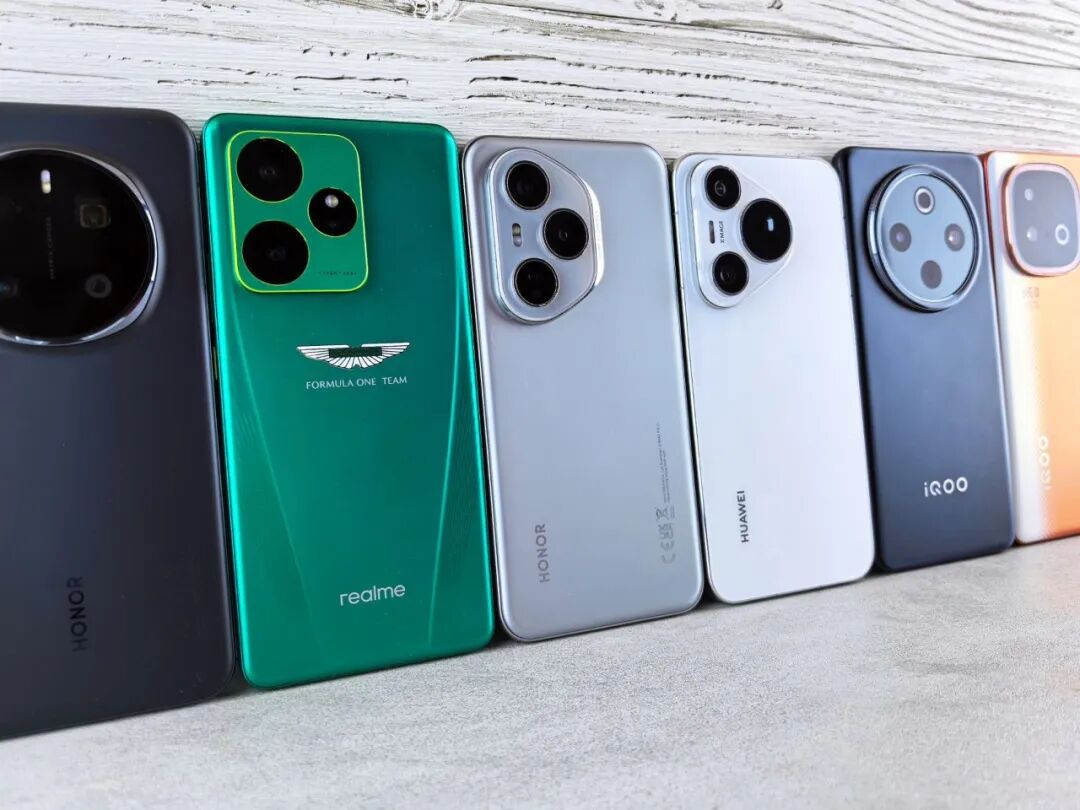
Fourth, the underlying growth logic of the phone market is being rewritten. In the long run, the growth logic of the phone industry has changed. The old model—relying on a flood of models, driving volume with budget phones, and spreading R&D costs through scale—is becoming ineffective. The future will more likely shift toward a model of higher revenue per unit: sell fewer, but earn more steadily on each.
Competition in the mid-to-high-end market will become mainstream, and the era of low-end price competition is essentially over. The market will clearly diverge in a K-shape: high-end players like Apple and Huawei will see their advantages amplified because they have brand premiums, supply chain capabilities, and high-net-worth user bases; mid-to-low-end manufacturers will be continuously squeezed, especially brands that rely on entry-level shipments and lack core premium capabilities—their pressure will be greater.
This doesn't mean the low-end market will disappear entirely, but it will become thinner and narrower, and some price segments may even be replaced by second-hand and refurbished phones. Phones are no longer just a game of "hardware upgrades"; manufacturers will increasingly focus on system services, trade-ins, cloud storage, AI features, and ecosystem stickiness. Simply put, in the past they wanted you to switch phones frequently; in the future they may want you to stay in the same ecosystem longer.
It's fair to say that phones turning from fast-moving consumer goods back into durable goods may not be a bad thing for the industry. The era of extensive growth is over, and the remaining players must take product development seriously. But for Chinese consumers accustomed to "switching every two years, cheaper each time," this shift will indeed take some getting used to. Cheap phones haven't disappeared—their former existence was built on three premises: cheap memory, overcapacity, and manufacturers burning money to grab share. Now none of these three premises remain.
END
Daily quote: To cultivate oneself, purity of mind is key; to navigate the world, caution in speech comes first. Learn to be someone who plants blessings. Ask not where blessings go in life; cultivate goodness with a pure mind, and blessings will arise on their own! Remember, what others can give you is not yours; what you can give others is truly yours! In this life, may you wade through the muddy waters of the world yet remain unstained by its worldly ways.
-
![]()
Phone Sales Hit a Ten-Year Low While Prices Keep Climbing—What's Going On?
-
![]()
Revenue of 94.14 Billion Yuan, Market Value of Only 89 Billion—Is Foxconn Industrial Internet Undervalued?
-
![]()
Microsoft Taps NVIDIA to Take On Apple Head-On: Redmond's High-End AI PC Gamble
-
![]()
DHS Leak Exposes 41,000 Employees: Undercover Agents and Grok Permission Groups Among the Casualties
-
![]()
Apple Actually Went Ahead and Made a Touchscreen MacBook, Exactly 16 Years After Steve Jobs Said It Wouldn't Work
-
![]()
Exclusive: The Two Turning Points That Sealed Xiaodu's Fate
-
![]()
Zhongji Innolight's Net Profit Triples: The Cash Flow Test Behind the AI Frenzy | Q3 Report
-
![]()
The $5 Billion Rumor and the $20 Million Floor Price: Character.AI's Death Ledger