Doubao Phone Hits the Market: ByteDance's Bigger Game on the Phone Ecosystem
 11/04 2026
 446


By mass-producing the Doubao phone at this particular moment, ByteDance is betting that the "AI experience" can give consumers a reason to upgrade—something that the traditional hardware-spec race can no longer deliver.

On September 1, Nubia announced on its official Weibo account that the NaviX Ultra, equipped with the Doubao Phone Assistant, had officially received network access approval from the Ministry of Industry and Information Technology and is slated to go on sale in September. According to the official statement, the model has completed the full compliance process—from large-model filing to terminal network access—making it the world's first AI agent phone to do so. Nubia President Ni Fei remarked on the day of certification: "Giving users peace of mind is the prerequisite for technological innovation."
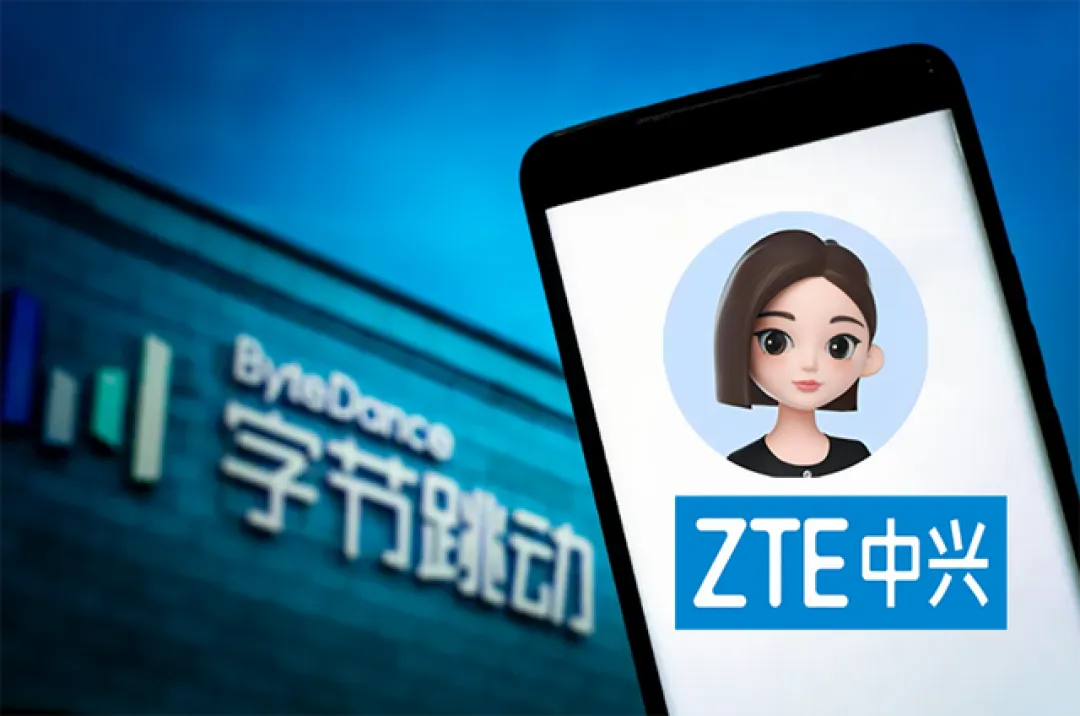
Yet beyond the hardware, the market is more focused on the software inside the phone—the Doubao Phone Assistant. The model is developed and produced by Nubia under ZTE Corporation, with ByteDance supplying the AI capabilities. On July 15, its on-device large model passed generative AI service filing, in the same batch as Apple Intelligence and Huawei Xiaoyi, making it an AI agent phone that has completed the full "large-model filing—terminal network access" process. ByteDance's stance on "making phones" was flatly denied just a year ago—in August 2025, rumors swirled that ByteDance was developing its own phone, and the company responded that it "does not involve the research, development, and launch of its own phone products."
So why can't ByteDance stay away from phones? The answer begins with a rejected collaboration.
01 ByteDance Rejected Across the Board
ByteDance's phone history goes back a long way. In 2019, it acquired part of the patent rights of Smartisan Technology and the Nut phone team, forming New Stone Laboratory, and successively launched the Nut Pro 3 and Nut R2—the latter selling fewer than 100,000 units a year by various estimates. In January 2021, New Stone Laboratory was merged into the education hardware team, and the phone business effectively ground to a halt.
But ByteDance never truly walked away from phones. Before the Doubao phone went on sale, some users spotted residual Smartisan code identifiers in the system settings, and the built-in ringtones included the classic Smartisan phone song "Mi Dian." More telling is the organizational continuity: according to media disclosures, ByteDance's Ocean team, which handles AI hardware, includes members from the Smartisan phone, PICO, and Oladance teams acquired over the years, and in 2025 it also absorbed some employees from Honor's phone business. In other words, the people and assets for making phones have always stayed within ByteDance—just in a different position.
In the first half of 2024, ByteDance made its first phone-related attempts, positioning itself initially as a large-model and AI supplier—seeking to partner with phone manufacturers to embed the Doubao large model into phones as a system-level capability. One of the partners was Nubia under ZTE. At ByteDance's all-hands meeting in February 2025, CEO Liang Rubo listed "exploring new UI interaction forms" as one of the year's three major AI goals, and phones are precisely the hardware carrier for that goal. In ByteDance's plan, this is the last link in a "trinity" layout: the combination of large-model capabilities, super apps, and hardware terminals. So far only Google has assembled a similar hand—the Gemini large model, GMS (essential for Android phones), super apps like YouTube, and Pixel phones—and Pixel's global sales share is less than 1%.
The plan did not progress smoothly, as ByteDance ran into a wall of competitors. Huawei tied its Pangu large model to HarmonyOS, Xiaomi developed MiLM and integrated it into HyperOS, OPPO chose to work with StepFun, and Honor joined hands with Zhipu. Reports said the first phone manufacturer ByteDance approached was actually Honor, but the two sides failed to reach an agreement; ByteDance also discussed cooperation with Samsung, again to no avail. ByteDance even offered concessions—according to brokerage research notes, it proposed in early negotiations that Doubao completely take over the phone AI assistant and all traffic, in exchange for waiving hosting fees and bearing token consumption costs—but mainstream manufacturers still declined. In the eyes of its partners, ByteDance has both self-developed models and super apps like Douyin; once it enters the system's bottom layer, the initiative will no longer belong to them. Some industry practitioners liken the changes brought by large models to the impact the iPhone and Android had on Nokia back then, implying: no one wants to be the next to be disrupted.
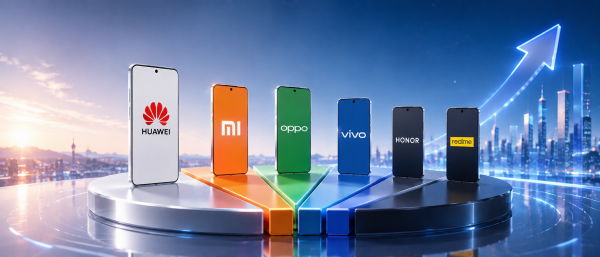
But "being rejected" only tells half the story. ByteDance's AI capabilities are expanding rapidly on another front: as of the end of 2025, Volcano Engine's large-model services covered 9 of the global Top 10 phone manufacturers, over 80% of systemically important banks, and 90% of mainstream automakers; on August 1, 2025, Xiaomi Browser launched an AI search feature that integrated precisely the Doubao large model; AIoT products connected to Doubao have shipped over 1 million units, with expectations to exceed 10 million by the end of the year.
This situation has precedents in the automotive industry. Huawei also boasts strong intelligent-driving capabilities but does not build cars itself. Seres, HarmonyOS Intelligent Mobility's earliest partner, was one of the automakers with the lowest market share at the time, and only later did the partnership gradually expand to more manufacturers. ByteDance's choice of ZTE follows a similar logic: ZTE has long been lumped into the "others" column in major phone sales statistics and urgently needs an AI story to turn things around, so it is willing to hand over the system's bottom layer to ByteDance. Some analyses call this cooperation a "strategic proof of concept"—first build a model with a non-mainstream manufacturer, then attract more manufacturers to follow.
02 Prying the Cheese
The proof-of-concept machine first appeared on December 1, 2025: the Doubao Phone Assistant technical preview was released with the Nubia M153, priced at 3,499 yuan, with 30,000 units in stock. On the same day, the China Academy of Information and Communications Technology released the "Dual Authorization Security Guidelines for End-Cloud Collaborative Agent Interaction" at the Internet Society Conference, which explicitly stated: "When an agent accesses third-party applications, it shall follow the verification rules of the third-party applications and shall not bypass verification measures by simulating user behavior, forging interaction events, automatically generating user responses, or other means."
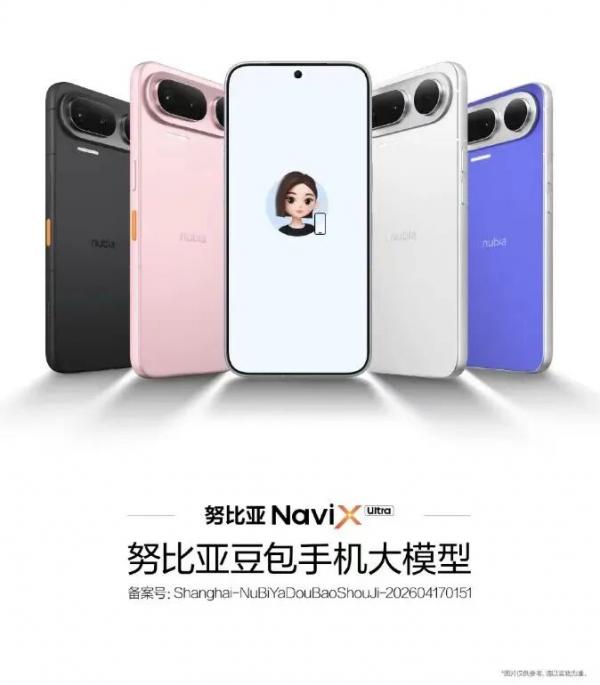
Orders for the M153 were cleared within hours of going on sale. What made it sell out was not hardware specs but capabilities: once the Doubao Phone Assistant obtained system-level permissions, users needed only one instruction for the AI to execute tasks across applications—price comparison and ordering across all platforms, organizing and sharing Xiaohongshu guides, automatically replying to WeChat messages. Some media tested the process and found it took about 1 minute and 56 seconds for the AI to complete one cross-application operation, nearly a minute slower than manual operation. The capability is real, but the efficiency is not yet mature.
The buzz did not last long. On the evening of December 2, some users reported that WeChat exited abnormally when the Doubao Phone Assistant operated it on the M153; on December 3, applications such as Taobao, Xianyu, Agricultural Bank of China, and China Construction Bank successively popped up security warnings. At 9 p.m. on December 3, Doubao officially announced the offline of the AI assistant's WeChat operation feature; on December 5, it announced restrictions on the use of financial applications and some game scenarios. From launch to full-scale contraction, the Doubao Phone Assistant lasted five days.
Subsequent testing by technical personnel found that the M153 had opened a system permission called INJECT_EVENTS for the Doubao Phone Assistant—in the Android permission system, this is the highest-level high-risk permission, previously reserved only for phone manufacturers themselves or their deeply authorized partners. Hackers who break through system restrictions to obtain this permission face criminal liability for intruding into computer systems. This permission allows programs to inject simulated user input events into the system: the Doubao Phone Assistant reads the screen, identifies buttons, and simulates clicks. What WeChat receives is a series of input signals hard to distinguish from real user operations. Combined with risk factors such as new devices and new accounts, the risk-control system flags it as a high-risk operation, and revoking the login status is the most direct response. Some security experts compare accessibility permissions to a "master key" that can open the "access control" between apps—which is precisely what super apps fear most.
The strong reaction from super apps was therefore almost inevitable. In April 2025, the WeChat Security Center issued an announcement reminding users not to use third-party tools under the name of "AI management of WeChat chat records"; in August, WeChat again banned the relevant permissions of a batch of AI agent products, signaling a strict prohibition of simulated click operations on WeChat. Tencent President Liu Chiping stated at an earnings call that WeChat will launch its own AI agent. 360 founder Zhou Hongyi predicted after the Doubao phone release that major apps might adjust page structures and add dynamic verification codes to prices, making it harder for AI to read information.
On January 26, 2026, this offense and defense was brought to Tencent's annual meeting. Ma Huateng named the Doubao phone at the employee meeting, saying that Tencent has always taken a clear stand against "using black-market plug-ins to record and upload users' phone and computer screens to the cloud," because it is "extremely unsafe and irresponsible." That evening, the Doubao Phone Assistant responded via its official Weibo: it strictly follows user authorization, and cloud processing follows the principle of "no storage, no training."
The awkward situation of the Doubao Phone Assistant actually had precedents. When Apple released Siri AI in 2024, it claimed it would be able to directly read the screen, but at the 2026 developer conference it abandoned this feature and switched to the App Intents framework, similar in purpose to MCP, allowing developers to authorize opening app content for Siri to call; Google Pixel phones support a similar framework but only open screen-reading control to a few overseas food delivery, fresh grocery, and ride-hailing apps that have reached cooperation; Honor's cooperation model with WeChat is that the phone assistant understands user instructions and initiates a call to WeChat, and WeChat, after receiving the instruction, completes message sending, voice or video call initiation itself, and then returns the result to the phone assistant. Throughout the process, the AI cannot see the WeChat interface. Some media wrote in their reports: how AI can control phones is not a technical issue, nor mainly a user privacy issue, but more about the power relations among all parties.
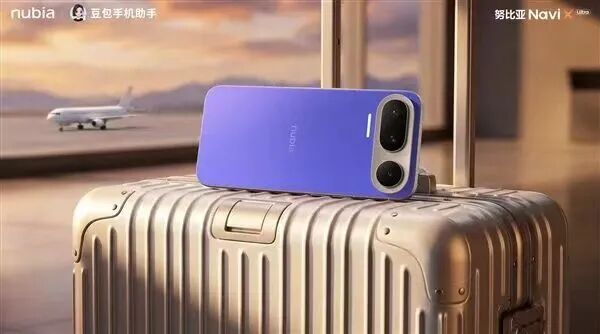
The first-generation proof-of-concept machine ended in the capacity of a "technical preview." But demand has been verified: early users willing to pay for "AI errands" have appeared, so the market is not the problem; the real problem is that if super apps do not open up, AI can hardly move forward. ByteDance's response was to change the technical route—from simulated clicks to protocol calls. On July 16, 2026, the second-generation model NaviX Ultra debuted at the World Artificial Intelligence Conference, with memory increased from 8GB in the first generation to 16GB and 24GB; in terms of technical route, the Doubao Phone Assistant abandoned the first generation's graphical interface simulated clicks and switched to MCP and A2A protocols, waiting for applications to actively open interfaces, with AI accessing as a service. ZTE Senior Vice President Ni Fei said in a group interview that the true commercialization of AI phones is not about completing a beautiful demo, but about making users willing to use them every day, and "daily use" requires the cooperation of commonly used apps. What ByteDance wants to pry is clearly a bigger chessboard.
03 A Bigger Chessboard
The chessboard here refers to the entire hardware ecosystem in ByteDance's eyes: phones are the first square, and earphones, glasses, and toys are all within the layout. According to industry analysis, the business model of the Doubao Phone Assistant is to charge cooperating phone manufacturers technical licensing fees and AI service subscription fees. If this "two-way charging" holds, ByteDance's role will return to that of a "platform party."
The cooperation model varies by manufacturer. For top manufacturers with fully self-developed ecosystems such as OPPO, vivo, and Honor, Doubao's collaboration is concentrated at the technical level—model integration and invocation, or cooperation on modular products like "Doubao Input Method"; the core voice entrances of these top manufacturers (Xiaobu Assistant, Blue Heart Little V, etc.) will not be conceded; for brands with limited domestic market share such as Transsion, Meizu, and Lenovo, Doubao proposes a deeper solution—directly building "Doubao AI" into the system level as a first-level entrance, where users can activate the full-featured assistant through a dedicated button or wake word. This model is compared in the industry to the deep binding of the "Seres-Huawei" style: hardware manufacturers gain differentiated AI capabilities, and ByteDance gains a user base and a data closed loop.
The deadlock on the ecosystem side is also loosening. In February 2026, reports said that some Alibaba-affiliated apps had reached a "ceasefire agreement" with Doubao: app manufacturers allow devices to log in normally, while Doubao proactively restricts AI operation scenarios. Previously, on December 10, 2025, some Alibaba-affiliated applications had successively lifted login restrictions on the device. From collective blockade to "ceasefire," and then to ByteDance negotiating partial permissions with high-frequency service platforms such as ride-hailing, food delivery, and ticket booking, ecosystem confrontation is beginning to give way to commercial negotiations.
ByteDance's chips have been laid out. According to third-party data, as of August 2025, the Doubao App had over 150 million monthly active users, making it the AI application with the largest user base in China; according to IDC statistics, in the first half of 2025 in China's large model public cloud market, Volcano Engine ranked first with a 49.2% share, and the daily average call volume of the Doubao large model exceeded 30 trillion Tokens in September 2025. This approach is similar to Android's expansion path back then—Google does not make phones, but through GMS it defined the intelligent experience of Android phones and charged manufacturers licensing fees. ByteDance wants to occupy this position, only replacing the "operating system" with the "large model." But similar to the fragmentation of the Android ecosystem, ByteDance also needs to negotiate with each manufacturer one by one; the data and privacy boundaries involved in on-device AI still have no industry consensus.
The window of opportunity is narrowing. According to IDC forecasts, China's AI phone shipments will reach 147 million units in 2026, accounting for more than half for the first time; in September, the phone market ushers in the densest launch wave in recent years—Huawei releases the tri-fold Mate XT 2 on September 7, Apple releases its first foldable iPhone Ultra on September 10, Xiaomi launches the wide-fold 18 Fold, and the straight-slab flagships from vivo, OPPO, and Honor debut in the same period. Meanwhile, affected by memory chip price increases, multiple manufacturers have raised prices in batches since March. IDC data shows that China's smartphone shipments in the second quarter of 2026 were approximately 66.01 million units, down 4.3% year-on-year, marking five consecutive quarters of decline.
Doubao Phone chose to mass-produce at this juncture, betting that the "AI experience" can become the reason for consumers to upgrade their phones—an answer that the traditional hardware spec competition cannot provide.
(The images and public data materials in this article are sourced from the internet and public industry platforms. If there is any infringement, please contact us promptly for timely modification.)
-
![]()
Baidu AI Redraws Its Battle Lines
-
![]()
Memory Prices Are Soaring, and Better Days Are Coming for Longcheer Technology and Its Peers
-
![]()
Audi's North-South Split: Volkswagen Can't Afford to Wait
-
![]()
Doubao Phone Hits the Market: ByteDance's Bigger Game on the Phone Ecosystem
-
![]()
OpenAI's Mysterious Ghost Model Briefly Appears, API Pulled Within Minutes
-
![]()
Shenzhen Computing Power Chip Company Secures Nearly 2 Billion Yuan in Back-to-Back Financing
-
![]()
Najing Technology Secures Series A+ Funding in the Tens of Millions of Yuan!
-
![]()
Q3 Net Profit Plunges 30,154.65%: Lianchuang Electronics' Cracks Can No Longer Be Hidden