Is Pop Mart and Luckin Coffee Eyeing the Same Piece of Cake?
 11/23 2026
 357
"
Pop Mart tested the waters first, and Luckin Coffee is right on its heels. Two giants setting their sights on the small home appliance track at the same time inevitably sparks the discussion of "why would consumer brands make home appliances?" So what are they really calculating?
Cover image source 丨 Unsplash"

Pop Mart and Luckin Coffee—one does designer toys, the other does coffee—yet they have both barged into the home appliance track one after the other.
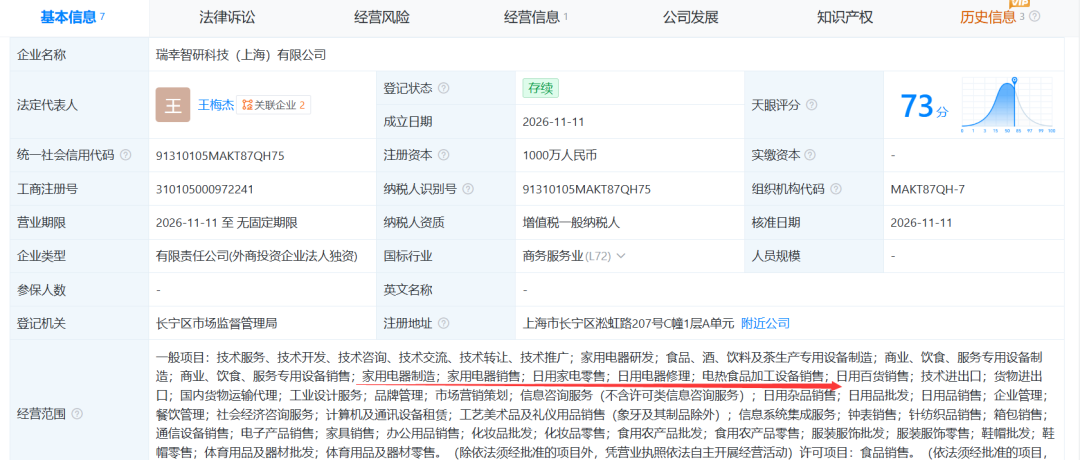
Recently, Luckin Coffee established Luckin Zhiyan Technology (Shanghai) Co., Ltd., whose publicly registered business scope includes the manufacture and sale of household appliances, and the sale of household electrical appliances and electric heating food processing equipment, among others.
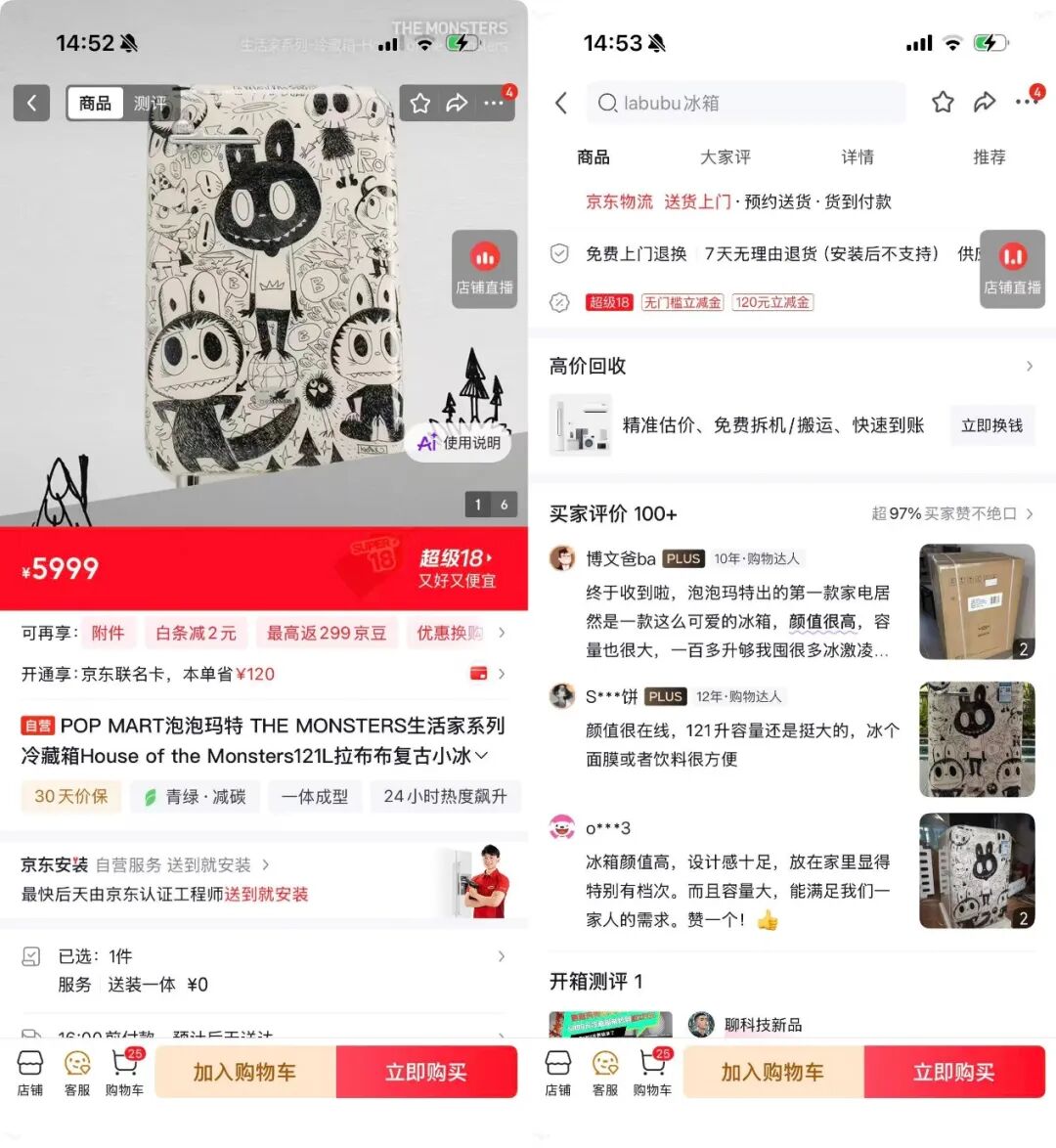
Half a year earlier, Pop Mart had also launched small home appliance products centered on its IP, with the first product being the THE MONSTERS Lifestyle Home series fridge, which has already landed on e-commerce platforms such as JD.com and Tmall.
However, these two fridges were limited releases with modest volumes. Pop Mart's Chief Operating Officer Si De said at the first-quarter earnings call that "(home appliances) account for a very low proportion relative to overall revenue now."
Pop Mart tested the waters first, and Luckin Coffee is right on its heels. Two giants setting their sights on the small home appliance track at the same time inevitably sparks the discussion of "why would consumer brands make home appliances?" So what are they really calculating?
1 Pop Mart's Home Appliances Make "No Splash"
In March this year, Pop Mart Chairman Wang Ning announced at an earnings conference that the company would launch derivative small home appliance products centered on IP, and stated that the small home appliance business is an important layout of the company's IP collectivization strategy.
Market sources said Pop Mart planned to launch small home appliances covering categories such as electric kettles, coffee machines, electric toothbrushes, and hair dryers, mainly adopting an OEM cooperation model, and had already entered a large-scale stocking phase.
In May, Pop Mart's first home appliance products officially went on sale—two LABUBU fridges with different design styles, officially priced at 5,999 yuan, with each model limited to only 999 units globally.
These two products had over 60,000 reservations before going on sale, sold out within one minute of launch, were once hyped to around 20,000 yuan on second-hand trading platforms, and even saw scalpers quote extreme prices of nearly 100,000 yuan—truly a massive spectacle.
But half a year has passed, and this product can no longer be found on the Tmall official flagship store. Only the JD.com home appliance self-operated flagship store still sells it, and it can be purchased at the original price. But the better-performing model has only 200+ reviews.
At the first-quarter earnings call in May this year, Pop Mart disclosed that fridge revenue was about 6 million yuan, but according to analyst estimates, the company's revenue for that quarter was about 6.76 billion yuan. The company's Chief Operating Officer Si De made it clear that "there are no plans to develop toward traditional home appliances."
By Pop Mart's semi-annual report, the company no longer mentioned the home appliance business, and brands such as electric kettles and coffee machines had only quietly entered Pop Mart's offline bakery and home goods stores.
In fact, before Pop Mart's home appliances officially hit the market, there were two voices in the market. Some skeptics argued that a designer toy company couldn't make good home appliances; others were positive, believing that designer toys could unlock new growth for the home appliance industry.
But Pop Mart's thinking may be more simple-minded.
Today, the growth of designer toy blind boxes is gradually peaking, and Pop Mart has begun trying to place IP into more consumption scenarios, such as daily home goods, fashion, and audio-visual entertainment, to find new growth points for IP and further extend the IP lifecycle.
It's just that this attempt by Pop Mart found the timing, conditions, and support all not quite right.
Over the past two years, the home appliance market has remained sluggish. Although Pop Mart's IP can bring certain emotional value, against the backdrop of increasingly rational consumer attitudes, it is really difficult to sustain such a high premium.
Some consumers compared small refrigerators on the market with configurations similar to the Pop Mart fridge—121L, direct cooling, Grade 1 energy efficiency—which generally cost around 2,000 yuan, while Pop Mart's price was almost triple that.
From this point of view, Pop Mart is still making home appliances following the mindset of making designer toys.
Long ago, Wang Ning mentioned his philosophy on making designer toys: he believed that "useless things are truly eternal, because as long as a product has functional attributes, it means its lifecycle will inherently decay."
But obviously, the practical attributes of home appliances are completely opposite to the "uselessness of the useful" logic of designer toys. Consumers are willing to pay a premium for "beautiful little useless things," but once it becomes a fridge with specific functions, consumers not only want it to look good but also want it to be practical and durable.
Pop Mart has not given a satisfactory answer to this question. For fans, the fridge is too large to collect; for ordinary consumers, this fridge offers neither cost-effectiveness nor functional innovation, making it hard to appeal to them.
This also serves as a reminder to latecomers: for those consumer brands wanting to cross into home appliances, besides using familiar IP collaborations to attract fans, what else can they rely on to make more consumers willingly pay?
2 Luckin Coffee Follows Behind to Learn
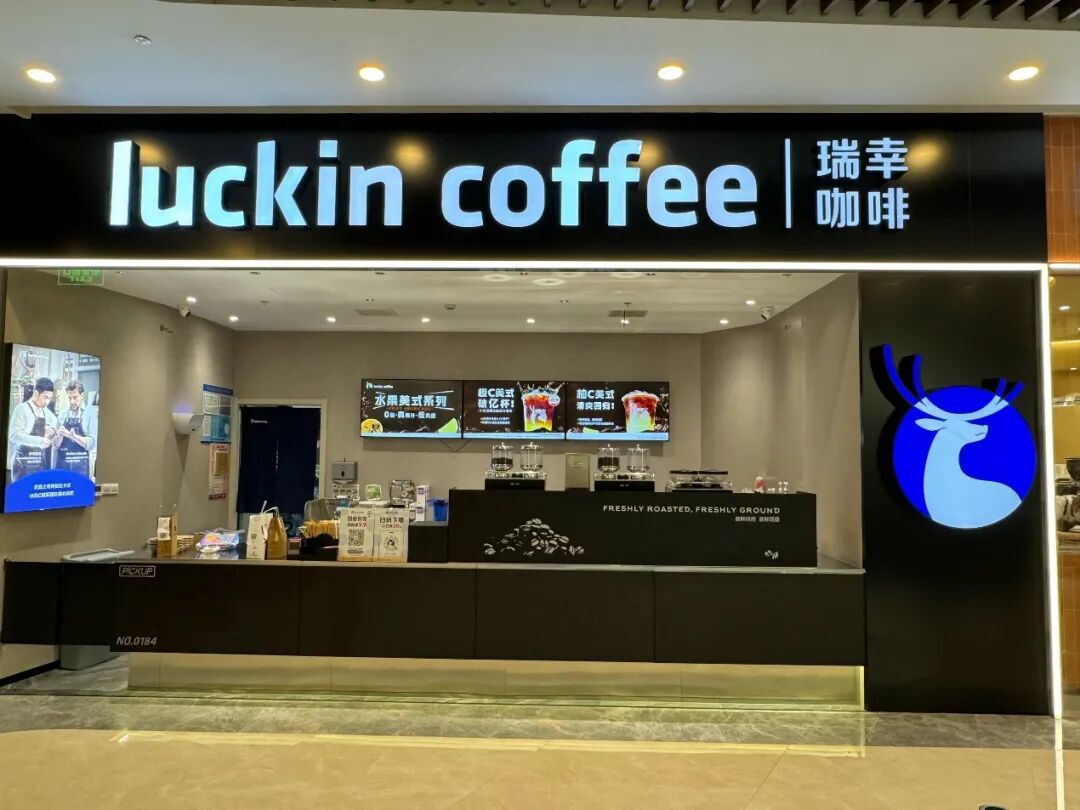
Recently, Luckin Coffee quietly established a new company whose main business scope includes the manufacture and sale of household appliances, seemingly also intending to cross into the home appliance track. Can it avoid the pitfalls Pop Mart stepped into?
Judging from the overall environment, the small home appliance market is still very cold.
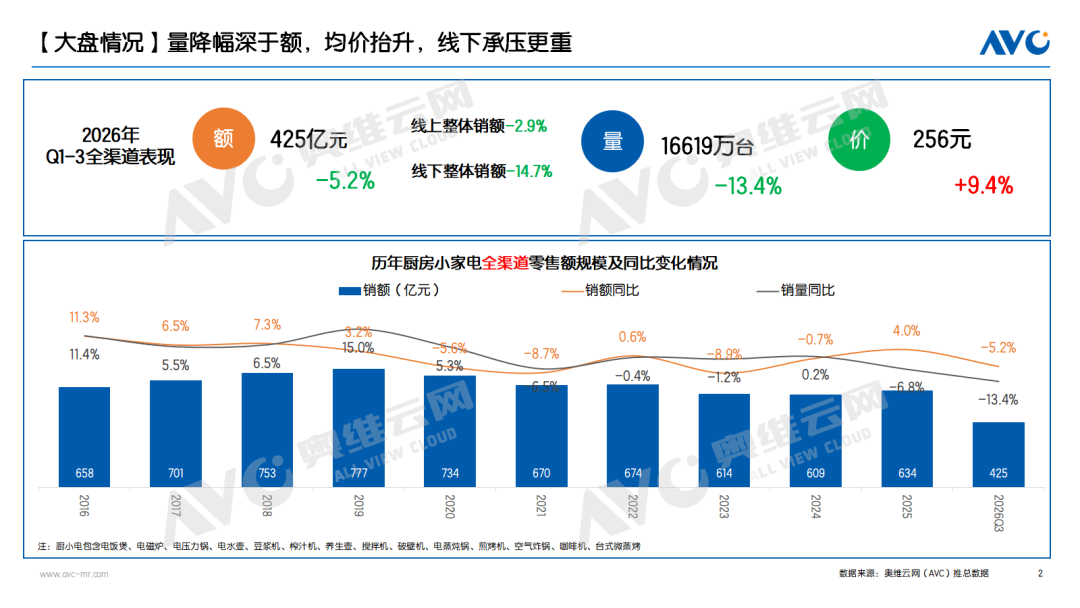
Data from AVC shows that in the third quarter of 2026, domestic kitchen small home appliance retail sales fell 5.2% year-on-year, with overall sales volume down 13.4% year-on-year; personal care small home appliance online retail sales were 17.34 billion yuan, down about 3.4% year-on-year.
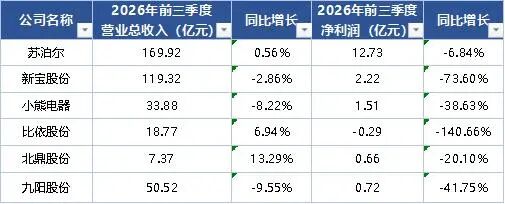
Specifically for listed small home appliance companies, the situation is also not optimistic. In the first three quarters of this year, leading enterprises such as Joyoung, Bear, and Xinbao saw both revenue and profit decline; although Supor's revenue grew slightly, its net profit fell 6.8% year-on-year.
The entire small home appliance track is even colder than major appliances and black appliances. In addition to weak consumer demand, the national subsidy has been scaled back starting this year, and kitchen small home appliances have been removed from the subsidized categories, directly weakening consumers' willingness to upgrade.
At such a difficult moment, why is Luckin Coffee entering the market against the trend?
First, although the small home appliance market is declining, average market prices are rising. In the first three quarters of this year, the average price in the kitchen small home appliance market rose 9.4% year-on-year to 256 yuan.
This shows that consumers have become rational—they would rather buy a little less but are willing to pay a premium for quality and experience. The focus of industry competition is beginning to shift from price involution to value competition.
Taking kitchen small home appliances as an example, in the first half of this year, the share of rice cookers in the price segment above 1,000 yuan reached 18.7%, up 4.2% year-on-year; in categories such as electric kettles, grills, and air fryers, mid-to-high price segments all saw double-digit share growth.
In addition, the trends within the small home appliance track are increasingly diverging. Traditional categories such as rice cookers, blenders, and electric kettles are shrinking, but some more everyday and practical categories are starting to sell well—coffee machines being a typical example.
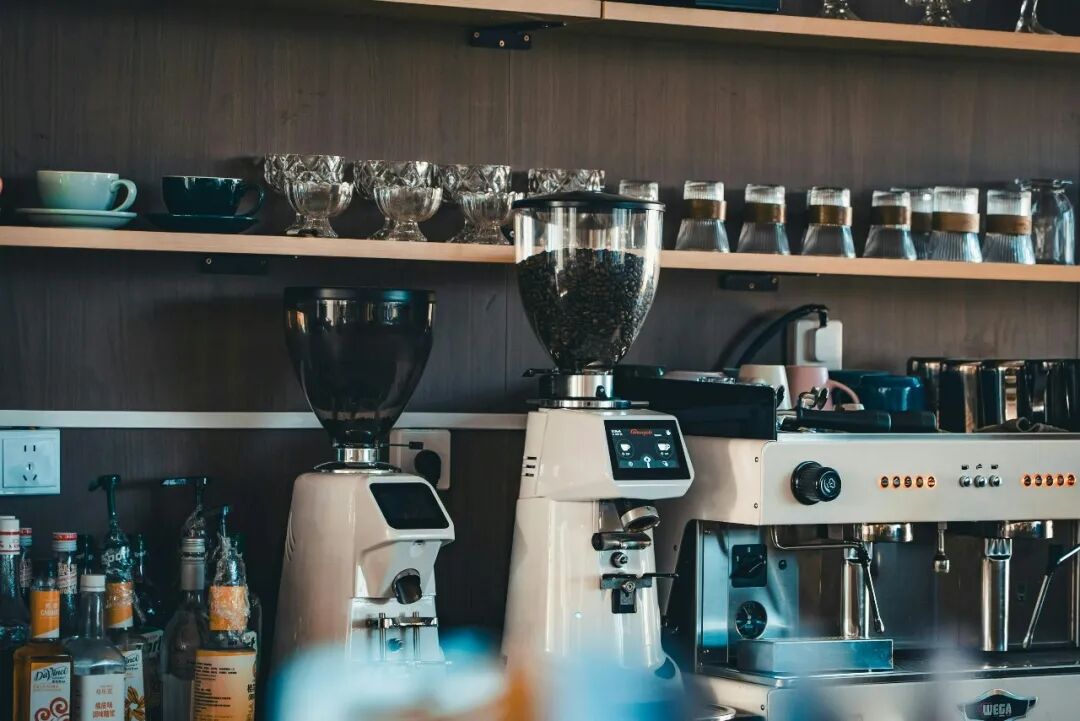
AVC aggregate data shows that in the first half of 2026, coffee machine retail sales grew 6% year-on-year online and surged 65% year-on-year offline, achieving counter-trend growth amid overall pressure on the home appliance market.
Over the past few years, the coffee price war completed user education for the industry, but as subsidies receded, 9.9-yuan coffee became increasingly rare, consumers began to feel the pinch, and simply making a cup themselves instead boosted coffee machine sales.
From this perspective, Luckin Coffee's opportunity in the home appliance market lies in these two changes: it can tap into subcategories that are still growing, and it can seize the premium space vacated by the home appliance price involution.
What's even better is that Luckin Coffee has advantages others don't in the coffee machine business.
By selling coffee machines, Luckin Coffee can unlock subsequent repurchases of coffee beans, capsules, and more, and connect its entire Luckin membership system, which had 123 million average monthly transacting customers in the third quarter—precisely where its supply chain and consumer mindshare are most valuable.
3 How Should Small Home Appliances Break Through
Of course, whether it's the eager Luckin Coffee or the tentative Pop Mart, it's still too early to say what moves they will make on the small home appliance track in the future.
But their entry at least shows one thing: this small home appliance track still has room worth exploring.
In 2020, the sudden pandemic spawned the "stay-at-home economy," consumers spent more time at home, and demand for kitchen small home appliances soared. But as the pandemic ended and consumers returned to offline dining, the small home appliance track quickly cooled down.
In 2022, kitchen small home appliance retail sales were 52.03 billion yuan, down 6.7% year-on-year; retail volume was 220.49 million units, down 12.7% year-on-year.
However, the "blame" for small home appliances not selling cannot be placed on the market alone. Consumers' disfavor toward small home appliances is essentially because they are "impractical, uninnovative, and poor in quality."
On social platforms, some consumers complained about the breakfast pans they bought, saying they looked useful but the heat distribution was uneven and stir-frying was particularly inconvenient; others complained that cleaning juicers is troublesome and that they sat gathering dust after only a few uses.
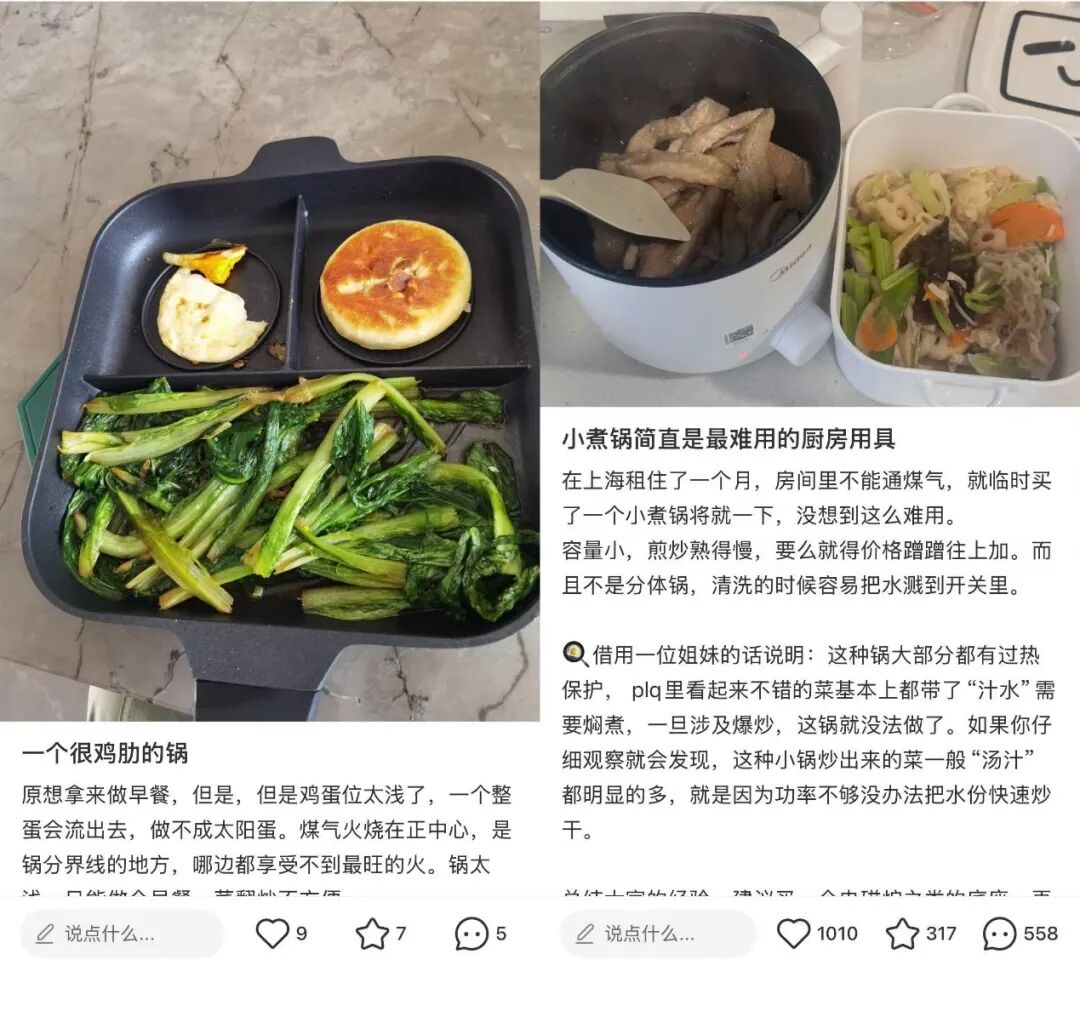
Ultimately, many manufacturers follow the trend of making small home appliances, selling neither functions nor solutions to pain points, let alone quality—they are just betting that consumers are willing to pay for traffic.
But as consumers gradually lose their mystique toward small home appliances, manufacturers are beginning to understand: small home appliances are not synonymous with refined living; they must truly bring users a better life and return to pragmatism.
On the one hand, what consumers need is not "good-looking" appliances but "good-to-use" ones.
In the first three quarters of this year, some cooking small home appliances continued to sell well: desktop electric oven sales rose 41.1% year-on-year; air fryers rose 6.7% year-on-year; Douyin data shows that from January to October this year, the sales growth rate of the shoe washing machine category reached 220%.
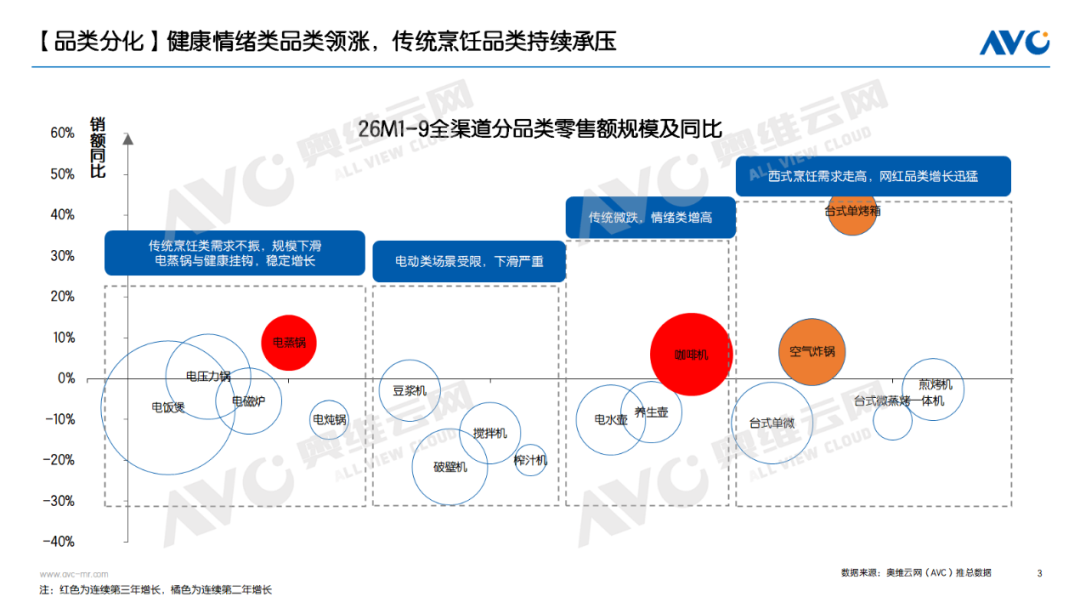
These small home appliances all share a common feature: they can solve a specific, repeatedly verified pain point—consumers don't need to turn on the stove, and can make a meal with an air fryer; with a shoe washing machine, they can avoid the hassle of squatting by the sink scrubbing shoes.
On the other hand, consumers look not only at functions but also at more multidimensional competition such as health, materials, nutrition, and intelligence.
Taking health as an example, the penetration rate of stainless steel inner pots for rice cookers has reached 42.6%, and the industry is promoting "one less coating, one less worry"; intelligent functions such as automatically matching heat to ingredients and shutting down to prevent dry burning and overflow have gradually become standard on flagship rice cookers.
At the same time, today's home appliances are becoming increasingly versatile.
In the past, functions such as steaming, boiling, stewing, and roasting were scattered across different machines; now a single all-in-one machine can cover them all. Although they can all do the job, consumers are more willing to pay for time savings and efficiency.
Times are changing, people's consumption views are innovating, and products naturally must change accordingly.
At this point, the entry of new players like Pop Mart and Luckin Coffee instead adds a mirror to the industry:
Small home appliances may seem to have a low threshold, but those that can ultimately be kept by consumers are not the gorgeous-looking ones, but those that can truly embed into users' lives and let users use them effortlessly.


-
![]()
BMW i3 and Lexus TZ Step Up: Joint Venture Brands Are Not Backing Down at the Guangzhou Auto Show
-
Understand This AI Evolution Diagram and You Understand the Essence of AI: 'Intelligence Moves Up, Users Stay Down'
-
![]()
NetEase's Latest Financial Report: High Gross Margin, Low Debt
-
![]()
AI Unemployment Buffer Period
-
![]()
"It's a Bit Late Now," Ma Huateng Said Point-Blank: Tencent Has Reached a Life-or-Death Moment
-
![]()
AI Short Dramas Begin to Impact the Gaming Industry?
-
![]()
Fangchengbao's October Domestic Sales Hit 34,761 Units, Titan 7 Duo Accounts for 68%
-
![]()
GM China October Retail: How Are Buick, Cadillac, and Zhijing Performing?