Apple Intelligence Launches Before "Dawn": Huawei Races to Release New AI Phone Brand "Starlight"
 11/24 2026
 437
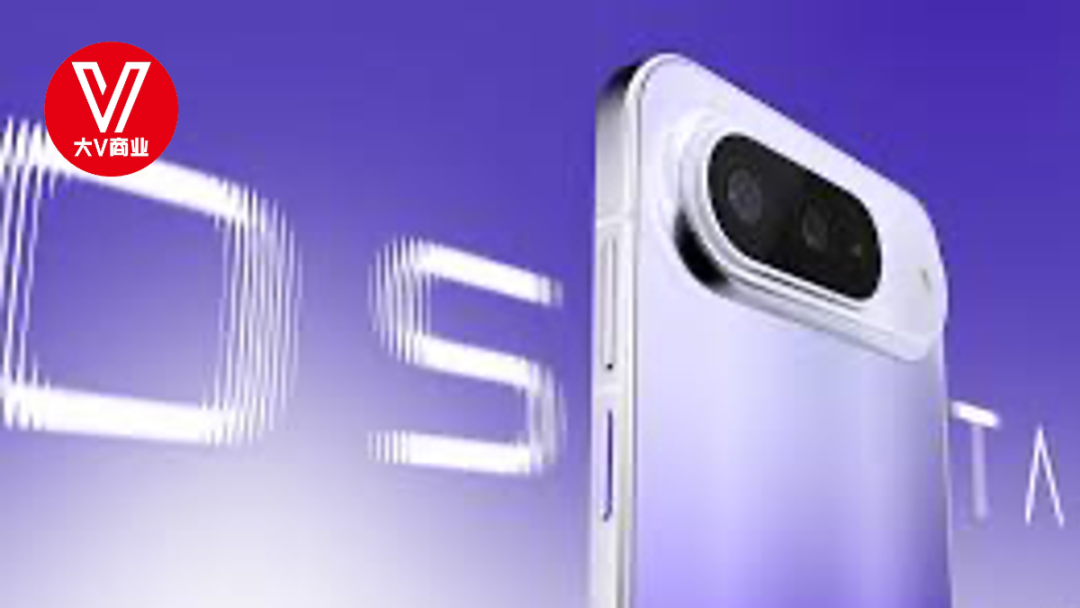
Huawei has launched yet another new phone brand, Starlight—also its first HarmonyOS AI phone.
On November 20, at the launch event for the HarmonyOS Smart Mobility Xiangjie V8 and the Starlight brand, Huawei introduced its new sub-brand OSTA Starlight, with its first HarmonyOS AI phone, the O1 Pro, going on sale simultaneously starting at 5,499 yuan.
Notably, just recently on October 31, Apple announced a partnership with Alibaba to integrate Qwen into Apple Intelligence for the China market, opening testing with the iOS developer Beta on November 4 and planning an official launch with iOS 27.3 in December.
In the AI phone market, less than a month into Apple Intelligence's China testing, a new variable has emerged.
On one side is the imminent arrival of Apple Intelligence; on the other is Huawei's AI phone brand, which debuted half a month early. Huawei Executive Director and Terminal BG Chairman Yu Chengdong set the goal for Starlight as "a pioneering technology brand beloved by consumers in the AI era." Reports indicate that Starlight shares technical foundations such as Kirin chips and HarmonyOS with Huawei's main brand.
▌1. After Eight Years, Xiaoyi Finally "Goes Official"
Huawei's AI phone efforts did not begin with Starlight.
Public records show that in 2018, the Mate 20 series featured EMUI 9.0, and the voice assistant "Xiao E" was renamed Xiaoyi; in 2019, EMUI 10 upgraded Xiaoyi from a voice assistant to an intelligent assistant; in 2023, Xiaoyi was connected to the Pangu large model, and by August of that year, monthly active users exceeded 200 million; at the 2024 Native HarmonyOS Night, Xiaoyi was upgraded to an intelligent agent, shifting from passive answers to proactive service; in 2025, it was connected to DeepSeek-R1, and in November of the same year, Xiaoyi A2A was commercialized for the first time.
In April this year, the Pura X Max debuted "Xiaoyi Companion AI," and in mid-November, a subscription-based Xiaoyi AI membership was launched. We can see that over these eight years, AI has always been a feature packed into the phone, but the phone itself was not redesigned for AI.
This is similar to Siri and Xiao Ai Tongxue—AI features have always existed, but only as part of the operating system.
With the launch of the Starlight phone, AI is beginning to become an important part of the phone's operating system, and is even starting to dominate how the phone is used.
The name OSTA comes from the initials of four words.
According to Huawei, OSTA stands for Original, Smart, Technology, and Accessible, emphasizing original exploration, intelligent technology, and accessible experience for all.
Starlight's brand proposition is "Come as you are, shine your own light," and its target audience is pioneering users who dare to try new things.
At the product level, the O1 Pro features a 6.39-inch 16:9.5 wide flat display with a 96.1% screen-to-body ratio, equipped with the Kirin 9030S and HarmonyOS 7 AI Pioneer Edition, a 200MP Red Maple imaging system, and a 7,000mAh battery.
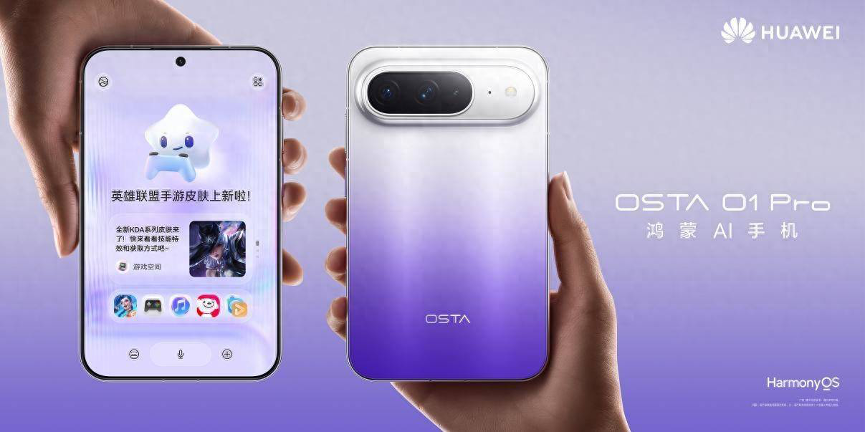
Huawei summarizes the AI experience in three points:
1. The industry's first system-level AI screen, ready on unlock, with one-step access to what you need;
2. Proactive system intelligence, opening over 300 system data points and more than 2,100 system skills to achieve second-level proactive service;
3. Long-term companionship and growth, based on a four-layer memory architecture, with long-cycle memory accuracy exceeding 92%.
The O1 Pro redesigns the entire device for AI at the product definition level. Xiaoyi is no longer a tool to be invoked, but an intelligent hub responsible for perception, memory, understanding, reasoning, and execution.
Reports indicate that more than 500 HarmonyOS ecosystem partners have integrated with Starlight.
Some observers believe Starlight's price point fills the gap left after Honor was spun off.
In September 2011, Honor's first model U8860 targeted Xiaomi, and in 2013 it was officially established as an internet phone brand for young people. Public records show that in 2015, Zhao Ming became Honor's president; in 2017, Honor achieved the top spot in online sales, with its highest China market share reaching 16.7%, making it one of the top two phone brands in China at the time.
After Honor was spun off, its share once fell to 3%.
▌2. AI Phone Competition Begins
Starlight is not the first to eat the crab in AI phones.
Over the past year, multiple players have already begun competing. In December 2025, ByteDance's Doubao partnered with ZTE to launch the Nubia M153 engineering prototype with a technical preview of "Doubao Phone Assistant," priced at 3,499 yuan, sold in limited quantities.
The first-generation Doubao phone took the GUI route, letting AI see the screen and tap buttons like a human, without requiring app cooperation.
But the frenzy lasted less than a week before multiple apps began restricting login on the Doubao phone due to competition and data security concerns.
For example, WeChat accounts were forcibly logged out due to "abnormal login environment," and Taobao, Alipay, Meituan, and several bank apps successively triggered risk controls. The initially promoted WeChat operation feature was forced to go completely offline.
In September this year, the second-generation Doubao phone, the Nubia NaviX Ultra, was released, starting at 5,999 yuan.
It is worth noting that this generation shifted to "protocol first," introducing the SAEP protocol, letting third-party apps declare whether they allow AI automated operations. On October 22 this year, the Doubao phone announced that 153 apps had refused to open permissions, which was described as "half the internet rejecting the Doubao phone."
Another important player in AI phones is StepFun.
As a large model company, StepFun chose to enter the phone business itself, releasing the STEPX Neo in July this year, equipped with its self-developed Step AOS system and the intelligent agent Amoo, and releasing a pioneer edition in October, priced at 3,999 yuan.
StepFun did not take the GUI route but the MCP+A2A interface route, and has reached cooperation with nearly a hundred companies including Alipay, Tencent, Ctrip, Meituan, and Didi.
The launch of Apple's China-market intelligence features is a catalyst for AI phone competition. Google phones and Apple in other markets have long offered AI features, and Google phones' flashy AI features previously sparked widespread discussion.
Meanwhile, China-market Apple Intelligence is accelerating its entry. Not long ago, Apple China finally confirmed that Intelligence would integrate Alibaba's Qwen, opening testing from November 4 and officially launching with iOS 27.3 in December.
It is worth noting that Huawei has not set short-term sales targets for the Starlight sub-brand AI phone. A Huawei representative said,
The core task is to implement innovative directions such as the still-maturing native AI interaction and new form factors, relying on pioneer users to complete technical refinement and experience validation; once the relevant solutions mature, they will in turn empower the main brand, forming a virtuous iterative loop of stable flagship backing and pioneering models testing the waters.
- End -
-
![]()
AI Hasn't Taken Over Yet, Games Are Still Carrying NetEase — Is Ding Lei Shifting the Blame to Short Dramas?
-
Sales Up 78.3%, Net Profit Down 73.3%: Leapmotor Can't Escape the "Gravity of Low Prices"
-
![]()
Revenue Soars, Stock Price Halved! How Did Lenovo Get Here?
-
![]()
Apple Intelligence Launches Before "Dawn": Huawei Races to Release New AI Phone Brand "Starlight"
-
![]()
Chongqing Post-80s Entrepreneur Makes a Fortune with AI Short Dramas: Rakes in 1.4 Billion Yuan in Nine Months
-
![]()
10 Million Smell Tags Feed an AI Nose, Perfume Companies Place Orders First
-
![]()
Major Automotive Stamping Player's Run of Strong Growth Comes to an End
-
![]()
Anthropic Pulls Off the Largest IPO in History at $81.3 Billion