Zhang Yiming’s Global Empire Surges: TikTok Achieves Scalable Profitability Across Key Markets!
 09/14 2026
 335
335
 Image Source: Weibo
China’s Internet Giant Makes Landmark Strides in Overseas Expansion.
When TikTok comes to mind, many associate it with heavy spending to attract users. After years of dominating the international short-video landscape, the key question has been whether it can turn a profit.

TikTok CEO Shou Zi Chew. Image Source: Weibo
A financial report from the UK’s Companies House reveals a significant shift: TikTok has achieved scalable profitability across a regional cluster that includes Europe, the UK, Latin America, and South Africa. Zhang Yiming’s ByteDance empire is no longer just investing heavily for user growth; it has successfully implemented a sustainable commercial model in select overseas markets.
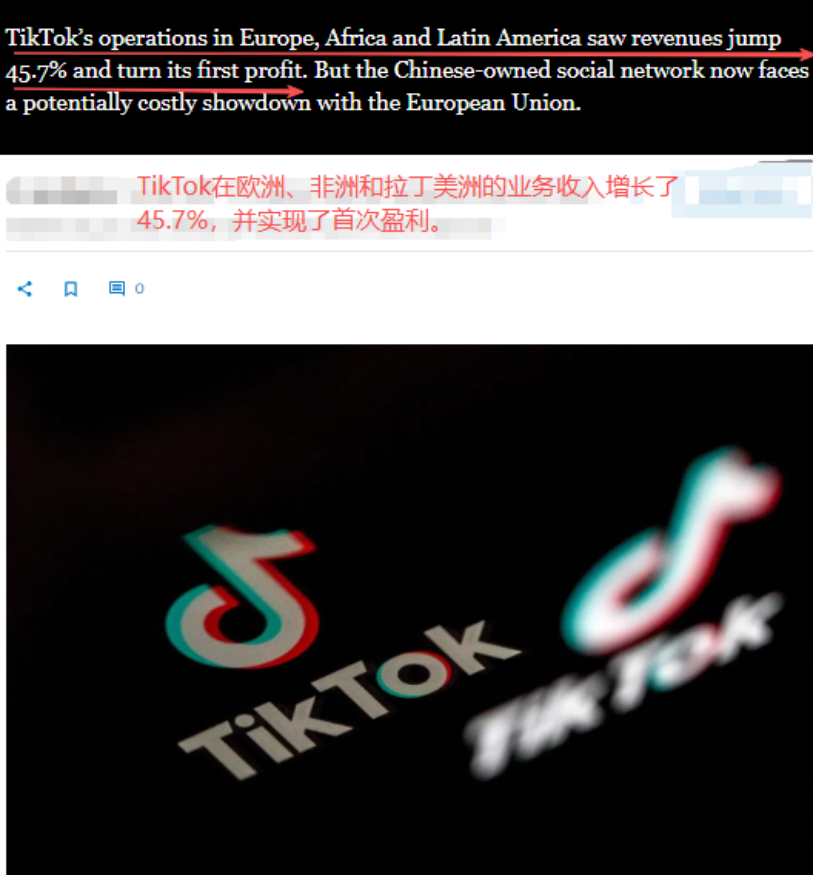
TikTok UK Achieves First Profit. Image Source: Forbes
Revenue Triples in Three Years: From Heavy Losses to Profitability
This profitability is not limited to the UK alone. TikTok Information Technologies UK Ltd, the main operational entity, acts as a regional hub, consolidating data from the UK, EU, Latin America, and South Africa.

TikTok Influencers Live-Streaming for Sales. Image Source: TikTok
The financial transformation in this region is striking:
In 2023, the market incurred a massive loss of $1.36 billion, with continuous investments in e-commerce infrastructure and user acquisition.
In 2024, losses narrowed to $657 million, despite revenue growth, as expenses remained high.
By 2025, the tide had turned: total revenue reached $9.1 billion, a significant 45.7% increase year-on-year, with a net profit of $703 million—marking the first annual profit.
Compared to $2.6 billion in revenue in 2022, regional revenue has more than tripled in just three years.
It’s important to distinguish between accounting profits and true operational performance: The $703 million net profit includes tax benefits from historical losses. Excluding this non-operational income, the true operating profit is approximately $452 million, with a pre-tax profit of $280 million. Even after accounting for policy benefits, the core business’s positive returns indicate self-sustaining growth.
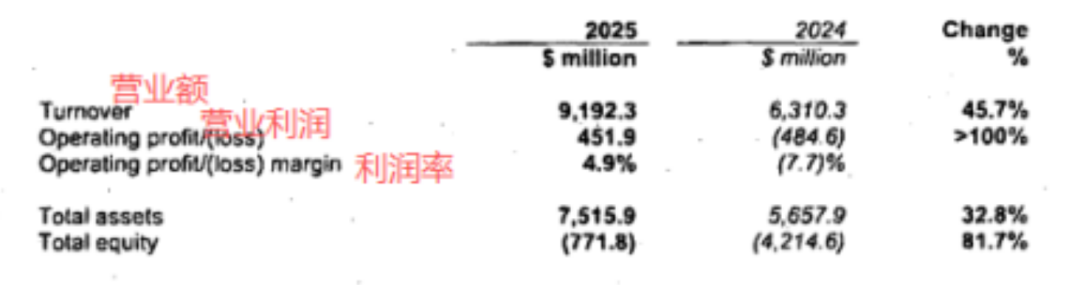
Actual Operating Profit Exceeds $400 Million. Image Source: Companies House
How TikTok Monetizes: Dual Engines of Advertising and E-commerce
TikTok’s path to profitability hinges on two core strategies: maximizing traffic value while严格控制无效支出 (strictly controlling ineffective spending).
In its early days, TikTok was primarily an entertainment app, relying on advertising for revenue, making it difficult to convert traffic into direct sales. The turning point came with TikTok Shop’s closed-loop e-commerce model.
As of June 2026, TikTok Shop has launched in 10 European countries. In just five core markets—France, Germany, Italy, Spain, and Ireland—over 100,000 businesses have joined. From August 2025 to February 2026, average daily GMV in these markets maintained triple-digit growth.
A complete commercial ecosystem has taken shape: users discover products through short videos → place orders with one click; influencers earn commissions by promoting products and creating content; brands advertise to drive traffic and complete transactions within the platform. Short videos, influencers, advertising, and e-commerce now form a closed loop within the same app, transforming traffic from mere entertainment into immediate purchasing power, significantly boosting monetization efficiency. Many overseas sellers note that TikTok is increasingly resembling Amazon.
The era of rapid growth through traffic acquisition is over. While the platform is profitable, merchant entry, fulfillment, and regulatory standards continue to tighten, as TikTok transitions from a short-video entertainment platform to a standardized trading platform.
Expanding Revenue While Cutting Costs: The Essence of Profitability
Rampant revenue growth alone is insufficient; if spending outpaces earnings, losses persist.
In 2025, marketing and management expenses in this profitable region grew by 40.4% year-on-year, significantly lower than the 45.7% revenue growth, achieving revenue growth that outpaces expense growth.
Organizational streamlining occurred simultaneously, with regional staff reduced from a peak of nearly 8,000 to 6,842, eliminating inefficient businesses and redundant positions. Instead of blindly increasing manpower for growth, the focus shifted to balancing revenue expansion with cost control.
 Image Source: Foreign Media
The Harsh Reality: Localized Profitability ≠ Global Dominance
While profitability has been achieved in Europe, Latin America, and South Africa, TikTok’s global market presents a stark contrast.
The US market remains a significant challenge. In 2023, US revenue reached $16.02 billion, indicating a massive market size. However, geopolitical tensions, compliance overhauls, and substantial investments in computing infrastructure have kept US operations in persistent losses. In early 2026, ByteDance formed a joint venture with Oracle and Silver Lake to sustain US operations.
Dragged down by massive losses in the US business, TikTok did not achieve overall global profitability in 2025. Meanwhile, regulatory pressure from the EU persists, with the risk of hefty fines looming. This regional profitability represents a phased victory, far from the final outcome.
Not Just TikTok: Chinese Overseas Expansion Reaches a “Profitability Turning Point”
TikTok’s breakthrough is not an isolated case. Previously, Chinese overseas platforms were perceived as prioritizing GMV over profits, burning money to seize markets. In the past year, leading overseas players have shifted from scale competitions to pursuing true profitability.
AliExpress: Achieved operational profitability in the second quarter of 2026, relying on overseas warehouses and local stocking to reduce logistics and return losses, enabling this veteran cross-border platform to establish an efficiency model.

AliExpress Achieves Profitability. Image Source: Alibaba
SHEIN: With a flexible supply chain securing its global market position, it initiated an IPO on the Hong Kong Stock Exchange, planning to raise approximately $1.8 billion, soon realizing its market value.
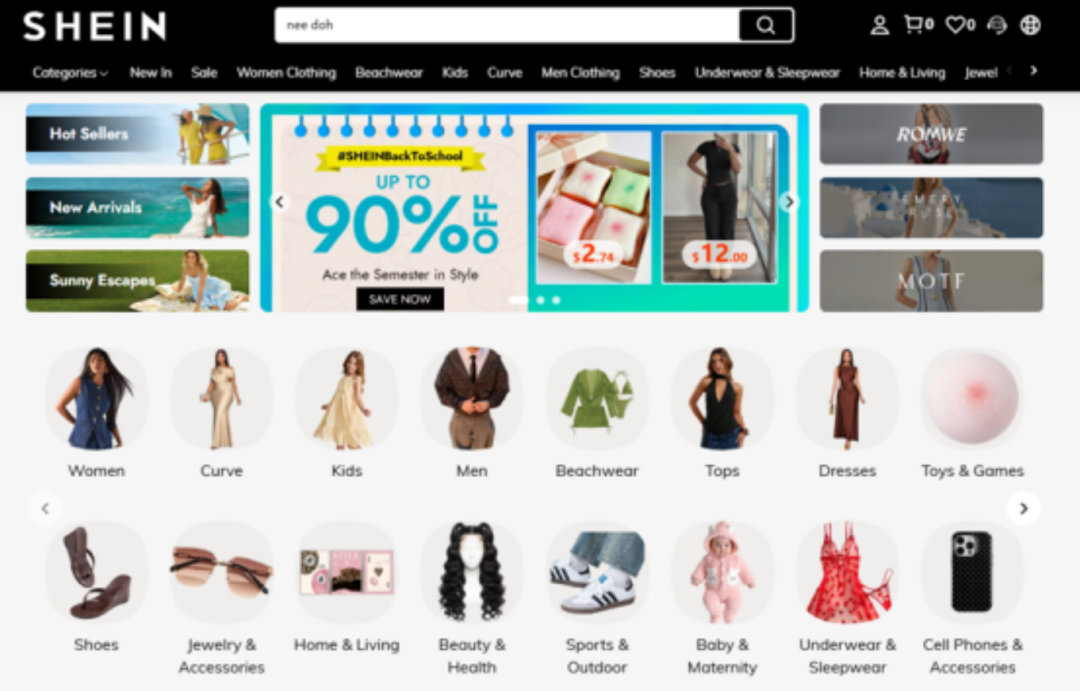
SHEIN Homepage. Image Source: SHEIN
Temu: With rapid expansion, it ranked second globally in global shopping website visits in July 2026, second only to Amazon.
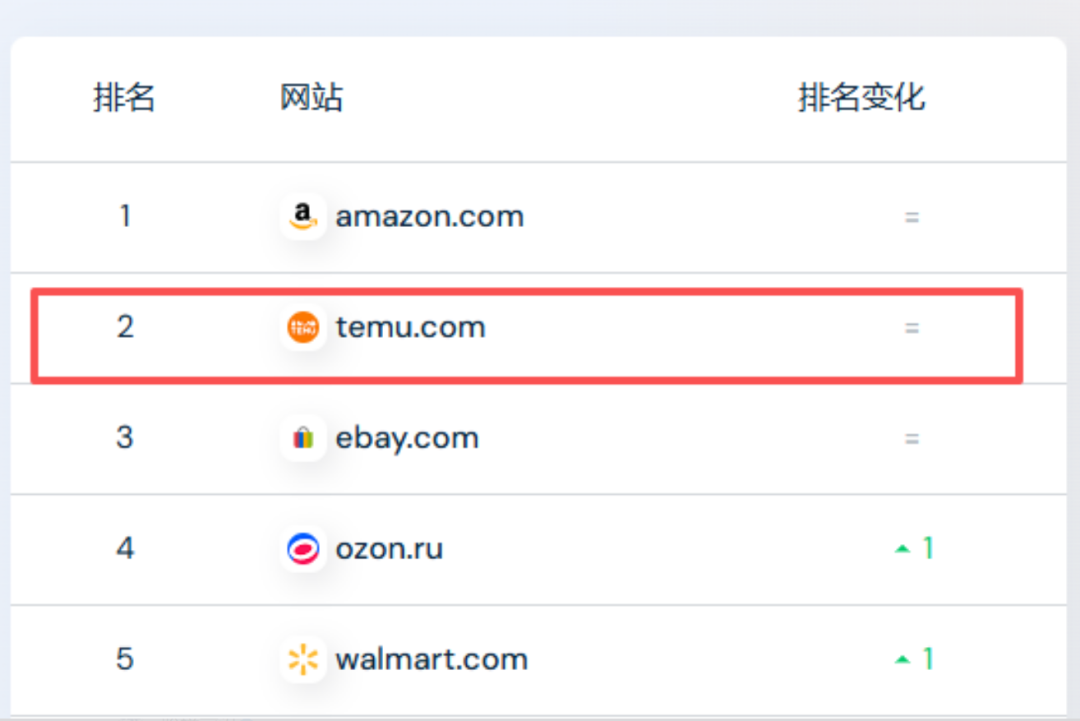
Temu Ranks Second in Global E-commerce and Shopping Website Visits. Image Source: Similarweb
While their strategies differ, the underlying logic is the same: initial investments in building user, merchant, and logistics infrastructures, followed by converting scale advantages into profits upon maturity, completely shattering the stereotype that “Chinese overseas expansion only burns money.”
Foreign Trade Factories Should Understand: The Logic of Customer Acquisition Has Changed
TikTok’s profitability is not just a business story for major corporations; domestic foreign trade enterprises must also grasp the underlying signals.
Many factory owners believe TikTok is suitable only for consumer goods like beauty and apparel, unrelated to B2B businesses like hardware, auto parts, and machinery equipment. This mindset is outdated.
Previously, overseas buyers relied on industry trade shows, B2B platforms, and Google searches to find suppliers. Short videos are becoming a new customer acquisition channel, allowing overseas buyers to visually inspect factory production lines and product testing through videos, quickly building trust.
Product strength determines whether a deal can be closed, but being visible to overseas clients determines whether you have a chance to close deals. Overseas competitors are already using short videos for brand building; if domestic factories cling to traditional channels, they risk missing out on a new wave of traffic dividends.
Benchmarking Giants: Can TikTok Challenge Meta and Amazon’s Core Markets in the Future?
Following regional profitability, the market is reassessing TikTok’s long-term potential, horizontally comparing it to Meta and Amazon, whose business models differ significantly.
 Image Source: Google
Meta derives 97% of its revenue from social advertising, leveraging social relationships for exposure, with e-commerce merely an ancillary business. Its Reels short video feature is a defensive product against TikTok, dependent on the existing social ecosystem without forming an independent e-commerce closed loop. Meta’s 2024 revenue reached $200.9 billion, similar in scale to ByteDance, but its business structure is singular, more prone to hitting growth ceilings.
 Instagram Homepage and Reels Interface. Image Source: X Social Platform
Amazon is the leader in shelf e-commerce, with core strengths in supply chain and warehousing fulfillment, where users habitually search and place orders actively; its weakness lies in weak content-driven product discovery capabilities, lacking immersive, discovery-based consumption scenarios.
TikTok, on the other hand, adopts a dual-engine approach of advertising and e-commerce, emphasizing "discovery first, then purchase" in its discovery-based e-commerce model, differentiating itself from Amazon’s search-based shelf e-commerce. However, TikTok’s weaknesses are also evident: fulfillment infrastructure is still under construction, and global compliance costs remain high.
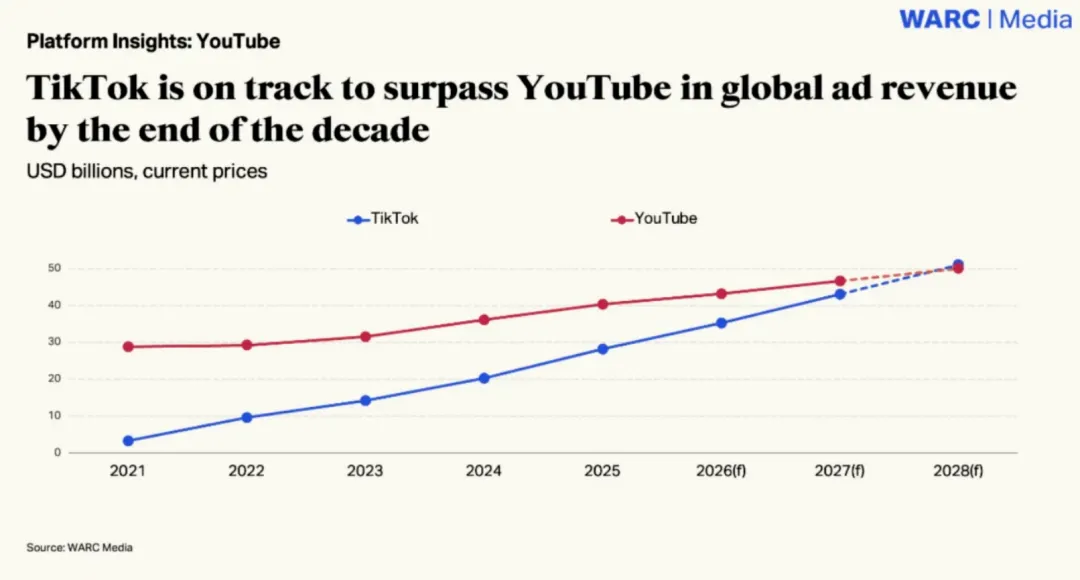
Image Source: WARC Media
Industry agency WARC predicts that by 2030, TikTok could surpass YouTube to become the global leader in video advertising. In 2025, ByteDance’s overall revenue reached $186 billion, ranking second in the global digital advertising market, second only to Google. YouTube’s advertising growth continues to decline, excelling in brand exposure but struggling with transactional conversions. In an environment where advertisers increasingly value ROI, YouTube’s shortcomings are becoming more pronounced.
TikTok is unlikely to completely replace Meta and Amazon in the short term but is continuously capturing their advertising and transactional incremental budgets.
Final Thoughts
Scalable profitability in Europe, Latin America, and South Africa marks a crucial milestone in ByteDance’s globalization, validating that TikTok’s “content + e-commerce” model can achieve profitability.
However, the global competition is far from over. Challenges like the US market dilemma, stringent regulations in various countries, and local competitors’ encirclement remain unavoidable. The rules of the overseas expansion game have changed, shifting from competing on burn rates and user scale to competing on the ability to convert traffic and supply chains into stable profits.
From burning money for scale to pursuing quality for profitability, Chinese overseas expansion has officially entered a new phase of profit realization, with the reshuffling of the global internet advertising landscape just beginning.
Interactive Topic: Do you believe TikTok can challenge Amazon and Meta’s market shares in the future? Can it surpass YouTube by 2030? Share your thoughts in the comments section.
Disclaimer: This article is solely a financial commentary on major corporations and does not constitute any investment advice. The enterprise data and regulatory events mentioned herein are derived from publicly available information and are for reference only, subject to official releases. Image sources are from the internet; if there are copyright issues, please contact for removal.
-
Tianlong-3 Yao-1 Mission Update: Insights from the 189.5-Second Flight
-
The Untold Undercurrent of CIFTIS: Chinese Tech Goes Global, Shifting from Quick Profits to Sustainable Value
-
![]()
Confirmed! Apple CEO Cook Admits to ‘Drawing Inspiration’ from Huawei; Luo Yonghao Offers Direct Criticism
-
![]()
Zhang Yiming’s Global Empire Surges: TikTok Achieves Scalable Profitability Across Key Markets!
-
![]()
No AI Until High School! NYC Establishes the Most Stringent Educational Boundary in U.S. History
-
The Dilemma of Expanding Domestic Cars and Shrinking Parking Spaces: A Parking Nightmare
-
Purchasing Power Parity: iPhone18 Pro Affordability Across Nations
-
Over 16% Surge! The 'Home Appliance Giant's' AI Story Pushes Boundaries