SpaceX Starship Enters Earth Orbit for First Time, Deploys 26 Starlink V3 Satellites
 09/29 2026
 353
353
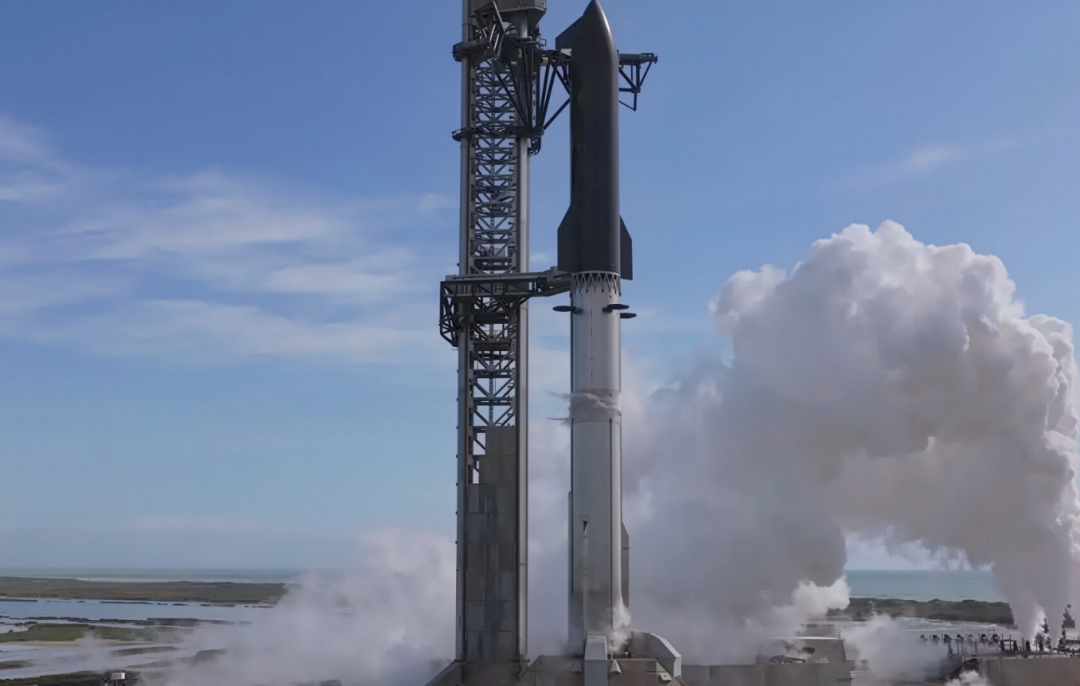
SpaceX Starship Enters Earth Orbit for First Time, Deploys 26 Starlink V3 Satellites
SpaceX's "Starship" spacecraft achieved its first Earth orbital flight on September 28, sending 26 new-generation "Starlink" V3 satellites into orbit. However, the test flight mission ended earlier than originally planned. The mission, initially scheduled to last approximately 10 hours, concluded after about 3 hours of orbital flight, with the spacecraft splashing down in the Pacific Ocean. The company has not yet disclosed the specific reasons for the early termination.
Chief Analyst's Interpretation: The Starship's entry into orbit and deployment of 26 V3 satellites marks the transition of reusable super-heavy rockets from the experimental phase to quasi-commercial launch capabilities, representing a milestone downward shift in the global aerospace industry's cost curve. The rapid networking of Starlink V3 will directly impact the competitive landscape of global communications infrastructure, with satellite internet bandwidth costs expected to decline by an order of magnitude.
For A-shares, the "SpaceX mapping " (SpaceX reflection) targets in the aerospace industry chain (satellite manufacturing, ground terminals, rocket support) may experience short-term thematic catalysts. However, more attention should be paid to the accelerated expectations of domestic constellation networking (such as Qianfan and Starnet). After overseas validation of cost reduction paths, domestic policy and capital expenditure rhythms are likely to follow. From a long-term perspective, satellite internet represents the largest incremental narrative in the communications sector after 5G. However, current A-share related targets generally have low earnings realization. It is advisable to focus on thematic waves, closely track domestic networking launch rhythms and order volume signals, and avoid excessive chasing without earnings support.
Overnight Market: A-shares Plunge, US Stocks Decline, Gold Prices Plummet by 4%, 30-Year US Treasury Yield Hits New High
On September 28, the Shanghai Composite Index fell 1.67% to close at 3823.62 points, the Shenzhen Component Index dropped 3.44%, and the ChiNext Index slumped 4.53%. Over 4,500 stocks declined across the market, with two-market turnover reaching 1.7 trillion yuan. US stocks also declined, with the Dow Jones Industrial Average falling 0.67% to 51481.51 points and the Nasdaq Composite Index dropping 0.92% to 26820.38 points. COMEX gold futures plummeted 4.00% to $4148.5 per ounce, while silver fell 5.82%. The 10-year US Treasury yield rose to 5.236%, and the 30-year yield hit a new high at 5.547%, with the US dollar index at 101.19.
Chief Analyst's Interpretation: The overnight asset pricing was dominated by a single theme: the upward revaluation of US Treasury yields. The 30-year US Treasury yield hit a new high, and the 10-year yield broke above 5.2%. The rise in risk-free rates systematically suppressed global risk assets, explaining the A-share high-flyers' plunge, US tech stock corrections, and gold's 4% drop. The 4% single-day decline in gold prices is particularly alarming, as rising real interest rates are eroding the precious metal valuations previously supported by "risk premium."
For A-shares, the 1.7 trillion yuan turnover amid broad declines indicates concentrated profit-taking by high-position funds under rate shocks. Short-term style may shift from speculative high-flyers to low-valuation cyclicals. However, domestic policy support and US-China economic-trade alleviate (easing) provide counterbalancing forces. The core contradiction (contradiction) for A-shares remains internal liquidity rather than external rates. The Valuation suppression (valuation pressure) on growth stocks from rising US Treasury yields is more sentiment-driven. Operationally, it is advisable to reduce position trading frequency, await stabilization signals in US Treasury yields, defend with high-dividend stocks, and wait for Layout Window (layout windows) in wrongly punished computing and tech leaders on the offensive end.
US-Iran Negotiations: Trump Says Information Exchanged Through Intermediaries, Situation to Be Resolved
US President Trump stated to the media at the White House on September 28 that US and Iranian negotiators have exchanged information through intermediaries. When asked about the progress of US-Iran negotiations, Trump did not disclose specific details but said, "We will win," and "The situation will soon become clear."
Chief Analyst's Interpretation: The Ease the signal (easing signal) from US-Iran negotiations, corroborated by the overnight modest rise in oil prices, indicates a marginal decline in geopolitical premiums. Previous market pricing of Hormuz Strait risks is gradually cooling as indirect communications resume, presenting a bearish factor for global inflation expectations and benefiting risk asset valuation repairs. However, it is crucial to recognize that "information exchange" remains far from a substantive agreement. The Repetitive nature (volatility) of Middle East situations ensures high oil price fluctuations, with Brent crude still above $100, and supply-side uncertainties unresolved.
For A-shares, further alleviate (easing) in US-Iran tensions and a lower crude price center will benefit cost-sensitive industries like aviation and downstream chemicals while suppressing short-term sentiment in oil exploration and tanker sectors. Gold, under dual pressure from rising US Treasury yields and geopolitical easing, faces short-term headwinds. It is advisable to maintain flexible positions on geopolitical themes, focusing more on mid- and downstream cost improvement opportunities from falling oil prices rather than chasing short-term pulses of geopolitical events.
- END -
-
![]()
Seres Struggles to Escape Huawei's 'Influence'
-
The AI 'Golden Rice Bowl' of FDE Amid Massive Layoffs
-
![]()
NIO and Geely Cross-Hold Shares: Pioneering a New Auto Industry Joint Venture Focused on Battery Swapping
-
![]()
From 1.3 Trillion to 300 Billion: The Vanishing Trillions in Market Value—Is the Zhipu AI Boom Over?
-
![]()
What Supports Chinese Cinema in the Absence of Blockbusters During the National Day Holiday? | 2026 Chinese Film Report and Overseas Trends
-
US$8.2 Billion: Silicon Valley's Top-Tier 'Girls Help Girls'
-
![]()
Are DOE and Metasurfaces Truly Distinct Entities?
-
![]()
Manus Founder Xiao Hong: Manus Preceded the Advent of Codex and Claude Collaboration