NIO and Geely Cross-Hold Shares: Pioneering a New Auto Industry Joint Venture Focused on Battery Swapping
 09/29 2026
 525
525
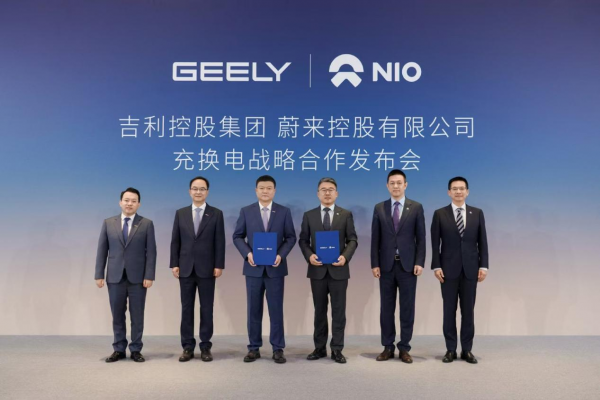
On September 28, NIO and Geely simultaneously announced a strategic partnership in battery swapping and charging services, with energy assets intertwined through cross-shareholding.
According to the agreement, Yiyi Internet, a subsidiary of Geely Holding Group, will acquire newly issued shares in NIO Power via a 100% equity stake plus RMB 640 million in cash. Post-transaction, Geely will own a 30% stake in NIO Power, while NIO China will maintain a controlling 63.6% stake. Concurrently, NIO will invest cash in Geely's Haohan Energy, securing a 10% stake.
This marks the emergence of a novel cooperation model in China's auto industry: automakers are transitioning from competing solely on models and brands to reorganizing resources around foundational capabilities in the new energy era.
Over the past few years, NIO has been the most staunch advocate of the battery swapping model, while Geely boasts a diverse brand portfolio and extensive user base. This collaboration merges NIO's energy replenishment network expertise with Geely's industrial scale, elevating battery swapping from a company-specific service to a more open energy infrastructure.
NIO Seeks Scale, Geely Seeks New Energy Access
For NIO, battery swapping represents a long-term strategic investment.
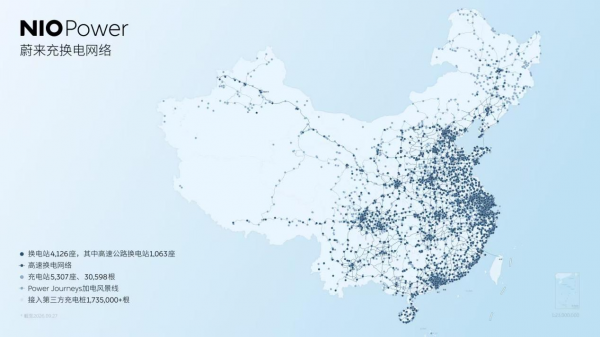
Since launching its first battery swap station in 2018, NIO has established China's largest battery swapping network, boasting over 4,000 stations today. Unlike other automakers relying primarily on charging networks, NIO's edge lies in transforming battery swapping into a holistic service system: users can swiftly replace batteries at swap stations without waiting for charging.
However, the battery swapping model is not without challenges, primarily due to its capital-intensive nature.
A battery swap station necessitates not only equipment investment but also substantial battery reserves and long-term operational costs. Relying solely on users from a single brand hinders rapid utilization efficiency improvement. Hence, NIO has been advocating for open battery swapping standards in recent years, aiming to attract more automakers to join.
Now, Geely's involvement opens new avenues for battery swapping.
As one of China's largest automotive groups, Geely owns multiple new energy brands, including Geely Galaxy, Zeekr, and Lynk & Co, catering to private consumption, taxi operations, and ride-hailing markets. The Yiyi Internet business Geely is injecting into NIO Power is not merely an asset but an operational system with experience in battery swapping for commercial vehicles. According to public information, Yiyi Internet has already deployed battery swap stations in multiple cities, serving a significant number of swap-enabled vehicles.
This implies that NIO's battery swapping network may soon serve not only private NIO vehicle users but also extend to broader commercial scenarios.
For Geely, opting for battery swapping holds practical significance. As competition in the new energy vehicle market intensifies, the gap between automakers is shifting from pure product competition to user experience competition. Range anxiety and energy replenishment efficiency remain key considerations for consumers when purchasing new energy vehicles. Geely has made substantial investments in batteries, electric drives, and intelligence, but building an energy replenishment network naturally requires scale.
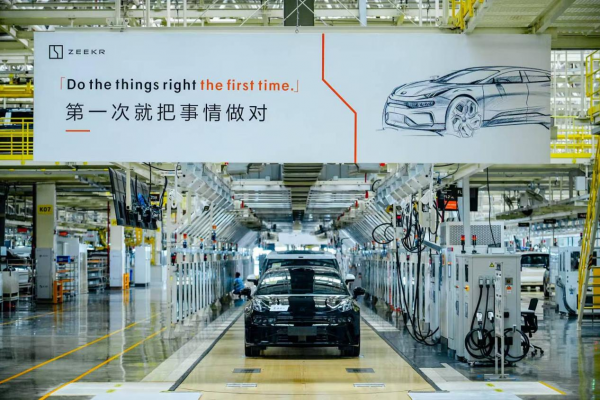
Constructing thousands of charging stations independently to gain a clear advantage is no easy feat; however, directly accessing a mature battery swapping system can significantly shorten the construction cycle for new energy product replenishment capabilities. Beyond the superficial "Geely joins NIO's battery swapping," this cooperation signifies both companies repositioning themselves in the new energy era. NIO needs more vehicles to utilize its energy network, while Geely needs to bolster its new energy infrastructure capabilities—their goals align at this juncture.
From Product Selling Point to Industry Infrastructure
Over the past few years, debates surrounding the battery swapping route have persisted.
Proponents argue that battery swapping can address the most significant pain point in new energy vehicle usage, particularly in high-frequency driving scenarios. Skeptics, however, contend that with the advancement of 800V high-voltage platforms and ultra-fast charging technologies, the necessity of battery swapping may diminish.
However, as new energy vehicles enter a phase of large-scale development, the industry is gradually recognizing that energy replenishment methods do not simply replace one another: fast charging addresses time efficiency, while battery swapping addresses energy supply efficiency, and the two may coexist long-term. Especially in the commercial vehicle sector, where vehicle downtime directly impacts revenue, the battery swapping model holds a natural advantage. In the private user market, if the battery swapping network is sufficiently developed, it can also enhance consumer experience.
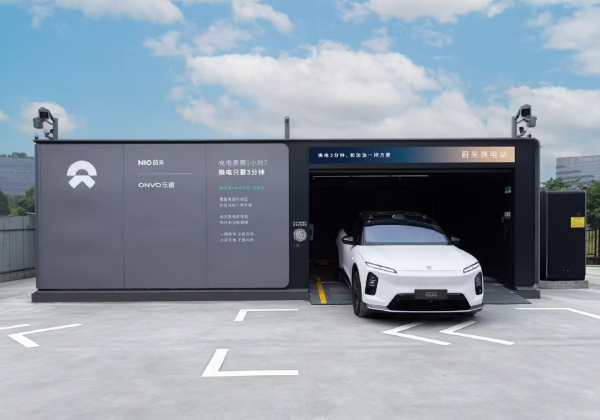
NIO's greatest achievement over the past few years has not been merely constructing thousands of battery swap stations but proving that a battery swapping system can truly operate. NIO has developed a comprehensive operational system encompassing battery standards, station construction, user operations, and energy scheduling.
However, for battery swapping to truly become industry infrastructure, more participants are essential.
Because the defining feature of infrastructure is scale.
Highways are valuable because all vehicles can utilize them; mobile communication networks are mature because they offer extensive coverage.
The same principle applies to battery swapping: if only one company adheres to a single battery swapping standard, it remains a brand-specific service; only when more models adopt it can it become a public energy network in the new energy vehicle era.
In this cooperation, both sides have explicitly expressed their intention to explore C-side battery swapping technology and standard collaborations, with Geely also planning to launch models incorporating battery swapping technology. Battery swapping is transitioning from an asset exclusive to NIO to a shared capability of the industry. In the future, as more Geely models—and even more automakers—participate, the battery swapping network may achieve a scale effect akin to that of charging networks.
For NIO, this also signifies an upgrade to its business model.
Previously, market attention on NIO focused more on sales, losses, and model competition. However, the energy business has always been NIO's most differentiated asset. If NIO Power can serve more brands in the future, its value will no longer hinge on how many vehicles NIO sells annually but on how many vehicles across the entire new energy market connect to its network.
This is why NIO is willing to onboard external shareholders like Geely. By expanding business scale through capital binding, the battery swapping business has the potential to transform into a long-term value asset.
From Brand Cooperation to Capability Cooperation: China's Auto Industry Enters a New Joint Venture Phase
The cooperation between NIO and Geely holds profound industry significance.
Over the past few decades, cooperation in China's auto industry has primarily centered around brands. During the traditional joint venture era, overseas automakers provided brands, models, and technologies, while Chinese companies offered markets, manufacturing, and supply chains. This model facilitated rapid growth in China's automotive industry, but core value remained concentrated in brands and products.
In the new energy era, this dynamic is shifting.
Chinese automakers have already forged their own advantages in batteries, electric drives, smart cockpits, autonomous driving, and energy replenishment systems. Therefore, new industrial cooperation is no longer solely about "who owns a strong brand" but about who possesses the most critical foundational capabilities for the future automotive industry.
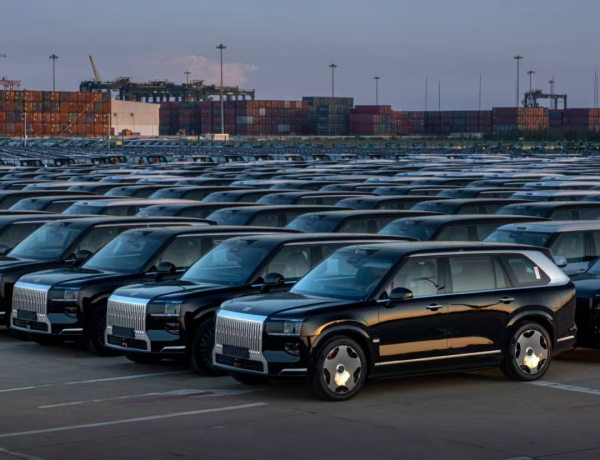
The cooperation between NIO and Geely exemplifies this transformation. The two sides have not established a joint venture around a specific model nor shared a single brand but have instead bound their equity around energy infrastructure. NIO's core asset is its years-built battery swapping network and operational system; Geely's core asset is its vast model matrix and market scale. What they are exchanging are capabilities, not merely resources.
This type of cooperation is likely to become increasingly prevalent in the future.
Because in the era of smart vehicles, the software, chips, energy, and data capabilities behind a single vehicle are becoming increasingly intricate, making it arduous for any one company to independently cover all areas. Future automotive competition may no longer revolve around who possesses the most technologies but who can orchestrate more high-quality capabilities. Huawei's cooperation with automakers on intelligent solutions, joint battery technology development among automakers, and NIO and Geely's co-construction of energy replenishment networks all represent a redivision of the industrial chain.

Automakers are transitioning from "comprehensive" competition to "core capabilities + ecological collaboration" competition.
As one of the most crucial infrastructures in the new energy era, energy replenishment networks are closer to daily user needs compared to intelligent driving and cockpits, making them easier to form long-term barriers. Whoever can master a large-scale, high-efficiency energy network may wield stronger influence in the future new energy market.
Of course, this cooperation is not without challenges.
Unifying battery swapping standards takes time, model adaptations require investment, and balancing interests among different brands will test operational capabilities. However, from an industry perspective, open cooperation has become an inevitable trend in the new energy sector. The era of single companies building all infrastructure is waning. In the future, automakers may form industrial alliances around core capabilities, marking a new form of competition in China's automotive industry.
In Conclusion
In the coming years, if more models under Geely join the battery swapping system and even more automakers participate, the battery swapping network could evolve into a new public capability in the new energy industry. By then, when consumers purchase new energy vehicles, their consideration will no longer be how many battery swap stations a single brand owns but whether the entire industry has jointly built a broader and more efficient energy network. NIO's years of investment have given it a first-mover advantage in battery swapping, while Geely's vast user base and industrial resources have expanded the system's applicability. Their collaboration further propels battery swapping from a single-brand service to a more open industry infrastructure.
In the era of gasoline vehicles, gas stations formed the infrastructure of the automotive industry; in the new energy era, charging and battery swapping networks are becoming the new "highways." The cooperation between NIO and Geely may well represent a significant stride toward Chinese automakers jointly building these highways.
-
The Financial Agent Boom: A Genuine AI Challenge Emerges
-
![]()
Seres Struggles to Escape Huawei's 'Influence'
-
The AI 'Golden Rice Bowl' of FDE Amid Massive Layoffs
-
![]()
NIO and Geely Cross-Hold Shares: Pioneering a New Auto Industry Joint Venture Focused on Battery Swapping
-
![]()
From 1.3 Trillion to 300 Billion: The Vanishing Trillions in Market Value—Is the Zhipu AI Boom Over?
-
![]()
What Supports Chinese Cinema in the Absence of Blockbusters During the National Day Holiday? | 2026 Chinese Film Report and Overseas Trends
-
US$8.2 Billion: Silicon Valley's Top-Tier 'Girls Help Girls'
-
![]()
Are DOE and Metasurfaces Truly Distinct Entities?