After Momenta Approaches Profitability: New L3 Regulations Unveiled, Will Cao Xudong's 'Engineering Philosophy' Fail?
 09/10 2026
 444
444
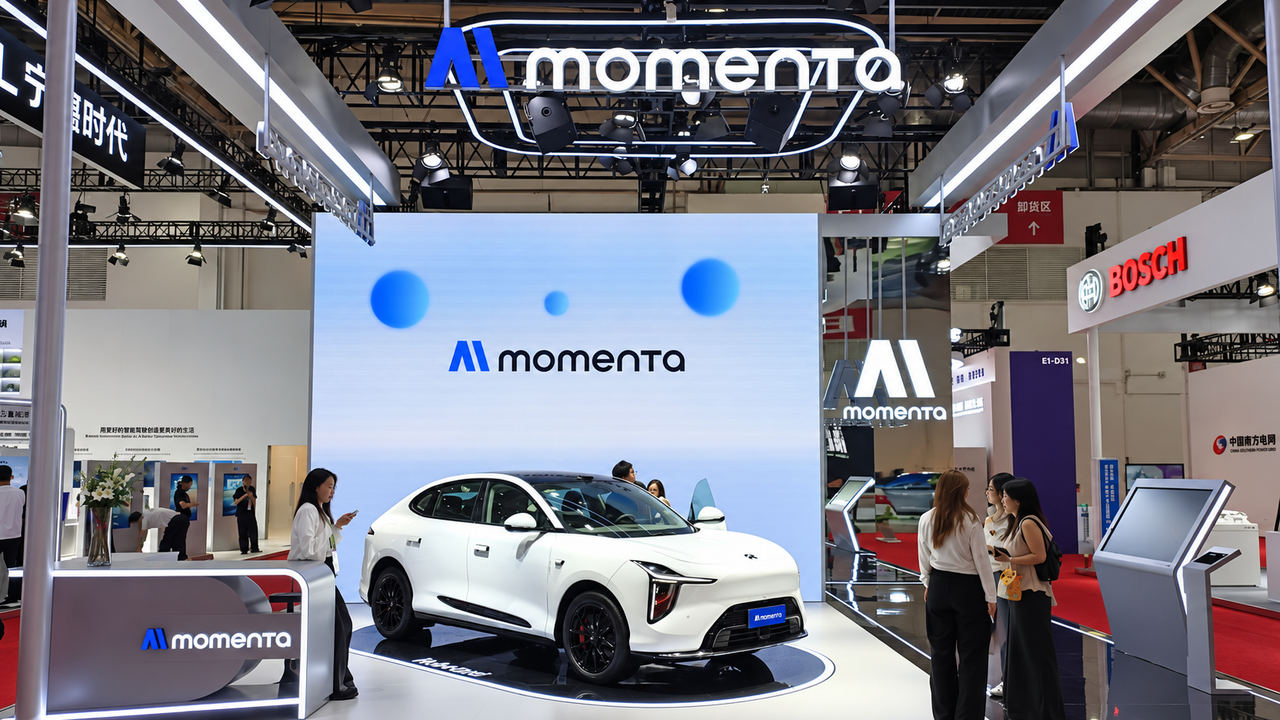
In 2022, developing intelligent driving for a new vehicle model required approximately 400 engineers working for two years with Momenta. Four years later, the same task can be accomplished by just 10–50 people in three months.
This transformation is reflected in Momenta's financial reports. The company refers to the underlying engineering system as Mainline, where foundational software is no longer rebuilt for each vehicle model. New projects are adapted along the same technical Main storyline (mainline), and solutions to new problems are integrated back into the system.
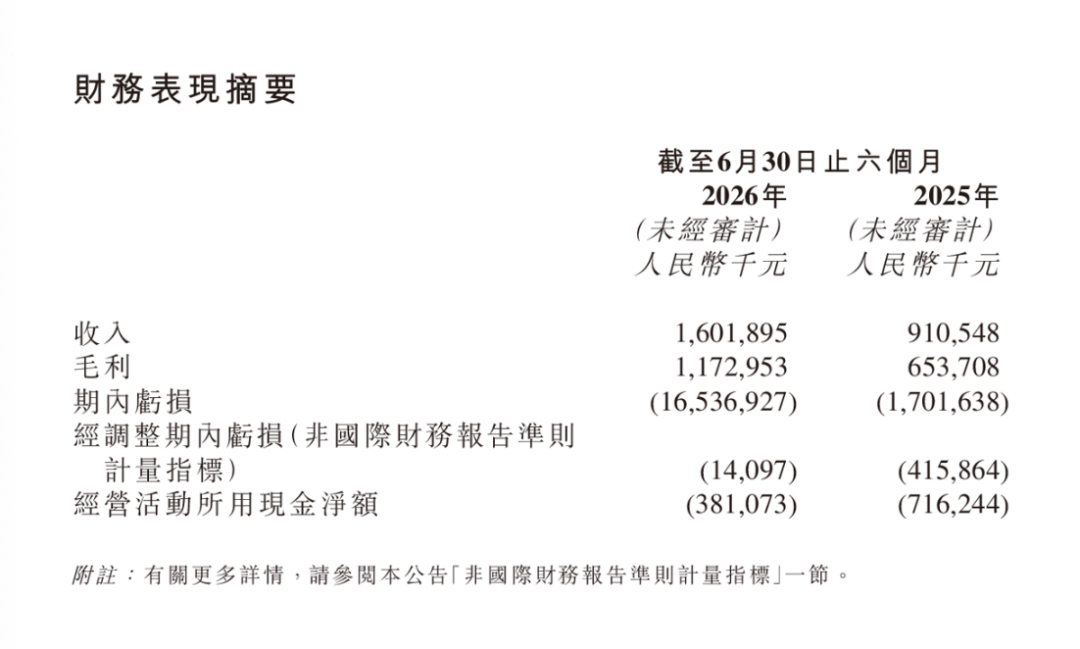
On August 31, this approach was fully reflected in the income statement for the first time. Momenta reported revenue of RMB 1.602 billion in the first half of the year, a 75.9% year-on-year increase; gross margin improved from 71.8% to 73.2%; adjusted net loss narrowed from RMB 416 million to RMB 14.097 million. During the same period, the company added 321,000 new vehicle installations, an 83.7% year-on-year increase, bringing the cumulative total to over 1 million units.
Over the past eight years, Cao Xudong has been addressing the same challenge: how to make the second vehicle model easier to develop than the first, and the twentieth automaker easier to serve than the second. This determines whether a third-party intelligent driving company can achieve scale. Automakers launch dozens of new models annually, and Momenta doesn't need to bet on which one will succeed. By entering enough brands and models, the same R&D investment can be amortized across more vehicles.
However, just as this approach nears profitability, a new conflict of interest emerges between Momenta and automakers. Momenta needs more automakers to share the same Mainline, as the more reusable components there are, the closer the business resembles software. Yet, with L3, automakers have reasons to retain more control.
On July 30, China's first mandatory national standard for L3 and L4 autonomous driving systems was issued, requiring vehicle manufacturers to establish a full lifecycle safety assurance mechanism from product development and manufacturing to post-deployment vehicle use, and to organize simulation, track, and road testing verifications. Less than a month later, a draft revision to the Road Traffic Safety Law, submitted for initial review, proposed that traffic violations occurring while autonomous driving functions are activated should be handled by automotive production and import enterprises.
These regulations do not specify who must develop the intelligent driving systems but further clarify the safety assurance obligations of vehicle manufacturers. While algorithms can be procured, vehicle manufacturers cannot outsource their own safety assurance obligations. For Momenta, what L3 truly adds are the elements that are more difficult to standardize under Mainline than vehicle model adaptation.

Momenta did not always have today's mass production system.
In 2021, ZHIJI became an important test for Momenta's entry into full-vehicle mass production. A subsequent review of this project revealed that Momenta once dedicated nearly half of its employees to the Shanghai project site. Beyond algorithms, the team faced mass production (mass production) issues such as interfaces, system integration, testing and verification, version management, and vehicle development milestones for the first time—problems that Mainline would later address. Momenta began creating unified tools and standard processes for recurring issues in projects, eliminating the need to rebuild foundational technology stacks for new vehicle models and shifting more work toward parameter adaptation and final-layer customization.
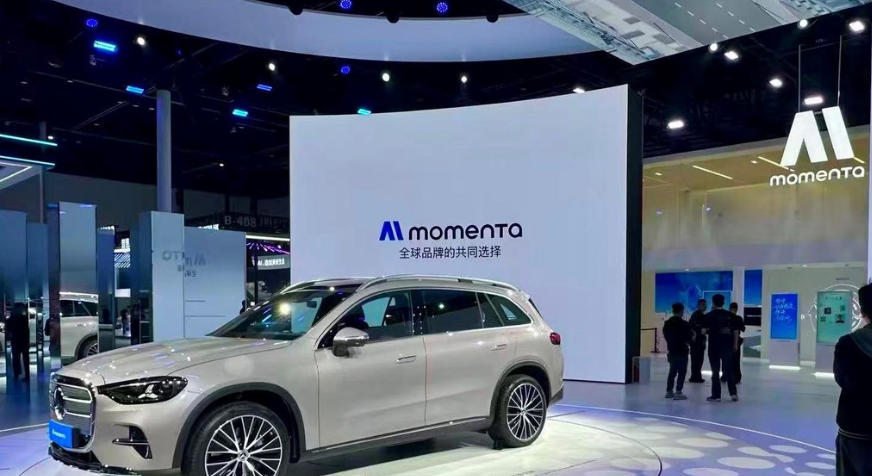
This engineering approach later supported Momenta's so-called 'ubiquity.' Even automakers themselves increasingly struggle to predict how many units a new model will ultimately sell. For third-party suppliers, a better strategy is to enter more brands and models, letting the law of large numbers disperse (diversify) risk for them.
As a result, its business model has increasingly resembled software. Momenta currently generates two main types of revenue: one is technical development services before vehicle model mass production, which still requires engineering teams to participate in projects; the other is software licensing revenue recognized based on vehicle sales after actual delivery. Theoretically, the larger the scale of the latter, the more R&D results are reused, and the lower the marginal costs.
An interesting change occurred in the first half of 2026. Momenta's revenue from technical development services grew by 81.5% year-on-year, outpacing the 67.5% growth in software licensing revenue; the proportion of licensing revenue declined from 39.8% to 37.9%. However, gross margin continued to rise during the same period. Projects did not disappear; what was reduced were the repeated costs required for the next project.
Yet, L3 is making some differences that could previously be absorbed by Mainline non-standardizable again. In 2025, the ARCFOX αS L3 version received product access permission for L3 autonomous driving models. BAIC later disclosed that the vehicle completed over 800,000 kilometers of equivalent testing. The testing covered not only autonomous driving functions but also functional safety, expected functional safety, cybersecurity, data security, and software upgrade safety, as well as compliance with road traffic rules; the vehicle was also equipped with an autonomous driving data recording system to document operational status during function activation for subsequent analysis and liability determination. Such work spans algorithms, software, sensors, vehicle architecture, data, and regulations, making it difficult to compress into a complete software package delivered by a single supplier.
Additionally, some automakers have begun redefining boundaries with suppliers based on these requirements. In July this year, Volkswagen deepened its collaboration with Horizon Robotics. Instead of adopting the simplest approach of procuring a complete solution, the joint venture CARIZON between Volkswagen's CARIAD and Horizon Robotics obtained white-box authorization for Horizon's AI foundational large model. CARIZON then independently developed a unified AI driving solution for the Volkswagen Group in China.
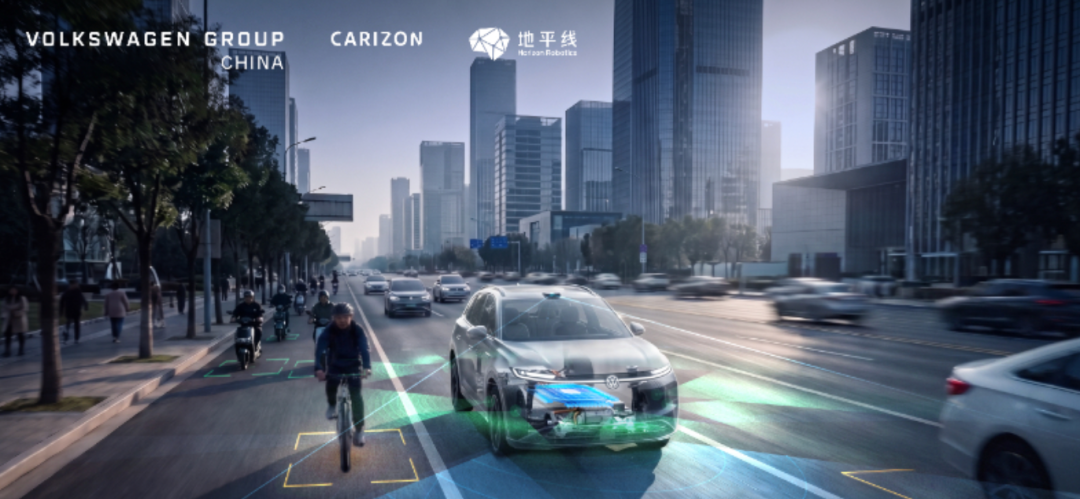
Although Horizon's model remains in the system, it will be combined with the C7H chip developed by CARIZON, the GAIA world model data platform, and Volkswagen's own CEA electronic and electrical architecture. Volkswagen officially summarized this collaboration as 'accelerating toward L3 and L4.' The supplier has not exited; what has changed is its position. Previously, leading third-party suppliers aimed to extend their coverage upward to system integration and mass production delivery. Now, Volkswagen is attempting to redefine collaboration boundaries closer to the foundational layers.
This also offers an alternative division of labor: foundational models and technical capabilities can still be purchased, but how they are ultimately combined into a Volkswagen-specific driving system remains largely within Volkswagen's R&D framework.
Momenta will soon face similar challenges. In April, SAIC Audi and Momenta announced that the AUDI E7X would become the first model featuring Momenta's L3 mass production capabilities. From the outset, both parties defined it as a joint development project. Momenta provided the R7 world model, while Audi required the system to continue (inherit) its Driving DNA, including driving feel during acceleration, lane changes, and cornering. Both parties also jointly developed an extreme safety scenario testing system for L3, continuously extracting low-frequency, high-risk scenarios using mass production vehicle data.
Here, it becomes difficult to distinguish which party is merely the 'buyer' and which is the 'supplier.' Algorithms can be shared, but Audi still decides how an Audi should drive; the model can come from Momenta, but vehicle safety redundancy, driving experience, and final product boundaries require joint definition by both parties. Beyond L3, the elements that each automaker must decide for itself will continue to grow.
Audi has its own driving style and safety standards; different automakers have varying electronic and electrical architectures, sensor solutions, and data governance requirements; entering different countries introduces varying ODDs (Operational Design Domains) and regulatory rules. While Mainline allows many vehicle models to share a common technical foundation, it cannot decide for an automaker the safety boundaries it is willing to assume.

Such changes emerged even before full-scale L3 mass production. In May this year, BYD unveiled and commenced mass production of its 4nm intelligent driving chip, Xuanji A3. Wang Chuanfu summarized the second half of the intelligence race as 'about chips.' In August, Li Xiang expressed his desire to keep future core technological barriers in-house, similar to Apple and Huawei. Li's new-generation L series already features the self-developed Mach M100 chip. In September, Changan unveiled its self-developed 'Tianshu Pilot,' with Zhu Huarong similarly emphasizing the need to master core technologies internally. NIO's NX9031 has been deployed since 2025, achieving full-stack self-development and mass production capabilities for intelligent driving chips.
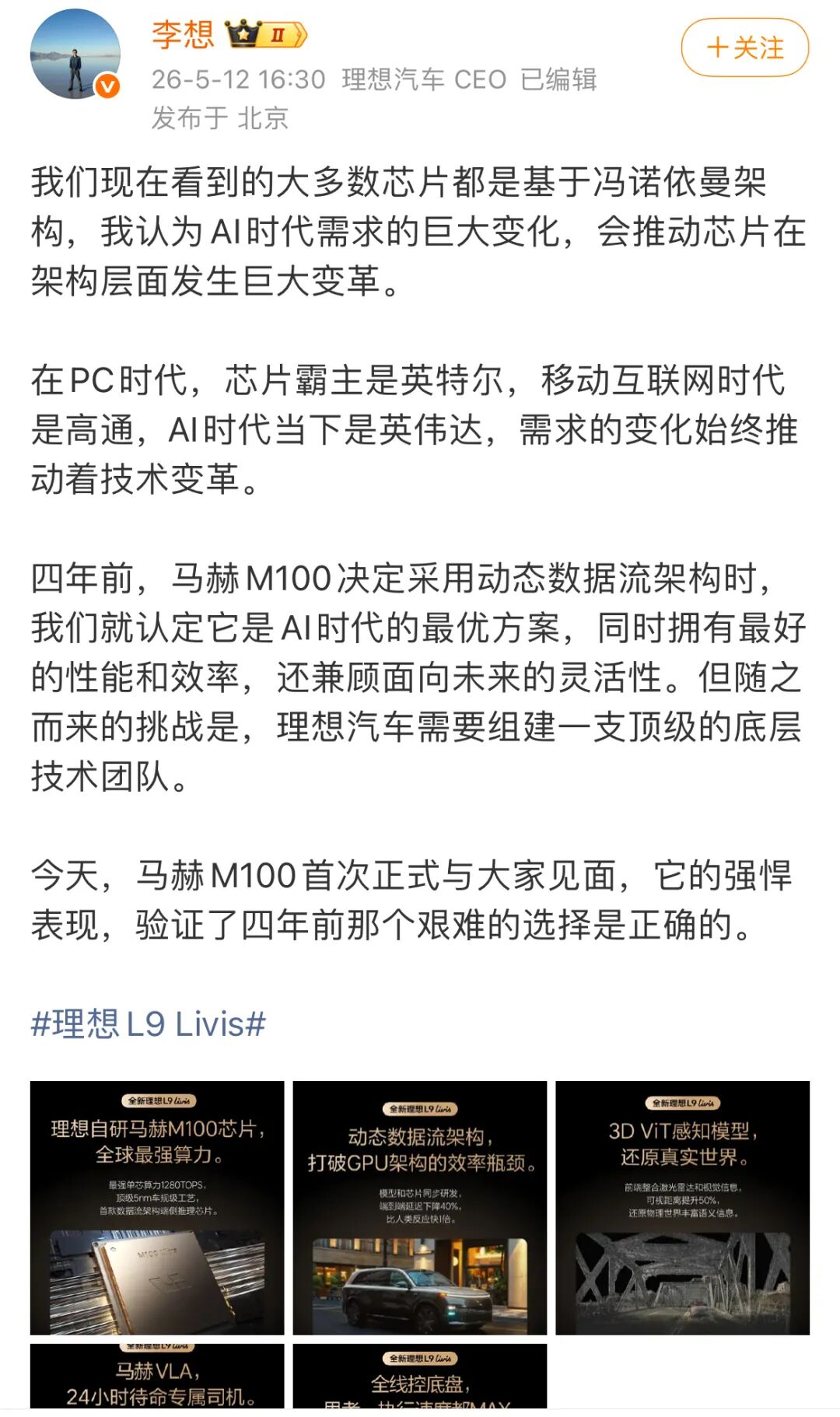
These automakers' choices to pursue in-house development do not mean they intend to eliminate suppliers entirely. Li Xiang clarified in the same response that self-developed chips do not diminish NVIDIA's status as an excellent chip company. After announcing its self-developed solution, Changan similarly emphasized continued collaboration with Huawei and other chip and vehicle partners. What they are truly redefining is what can be purchased, what is suitable for joint development, and what must remain in-house.
This is why Yu Kai remains optimistic about the third-party market long-term. Horizon Robotics publicly estimates that only about 20% of automakers can afford full-stack self-development costs in the long run, with the remaining 80% still relying on external collaboration to varying degrees. The reason is simple: intelligent driving R&D has become a business requiring long-term investment in models, data, chips, computing power, and engineering teams. For many automakers with annual sales insufficient to amortize these costs, rebuilding a complete system is uneconomical.
Ultimately, a bipolar market may emerge, with a few large automakers continuing to bring chips, models, data loops, and product definition in-house, while more small and medium-sized automakers avoid duplicating a full technical stack, relying instead on more mature, affordable, and mass-producible external capabilities. Suppliers will not disappear but may become more concentrated.
On September 5, He Gang, vice president of Changan, predicted that the intelligent driving solution market might undergo its first round of consolidation around 2028, leaving only five or six competitive solution providers. While this is just one automaker executive's view of the industry's future, it reveals a seemingly contradictory trend: automakers increasingly seek to master core capabilities while fewer companies can sustain full-scale intelligent driving development long-term.
This may not be a bad outcome for Momenta. L3 demands larger models, more complete simulation systems, vast long-tail scenario libraries, stricter software safety frameworks, and longer-term maintenance. The higher the R&D costs, the more evident the value of having over twenty automakers share the same foundational R&D becomes.
The changes occur along the value chain. The closer to models, data, simulation, and engineering tools—elements reusable across automakers—the greater the scale advantage for third-party platforms. The closer to specific product definition, safety boundaries, data control, and user relationships, the more motivated automakers are to retain control. Volkswagen's white-box collaboration with Horizon Robotics has already drawn this boundary: automakers may not need to retrain all foundational models but want to control the process of transforming models into final products.
Momenta is also seeking better business opportunities within this new boundary. Its current scale effects have begun benefiting customers. During the August 31 earnings call, company management acknowledged that China's automotive price war has impacted the supply chain, with potential adjustments to per-vehicle ASP (Average Selling Price) in the future. Momenta interpreted this as a volume discount: as mass production scales increase, tiered pricing (tiered pricing) passes some marginal cost reductions to automakers.
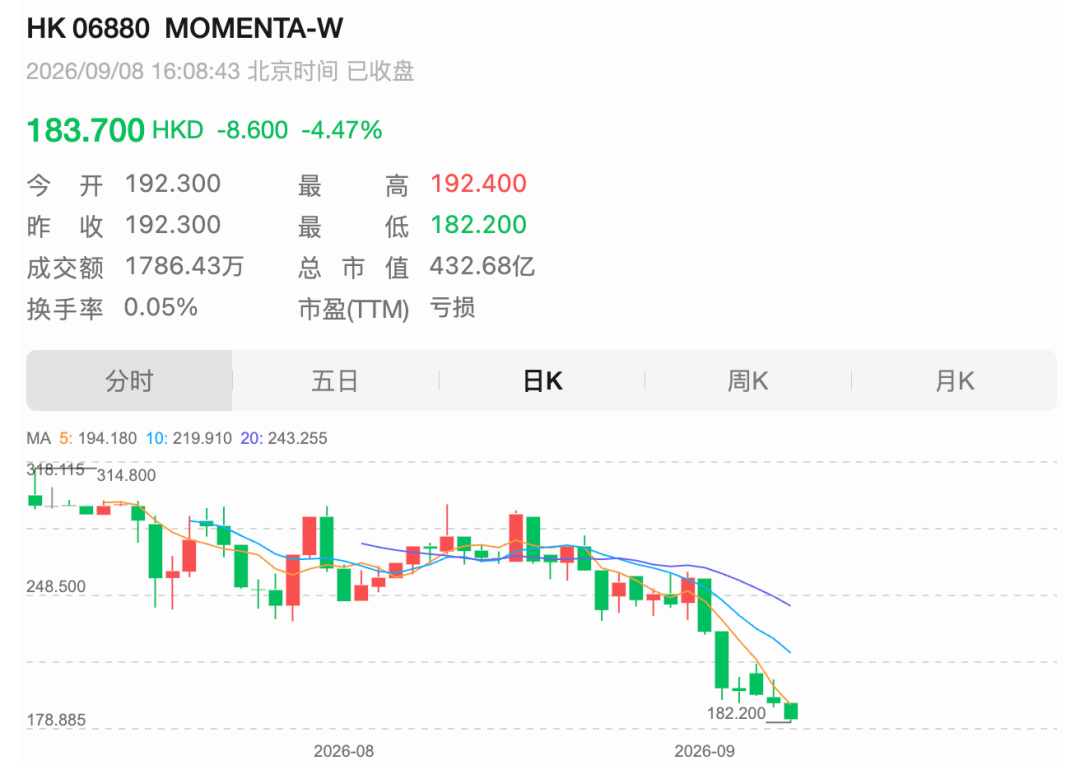
Scale effects, therefore, do not remain entirely with Momenta. If per-vehicle license prices continue to face pressure, Momenta will need to generate longer-term revenue from the same vehicles. The company has begun discussing consumer-oriented subscription models with automakers.
Tesla can directly sell FSD to vehicle owners because the car, software, accounts, and user relationships all reside within the same company. Momenta's situation differs; it must collaborate with partner automakers to define who determines functionality, who controls accounts, who sets pricing, and how subscription revenue is shared.
This is where L3 is most likely to transform third-party intelligent driving business models. If an L3 capability can significantly boost per-vehicle revenue but requires a large joint development, verification, and safety team for each automaker, Momenta might revert to the project-based model it once sought to avoid. Conversely, if world models, simulation, safety toolchains, and most core software remain within Mainline, leaving only the uppermost safety boundaries and product definitions to OEMs, L3 could amplify the value of third-party platforms.
Ultimately, this boundary will be reflected in two key metrics for Momenta: labor efficiency and profit margins.

The more complex L3 becomes, the stronger the economic rationale for dozens of automakers to share models, data, simulation, and engineering tools. What changes is how far this sharing extends. The closer to product definition, safety boundaries, and user relationships, the more automakers want control; the closer to models and engineering infrastructure reusable across vehicle models and brands, the more evident the scale advantage for third-party suppliers becomes.
Cao Xudong has long sought to use engineering methods to counteract this complexity. He set a strict rule for Momenta: after repeating a task two or three times, it should be handed over to tools, and demands from different automakers and vehicle models should not cause the mainline to diverge. He explained the reason: if the team continuously creates branches to meet short-term client demands, it risks becoming trapped in perpetual maintenance and firefighting, ultimately dragging down labor efficiency with project-specific demands.
L3 may bring this old issue back in front of Cao Xudong. In the past, differences in hardware configurations, vehicle models, and functionalities could largely be absorbed by Mainline. Now, what are added are safety boundaries, driving styles, data governance, and the automakers' own responsibility systems. Not all these differences are necessarily suitable to be eliminated by tools.
This will be a deeper and less comfortable business than before.
*The featured image and illustrations in the text are sourced from the internet.
-
![]()
Starting from 15,999 yuan! Apple's First Foldable iPhone Duo Released: First Under-Display Front Camera on Inner Screen, eSIM Only
-
![]()
Starting from 259,900 yuan, 5,500 orders in one day! Will the XT5 PHEV become Cadillac's Normandy in the new energy sector?
-
Mistral Raises €3 Billion in Series D Funding: European AI Powerhouse Ignites Global Computing Arms Race
-
Li Xiang Bets 2.65 Billion on Sunwoda, Li Auto Fights Back from the Brink
-
250,000 Yuan a Year vs. $1,500 a Month! The AI Budgets of Big Firms Are at Polar Opposites
-
After Being 'Sentenced to Death' by AI for Two Years, Recruitment Stocks Have Actually Seen Their Values Double Collectively
-
![]()
After Momenta Approaches Profitability: New L3 Regulations Unveiled, Will Cao Xudong's 'Engineering Philosophy' Fail?
-
![]()
Net Profit Drops Over 90%: Is the 'Big-Spending' Post-90s Billionaire Now Facing Hard Times?