Xingyu Shares: Governance Weaknesses Come to the Forefront
 09/10 2026
 505
505
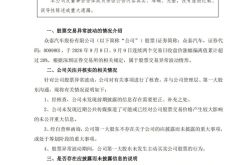
Xingyu Shares (601799.SH) has found itself at a crossroads of regulatory, client, and capital market scrutiny, triggered by a controversy over the termination of campus recruitment contracts. On the evening of September 9, the Shanghai Stock Exchange issued a regulatory inquiry to the company. Concurrently, Xingyu Shares released a statement correcting inaccuracies in the reported ages of its executives in its annual report.
Image source: Xingyu Shares announcement
For this leading automotive lighting company, which is actively pursuing an H-share listing, the central concern is no longer merely a labor dispute. Instead, it is whether its governance framework can withstand rigorous examination from both supply chain partners and the capital markets.
Intense Scrutiny
After the market closed on September 9, Xingyu Shares once again became the center of attention.
That evening, the Shanghai Stock Exchange issued a regulatory inquiry to Xingyu Shares, demanding clarification on certain regulatory matters concerning the company. The scope of the inquiry encompassed not only the listed entity but also its directors, senior management, controlling shareholder, and actual controller.
To date, the specific content and requirements of the regulatory inquiry have not been made public. Therefore, it cannot be conclusively stated that they are directly related to the campus recruitment contract termination or the inaccuracies in the annual report. However, the timing of this regulatory action is notably sensitive.
Almost simultaneously, Xingyu Shares issued a 'Correction Notice Regarding Typographical Errors in the 2025 Annual Report.' The company acknowledged that it had erroneously reported the age of Vice Chairman and Deputy General Manager Zhou Yuheng as 58 in the 2025 annual report.
Zhou Yuheng was actually born in December 1985. The company clarified that this error did not involve financial data, accounting items, or operational metrics and would not materially impact previously disclosed periodic reports.
The concern arises from the fact that this seemingly minor typographical error occurred amid heightened scrutiny of Xingyu Shares' governance.
Previously, the Changzhou Municipal Human Resources and Social Security Bureau confirmed that Xingyu Shares had recruited 440 college graduates from the 2026 graduating class and subsequently terminated labor contracts with 107 of them. The consultation process was criticized for being 'overly simplistic and rigid, lacking sufficient and effective communication.'
On September 7, Xingyu Shares further admitted that management had made judgment errors and hasty decisions, leading to disciplinary actions against four management personnel, including General Manager Zhou Xiaoping. Penalties included salary reductions, reassignment of duties, removal from positions, and demotions.
What truly raises concerns among capital market participants is that the risks have begun to extend beyond the company's internal operations.
On September 1, Volkswagen China confirmed that it had initiated a special investigation into complaints involving Xingyu Shares and explicitly stated that the principle of respecting workers' legitimate rights and interests extends throughout its supply chain management.
Meanwhile, media reports indicated that Mercedes-Benz had forwarded relevant complaint materials to a professional team for further review. However, as of the latest public reports, Mercedes-Benz had not formally confirmed the progress of the investigation.
At the same time, Xingyu Shares is still in the process of seeking an H-share listing. The company initially submitted its listing application to the Hong Kong Stock Exchange on January 26 of this year and resubmitted it on July 29. In August, it obtained approval from the China Securities Regulatory Commission for its overseas listing and plans to issue no more than 44,799,650 ordinary shares for overseas listing.
However, the company's H-share listing still requires relevant approvals from the Hong Kong Securities and Futures Commission and the Hong Kong Stock Exchange.
This means that an incident initially confined to human resources management has now simultaneously drawn attention from regulators, key clients, and overseas capital markets.
As of the market close on September 9, Xingyu Shares' stock price stood at 75.20 yuan, down 3.07%, with a total market capitalization of approximately 21.48 billion yuan. Compared to its stock price of around 124.85 yuan at the beginning of the year, the cumulative decline has approached 40%. Relative to its intra-year high of 158.5 yuan on February 2, the stock price has retreated by more than half.
The market is now reevaluating the company.
Performance Pressure
If one examines the operational data from the past few years, Xingyu Shares remains a fundamentally robust automotive components company.
The company's core business is automotive lighting. In 2025, it achieved operating revenue of 15.257 billion yuan, up 15.12% year-on-year, and net profit attributable to shareholders of 1.624 billion yuan, up 15.32% year-on-year.
Among this, revenue from the lighting business reached 14.362 billion yuan, accounting for approximately 94% of total revenue, with a gross margin of 20.20%. Although the controller business generated only 216 million yuan in revenue, it saw a year-on-year increase of 220.78%, with a gross margin of 27.96%, becoming a new growth point in the company's product structure upgrade.
However, growth significantly slowed down in 2026.
In the first half of 2026, Xingyu Shares achieved operating revenue of 6.884 billion yuan, up 1.87% year-on-year, and net profit attributable to shareholders of 669 million yuan, down 5.26% year-on-year.
In the second quarter alone, revenue was approximately 3.454 billion yuan, down 5.7% year-on-year, and net profit attributable to shareholders was 314 million yuan, down 18.3% year-on-year. The company attributed this primarily to sluggish domestic passenger vehicle sales, lower-than-expected sales of some matching models, and increases in the prices of some raw materials.
From a product perspective, the company's true long-term value still lies in the intelligentization of automotive lighting.
Traditional automotive lights have evolved from mere illumination components into intelligent visual systems that integrate illumination, projection, display, sensing, and control.
Xingyu Shares is currently focusing on promoting products such as ADB, HD-ADB, DLP digital projection, MicroLED, MiniLED, OLED, and automotive light controllers, while extending into regional control units, integrated sensing, and interactive displays.
In the first half of 2026, the company undertook research and development projects for the lighting of 59 vehicle models and achieved mass production for 46 vehicle model projects. During its earnings briefing, the company also disclosed that revenue from new energy vehicle models now accounts for more than 50%.
This is also the core logic behind the capital markets' previously high valuation of Xingyu Shares: intelligentization drives up the value of automotive lights per vehicle, while the rise of domestic brands and new energy vehicle manufacturers presents an opportunity for domestic automotive light suppliers to replace foreign manufacturers.
However, there is also the issue of client concentration.
In 2025, Xingyu Shares' top five clients contributed 9.874 billion yuan in sales, accounting for 64.70% of the company's annual sales. Its clients include domestic and foreign automakers such as Volkswagen, FAW-Volkswagen, SAIC Volkswagen, Mercedes-Benz, BMW, Toyota, as well as Chery, Geely, Li Auto, NIO, XPeng, and Seres.
When clients are highly concentrated, supply chain compliance is no longer just a 'reputational issue.'
Whether a core client's investigation into a supplier ultimately affects orders depends on the investigation's findings and cannot be concluded in advance.
From a commercial perspective, major clients exert significant influence over supplier ratings, project awards, new model matching, and subsequent contracts. Any governance risks that enter the procurement system may potentially penetrate from public sentiment to the operational level.
Xingyu Shares' own changes in workforce structure are also worth observing.
Public annual report data shows that the company's on-roll employees decreased from 10,426 in 2025 to 7,532, a reduction of 2,894 people in one year. During the same period, the hours of labor outsourcing increased from 8.6381 million hours to 10.8742 million hours, up 25.89% year-on-year.
This does not directly prove any violations in the company's employment practices but at least indicates that the company's human resources structure has undergone significant adjustments amid increasing industry competition and cost pressures.
The incident involving the 107 campus recruits appears to be a case of loss of control amid such operational pressures and organizational adjustments.
Valuation Logic Changes
Xingyu Shares does not face an industry without growth potential.
On the contrary, automotive lighting is still in a technological upgrade cycle.
The rise of new energy vehicles, intelligent driving, and upgrades in vehicle electronic and electrical architecture are driving the evolution of automotive lights from 'visibility' to 'interactivity.'
ADB adaptive high beams, DLP projection, digital taillights, and the integration of lighting with sensing are all increasing the value of automotive lights per vehicle.
The addition of controllers, software algorithms, and intelligent interaction systems also means that the future competition among automotive light companies will no longer be solely about mold and optical manufacturing but about system integration capabilities.
On the other hand, China's automotive industry is experiencing a clear divergence between domestic and international markets.
According to data from the China Association of Automobile Manufacturers, in the first half of 2026, domestic automobile sales reached 15.017 million units, down 4.1% year-on-year, but exports reached 5.096 million units, up 65.3% year-on-year. New energy vehicle sales reached 7.446 million units, up 7.3% year-on-year.
In August, this divergence continued, with domestic passenger vehicle sales under pressure while exports continued to grow rapidly.
For Xingyu Shares, this simultaneously presents opportunities and risks.
The opportunity lies in the fact that the overseas expansion of Chinese automakers may drive the globalization of local component companies. The increasing penetration of intelligent automotive lights will also continue to raise technological barriers.
Xingyu Shares has already established a presence in overseas markets and is extending from traditional automotive lights to intelligent lighting, controllers, and system integration. As long as core client projects continue to ramp up, the logic of product upgrades remains intact.
The risks come from three levels. First is industry pricing pressure. As competition in the automotive industry intensifies, automakers continue to pass on cost-reduction requirements upstream. Even if component companies upgrade their product technologies, they may not necessarily achieve higher profit margins simultaneously.
Second is the risk of client concentration. The top five clients contribute nearly two-thirds of revenue, making procurement adjustments, model sales changes, and supplier ratings by core clients significantly impact Xingyu Shares' performance.
Third, and most fully exposed by this incident, is the revaluation of governance risks.
Xingyu Shares has established a Strategy and ESG Committee, disclosed a sustainability report, and set up mechanisms for employee rights, communication, and risk management in its documents.
The issue is not 'whether there is an ESG system' but whether these systems truly enter operational decision-making.
If a company possesses a complete ESG framework yet demonstrates hasty decision-making and poor communication during a large-scale personnel adjustment, subsequently triggering government notifications, client investigations, and capital market doubts, then what the market truly needs to reassess is no longer the completeness of the reports but whether internal risk control can operate effectively.
This is also the most significant warning from the Xingyu Shares incident.
In the past, when capital markets discussed ESG, they focused more on carbon emissions, green manufacturing, and information disclosure. In the future, for an increasing number of Chinese companies entering global supply chains, labor relations, supply chain responsibilities, data security, business ethics, and other 'S' (Social) and 'G' (Governance) dimensions are likely to directly impact orders, financing, and international market access.
Xingyu Shares' technological capabilities and its position as an automotive lighting leader have not disappeared due to this incident, nor has the industrial trend of intelligent automotive lights changed.
However, with the stock price having retreated by more than half from its intra-year high, the H-share listing still in progress, and Volkswagen's special investigation not yet concluded, what the market needs to observe is no longer just how many automotive lights can be sold in the next quarter.
More critically, the company must prove that the governance systems written in its reports can truly reach the decision-making tables of its management.
This will determine whether this incident ultimately proves to be just a short-term public sentiment shock or whether a long-term risk discount needs to be incorporated into Xingyu Shares' valuation system.
-
Why Are Mobile Phone Prices Rising En Masse? Is AI the Primary Driver?
-
Celebrating Android Manufacturers for Sparking Innovation in Foldable Display Technology
-
![]()
Embracing the 'Lanshan' Legacy: WEY's New Boxy SUV Teases Its 'Entry-Level Pricing'?
-
Xingyu Shares: Governance Weaknesses Come to the Forefront
-
Is Qualcomm in a State of Panic? Apple Adopts Its Self-Developed C2 Modem, Fully Parting Ways with Qualcomm's 5G Chips?
-
![]()
Zotye Automobile Restarts Production
-
![]()
A New Landmark: China’s Pure Electric Vehicle Penetration to Eclipse 50%!
-
![]()
The Loss Conundrum and the High-End Wager: Xiang Xingchu Declares, 'JAC Embarks on Its Third Trailblazing Journey'