Financial Report Riddled with Bizarre Errors Again: Changzhou’s Wealthiest Woman Faces Ongoing Troubles
 09/10 2026
 525
525
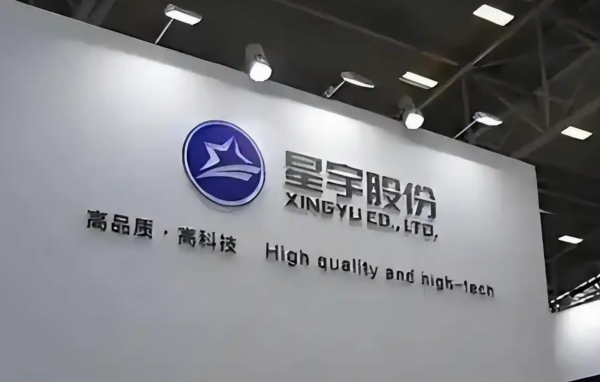
A dispute over the termination of fresh graduates has brought Zhou Xiaoping, Changzhou’s richest woman and the de facto controller of Xingyu Shares, into the public eye. Before the controversy could die down, the company found itself embroiled in compliance and information disclosure issues, with multiple disputes erupting in quick succession. This has left the leading domestic automotive lighting enterprise grappling with sustained pressure from both public sentiment and regulatory scrutiny.
On September 9, netizens exposed bizarre data errors in Xingyu Shares’ 2025 annual report. The publicly released financial report stated that Zhou Xiaoping, the company’s chairperson, is 65 years old, while her son, Zhou Yuheng, the vice chairperson and deputy general manager, was listed as 58 years old. Based on publicly available data, the age difference between the two is only seven years, indicating a clear oversight in disclosure.
Just a day earlier, the company’s accountability results regarding the fresh graduate termination incident were exposed by the media as having questionable core accountability targets, raising suspicions of deliberately arranged “scapegoats.” The authenticity and rigor of the company’s apology and rectification efforts were widely questioned by the market.
Although Xingyu Shares promptly issued explanations and correction announcements regarding the two controversies, the successive information oversights and accountability disputes, compounded by the previous public outcry over the fresh graduate terminations, continued to trigger layered inquiries from the market and netizens. This subjected the company’s governance, internal control management, and information disclosure capabilities to intense scrutiny.
Basic Data Errors Found in Financial Report
Cross-verification with publicly available information revealed that Zhou Yuheng was actually born in December 1985 and will only be 40 years old in 2025, an 18-year discrepancy from the data disclosed in the annual report. This constitutes a serious clerical and data entry error.
As Zhou Xiaoping’s son, Zhou Yuheng is deeply entrenched in the company’s core management and has long been involved in its operational management, making him an important family member and executive at Xingyu Shares.
In response to this financial report blunder, Xingyu Shares urgently issued an annual report correction announcement and publicly apologized on the evening of September 9. The company stated that the age information error was a clerical mistake and did not involve financial data, accounting items, or core operational indicators, thus not materially affecting the authenticity and completeness of the periodic report. Meanwhile, the company promised to comprehensively optimize the preparation and review processes of disclosure documents, improve internal control review mechanisms, and prevent similar oversights from recurring.
This basic information disclosure error did not remain at the level of public sentiment alone; regulatory authorities also stepped in simultaneously.
On September 9, the Shanghai Stock Exchange issued a regulatory work letter to Xingyu Shares regarding its non-standard information disclosure practices, clarifying regulatory requirements for the company, all directors, executives, and controlling shareholders and actual controllers. This further reinforced the primary responsibility of listed companies for information disclosure. The successive disclosure flaws in a short period also raised market doubts about the rigor of the company’s internal control system.
Rectification Sincerity Questioned by Public Opinion
Before the financial report errors were exposed, Xingyu Shares had initiated internal accountability due to the batch termination of fresh graduates, and the accountability results once again pushed the company to the center of public controversy.
On September 7, the company announced a rectification and accountability report regarding the fresh graduate termination controversy, imposing penalties on four core management personnel. Yu Zhiming, the human resources director who was the focus of accountability and was dismissed, was subsequently subjected to layered scrutiny by the media and netizens, revealing multiple doubts about his identity and job performance.
Publicly available information showed that Yu Zhiming, who was held accountable, is 61 years old and has long been detached from the company’s core operational management positions. His public resume indicated that he had never held a human resources-related position and had previously served as the company’s deputy general manager, board secretary, and director for an extended period, with no human resources management work experience.
More critically, Yu Zhiming had officially left his position after the company’s board of directors was re-elected in April 2025 and no longer held any operational management positions, meaning he was not the on-duty human resources head when the incident occurred.
Furthermore, netizens, after reviewing Xingyu Shares’ public ranking system and annual financial reports over the years, found that the company’s internal management sequence promotion levels only included team leader, director, department head, and deputy general manager, with no fixed position for a “human resources director.” Such a position and its incumbent had never been disclosed in publicly available financial reports over the years.
With a non-existent position name on one side and an accountability target who had long left his position and had no relevant job performance experience on the other, multiple contradictions led to widespread suspicions that this accountability was a “scapegoat-finding, formalistic rectification.”
In response to public doubts, local human resources and social security departments once responded, confirming that Xingyu Shares had an internal human resources director position and that Yu Zhiming had served as the company’s party secretary and human resources director.
In response to further public doubts, Xingyu Shares supplemented its response, stating that Yu Zhiming was a retired rehired employee who had overseen human resources-related work during his tenure and thus bore corresponding management responsibility for this employment incident.
However, this response did not quell the controversy, as the market generally believed that the company had listed a person who had long left his position and had no direct job performance responsibility as a core accountability target, while only reassigning and imposing salary deductions on on-duty executives in charge. This indicated an imbalance in accountability efforts, vague responsibility division, and a formalistic approach to rectification and apology that failed to demonstrate a substantive attitude toward error correction.
Fresh Graduate Termination Controversy Continues to Ferment
The financial report oversights and accountability disputes all stemmed from the previously fermenting batch termination of fresh graduates.
In August 2026, multiple fresh graduates reported that they had been asked to negotiate their resignation only about a month after joining Xingyu Shares, either by signing a resignation agreement citing personal reasons or being transferred to production line positions. A large number of fresh graduates faced passive terminations, involving 107 individuals. After the incident was exposed, it quickly garnered widespread attention online, with public opinion directly accusing the company of rough employment practices and reneging on campus recruitment commitments.
After verification by human resources and social security departments at the city and district levels in Changzhou, it was determined that Xingyu Shares’ handling of the fresh graduate termination incident involved simplistic and rigid methods, inadequate communication with graduates, and non-standard disposal procedures.
Under pressure from public opinion and regulators, Xingyu Shares publicly apologized three times, introduced a compensation plan, and initiated internal accountability. The company imposed a 12-month salary deduction on chairperson Zhou Xiaoping, reassigned and imposed salary deductions on the deputy general manager in charge of human resources, demoted and reassigned the head of the human resources department, and dismissed the “human resources director” as part of its rectification measures, attempting to quell public sentiment.
However, the incident did not end there but continued to spread outward, triggering dual chain reactions in the supply chain and capital market. Some of the terminated fresh graduates compiled relevant evidence and filed complaints with core downstream automaker suppliers of Xingyu Shares. Mercedes-Benz, an important cooperative client of Xingyu Shares, accepted the relevant reports and generated a dedicated case number, classifying this employment incident as a serious moral and labor misconduct by the supplier and formally initiating a compliance special review. Volkswagen China also intervened simultaneously, launching a compliance investigation into Xingyu Shares, focusing on verifying its employment norms and corporate governance.
Beyond the supply chain compliance crisis, this series of public sentiment incidents also directly impacted Xingyu Shares’ Sprint (here meaning “striving for”) Hong Kong stock IPO process. Publicly available information showed that Xingyu Shares had submitted a second listing application to the Hong Kong Stock Exchange at the end of July 2025 and successfully obtained the China Securities Regulatory Commission’s overseas listing filing notice in August, being in a critical window period for Hong Kong stock listing review.
According to market information, the Hong Kong Stock Exchange had received relevant complaint materials and referred the incident to the listing review department for handling. Corporate employment compliance, internal control governance, and ESG performance are all core indicators for Hong Kong stock listing review. The continuous outbreak of employment disputes, internal control oversights, and information disclosure errors triggered a special inquiry from the Hong Kong Stock Exchange, likely prolonging the listing review cycle. If subsequent verifications determine that the company has significant compliance governance defects, the possibility of supplementary disclosures, suspended reviews, or even impacts on the listing process cannot be ruled out.
From the fresh graduate terminations to the accountability controversy and then to the basic financial report errors, in just over ten days, Xingyu Shares consecutively exposed multiple vulnerabilities in employment management, internal governance, and information disclosure. Against the backdrop of increasingly stringent compliance regulations in the capital market and standardized supply chain reviews by downstream automakers, the negative impacts of this series of controversies continue to spread. The effectiveness of rectifications and the subsequent direction of the IPO for this leading automotive lighting enterprise will also continue to draw close attention from the market and regulators.
-
![]()
Zhipu’s Dual-Track Strategy: Balancing Growth and Profitability
-
![]()
Financial Report Riddled with Bizarre Errors Again: Changzhou’s Wealthiest Woman Faces Ongoing Troubles
-
![]()
A Critical Year for Autonomous Driving: Will 'Systematic Capabilities' Determine the Final Outcome?
-
![]()
Volkswagen's Strategic Shift: 'Outward' Focus in China, 'Upward' Ambitions in the US
-
Power Supply IC WT5127: Converting 220V to 15V at 500mA
-
Why Are Mobile Phone Prices Rising En Masse? Is AI the Primary Driver?
-
Celebrating Android Manufacturers for Sparking Innovation in Foldable Display Technology
-
![]()
Embracing the 'Lanshan' Legacy: WEY's New Boxy SUV Teases Its 'Entry-Level Pricing'?