The 'Three-tier Deconstruction' of the Restructuring Intentions Between FAW and GAC
 09/15 2026
 489
489
The shareholder list of GAC Group may soon welcome a significant new name.
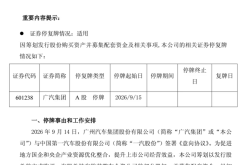
On the evening of September 14, GAC Group announced plans to purchase partial equity in a vehicle joint-venture company held by China FAW Co., Ltd. through the issuance of shares, while raising matching funds (supporting funds). Upon completion of the transaction, FAW Co., Ltd. will become GAC Group's second-largest shareholder and a strategically influential stakeholder, with GAC's actual controller remaining unchanged.
The announcement did not disclose the name of the target company, but its business scope highly aligns with that of FAW Toyota Motor Co., Ltd. in publicly available documents, pointing to this joint-venture automaker.
While the cooperation direction has been broadly determined, key details affecting the transaction's value remain unfilled.
Issues such as how much in assets GAC will purchase, how many shares it will issue, FAW's final stake, and its governance participation have not been disclosed. Both sides have signed only an intent agreement, with the formal transaction plan still under development.
What Does GAC Need?
GAC's current situation is more complex than a simple sales decline, as it is in the most challenging phase of transitioning between old and new businesses.
In the first half of 2026, GAC Group's operating revenue reached RMB 46.121 billion, up 9.38% year-on-year, but its net loss attributable to shareholders widened to RMB 4.467 billion. During the same period, the gross profit margin of its automobile manufacturing business was -6.27%.
GAC's issue does not stem from a 'lack of new models.'
The Aion i60 has achieved monthly sales exceeding 10,000 units, with the N60 contributing incremental growth after its launch. Trumpchi has focused on the MPV segment, launching models such as the Xiangwang M8 PHEV L and Xiangwang E8 PHEV.
In the first eight months of 2026, cumulative sales of GAC Aion grew by 58.37% year-on-year, while GAC Trumpchi's cumulative sales increased by 8.47%. Combined sales of the two self-owned brands reached approximately 457,800 units, accounting for 45.21% of GAC Group's total sales of 1,012,600 units during the same period.
GAC's product adjustments have received market response, but how much profit the new sales volume can generate remains uncertain. The challenge lies in when the revenue from new products can cover the underlying investments.
In the first half of 2026, while GAC Group's self-owned brand sales grew, selling expenses increased by 17.45% year-on-year to RMB 3.056 billion; self-owned R&D investment reached RMB 4.834 billion, up 27.58% year-on-year.
More critically, while the self-owned business competes for orders, the traditional joint-venture business is losing scale.
In the first eight months of 2026, GAC Aion's sales grew by 58.37%, while GAC Honda's sales declined by 51.81% and GAC Toyota's sales fell by 2.46%, resulting in only a 0.21% increase in the group's total sales.
Previously, joint-venture profits supported investments in self-owned brands. Now, with joint-venture operations under pressure and self-owned products still striving for scale amid ongoing R&D, channel, and capacity adjustments, GAC bears the costs of maintaining old businesses and nurturing new ones simultaneously.
In the first half of 2026, GAC's net cash outflow from operating activities was RMB 7.104 billion. Model replacements, technology development, and market expansion still require funding, but the ability to self-finance operations has not yet recovered.
This explains why GAC needs external cooperation. For an automaker showing product improvements but still incurring losses, diversifying revenue sources helps sustain necessary investments and prevents product iterations from stalling midway.
What Does FAW Seek?
What GAC hopes to gain is asset returns, financial flexibility, and more stable industrial cooperation. FAW's willingness to participate in this exchange also stems from its own transformation needs.
In 2025, China FAW sold over 3.302 million vehicles, with joint-venture brands accounting for 2.362 million units (over 70%) and self-owned new energy vehicles (NEVs) exceeding 366,000 units.
While the joint-venture business still supports the group's scale, self-owned NEVs bear the task of expanding future market space. Behind the group's massive scale, the self-owned NEV business still needs to expand market share and improve investment efficiency.
Although FAW can continue relying on its own investments to drive transformation, product development, technological iteration, and market trial-and-error all require funding and time. Acquiring a stake in GAC offers an alternative: participating in another automaker's development and reducing independent investment burdens through joint development and technical cooperation.
This is where GAC's appeal lies.
Aion's experience in the mass-market NEV segment, Trumpchi's MPV market accumulation, and its established R&D and supply chain systems can serve as foundations for cooperation. FAW needs to assess whether these capabilities can help shorten its development cycles and scale up technological applications.
The assets FAW plans to contribute are closer to proven operational results. The business scope disclosed in the announcement strongly suggests the target is FAW Toyota Motor Co., Ltd.
In 2025, FAW Group derived approximately RMB 3.65 billion in investment income from FAW Toyota, raising market expectations for a synergistic restructuring performance (1+1>2).
However, it should be noted that FAW Toyota's performance has been sluggish in 2026. In the first half, its sales reached 273,700 units, down 27% year-on-year, while GAC Toyota's sales hit 341,100 units during the same period.
Regardless of performance, if the target is confirmed, a clear exchange relationship emerges.
This is a mutually beneficial asset swap: GAC acquires joint-venture assets, FAW partially securitizes its assets, and gains the right to participate in GAC's long-term value distribution.
Can Both Sides Win?
Thus, this is a bidirectional bet.
The announcement sets the transaction direction, but the numbers determining benefit allocation remain undisclosed.
Issues such as how much equity GAC will purchase in the target, how many shares FAW will ultimately hold in GAC, the asset valuation and share issuance prices, and the scale of Supporting financing (supporting funds) still require clarification in subsequent plans.
These details directly determine the costs of the exchange for both sides.
Under the premise of purchasing the same proportion of target equity, the higher the target's valuation and the lower the share issuance price, the more shares GAC must issue to FAW.
Moreover, FAW Group's status as the 'second-largest shareholder' is currently just a ranking.
As of the end of June 2026, Guangzhou Automobile Industry Group held 54.02% of GAC's shares, while HKSCC NOMINEES LIMITED held 27.56% (via Hong Kong Central Clearing Ltd.). Currently, GAC's largest non-controlling single shareholder holds a 3.88% stake.
This means the 'second-largest shareholder' does not inherently correspond to a 20%-30% stake.
From GAC's perspective, particular attention must be paid to whether future cooperation benefits are fully priced into the acquisition cost in advance.
Joint R&D and procurement cost reductions require subsequent execution. If these unrealized gains are already reflected in high valuations, existing shareholders may bear costs upfront and await cooperation outcomes later.
Thus, evaluating this transaction involves highly complex dimensions.
The target asset's profitability and cash dividend levels determine what GAC actually acquires; asset valuation, issuance price, and share quantity determine the costs borne by existing shareholders; the board seats and decision-making power FAW gains, along with whether both sides can integrate R&D, procurement, channels, and capacity, determine whether 'strategic influence' creates synergies or increases governance costs.
Meanwhile, this partnership between FAW and GAC reflects a common challenge faced by traditional automotive groups: profits accumulated during the joint-venture era are receding, self-owned NEV businesses have not fully taken over, yet investments in technology, marketing, and globalization cannot halt.
In just a few years, China's auto industry has spanned two eras. It is too early to conclude whether FAW's stake in GAC will achieve a win-win outcome.
Nevertheless, FAW secures a seat, while GAC buys time. In today's automotive elimination race, time only becomes a valuable asset when transformed into products, costs, and brands.
-
The 'Three-tier Deconstruction' of the Restructuring Intentions Between FAW and GAC
-
![]()
"Living Room on Wheels": Pie or Trap?
-
![]()
Zhipu Secures Nearly US$5 Billion in Funding
-
![]()
FAW and GAC Integration: Will China's North and South Toyota Further Merge, and Will Dongfeng Continue Its Consolidation Efforts? | MINGJINGpro
-
![]()
Goldman Sachs Sets Its Sights on a City: Ulanqab!
-
![]()
The City in Goldman Sachs’s Spotlight: Ulanqab!
-
How Should Gas Stations Adapt Amid Declining Fuel-Powered Vehicle Sales?
-
![]()
Should GAC Shareholders Be Concerned: FAW Opts Not to Invest Cash but Lightens Its Joint Venture Load to Become Second-Largest Shareholder!