Under the Wave of Restructuring, Are the Struggling Neta and Zotye Making a Comeback?
 09/18 2026
 425
425

Lead-in
Introduction
Seizing a Second Chance: How to Turn the Tide?
Guided by the '15th Five-Year Plan' for the Development of the Intelligent Connected New Energy Vehicle Industry, the pace of mergers and acquisitions within China's automotive sector has significantly quickened. Leading the consolidation charge are large state-owned enterprises such as FAW and GAC, ushering in a new era of industrial resource optimization.
However, this wave of restructuring extends beyond major central and state-owned enterprises. Shao Ji, Deputy Director-General of the Industrial Development Department at the National Development and Reform Commission, clarified at a press conference that mergers and acquisitions among enterprises will be promoted in a market-oriented and legally compliant manner.
Recent high-profile cases, including 'Taiyi Shenglian's Rescue of Neta', Zotye's production resumption, and Haima Automobile's stock price volatility, serve as prime examples of market-driven restructuring.
For 'zombie' automakers, this window of merger and acquisition opportunities represents a rare chance to 'rise from the ashes'.
Judging from the plans disclosed by Neta and Zotye, both companies see overseas markets as their key future growth areas, which is indeed the only viable path at present.
However, times have changed. A few years ago, when Neta Automobile was establishing a factory in Thailand, it was still competing with Japanese automakers. Now, with leading domestic companies such as BYD, Geely, Chery, and SAIC accelerating their overseas expansion, market competition has evolved into a scenario where these companies are sandwiched between Chinese and foreign competitors. Thus, the path to survival post-restructuring remains fraught with challenges.
01 Capital Steps In, Reviving Struggling Manufacturers
Shanshi Hi-Tech's acquisition of Neta Automobile is clearly a well-planned move.
In mythology, after Nezha (Neta) took his own life, his master Taiyi Zhenren reconstructed his body using lotus roots. Applied to Neta Automobile, the two tangible entities, 'Taiyi' and 'lotus root', have merged, culminating in the move under the banner of 'Taiyi Shenglian' in an attempt to revive this company once abandoned by the market and consumers.
Undoubtedly, Taiyi Shenglian and even Yuxu Technology behind it are investment platforms specifically tailored by Shanshi Hi-Tech for Neta Automobile.
Industrial and commercial data reveals that Taiyi Shenglian was established in April this year, with the actual controlling entities being Zhejiang Shanshi Synchronization Co., Ltd. and Zhejiang Shanshi Yuxu Technology Co., Ltd. The former is controlled by Ye Ji, Chairman of Shanshi Hi-Tech, while the latter is controlled by Yu Shuxin, Head of the Board Office at Shanshi Hi-Tech. Both companies were also established in 2026.
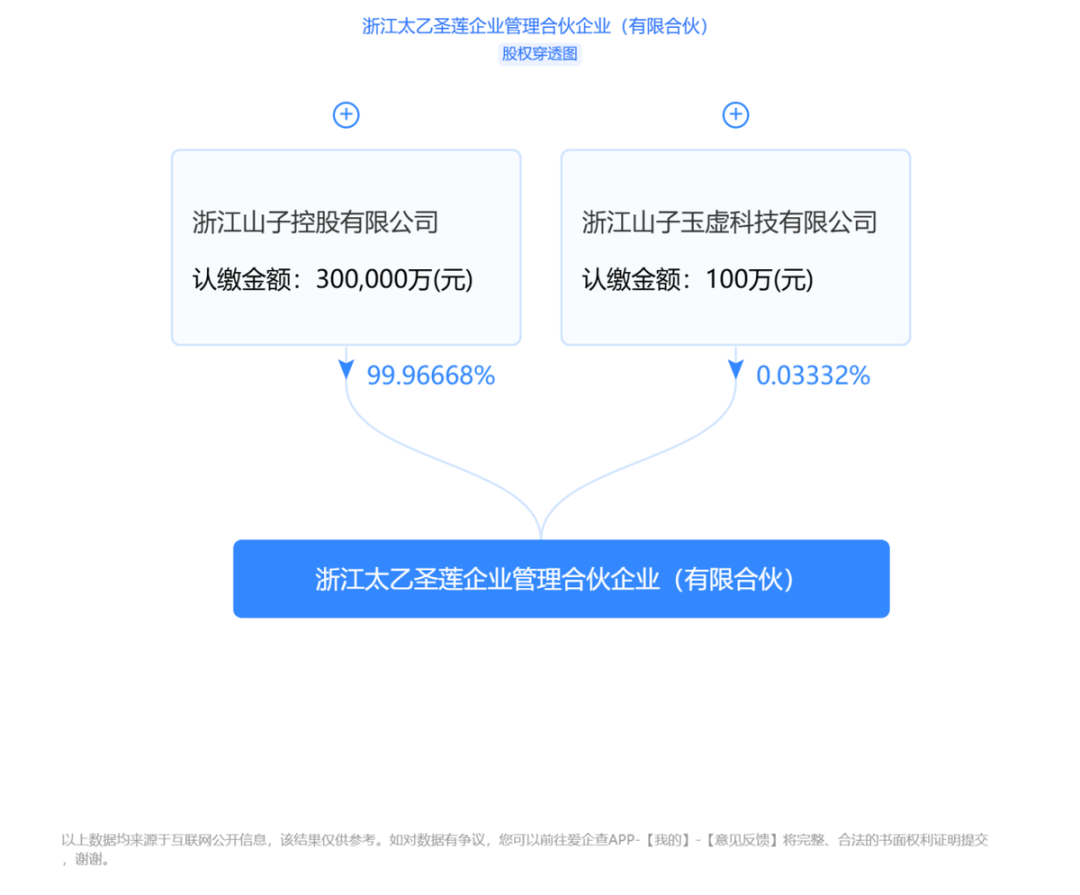
As early as last year, Shanshi Hi-Tech displayed keen interest in Hozon New Energy and became the sole qualified potential restructuring investor, paying a registration deposit of 50 million yuan and temporarily taking over Neta's daily operations. However, its proposed 4.5 billion yuan restructuring plan failed to materialize on schedule and was subsequently scrapped.
Why is Shanshi Hi-Tech persistently pursuing the acquisition of a debt-laden and halted automaker? Because it aspires to evolve from merely an auto parts supplier to a vehicle manufacturer.
Shanshi Hi-Tech, originally a prominent real estate company in Ningbo, later transitioned into high-end manufacturing, forming two main businesses: automotive components and semiconductor advanced packaging. It once supplied electric drive reducers for the Neta N01.
Previously, Shanshi Hi-Tech obtained passenger vehicle production qualifications by acquiring Hebei Hongxing Automobile. It also recruited Zhu Renjie, former Manufacturing Director at Tesla, as CEO of its subsidiary Shanshi Youqian Company, with plans to create an extremely cost-effective model priced under $10,000.
During this period, Shanshi Hi-Tech also prepared another subsidiary for taking over Neta—Zhejiang Qianhe Automobile Co., Ltd., named after the 'Qian' from Shanshi Youqian and the 'He' from Hozon Automobile, established in December 2025. Perhaps due to the failure of the 4.5 billion yuan restructuring plan, Shanshi Hi-Tech instead established Taiyi Shenglian. This 3 billion yuan scheme represents another attempt.
According to the V17 project team's plan, the focus for 2025-2026 will be on three key tasks: completing the development and production of the V17 model, jointly building an exclusive online sales channel with Tmall, and implementing offline mass deliveries. This model is targeted at the domestic market, primarily sold online, with production and delivery planned for 2026.
From the plan, Neta Automobile's future will primarily focus on overseas markets. In other words, after taking over Neta Automobile, Shanshi Hi-Tech aims to complete a dual domestic and overseas layout within the year.
Like Neta, Zotye has been making frequent resumption moves this year, especially in September. In March, the Shenkang Body Mold Factory resumed operations, in June, the new vehicle styling was finalized, in September, the new model molds were delivered, and the base coating production line renovation project was successfully completed and put into operation, disclosing that the 'brand-new A0-class model has officially entered the mass trial production stage'.
Driven by industrial restructuring policies and positive resumption progress, Zotye's stock price has continuously hit limit-up; Haima Automobile also experienced stock price fluctuations on September 14, showcasing the capital market's enthusiasm for restructuring themes involving struggling automakers.
02 Triple Challenges: Debt, Overseas Expansion, and Supply Chains
Capital infusion does not equate to corporate rebirth. After the restructuring plan is implemented, automakers face multiple challenges, including funding pressure, debt negotiations, overseas market competition, and rebuilding supply chain trust.
The primary issue is debt disposal and sustained capital investment. Automakers that have halted production generally carry heavy debts, including unpaid employee salaries, upstream component payments, and bankruptcy-related expenses. Restarting production lines, iterating models, and building channels also require continuous incremental capital investment.
Taking Neta Automobile as an example, according to the 'Restructuring Plan (Draft)', 'Taiyi Shenglian' plans to provide 3 billion yuan in restructuring investment funds to acquire approximately 70.62% of Hozon New Energy's equity. Of this, 1.167 billion yuan will be used to settle claims corresponding to retained assets and bankruptcy expenses, while 1.833 billion yuan will supplement working capital to support resumption.
Although compared to the 26 billion yuan in declared claims, the 1.167 billion yuan in repayment funds may seem like a drop in the bucket, mergers and acquisitions still represent a redemptive opportunity for many debt-laden companies at present. Especially now, component companies are struggling, with increasingly thin profit margins on payment terms. Restructuring is also a small but timely relief for component companies.
Maintaining stable long-term development is also a challenge. Hozon New Energy's future development plan will be divided into three stages:
In the first stage, it plans to resume production of the Neta X model, primarily targeting overseas markets, with a target annual sales volume of 10,000 units;
In the second stage, it will focus on launching models suitable for regions such as Asia, Africa, and Latin America, with a target annual production of 300,000 units; in the third stage, it will create globalized intelligent models, aiming for an annual output value of 40 billion yuan and initiating IPO preparations.
The first stage is feasible. Although overseas competition is fierce now, Neta Automobile has previously laid the groundwork for overseas expansion. Moreover, the 'Restructuring Plan (Draft)' states that the resumed Neta X model 'has already secured some letters of intent', making the challenge of 10,000 orders not overly significant.
In contrast, the feasibility of implementing the second and third stages is relatively slim.
In 2025 and 2026, leading companies are accelerating their overseas expansion, and Neta Automobile's start is already late. Last year, the overseas scale of several leading automakers, including Chery, SAIC, BYD, Changan, Great Wall, Geely, and Dongfeng, reached over 5 million units. This year, multiple companies are aiming for overseas targets in the millions.
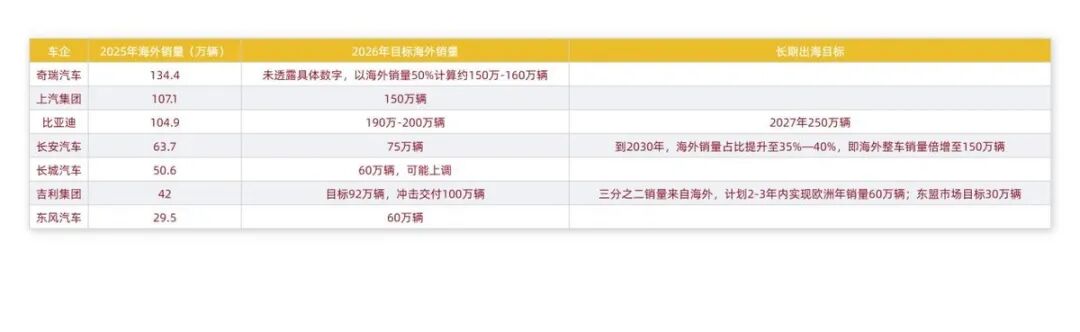
Especially now, with pressure on the domestic market, overseas markets are expected to account for nearly half of the sales volume in the long-term development plans of several automakers, leaving even less room for mid-tier and lower-tier automakers.
Neta and Zotye will also have to pay a higher price to gain a foothold overseas. Neta's halt was due to a lack of core technologies and a blind push for high-end models, while Zotye's issues stemmed from a lack of originality and weak quality and technology—the core reasons being technological shortcomings.
Now, with such rapid market and technological iterations, the Neta X has already lost its competitiveness. If they continue to rely on low prices to attract consumers, the outcome overseas will not change significantly.
Moreover, the models they are now offering are entry-level compact models, which are also a key focus for leading companies. At least for now, there are no significant highlights. Furthermore, the key to low-priced models is to achieve high sales volumes to spread costs. Once sales fall short of expectations, they will directly fall into a vicious cycle of losses leading to bankruptcy.
The lack of endorsement for independent brands going overseas further raises the barrier to breakthrough. Resuming production at this stage will inevitably rely on existing domestic product lines and supply chains, adopting a 'domestic production, overseas sales' model, which is also the approach taken by joint ventures struggling to survive domestically.
However, the issue is that compared to joint ventures, their overseas recognition is extremely low. Although Neta Automobile once established a factory in Thailand, it ultimately failed to fulfill the signed agreement content, tarnishing its reputation and making the path to overseas expansion inevitably difficult.
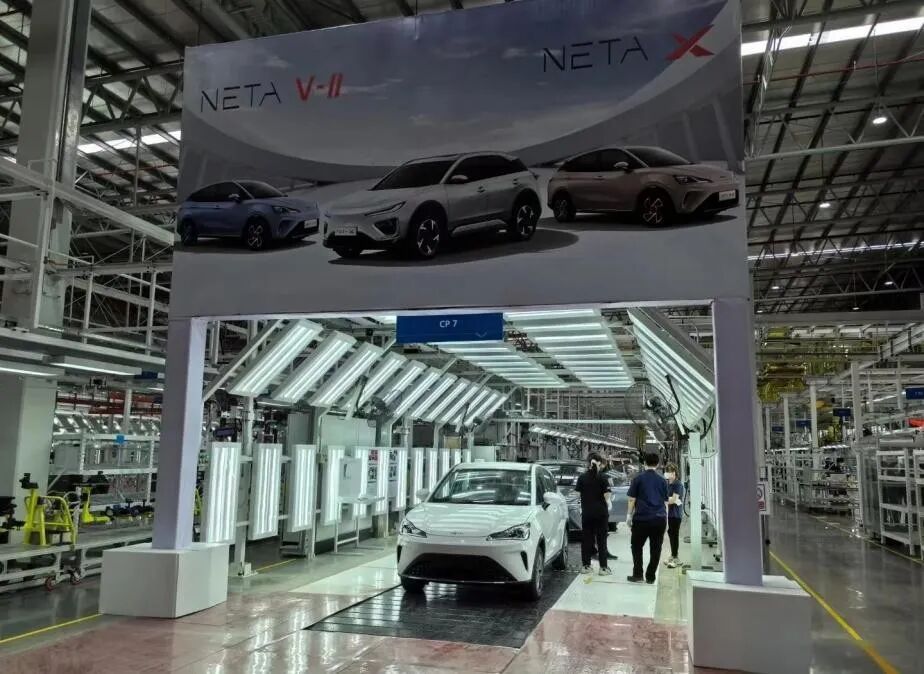
Moreover, few independent brands currently focus solely on overseas markets, with HiPhi being a rare example. However, HiPhi positions itself as high-end, with larger profit margins and not particularly high sales volumes.
The mobile phone industry does offer successful examples of overseas low-end market penetration, such as Tecno, known as the 'King of African Mobile Phones', which reported revenue of 35.4 billion yuan and net profit attributable to parents of 1.773 billion yuan last year. However, the automotive industry is a capital-intensive sector, with huge investments in R&D, certification, production, and after-sales, making it difficult to replicate the regional strategies of the mobile phone industry.
Beyond market competition, rebuilding supply chain trust is another hidden risk. Relying on the mature and complete domestic automotive supply chain system for overseas expansion is key to the restructuring plan.
However, during the production halt, companies owed significant amounts to suppliers and employees. After the debt turmoil, the trust of suppliers and former employees in the company has been damaged. Even with capital injection to restart production, there remains significant uncertainty in stably obtaining component supply and stable employment. Once order volumes are small, component suppliers' willingness to cooperate will be even lower, potentially triggering panic.
Moreover, Neta Automobile's third-stage plan in the restructuring scheme to strive for an output value of 40 billion yuan and initiate an IPO inevitably raises market doubts. With 3 billion yuan in capital entering the fray, the goal is to leverage hundreds of billions in business scale. How much of this is firm determination for practical restructuring, and how much is the gamble of passing the buck, remains unclear for now.
Furthermore, this round of industrial restructuring is also driven by the excess capacity and numerous domestic automakers, aiming to accelerate industry consolidation. In this context, whether automakers that have experienced long production halts still hold value is also a question.
Overall, the market-oriented restructuring of the automotive industry driven by policies provides a precious opportunity for struggling automakers to break free and rebirth. Capital entry, resumption of production, and overseas layout have brought long-awaited hope to automakers like Neta and Zotye. However, the overarching trend of industry consolidation is irreversible, and multiple challenges such as intensified competition in overseas markets, core technological shortcomings, and debt and supply chain risks remain hurdles that these restructured automakers must overcome.
Nirvana requires breaking free from old shackles. If they still fail to achieve essential iterative innovation, several marginal automakers are destined to repeat past mistakes and squander this rare opportunity for industrial restructuring.
Editor-in-Charge: Li Sijia Editor: He Zengrong

THE END
-
![]()
Under the Wave of Restructuring, Are the Struggling Neta and Zotye Making a Comeback?
-
![]()
Bumper Bookings! BAIC Unveils New Car, Securing Over 30,000 Reservations in Just One Hour!
-
![]()
Li Auto i9 Priced at 369,800 Yuan 'Shakes Up the Market': Is NIO ES8's 'Sales Dominance' Under Threat?
-
![]()
Net Worth Skyrockets! Liang Wenfeng Might Overtake Zhang Yiming as China’s Wealthiest Individual
-
![]()
Final Decision Unveiled: The Importance of FAW and GAC Signing the Letter of Intent
-
![]()
The Latest Statement from the Godfather of AI: Don't Trust Industry Self-Regulation, It Will Be Too Late When You React
-
![]()
Perfect Model, Zero Business Impact - The Last Mile of AI Commercialization | FDE Industry Research Report
-
![]()
Is Liang Wenfeng Set to Become China’s Wealthiest Individual by Appointing a Post-90s CFO?