Domestically Overlooked, Yet Coveted Abroad: How China’s Bus Industry Rakes in $26 Billion Annually
 09/18 2026
 427
427
Produced by: #Market Value Finance
In recent years, China’s domestic high-speed rail network has expanded significantly, and private car ownership has surged. Long-distance passenger buses have seemingly faded from the public eye (the term "shijian" is retained in pinyin to preserve its cultural nuance, though it translates to "view" or "radar" in this context), leading many to speculate that the bus industry is a sunset sector. However, on the global stage, Chinese buses tell a vastly different story.
According to the China Bus Statistical Information Network, in 2025, exports of domestically produced buses exceeded 78,000 units, with overseas net profits surpassing 26 billion yuan. The first half of 2026 saw sustained growth, with 41,156 large, medium, and light buses exported—a 15.64% year-on-year increase.
From Riyadh to London, Mexico City to Santiago, Chinese buses are reshaping the global public transportation landscape with a steady stream of orders.
PART 01
From Underdogs to Global Leaders: Chinese Buses Redefine the Industry
01
In the early 2000s, Chinese bus companies ventured overseas for the first time to participate in European auto shows. The main exhibition halls were dominated by American, European, and Japanese brands, while Chinese products were relegated to a remote "basement" section.
In 2013, a Chinese automaker secured an order for 10 fully electric buses in Long Beach, defeating local competitors. Before celebrating, they faced criticism from the Los Angeles Labor Bureau, which claimed the deal violated "U.S. labor laws." Shortly after, accusations of "serious quality issues" emerged, along with demands to cancel the order.
Such biases persisted for years until a turning point in 2018.
Yutong Bus participated in a Danish public transportation bidding project for the first time and faced skepticism about "Chinese brands having no market in Europe." Yet, Yutong won the contract, marking a symbolic breakthrough for Chinese buses into the European market.
Since then, Chinese buses have expanded globally, from isolated deals to sweeping market dominance.
The export landscape in the first half of 2026 is clear:
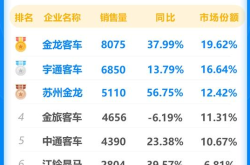
According to the China Bus Statistical Information Network, King Long Bus led the industry with 8,075 exported units—a 37.99% year-on-year increase. Yutong Bus followed with 6,850 units, ranking second, while Suzhou King Long surged to third place with 5,110 units, a 56.75% increase. The top three companies accounted for nearly half of the industry’s export share, highlighting a concentrated market.
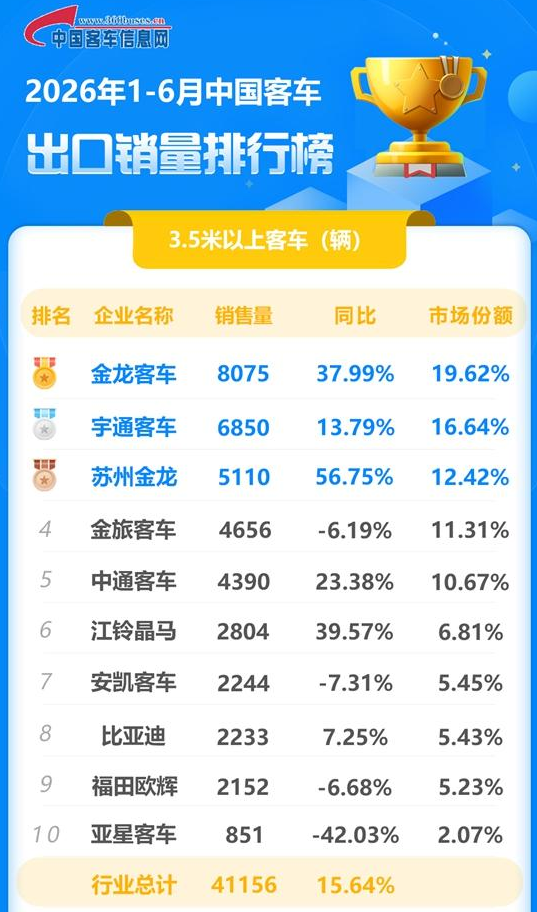
Source: Bus Information Network
Competition in the new energy bus sector is even fiercer. In the first half of 2026, BYD ranked first in new energy bus exports with 2,233 units, capturing a 22.15% market share—its third consecutive year as the global leader.
Yutong exported approximately 1,654 large and medium-sized new energy buses, a 54.1% year-on-year increase.
Globally, Chinese new energy buses’ market share rose from 30% in 2020 to 37% in 2025. Chinese electric buses still accounted for about 60% of global sales in 2025, continuing to dominate supply.
In just over a decade, Chinese buses have evolved from marginalized outsiders to operators on London streets and in desert hinterlands, achieving an industrial resurgence.
PART 02
Beyond Low Prices: The Systemic Advantage of Chinese Buses
02
Many associate "Made-in-China" globalization with low prices. However, data shows Chinese buses’ rise stems not from price wars but from the "dimensional reduction strike" enabled by the new energy industrial system.
The core strength of Chinese new energy buses lies in their three-electric (battery, motor, controller) supply chain.
According to the International Energy Agency, China produces about 85% of the world’s lithium-ion batteries, making it the global leader. Companies like BYD and CATL have achieved full-stack self-research in three-electric technologies, integrating upstream mineral resources to downstream applications. This ensures technological leadership, minimizes costs through economies of scale, and maintains superior delivery stability compared to overseas rivals—the foundation for balancing performance and cost.
An even deeper advantage is flexible manufacturing and customization.
Global market demands vary widely: Yutong delivered pure electric buses to Pakistan with dual-middle-door designs and front-rear partitioned seating, equipped with an industry-first power battery nitrogen protection system to prevent fires in high-temperature, arid climates.
Golden Dragon Bus customized 234 buses for Saudi Arabia, addressing extreme heat (surface temperatures near 50°C, interiors up to 70°C) by ensuring rapid cooling within 30 minutes of startup. From contract signing to vehicle rollout, the entire process took under 50 days.
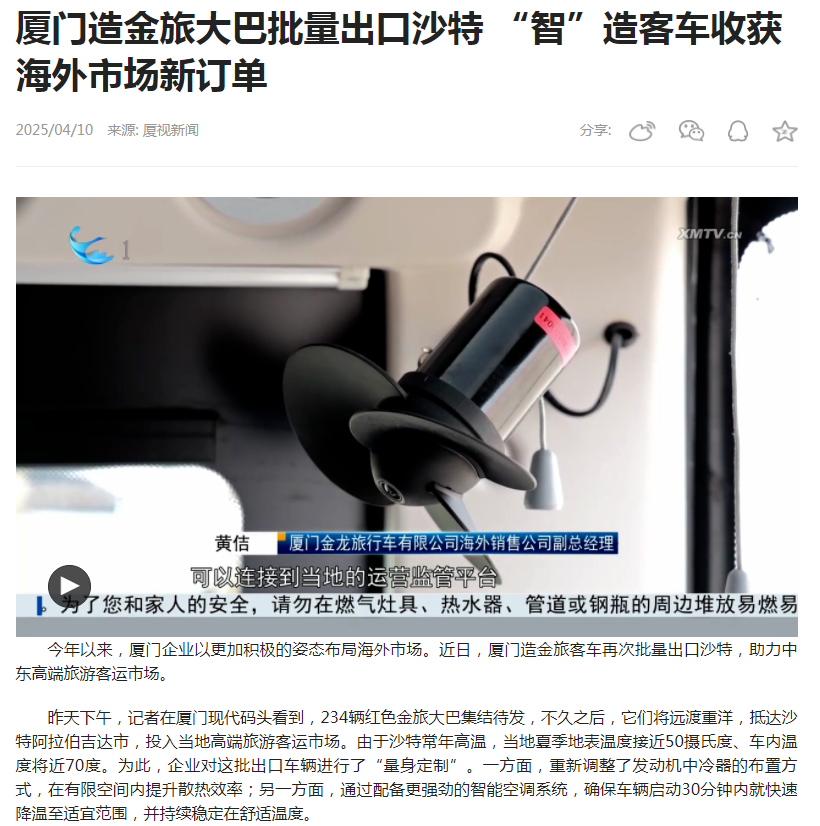
Source: Xiamen Media Group
While European and American automakers often take 1–2 years to deliver customized models, Chinese manufacturers, leveraging modular architectures and flexible production lines, complete targeted modifications in months.
Moreover, selling buses is just the start.
Yutong has established 11 central warehouses and 92 front-line warehouses globally, ensuring 24-hour parts availability and offering full-chain services like remote diagnostics, OTA upgrades, and driver training.
For overseas operators, signing with Yutong means securing a complete operational guarantee.
Ultimately, Chinese buses’ global expansion relies on systemic advantages: "supply chain + manufacturing + services." Competitors may replicate vehicle specifications but cannot match the efficiency of China’s industrial cluster or its full-link service capabilities—the true ace card for global success.
PART 03
Selling Is Just the Start: ‘Taking Root’ Is the Real Challenge
03
Many focus solely on export volume growth, overlooking the qualitative shift in business models.
Historically, Chinese bus exports were one-off "sell one, earn one" deals. Today, automakers pursue long-term strategies to "capture a market and reap full lifecycle value"—the most underestimated aspect of their global rise.
Overseas customers seek not just buses but complete urban public transportation electrification solutions.
Chinese automakers excel by exporting domestic electrification expertise, upgrading from product sales to "turnkey" projects.
During the Qatar FIFA World Cup, Yutong delivered 888 pure electric buses, built exclusive charging stations, intelligent dispatch platforms, and deployed a full-time operations and maintenance team.
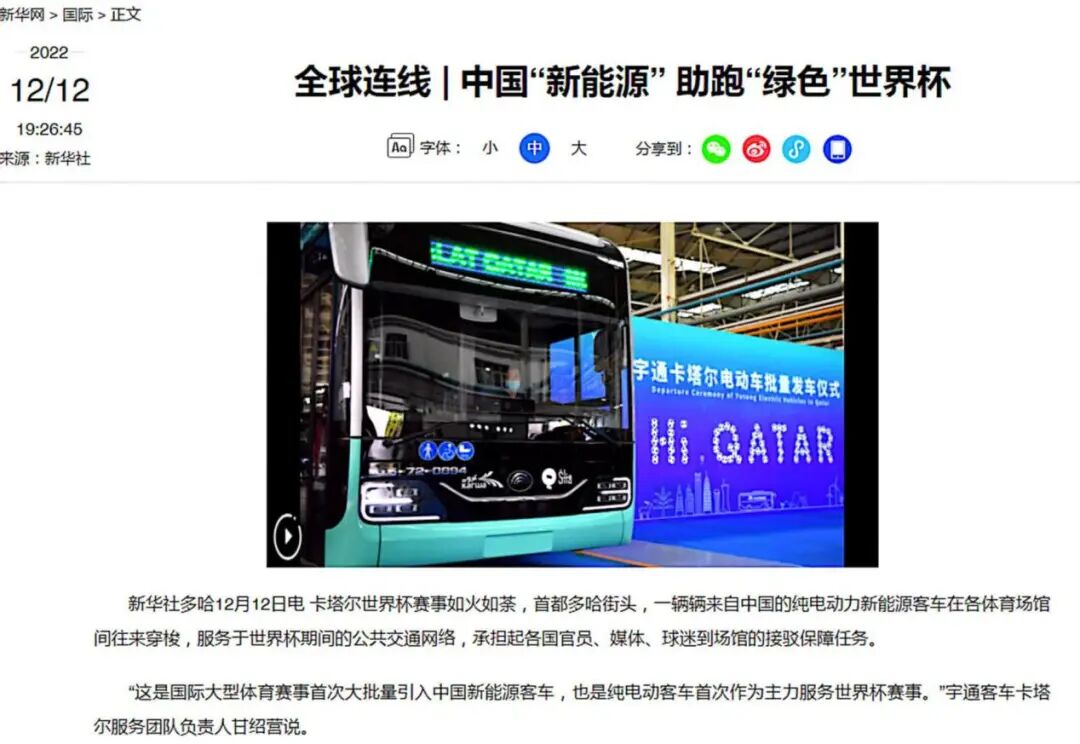
Source: Xinhua Net
Today, in markets like Saudi Arabia and the UAE, Chinese firms secure not scattered vehicle orders but city-wide smart bus transformation projects.
From vehicle selection and charging infrastructure to route planning and operational management, everything is delivered as a package—amplifying order value by 2–3x and raising competitive barriers.
Another key to "taking root" is shifting from exporting complete vehicles to localized manufacturing.
Exporting alone faces tariff barriers and trade friction risks. Deep localization is essential for market penetration.
Golden Dragon Bus’s new energy bus assembly plant in Ethiopia is East Africa’s first localized production base. By 2024, it mass-produced pure electric models, slashing import costs and driving local industry development, becoming the go-to choice for government procurement.
BYD and Yutong have also established bases in Hungary, Malaysia, and elsewhere, serving European and Southeast Asian markets.
Industry estimates suggest localized production cuts comprehensive costs by 15–20% while meeting government procurement localization requirements, securing large orders unattainable through exports alone.
From selling products to solutions, and from exports to local roots, Chinese buses have moved beyond scaling exports to harvesting value—enhancing profitability and rewriting enterprise valuation frameworks, transforming manufacturers into integrated service operators.
END
Disclaimer (Scroll up and down to view the full text)
Market Value Finance hereby states that all information and content provided are objectively compiled and analyzed based on publicly available data. However, we cannot guarantee absolute accuracy, completeness, or timeliness. Opinions, analyses, and conclusions herein reflect Market Value Finance’s independent views at a specific time and do not constitute investment advice. Financial markets carry risks; investors bear full responsibility for decisions based on this information. For questions or omissions, contact us via official channels for prompt verification and handling.
-
After Huawei Steps Back, Can Seres Take the Helm of AITO?
-
Computing Power Amidst Snow-Capped Peaks
-
15.3068 Million Yuan! Daoming Optics Secures Contract for Raw Material Supply in Guangdong’s New Energy Vehicle License Plate Project
-
![]()
1.1 Billion Yuan in Fundraising Reallocated! FG Optics Inc. Ramps Up Investment in Precision Optics and Aerospace Lenses
-
![]()
Domestically Overlooked, Yet Coveted Abroad: How China’s Bus Industry Rakes in $26 Billion Annually
-
Has the FCC靴子 Finally Landed? Can Domestic Optical Module Companies Breathe a Sigh of Relief?
-
![]()
From Purchasing Cells to Defining Cell Specifications: The Shifting Power Dynamics in the New Energy Industry Chain
-
![]()
If ByteDance Goes Public, Could It Become China’s Largest Company by Market Capitalization?