Volvo S90 Price Plummets from 400,000 Yuan to 220,000 Yuan! Traditional Luxury Cars Face More Than Just a Price War
 09/21 2026
 542
542
Written by | Auto Observer
The automotive industry is currently witnessing the most intense price reshuffle among traditional luxury brands.
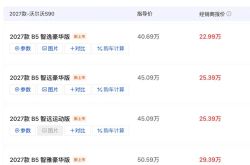
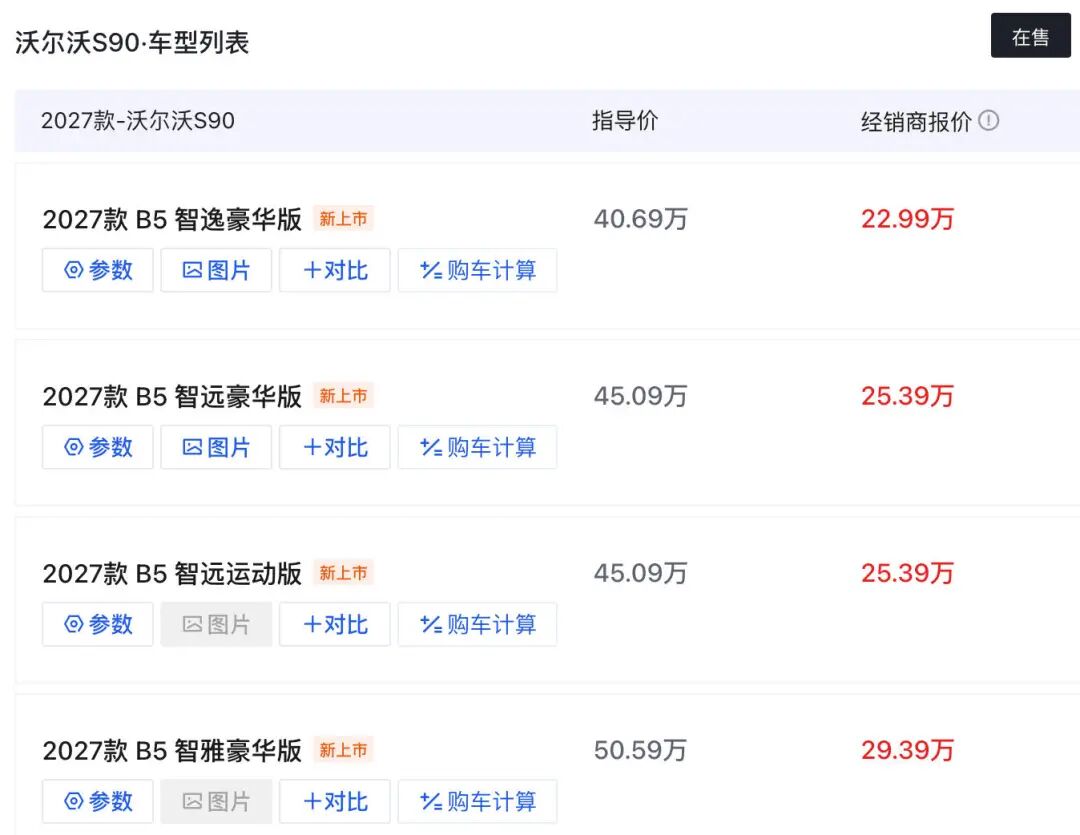
Recent reports indicate that Volvo's flagship sedan, the S90, which was initially priced at over 400,000 yuan upon its launch, has now seen its terminal transaction prices hit rock bottom. At some dealerships, after factoring in trade-in allowances and manufacturer subsidies, the full payment price can drop to as low as 220,000 yuan. This represents a nearly 50% reduction from the official starting price of 406,900 yuan, with a price slash nearing 180,000 yuan.
This is not an isolated incident. Auto Observer has observed that in certain regions, the base price of the Audi A6L has dropped to 266,000 yuan, with discounts exceeding 150,000 yuan off the Manufacturer's Suggested Retail Price (MSRP). The BMW 5 Series has seen its lowest starting price fall into the 290,000 yuan range, while the BMW 7 Series offers discounts up to 270,000 yuan. The Mercedes-Benz C-Class has entered the 200,000 yuan range, and the entry-level Mercedes-Benz GLB has dropped to 144,900 yuan.

The outside world perceives this wave of price cuts as a sign of industry intensification and corporate self-preservation. However, Auto Observer believes that we may be entering an era of reconstruction, where the old luxury system is gradually crumbling, and the power to define automotive value is changing hands.
For a decade or more, the core premium logic of traditional luxury cars has relied not only on product strength but also on information asymmetry, brand monopolies, and social status symbols.
Foreign automakers have capitalized on their first-mover technological advantages, century-old brand endorsements, and high-end marketing strategies to firmly establish their dominance in China's luxury car market. They have equated "luxury" with "imported badges, large displacements, and leather interiors," reaping high premiums through entrenched consumer perceptions.
However, this approach now appears outdated.
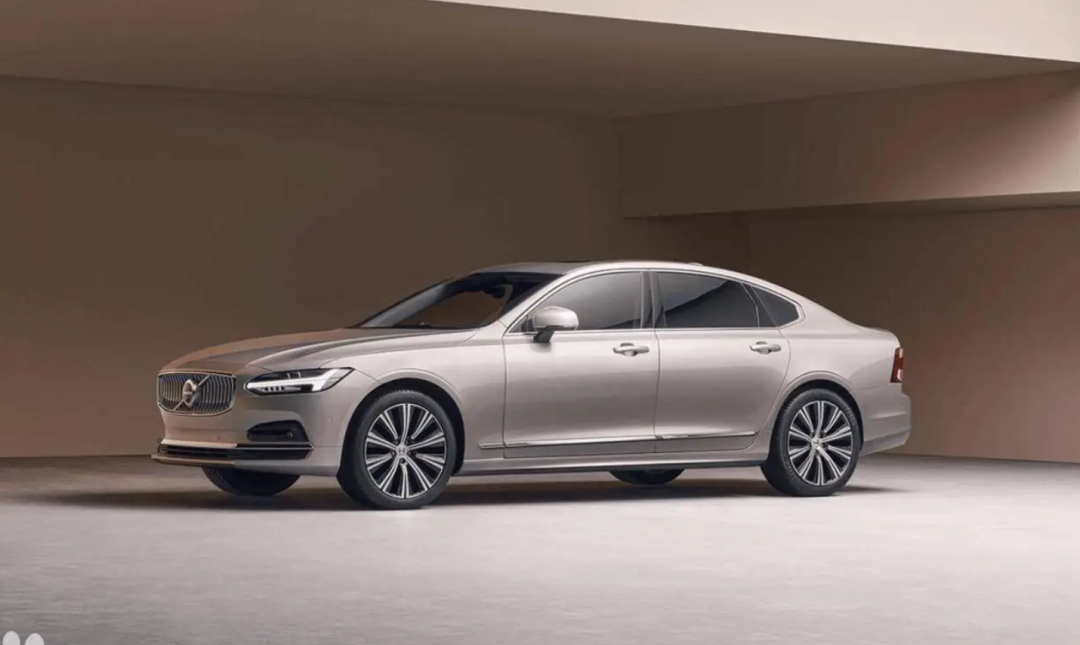
Take the Volvo S90 as an example. This once-flagship mid-to-large luxury sedan has relied on its SPA platform for a decade without significant generational updates, rendering its architecture outdated. Its vehicle chip and intelligent driver-assistance systems have remained stagnant for years, stuck at basic Level 2 autonomous driving capabilities, lacking advanced urban intelligent driving features or seamless smart cockpit experiences.
During the era of fuel-powered vehicles, consumers were willing to overlook these intelligence shortcomings, paying a premium for "Nordic safety" and the "luxury car badge." However, in today's era of widespread new energy intelligence, where 200,000-yuan-class domestic new energy sedans come standard with 8295 flagship chips, mapless urban Navigation on Autopilot (NOA), full-domain smart cockpits, and high-end comfort configurations, the brand aura of outdated fuel-powered luxury cars can no longer command a premium.
A decade ago, safety was a selling point. Today, consumers demand intelligence.
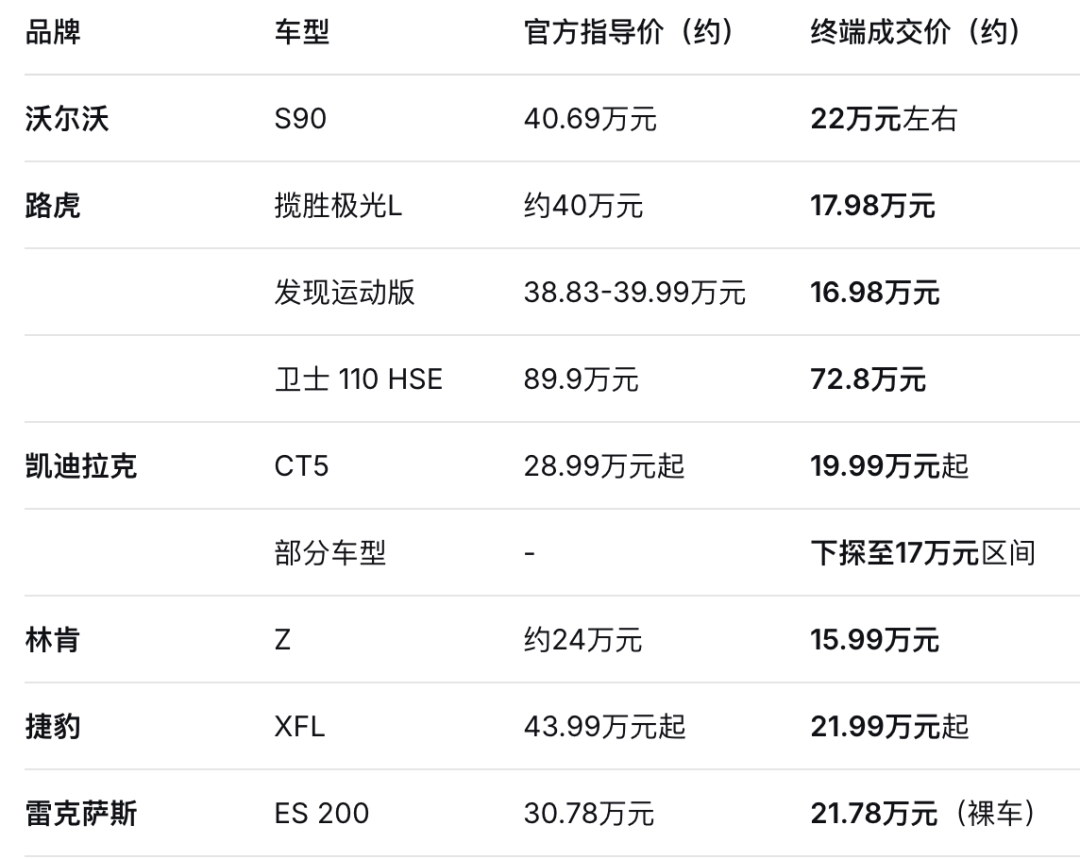
In Auto Observer's view, the Volvo S90 now competes not with the Mercedes-Benz E-Class or BMW 5 Series but with the AITO M9, NIO ES8, and Xiaomi SU7.
Against this backdrop, Volvo's market position in China continues to erode. In 2025, Volvo's global sales reached 710,000 units, down 7% year-on-year. Its operating profit plummeted from 22.3 billion Swedish kronor to 300 million Swedish kronor, marking its first annual loss in nearly a decade. Among these figures, China market revenue fell by 23%. In the second quarter of 2026, sales in the Greater China region dropped to 24,900 units, with the decline widening to 35%.

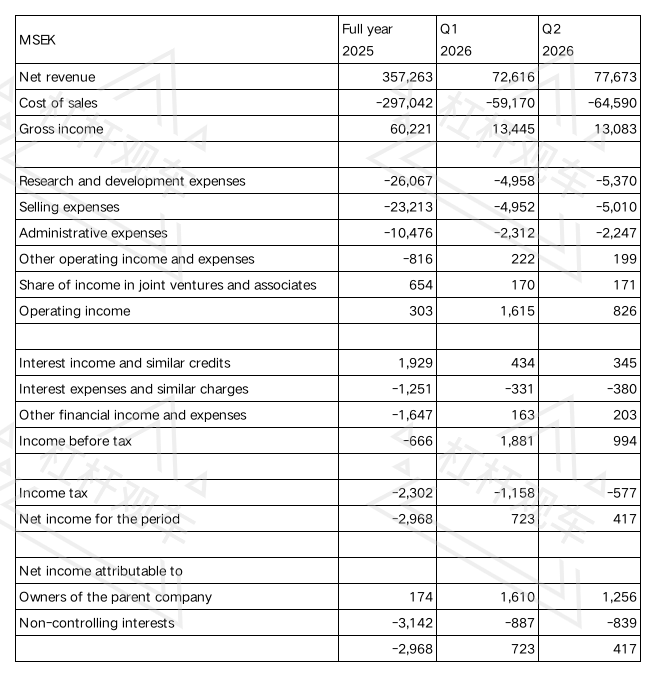
With two leadership changes in four months—Duan Jianjun briefly replacing Yuan Xiaolin before He Kuo took over as Greater China sales president in September—the frequent reshuffling underscores Volvo's struggle to find a foothold in the Chinese market.
Of course, this issue is not unique to Volvo. In the first half of 2026, Mercedes-Benz sales in China fell by 28%, BMW by 20.4%, and Audi by 19%...
In Auto Observer's view, the root cause of traditional luxury brands' dilemma lies in their wavering global electrification strategies.
According to incomplete statistics by Yicai, over 10 automakers, including Honda, Ford, Stellantis, General Motors, BBA (BMW, Mercedes-Benz, Audi), and Porsche, have either withdrawn or slowed down their electrification plans, with cumulative losses reaching approximately 500 billion yuan.
Honda even reported its first annual loss in nearly 70 years of listing, with estimated losses from reevaluating its electrification strategy totaling up to 2.5 trillion yen.
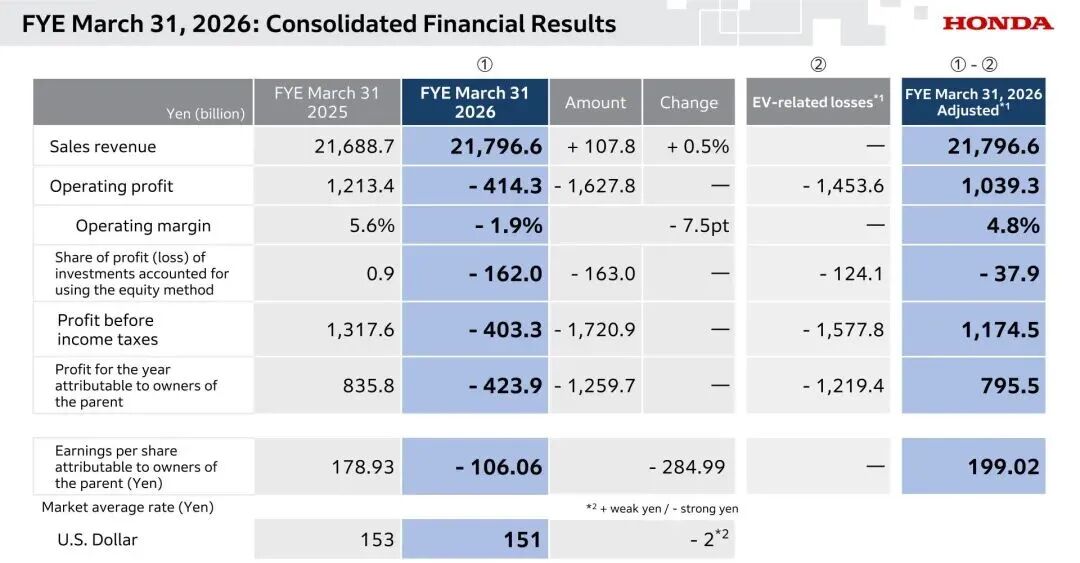
The direction was correct, but the timing was off. These automakers profited handsomely during the fuel car era but hesitated in their transition to electrification—unwilling to fully commit to pure electric vehicles yet reluctant to abandon the profitable fuel car segment, ultimately falling behind in both areas.
This is particularly evident in the Chinese market, where domestic brands lead in smart cockpits, autonomous driving, and user engagement, while traditional luxury brands' "retrofitted electric" products fail to compete on the same level.
That said, traditional luxury cars still retain their expertise in chassis engineering, safety heritage, and years of accumulated reputation. BBA and Volvo maintain advantages in mechanical quality. However, the pricing of past luxury brands always included hefty "prestige taxes" and "brand premiums."
From this perspective, for truly knowledgeable, long-term car owners, this may present an opportunity to acquire luxury mechanical quality at joint-venture prices.
All charts in this article without specified sources are publicly disclosed through various channels. We hereby clarify and express our gratitude! The views expressed herein are for reference only and do not constitute investment advice.
This article is original content from Leverage Auto Observer. Unauthorized reproduction is prohibited. For authorized reproduction, please obtain permission and credit the source and author at the beginning of the article. Thank you!
-
![]()
Stellantis CEO: Global Auto Market Splits into U.S. and the Rest
-
![]()
37.1% of Buyers Ditch Purchases Over Lack of CATL Batteries: Who Really Holds the Power Over My Battery?
-
![]()
Volvo S90 Price Plummets from 400,000 Yuan to 220,000 Yuan! Traditional Luxury Cars Face More Than Just a Price War
-
![]()
Starting from 135,900 yuan! Official Announcement of Volkswagen's New All-Electric Vehicle: Official Launch on September 20
-
![]()
281,000! Toyota's New Car Announcement: Official Launch on September 21
-
![]()
Landun Optoelectronics Faces Persistent H1 Losses as Environmental Monitoring Revenue Dwindles, Eyes Cross-Border ‘Light Chase’ for Turnaround
-
![]()
Dongfeng Unveils Its New Vehicle: Available for Purchase Starting September 28!
-
![]()
Official Launch of Audi’s New Model: Debuting September 20, Merging Style and Emotion, First Road Test by Han Han!