JAC Motors: Is It the New 'Star Player' in the Eyes of Investors?
 09/23 2026
 423
423
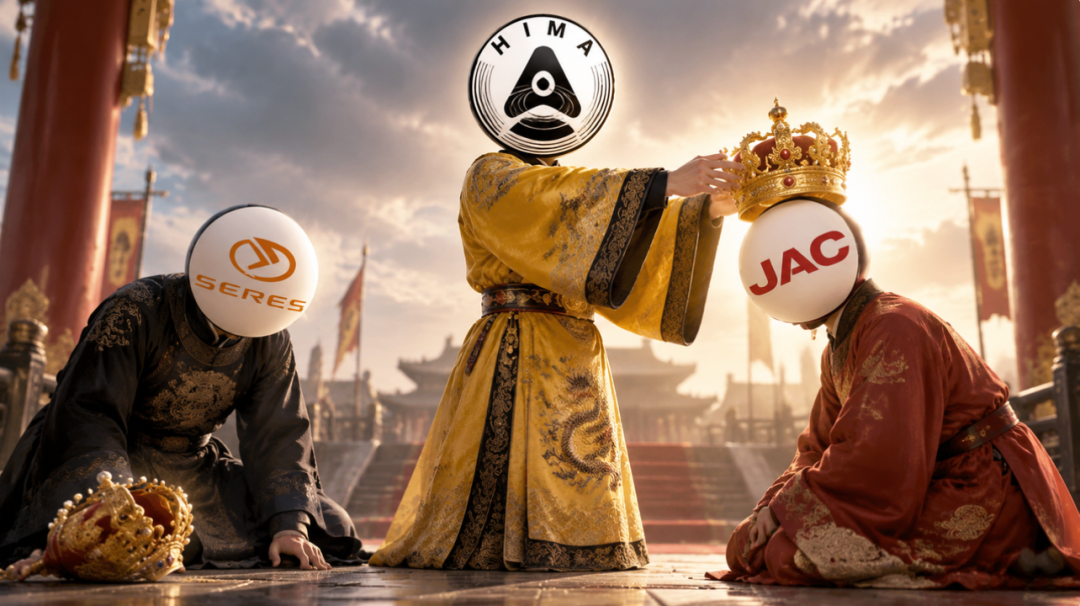
The Dawn of the 'Post-Harmony Intelligent Mobility Alliance' Phase
On September 22, JAC Motors' stock price soared to its daily limit, reaching RMB 21.32, and continued to climb the following day.
Interestingly, this surge was not mirrored across the broader automotive sector. Other listed automakers performed relatively weakly, indicating that investors were not merely following a general automotive trend but were responding to a more specific narrative.
JAC Motors is poised to become the new 'star player' within Huawei's automotive ecosystem.
01 AITO Steps Back, JAC Steps Up
From a news perspective, the influx of investor interest was primarily sparked by two developments.
On the one hand, following JAC Motors' stock hitting the daily limit on the afternoon of September 22, the company addressed investor inquiries, confirming its ongoing collaboration with Huawei under their established partnership framework.
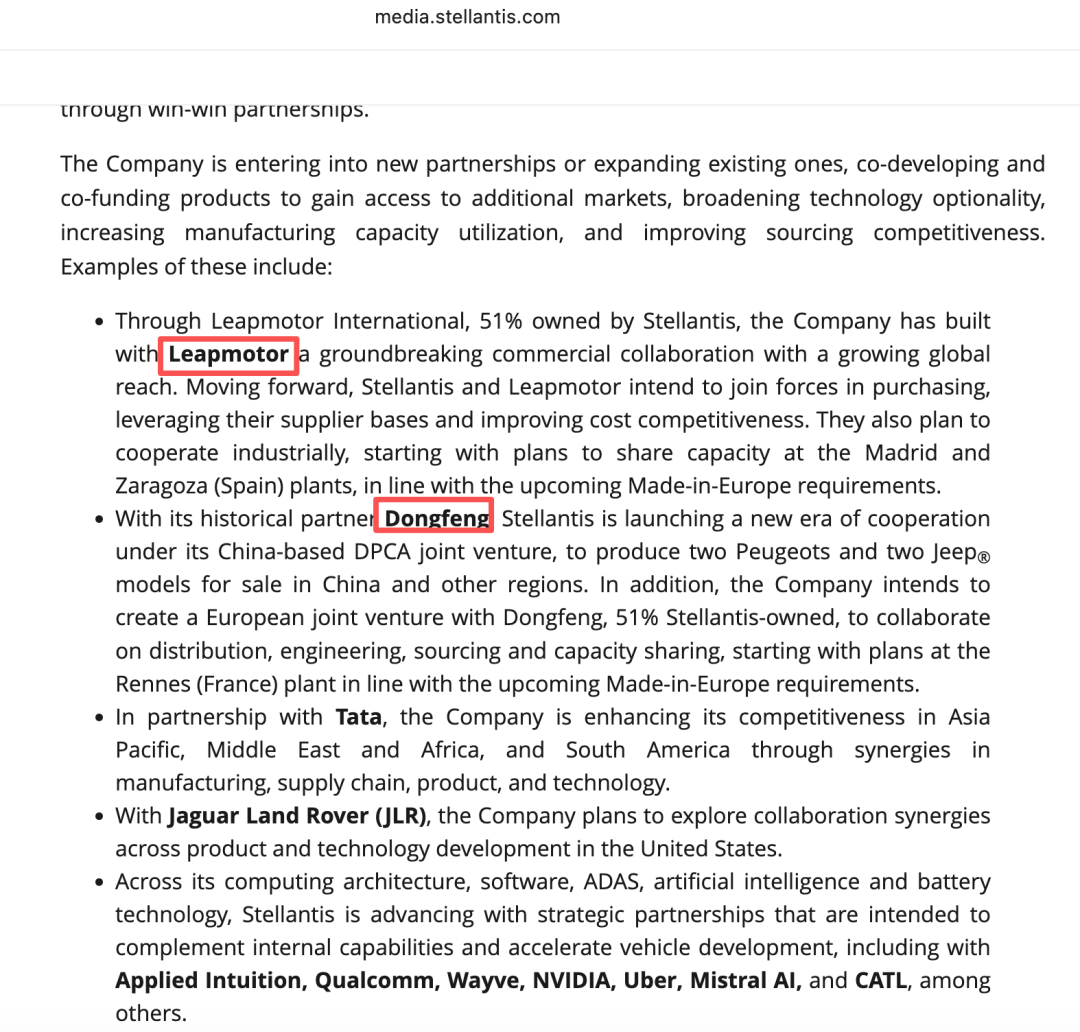
On the other hand, rumors emerged about JAC's potential collaboration with an international luxury automaker. According to a Yicai report, Stellantis Group is in long-term industrial cooperation talks involving its ultra-luxury brand Maserati, Huawei, and JAC Motors. The plan is to integrate Huawei's Harmony Intelligent Mobility Alliance platform into Maserati models, aiming to launch the first jointly developed mass-production vehicle by the end of 2027.
In response, Stellantis China's representatives declined to comment on market rumors or speculation, noting that Maserati's future strategy and development plans would be officially announced at the Investor Day event in Modena, Italy, this December.
Individually, neither of these developments would be sufficient to explain such a strong market reaction to JAC Motors.
After all, collaboration with Huawei is not a novelty. Previously, automakers such as Seres, Chery, and BAIC have already joined the Harmony Intelligent Mobility Alliance ecosystem, with JAC being just one of them. Meanwhile, the rumored partnership with Maserati, even if realized, would still require product development, market validation, and sales growth, and would not immediately impact the listed company's financial performance.
What truly shifted market expectations was the 'reshuffling' within the Harmony Intelligent Mobility Alliance ecosystem.
Over the past few years, Seres' AITO has undoubtedly been the most successful example of Huawei's automotive ecosystem. From the AITO M6 to the AITO M9, Seres demonstrated that the 'automaker manufacturing capabilities + Huawei's intelligent capabilities' collaboration model could succeed. Consequently, capital markets assigned Seres a relatively high valuation, considering it a key beneficiary of Huawei's automotive ecosystem.
However, on September 15, a report about adjustments to Huawei's collaboration model with Seres stirred the Chinese automotive market: Huawei would adopt a more asset-light approach in the future, with the initiative over core aspects such as product definition, brand marketing, channel retail, and service systems shifting from Huawei to Seres. Huawei would transition to a technology-enabling role. In essence: Previously, Huawei led while Seres supported; now, Seres leads while Huawei empowers.
As a result, the market began to reconsider: If AITO is no longer the absolute core of the Harmony Intelligent Mobility Alliance, who will become the next partner to receive Huawei's resource allocation?
This became the catalyst for JAC Motors to be re-evaluated by investors.
Although Seres remains part of the Harmony Intelligent Mobility Alliance ecosystem, the market perceives that the closely intertwined, co-growth collaboration model of the past is evolving. For Huawei, the Harmony Intelligent Mobility Alliance has transitioned from its initial phase of model validation to a phase of multi-brand expansion.
For a system to sustain growth, it inevitably needs a 'star player.' Therefore, the Harmony Intelligent Mobility Alliance requires a new leader, a new pillar, and a brand that can represent its future strategic direction.
And the compliant JAC and the high-performing MAEXTRO happen to fit this role.
Unlike AITO, which targets the mid-to-high-end family market, MAEXTRO has been positioned from its inception to target the ultra-luxury market priced at over RMB 1 million. For Huawei, MAEXTRO is not just a product but a crucial attempt to challenge traditional luxury brands.
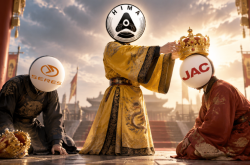
Consequently, in the eyes of investors, JAC's narrative began to shift. Previously, JAC was seen as a traditional automaker gaining attention due to its collaboration with Huawei. Now, some investors began to view it as the new strategic core of Huawei's automotive ecosystem.
In other words, in the market's narrative, JAC is transitioning from a 'partner' to a 'key focus for nurturing,' becoming the new 'successor' that investors are betting on within the Harmony Intelligent Mobility Alliance ecosystem.
02 Three Challenges JAC Must Overcome to Become the New 'Star Player'
Investors are re-pricing JAC Motors, but the reality is that becoming the new 'star player' of the Harmony Intelligent Mobility Alliance is no easy feat, nor is it guaranteed to replicate Seres' success.
From the perspective of China's new energy vehicle (NEV) development stage, the market environment MAEXTRO faces is entirely different from that of AITO in the past. AITO rose during a period of rapid growth in the NEV sector, enjoying the era's benefits. In contrast, MAEXTRO now faces far more intense competition for existing market share.
Around 2022, when AITO entered the market, China's NEV sector was still in a phase of rapid expansion. At that time, consumers were shifting from fuel vehicles to NEVs, and the high-end smart electric vehicle market had significant gaps. Huawei's intelligent cockpit, advanced driving assistance, and brand endorsement held strong appeal for traditional luxury car users.
The rapid market penetration of models like the AITO M7, AITO M9, and contemporaneous competitors like Li Auto was essentially driven by two trends: On the one hand, the NEV market continued to expand; on the other hand, a consumption shift was occurring in the RMB 300,000 SUV segment.
Today, however, the NEV market has entered a new phase. According to data from the China Passenger Car Association, by 2025, the retail penetration rate of NEV passenger vehicles has exceeded 50%, transitioning from an incremental phase of 'NEVs replacing fuel vehicles' to a phase of brand and product competition.
Previously, the competition revolved around whether NEVs had a chance—a complete blue ocean where all players jointly encroached on the fuel vehicle market. Now, it has become a zero-sum game among NEV manufacturers, with direct competition for survival.
Secondly, the path MAEXTRO has chosen to challenge is inherently more difficult than that of AITO.
The AITO M9 primarily covers the RMB 400,000 market segment, competing mainly against traditional luxury SUVs and high-end NEV models. However, MAEXTRO targets the ultra-luxury market priced at over RMB 1 million from the outset, meaning it faces not just product performance competition but also brand value competition.
Because consumers purchasing ultra-luxury vehicles are not just buying configurations and intelligence but also the luxury perception accumulated by brands like the Mercedes-Benz S-Class, the status symbol represented by Maybach, and the brand equity built by Porsche over decades.
Huawei can address intelligence, supply chains, and user experience, but establishing luxury brand recognition in a short time remains MAEXTRO's greatest challenge.
Furthermore, the Harmony Intelligent Mobility Alliance has evolved from AITO's earlier 'sole dominance' to an era of 'five-brand competition.'
Previously, when the market mentioned Huawei's automotive endeavors, AITO was the first brand that came to mind. Today, however, the Harmony Intelligent Mobility Alliance ecosystem includes multiple brands: AITO, Luxeed, STELATO, MAEXTRO, and SHANGJIE. As the number of partners grows, a new question arises: Where will Huawei's technological, channel, and marketing resources ultimately allocate?
While this is the core reason for investors' focus on JAC, it is also a potential concern for the company.
Beyond market uncertainties, JAC must also clarify its role: Is it merely a manufacturing partner within Huawei's ecosystem, or a long-term collaborator capable of realizing the luxury brand dream?
After all, Seres has already proven that Huawei's empowerment can help a traditional automaker quickly create a hit product. What JAC needs to prove is whether Huawei's empowerment can help a traditional automaker build a genuine luxury brand.
This is the ultimate test for the 'new star player.'
Investors can place their bets in the secondary market ahead of time, but ultimately, sales, profits, and user recognition will determine the succession. JAC may have ascended to the throne in the eyes of investors, but whether it can truly carry the banner of the Harmony Intelligent Mobility Alliance remains to be seen over time.
- END -
-
![]()
The 'Original Data Sin' in the AI Industry: Unraveling the Zhipu ZCode Controversy
-
![]()
Li Yanhong’s Good Looks Can’t Rescue Baidu AI’s Struggles
-
![]()
JAC Motors: Is It the New 'Star Player' in the Eyes of Investors?
-
![]()
Hangzhou Beckons! Xinguang Optoelectronics Unveils 100 Million Yuan Investment for Precision Measurement Subsidiary
-
![]()
Largan Precision Secures Land for NT$8 Billion! What Are the Chances of Winning the CPO Bet?
-
![]()
Not Just 'Talking the Talk': AutoNavi Enhances AI's Understanding of the Physical World
-
![]()
Exclusive Interview with Xiong Guanhao from Sunny Optical: Reconstructing the Value of Light with 'Optics + AI'
-
![]()
More Than 50 Crashes: A Chinese Farmer Takes Flying Cars to the Emirates Palace in Abu Dhabi