Can the Hongqi Tiangong 07 Compensate for the Flaws of the Hongqi EH7?
 09/28 2026
 482
482
Recently, the Hongqi Tiangong 07 (hereinafter referred to as the Tiangong 07) has officially opened for pre-sales, offering a total of three models.
According to publicly available information, the Tiangong 07 is a completely new model, yet it is widely considered by the outside world as the "successor" to the Hongqi EH7. In comparison to the Hongqi EH7, the Tiangong 07 boasts a significantly lower price tag without sacrificing product quality. Instead, it further elevates its capabilities in intelligent driving, power, and energy replenishment. Let's delve into the changes brought by this "successor."
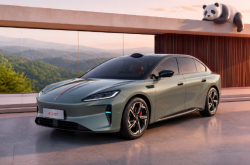
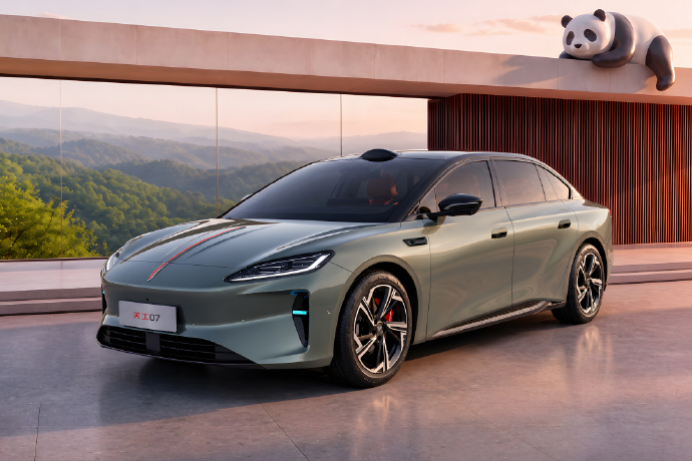
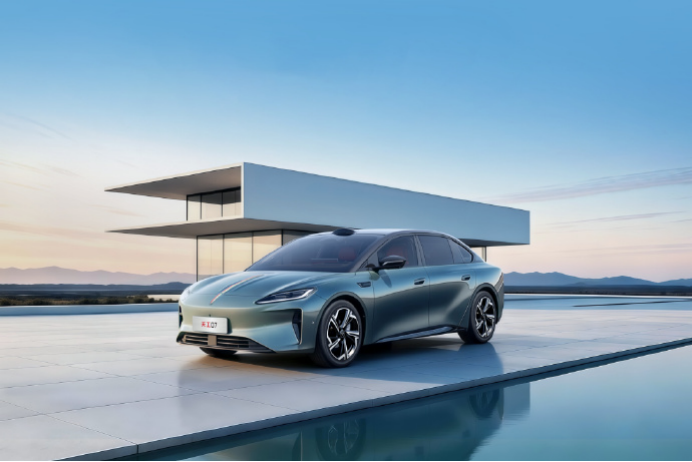
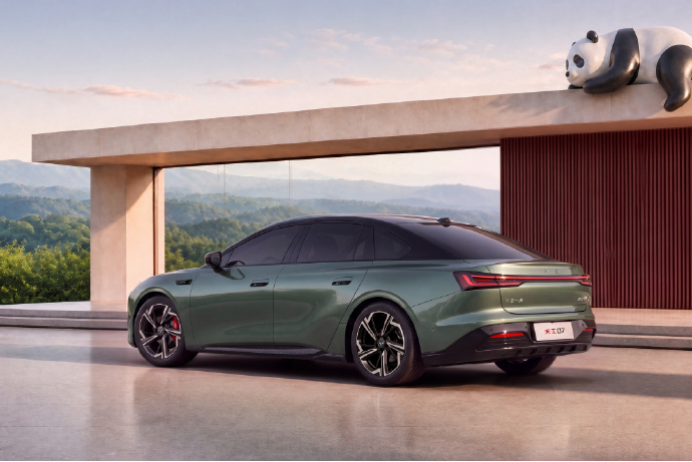
In terms of appearance, the new vehicle retains the sleek silhouette of a mid-to-large pure electric sedan. Its design is simpler compared to the overall aesthetic of the EH7, aligning more closely with the design trends of new energy vehicles. The closed front grille is complemented by split headlights, and a LiDAR system is installed on the roof. The sides feature semi-hidden door handles, striking a balance between low wind resistance and practicality. The rear is designed with a small ducktail spoiler and a full-width taillight, giving it a more streamlined appearance. Additionally, the new car's length has been extended to 5000mm compared to the EH7.
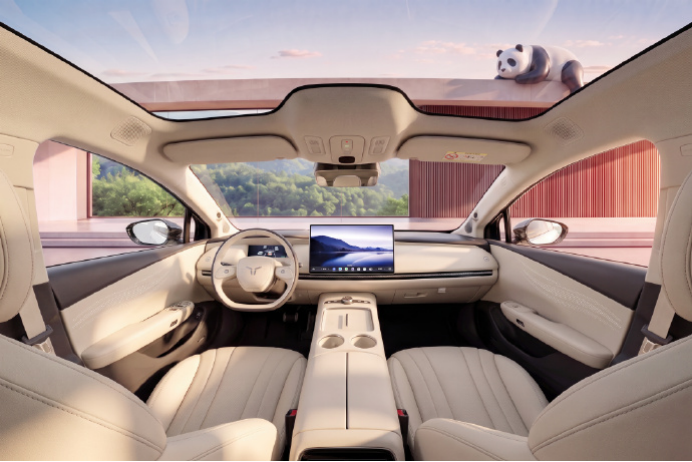
Meanwhile, the interior of the Tiangong 07 has undergone a complete transformation. The new vehicle features an 8.88-inch LCD instrument cluster and a 17.3-inch floating central control screen, complemented by a wraparound cockpit and hidden air vents. Compared to the previous 15.5-inch central control screen layout of the EH7, it exudes a more premium and technologically advanced ambiance. Notably, the intelligent cockpit of the EH7, which was previously criticized for "falling short of new energy vehicle standards," has also been upgraded in the new car. The new model is equipped with a Qualcomm 8397 chip, 64GB of RAM, and 512GB of storage, along with the Lingxi Cockpit 6.0 system, which supports on-device large models and multi-device interconnection.
Particularly noteworthy is the significant progress made by the Tiangong 07 in intelligent driving. In contrast to the Hongqi EH7, which primarily relied on visual solutions, the new vehicle incorporates a 384-line dynamically adjustable LiDAR and is equipped with Hongqi Sinan Intelligent Driving 5.0, supporting highway and urban navigation assistance functions. This further aligns its perception hardware and assisted driving capabilities with mainstream standards.
While addressing intelligence flaws, the Tiangong 07 also excels in power. The new vehicle adopts an 800V high-voltage platform and a SiC electric drive system across all variants, offering both single and dual-motor options. The rear-wheel-drive version boasts a maximum power of 340kW, while the all-wheel-drive version delivers a total power of 530kW, achieving a 0-100km/h acceleration time as fast as 3.5 seconds.
It is evident that compared to the Hongqi EH7, the Tiangong 07 has rectified key flaws in intelligence and power, resulting in a substantial overall enhancement in product quality.
However, the RMB 200,000-class pure electric sedan market is now fiercely competitive, making it challenging for the Tiangong 07 to establish a foothold. Upon its launch, the new vehicle will face direct competition from models such as the BYD Han EV, XPENG P7+, GAC Toyota bZ4X, and Lynk & Co 10 EV, each of which boasts its own strengths in power, intelligent driving, and range.
Among them, the BYD Han EV emphasizes fast charging as a selling point, with the 2026 Flash Charge version offering a CLTC pure electric range of 705km and a rapid charging time of just 5 minutes to go from 10% to 70%. The XPENG P7+ focuses more on intelligent driving, with the 2026 pure electric version equipped with the second-generation VLA intelligent driving system, delivering a computing power of 2250TOPS. The bZ4X highlights the HarmonyOS cockpit and Huawei's intelligent drive system, with the LiDAR version supporting highway and urban navigation assistance. The Lynk & Co 10 EV pushes the boundaries in performance, range, and charging, with the rear-wheel-drive version delivering a maximum power of 370kW, a CLTC pure electric range of up to 816km, a rapid charging time of just 5.5 minutes to go from 10% to 80%, and offering the H7 advanced assisted driving system. In terms of product quality alone, the Tiangong 07 is no pushover, but facing such formidable competitors, securing sales volume will not be a walk in the park.
It is worth noting that while these models compete on features, their prices remain highly competitive without being inflated. For instance, the BYD Han EV and bZ4X, which offer significant discounts, have the Han EV 2026 Flash Charge version priced starting at RMB 179,800, with some regions offering subsidies that bring the price down to as low as RMB 155,800. The bZ4X is priced at around RMB 154,800 after discounts, and further reductions to RMB 147,800 with additional benefits. In this market environment, the Tiangong 07's limited-time benefit price starts at RMB 169,900, lacking a prominent price advantage.
Evidently, competition in the RMB 200,000-class pure electric sedan market is no longer just about a single parameter but rather a comprehensive comparison of power, intelligent driving, range, charging capabilities, and price. Although the Tiangong 07 boasts strong product quality, it still faces significant pressure in a market filled with formidable competitors and escalating price wars.
More critically, the Tiangong 07 must also address the issue of the relatively weak brand premium for Hongqi. Although Hongqi positions itself as a premium luxury brand, consumer recognition of this positioning is not high, as evidenced by the performance of its main models. From January to August this year, the Hongqi H5 accumulated sales of 63,151 units, accounting for 37.71% of the brand's total sales. The Hongqi HS5 sold 28,221 units during the same period, representing 16.85% of the total. These two models indeed support a significant portion of Hongqi's sales volume. However, the issue lies in their significantly lower transaction prices compared to the official MSRP: the H5 has an official MSRP of RMB 159,800 but an actual transaction price of around RMB 121,000. The HS5 has an official MSRP of RMB 186,800 but can be purchased for RMB 131,800 at the dealership. Consistently selling at lower transaction prices has led consumers to perceive that "Hongqi models are worth this much," making it even harder for the brand premium to manifest.
In conclusion, compared to the EH7, the Tiangong 07 has indeed rectified many flaws in terms of intelligence and power, resulting in a noticeable improvement in product quality. However, in the RMB 200,000-class market, where prices continue to decline and competitors keep emerging, the benefit price starting at RMB 169,900 does not offer a significant advantage. After its launch, whether the Tiangong 07 can convert its product quality into sales volume and persuade consumers to pay RMB 170,000 for the "Hongqi" brand will ultimately depend on the market's response.
(Images sourced from the internet, removed if infringing)
-
![]()
Silicon Carbide Optical Waveguides: From 'Performance Option' to 'Mass Production Element'
-
![]()
BYD’s 5-Minute Charge vs. Geely’s 4.5-Minute Charge: The Megawatt-Level Charging Race Heats Up
-
![]()
Trump Urges Factory Construction, While Detroit Resists: Who’s Playing the Good Cop, and Who’s the Bad Cop?
-
![]()
Chinese Cars Climb to Top of German Import Rankings, Driven by German Consumers
-
Global Luxury Market Cools Down: What’s Next for Ultra-Luxury Cars?
-
![]()
Automakers Spare No Effort to Drive Up Sales
-
![]()
Can the Hongqi Tiangong 07 Compensate for the Flaws of the Hongqi EH7?
-
![]()
Intelligent 'Made in China' Propels Joint Venture New Energy Vehicles Forward