Geely and NIO’s Charging and Battery Swap Networks Go Live
 09/29 2026
 416
416
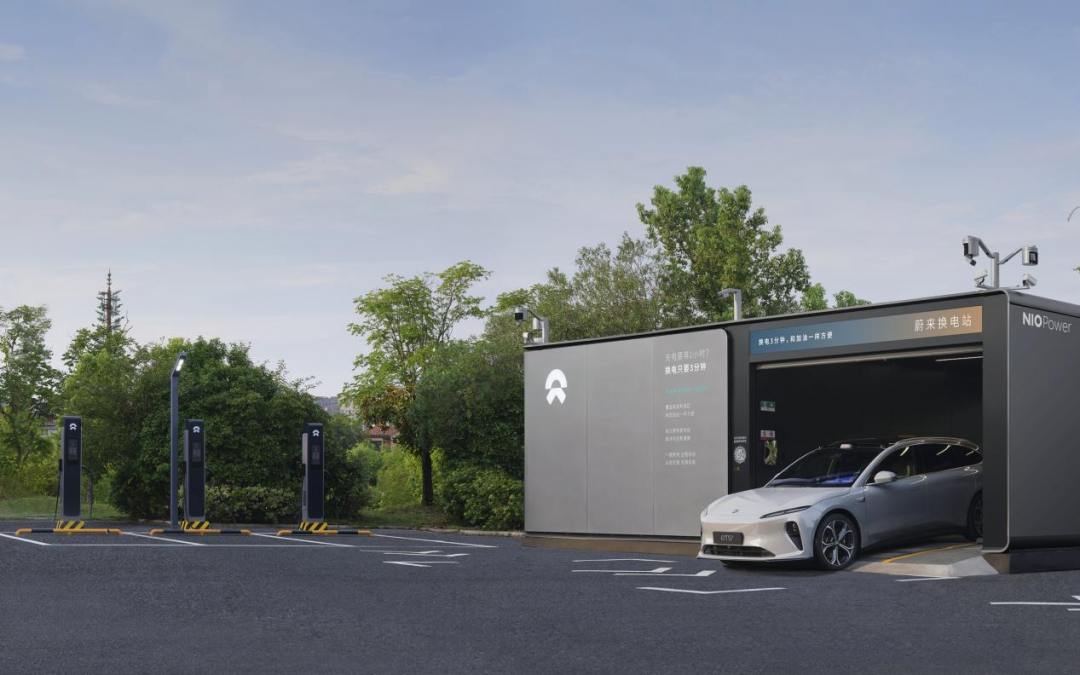
On September 28, NIO and Zhejiang Geely Holding Group unveiled a landmark strategic partnership in Hangzhou, focusing on the integration of charging and battery swap services. The collaboration goes beyond mere technology and standard sharing or the joint establishment of service networks; it extends to capital and asset integration through cross-shareholding. Geely Holding Group will acquire a 30% stake in NIO Power by transferring 100% of its equity in YiYi Interconnect and contributing RMB 640 million in cash. Conversely, NIO will secure a 10% stake in Haohan Energy, a Geely subsidiary. This move enables Geely’s consumer (C-end) battery swap vehicles to utilize NIO’s battery swap stations, while NIO’s charging users gain access to Geely’s charging network, significantly alleviating the fragmented energy replenishment landscape characterized by isolated station constructions.
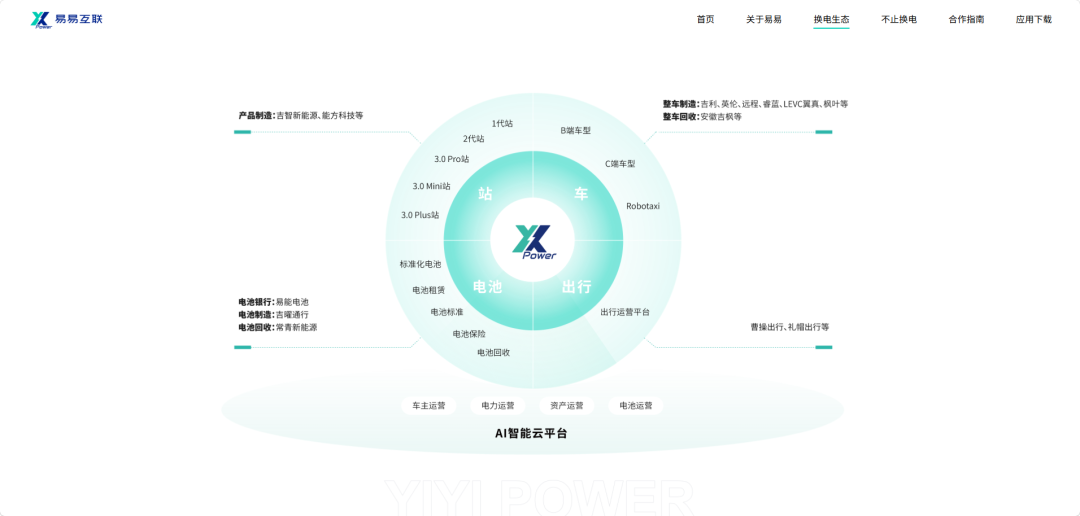
At the operational level, YiYi Interconnect’s battery swap services for commercial vehicles will be fully integrated into NIO Power, which will continue to operate and enhance this segment. More notably, for individual consumers, the two companies will jointly develop unified C-end battery swap technologies and standards. Geely Holding Group will be responsible for developing C-end battery swap vehicle models, while NIO Power will provide the battery swap services. This collaboration suggests that Geely’s passenger vehicles will soon have direct access to NIO’s battery swap network.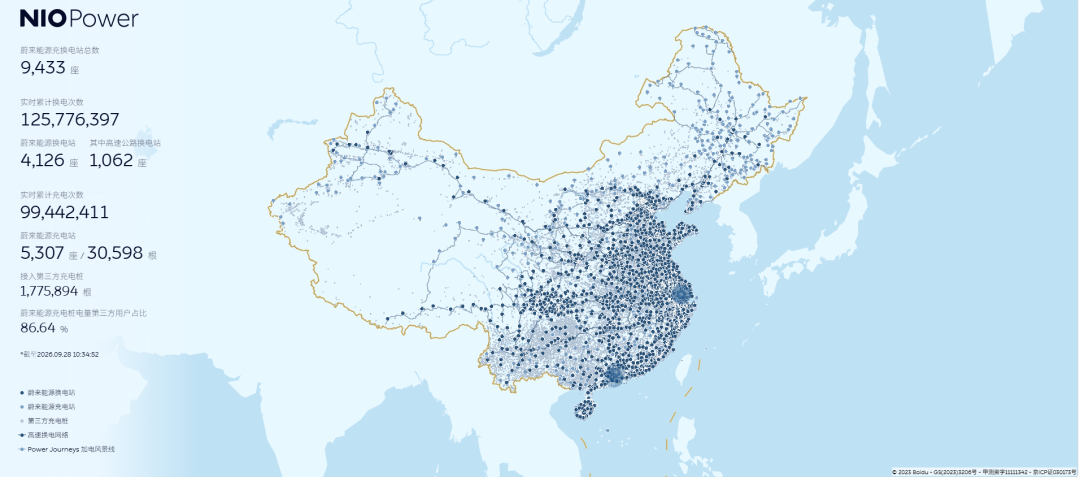
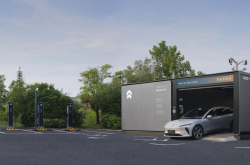
Data reveals that as of September 27, 2026, NIO had established a nationwide network of 9,433 charging and battery swap stations, comprising 4,126 battery swap stations and 5,307 charging stations with 30,598 charging piles. These operational facilities lay a solid foundation for the collaboration between the two entities. In its official announcement, NIO stated that NIO Power aims to have built a cumulative total of 10,000 battery swap stations by 2030, with an estimated annual power demand for the battery swap network surpassing 10 billion kWh. To support this expansive network, continued station construction is essential, alongside attracting more vehicle models and users to join.
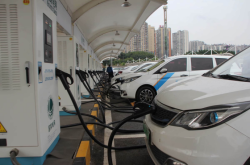
Additionally, Geely has deployed over 2,500 charging stations and 12,000 charging guns across 232 cities nationwide, including over 1,500 ultra-fast charging stations. Haohan Energy has previously integrated the charging maps of Geely Galaxy, Lynk & Co, and Zeekr, making them available to social new energy vehicles. Geely plans to have over 22,000 charging stations and over 100,000 charging guns by the end of 2027, including over 15,000 Geely Smart Charging Stations and over 50,000 Smart Charging Guns, aiming to be the first to achieve comprehensive coverage in county-level cities across the country.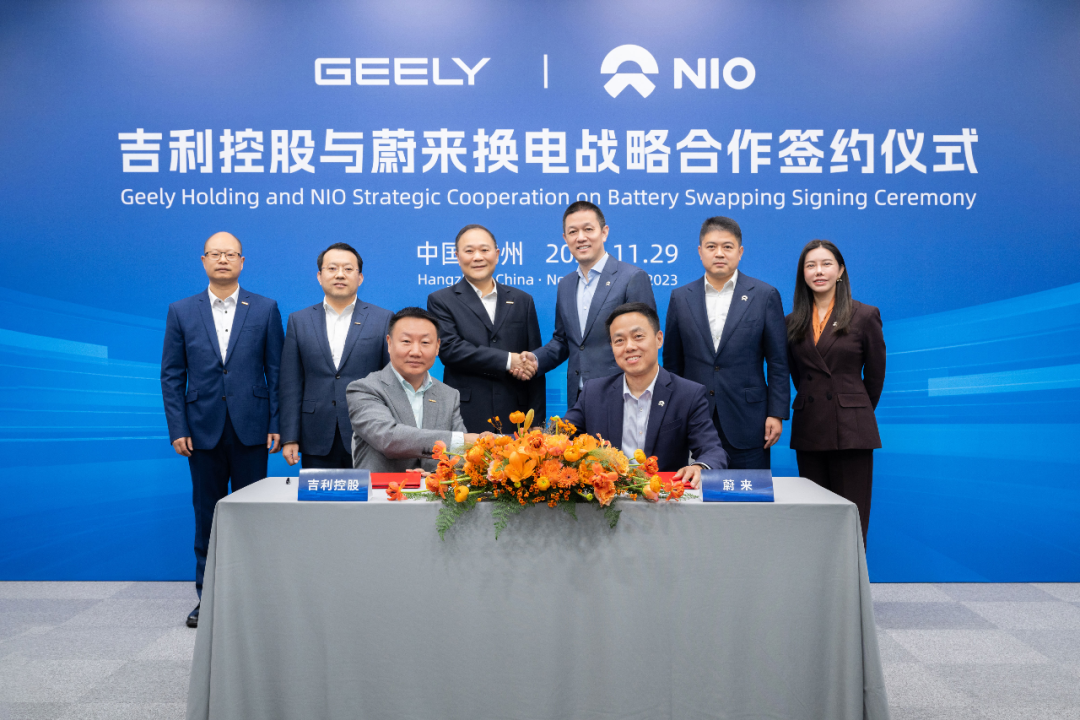
The roots of this collaboration can be traced back to November 29, 2023, when Geely Holding Group and NIO signed a battery swap strategic cooperation agreement in Hangzhou. They agreed to establish two battery swap standard systems for private and commercial vehicles using the 'co-invest, co-build, co-share, co-operate' model. Geely became the second automotive company to partner with NIO in battery swapping. Three years on, the partnership has evolved from technical standards and network interconnection to deep integration at the capital, asset, and operational levels.
This transformation addresses a long-standing challenge in energy replenishment infrastructure: isolated station construction has led to network fragmentation and redundant investments, with some facilities experiencing low utilization rates. Battery swapping, in particular, demands high standardization—battery pack dimensions, vehicle platforms, battery swap equipment, and back-end operational systems all require precise coordination. Issues related to benefit distribution and construction responsibilities, which were difficult to resolve through technical cooperation agreements alone, are now being addressed through equity relationships.
The division of responsibilities is clear: Geely contributes YiYi Interconnect and cash in exchange for an existing, large-scale entry point into the passenger vehicle battery swap network while maintaining its advantages in the commercial vehicle sector. NIO, on the other hand, brings in capital, high-frequency business (B-end) demand, and Geely’s extensive brand portfolio to share the costs of its capital-intensive energy business. Commercial vehicles from companies like Cao Cao Mobility can provide stable, high-frequency B-end demand for battery swap stations. Combined with the scale of Geely’s multi-brand passenger vehicles, the two sides are essentially striving to integrate B-end and C-end usage scenarios into a unified network.
-
Per Capita Monthly Data Usage Hits 23.45G! Operators Reduced to Mere Channels for Apps Such as WeChat and Douyin
-
The Milestone of the 100,000th Vehicle: How Far Has BYD Progressed in Thailand?
-
![]()
【Electric Equipment】First National Subsidy for All-Electric Cargo Ship Received
-
![]()
Geely and NIO’s Charging and Battery Swap Networks Go Live
-
![]()
Four Trading Days, Three Daily Limits: JAC Motors Surpasses Seres to Become Huawei's Premier Auto Concept Stock!
-
![]()
What Cars Can You Buy with a 100,000 Yuan Budget? The Options Far Surpass Your Expectations
-
![]()
AI Fuels Wealth Creation, Shakes Up the Rich List
-
![]()
The Unveiling of 'Mega Project - Dawning 8000': How Cutting-Edge Computing Power Transforms Scientific Research