What Cars Can You Buy with a 100,000 Yuan Budget? The Options Far Surpass Your Expectations
 09/29 2026
 460
460
Just a few years ago, with a car-buying budget of around 100,000 yuan, the primary goal was simply to "make do." Vehicles in this price bracket often required consumers to compromise on space, features, brand reputation, and other key aspects. Achieving a well-rounded and exceptional driving experience was almost a luxury, and trade-offs were the norm for those purchasing cars within the 100,000 yuan range.
In today's automotive market, cars priced just above 100,000 yuan not only fulfill daily commuting needs but also offer superior interior space, advanced intelligent driving capabilities, and impressive range performance. They have transitioned from being "just adequate" to "more than satisfactory."
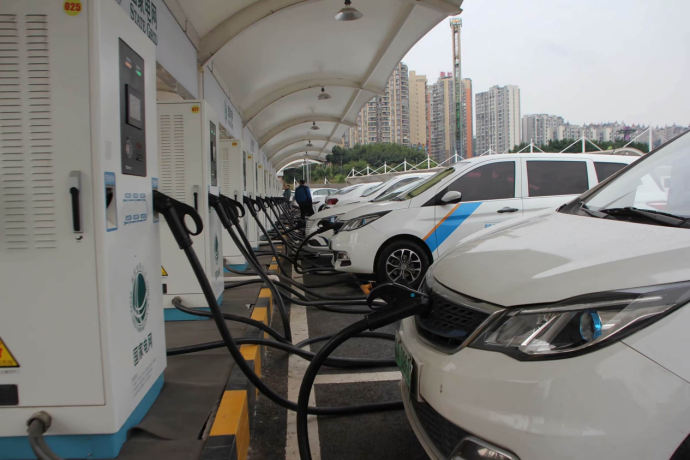
What's even more remarkable is that entry-level models from luxury brands, which once commanded prices nearing 200,000 to 300,000 yuan, now have final, stripped-down prices dipping into the 100,000 yuan range. For instance, the final price of the Audi A3 is nearing 100,000 yuan. According to dealer quotes, the 2026 entry-level Flying Pleasure hatchback and sedan versions are priced between 104,900 and 108,900 yuan, with some dealerships offering even lower prices.
Moreover, with a 100,000 yuan budget, you can acquire far more than just a prestigious brand emblem.
Also within the 100,000 yuan price range, the GAC Aion AION N60, after limited-time renewal subsidies, starts at 103,800 yuan. It comes standard with a 192-line LiDAR across all trim levels, a feature previously exclusive to high-end models.
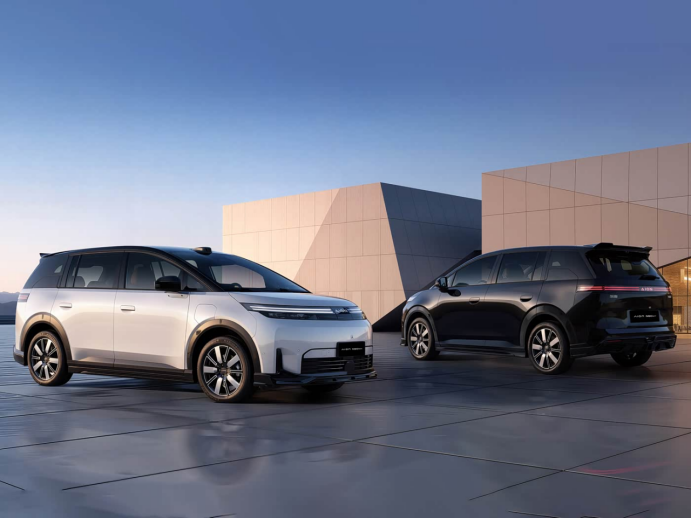
Additionally, the MG 07, launched in August this year, starts at 105,900 yuan and comes standard with mCDC intelligent electromagnetic suspension across all trims, a rarity at this price point. The 115,900 yuan hybrid 245 LiDAR version also boasts Momenta R7 advanced driver-assistance systems and LiDAR, along with CATL batteries. The simultaneous inclusion of advanced suspension and intelligent driving hardware further elevates the vehicle's configuration standards.
The Leapmotor B01 and B10, both equipped with an 800V silicon carbide high-voltage platform across all trims, start at 92,800 and 99,800 yuan, respectively. They can charge from 30% to 80% in as fast as 16 minutes and offer a maximum CLTC range of up to 670 kilometers. High-voltage fast charging is no longer exclusive to mid-to-high-end models; it's now available for under 100,000 yuan.
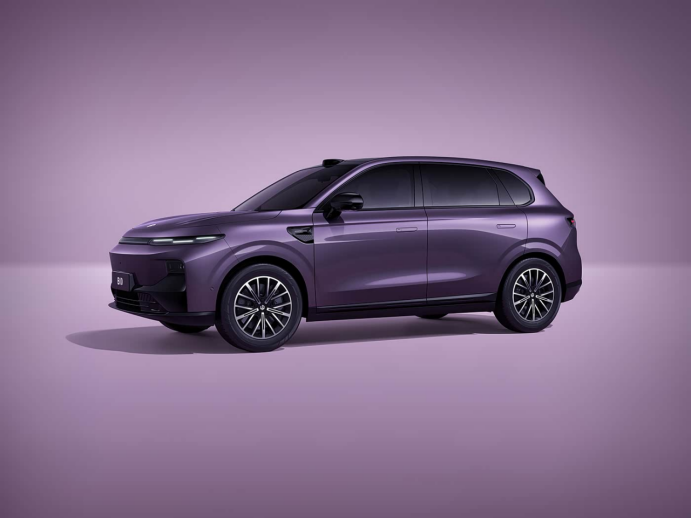
Consider the Venus V6, starting at just 89,900 yuan, officially touted as the only large six-seater SUV in the 100,000 yuan range equipped with Huawei's Qiankun Intelligent Driving ADS 5 SE. It marks Huawei's first foray into mass-produced models priced at 100,000 yuan. To put things in perspective, the world's first mass-produced vehicle featuring Huawei's HI full-stack intelligent automotive solution was the Arcfox Alpha S HI version, launched in 2022 with a starting price of 397,900 yuan. From 397,900 to 89,900 yuan, Huawei's intelligent driving price threshold has been significantly lowered.
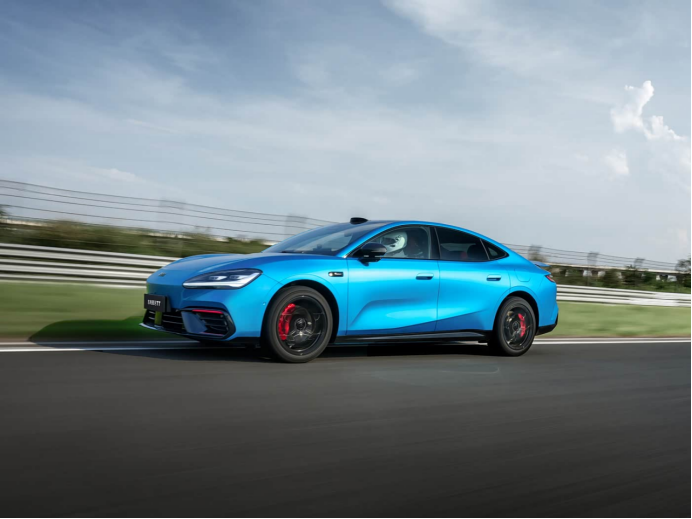
Furthermore, the Geely Galaxy TT, launched this month, starts at 129,900 yuan and comes standard with an 800V high-voltage platform and LiDAR across all trims, equipped with CATL batteries. Even the base version offers a range of 640 kilometers. Six months ago, such a comprehensive package would have cost over 200,000 yuan!
If we look back three to five years, each of these configurations would have commanded a price tag exceeding 200,000 yuan. Now, they are all clustered within the same price band, separated by just a few thousand yuan.
The ability to drive car prices down to this level is not solely due to automakers' market concessions.
For years, the challenge in bringing intelligent driving features to the mass market lay in the reliance on overseas imports for core components like LiDAR, high-computing-power intelligent chips, and high-precision vehicle sensors. This kept procurement costs high and raised the entry barrier for high-end intelligent driving models.
Today, the domestic smart car supply chain has fully matured, with core components achieving localization and mass production. This has broken overseas price monopolies and technological barriers, providing cost and technological support for the industry's trend of "low price, high configuration."
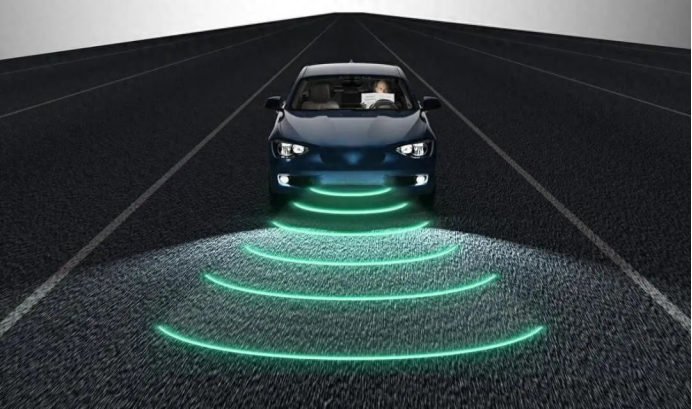
Take LiDAR, for example; its unit price has plummeted from tens of thousands of yuan early on to just a few thousand yuan now. The same trend applies to intelligent driving chips, with the cost per TOPS dropping from around 9 yuan in 2024 to about 7.5 yuan this year. The decline in component prices has accelerated the transition of such hardware from "top-tier exclusives" to "standard equipment for all."

Meanwhile, the cost-sharing enabled by massive production and sales volumes has become another driving force behind low prices and high configurations.
China's annual new energy vehicle sales reach millions of units, with batteries, radars, and chips each representing multi-million-unit markets. As production scale increases, unit costs naturally decline. Relevant data shows that in 2025, LiDAR installations in China's passenger vehicle market reached 2.756 million units. In the first quarter of 2026, domestic passenger vehicle LiDAR installations exceeded 985,000 units, with an expected annual installation volume of over 4 million units in 2026.
Furthermore, the iterative optimization of automakers' R&D models has further opened up space for low prices and high configurations.
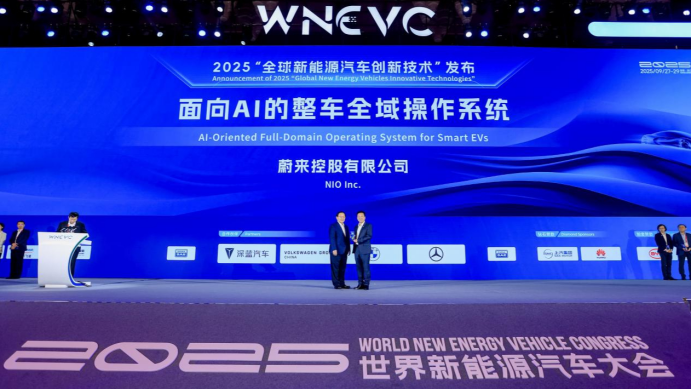
In the past, the industry widely adopted a "one-car-one-research" approach, developing intelligent driving systems and architectures separately for different price points and model series. This resulted in long R&D cycles, high costs, and extremely low technology reuse rates. Today, leading automakers like Changan, BYD, and NIO are increasingly adopting universal vehicle intelligence architectures, allowing the same intelligent driving technology and hardware solutions to be adapted across multiple model tiers. This effectively dilutes per-vehicle R&D and iteration costs.
In conclusion:
Today, a car-buying budget of 100,000 yuan is being redefined by the market. This trend of "low price, high configuration" is the result of multiple factors working in tandem. The localization of the supply chain, economies of scale from multi-million-unit production and sales, coupled with internal cost reductions through vertical integration and universal self-research by automakers, are jointly driving the penetration of high-end hardware into lower-priced segments. However, cost benefits have their limits, and balancing price reductions with overall vehicle quality remains a challenge that automakers must address in the future.
(Images sourced from the internet; removal upon infringement notice)
-
The Milestone of the 100,000th Vehicle: How Far Has BYD Progressed in Thailand?
-
![]()
【Electric Equipment】First National Subsidy for All-Electric Cargo Ship Received
-
![]()
Geely and NIO’s Charging and Battery Swap Networks Go Live
-
![]()
Four Trading Days, Three Daily Limits: JAC Motors Surpasses Seres to Become Huawei's Premier Auto Concept Stock!
-
![]()
What Cars Can You Buy with a 100,000 Yuan Budget? The Options Far Surpass Your Expectations
-
![]()
AI Fuels Wealth Creation, Shakes Up the Rich List
-
![]()
The Unveiling of 'Mega Project - Dawning 8000': How Cutting-Edge Computing Power Transforms Scientific Research
-
![]()
Why Are European and American Automakers Venturing into Diverse Sectors?